Civilization is often described through its most visible achievements: great buildings, famous leaders, works of art, and moments of political drama.
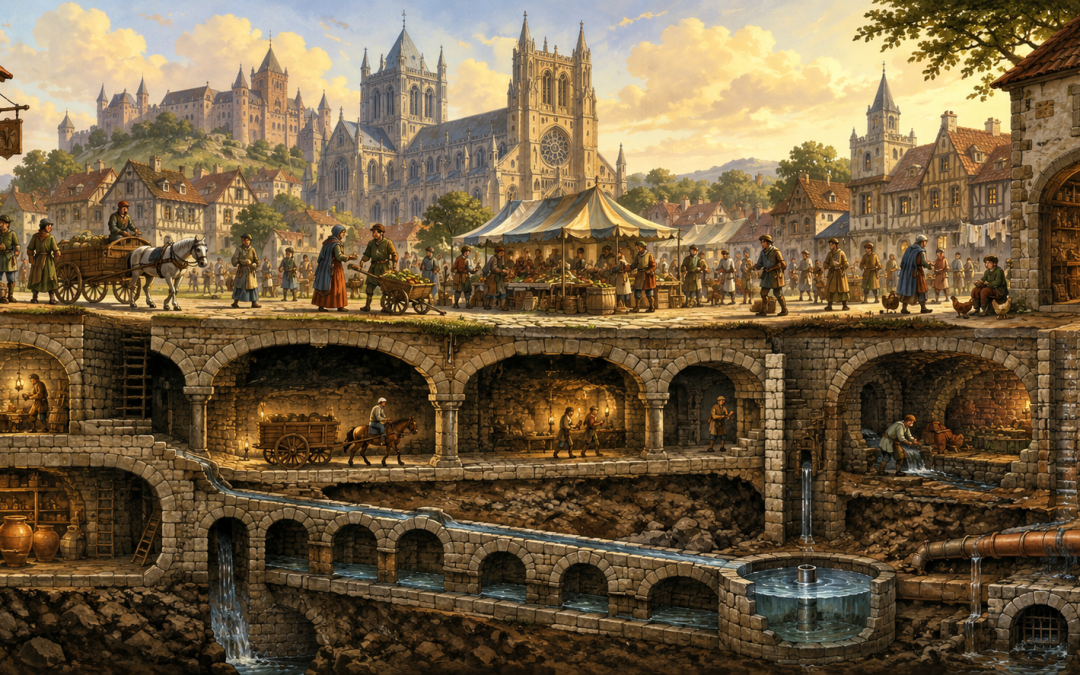
Yet much of what makes a society function lies beneath the surface.
Roads, water systems, energy, transportation, communication, institutions, and shared habits of cooperation rarely attract the same attention as the people and events they support. We tend to notice them most clearly when they fail.
The Hidden Framework explores the physical and social systems that allow complex societies to function. Some are tangible. Others are institutional. All help answer a simple question: how do millions of people live, work, trade, and cooperate at scale?
As the series evolved, I found myself returning repeatedly to systems that were both essential and largely invisible. They were hiding in plain sight: the roads beneath the traffic, the legal systems beneath commerce, the institutions beneath political stability, and the networks of trust that make cooperation possible.
The phrase became a useful shorthand for the series itself. Civilization is often judged by its monuments, but monuments rarely stand alone. Beneath them lie the foundations that make complex societies possible.
The Hidden Framework explores those foundations—physical, institutional, and social. Some essays examine medieval foundations such as Domesday Book, Common Law, Parliament, and Universities. Others trace the networks and systems that continued to shape society long after their creators were gone.
The index below maps the journey so far. Some frameworks have already been explored; others remain hidden, waiting to be discovered.
Physical Infrastructure
- Introduction—The Engineers Who Built the Modern World
- Potholes and Progress
- Roman Threads
- Water Highways— Canals and the logistics of the Industrial Revolution
- Black Underfoot—Coal and the First Energy Abundance
- Steam, Engines & Smoke—The Real Engines of the Industrial Age
- Standard Time — Sandford Fleming and the Order of Hours
- Power Lines—The Rise of the Electrical World
- Lifelines at Sea — Shipping, Logistics, and the Maritime World
- Building Big — Bridges, Railways and the Steel Imagination
- Materials Matter — From Lime Mortar to Carbon Rings
- Networks of Empire — Rail, Telegraph and Control
- The Energy Dilemma — Fossil Fuels, Fantasy and Physics
- The Domestic Engine — How Engineering Moved Indoors
- Five Miles Changed Everything — Bicycles and the Expansion of Choice
- Conclusion — The Long Relay
Institutional Infrastructure
- Domesday Book — When England Learned to Count
- The Exchequer — Counting the Kingdom
- Sheriffs and Shires — The Geography of Governance
- Parliament — Institutionalizing Consent
- Common Law — When Trust Became a System
- Guilds — How Skills Survived
- Charters and Privileges — Learning to Negotiate
- Universities — Where Knowledge Learned to Grow
Human Infrastructure