
The Five Acts of Civilization
The Five Acts of Civilization
History is often taught as a sequence of dates, dynasties, battles, and events. Our three series—The Continental Thread, The Hidden Framework, and Fascinating People—take a different approach.
Across thousands of years, civilizations have grappled with remarkably similar questions:
- How do societies organize themselves?
- How is power exercised—and constrained?
- How does knowledge survive?
- What happens when systems come under stress?
- And how do people adapt when the world changes?
The Five Acts offer one way of exploring those questions.
Rather than treating history as a collection of isolated episodes, they trace the long story of how civilizations inherit knowledge, build institutions, endure crises, reinvent themselves, and accumulate wisdom across generations.
The Acts are not rigid historical periods. They are recurring patterns. Just as individuals experience growth, challenge, adaptation, and renewal throughout their lives, societies repeatedly pass through similar cycles. The boundaries are rarely neat. Periods overlap. Old ideas persist. New ones emerge. Moments of stress often contain the seeds of reinvention.
Viewed through this lens, history becomes more than a timeline. It becomes an ongoing conversation between the past and the future—a story of how human beings learn, adapt, and attempt to build something that endures.
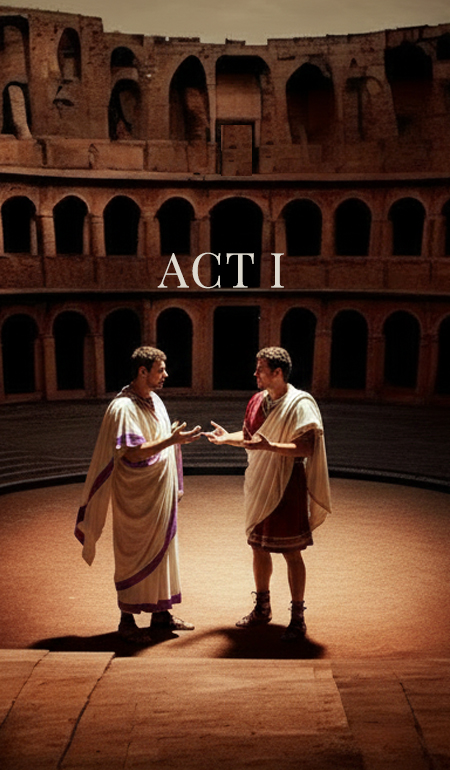
Act I — Inheritance
How Civilization Learned
No civilization begins from scratch.
The ancient world developed many of the ideas, institutions, and technologies that still shape modern life: writing, law, citizenship, philosophy, engineering, administration, and organized religion.
Egypt explored permanence. Greece explored ideas. Rome explored scale.
Even after the Western Roman Empire collapsed, much of that inheritance survived in monasteries, manuscripts, local customs, and collective memory. The lights dimmed, but they did not go out.
Act I asks a simple question:
How did civilization remember enough to begin again?
Explore ACT I

Act II — Building the Kingdom
Foundations of Medieval England
Following the Norman Conquest of 1066, England entered one of the most remarkable periods of state-building in European history.
Castles appeared. Common Law emerged. Cathedrals rose. Monasteries expanded. Kings extended their authority. Administrators recorded, measured, taxed, and governed.
The institutions that would eventually become recognisably English began to take shape. What had once been a collection of territories gradually became a kingdom.
Act II explores how societies transform inheritance into institutions.
Explore ACT II

Act III — The Stress Test
When the Numbers Stop Adding Up
Every system eventually encounters pressures it was not designed to withstand.
The fourteenth and fifteenth centuries brought a succession of shocks: famine, plague, labour shortages, war, political instability, and dynastic conflict.
The Great Famine exposed the limits of medieval agriculture. The Black Death transformed the relationship between land and labour. The Hundred Years’ War strained governments and finances. The Wars of the Roses revealed fractures within the ruling elite.
Yet collapse was not the outcome. Adaptation was.
Act III examines what happens when institutions confront realities they can no longer ignore.
Explore ACT III

Act IV — Reinvention
A Larger World
The old medieval order did not disappear. It was transformed.
Printing multiplied ideas. The Reformation challenged authority. Oceanic exploration connected continents. Trade expanded. Empires grew. Religious conflicts reshaped politics.
The scale of the known world expanded dramatically. Europe did not simply recover from the stresses of the late Middle Ages—it reinvented itself.
Act IV explores how societies adapt when the room suddenly becomes much larger.
Explore ACT IV

Act V — Civilization Compounds
Ideas Build Upon Ideas
The final act is still unfolding.
The Enlightenment, the Scientific Revolution, industrialisation, representative government, global trade, mass education, and modern technology all share a common characteristic: they build upon previous generations of accumulated knowledge.
Ideas begin to compound. Knowledge spreads faster. Institutions become more sophisticated. Capabilities expand.
The opportunities grow.
So do the risks.
Act V asks a question that remains open today:
What happens when civilization acquires powers its institutions are still learning how to manage?
Explore ACT IV
The Five Acts are Chapters in the Same Story
Each generation inherits a world it did not create, modifies that inheritance, and passes something forward.
Civilization is a conversation that has been continuing for thousands of years.
The Five Acts describe recurring patterns, rather than rigid historical periods. Civilizations repeatedly inherit, build, encounter stress, reinvent themselves, and accumulate knowledge. These processes overlap, repeat, and sometimes occur simultaneously.
The most interesting stories often emerge when people refuse to move to the next act. That is where the tension lives.
The Historical Periods answer:
- When did this happen?
- The Five Acts answer:
- Why does this matter?
- And beneath both lies a larger question:
- How do societies adapt when reality changes?