

Nestled on the banks of the River Tweed, Abbotsford stands as a monument to the power of storytelling and the imagination of one of Scotland’s most influential writers, Sir Walter Scott.

Built as a family home and a sanctuary for creativity, this eclectic masterpiece speaks to Scottish history, culture, and romanticism.
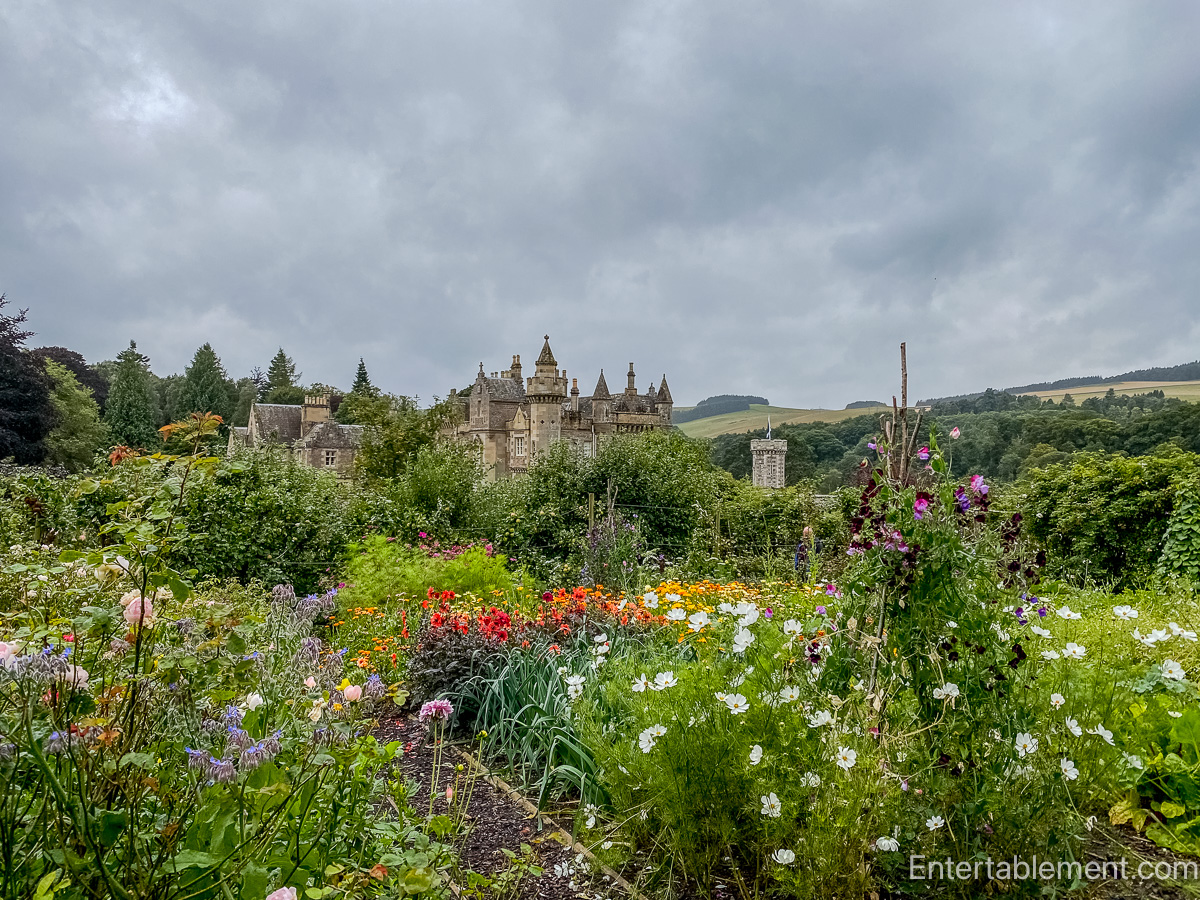
Scott named his home Abbotsford, after the nearby river crossing once used by the monks of Melrose Abbey. His historical adventure stories revived an interest in Scottish culture, and he was instrumental in recovering the Honours of Scotland—the crown, sword, and sceptre hidden in Edinburgh Castle for over a century. This achievement resulted in his being placed in charge of the arrangements for George IV’s visit to Scotland in 1822, further cementing his role as a cultural figurehead.
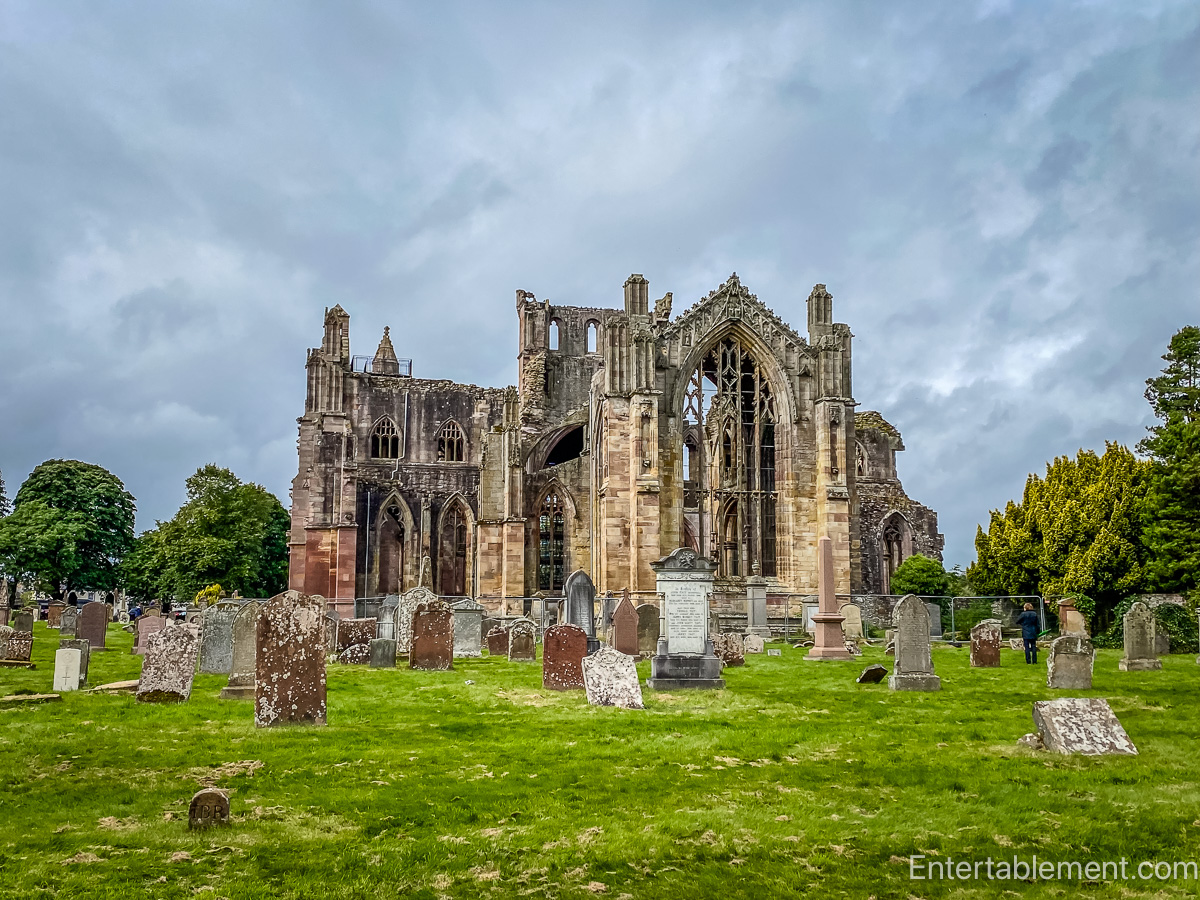
Melrose Abbey
A Dream Made of Stone
When Sir Walter Scott first saw the land that would become Abbotsford, it was nothing more than a modest farm called Cartley Hole. Yet, in Scott’s mind, it was the canvas for his vision of a grand baronial mansion. Completed in 1824, Abbotsford is a harmonious blend of Gothic Revival, Scottish Baronial, and Romantic Fantasy. Its turrets, castellated walls, and intricate stonework are reminiscent of the medieval castles and abbeys that inspired Scott’s novels and poetry.
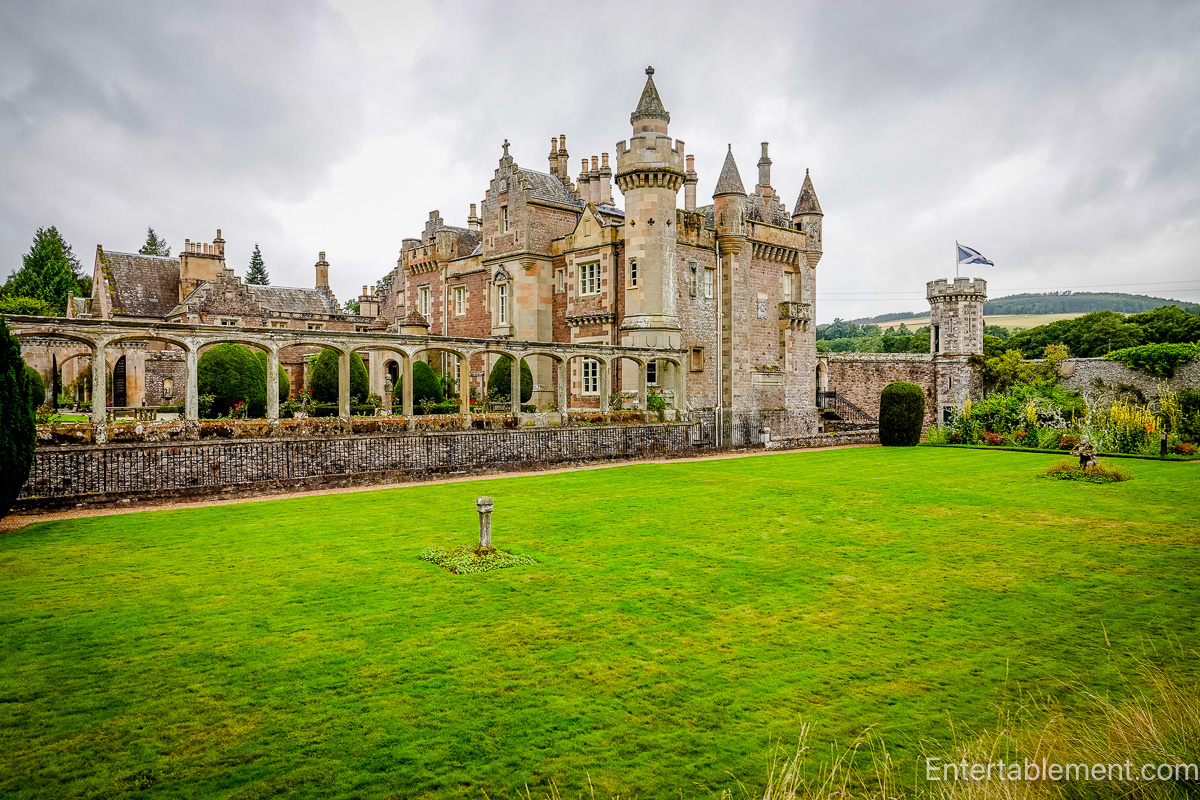
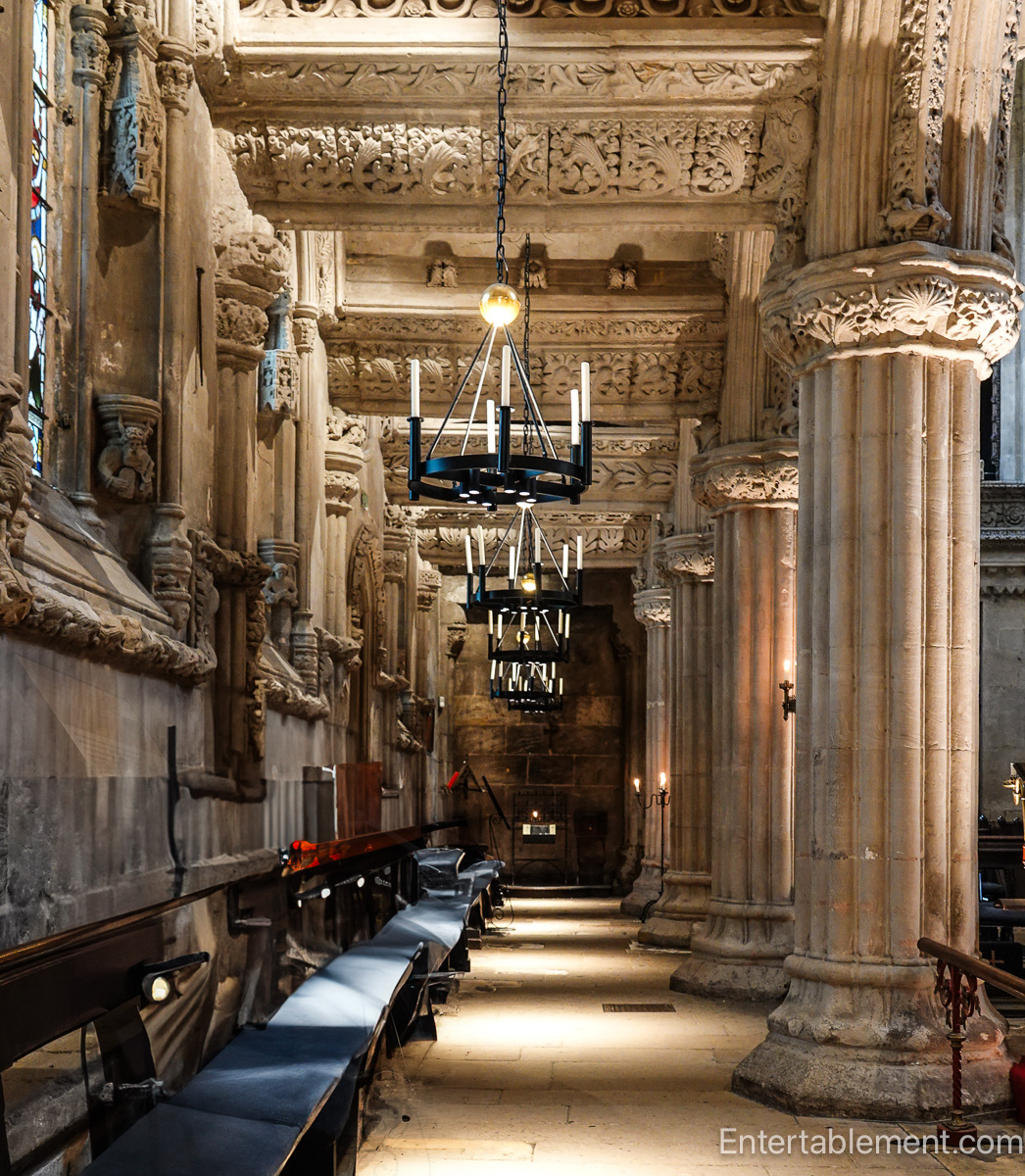
Scott admired Rosslyn Chapel’s intricate stonework and drew upon its designs to enhance Abbotsford’s architectural narrative.

Echoes of History: The Main Hall
The Main Hall at Abbotsford is a tribute to Scott’s fascination with history and legend. Every inch is covered in memorabilia.
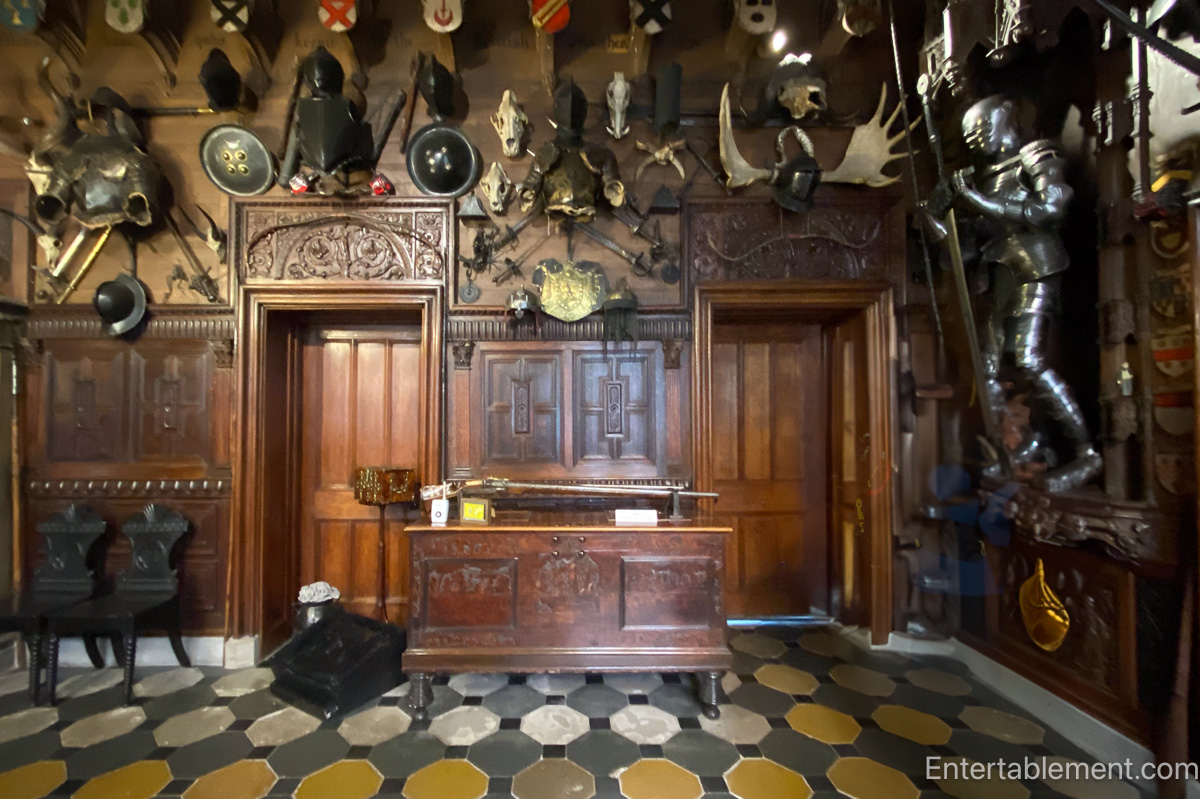
Here, weapons and armour from across Europe, including swords, spears, and suits of armour, adorn the walls. These artefacts are meticulously arranged, evoking the atmosphere of a medieval armoury.
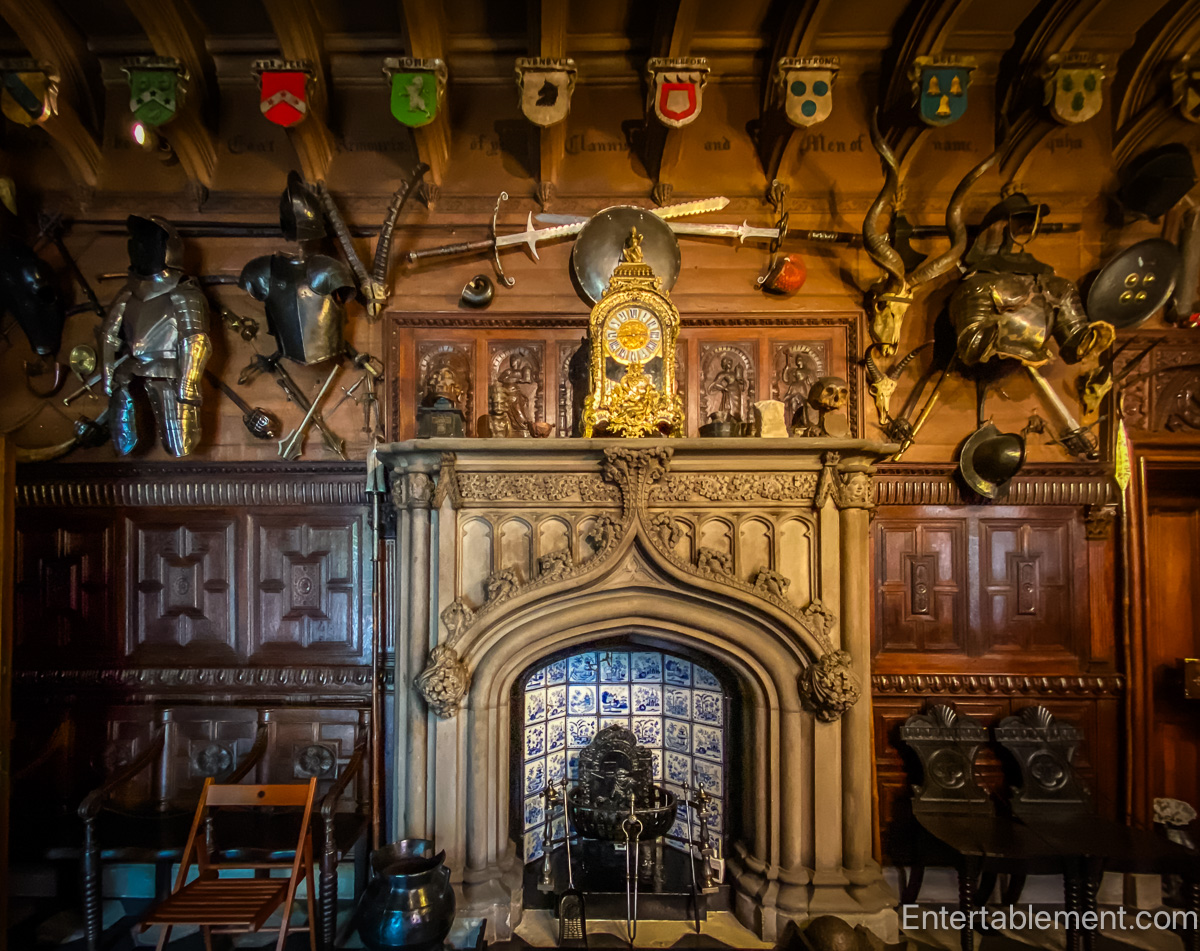
Above the fireplace, a clock keeps time beneath the gaze of ancestral coats of arms, echoing the themes of chivalry and valour that permeate Scott’s works.
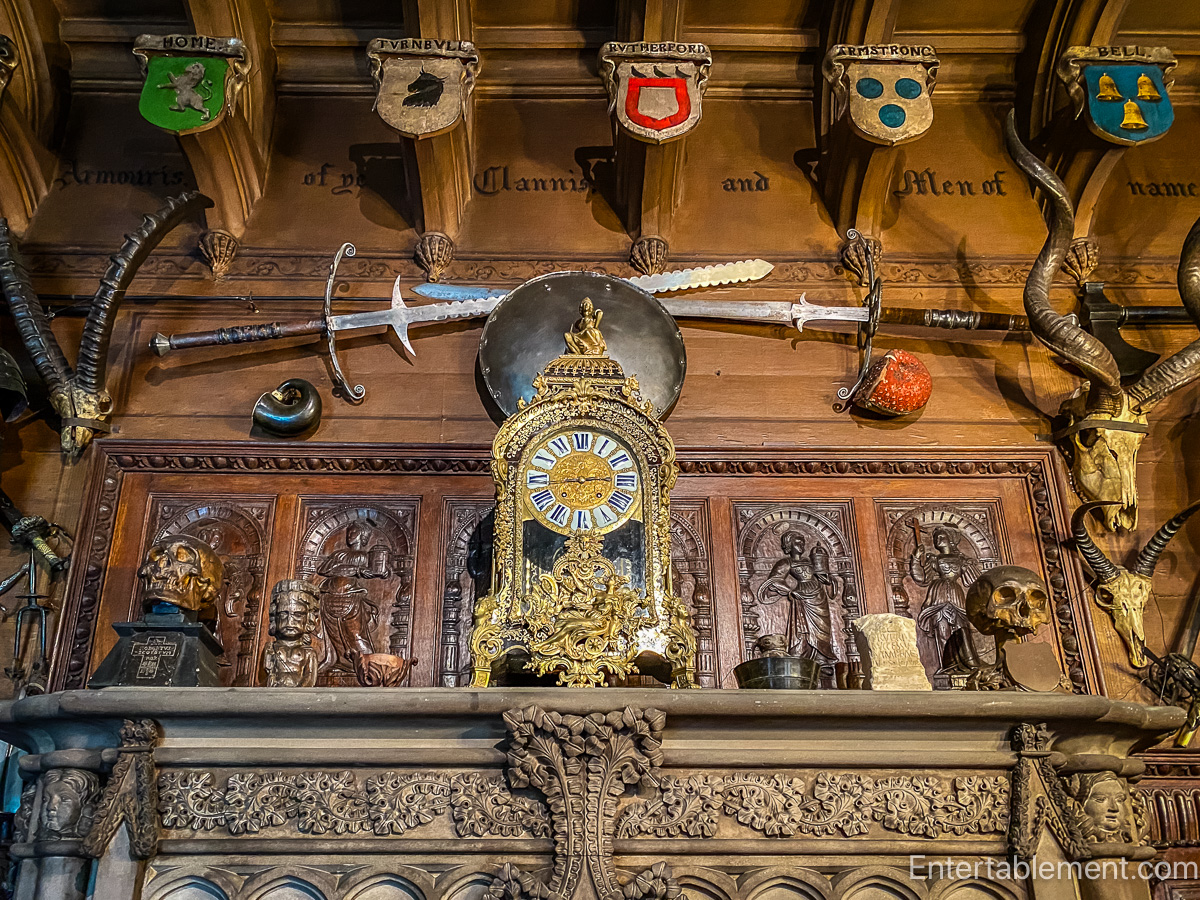
The hall reminds us of Scott’s passion as a cultural collector, preserving the artefacts and stories of Scotland’s past.
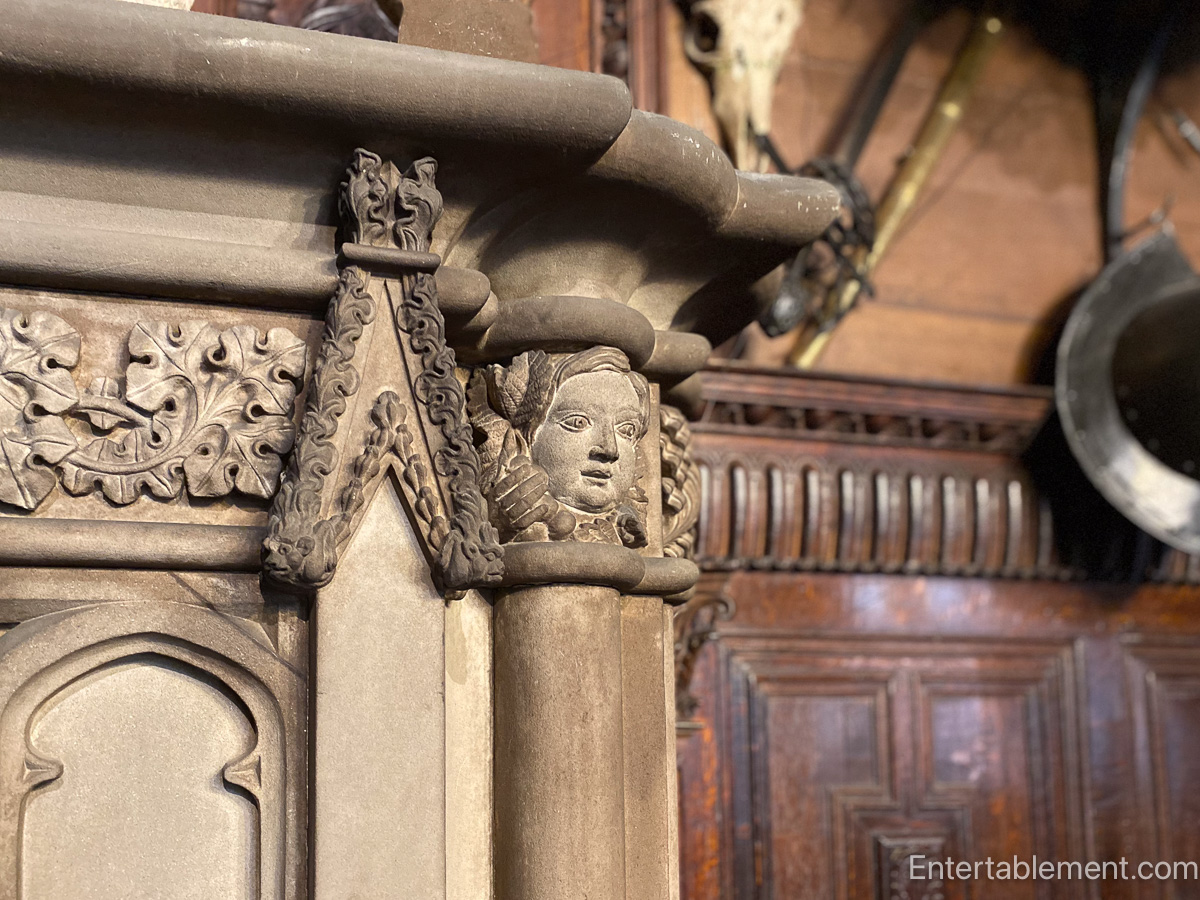
It’s easy to imagine Scott drawing inspiration from this collection as he crafted his historical novels.
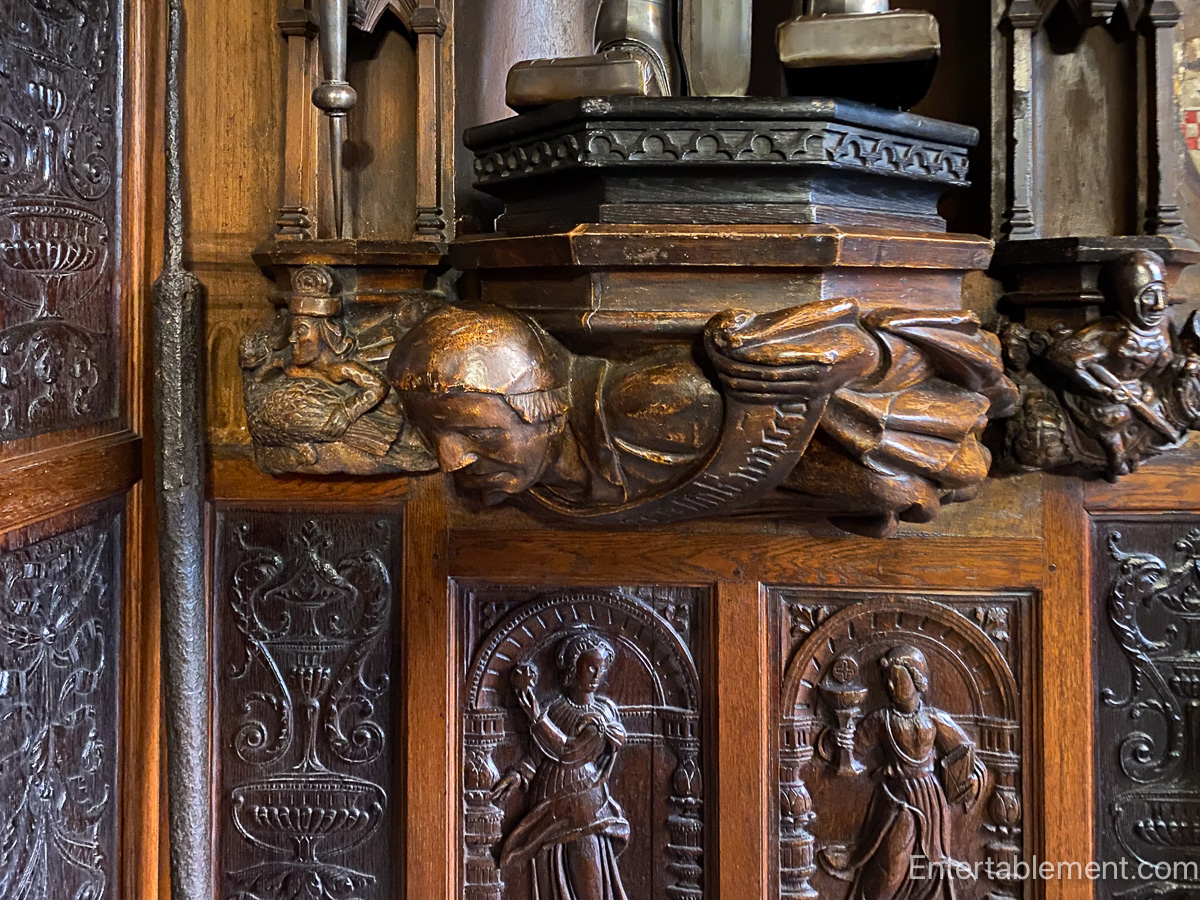
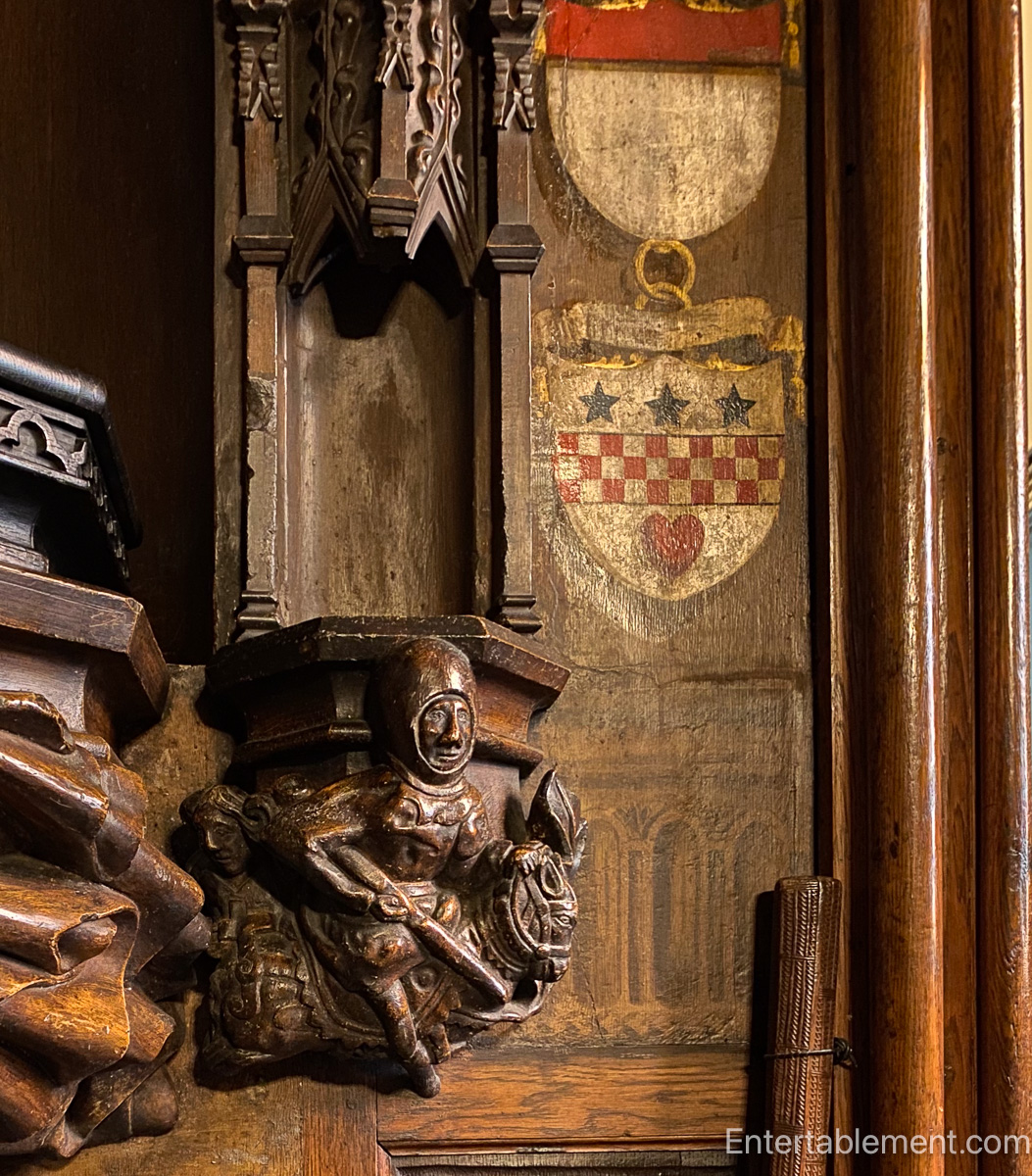
Scott meticulously designed every detail of the house, ensuring that Abbotsford proclaimed his identity as a proud Scot and a history lover. The architectural style he popularized would later influence the design of countless Victorian buildings, shaping the identity of Scottish Baronial architecture.
The Heart of the Home: The Library
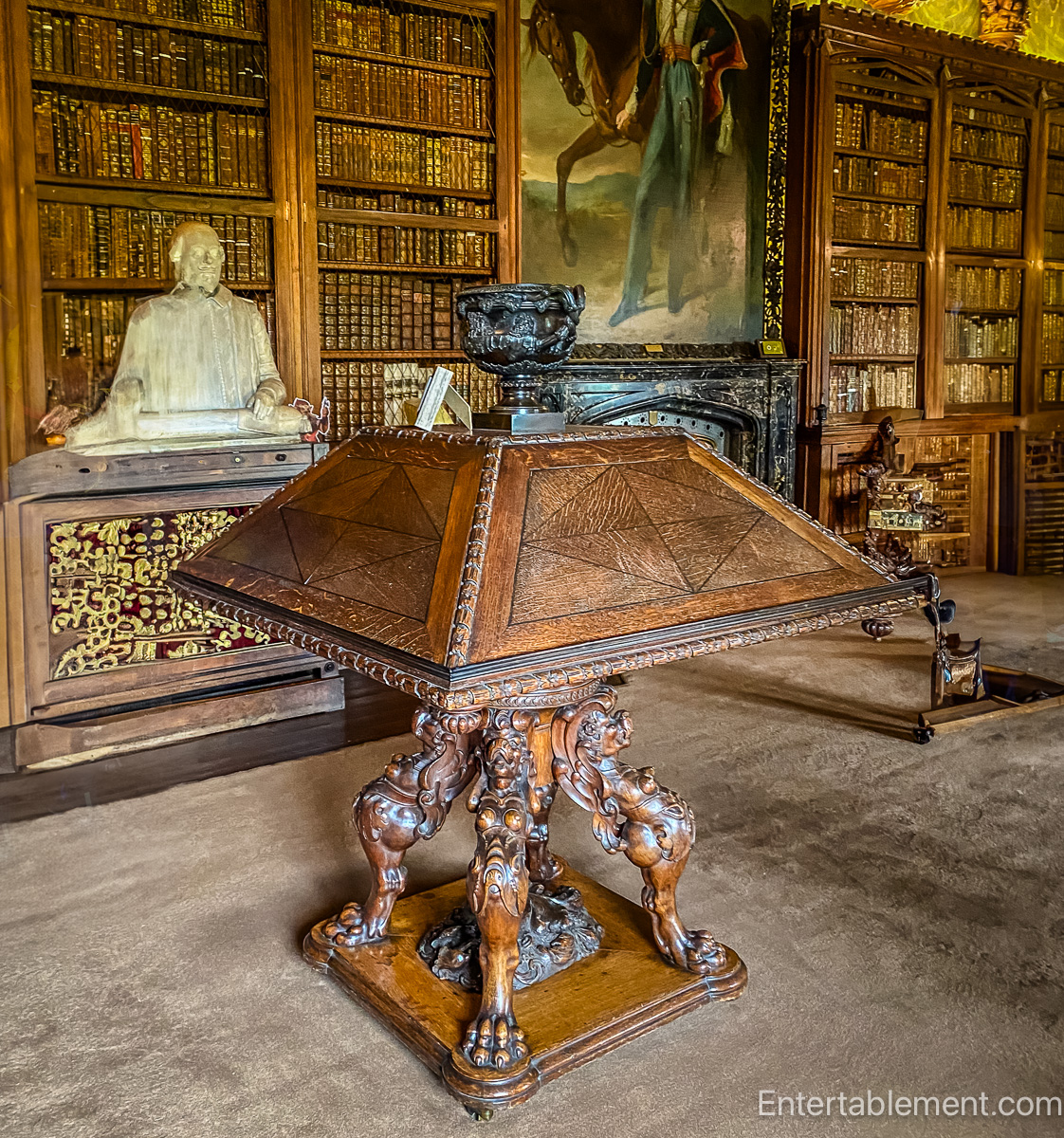
Walking into the library at Abbotsford feels like stepping into one of Scott’s novels. Surrounded by over 9,000 volumes, many rare and ancient, the room reflects Scott’s insatiable curiosity and love of history.
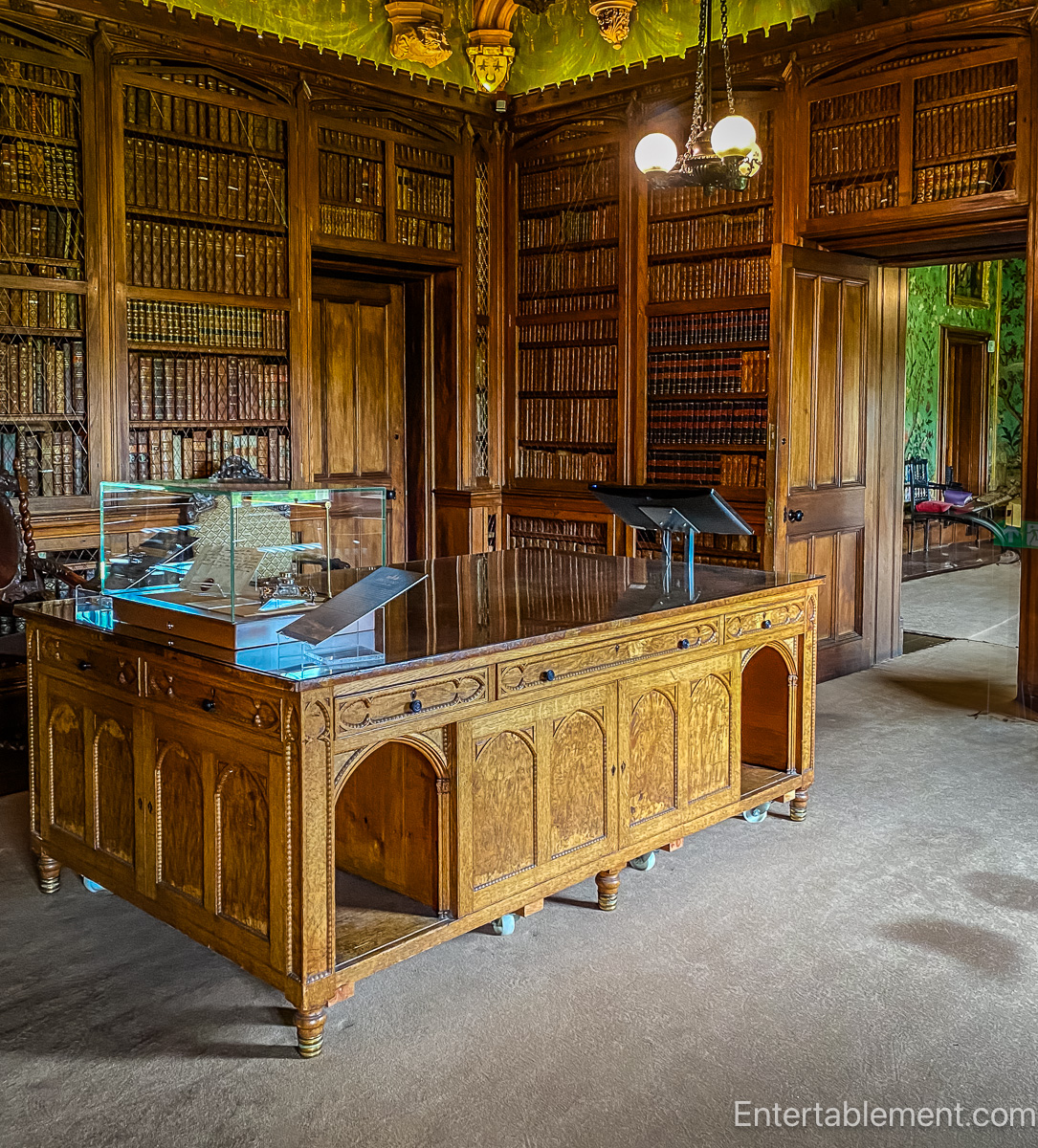
More than just a collection of books, it is a testament to the mind of a man who changed how the world perceived Scotland.
This touch of Gothic flourish exemplifies Scott’s romantic vision, melding architectural homage with creative adaptation.

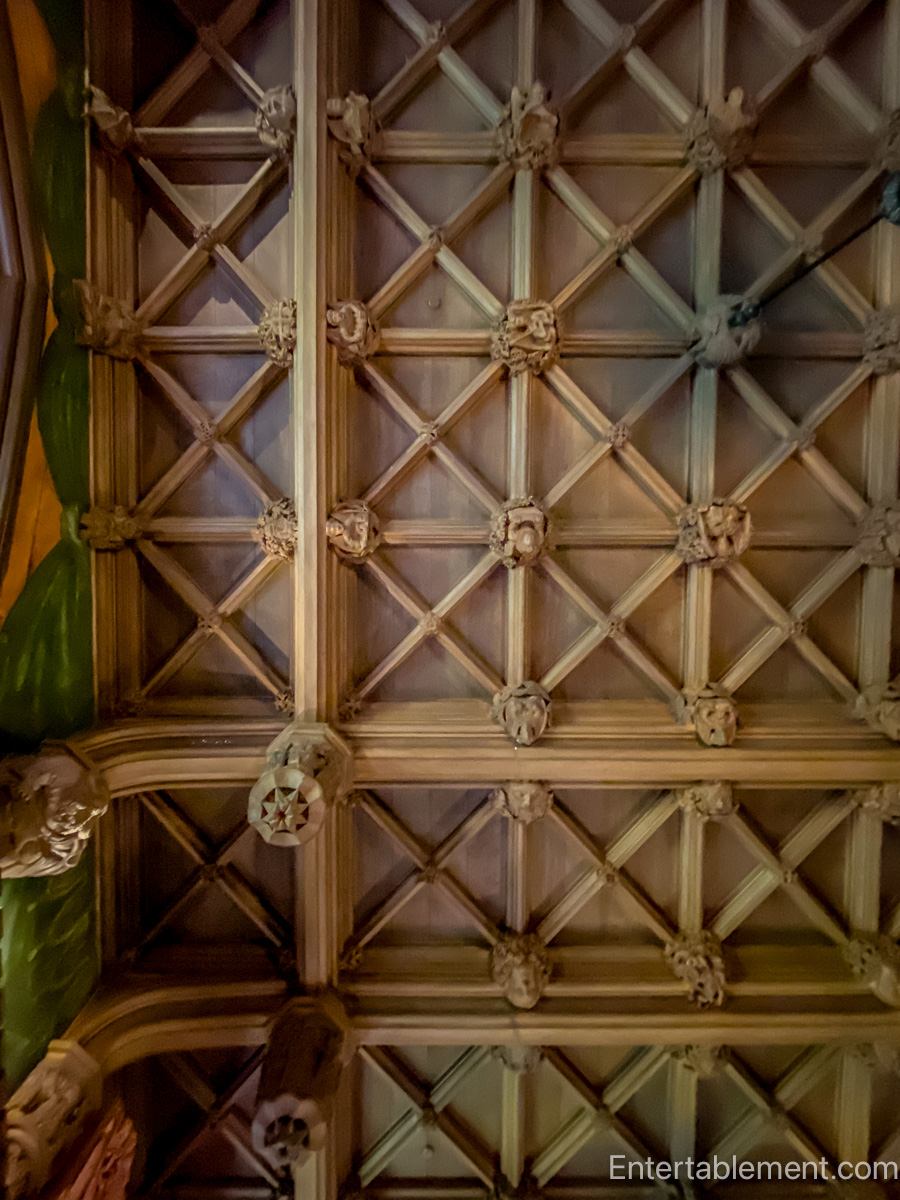
Based on those found at Rosslyn Chapel, the corbels are made of plaster.
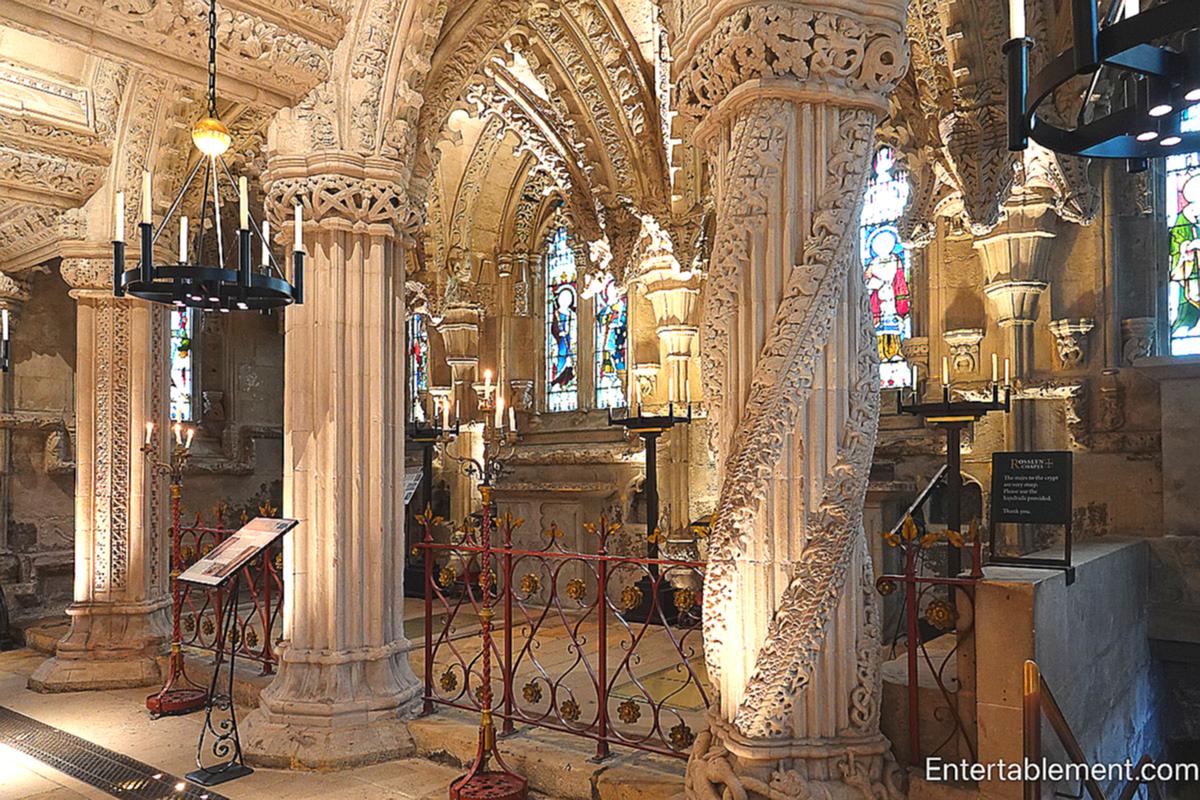
At Abbotsford, the ceiling, though made of plaster, is painted to resemble wood. Unlike the weathered interior of Rosslyn, it is pristine and fully intact.
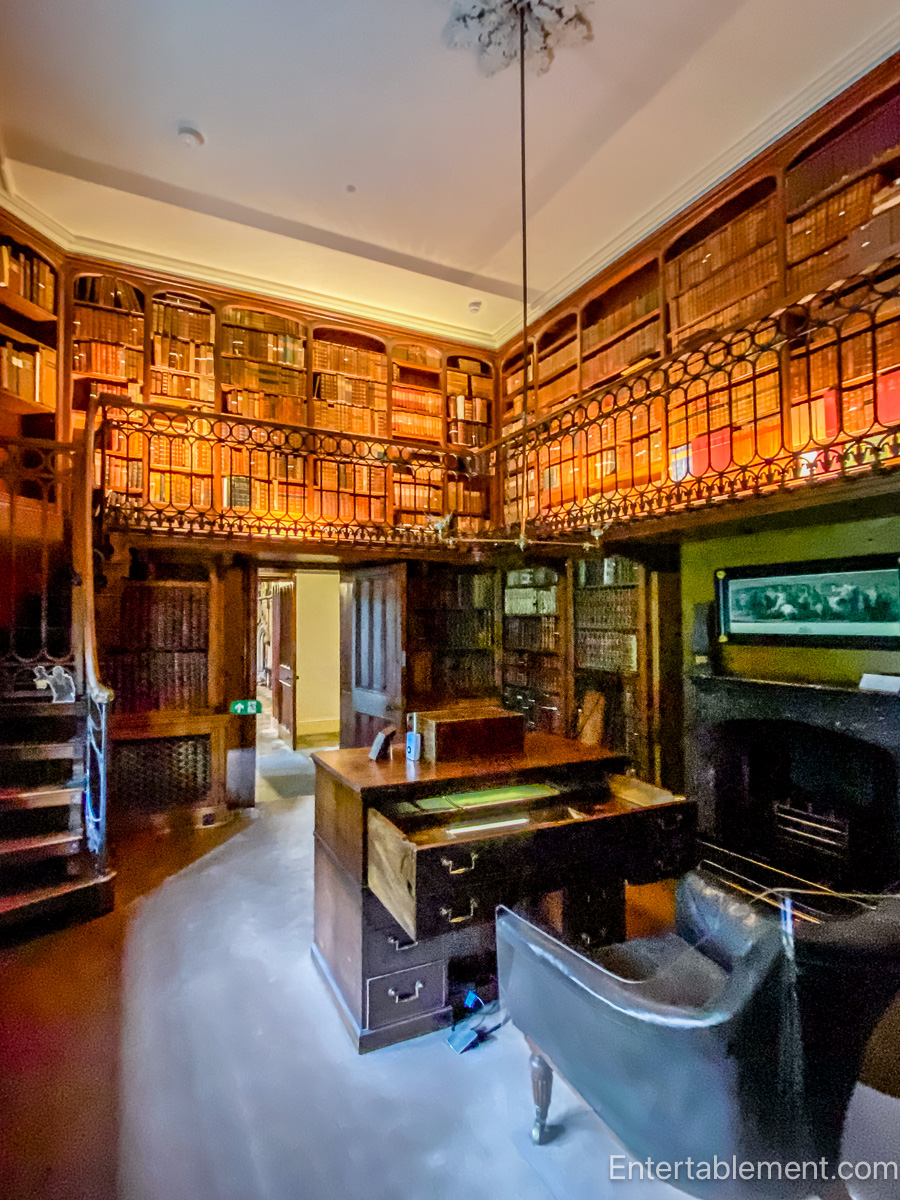
The separate study, adjoining the library, has a two-tiered gallery, a wrought-iron balustrade and warm wooden panelling, creating an atmosphere of quiet contemplation. More than any other, this room captures the spirit of the man who brought Scotland’s legends to life. Scott penned many of his iconic works, including Ivanhoe, Rob Roy, and The Lady of the Lake, in this room.
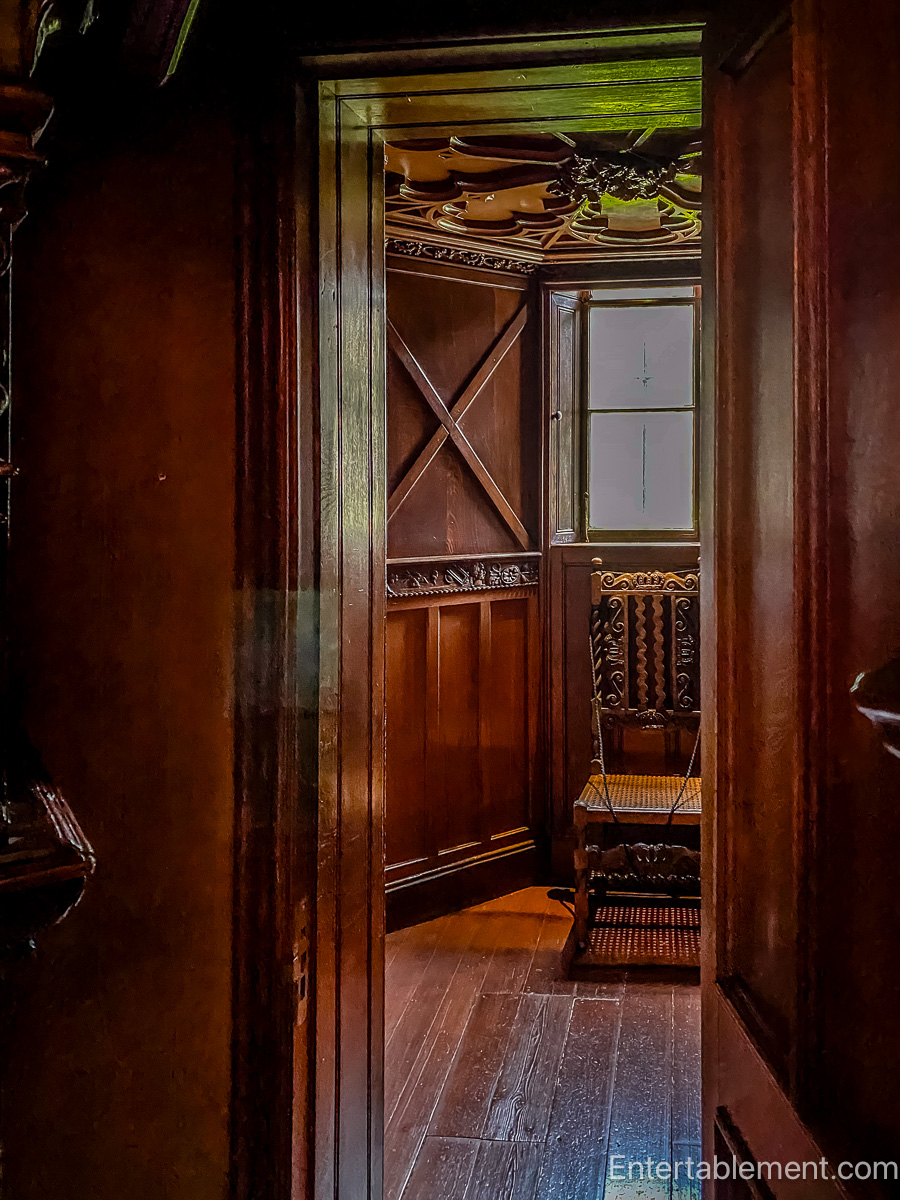
A hidden door in the gallery conceals a secret staircase leading to a chamber—a secluded nook designed for reflection or escape.
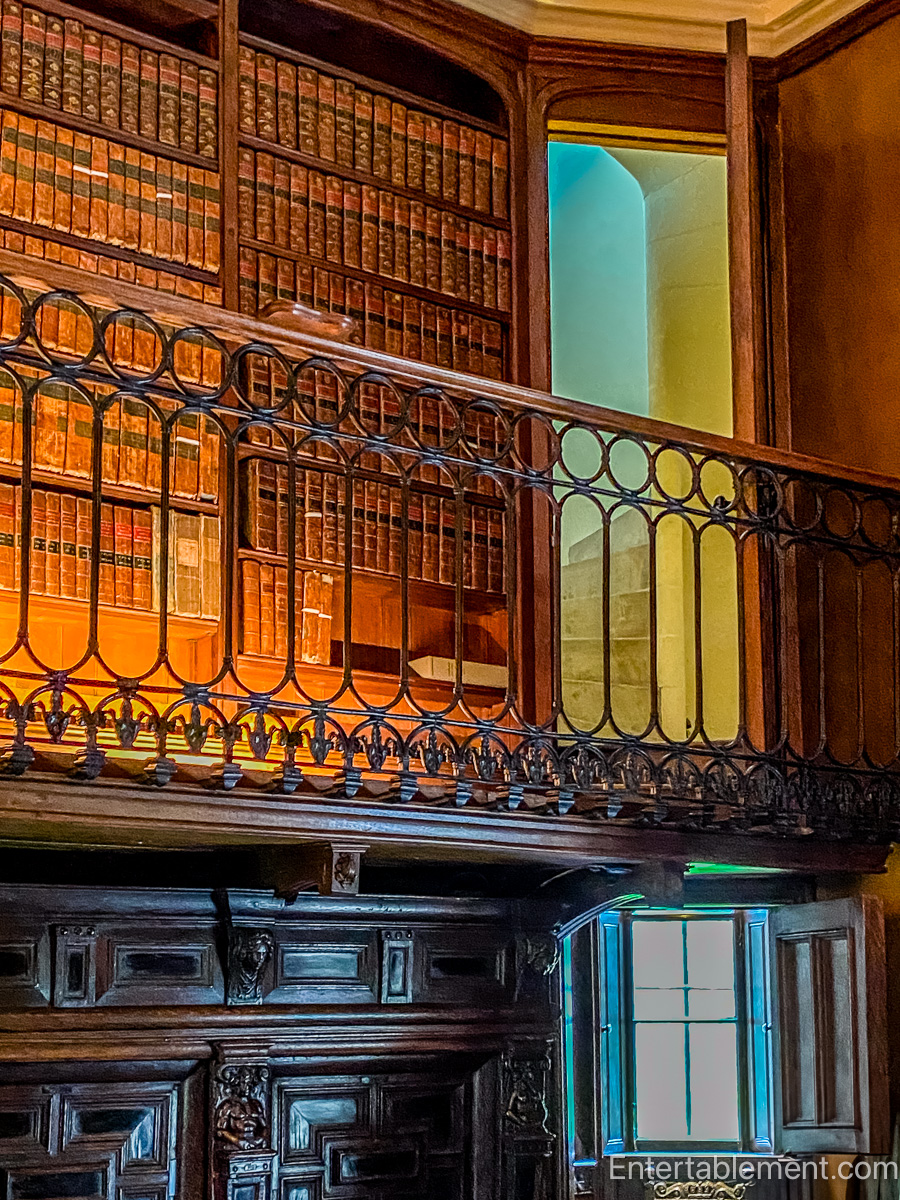
Whatever its purpose, it is a testament to Scott’s love of mystery and whimsy, and it reinforces his legacy as a master of narrative, not just in his books but also in the architecture of his home.
Exquisite Chinese Wallpaper: The Saloon
The Saloon at Abbotsford is a strikingly elegant space, distinguished by its exquisite green Chinese wallpaper, which sets the tone for a room both opulent and intimate. The fine porcelain and decorative pieces lend a lived-in warmth to the space.
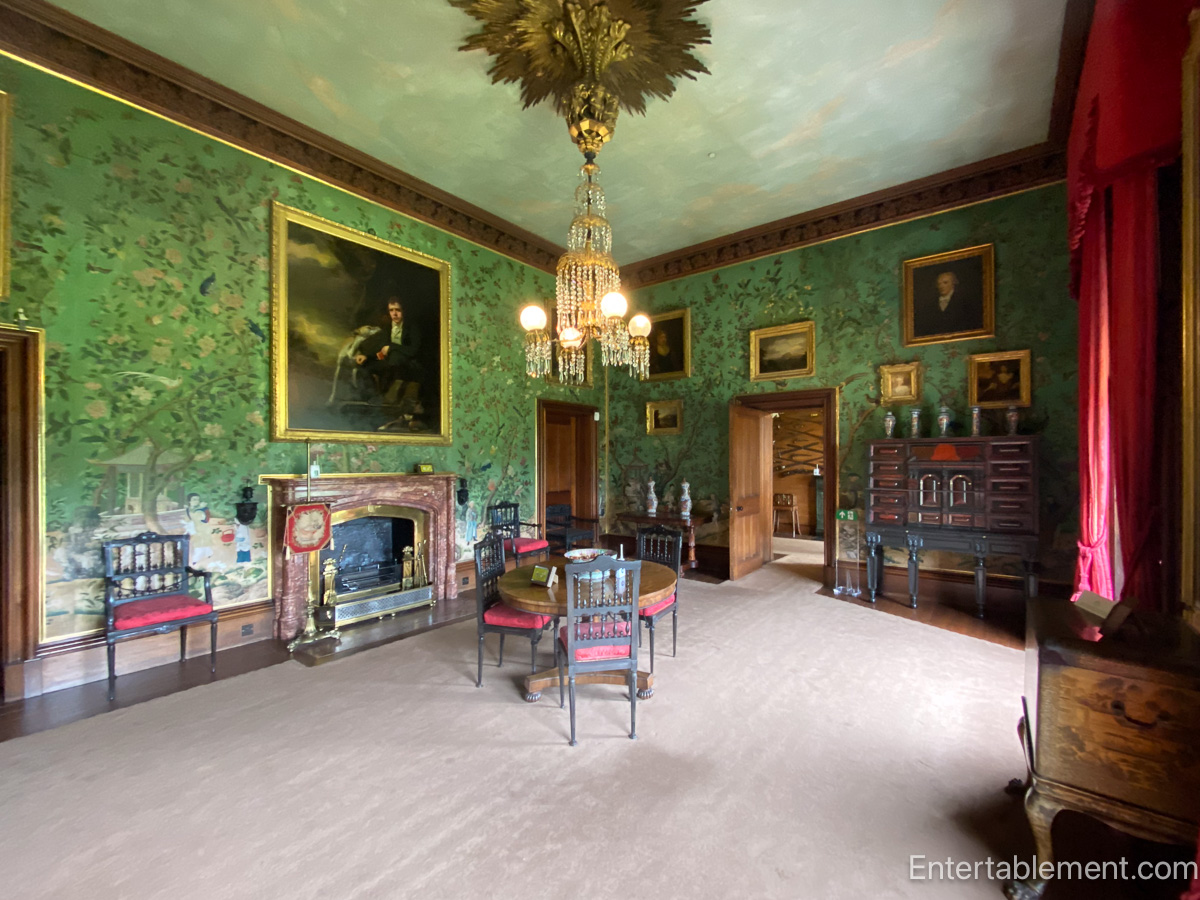
The wallpaper, hand-painted with intricate depictions of exotic flora and birds, brings a sense of the outside world into the heart of the home, reflecting Scott’s fascination with faraway places and the romanticism of the East.
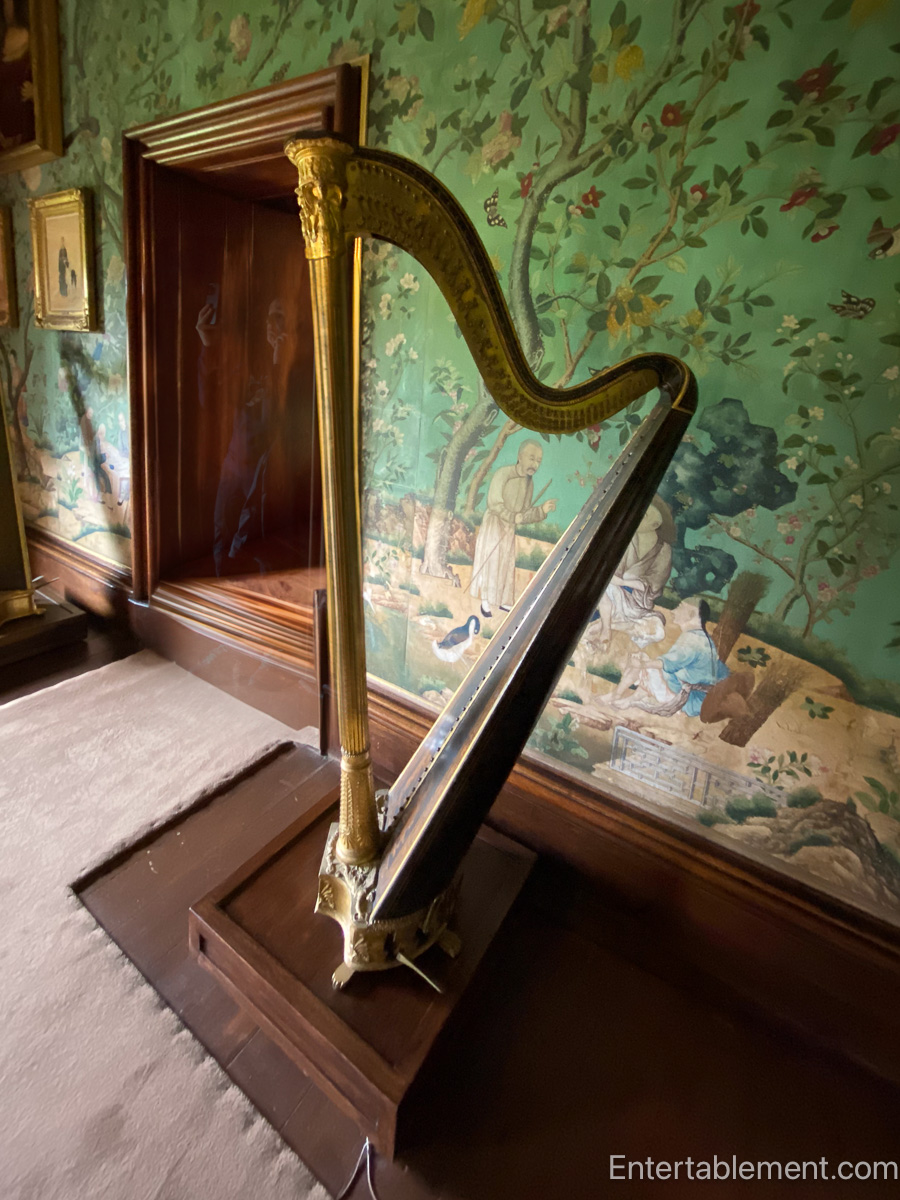
This room was designed for both formal entertaining and quiet reflection. Its richly upholstered furniture, gleaming chandelier, and carefully curated artwork add to its grandeur.
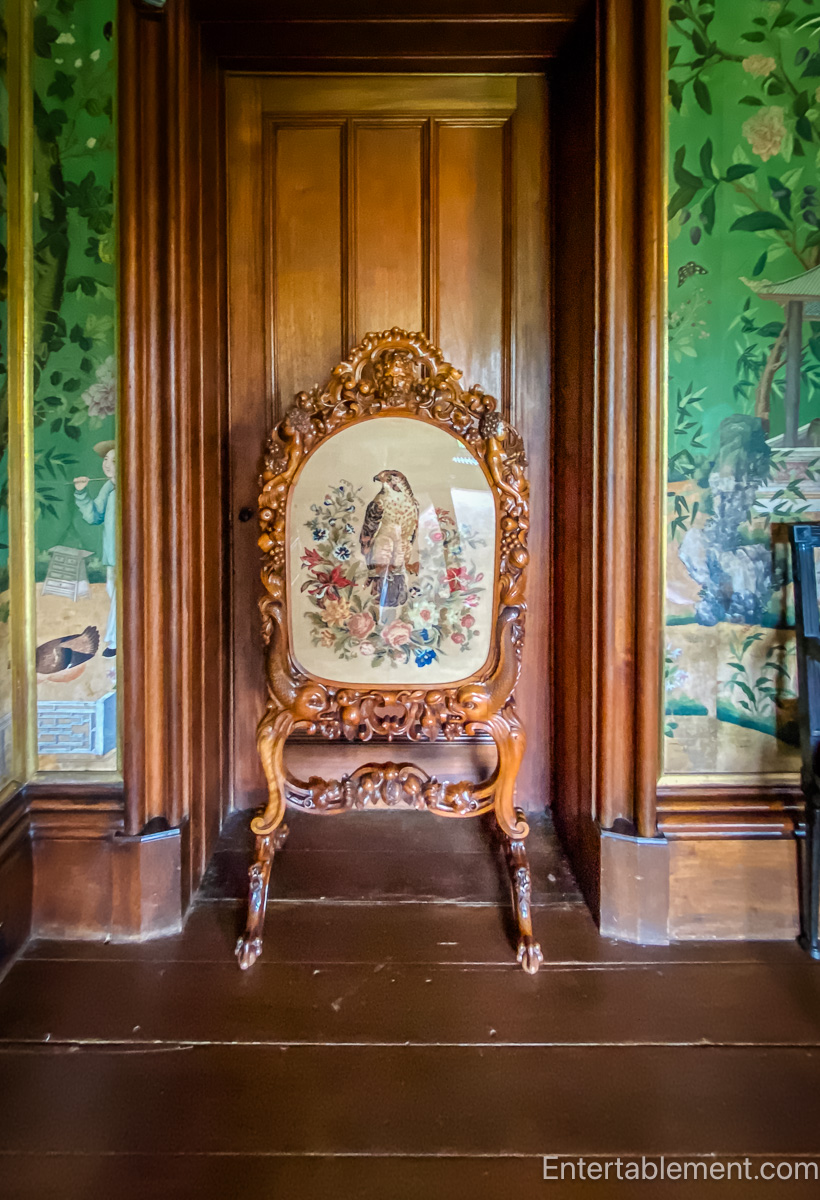
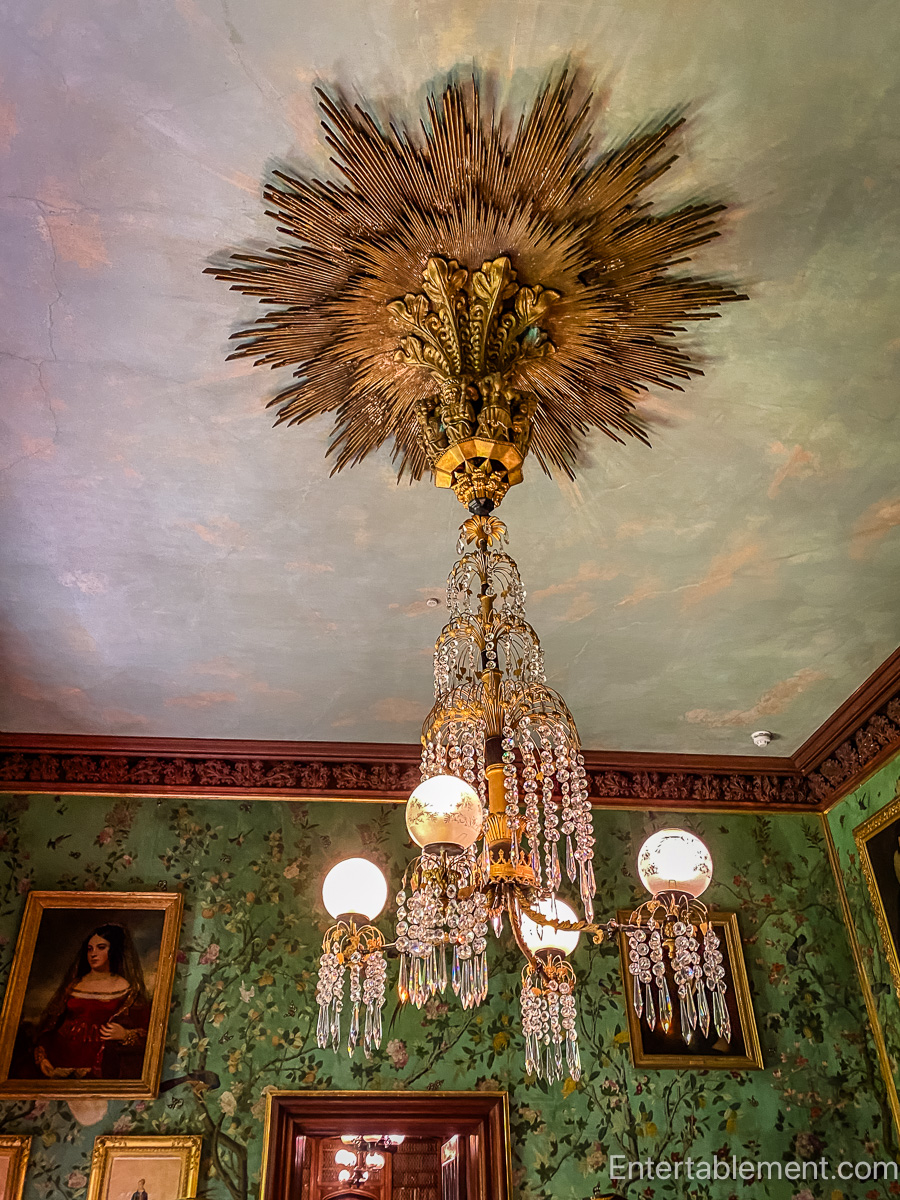
The marble fireplace, flanked by finely carved seating, serves as a focal point,
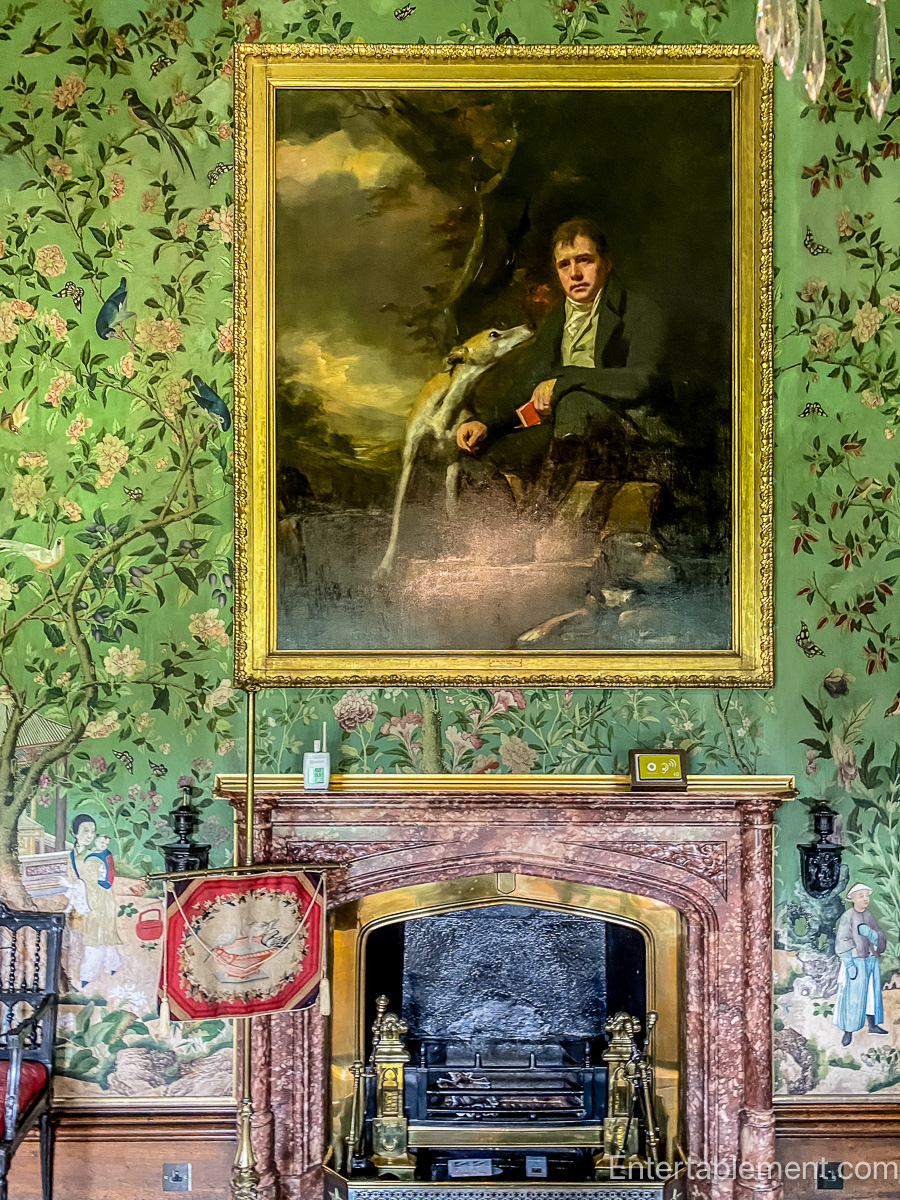
Above, the gilded cornicing frames the room, reinforcing the sense of refined luxury.
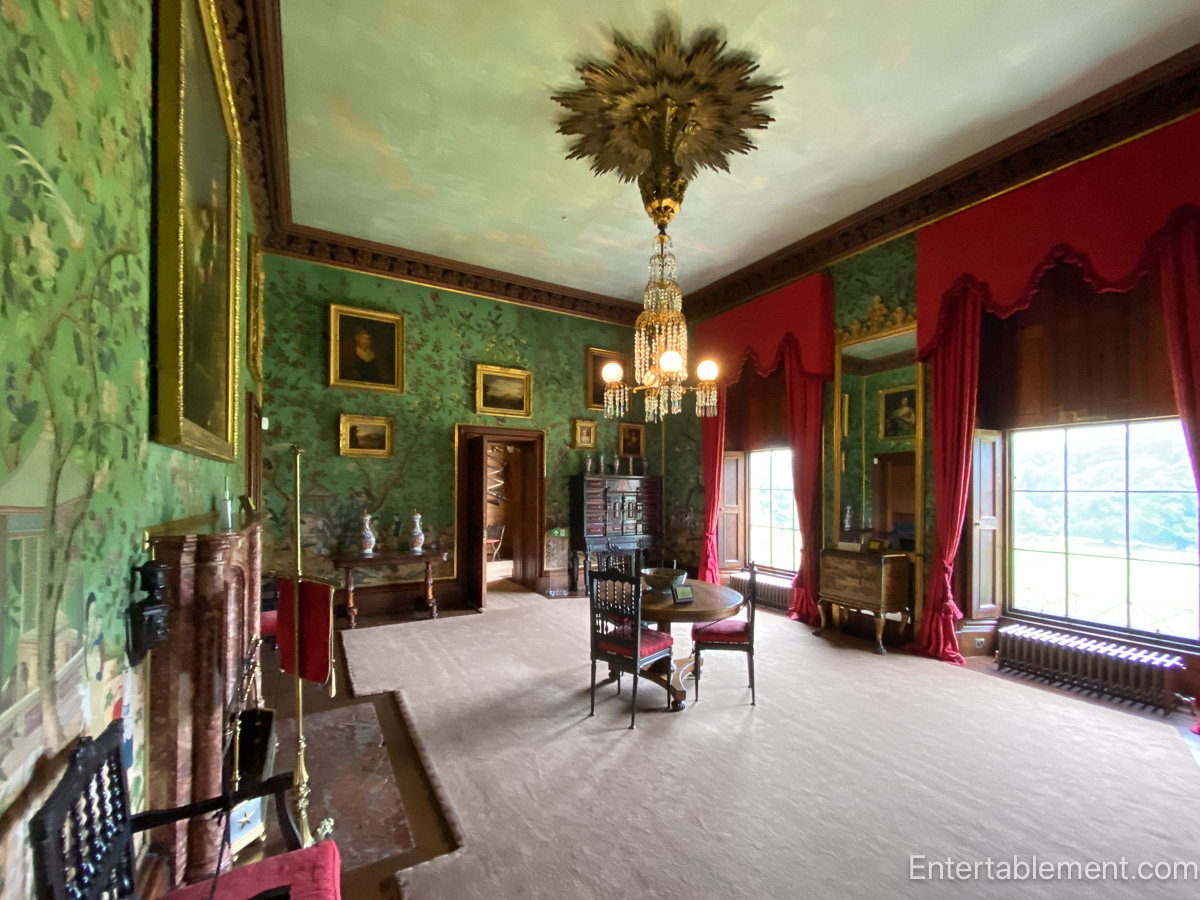
Whether used for conversation, music, or relaxation, the room reflects Scott’s ability to create a home that is both deeply personal and a grand stage for literary and cultural exchange.
A Feast for the Eyes: The Dining Room
The dining room at Abbotsford is a masterclass in understated elegance, reflecting Scott’s preference for a comfortable yet dignified space to entertain guests.
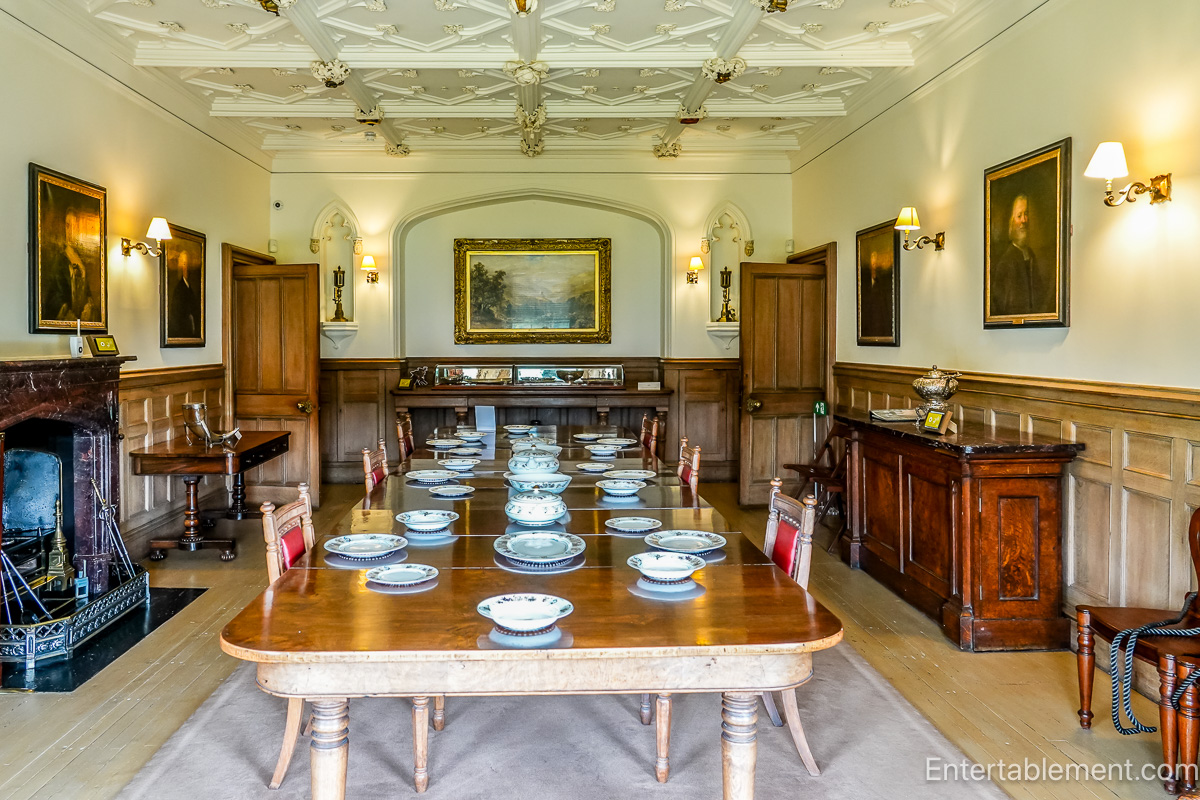
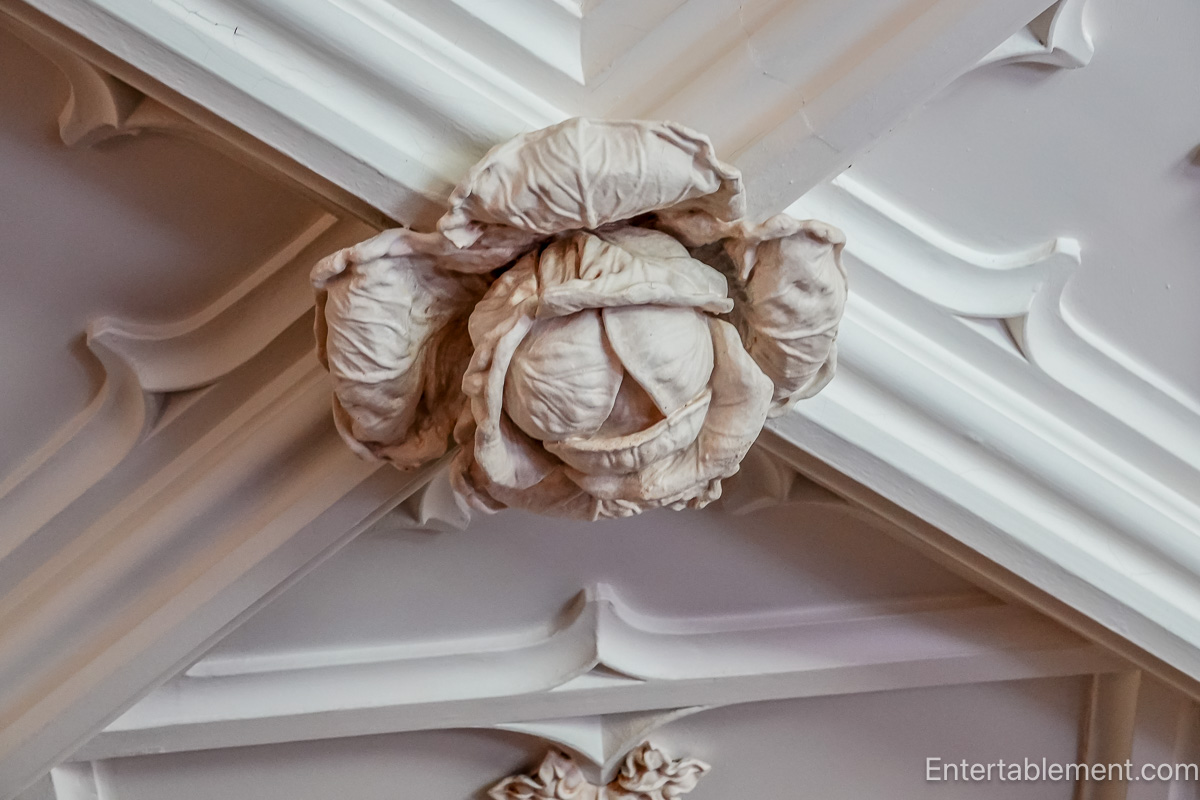
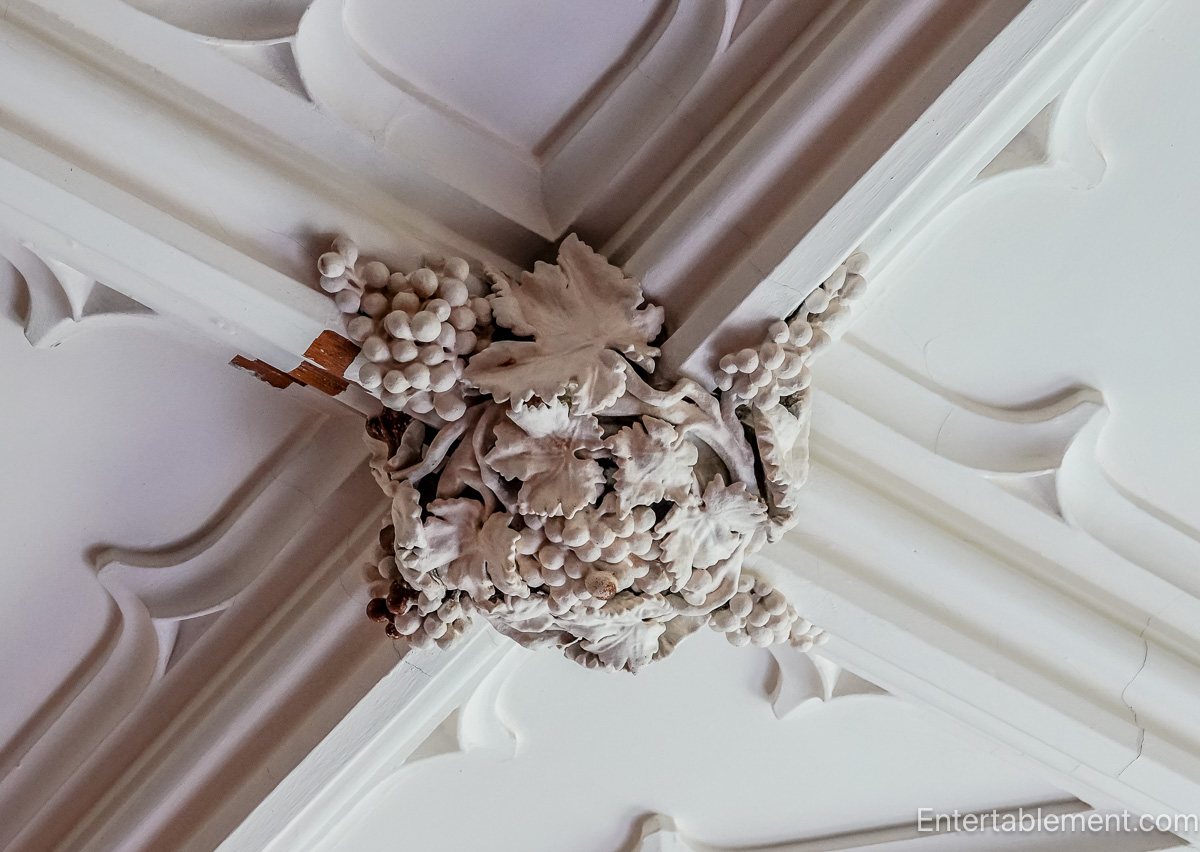
The intricate plaster ceiling is adorned with grapevines and foliage, symbolizing abundance and hospitality.


The dining table is set with Abbotsford china.
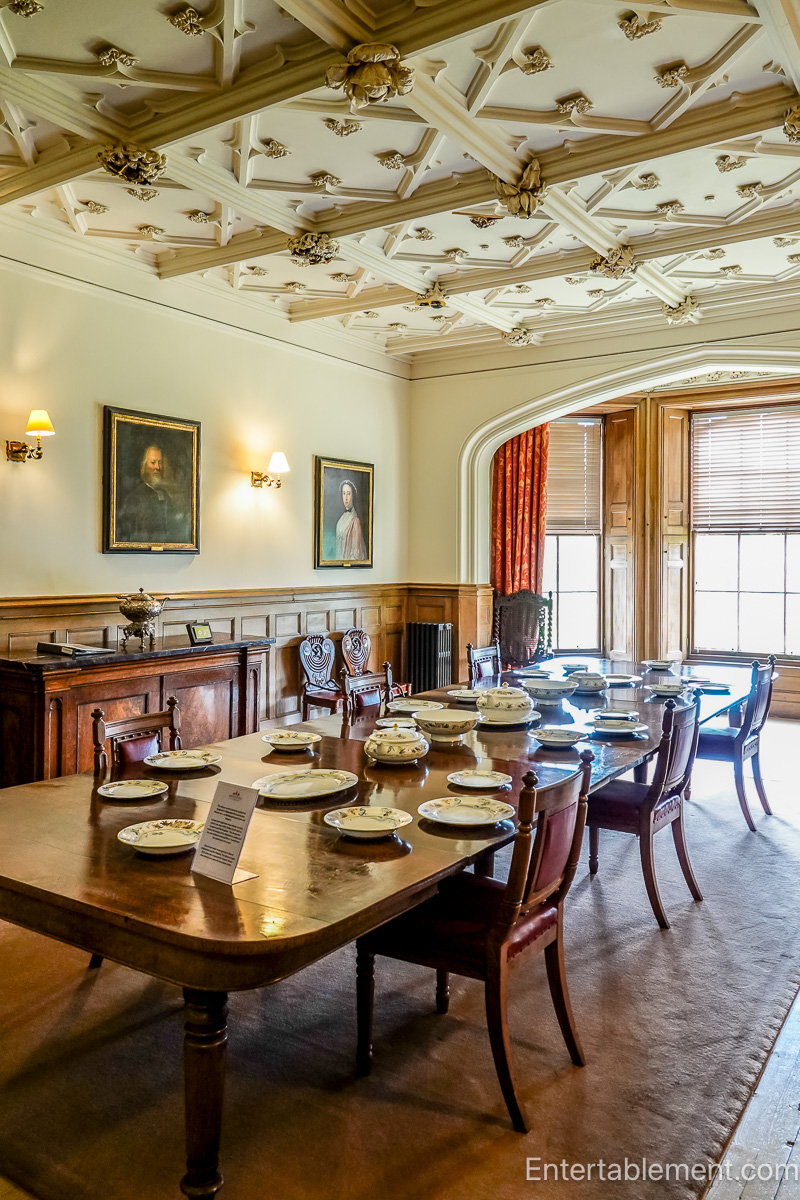
This unique pattern, custom-made for the house, is decorated with delicate floral motifs and architectural elements inspired by Abbotsford.
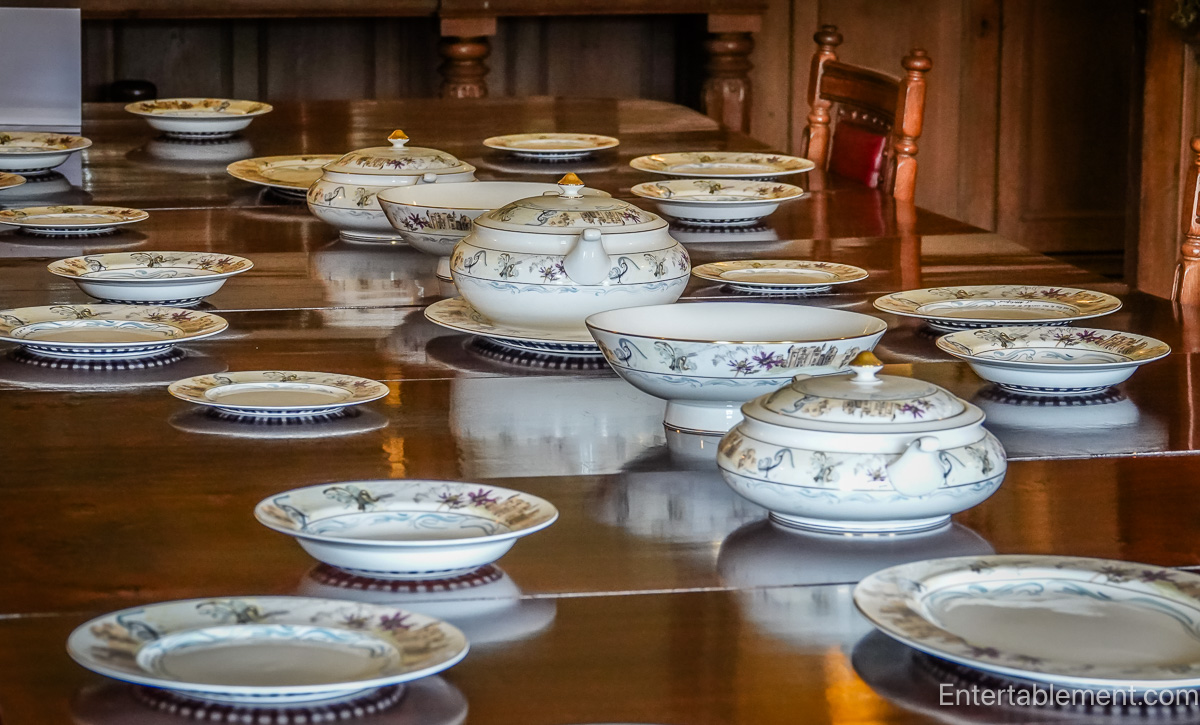
The china depicts the house’s distinctive architecture and romanticized landscapes, bringing a narrative quality to each setting.
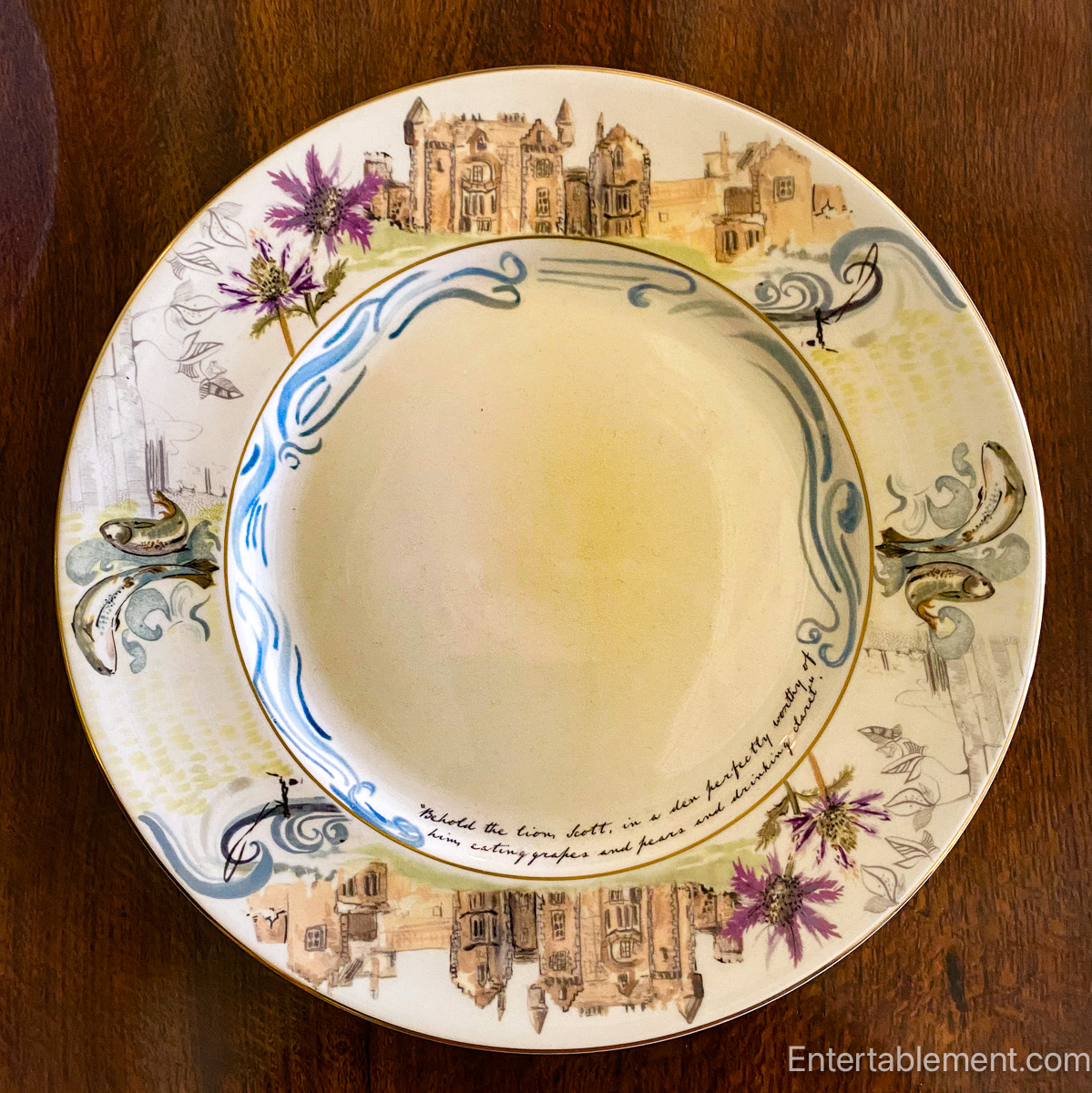
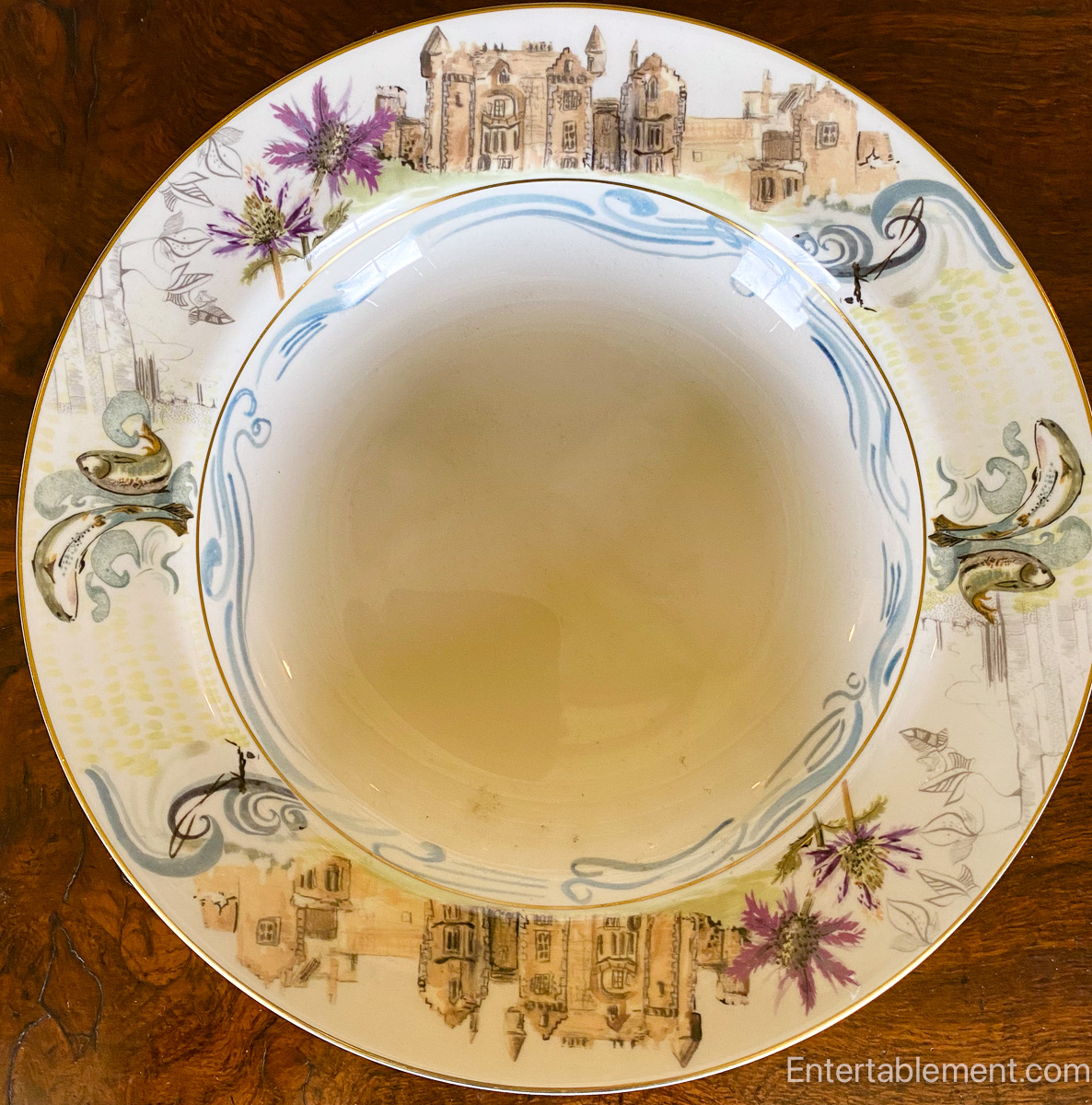
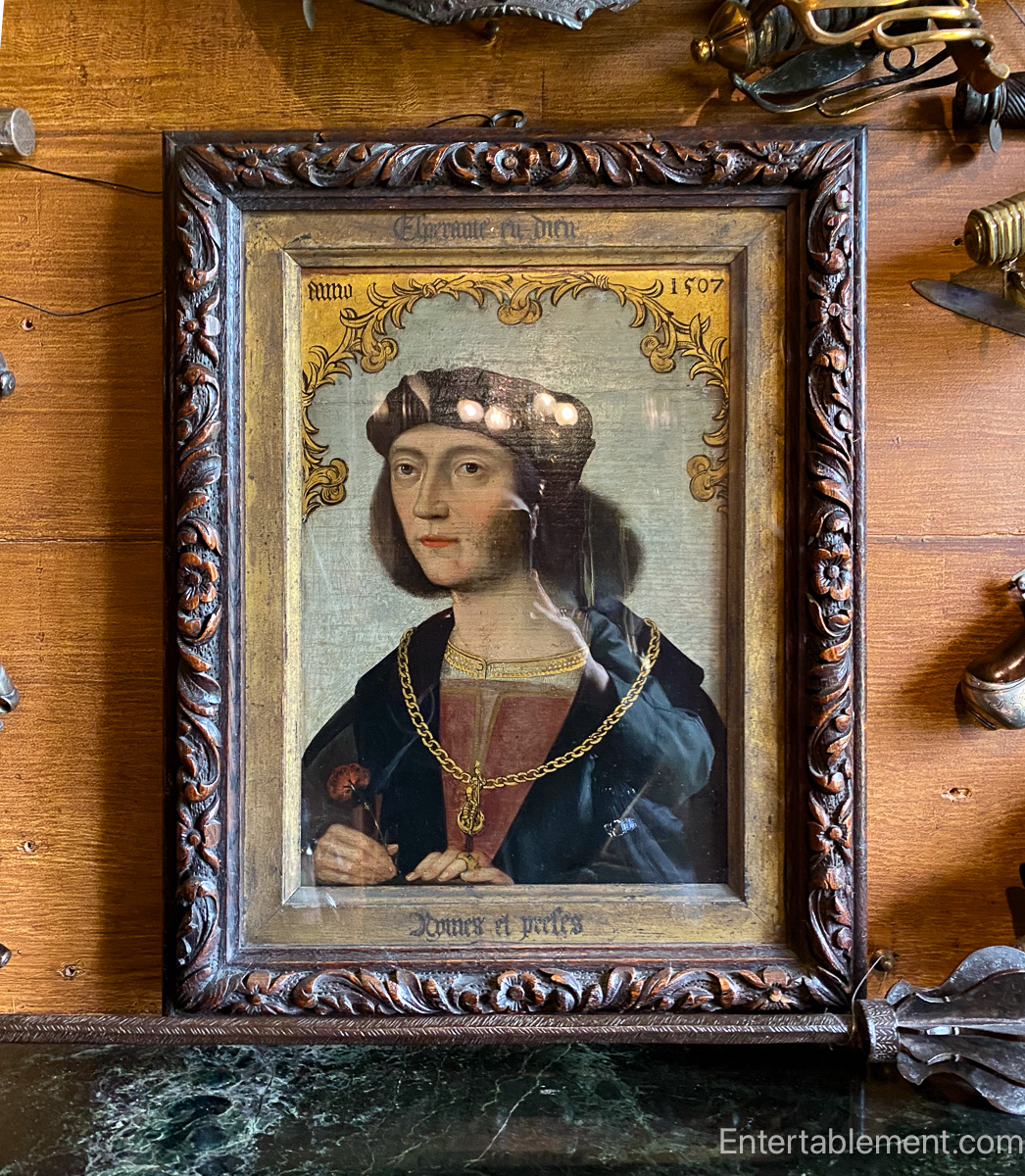
The room’s Georgian mahogany furniture enhances the sense of timeless elegance, while portraits of Scott’s ancestors gaze down from the panelled walls. This gentleman looks rather like the hapless Richard III, but it isn’t him.
The Walled Garden: A Living Tribute
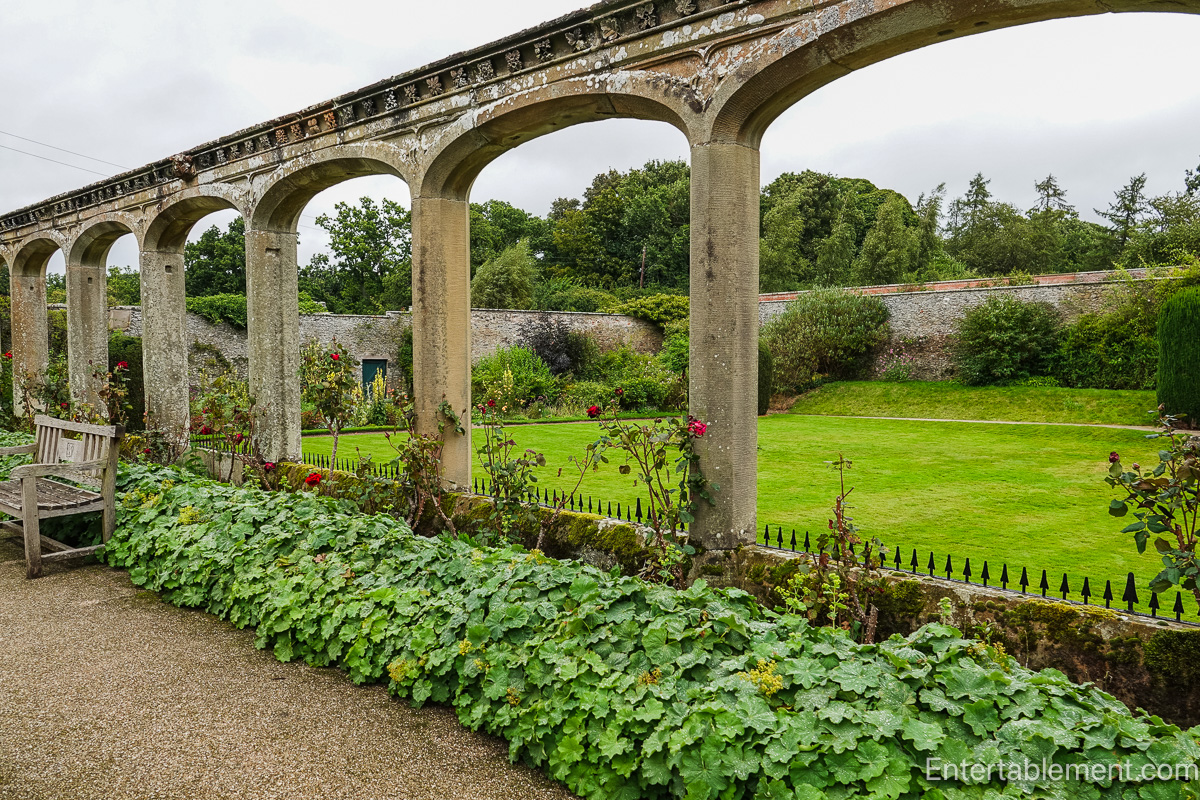
Abbotsford’s walled garden is a vision of a romanticized Scottish landscape. Initially designed to provide household fruit and vegetables, the garden is a stunning blend of practicality and beauty.
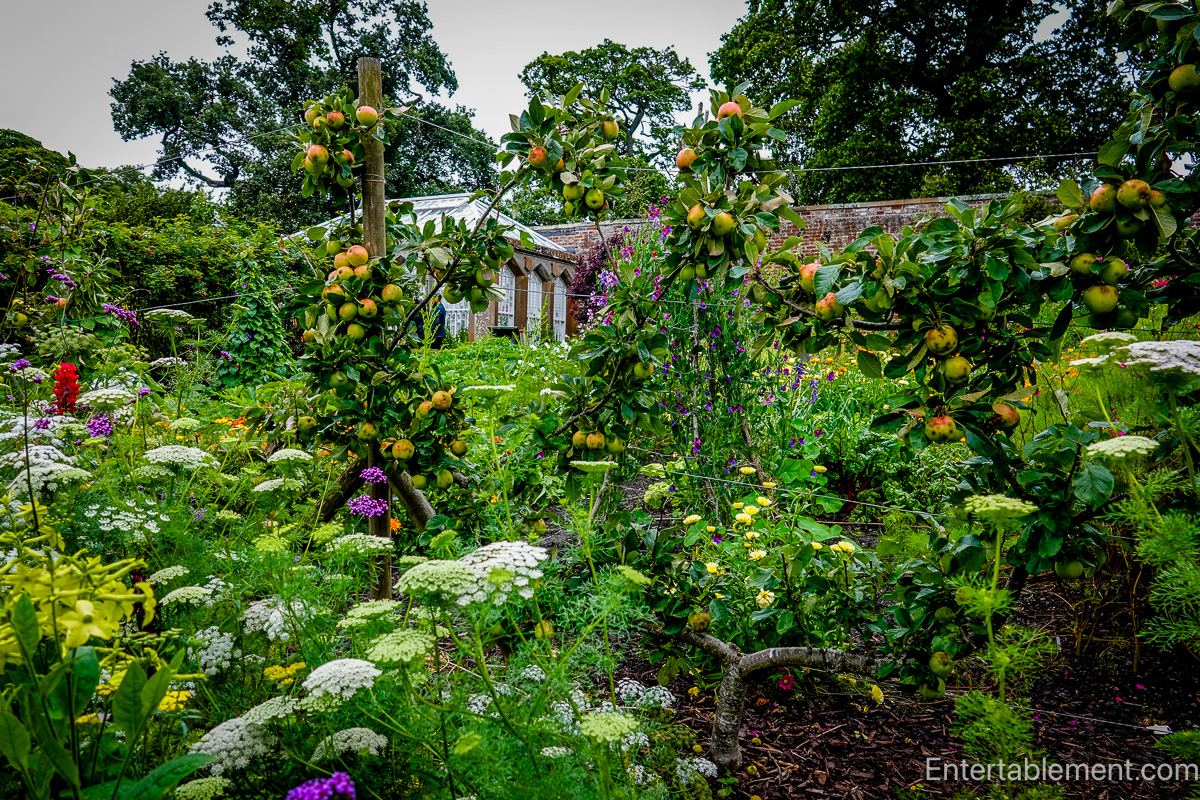
Its elevated position captures the sun, while the brick walls retain warmth, creating a microclimate where exotic plants such as peaches and nectarines once flourished.
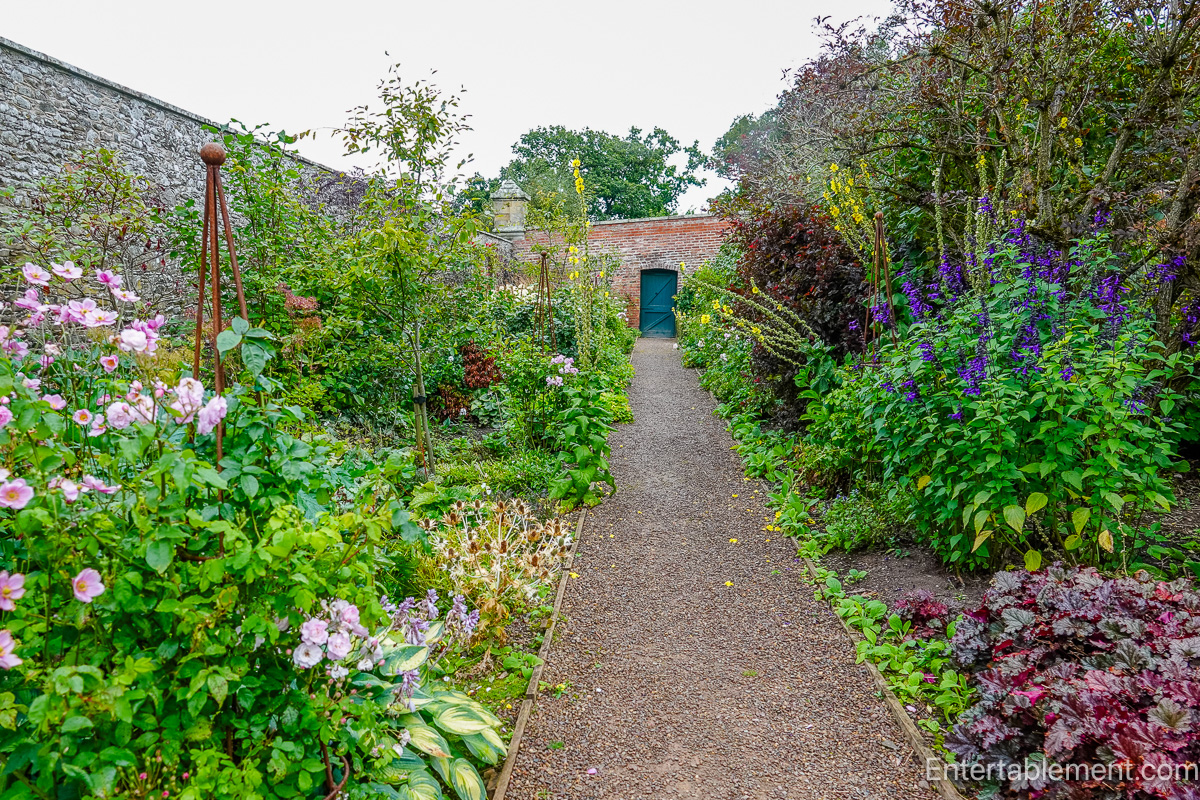
The borders offer a succession of seasonal colour throughout the year
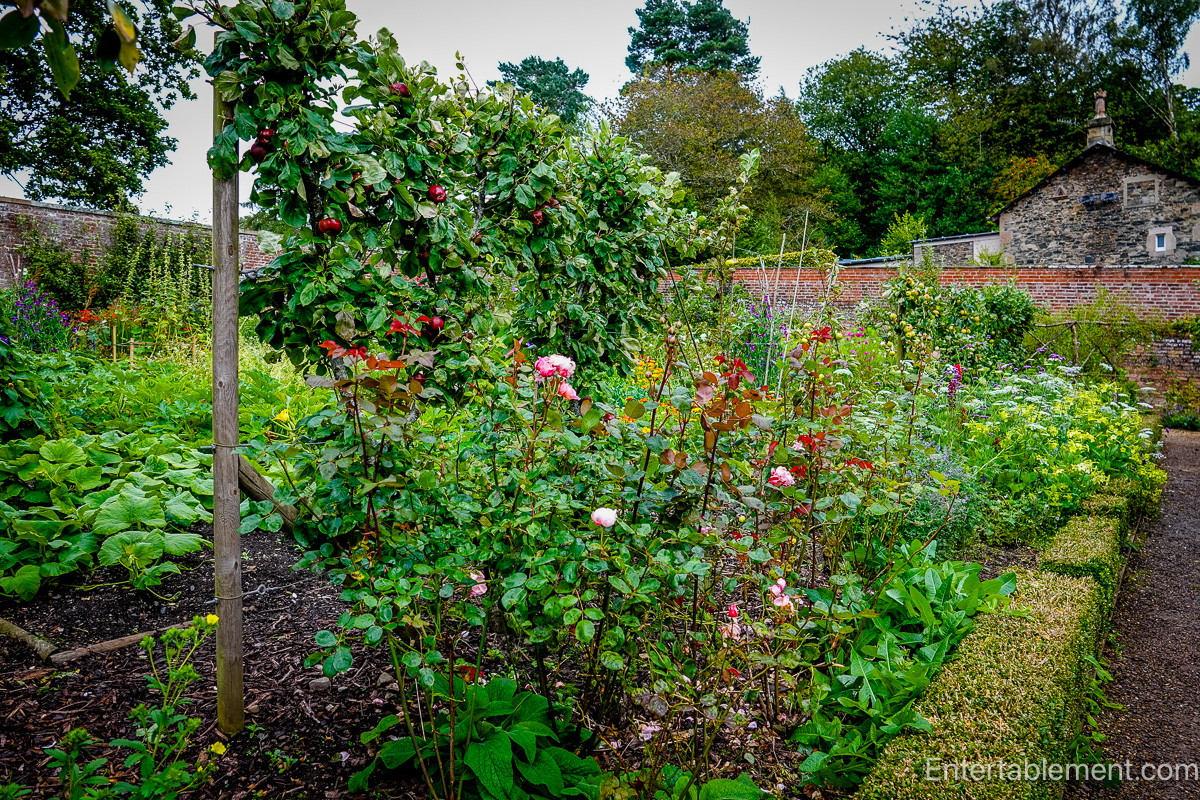
Scott’s love for natural beauty is evident in the harmonious design, which blends native flowers with cultivated varieties. The espaliered apple trees and flourishing herbs echo the garden’s original purpose while enhancing its visual appeal.
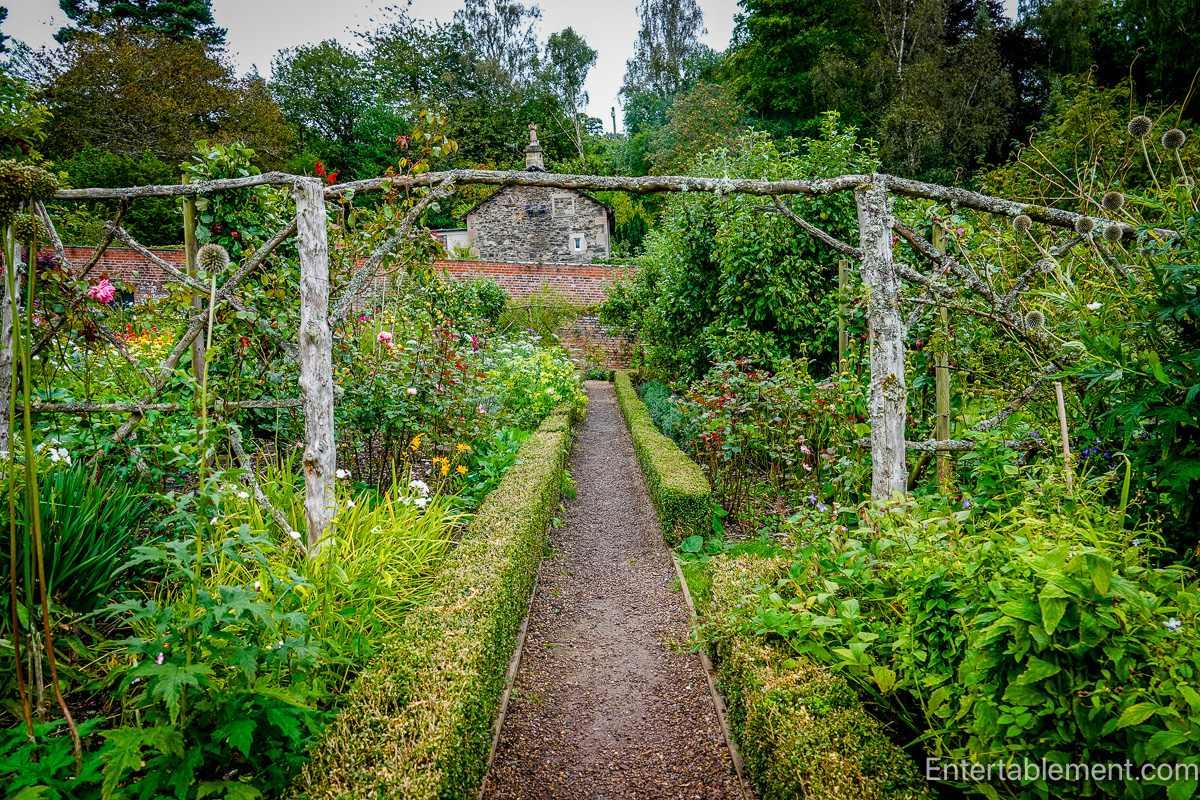
One can imagine Scott drawing inspiration from the garden’s vibrant blooms and structured elegance while wandering the paths.
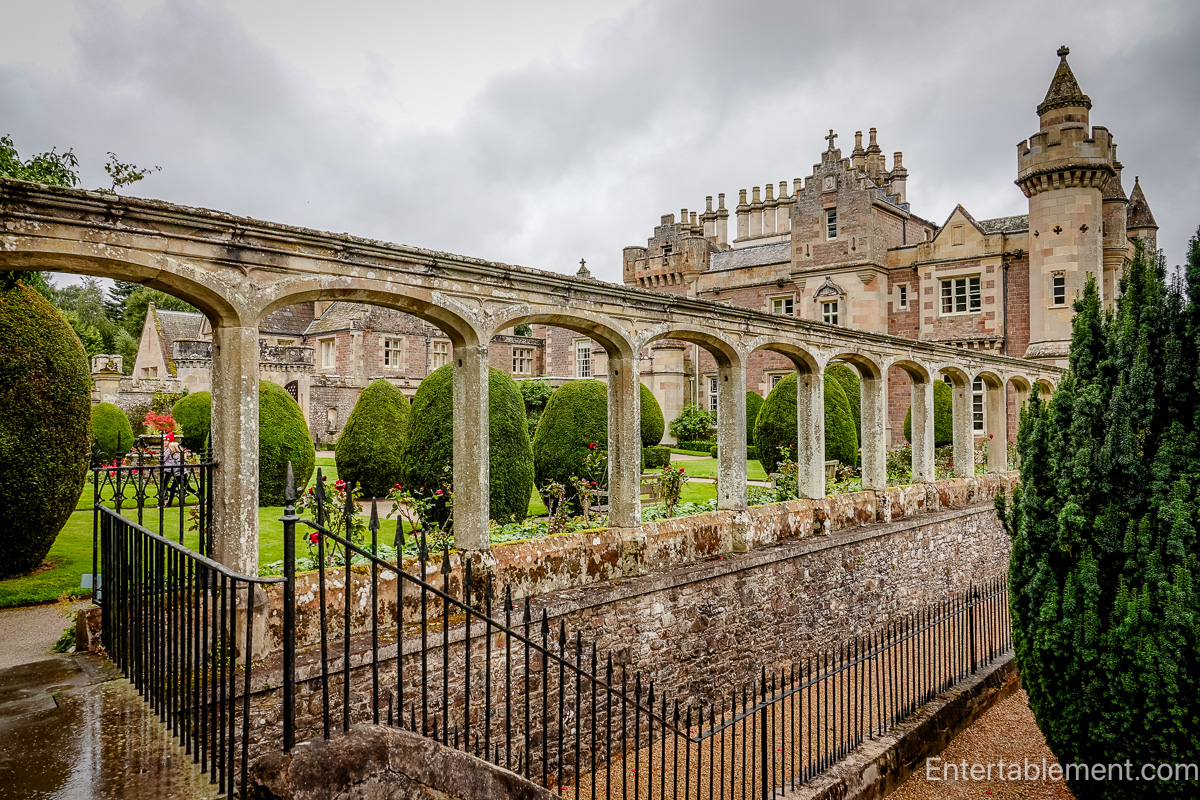
It is a space designed for reflection and creativity, a living tribute to the author who crafted worlds within his words.
The Hope Scott Wing: A Scrumptious Retreat
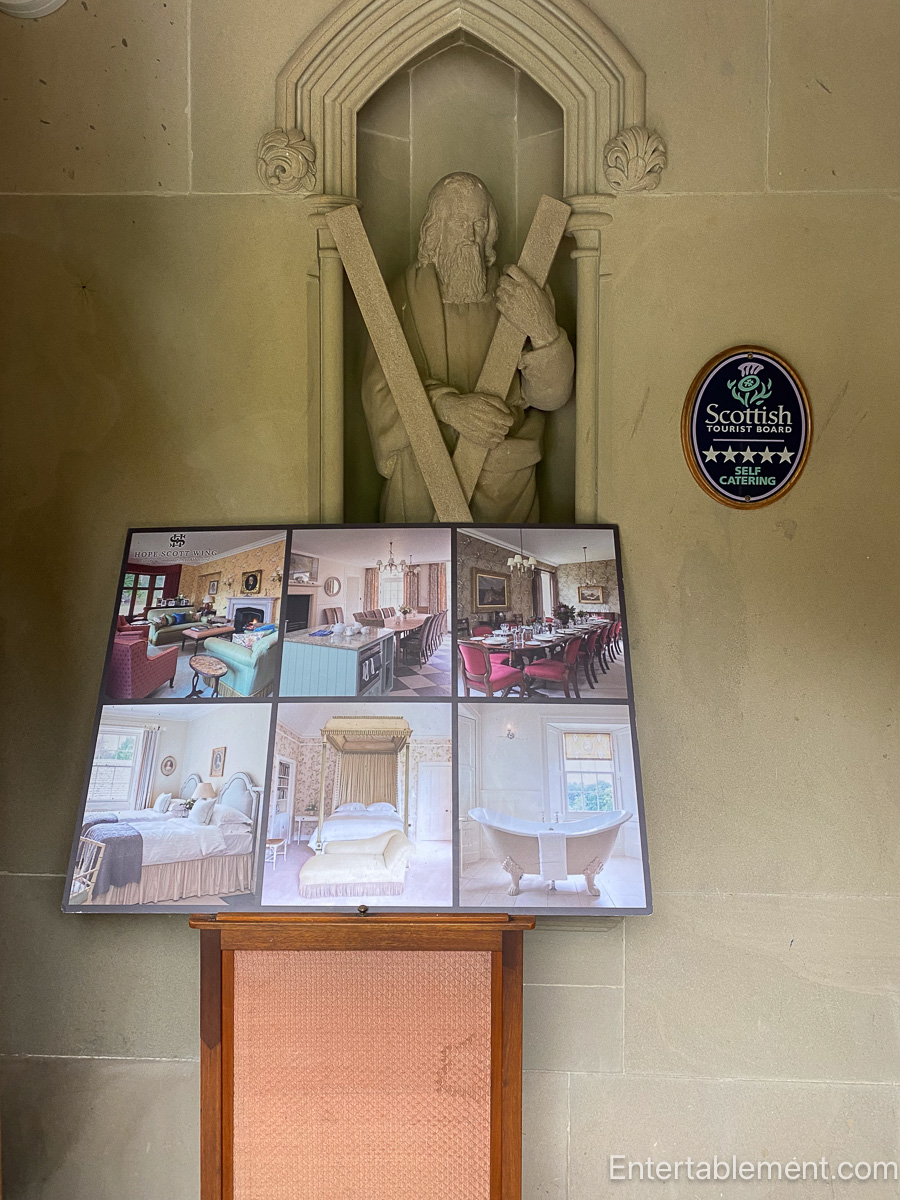
We were intrigued to discover the Hope Scott Wing, the access to which is tucked inside the garden. Originally home to Scott’s granddaughter, Charlotte Hope Scott, this upscale accommodation blends historic charm with modern comforts and is available for exclusive hire. The wing accommodates 16 guests and features seven individually styled luxury bedrooms. Self-catering accommodation of this kind is becoming increasingly popular in great country homes; no doubt, they help maintain the property while offering a unique experience to the guests. We often avail ourselves of these types of accommodation, though usually for fewer people!
Resting Place at Dryburgh Abbey
Sir Walter Scott is buried at Dryburgh Abbey, a fittingly romantic final resting place. Scott was descended from two Borders families, including the Haliburtons of Newmains, who took over the north transept of the abbey church as their burial ground. Though Scott might have inherited the abbey lands, a bankrupt grand-uncle lost the property before it could pass to him.
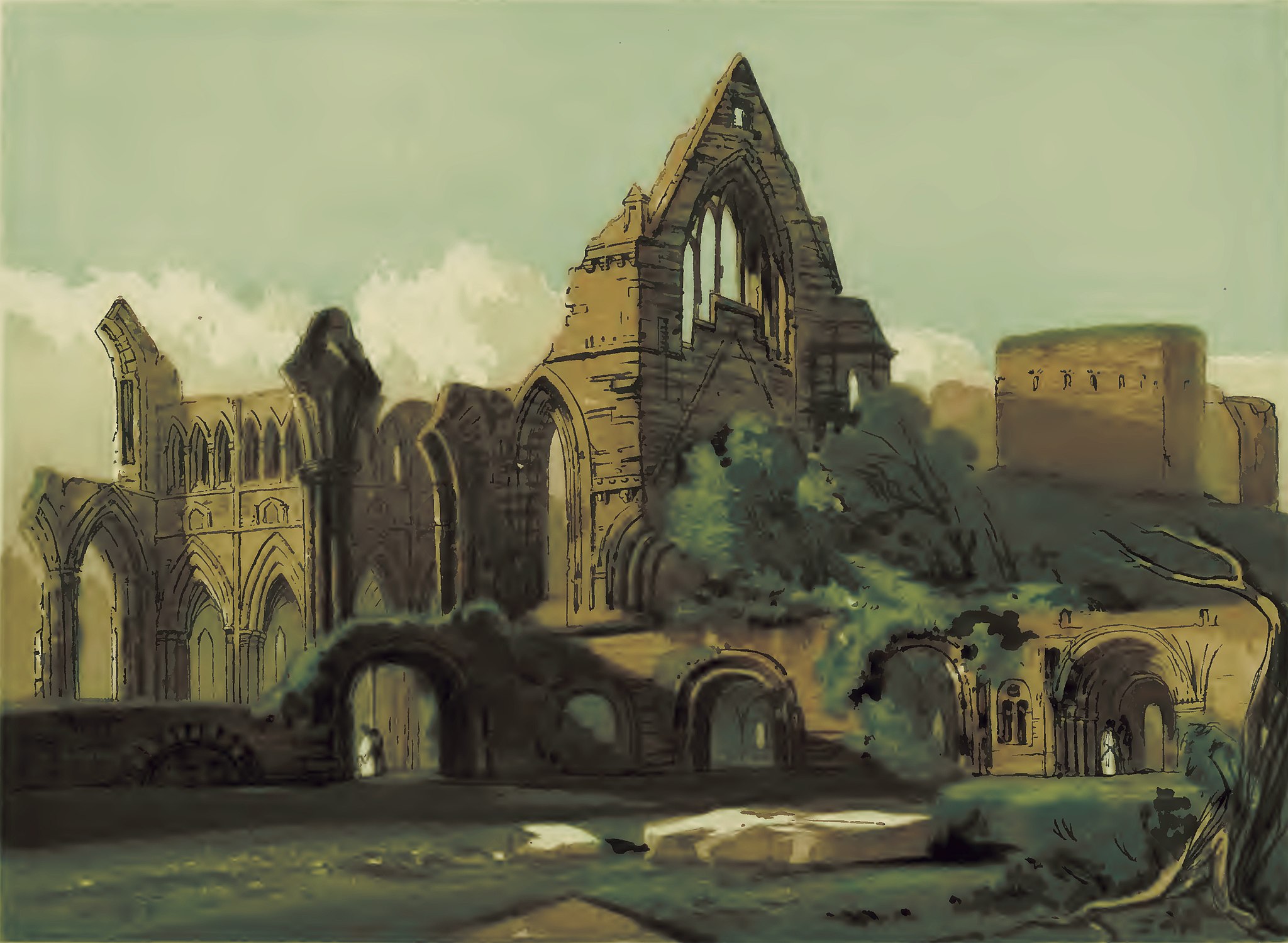
Scott remarked, “We have nothing left of Dryburgh but the right of stretching our bones there.” Robert Erskine, 11th Earl of Buchan, a close friend and fellow historian, is also buried at Dryburgh. The eccentric earl had spent years improving the abbey grounds and even erected a statue of William Wallace nearby. Unfortunately, when the earl was laid to rest in 1829, his head was laid the wrong way—about which Scott quipped, “It was little matter, as it had never been quite right in his lifetime.”
Today, Dryburgh Abbey holds the tombs of Scott, his wife Charlotte, his son Walter, his son-in-law and biographer John Gibson, and the grave of Field Marshall Earl Haig, buried there in 1928.
A Lasting Legacy
Abbotsford is perhaps Sir Walter Scott’s most personal work. He filled his novels with the history, legends and landscapes of Scotland, then set about creating a home that brought those same enthusiasms to life. The result is a wonderfully eccentric mixture of medieval romance, architectural invention and personal treasures. Wandering through its rooms, it’s difficult to imagine a house that could tell us more about the man who built it.