
The Cathedral Project
Cathedral Stories

Explore any one or all 43 of the cathedrals, which are in alphabetical order for easy access.
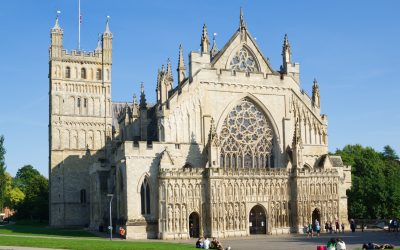
What I Didn’t Know at Exeter—And What’s Next for Entertablement Abroad
Forty-two cathedrals, ten years, and one curious Canadian I didn't set out to build a catalogue of cathedrals. Or stately homes. Or rebellious reformers. Or ecclesiastical power plays. I just liked beautiful places. It began with a trip to Devon and a visit to Exeter...

England in the Autumn Part III
Picking up from England in the Autumn Part II, we departed from South Lodge at Montacute. We were going to Grantham to stay at another National Trust self-catering cottage, No. 1 Belton, on the Belton Estate. The house was built in 1896 for the Clerk of Works, a...

The Dissolution of the Monasteries
In April of 1536, the 27th year of King Henry VIII's 38-year reign, more than 800 monasteries, nunneries and friaries were nestled across England — communities of prayer and devotion for abbots, monks, priors and nuns who provided sanctuary, tended the sick and...
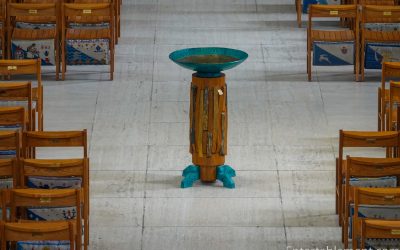
Cathedrals in the 20th Century and Beyond (1900 to present)
Previous post in the series: The Victorians to the Rescue New dioceses and their cathedrals continued to appear in the 20th century, though the pace of restoration of earlier cathedrals slowed. And people being people, arguments over preferred styles continued. George...
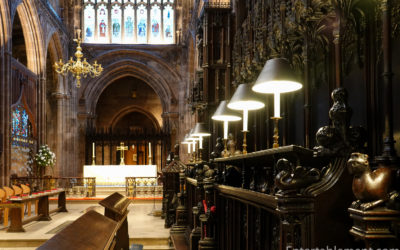
The Victorians to the Rescue (1820–1900)
Previous post in the Series: Dissolution and Decline As the Industrial Revolution took hold, the general population saw a sustained rise in income and living standards for the first time in history. People flocked to newly industrialised towns in the North of...
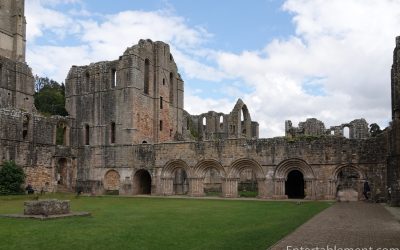
Dissolution and Decline (1534-1820)
Previous post in the series: The Dizzying Heights of Perpendicular Gothic The Norman King William the Conqueror launched the great English medieval Cathedral, and Tudor King Henry VIII wrought its end. Incandescent with rage at the Pope's refusal to annul his marriage...
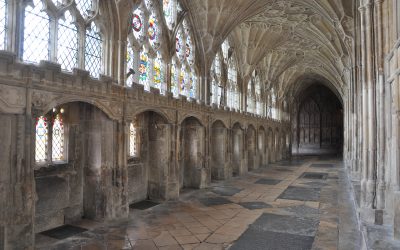
The Dizzying Heights of Perpendicular Gothic (1350 – 1530)
Previous Post in the series: Decorated Gothic While Edward III remodelled his murdered father's tomb at Gloucester in 1330 to create a more fitting memorial, the Decorated Gothic period was drawing to a close. Perpendicular Gothic, which followed, moved the focus to...

Decorated Gothic (1250-1350)
Previous Post in the series: Early Gothic Cathedrals Henry III (1216-1272) was only nine when he became king; by the time he assumed power in his own right in 1227, his regent had soothed the turbulent waters left by his truculent sire, King John, through the...
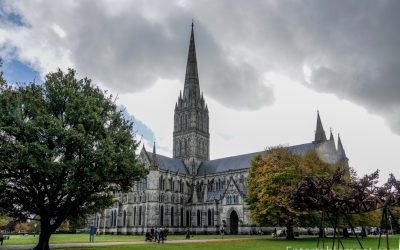
Early Gothic Cathedrals (1170-1250)
Previous post in the series: The Normans and Their Cathedrals The hallmark of the Gothic era, the pointed arch, made its way from France to England just in time to rebuild the east end of Canterbury Cathedral after its devastating fire of 1174 (the second within a...

The Normans and Their Cathedrals (1066-1170)
William the Conqueror got more than he bargained for in 1066. The plan: sail to England, defeat English King Harold, launch a charm offensive, have a Coronation at Westminster Abbey and win over the Saxon earls. Normans and Saxons live in two-part harmony. Job done....

England’s Anglican Cathedral Tapestry
England's 42 Anglican Cathedrals share a tumultuous political history, or tapestry, which plays out in each unique Cathedral Story. It all starts with the Romans, a sophisticated and organized bunch if ever there was one. Their aqueducts provided running water, their...
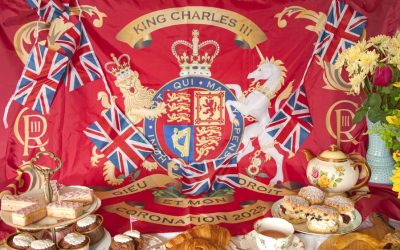
Cathedrals and Coronations
London is abuzz with preparations for the Coronation. When we visited in early April, the street in front of Buckingham Palace was already closed off, with tiered seating erected across the Mall and nearby Green Park. The scale of preparation for the historic event is...

Birmingham Cathedral
Unabashedly Baroque, the Cathedral Church of St. Philip was initially a parish church, joining the Cathedral ranks only in 1905, and is one of the smallest of their number. In the early 18th century, Birmingham's burgeoning metal industry prompted building of a larger...
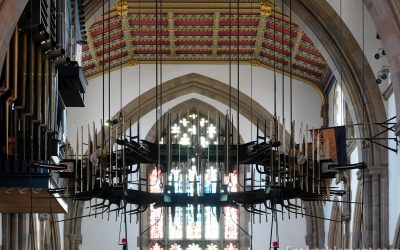
Blackburn Cathedral
The Diocese of Blackburn was carved out of the Diocese of Manchester in 1926, and the parish church of St Mary the Virgin became Blackburn Cathedral. Blackburn asserts evidence of Christian activity since 596. In 1820, when the foundations of the oldest part of the...

Bradford Cathedral
Bradford is one of three Cathedrals in the Diocese of Leeds, the others being Ripon and Wakefield. The present church, the third on the site, was built in the 15th century and incorporated elements from the previous building. Standing high on the hillside above the...

Bristol Cathedral
vMost medieval cathedrals grow younger from west to east. The western portion, almost invariably the nave, was built first. Fancy add-ons—choirs, presbyteries and lady chapels—were tacked onto the east as energy, war-free interludes, and funds permitted. Bristol is...
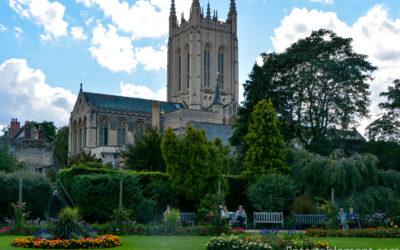
Bury St Edmunds Cathedral
Bury St Edmunds is a gorgeous little market town in Suffolk, East Anglia with a very colourful history. Originally known as Beodericsworth (thank goodness some place names became simpler over time), Bury St Edmunds owes its modern name to two very different things....
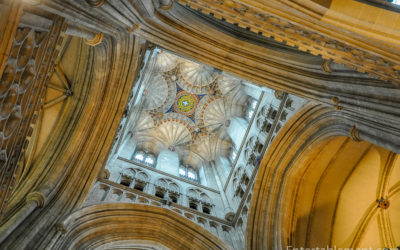
Canterbury Cathedral
Canterbury Cathedral is magnificent in and of itself. Still, it's probably most famous for being the site of the murder of Thomas à Becket, the Archbishop who repeatedly clashed with King Henry II (husband of Eleanor of Aquitaine, a pretty powerful woman in her own...
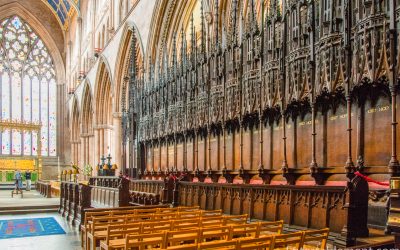
Carlisle Cathedral
The diminutive Carlisle Cathedral is the most northerly of the medieval cathedrals and larger than only Derby Cathedral, the smallest. Throughout the middle ages, the town of Carlisle was the site of constant border skirmishes between the Scots and the English, and...
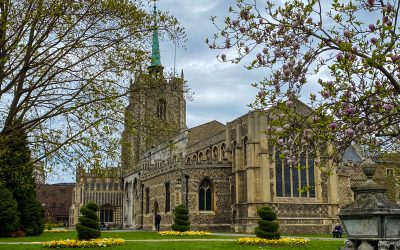
Chelmsford Cathedral
The Church of St. Mary the Virgin became Chelmsford Cathedral following a cranky contest in 1913 to choose a suitable site for the new Cathedral to serve East London. Unfortunately, funds proved short, so plans for a new building were quickly abandoned, but in 1923,...

Chester Cathedral
A former Benedictine Abbey set in a walled Norman city, Chester Cathedral, has the works. Its architecture comprises 11th-century Norman to 18th-century Gothic revival and every style in between. Chester, a cathedral city (obviously), has some of the best-preserved...
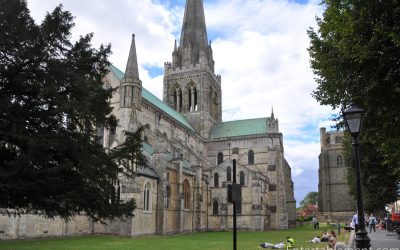
Chichester Cathedral
If Exeter Cathedral is a sumptuous white wedding gown, Chichester Cathedral is a grey morning suit with a particularly vibrant waistcoat. Chichester Cathedral's predecessor, Selsey Abbey, was founded in 681 by the irascible Wilfred of Ripon, famous for championing the...
Christ Church Cathedral, Oxford
Good morning and Happy Groundhog Day! Today we are picking up in Oxford and as it's also a Sunday, in place of attending a church service, we will visit Christ Church Cathedral. Lovely spring flowers greet us at the entrance. Christ Church is a joint...

Coventry New Cathedral
What on earth were they thinking? When the war ended in 1945, more than 2 million homes in the UK had been destroyed or badly damaged, leaving millions of people homeless. Transport, infrastructure and industry had all sustained massive damage. Food was in short...