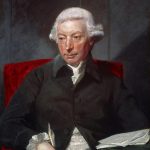

Parliament is often presented as an early step on the road to democracy.
There is some truth in that interpretation. Yet it risks missing the more immediate question Parliament was created to solve:
How do you govern increasingly capable people?
By the thirteenth century, England had become wealthier, more populous, and more administratively sophisticated than the kingdom William the Conqueror had inherited. Royal government reached further than ever before. Trade expanded as towns grew and literacy increased.
An Answer to Complexity
The kingdom was becoming more complex. So was the challenge of governing it. It went a bit like this:
- Kings needed money.
- They needed military service.
- They needed cooperation.
- The simplest solution was command.
- The more durable solution was consent.
Parliament emerged gradually from older traditions of consultation between rulers, nobles, clergy, and local communities. It was not invented in a single moment. Nor was it originally democratic in any modern sense.
Its purpose was practical. The Crown sought support, while the kingdom’s leading interests sought influence. And It turned out that negotiation proved a lot more effective than coercion.
This process accelerated during the reigns of Henry III and Edward I. Simon de Montfort‘s parliament of 1265 famously included representatives from towns alongside nobles and clergy. Edward I later expanded the practice, particularly when seeking approval for taxation.
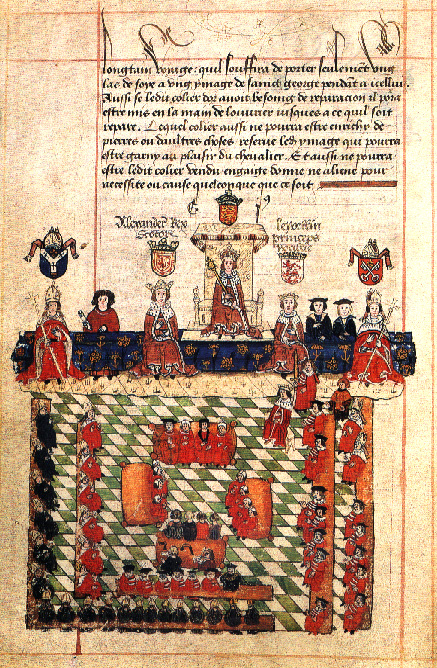
Parliament of Edward I; Source
What emerged was an institution unlike many of its continental counterparts.
Consent Trumps Coercion
England’s rulers increasingly discovered that obtaining agreement could be more effective than simply issuing orders. Parliament did not eliminate conflict, but it provided a mechanism for managing it.
The significance extended far beyond medieval politics.
As Parliament matured, it helped establish a principle that would echo through centuries of English and American constitutional development; Government functions more effectively when those affected by decisions possess a voice in them.
The idea seems obvious today. It was anything but obvious in the Middle Ages.
Consultation Leads to Cooperation
Parliament’s greatest achievement was not democracy, but cooperation. It transformed consultation from an occasional necessity into a regular institution. And in doing so, it addressed one of civilization’s most persistent challenges.
How do large numbers of people work together without relying entirely on force?
England’s answer was imperfect, gradual, and often contentious. It was also remarkably durable.
Parliament became one of the kingdom’s most important hidden frameworks. An institution that converted power into consent and disagreement into negotiation.
The castles may have symbolized authority. Parliament helped make authority sustainable.