Civilizations cannot function through command alone.
As societies grew larger and more complex, different groups inevitably developed different interests.
- Kings sought revenue.
- Towns wanted autonomy.
- Merchants looked for opportunities to trade.
- Monasteries desired protection.
- Landowners want security for their property and families.
The challenge was not eliminating these competing interests. That was impossible. The challenge was finding ways to manage them.
One of medieval England’s most important tools for doing so was the charter.
More Than a Piece of Parchment
At first glance, a charter can seem rather underwhelming. It is, after all, just a document: a piece of parchment recording rights, privileges, obligations, or agreements.
Yet charters were among the most important administrative innovations of the medieval world. Issued by kings and nobles, they were highly sought by monasteries, towns and merchants.
One of the most valuable privileges a town could receive was the right to hold a regular market. Such charters attracted merchants, encouraged settlement, and helped transform small communities into centres of local exchange. In this way, charters did more than define rights. They helped create the conditions under which trade and prosperity could grow.

Borough Market
Today the word privilege often carries negative connotations. In the medieval world, privileges frequently meant something rather different: clarity.
- Who had the right to hold a market?
- Who could collect tolls?
- What obligations were owed to the Crown?
- What legal protections existed?
Charters helped answer these questions, replacing uncertainty with written agreements.
Negotiation in Writing
The significance of charters extended far beyond the specific rights they granted. They represented something increasingly important in medieval England: negotiation.
A ruler did not simply issue commands and expect unquestioning obedience. A town might seek trading rights. Merchants might request protections. Religious institutions might seek confirmation of long-established privileges.
The result was often a bargain. Both sides gained something. The agreement was written down, witnessed, and preserved.
In this way, charters became instruments of stability. They reduced uncertainty, created shared expectations, and transformed informal understandings into formal agreements.
In a kingdom that was becoming larger, wealthier, and more complex, that mattered enormously.
The Lasting Influence of Charters
The influence of charters can still be seen today in contracts, corporate charters, constitutions, and countless other agreements that define relationships and responsibilities. The underlying principle is familiar: people cooperate more effectively when expectations are clear.
Charters and privileges did not eliminate conflict. Medieval England remained a lively place to disagree, litigate, and occasionally rebel. What charters did provide was a framework within which those disagreements could be managed.
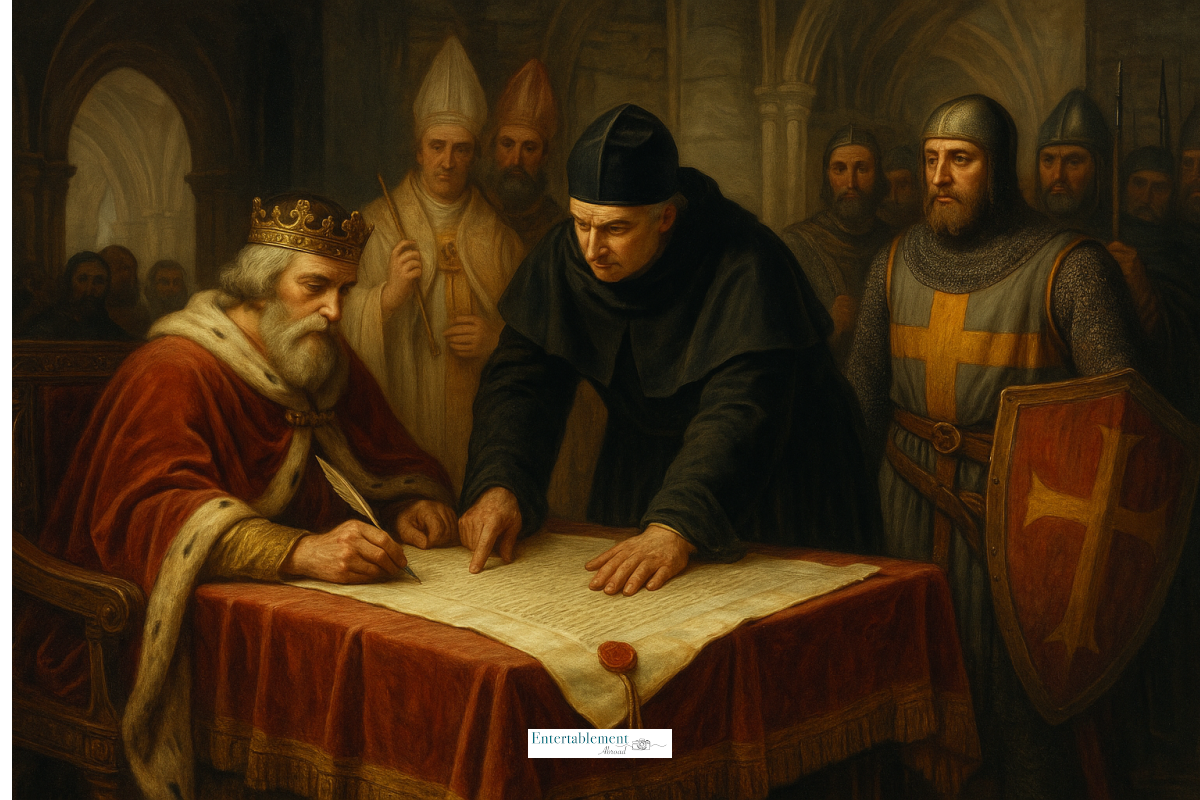
That may not sound as dramatic as a castle or as inspiring as a cathedral. Yet it was one of the hidden foundations of a successful society. By turning negotiation into something that could be recorded, preserved, and relied upon, charters helped transform cooperation from a matter of personal relationships into a feature of the system itself.
The Law of Unintended Effects
Like many successful institutions, charters had unintended consequences. The rights and privileges they created often brought stability and prosperity, but they could also create vested interests. Groups that had negotiated valuable privileges naturally sought to preserve them.
Over time, arrangements that began as practical solutions could become barriers to competition or sources of political influence. The tension is a familiar one. Institutions help societies cooperate, but they can also encourage those who benefit from them to protect their advantages. Medieval charters were no exception.