

“Fascinating! Are there any records of how the Romans accomplished what they did?” It’s a revealing question.
We tend to look at Roman roads, aqueducts, harbours, baths, and sewers as isolated engineering marvels — evidence of some lost technological brilliance. But the real Roman miracle was not any single invention.
It was coordination.
The Romans inherited ideas from the Greeks, Etruscans, Persians, and the broader Mediterranean world. They did not emerge from nowhere with magical concrete and superhuman engineers.

Athens Amphitheatre
Civilization rarely works that way.
Rome became extraordinarily good at organizing labour, materials, surveying, standards, administration, and maintenance at scale — and then sustaining those systems across generations. That is far harder than building a single impressive structure. And it may be the more important lesson.
Rome Rarely Started From Scratch
One of the most fascinating aspects of Roman civilization is how much of it was incremental.
From the Greeks, they obtained mathematics, geometry, philosophy, and much of the theoretical framework behind engineering and architecture.
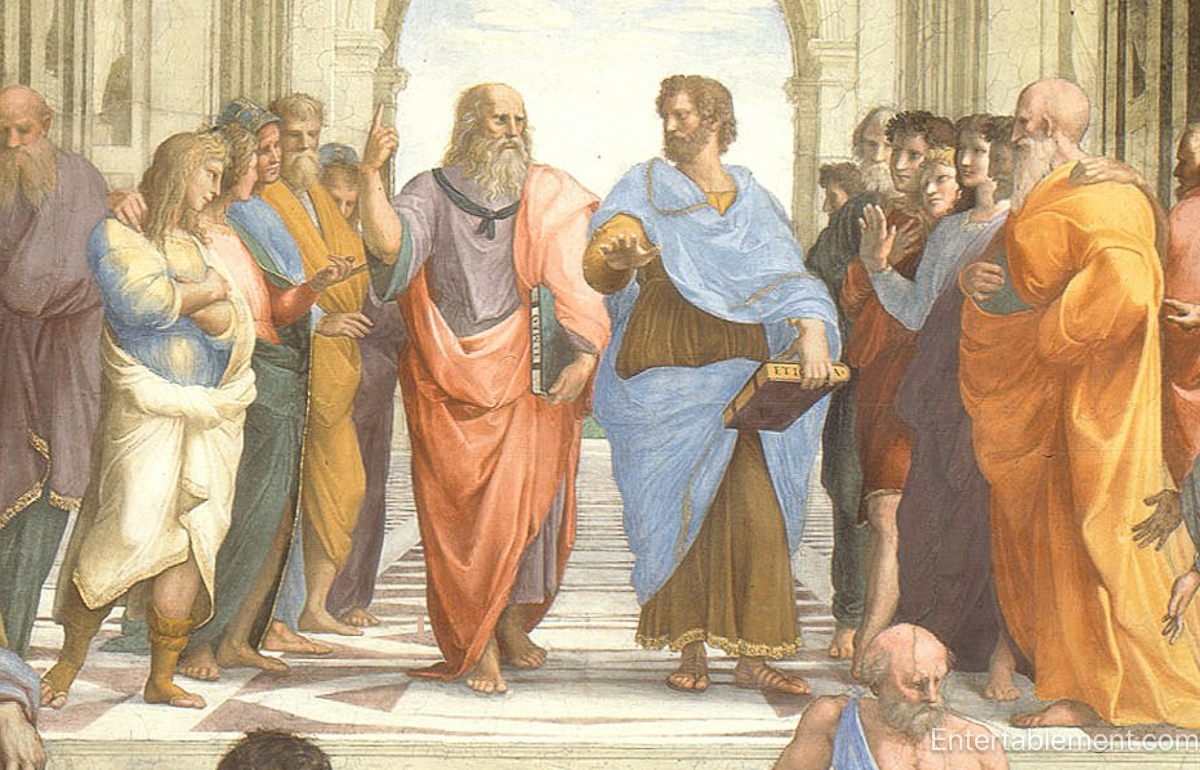
The School of Athens
The Etruscans influenced drainage systems, arches, and urban planning. And the Persians had already demonstrated the power of large road networks and administrative coordination.
Rome absorbed all of it. But the Romans possessed a particular genius for taking ideas and turning them into systems.
A Greek city might build an impressive harbour. The Romans asked, *How do we standardize harbour construction across an empire?*
A local ruler might maintain a road. The Romans asked *How do we connect thousands of miles of roads into a coherent network capable of moving armies, information, taxes, grain, and trade reliably across continents?”
This is one of the recurring hidden frameworks of civilization. Progress is usually cumulative. Civilizations rise not merely through invention, but through accumulation, adaptation, organization, and transmission.
A lone genius can make the mental leap that leads to breakthrough.
- Isaac Newton transformed physics and mathematics through extraordinary conceptual insight, but his ideas spread because universities, printing networks, scientific societies, and generations of scholars preserved and taught them.
- Tim Berners-Lee created the World Wide Web, but the web reshaped civilization because telecommunications infrastructure, universities, governments, open standards, and millions of users adopted and expanded it.
Breakthroughs matter. Scaling them is a different challenge entirely.
Roads Were More Than Roads
Roman roads are often admired for their durability, and rightly so. Some still influence modern routes today. But the physical roads themselves were only part of the system.
Roads allowed distances to shrink such that armies could move rapidly and officials could administer distant provinces. Commerce thrived as merchants were able to receive raw materials and transport finished goods. Communication allowed messages to travel and ideas to spread. Finally, taxes could be collected so infrastructure and administration could be maintained.
In many ways, Roman roads were the information backbone of the ancient world. The roads worked because the system around the roads worked.
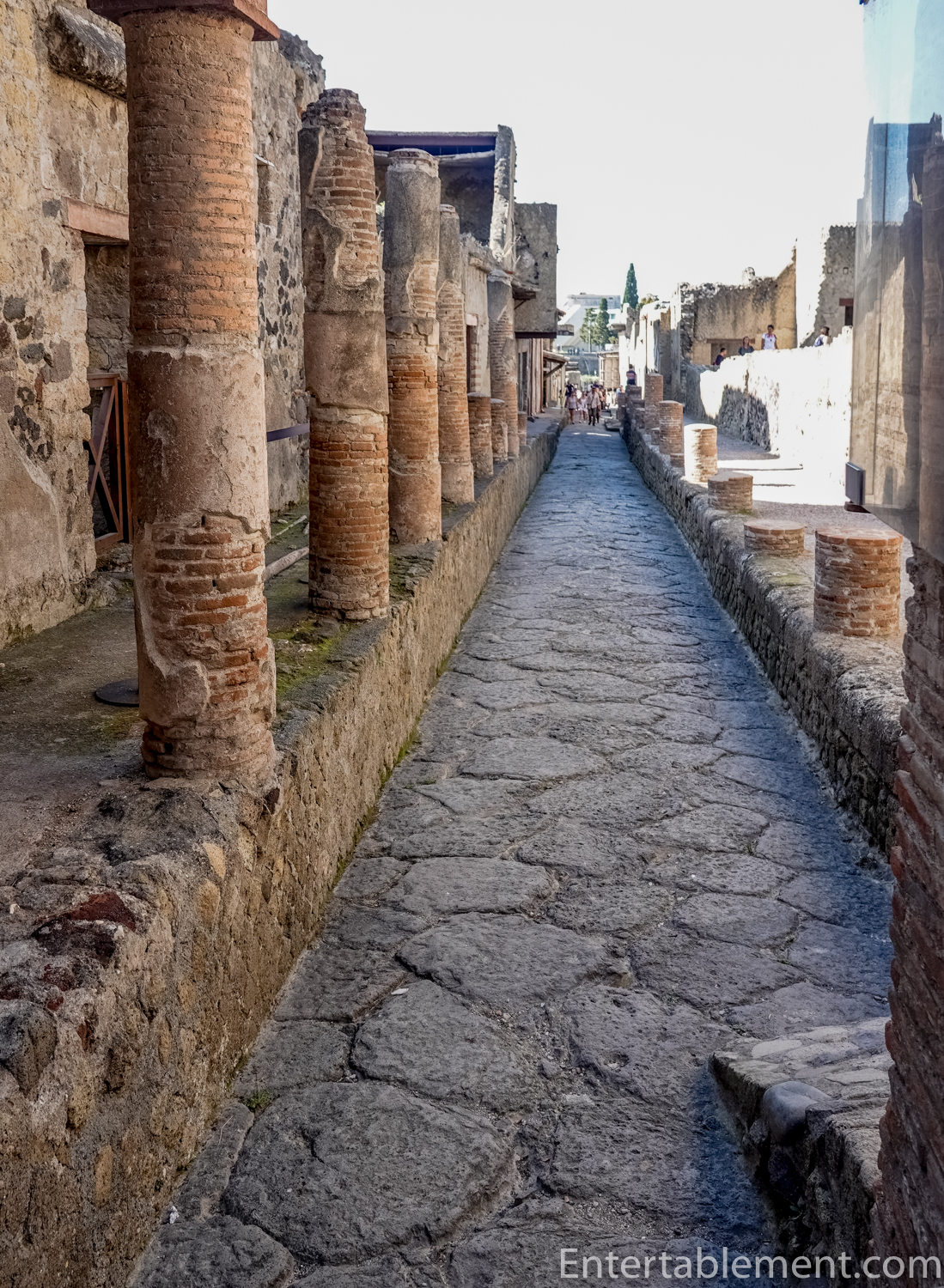
Herculaneum
Surveyors measured routes carefully and engineers followed standardized practices. Labour was organized, materials sourced and damage repaired.
Most importantly, the Romans treated infrastructure as something continuous rather than episodic. Anyone can build a road once. Civilization begins when roads are inspected, repaired, funded, and maintained decade after decade.
Water Was Governance Made Visible
The aqueducts are perhaps the clearest expression of Rome’s hidden operating system.
Water changes everything. Reliable water allows larger urban populations to survive. For the Romans that meant public baths, fountains and a sanitation systems. Water supports industry and food supply stability, and a certain expectation of civic order.

Roman Bath, Bath
A city receiving fresh water daily learns something profound about civilization: that systems can be trusted.
The Romans became masters of moving water over astonishing distances using carefully calculated gradients, tunnels, bridges, siphons, and reservoirs. But again, the miracle was not merely technical, though trained engineers and labour coordination were vital.
Sextus Julius Frontinus, the Roman official responsible for Rome’s water supply in the first century CE, wrote extensively about maintenance, theft, repairs, inspections, and water management. Reading him feels surprisingly modern. He sounds less like a mystical ancient engineer and more like the administrator of a very large public utility.
That may actually be the point.
Standardization Was Rome’s Superpower
One of Rome’s quiet superpowers was standardization.
A road engineer in Britain operated within a recognizable Roman system. An administrator in Gaul understood the same framework. A commander in North Africa could rely upon familiar logistics.
Modern civilization works similarly. Shipping containers, internet protocols, electrical standards, and building codes all reduce friction.

Port at Dover
We barely notice them when they work; the Romans understood their value instinctively.
Maintenance Is Civilization
Perhaps the deepest Roman lesson is this: Maintenance is not secondary to civilization. Maintenance is civilization.
Anyone can build a monument once. The difficult part is sustaining systems across generations.
- Aqueducts leak.
- Harbours silt up.
- Bridges decay.
- Sewers clog.
- Roads crack.
A functioning civilization is not simply a collection of impressive objects. It is a society capable of repeatedly organizing labour, resources, trust, and institutional continuity in order to keep those systems operating.
History tends to celebrate emperors, generals, inventors, and visionaries. Civilization, however, relies just as heavily on people willing to collect the garbage, repair the aqueduct, clear the road, mend the bridge, and keep the water flowing.
We were reminded of this during the pandemic, when many professionals worked safely from home while warehouse workers, truck drivers, utility crews, grocery clerks, farmers, and delivery drivers quietly kept society functioning.
The Romans would have understood the principle immediately.
When Rome Left the Room
This may be why the decline of Roman infrastructure after the Western Empire fragmented feels so historically significant.
When Rome left the room, maintenance began to fail. Roads deteriorated, Trade contracted, Urban populations shrank, Coordination weakened.
People often notice civilization most clearly when its hidden frameworks disappear. Ask any local council what sends voters stark raving mad: garbage strikes and potholes left unrepaired.

The Hidden Framework Beneath the Marble
Modern people sometimes romanticize Rome as though it possessed lost technologies beyond our comprehension. But the real Roman achievement was in some ways both less mystical and more impressive.
Rome learned how to coordinate. Not perfectly, and not forever. And not without brutality, inequality, and contradiction.
But extraordinarily well for its time. Roads, aqueducts, sewers, ports, baths, and public buildings were not isolated engineering marvels. They were visible expressions of something larger. A civilization capable of organizing labour, transmitting knowledge, maintaining standards, and sustaining trust across vast distances.

Empires may rise through conquest, but they endure through maintenance.
And perhaps that remains one of civilization’s most important hidden frameworks today.
- Previous in the series: The Water Highways: Canals and the Logistics of the Industrial Revolution





We could use the Roman’s here for our roads. When a road or dangerous junction needs fixing it takes forever with bureaucracy making decisions, permits, the environmental aspect of the repair, etc. Thanks for such an informative education on how the world thrived so many years ago
Modern potholes appear to be the bane of our existence, worldwide. One thing we are very good at, apparently, is creating bureaucratic sludge. Managing the actual sludge? Not so good.