
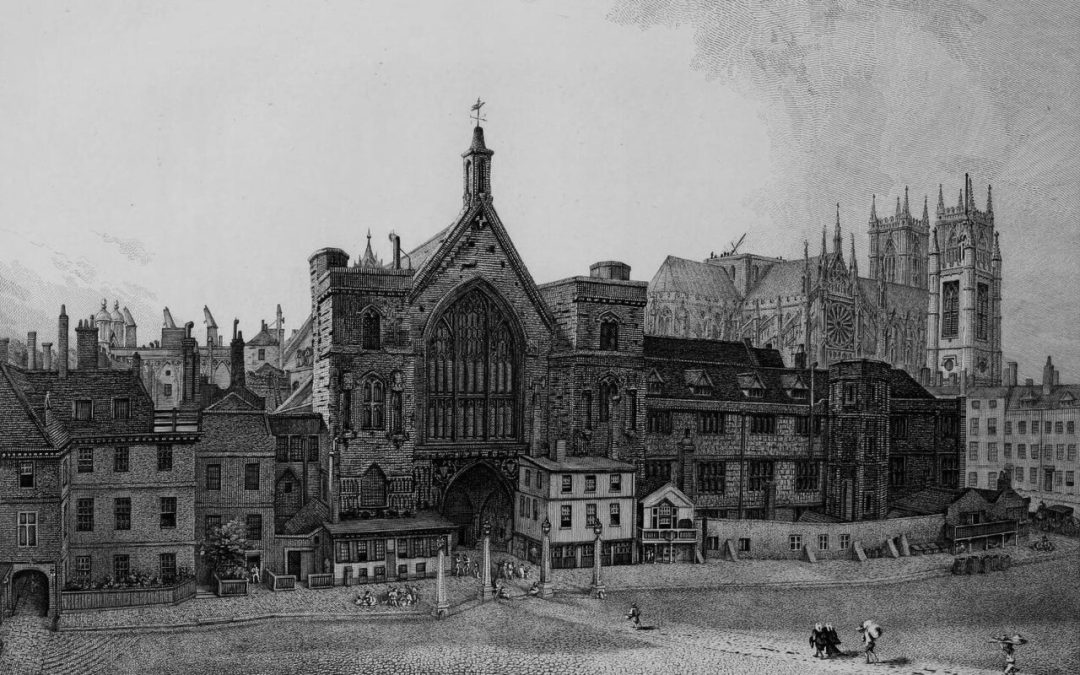
Most visitors to medieval castles imagine kings making grand decisions. Most visitors to medieval cathedrals imagine bishops debating matters of faith. Few imagine accountants.Yet one of the most important innovations in medieval England involved neither warfare nor religion. It involved counting.
The Norman Conquest transformed England. William the Conqueror established authority, redistributed land, and commissioned the Domesday Book to understand the resources of his new kingdom.
But information alone was not enough. Knowing what existed and managing it were two different challenges. The solution emerged during the reign of Henry I. Known to contemporaries as Beauclerc, or “Fine Scholar,” Henry possessed a keen appreciation for administration. Under his rule, royal finances became increasingly organized and systematic.
At the heart of this effort stood an institution known as The Exchequer.
Financial Audits and a Chequered Cloth
The name came from the chequered cloth used during financial audits. Officials moved counters across a patterned table to calculate revenues and obligations, much like an abacus spread across a chessboard.

The method was simple.
The implications were profound. For the first time, England possessed a permanent mechanism for tracking royal income, debts, taxes, and obligations across an entire kingdom. Money owed to the Crown could be recorded, payments could be verified, information became administration, and most importantly, officials could be held accountable.
The surviving Pipe Rolls—annual financial records first preserved during Henry’s reign—offer remarkable evidence of this transformation. They reveal a government increasingly capable of monitoring its own affairs.

To modern eyes, the records appear tedious, but to historians, they are revolutionary.
The Exchequer represented something larger than bookkeeping—It represented visibility. A kingdom that can measure its revenues can plan. If it can track obligations, it can enforce them. And a kingdom that can hold officials accountable can govern more effectively.
The Domesday Book
The Domesday Book provided a snapshot; the Exchequer created a system. The connection is direct and profound.
William counted the kingdom. Henry I learned how to manage it.
This administrative capability helped make England one of the most centralized and effective kingdoms in medieval Europe. It supported royal justice, military campaigns, infrastructure, and government itself.
Many of the institutions later associated with Henry II and the mature medieval state rested upon foundations laid by the Exchequer.
Its influence extended far beyond the Middle Ages. Modern governments rely upon budgets, audits, tax records, and financial reporting for the same reason Henry’s officials gathered around a chequered table nearly a thousand years ago.
You cannot manage what you cannot measure.
The Exchequer reminds us that civilization is not built solely by conquerors, warriors, or visionaries. Sometimes it advances because someone develops a better way to keep track of the numbers.
The castles may capture our attention. The cathedrals may inspire our admiration. Yet beneath both lay an increasingly sophisticated administrative machine. The Exchequer was one of its most important gears.
A kingdom that could count itself had become a kingdom that could govern itself.





_MET_DP873998.jpg)
