
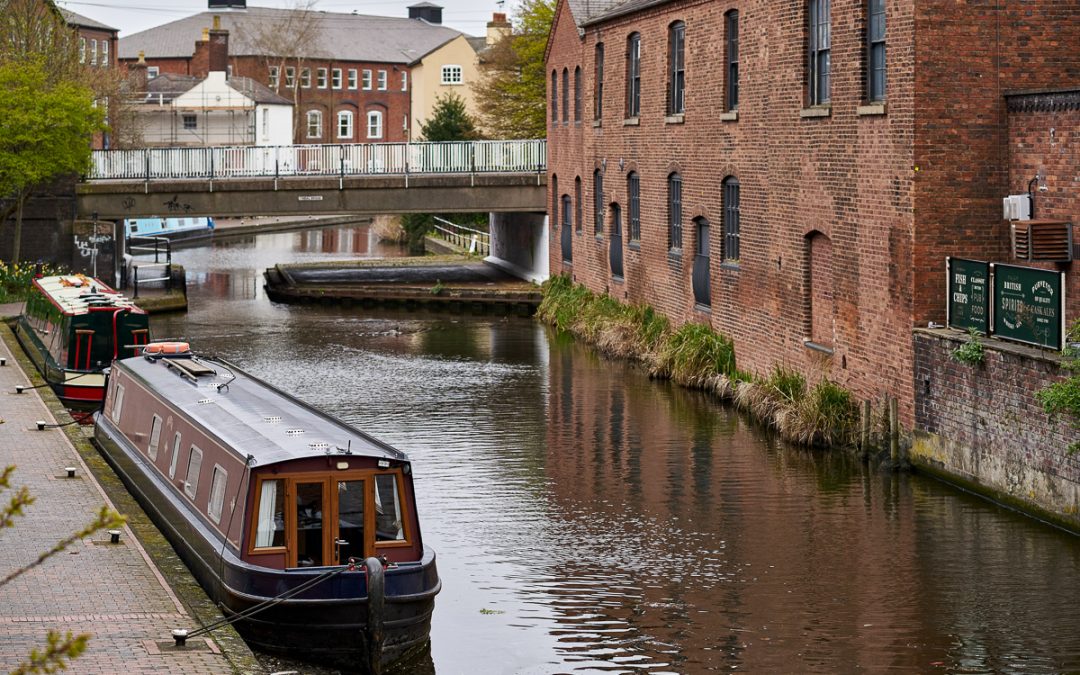
Long before railways stitched Britain together with iron and steam, another network quietly reshaped the country. These were the canals — the water highways of the Industrial Revolution.
Britain did not invent the idea that controlling water could transform civilization. Venice had turned lagoons into commercial power after the collapse of Rome, while the Dutch later built canals, drainage systems and flood controls that allowed an entire society to survive and prosper in difficult marshland.
By the eighteenth century Britain would apply many of the same principles to a different challenge: moving coal, iron and raw materials through an industrial economy.
Today canals appear picturesque. Narrowboats drift lazily through countryside and towns. Yet these quiet channels once formed some of the most advanced infrastructure in Europe.They were the logistics system that made industrial society possible.
The Problem of Moving Things
For most of history, moving goods over land was painfully difficult. Roads were rough, muddy and often nearly impassable in winter. Heavy materials such as coal, iron ore, timber and stone were expensive and exhausting to transport by wagon.
Water offered a solution long understood by human societies. Boats could carry enormous loads with surprisingly little effort. A single horse walking steadily along a towpath could pull a barge carrying far more cargo than the same animal could manage on a road.
The problem was that rivers did not always flow where industry needed them to go. So Britain built the rivers itself.

Canal Mania
The canal age truly began in 1761 with the opening of the Bridgewater Canal, engineered by James Brindley for the Duke of Bridgewater.
The duke owned rich coal mines at Worsley near Manchester, but poor roads made transporting coal slow and expensive. Brindley’s canal connected the mines directly to the city.
The effect was immediate. Coal prices reportedly fell dramatically, industry gained access to cheaper fuel, and investors suddenly recognized the enormous potential of canals.
The canals did not merely transport industry. They created it. Factories and workshops clustered along canal banks where heavy materials could arrive easily and finished goods could depart the same way. Industrial geography began to follow the water.

Engineering a Landscape
Building canals required extraordinary ingenuity. Engineers constructed aqueducts across valleys, tunnels through hills and elaborate lock systems capable of raising and lowering boats between different elevations.
Some of these structures still feel astonishing today. Brindley’s Barton Aqueduct, carrying the Bridgewater Canal above the River Irwell, seemed almost magical to eighteenth-century observers: a navigable waterway suspended above another river.
Meanwhile the countryside itself was quietly reshaped. Towpaths became familiar features of the landscape as horses pulled barges steadily through the canals below. Even now these paths remain, though walkers and cyclists have replaced the horses — though readers of English detective fiction will recognize them as the perfect escape route for a fleeing villain.
Slow but Powerful
Canal boats moved slowly. A typical barge might travel only three or four miles per hour, pulled steadily along by horses on the towpath. But speed was never the point.
What mattered was capacity and reliability. The canals provided predictable transport that did not depend on the weather, the condition of roads, or the strength of wagon teams. For heavy industry, that reliability mattered far more than speed.
In a sense, canals were the first modern freight network. They allowed the continuous movement of large volumes of raw materials across long distances. Coal fed the furnaces of ironworks. Iron produced the machines of factories. Goods moved outward to markets and ports.
Behind the visible drama of steam engines and textile mills, the canals quietly carried the weight of the Industrial Revolution.
The Coming of the Railways
By the early nineteenth century another technology began to transform transport: the railway. Steam locomotives could move goods far faster than canal boats and were not limited by water routes. Gradually railways overtook canals as the dominant freight system.
Yet the canal network had already accomplished something profound. It had laid down the logistical skeleton of industrial Britain. Many railway lines later followed routes first established by canals, linking the same mines, factories, and cities. The water highways had mapped the industrial landscape.
The Hidden Framework
Today the canals remain, though their purpose has changed. Narrowboats now carry holidaymakers instead of coal. Towpaths are used by walkers and cyclists rather than horses hauling freight. But the quiet channels still reveal an important truth about the history of civilization.
Ideas and inventions often receive the credit for historical change. Yet those ideas depend on something deeper: the ability to move energy, materials, and goods efficiently through the landscape. In the eighteenth century, canals provided that capability. They did not sparkle like cathedrals or thunder like locomotives. They slipped quietly through fields and towns, carrying their heavy cargo almost unnoticed.
But without those water highways, the Industrial Revolution would have moved far more slowly — if it had happened at all.
Life on the Water
Although canals were built for freight, many of them have found a second life in the modern era. Along the waterways of Britain today it is common to see narrowboats and Dutch-style barges used an alternative form of urban housing. These vessels move slowly along the same routes that once carried coal, pottery, and iron during the Industrial Revolution.
The towpaths that once guided horses pulling heavy barges now serve walkers and cyclists, while the boats themselves have been transformed into floating homes, studios, and small communities.
Most traditional English canal boats were narrowboats, designed specifically to fit the narrow locks of the canal system — usually about 7 feet wide. The Dutch barges you see today often came later. They were originally designed for the broader canals and rivers of the Netherlands and Belgium.
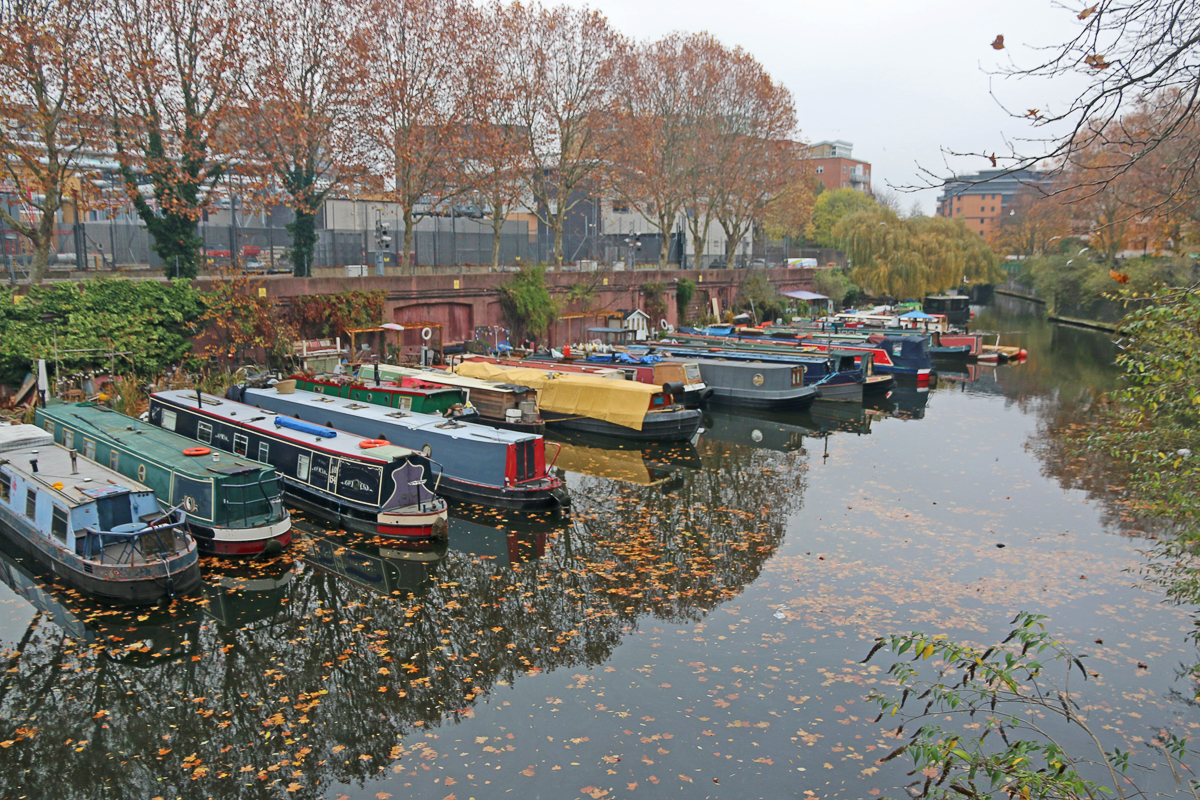
It’s a nice example of how infrastructure evolves. What began as freight corridors for coal and iron now supports a quieter form of life on the water, centuries after the engineers first cut those channels through the countryside.
- Previous in the series: Waterworks: Aqueducts, Sewers and the Flow of Civilization
- Next in the series: The Real Roman Miracle was Coordination





When we lived in the UK we walked along many canals and never thought about the history of the canals. It was always so peaceful without a car to be seen. Many long boats housed families and part of me envied their simple life! But then, I snapped back to reality. Thanks for that bit of history that I never thought about as I walked along the tow paths.
I hadn’t thought about them either, Maura, until I started this Hidden Framework series. But they came to my attention when I was learning about Stoke-on -rent. Josiah Wedgwood built a canal and located his factory, Etruria, on it. It seems water was a much more gentle way of shipping delicate porcelain. How things work and what technology underlies it is always fascinating to me. Otherwise, history just seems to be one ruler piled on top of another and I need a dance card to keep track of the players.
I always love seeing the towpaths on all the Lewis and Morris mysteries. And I am enjoying the Cherringham mysteries—Jack, the retired NYC detective lives on a Dutch barge in the Cotswolds.