
Hidden Frameworks
Most of the forces that shape civilization are easy to see: great leaders, famous buildings, decisive battles and extraordinary works of art.
Yet beneath these visible achievements lies another story—one of the systems, technologies and habits that quietly transformed everyday life.
The Hidden Frameworks explore the often-overlooked innovations that allowed societies to function, prosper and grow. Roads carried ideas as well as armies. Reliable clocks coordinated communities. Sewers protected public health. Banking expanded trade. Writing preserved knowledge across generations.
Because these advances became familiar, they also became almost invisible. Yet each represents centuries of experimentation, refinement and accumulated understanding.
From the first irrigation canals to modern infrastructure, every essay asks the same enduring question:
What unseen framework made civilization possible?
Act I – Inheritance
Every civilization begins by receiving more than it creates.
Roads, engineering, systems of measurement and administrative knowledge are passed from one generation to the next, often surviving the societies that first built them. These essays explore the physical and organizational foundations inherited from the ancient world and ask how later civilizations chose to preserve, adapt—or sometimes lose—them.
These essays reveal the hidden frameworks that later generations inherited, whether they recognized their value or not.
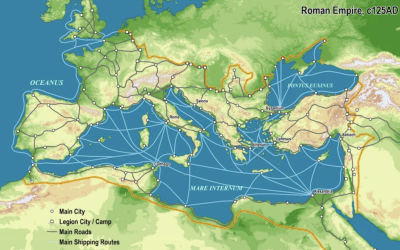
The Real Roman Miracle was Coordination
“Fascinating! Are there any records of how the Romans accomplished what they did?” It’s a revealing question. We tend to look at Roman roads, aqueducts, harbours, baths, and sewers as...

Water Works: Aqueducts, Sewers, and the Flow of Civilization
If you’ve ever flushed a toilet, turned on a tap, or bathed in water that didn’t come from a bucket, you’re enjoying the quiet success of one of civilization’s most ambitious engineering...

Potholes and Progress
For those of us who live in climates where winter doesn’t so much end as melt into a slushy, muddy spring, roads suddenly become impossible to ignore. The salt and sand remain, the ground...
Act II – Building the Kingdom
Strong kingdoms are built as much through systems as through sovereigns.
Surveyors, sheriffs, courts, records, universities and institutions gradually transformed personal authority into enduring structures of governance. These essays examine the hidden frameworks that allowed medieval England to become an increasingly organized, prosperous and resilient society.
Together, they reveal the hidden systems that allowed a kingdom to become a nation.
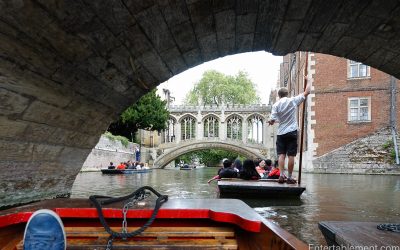
Universities — Where Knowledge Learned to Grow
Knowledge presents a curious problem. A skilled craftsperson can teach an apprentice. A parent can pass experience to a child. A teacher can educate a classroom. But how does an entire...

Guilds — How Skills Survived
Civilizations depend upon skills. That may sound obvious, but it poses a surprisingly difficult challenge. A cathedral does not build itself. Someone must know how to quarry stone, shape...

Common Law — When Trust Became a System
Civilizations depend upon trust. Not necessarily trust between friends, neighbours, or family members. Most societies manage that reasonably well. The greater challenge is trust between...
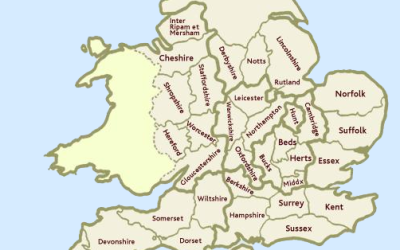
Sheriffs and Shires — The Geography of Governance
How do you govern a kingdom before telephones, railways, newspapers, or computers? The question confronted every medieval ruler. Authority might reside in London, Winchester, or...

The Exchequer — Counting the Kingdom
Most visitors to medieval castles imagine kings making grand decisions. Most visitors to medieval cathedrals imagine bishops debating matters of faith. Few imagine accountants.Yet one of...

The Domesday Book — When England Learned to Count
Most people encounter the Domesday Book as a historical curiosity. A giant medieval survey commissioned by William the Conqueror in 1086. It's seen as an impressive artifact, a useful...
Act III – The Stress Test
The true strength of any system is revealed when it is placed under pressure.
War, plague, political conflict and economic upheaval exposed weaknesses but also prompted adaptation and reform. These essays explore how the hidden frameworks of civilization were tested, strengthened or reinvented in times of crisis.
Under pressure, hidden frameworks become visible.

Charters and Privileges — Learning to Negotiate
Civilizations cannot function through command alone. As societies grew larger and more complex, different groups inevitably developed different interests. Kings sought revenue. Towns...

Parliament — Institutionalizing Consent
Parliament is often presented as an early step on the road to democracy. There is some truth in that interpretation. Yet it risks missing the more immediate question Parliament was created...
Act IV – Reinvention
Periods of renewal often begin with practical innovation.
New sources of energy, improved transportation, stronger materials and more efficient networks changed not only how people worked, but how entire societies functioned. These essays explore the engineering and infrastructure that reshaped Britain and laid the foundations of the modern world.visible.
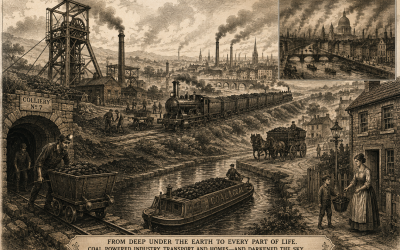
Black Underfoot—Coal and the First Energy Abundance
In the summer of 1976, London was preparing to celebrate the Queen’s Silver Jubilee. Some buildings had already been cleaned for the occasion; others were still waiting their turn. The...
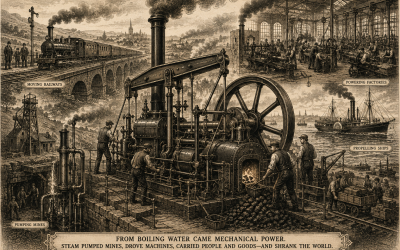
Steam, Engines & Smoke — The Real Engines of the Industrial Age
Steam & Smoke: The Real Engines of the Industrial Age Before electricity lit streets and homes, the machinery driving the industrial world was hard to ignore. Steam hissed, pistons...
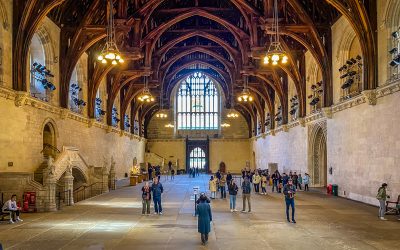
The Peerage and The Gentry — England’s Governing Class
Westminster Hall has witnessed coronation feasts, royal courts, state trials and the evolution of Parliament. Yet England was never governed from this room alone. Beyond these walls,...

The Water Highways—Canals and the Logistics of the Industrial Revolution
Long before railways stitched Britain together with iron and steam, another network quietly reshaped the country. These were the canals — the water highways of the Industrial Revolution....
Act V – Civilization Compounds
The greatest transformations rarely come from a single invention.
They emerge when technologies, institutions and knowledge connect, reinforce one another and accumulate across generations. These essays explore how seemingly ordinary systems—from standard time to electrical networks—combined to create a civilization capable of achievements that no earlier age could have imagined.

Power Lines—The Rise of the Electric World
Before electricity remade the night, people had become remarkably good at managing darkness. Candles and oil lamps had illuminated homes for centuries, until the nineteenth century...

Standard Time — Sandford Fleming and the Order of Hours
A World Out of Sync For most of human history, time was local. Towns set their clocks by the sun, with noon defined as the moment it reached its highest point in the sky. When people and...
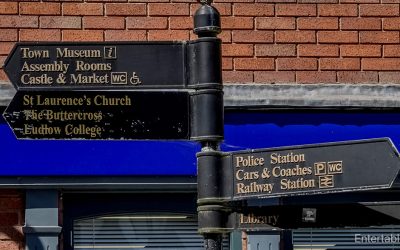
Civil Society — The Institutions Nobody Designed
At a crossroads in Ludlow, a signpost directs visitors towards the castle, market, St Laurence's Church, the Buttercross, assembly rooms, town museum, college and library. It is a...