
The Continental Thread
Civilization does not begin anew with each generation.
Every society inherits ideas, institutions and capabilities developed by those who came before. Some preserve them. Some refine them. Some discover entirely new ways of understanding the world. Together, they form a long conversation stretching across thousands of years.
The Continental Thread follows that conversation.
History is rarely a smooth upward trajectory. It includes invasions, pandemics, volcanic winters, financial panics, civil wars, revolutions and technological disruptionThe question is not whether these ruptures occur—they always do. The question is whether civilization can adapt without losing everything it has already learned.
From the first cities of Mesopotamia to the modern world, each essay explores the same enduring question:
Act I – Inheritance
How Civilization Learned
No civilization begins from scratch.
The ancient world developed many of the ideas, institutions, and technologies that still shape modern life: writing, law, citizenship, philosophy, engineering, administration, and organized religion.
Egypt explored permanence. Greece explored ideas. Rome explored scale.
Even after the Western Roman Empire collapsed, much of that inheritance survived in monasteries, manuscripts, local customs, and collective memory. The lights dimmed, but they did not go out.
Act I asks a simple question:
How did civilization remember enough to begin again?
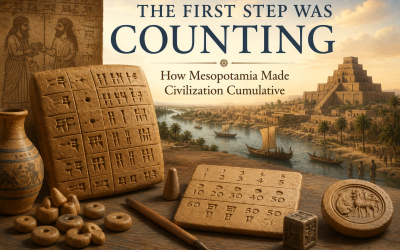
Mesopotamia — The First Step was Counting
When we think about the beginnings of civilization, our minds often leap to pyramids, kings and great cities. The real story may have begun somewhere far less dramatic. It may have begun...
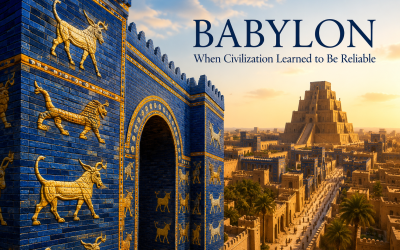
Babylon — When Civilization Learned to Be Reliable
Few ancient cities have accumulated as many meanings as Babylon. Its name conjures a tower reaching towards heaven, its builders suddenly unable to understand one another. It recalls...
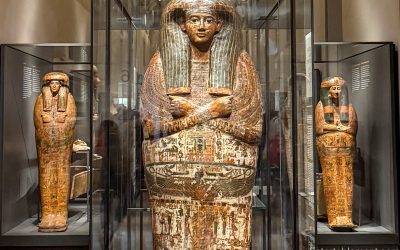
Egypt in Turin—An Accidental Highlight
Turin was not supposed to be the point. This was a Northern Italy trip with friends — Bill and Maura — the kind of people who have already seen most things, lived in most places, and are...
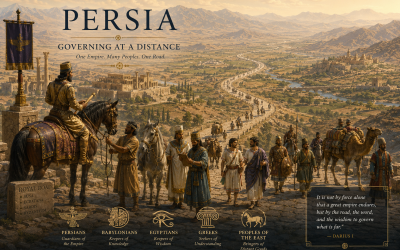
Persia — Governing at a Distance
How do you govern people who speak different languages, worship different gods, and live thousands of kilometres apart? For much of human history, the answer was simple: you...
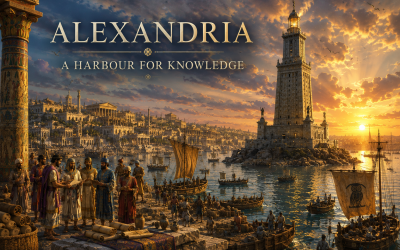
Alexandria — A Harbour for Knowledge
To understand the world is itself a form of power. Long before a ship reached the harbour of Alexandria, sailors knew they were approaching something remarkable. By day, a gleaming white...
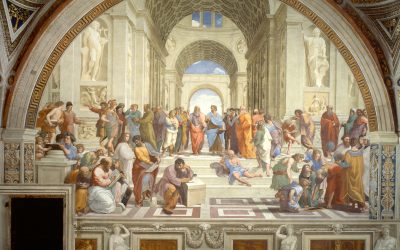
Greece—When Life Moved Into the Open
My working impression of Greece was embodied in the Vatican’s fresco The School of Athens by Raphael. In it, Socrates (left) argues in the crowd, Plato points upward toward higher truths...
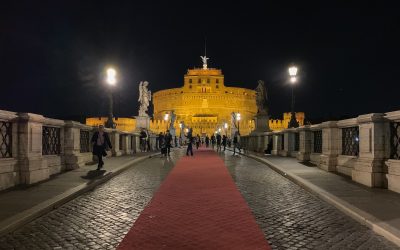
Rome — Scale, Infrastructure, and the Relief of Decision
My first trip to Rome included our son Adam and his then-fiancée Annie. They had both been before—Annie in particular is travel-obsessed in the most admirable way—and they undertook to...
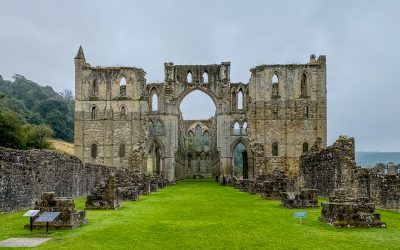
Collapse, Scarcity, and Survival—When Rome Leaves the Room
For a long time, I thought of what followed Rome's departure from England as collapse — full stop. The so-called “Dark Ages.” Civilization slipping backwards into mud and thatch as roads...
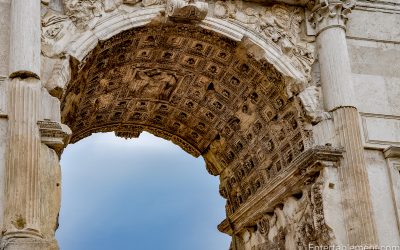
Italy — Rome Never Really Left
It is easy to picture Rome at its height — luxurious baths, roads stretching to eternity, and spectacles in the Colosseum — an empire that seems to have been running perfectly well. Which...

Paris—Where Gaul Keeps Going
When the roof of Notre-Dame de Paris caught fire in April 2019, the images traveled around the world almost instantly. People watched the flames climb through the timber framework, watched...
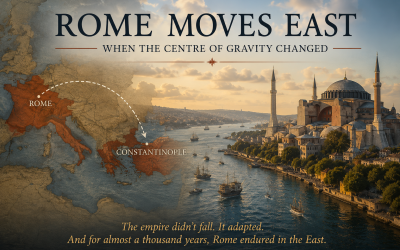
Rome Moves East — When the Centre of Gravity Changed
Ask almost anyone when the Roman Empire fell and the answer comes back without hesitation: 476 AD. It is one of those historical facts that seems so well established we rarely think to...
Act II — Building the Kingdom
Foundations of Medieval England
Following the Norman Conquest of 1066, England entered one of the most remarkable periods of state-building in European history.
Castles appeared. Common Law emerged. Cathedrals rose. Monasteries expanded. Kings extended their authority. Administrators recorded, measured, taxed, and governed.
The institutions that would eventually become recognizably English began to take shape. What had once been a collection of territories gradually became a kingdom.
Act II explores how societies transform inheritance into institutions.
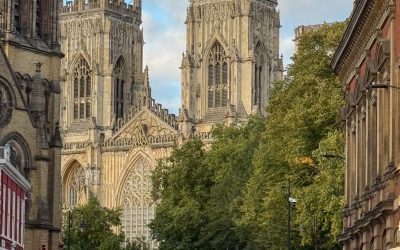
From Conquest to Kingdom — England’s High Medieval Ascent (1066–1300)
York offers a clue to one of the great stories of medieval England. Walk through the city on a busy Saturday morning and, after a while, something begins to feel oddly familiar. The market is bustling. Shops line narrow streets. The cathedral dominates the skyline....
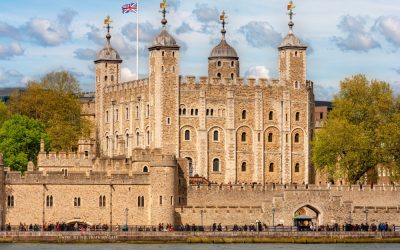
Conquest in Stone — How the Normans Rebuilt England
In 1075, a white stone fortress began rising above the timber streets of London. It was not English. Its builders spoke French, and its sheer presence above the city announced something unmistakable: England had been conquered. The White Tower — now embedded within...
Act III — The Stress Test
When the Numbers Stop Adding Up
Every system eventually encounters pressures it was not designed to withstand.
The fourteenth and fifteenth centuries brought a succession of shocks: famine, plague, labour shortages, war, political instability, and dynastic conflict.
The Great Famine exposed the limits of medieval agriculture. The Black Death transformed the relationship between land and labour. The Hundred Years’ War strained governments and finances. The Wars of the Roses revealed fractures within the ruling elite.
Yet collapse was not the outcome. Adaptation was.
Act III examines what happens when institutions confront realities they can no longer ignore.
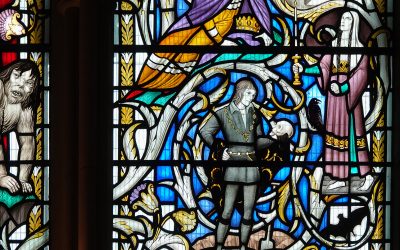
The Calamitous 14th Century — When the Numbers Stopped Adding Up
By 1300, medieval Europe looked remarkably successful. Populations had been growing for generations. Towns were expanding. Trade flourished. Universities were opening their doors. Governments had become more capable and kingdoms more prosperous. If you had been living...
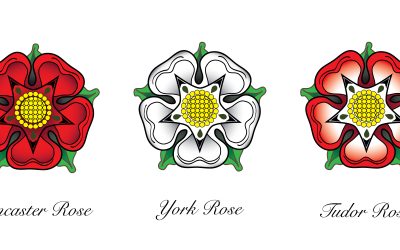
The Wars of the Roses — The Crisis of Dynastic Succession
The conflict known as the Wars of the Roses was not a single war but a long struggle for the English crown fought between rival branches of the royal family. The two houses were House of Lancaster and House of York. Both traced their ancestry to Edward III, and both...
Act IV — Reinvention
A Larger World
The old medieval order did not disappear. It was transformed.
Printing multiplied ideas. The Reformation challenged authority. Oceanic exploration connected continents. Trade expanded. Empires grew. Religious conflicts reshaped politics.
The scale of the known world expanded dramatically. Europe did not simply recover from the stresses of the late Middle Ages—it reinvented itself.
Act IV explores how societies adapt when the room suddenly becomes much larger.
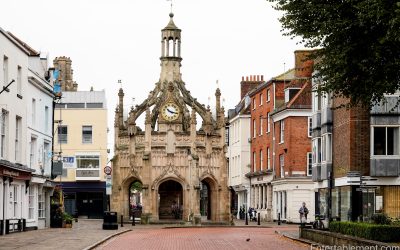
The Long Recovery — When England Quietly Changed Direction
The England we left at the end of the fourteenth century had endured almost everything history could throw at it. The Black Death had returned more than once. War with France dragged on for generations. Harvests failed. The Peasants' Revolt exposed deep social...

Florence — Wealth, Banking and Taste
A visitor to Rome is immediately struck by the juxtaposition of ancient and modern life. Traffic whizzes past the Colosseum, while Romans go about their daily business, apparently taking for granted a monument that has stood for nearly two thousand years. Ancient...
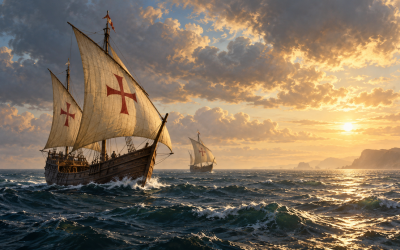
Portugal — The Atlantic Opens
In 1492, Columbus sailed the ocean blue. We remember the rhyme. But why was he going at all? Why Bother? Columbus was looking for a sea route to Asia. What could possibly make such an expensive and dangerous journey worthwhile? The answer begins with things that...
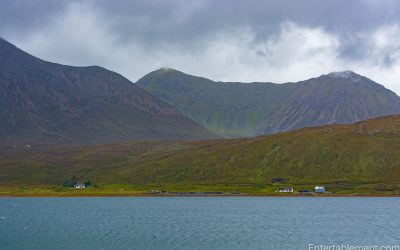
The Highland Clearances — When the Old Ways No Longer Worked
Sheep, landlords, tenants, and the difficult business of adapting to change A Story Told on the Water Some years ago, Glenn and I travelled through Scotland aboard the Belmond Royal Scotsman, on its Clans and Castles itinerary. One excursion took us out on the water...
Act V – Civilization Compounds
Ideas Build Upon Ideas
The final act is still unfolding.
The Enlightenment, the Scientific Revolution, industrialization, representative government, global trade, mass education, and modern technology all share a common characteristic: they build upon previous generations of accumulated knowledge.
Ideas begin to compound. Knowledge spreads faster. Institutions become more sophisticated. Capabilities expand.
The opportunities grow.
So do the risks.
Act V asks a question that remains open today:
What happens when civilization acquires powers its institutions are still learning how to manage?
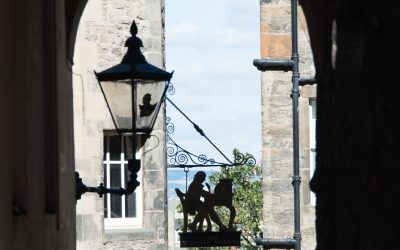
Edinburgh — Where Scotland Learned to Question
Edinburgh is a city best approached on foot, although your legs may have a few objections. The Old Town rises and falls along a rocky ridge, its narrow closes disappearing between tall buildings, Streets occasionally open onto unexpected views of the Firth of Forth or...