
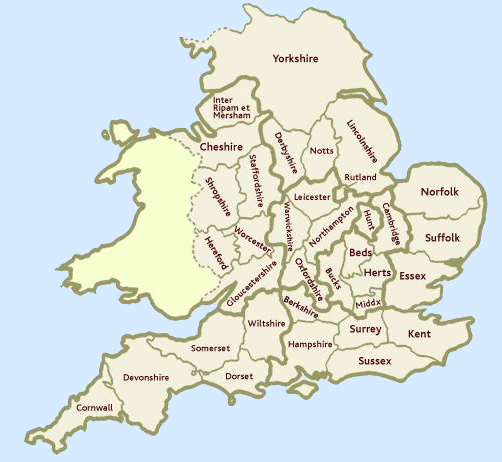
How do you govern a kingdom before telephones, railways, newspapers, or computers? The question confronted every medieval ruler.
Authority might reside in London, Winchester, or Westminster, but England stretched far beyond the horizon. Messages travelled at the speed of horse or foot. Information was slow, incomplete, and often unreliable.
Yet medieval England became one of the most effectively governed kingdoms in Europe.
Enter The Shire (or County, as it’s now known)
Part of the answer lay in a deceptively simple idea: the shire.
Many English counties have ancient origins, some reaching back to Anglo-Saxon times. Long before the Norman Conquest, England had already developed a system of regional administration built around shires and local officials.
The Normans did not invent the structure. They adopted it, and used it remarkably well.
There’s a New Sheriff in Town
At the centre of the system stood the sheriff. The word itself derives from “shire reeve”—the royal official responsible for representing the king’s authority within a county.
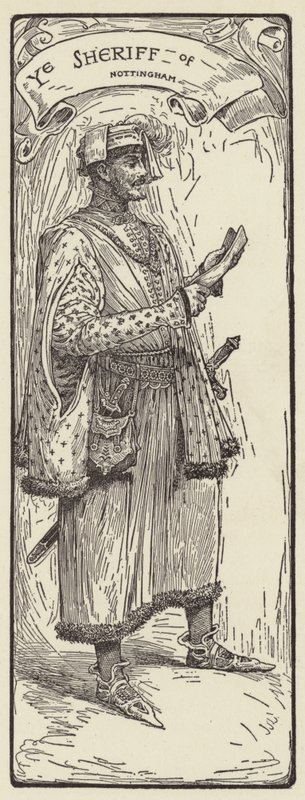
The Sheriff of Nottingham; Source
The sheriff’s job was to:
- Collect revenues.
- Oversee royal lands.
- Administer justice.
- Maintain order.
- Report information back to the Crown.
In modern terms, the sheriff was part tax collector, part judge, part administrator, and part regional manager.
And We Think Networks are New
The genius lay not in the individual office but in the network. England had been divided into manageable units, and while information flowed upward, authority flowed downward. Hence, the kingdom became governable at scale.
This administrative geography helped make possible many of the institutions that followed.
- Compiling the Domesday Book relied upon local knowledge gathered through shire structures.
- The Exchequer depended upon sheriffs to collect and report revenues.
- Royal justice increasingly operated through county administration.
The system was by no means perfect. Sheriffs could be corrupt, inefficient, or unpopular. Medieval records contain numerous complaints about abuses of office.
Yet the framework endured because it solved a fundamental problem: How do you extend authority beyond line of sight?
The answer was not more castles or larger armies.; the answer lies in organization. The shires transformed geography into governance. Their success is easy to overlook because counties feel so familiar. Many survive today with boundaries and identities stretching back centuries.
That familiarity is itself evidence of their achievement.The shire was more than a place on a map. It was an administrative technology.
One of the hidden systems that helped turn England into a kingdom capable of governing itself.