

By 1300, medieval Europe looked remarkably successful. Populations had been growing for generations. Towns were expanding. Trade flourished. Universities were opening their doors. Governments had become more capable and kingdoms more prosperous.
If you had been living in England then, you might reasonably have believed the future would look much like the recent past.
It didn’t.
Sometimes civilization changes because human ingenuity discovers something new—a better sail, a printing press or a steam engine. At other times, history changes because reality delivers a savage blow. Harvests fail. Disease spreads. The climate shifts.

The World Before the Storm
The first warning arrived in 1315. Years of unusually wet weather brought harvest failures across much of northern Europe. Crops rotted in the fields. Livestock died. Food became scarce. What followed became known as the Great Famine.
The crisis eventually passed, but it exposed something important. Medieval society had become increasingly dependent on continued growth. More people required more food. More cultivation pushed agriculture into less productive land. There was less room for error than there had once been.
The machinery was working, but it was already operating closer to its limits than most people realized. Medieval Europe had become a remarkably successful system. Like many successful systems, however, it had quietly become more dependent on everything continuing to work.
Then came the Black Death. When plague arrived in England in 1348, contemporaries struggled to comprehend what they were witnessing. Villages lost families and towns lost craftsmen. Monasteries were deprived of monks. Some communities lost half their population.
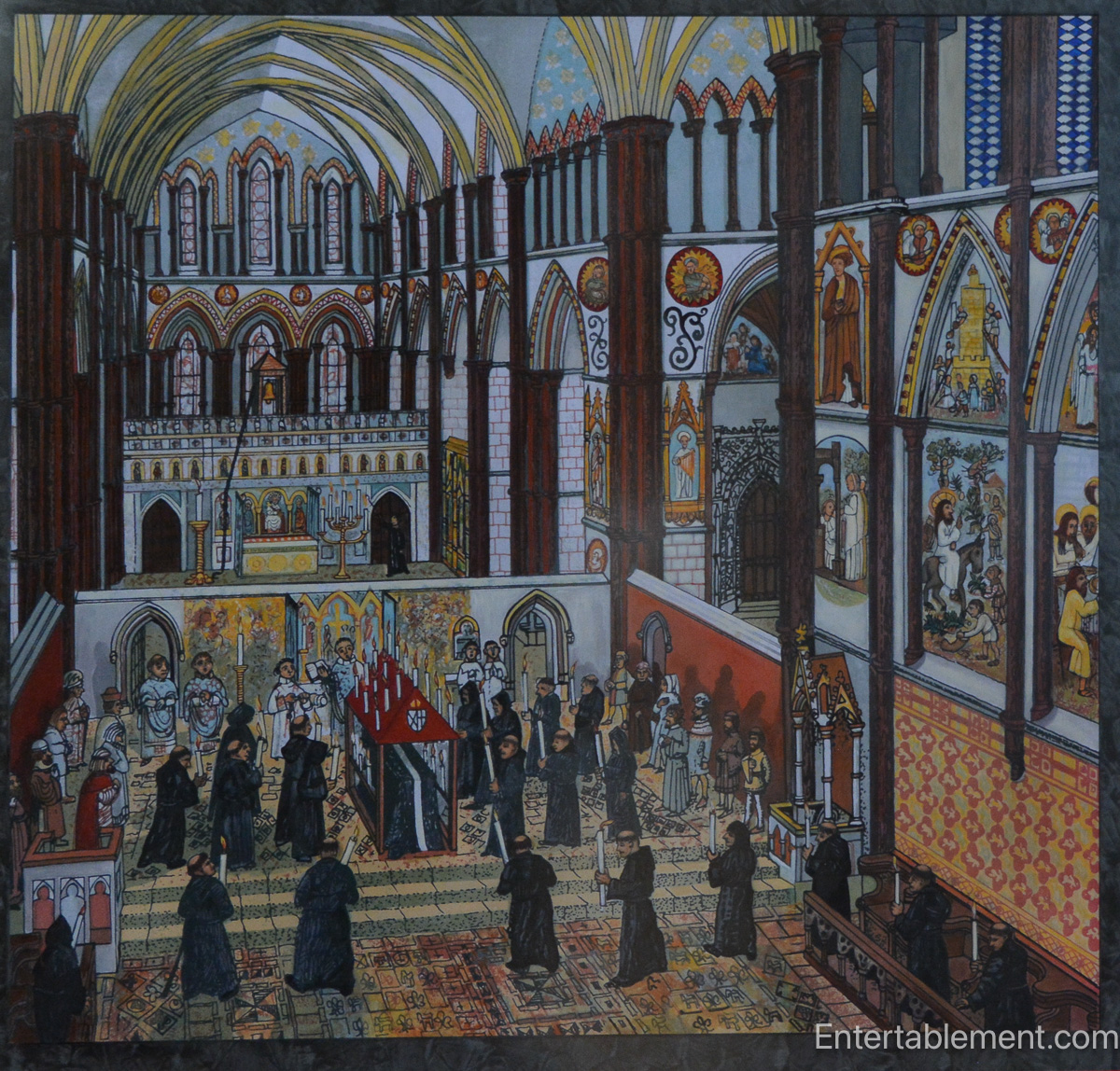
Death of Thomas Brinton 1389
The human tragedy is difficult to overstate. Yet what fascinates me most is what happened afterward.
An Unexpected Shift in Power
For centuries, medieval society had been built around a simple assumption: people were plentiful. Land, money and opportunity might be scarce. But people were everywhere.
Then, suddenly, they weren’t.
Imagine owning a large estate in 1340. Your challenge is finding enough land for tenants. Then imagine owning that same estate twenty years later. The land is still there, but the tenants are not.

Fields still need ploughing. Sheep require tending. Buildings are in need of repair. But the workers required to do those things have become surprisingly difficult to find. When the arithmetic changes, power usually follows.
For perhaps the first time in generations, labourers discovered that employers needed them more than any particular worker needed that employer. Wages rose while opportunities expanded. People moved. Landlords found themselves competing for labour.
This was not liberation born of ideology; it was autonomy born of arithmetic.
The Trouble with Old Assumptions
The authorities were not enthusiastic. In 1351, the Crown issued the Statute of Labourers, an attempt to freeze wages and prevent workers from demanding better terms. The logic was straightforward enough: if rising wages threatened social stability, surely a law could stop them.
Governments throughout history have tried to legislate away economic reality. Economic reality has rarely cooperated.
The difficulty was that no statute could recreate the millions of people who had died. Labour remained scarce, so landlords continued competing for workers. And labourers learned that their services were valuable.
England spent the next generation arguing with the consequences of the Black Death. The assumptions that had once held society together no longer described the world people were living in.Everyone was working from a different memory. Labourers remembered discovering they had choices. Landowners remembered when labour had been plentiful. Governments still needed taxes to finance wars.
The old assumptions no longer matched reality.
When Authority Is Questioned
By 1381, those tensions had accumulated into something larger. The Peasants’ Revolt is often remembered for its dramatic moments: crowds marching on London and confrontations with royal officials. The revolt’s most famous leader, Wat Tyler, became the face of a reality that rulers could no longer ignore.
These pressures would eventually challenge not only local authorities but the monarchy itself, contributing to the tensions that marked the reign of Richard II.

Yet beneath the drama lay a simpler question. If the world had changed so profoundly, why were people still expected to live by rules designed for a different age?
The revolt itself was suppressed. Its leaders were killed and order was restored— at least on the surface. The deeper changes, however, proved far more difficult to reverse. The authorities won the confrontation, but the old equilibrium never fully returned.
Room to Imagine Something Different
One of the paradoxes of the fourteenth century is that catastrophe created opportunity.
A smaller Europe was not necessarily a happier Europe. The century remained harsh, violent, and uncertain. Plague returned repeatedly. War continued. Political instability persisted.

Yet survivors found themselves with something that had previously been in short supply: room. Room to negotiate, to move and to imagine different possibilities. Customs that had once seemed permanent began to loosen. Established hierarchies came under pressure.
Economic assumptions were not the only ones under pressure. Even the Church found its authority questioned as familiar explanations struggled to account for unfamiliar realities. Voices such as John Wycliffe‘s did not emerge in a vacuum. They reflected a society increasingly willing to ask whether long-established institutions still deserved unquestioned confidence.
The century did not produce optimism. It produced possibilities. And possibilities can be surprisingly disruptive.
Even literature began to notice the difference. Geoffrey Chaucer populated The Canterbury Tales not with kings and saints alone, but with merchants, millers, wives, scholars and pilgrims—a broader cross-section of English life than previous generations had imagined worth recording. Society itself had become more varied, more mobile and more interesting.
The Real Legacy of the Fourteenth Century
People living through the Black Death often searched for villains. They blamed sinners, foreigners, heretics, bad air, divine punishment—anything that might explain what was happening. This is a very human response. When systems come under strain, we instinctively look for causes that have faces.
The deeper story is often less personal. The relationship between people, land, labour, and institutions had changed. The assumptions that had supported medieval society for centuries no longer fit reality.
The fourteenth century did not simply interrupt England’s story. It asked whether the institutions built during the High Middle Ages were strong enough—and flexible enough—to survive a world that no longer behaved as expected.
Some broke. Others adapted. Those that endured became the foundations upon which England would rebuild.
The generations that followed would wrestle with those consequences through disputed kingship, dynastic conflict and eventually the Wars of the Roses — a story reflected in figures such as Henry IV, Henry V, and Margaret of Anjou.
Out of that long period of instability, England gradually became ready to reinvent itself.