
Hidden Frameworks
Civilization is usually described through its most visible achievements: great buildings, famous leaders, works of art and moments of political drama.
Yet the systems that make those achievements possible often remain almost invisible.
Roads, water supplies, legal systems, financial institutions, universities, shipping networks, standards of measurement and habits of cooperation rarely receive the same attention as the people and events they support. We tend to notice them most clearly when they fail.
The Hidden Framework explores the physical, institutional and social systems that allow complex societies to function. Some are tangible. Others exist only because millions of people trust them enough to participate. Together they answer a deceptively simple question:
How do millions of people live, work, trade and cooperate at scale?
Human Infrastructure
Behind every successful institution stands a network of people, relationships and shared expectations.
Trust, leadership, expertise, voluntary cooperation and a sense of civic responsibility cannot be engineered in the same way as a road or a bridge, yet they are no less essential. This section explores the individuals, communities and social structures that transformed collections of people into functioning societies.
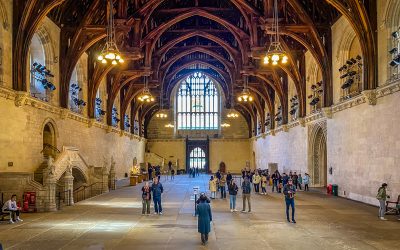
The Peerage and The Gentry — England’s Governing Class
Westminster Hall has witnessed coronation feasts, royal courts, state trials and the evolution of Parliament. Yet England was never governed from this room alone. Beyond these walls, thousands of members of the peerage and gentry quietly carried out the work that kept...
Institutional Infrastructure
Civilizations depend not only on what they build, but on how they organize themselves.
Laws, records, courts, universities, representative government and systems of taxation create the stability that allows people to cooperate with strangers and plan for the future. These institutions evolved gradually, often through centuries of experimentation, becoming some of the most enduring frameworks ever created.

Standard Time — Sandford Fleming and the Order of Hours
A World Out of Sync For most of human history, time was local. Towns set their clocks by the sun, with noon defined as the moment it reached its highest point in the sky. When people and information travelled slowly, the small differences between one town’s time and...
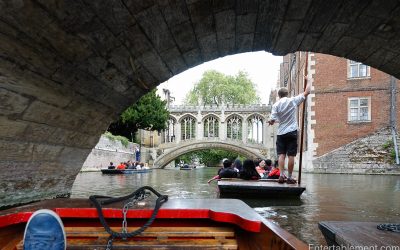
Universities — Where Knowledge Learned to Grow
Knowledge presents a curious problem. A skilled craftsperson can teach an apprentice. A parent can pass experience to a child. A teacher can educate a classroom. But how does an entire society accumulate knowledge over centuries? How do ideas survive the people who...

Charters and Privileges — Learning to Negotiate
Civilizations cannot function through command alone. As societies grew larger and more complex, different groups inevitably developed different interests. Kings sought revenue. Towns wanted autonomy. Merchants looked for opportunities to trade. Monasteries desired...

Guilds — How Skills Survived
Civilizations depend upon skills. That may sound obvious, but it poses a surprisingly difficult challenge. A cathedral does not build itself. Someone must know how to quarry stone, shape timber, design arches, and raise walls that will stand for centuries. Tools must...

Common Law — When Trust Became a System
Civilizations depend upon trust. Not necessarily trust between friends, neighbours, or family members. Most societies manage that reasonably well. The greater challenge is trust between strangers. Imagine arriving in a town you've never visited before. You agree to...

Parliament — Institutionalizing Consent
Parliament is often presented as an early step on the road to democracy. There is some truth in that interpretation. Yet it risks missing the more immediate question Parliament was created to solve: How do you govern increasingly capable people? By the thirteenth...
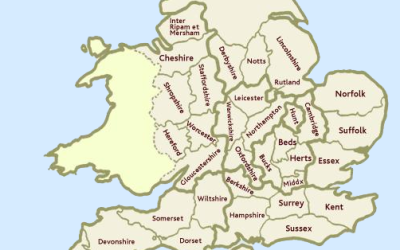
Sheriffs and Shires — The Geography of Governance
How do you govern a kingdom before telephones, railways, newspapers, or computers? The question confronted every medieval ruler. Authority might reside in London, Winchester, or Westminster, but England stretched far beyond the horizon. Messages travelled at the speed...

The Exchequer — Counting the Kingdom
Most visitors to medieval castles imagine kings making grand decisions. Most visitors to medieval cathedrals imagine bishops debating matters of faith. Few imagine accountants.Yet one of the most important innovations in medieval England involved neither warfare nor...

The Domesday Book — When England Learned to Count
Most people encounter the Domesday Book as a historical curiosity. A giant medieval survey commissioned by William the Conqueror in 1086. It's seen as an impressive artifact, a useful source, and a remarkable survival. All true. Yet the real significance of Domesday...
Physical Infrastructure
Physical infrastructure forms the skeleton of civilization.
Roads, bridges, canals, ports, power, water and building materials allow people, goods, energy and ideas to move efficiently across great distances. These systems are so deeply woven into everyday life that we rarely notice them until they break down. The essays in this section explore the engineering, ingenuity and practical problem-solving that made increasingly complex societies possible.

Power Lines—The Rise of the Electric World
Before electricity remade the night, people had become remarkably good at managing darkness. Candles and oil lamps had illuminated homes for centuries, until the nineteenth century brought gaslight to streets, factories, theatres and drawing rooms. Each improvement...
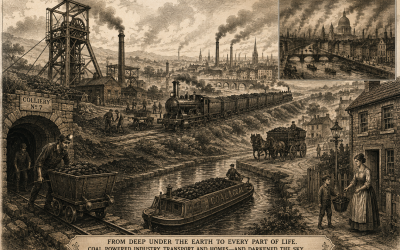
Black Underfoot—Coal and the First Energy Abundance
In the summer of 1976, London was preparing to celebrate the Queen’s Silver Jubilee. Some buildings had already been cleaned for the occasion; others were still waiting their turn. The contrast was startling. Pale stone gleamed beside façades darkened by decades of...
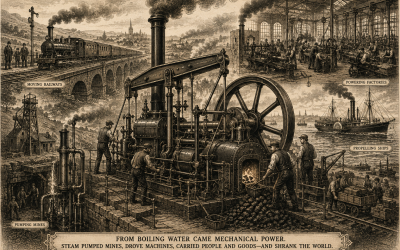
Steam, Engines & Smoke — The Real Engines of the Industrial Age
Steam & Smoke: The Real Engines of the Industrial Age Before electricity lit streets and homes, the machinery driving the industrial world was hard to ignore. Steam hissed, pistons thudded and chimneys poured smoke into the air. At the heart of it all was...
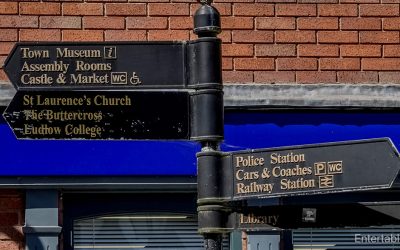
Civil Society — The Institutions Nobody Designed
At a crossroads in Ludlow, a signpost directs visitors towards the castle, market, St Laurence's Church, the Buttercross, assembly rooms, town museum, college and library. It is a wonderfully concise introduction to the town, and to something we seldom think about:...

The Water Highways—Canals and the Logistics of the Industrial Revolution
Long before railways stitched Britain together with iron and steam, another network quietly reshaped the country. These were the canals — the water highways of the Industrial Revolution. Britain did not invent the idea that controlling water could transform...

Water Works: Aqueducts, Sewers, and the Flow of Civilization
If you’ve ever flushed a toilet, turned on a tap, or bathed in water that didn’t come from a bucket, you’re enjoying the quiet success of one of civilization’s most ambitious engineering projects. Unlike roads or bridges, water systems are designed to disappear. When...

Potholes and Progress
For those of us who live in climates where winter doesn’t so much end as melt into a slushy, muddy spring, roads suddenly become impossible to ignore. The salt and sand remain, the ground begins to shift, and—right on schedule—the potholes arrive. It’s a seasonal...
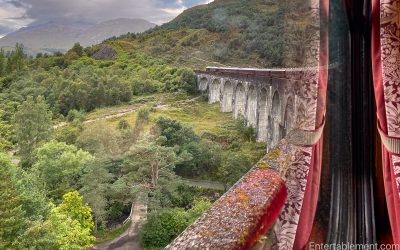
Introduction to The Hidden Framework: The Engineers Who Built the Modern World
The idea for The Hidden Framework for Entertablement Abroad came to me while listening to How the Scots Invented the Modern World — one of those audiobooks that accompanies me as I putter around cooking, gardening or doing chores. I was struck by the story of Sandford...