History often remembers revolts for their drama, and the Peasants’ Revolt of 1381 certainly provided plenty of that. Crowds marched on London. Government officials were attacked.
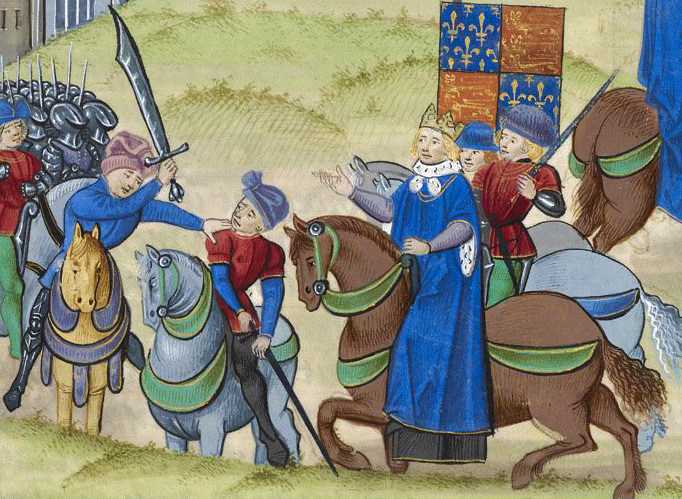
The young Richard II confronted the rebels in person. Wat Tyler, one of the revolt’s leaders, was killed during tense negotiations at Smithfield.
Yet the significance of Wat Tyler lies not in how the revolt ended, but in why it happened. The uprising was a symptom of a much larger transformation that had been reshaping England for decades.
A Plague on All Your Houses
The story begins with the Black Death.
When plague swept through England in the middle of the fourteenth century, it killed a substantial portion of the population. The consequences extended far beyond the immediate tragedy. Labour became scarce and workers suddenly found themselves in greater demand. As wages began to rise, landowners and employers struggled to maintain the old arrangements.
For ordinary people, new opportunities emerged; for those who benefited from the existing system, this was deeply unsettling.
The government attempted to turn back the clock. Laws such as the Statute of Labourers sought to limit wages and tie workers to conditions that reflected the world before the plague. Yet reality had changed. No legislation could reverse the demographic impact of millions of deaths across Europe.
The tension that had been growing for decades was followed by taxation. England’s involvement in the Hundred Years’ War placed increasing demands on royal finances. A series of poll taxes, levied on individuals rather than wealth, proved particularly unpopular. Many people felt they were being asked to shoulder burdens imposed by a system that refused to acknowledge how much their world had changed.
A Changing Social Order
By 1381 frustration boiled over. Rebels from Kent and Essex marched toward London. Their grievances varied, but many shared a common theme: opposition to restrictions that attempted to preserve an older social order.
Wat Tyler emerged as one of the revolt’s most visible leaders. Curiously, we know relatively little about him—unlike kings and nobles, he left few records behind. What survives comes largely from observers who regarded the rebellion with alarm. But his importance does not depend upon biography. Tyler became the spokesman for a reality that rulers could no longer ignore.
The revolt itself was ultimately suppressed. Tyler was killed. Royal promises were withdrawn. The established order appeared to reassert itself. On the surface, little had changed; in reality, almost everything had.
The labour shortages created by the Black Death did not disappear. Economic pressures continued to reshape relationships between landowners and workers. Serfdom gradually declined and mobility increased. Most tellingly, wages remained difficult to control.
The world that the authorities hoped to restore was already fading.
Policy vs Reality
The Peasants’ Revolt revealed a gap between reality and policy. Those in power were attempting to preserve assumptions that no longer matched the facts on the ground. The rebellion was dramatic, but the underlying problem was demographic, economic, and social. Wat Tyler did not create that transformation, or even direct its outcome. He simply gave voice to pressures that had been building for a generation: the numbers had changed and like it or not, England was changing with them.