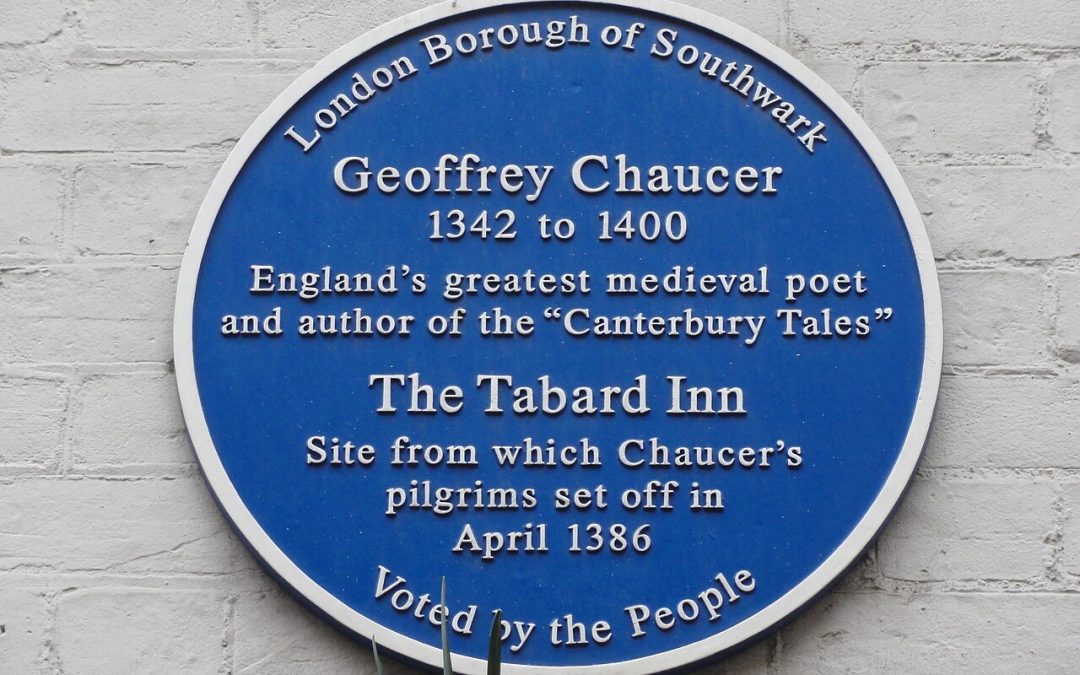
Most periods of history are remembered through the actions of kings, generals, and rebels. Geoffrey Chaucer reminds us that civilizations are also shaped by storytellers.
Living during one of the most turbulent periods in English history, Chaucer witnessed the aftermath of the Black Death, the Peasants’ Revolt, the reign of Richard II, and the political uncertainties that accompanied a rapidly changing society. Yet unlike many chroniclers of his age, he was less interested in recording battles and treaties than in observing people.
And what people he found! Merchants, millers, knights, clerics, wives, pilgrims, officials, and labourers all appear in Chaucer’s work. They are ambitious, funny, vain, generous, hypocritical, wise, foolish, and occasionally all of those things at once. Eight centuries later, they still feel recognizably human.
That achievement was revolutionary.
Writing of Everyday Life
For centuries, much of England’s literary culture had been conducted in Latin or French. These were the languages of the Church, government, and the aristocracy. English survived as the language of everyday life but was rarely regarded as a vehicle for serious literature.
Chaucer helped change that. Writing in Middle English, he demonstrated that the language could handle comedy, tragedy, romance, philosophy, and social commentary. In so doing, he helped establish English as a literary language and laid foundations that later writers, from Shakespeare to Dickens, would build upon.
His masterpiece, The Canterbury Tales, is often described as a collection of stories told by pilgrims travelling to the shrine of Thomas à Becket at Canterbury Cathedral. In reality, it is something much larger. The pilgrimage provides an excuse to gather together an extraordinary cross-section of English society and allow them to speak. Chaucer doesn’t lecture his readers about human nature, but reveals it through conversation, humour, observation, and contradiction.
The result is one of the first great portraits of England itself.
The Medieval Stress Test
Chaucer lived during what we might call a stress test for medieval society. The Black Death had transformed the economy; it created labour shortages that changed social relationships. Traditional hierarchies creaked pressure, new wealth emerged, and old assumptions were questioned. While politicians argued and kings struggled to maintain authority, Chaucer quietly documented the people living through those changes.
In many ways, he represents one of the hidden consequences of the fourteenth century. England was becoming self-aware. The kingdom was not merely surviving crisis, it was now speaking about it, in a voice that was curious, observant, humorous, and increasingly willing to examine itself.
Perhaps this is why Chaucer still feels surprisingly modern. He rarely presents people as heroes or villain. Instead, he portrays them as they are: complicated, inconsistent, and endlessly fascinating. Just like us.
History often remembers the rulers of an age. Chaucer remembered everyone else. And in doing so, he helped England learn to tell its own story.