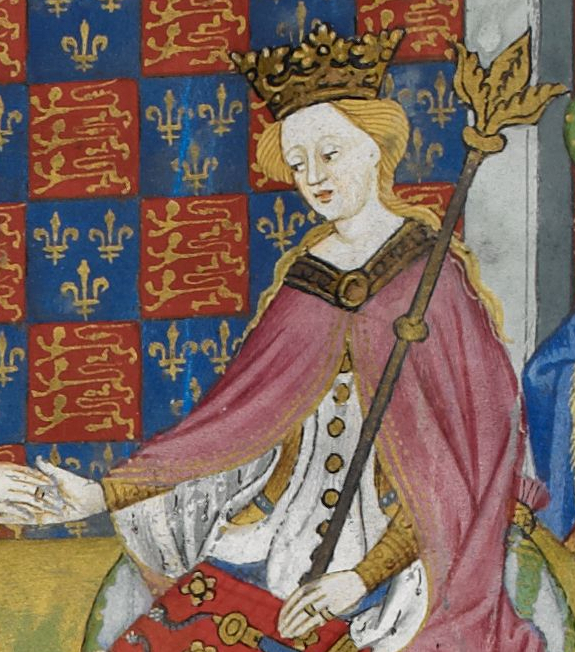
History is often kinder to victors than to survivors. Margaret of Anjou was neither.
For centuries she has appeared in English history as a controversial figure: ambitious, combative, and unwilling to accept defeat. To some contemporaries she was a dangerous woman who helped plunge England into civil war. To others she was a determined queen fighting to protect her family and her son’s inheritance. And the truth is perhaps both simpler and more complicated.
Margaret spent much of her life attempting to preserve a political order that was already beginning to fall apart.
A Queen in an Unravelling Kingdom
Born in 1430, Margaret was the daughter of René of Anjou, a French prince whose titles greatly exceeded his resources. At the age of fifteen she married King Henry VI of England, sealing a diplomatic agreement intended to bring peace between England and France.
The marriage brought Margaret into a kingdom that appeared stable on the surface, but problems were bubbling underneath.
The victories won by Henry V were fading into memory. England’s position in France was deteriorating. Powerful nobles competed for influence. The crown’s finances were strained. Confidence in government was weakening.
Most critically, Henry VI proved very different from his father. Deeply pious and personally gentle, Henry possessed many admirable qualities. Yet he lacked the decisiveness and political authority required to manage an increasingly divided kingdom. As rival factions gathered around competing nobles, effective leadership became harder to maintain.
When the King Could Not Rule
Then matters became dramatically worse. In 1453 Henry suffered a severe mental collapse that left him unable to govern for extended periods. The kingdom suddenly faced a question for which medieval institutions had no clear answer:
What happens when the king cannot rule?
Somebody had to make decisions. Somebody had to protect the interests of the royal family. And somebody had to safeguard the future of the young Prince Edward. Increasingly, that someone was Margaret. It was an impossible assignment.
At the Centre of the Storm
Every action she took generated opposition. Every attempt to defend her son’s inheritance was viewed through the lens of factional politics. Supporters of Richard, Duke of York, regarded her as an obstacle. Her own supporters expected strength and leadership in circumstances that offered few good choices.
As tensions escalated, England drifted toward civil war. The conflict that became known as the Wars of the Roses was not simply a struggle between two families. It was a crisis of legitimacy. Competing branches of the royal house advanced rival claims to the throne. Old assumptions about authority began to fracture. The political system struggled to resolve disputes peacefully.
Margaret found herself at the centre of that storm. Unlike many medieval queens, she was not merely an observer. She negotiated, campaigned, formed alliances, raised support, and fought for the Lancastrian cause across England and France. Her determination impressed allies and alarmed opponents.
Fighting for a Lost Cause
Yet determination could not alter reality.
The Yorkist cause eventually triumphed. In 1471, following the Lancastrian defeat at the Battle of Tewkesbury, Margaret’s son Edward was killed. The future for which she had struggled vanished almost overnight.
Soon afterward she returned to France, where she spent her remaining years in relative obscurity.
Custodian of a Fragile Crown
By conventional standards, Margaret failed. The dynasty she defended lost the throne. The son she fought to protect never became king. And the cause she championed collapsed.
Perhaps history should judge her more generously. Margaret did not create England’s crisis. She inherited it. The kingdom she entered as a young queen was already burdened by military setbacks, political rivalries, financial pressures, and an increasingly ineffective monarchy. When those tensions finally erupted, she became one of the few people willing to confront them directly.
History often celebrates founders, conquerors, and victors. Margaret belongs to a different category. She was a custodian attempting to preserve a fragile inheritance during a period of extraordinary uncertainty.
Whether one admires her or not, her courage is difficult to deny. In an age when institutions were failing and loyalties were shifting, Margaret of Anjou refused to abandon the future she believed was worth defending. That determination helped shape one of the most dramatic chapters in English history.
Margaret could not prevent the collapse of Lancastrian rule. Yet in trying to preserve it, she became one of the defining figures in England’s greatest medieval stress test—a reminder that history is shaped not only by those who build institutions, but also by those who struggle, often unsuccessfully, to keep them alive.