
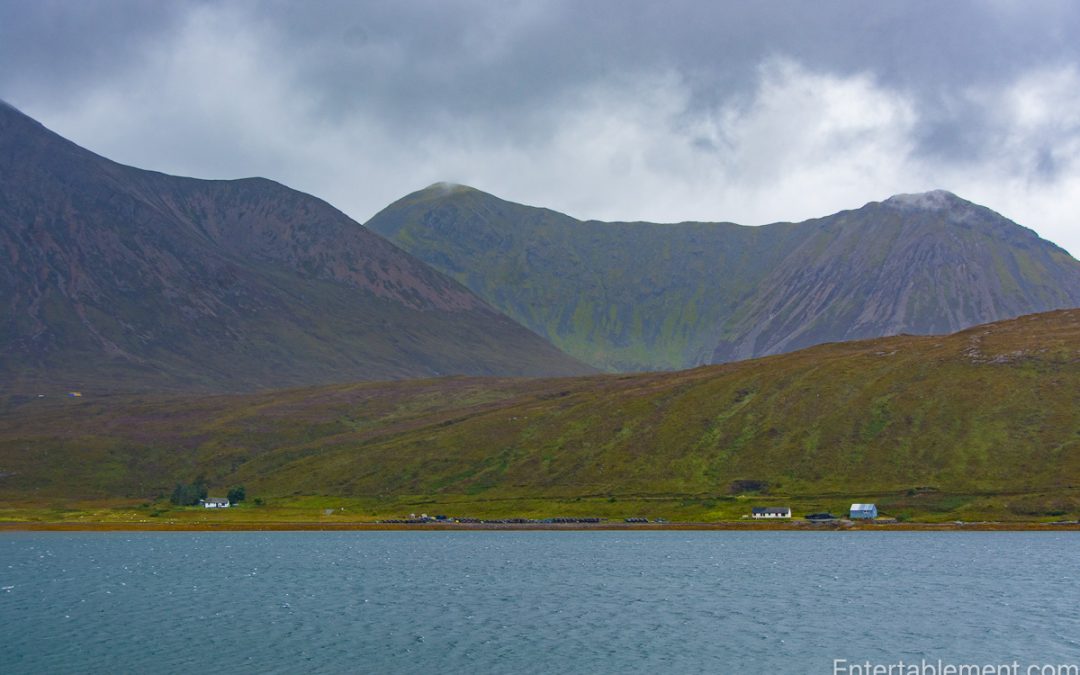
Sheep, landlords, tenants, and the difficult business of adapting to change
A Story Told on the Water
Some years ago, Glenn and I travelled through Scotland aboard the Belmond Royal Scotsman, on its Clans and Castles itinerary.

One excursion took us out on the water with a Highland skipper who had very definite views about the Highland Clearances. He was indignant. Generations of Highland families had been driven from their homes to make room for sheep, their communities destroyed by landlords interested only in increasing their rents.
His account left little room for ambiguity about who had been wronged and who was responsible. It was a compelling story, particularly when told against the magnificent landscape in which these events had unfolded.

But I found myself wondering about what else might have been going on. What had made sheep farming so attractive? How had the Highland economy supported its population before the Clearances? What alternatives were available to landowners and tenants? And why had some communities managed the transition better than others? Most of all, I wondered how people responded when the economic arrangements on which their lives depended began to change.
The Highland Clearances were not a single event. Beginning in the second half of the eighteenth century and continuing well into the nineteenth, they unfolded across communities with different circumstances, under landlords with different motives, during a period of extraordinary economic and technological change.
Before the Sheep
For centuries, Highland society had been organized around clans, kinship and a demanding agricultural environment. The landscape was beautiful, but making a living from it was another matter. Thin soils, short growing seasons and difficult terrain limited cultivation.
Families combined small-scale farming with livestock raising, shared grazing and whatever supplementary activities their location permitted. Cattle were particularly important. Highland cattle could survive difficult conditions, and drovers brought animals south to markets in Scotland and England. The Highland economy was not isolated from commerce, even before the great agricultural changes of the eighteenth century.

The clan system provided a social framework in which chiefs exercised authority and followers expected protection and access to land. It was neither an idyllic arrangement nor an entirely commercial one. Obligations ran in both directions, although power was distributed very unequally.
Over time, that relationship changed. The military and political importance of the clans diminished, particularly after the Jacobite rising of 1745. Chiefs increasingly became landlords in the more familiar commercial sense, concerned with estate income, debts and the productive use of their property. But social expectations did not necessarily change at the same pace.
A tenant might still regard the land as part of an inherited relationship between family, clan and place. His landlord might increasingly see it as an asset that ought to produce a competitive return. Both could believe they understood the arrangement, without realizing how differently they had come to interpret it.
Enter the Sheep
Sheep were particularly well suited to the Highland landscape. Large flocks could graze extensive upland areas, producing wool and meat for growing markets. Commercial sheep farming required capital, knowledge and skilled shepherds, but offered landlords the prospect of substantially higher rents from land that had previously supported numerous small tenancies.
The difficulty was that the land was already occupied. Traditional Highland agriculture combined modest cultivated plots with shared grazing, while commercial sheep farming favoured consolidating those holdings into a handful of extensive leases, often granted to experienced farmers from the Borders or elsewhere in Scotland. The economic advantages were clear, but so was the conflict with families whose livelihoods depended on the existing arrangements.
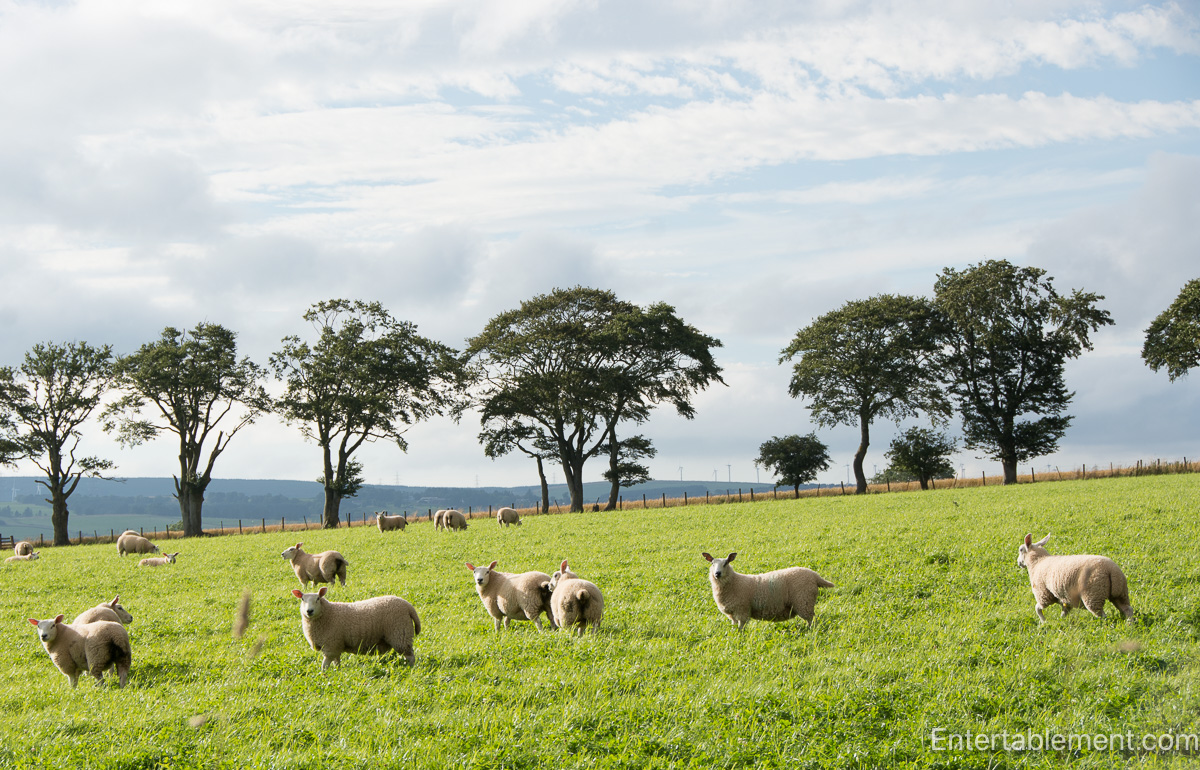
The alternatives, however, were limited. The Industrial Revolution had begun, but there was no convenient factory waiting to be erected on a remote Highland hillside. Roads were poor, markets distant, capital limited and agricultural possibilities constrained by geography. Sheep farming wasn’t necessarily a failure of imagination; in some places, it may well have been the most commercially viable use of the land. That still left the question of what should happen to the people already living there.
A New Life by the Sea
In the earlier period of the Clearances, many landowners did not initially intend to remove their tenants from the Highlands altogether. Instead, they relocated families from inland settlements to smaller coastal holdings, where they were expected to combine limited cultivation with fishing, kelp production and other employment.

Kelp was particularly promising. Burning seaweed produced an alkaline material used in industries including soap and glass manufacture. Demand grew during the eighteenth century, and the trade provided work for thousands of Highlanders.
From the perspective of an estate planner, this could appear to be a sensible reorganization. The inland land would produce sheep rents, while the population would establish a different livelihood along the coast.
Some proprietors invested in coastal development, fishing and associated industries. Others offered far less assistance, and not every tenant was resettled. Even where the intentions were constructive, the transition could be punishing. Families accustomed to farming inland might have little experience of commercial fishing, while coastal crofts were often too small or too poor to support a household without additional earnings. The new arrangement depended on markets that neither landlord nor tenant controlled. For a time, kelp was profitable, but its success was not guaranteed to last.
When the New System Stopped Working
The end of the Napoleonic Wars in 1815 brought major changes to trade and prices. Competition from alternative sources of alkali undermined the kelp industry, while agricultural markets also weakened. Families who had been relocated to the coast found that the supplementary employment on which they depended was disappearing.
Meanwhile, the Highland population had grown, and small holdings had often been subdivided among successive generations. More people were trying to live from limited land, with fewer reliable sources of income. The potato provided a valuable source of food from small plots, but increasing dependence on it introduced another vulnerability. Crop failures in the 1830s were followed by the devastating potato blight of the 1840s. The resulting Highland famine exposed how precarious the coastal economy had become.
This is one reason the chronology matters so much. A landlord making decisions in 1770 might reasonably have expected expanding opportunities in wool and kelp. A proprietor confronting widespread poverty in 1847 faced an entirely different set of circumstances. Nor were all proprietors equally wealthy. Some estates were heavily indebted, and a number of landlords faced financial ruin themselves.
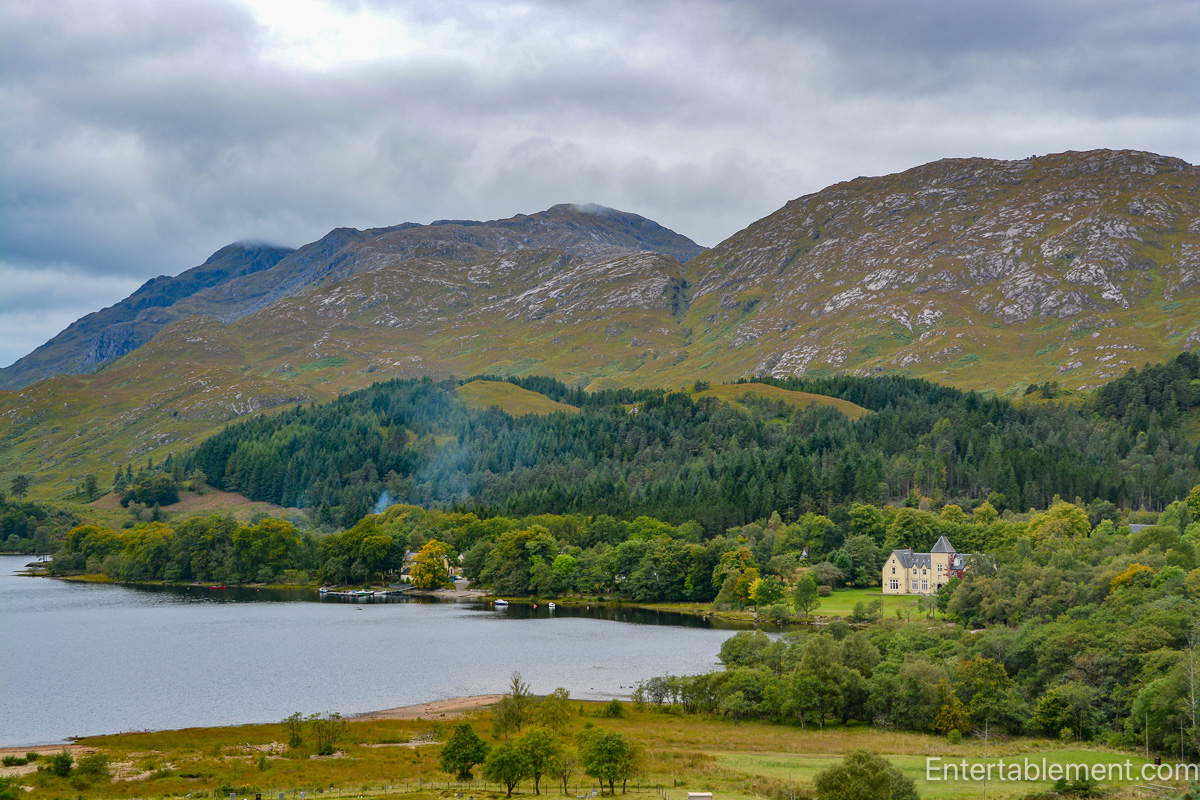
The growing distress of the population also prompted another wave of removals. Emigration, sometimes assisted financially by landlords, increasingly replaced coastal resettlement as the proposed solution. For families who had already adapted once, the ground had shifted beneath them again.
Sutherland and the Cost of Improvement
The Sutherland Clearances became among the most notorious examples of the process. In the early nineteenth century, the Sutherland estate undertook a sweeping reorganization intended to replace inland settlements with commercial sheep farms while relocating tenants to the coast.
The plans included ambitions for coastal employment and economic development. On paper, the transformation was presented as improvement, but its implementation became infamous. In Strathnaver and elsewhere, families were removed from homes their communities had occupied for generations. Houses were demolished or rendered uninhabitable, and accounts of the removals provoked fierce controversy.

Patrick Sellar, an estate factor involved in the clearances, was prosecuted in connection with the events and acquitted. The bitterness surrounding his conduct endured.
The Sutherland story deserves careful examination, not least because the estate’s stated objectives and the experiences of many tenants diverged so sharply. It also raises a question that extends well beyond the Highlands: even where economic change offers genuine benefits.
The Choices People Made
The consequences of these changes were deeply personal. Families faced decisions about whether to remain in increasingly precarious circumstances, seek employment elsewhere or leave Scotland altogether. Their options depended on far more than their willingness to embrace change. A young Highlander with a little money, useful connections and no dependants might see emigration as an opportunity. An elderly tenant with a disabled spouse, several grandchildren and no savings might regard the same prospect with understandable dread.
Leaving also meant abandoning more than a house. Families stood to lose their neighbours, language, familiar customs, local knowledge and the networks of mutual assistance on which they relied. Nor should resistance be confused with passivity. Some tenants petitioned, protested or organized opposition to removal. Others negotiated, relocated, sought employment or emigrated. Resourcefulness, initiative and tolerance for uncertainty undoubtedly influenced individual responses, but they operated within circumstances that differed enormously from one household to another.
The landlords faced choices of their own, although they generally possessed far greater control over the terms of change. Some were energetic improvers, others financially desperate, and still others chiefly interested in increasing rents. Some invested in new settlements and employment; others carried out removals with little apparent concern for what happened afterward. There were also proprietors who delegated decisions to factors and estate managers, introducing another layer between the people making the plans and those living with their consequences.

The Highland Clearances were part of a much wider transformation of Britain’s economy, and the old arrangements could not necessarily have continued indefinitely. But recognizing the economic pressures does not excuse every decision made in response to them. Landlords differed in their willingness to accommodate those whose livelihoods were threatened, just as tenants differed in their ability to adapt to changing circumstances. The results reflected geography, markets, resources and individual judgment, often in combinations that are difficult to disentangle. Understanding those differences does not diminish the suffering caused by the Clearances. It helps explain why the consequences varied so greatly, and why the manner in which change is managed matters as much as the reasons for undertaking it.