
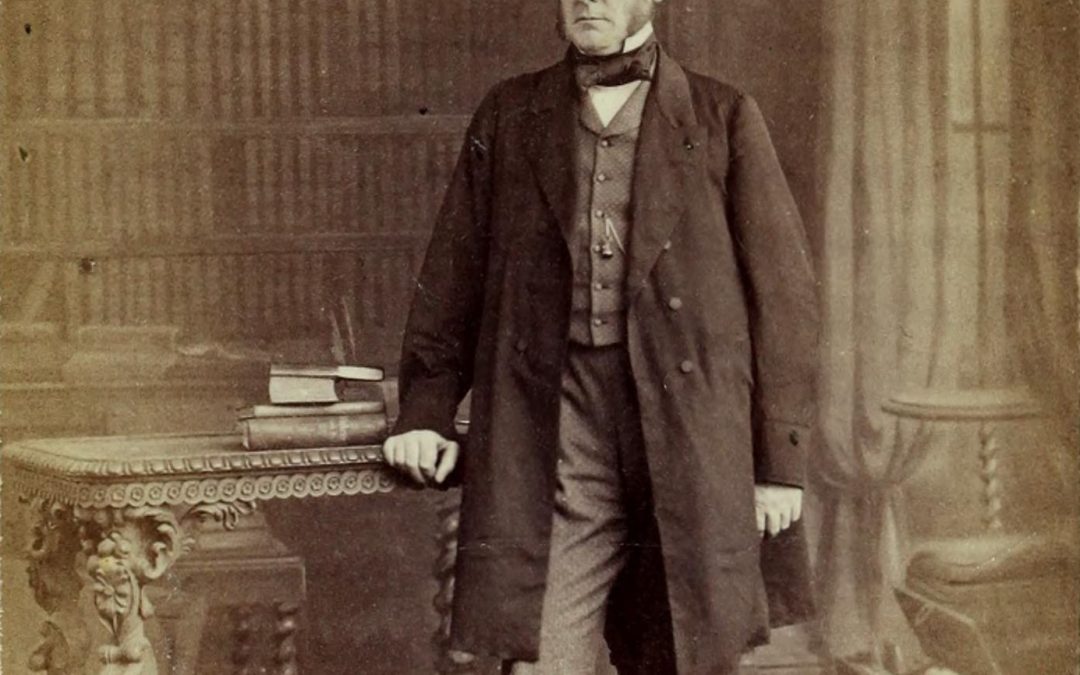
Walk into almost any English cathedral and there is a good chance George Gilbert Scott has already been there.
York, Lichfield, Ely, Chichester, Peterborough, Rochester, St Albans, Hereford, Exeter, Durham, Salisbury—the list seems almost endless. By the time of his death in 1878, Scott had worked on hundreds of churches and dozens of cathedrals, leaving a mark on Britain’s medieval heritage unmatched by almost any other architect.
Over the course of his career he undertook more than 800 commissions, making him one of the most prolific architects in British history. Yet relatively few people today know his name.
That is perhaps because Scott rarely sought to create monuments to himself. His life’s work was devoted instead to preserving monuments created by others. If Sir Christopher Wren rebuilt London after the Great Fire, George Gilbert Scott did more than anyone to rebuild medieval Britain.
A Nation Wealthy Enough to Remember
Scott lived during an extraordinary period of confidence and prosperity. The Industrial Revolution had transformed Britain into the world’s leading economic power. Railways connected towns that had once been days apart. Factories produced wealth on a scale unimaginable only a century earlier.
For the first time in generations, Britain possessed not only the resources to build for the future, but also the means to care for its past.
Prosperity gave Victorian Britain something earlier generations had often lacked: the freedom to think beyond immediate survival. Medieval buildings that might once have been left to deteriorate could now be repaired, studied and appreciated as part of the nation’s shared inheritance.
Saving More Than Stone
Many of England’s medieval churches had suffered centuries of neglect. Some had been damaged during the Reformation or the Civil War. Others had simply deteriorated through age, weather and lack of maintenance. Roofs leaked. Towers became unstable. Stonework crumbled. In many places, urgent decisions could no longer be postponed.
More often than anyone else, those responsibilities fell to George Gilbert Scott.
Although he designed everything from schools and colleges to railway hotels and public monuments—including the Midland Grand Hotel at St Pancras and the Albert Memorial in Kensington—it was the rescue of Britain’s medieval churches that became his life’s work.
Restoration or Reinvention?
Scott’s restorations were never intended merely to repair broken masonry. Like many Victorians, he believed Gothic architecture represented one of the highest achievements of English civilization. Restoring these buildings was not simply an architectural exercise; it was an act of cultural stewardship. Cathedrals were repositories of craftsmanship, faith, memory and identity. To allow them to decay would have been to lose something that could never truly be replaced.
Today, historians sometimes question aspects of Victorian restoration. In their enthusiasm to recover an imagined medieval ideal, architects occasionally removed features that later generations might have preferred to preserve. Scott himself acknowledged that restoration demanded great care, and over the course of his career his approach became increasingly restrained as his understanding of conservation evolved.
Yet it is easy to judge these decisions with the benefit of knowledge that did not exist at the time. Scott and his contemporaries confronted a different question. Many of the buildings under their care were in serious decline. They faced a choice that ours rarely does: intervene imperfectly or risk losing a priceless inheritance altogether.
The result is visible across England today. Millions of visitors still walk through soaring naves, admire medieval carvings and gaze at ancient stained glass because a Victorian generation believed these buildings deserved to survive.
The Long Chain of Stewardship
Civilizations do not preserve themselves. Every library, cathedral and historic building survives because someone, at some point, decided it mattered enough to repair rather than abandon. George Gilbert Scott made that decision hundreds of times. His greatest legacy is not simply the buildings he touched, but the inheritance he helped pass to the generations that followed.
More than a century after his death, England’s cathedrals continue to welcome worshippers, historians and travellers from around the world. Their stones bear the marks of many generations of builders, craftsmen and caretakers.
Every visit to an English cathedral is, in part, a meeting with George Gilbert Scott. Most visitors will never know his name. Yet as they step beneath vaulted ceilings, admire medieval stonework or pause before ancient stained glass, they are enjoying an inheritance that he helped preserve.
Few architects have left a quieter—or more enduring—gift.