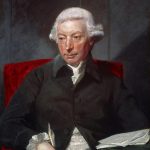

Ptolemy I Soter left his mark on history not only through conquest, but through a shrewd understanding of what was worth preserving.
Most people first meet him as one of Alexander the Great’s generals, standing somewhere in the background while history’s most famous conqueror marched across Asia. It would have been easy to spend the rest of his life remembered simply as one of Alexander’s loyal companions. Instead, he quietly became one of the ancient world’s most successful rulers.
When Alexander died suddenly in Babylon in 323 BC, his vast empire fractured almost overnight. His generals competed fiercely for power, each hoping to inherit some part of what he had built. Many spent decades fighting to recreate Alexander’s empire.
Ptolemy chose a different path. Rather than chasing everything, he secured Egypt. It proved to be one of history’s better decisions.
Rich farmland stretched along the Nile. Ancient administrative systems already existed. The Mediterranean connected Egypt to the wider world. Instead of endlessly expanding, Ptolemy concentrated on making one kingdom remarkably stable. It was a different kind of ambition.
A Practical Mind
If Alexander was bold, Ptolemy was patient.
One story captures his character rather well. After Alexander’s death, an elaborate funeral carriage began carrying the conqueror’s body towards Macedonia. Possessing Alexander’s remains was more than a matter of respect. Whoever buried him could also claim a measure of political legitimacy.
Ptolemy simply intercepted the procession and brought Alexander to Egypt. It sounds almost audacious. Yet it reveals something important about him. Ptolemy understood that symbols matter. He did not need to win another spectacular battle if he could quietly strengthen his own position through careful judgment.
Throughout his reign he showed the same practical temperament. He fought when necessary, negotiated when possible, and gradually accepted that preserving Egypt mattered more than endlessly pursuing impossible dreams of reuniting Alexander’s empire.
He seemed unusually comfortable asking not, “What can I conquer next?” but “What can I make endure?”
The General Who Remembered
Long before historians studied Alexander, one of his closest companions had already begun recording what had happened. At some point during his reign, Ptolemy wrote an account of Alexander’s campaigns based on his own experiences. The original work has been lost, but it survived long enough for the Greek historian Arrian, writing nearly four centuries later, to use it extensively. Arrian considered Ptolemy one of his most trustworthy sources because he had witnessed the events himself.
That small detail says a great deal about Ptolemy. He was not content merely to shape history; he wanted to preserve it.
Like Samuel Pepys many centuries later, he had occupied a front-row seat during extraordinary events. Unlike Pepys, Ptolemy wrote not a private diary but a public memoir, conscious that future generations might wish to understand how Alexander’s astonishing campaigns had actually unfolded.
It is one of history’s quiet ironies that a man who devoted so much effort to preserving knowledge wrote a book that has itself disappeared.
Yet his voice still reaches us indirectly through the historians who copied, quoted and trusted his work.
A Home for Knowledge
The same instinct shaped his greatest achievement. Ptolemy understood that books scattered across the Mediterranean accomplished little if they remained scattered. Scholars needed somewhere to gather. Ideas needed somewhere to meet.
So in his new capital of Alexandria, he began creating something unprecedented. Not merely a library. An institution.
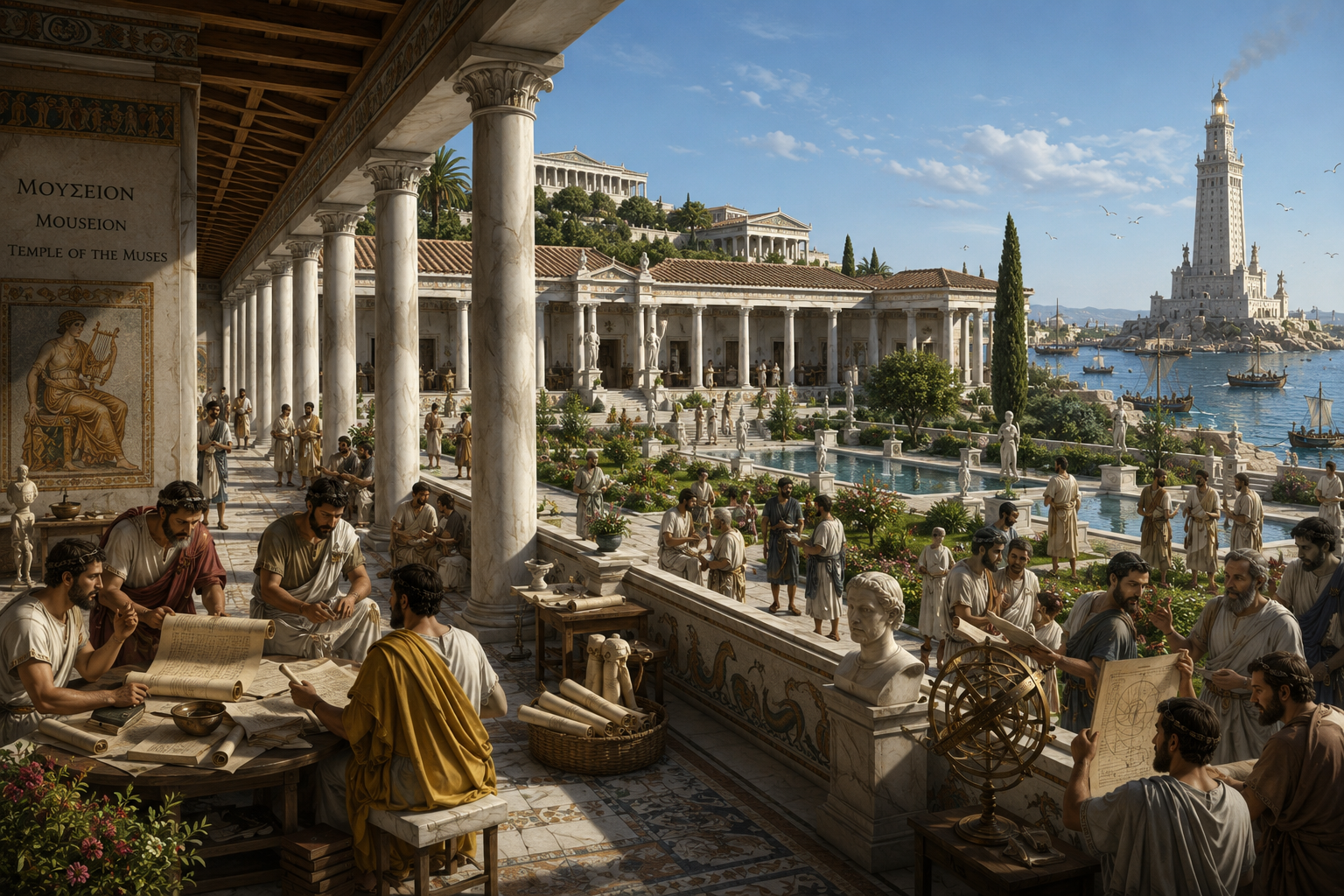
Alexandria Library Campus
His successors greatly expanded the project, but the vision belonged to Ptolemy. Ships arriving in Alexandria were asked to surrender any books they carried so copies could be made. Scholars came from across the Greek world to study mathematics, astronomy, geography, medicine, philosophy and literature.
The Library of Alexandria became far more than shelves of papyrus scrolls. It became a place where knowledge itself was expected to grow.
Thinking Beyond a Lifetime
Perhaps Ptolemy’s greatest gift was time. Alexander died at thirty-two. Ptolemy lived into his eighties and ruled Egypt for almost forty years. Long lives allow different kinds of achievements.
He established a dynasty that would govern Egypt for nearly three centuries. He strengthened Alexandria until it rivalled Athens as a centre of learning. Remarkably for an ancient monarch, he eventually transferred power peacefully to his son, Ptolemy II, helping to secure an orderly succession rather than another civil war.
He seemed to understand something many rulers never do: institutions matter more than individuals.
The Long View
Alexander changed the map. Ptolemy changed what civilization remembered.
It is tempting to think of great civilizations as collections of magnificent buildings, victorious armies or famous rulers. Yet they survive only because generation after generation chooses to preserve what came before. Ptolemy’s greatest monument was not a palace or a battlefield. It was the conviction that knowledge deserved a permanent home.
More than two thousand years later, the original Library has vanished. Most of its scrolls are gone. Even Ptolemy’s own book survives only through the words of later historians. Yet the idea he championed—that civilization advances by collecting, testing, preserving and sharing knowledge—remains one of humanity’s most powerful inventions.
Perhaps that is why Ptolemy still feels surprisingly modern. He understood that remembering is not the opposite of progress. It is one of its foundations.