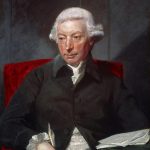

Most people associate William the Conqueror with England, but his story begins across the Channel in Normandy. A duke known to his contemporaries as William the Bastard inherited a fragile duchy and transformed it into one of the most formidable powers in Europe.
Born around 1028 at Falaise Castle, William’s path to power was far from secure. The illegitimate son of Duke Robert I, he inherited the duchy as a child and spent much of his early life surviving rebellions, conspiracies, and assassination attempts. Long before he became known as William the Conqueror, he had learned that authority was rarely given and often had to be defended.
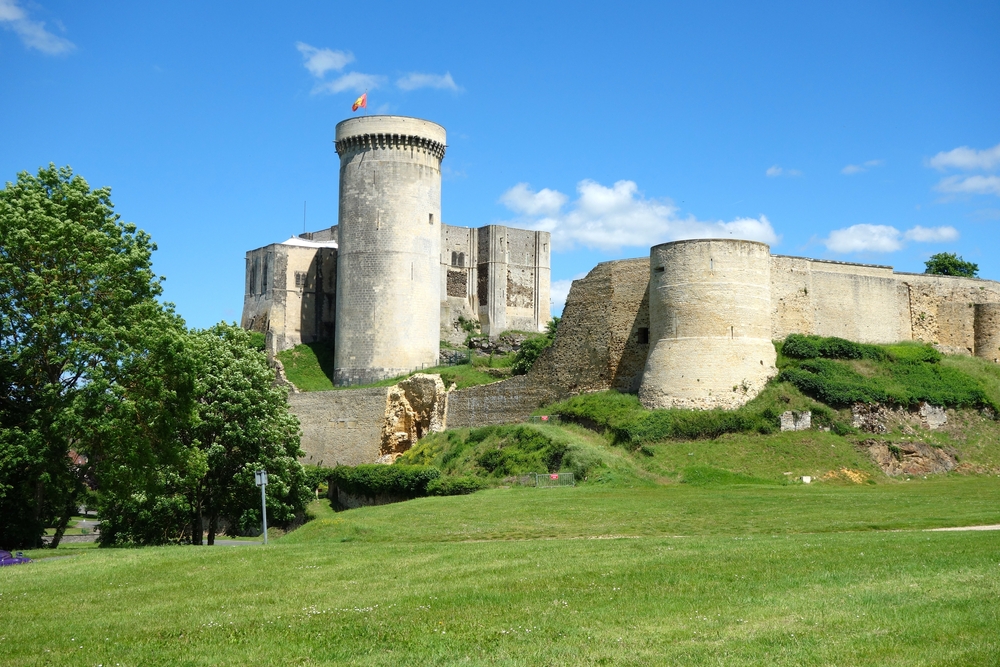
Falaise Castle, Normandy, France
Normandy itself was a remarkable place. Settled by Vikings a century earlier, the region had adopted the language, customs, and Christianity of France while retaining much of the energy and ambition of its Scandinavian founders. By William’s time, the Normans had become some of the most formidable soldiers and administrators in Europe.
When the English king Edward the Confessor died without an heir in January 1066, several men claimed the throne. William believed he had been promised the crown and prepared to enforce that claim. His victory over Harold Godwinson at The Battle of Hastings in October changed the course of English history. It did not, however, secure England overnight. Conquest proved easier than control.
Over the following two decades William rebuilt England’s ruling class, redistributed land, constructed castles, reorganized government, and commissioned the Domesday Book, one of the most remarkable administrative surveys of the medieval world. The landscape itself changed. Stone keeps rose above English towns. Norman cathedrals reshaped skylines. French became the language of the court and aristocracy. England became more closely connected to continental Europe than at any time since the Roman period.
William was neither a simple hero nor a simple villain. He could be courageous, disciplined, and politically astute. He could also be ruthless. Rebellions were crushed with devastating force, particularly in the North, where the Harrying of the North left entire regions impoverished. His achievements came at a considerable human cost.
Yet nearly a thousand years later, the consequences of his reign remain visible. Castles, cathedrals, legal institutions, patterns of land ownership, and even the English language bear the marks of the Norman transformation. Few individuals have altered the course of a nation so profoundly.
The fascinating question is not how William won England. It is how a Norman duke from France came to remake an entire kingdom—and how the world he created still shapes our own.