By the end of the third century, the Roman Empire was in trouble. It had not buckled—it was still vast, wealthy, and formidable. Roman armies still defended long frontiers and trade still crossed the Mediterranean. Cities still functioned; the machinery of empire had not stopped. But it had become dangerously unreliable.
For much of the century, emperors came and went with alarming speed. Generals were proclaimed by their troops, defeated by rivals, and replaced by the next ambitious commander. Civil war was frequent. Borders were under pressure. Currency had been debased leading to severe inflation, The empire had become so large that no single ruler could easily respond to every crisis.
Rome had outgrown the political arrangements that had made it great. Then Diocletian came along and tried to rebuild the system.
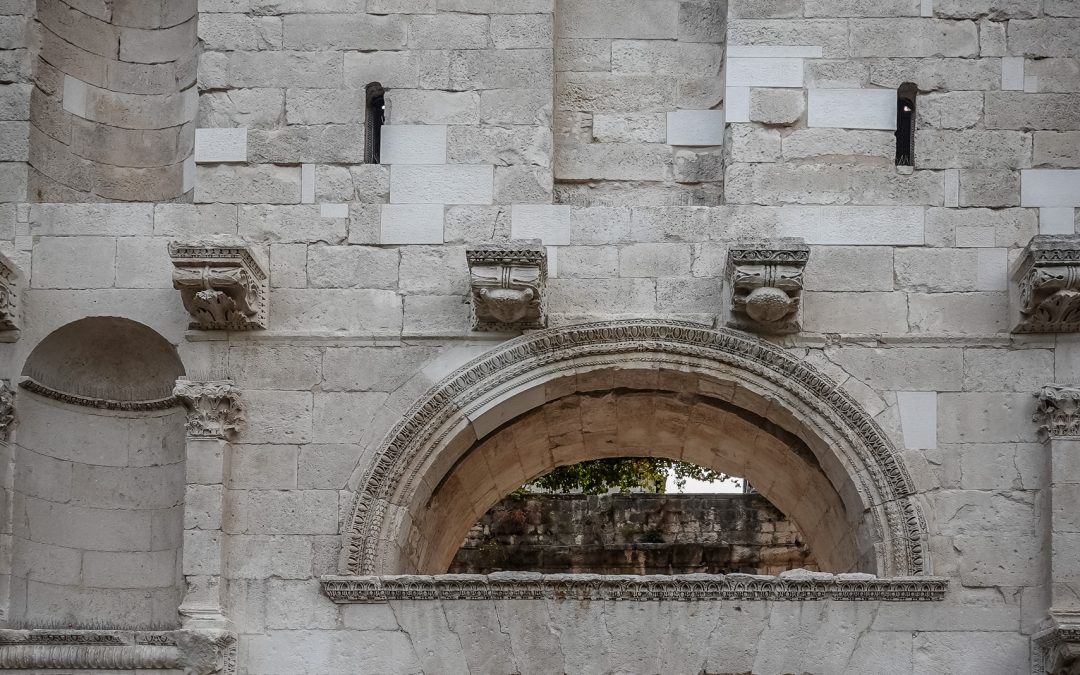
Diocletian’s Palace
He did not save the Roman Empire in the form it had once known. That was no longer possible. But he made it governable again—and, in doing so, helped create the late Roman world that Constantine would inherit.
The Empire in Crisis
Diocletian was born around 244, probably in the Balkans, and rose through the army. That was not unusual. By his time, the Roman army had become one of the few institutions through which a capable man of modest origins could reach the highest level of power.
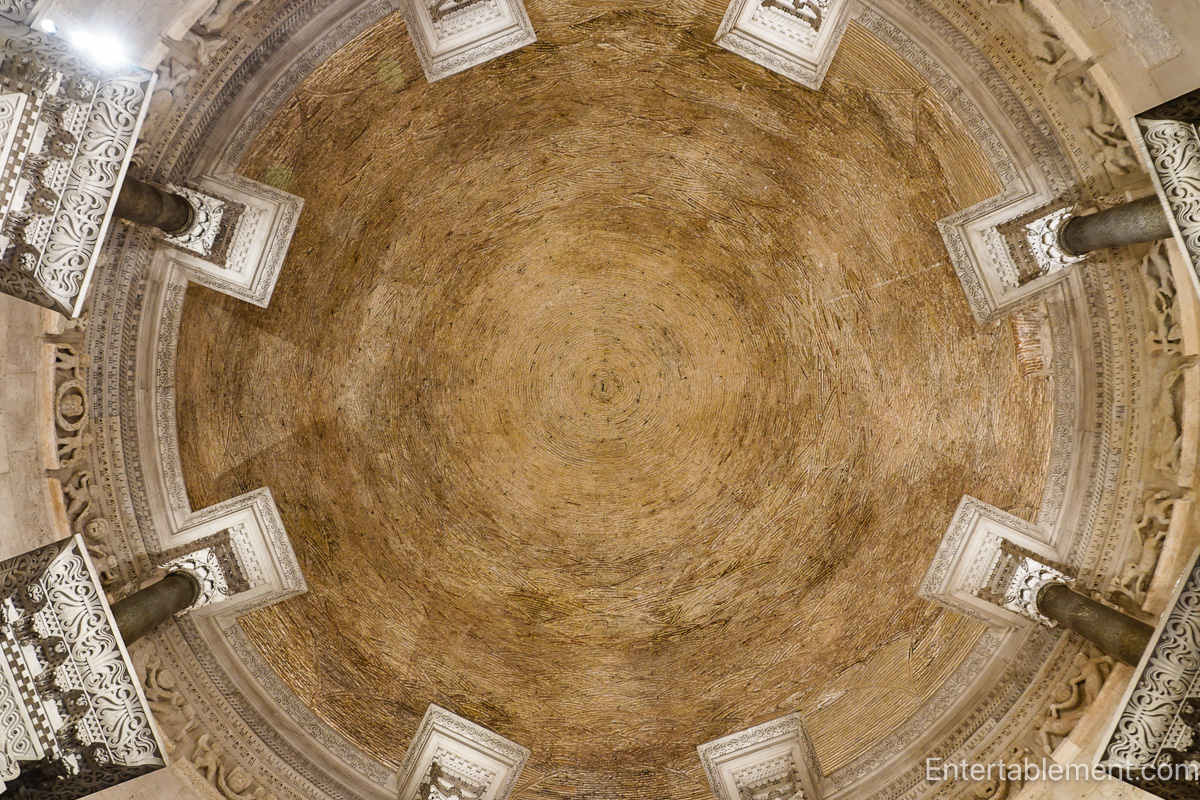
Diocletian’s Palace
He became emperor in 284, after yet another succession crisis. The scale of the problem was daunting. The empire stretched from Britain to Egypt, from Spain to the Euphrates. A crisis in Gaul might require an emperor’s presence while a rebellion was breaking out along the Danube or a Persian invasion in the east. The old arrangement—one emperor, one court, one political centre—was no longer enough.
Diocletian’s answer was radical. If the empire was too large for one ruler, then it would need more rulers.
Four Emperors
Diocletian did not divide the Roman Empire into separate countries. He divided the work of governing it.
First, he appointed a colleague, Maximian, as co-emperor in the west. Then, in 293, each senior emperor appointed a junior colleague. These four rulers formed what historians call the Tetrarchy: government by four.
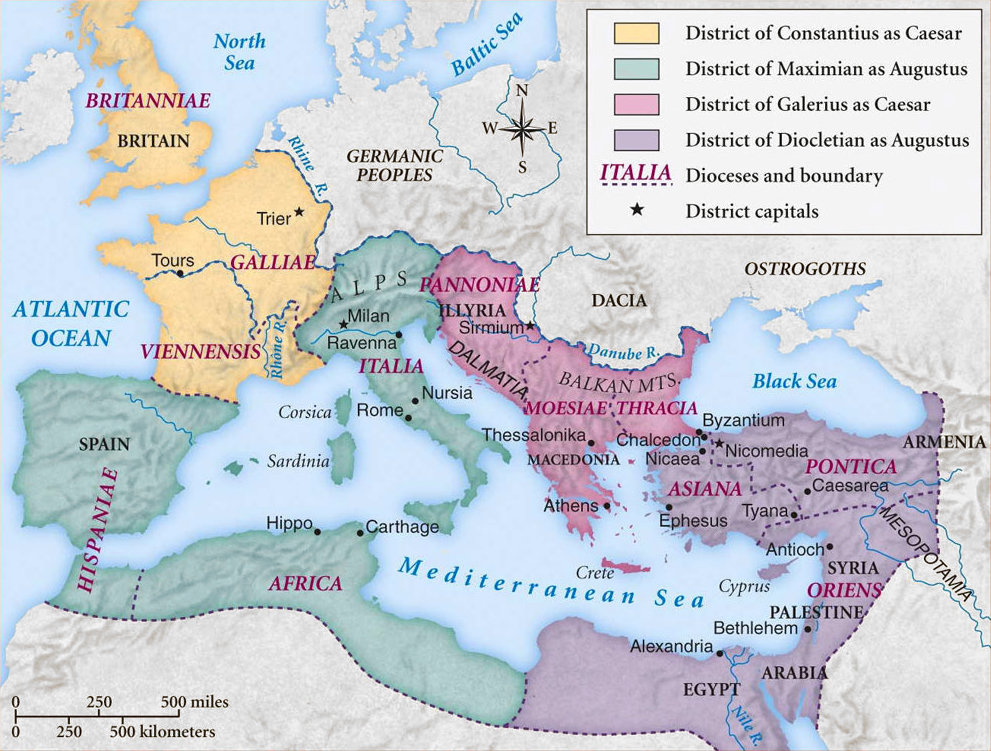
Diocletian governed the eastern half of the empire from Nicomedia, in what is now north-western Turkey. Maximian governed the west. The junior emperors, known as Caesars, were responsible for other strategic regions. The arrangement was practical rather than sentimental.
Each ruler could be closer to the frontier, the armies, and the places where trouble was likely to break out. The empire could respond more quickly. A succession plan existed in theory: when a senior emperor retired, a junior emperor would take his place, and new Caesars would be appointed.
It was an attempt to turn imperial power from a personal gamble into a functioning institution, and for a time, it worked remarkably well. The frontiers stabilized, usurpers defeated and order returned. The empire was not peaceful in any modern sense, but it was more secure than it had been for decades.

Diocletian had recognized a basic truth of government: a system that depends entirely on one exceptional individual is not a system. It is a prolonged emergency.
A More Organized Empire
The Tetrarchy was only part of Diocletian’s reform programme. He reorganized the provinces, making them smaller and more numerous. They became easier to administer and less likely to become independent power bases for ambitious governors. He grouped provinces into larger administrative units called dioceses, creating another layer of government between local officials and the emperor.
He also separated civilian and military authority more clearly. A provincial governor might administer taxes and justice, while a different official commanded troops. The aim was obvious: make it harder for one man to combine local wealth, political authority, and an army into a bid for the throne.
The bureaucracy grew, giving Diocletian a reputation as the architect of an oppressive late Roman state: more officials, more paperwork, more taxes, more regulation. There is some truth in that. Government became heavier and more demanding.
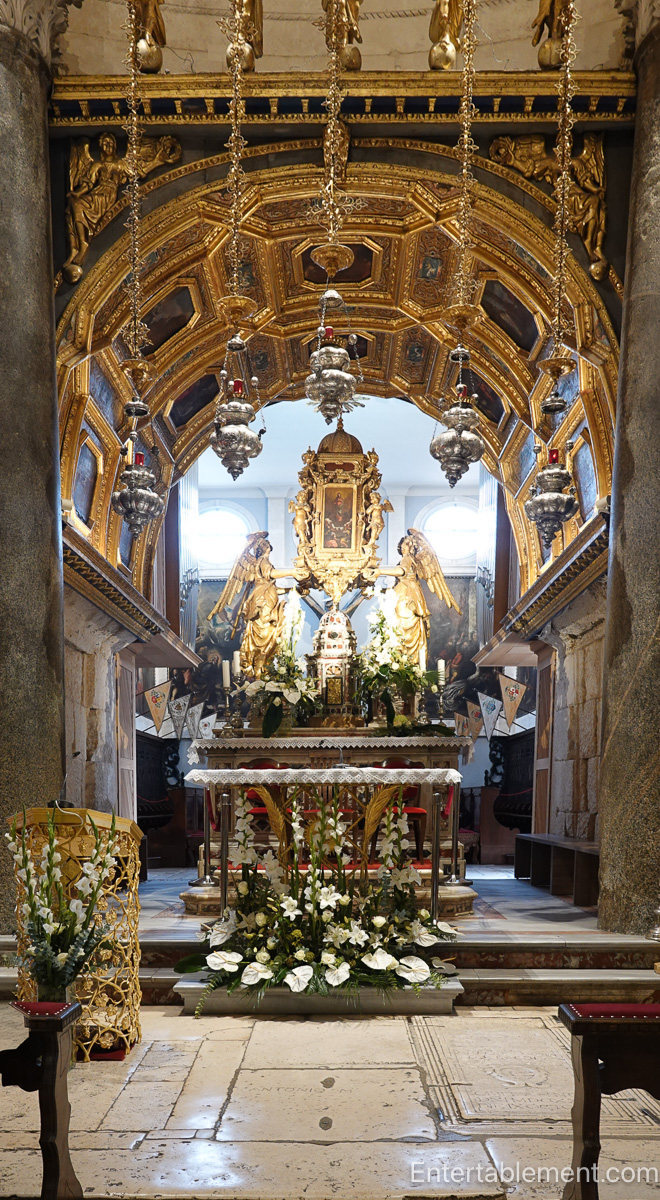
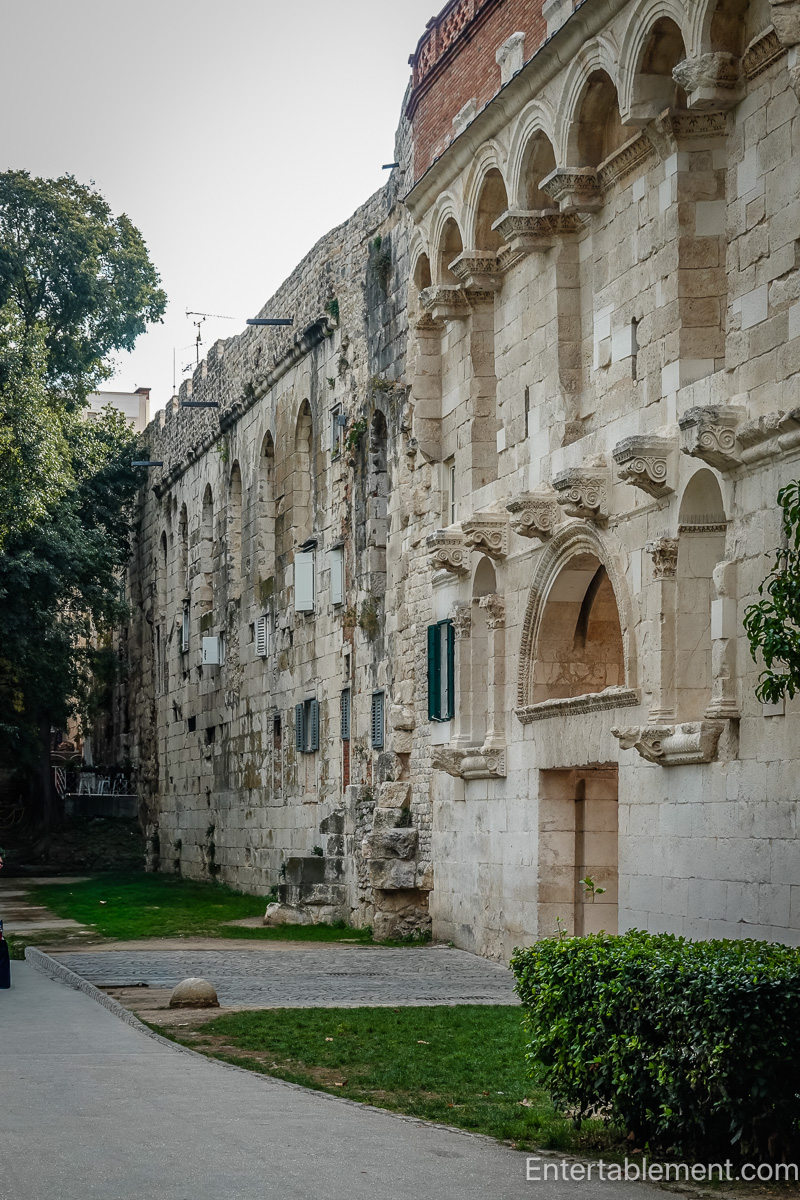
Diocletian’s Palace
But the alternative was not a lighter, more charming Roman Empire. The alternative was recurring chaos. Large states do not defend long borders, maintain roads, supply armies, and collect revenue by wishing themselves simpler. Diocletian’s reforms made the empire more cumbersome, but more durable.
The Price of Stability
The financial problem was an especially difficult nut to crack. Years of civil war and military spending had put pressure on the imperial treasury. Coins had been repeatedly debased, meaning that their metal content no longer matched their official value. Prices rose and trust declined, making the economy harder to manage.
Diocletian attempted currency reform. He introduced new coins and tried to restore confidence in the monetary system. He also issued one of history’s most famous economic regulations: the Edict on Maximum Prices.
The edict listed maximum prices for an astonishing range of goods and services: grain, wine, meat, clothing, transport, labour, and professional fees. It was an attempt to stop inflation and prevent profiteering. Not unsurprisingly, it did not work very well.
Value is a stubborn thing. When governments sets prices below what sellers can reasonably accept, goods tend to disappear, trade moves elsewhere, transactions move underground, and enforcement becomes difficult. The edict was widely ignored, unevenly applied, and eventually abandoned.

Diocletian’s palace
But it is worth noticing what Diocletian was trying to do: not simply issue arbitrary commands, but attempt to confront a genuine problem. How does a government preserve economic order when money has become unreliable and military demands are enormous?
His answer was unsuccessful. The same solution has been tried by others in more modern times and it has been equally futile. Inflation is difficult beast to tame.
The Emperor Becomes More Distant
Diocletian also changed the style of Roman rule. Earlier emperors had maintained (at least in theory) the fiction that they were the princeps—the “first citizen” of a republic that still existed in some ceremonial form. In practice, emperors had long held enormous power. But they often presented themselves as leaders among citizens rather than as monarchs above them.
Diocletian dropped much of the pretence. The emperor became increasingly distant, ceremonial, and visibly sacred. Court ritual grew more elaborate. Access to the emperor was controlled. Subjects were expected to show formal deference. The ruler was routinely described as dominus—lord or master.

Diocletian’s Palace
This was not merely vanity. An empire repeatedly torn apart by generals claiming the throne needed a stronger idea of what the throne represented. Diocletian made the emperor less like a successful politician and more like the embodiment of order itself.
The old Roman republic had faded long before Diocletian; he simply stopped pretending that it was still in the room.
The Great Persecution
Diocletian’s most troubling legacy was his persecution of Christians. For much of his reign, Christians had lived relatively quietly within the empire. But in 303, a series of edicts ordered churches destroyed, scriptures surrendered, clergy imprisoned, and Christians required to participate in traditional Roman religious rites.
The persecution varied greatly from region to region. It was harshest in the eastern empire and less severe in the west, where Constantine’s father, Constantius Chlorus, appears to have enforced it more mildly.
Why did Diocletian act as he did? Partly, it was an attempt to restore unity. The Roman state had long been tied to public religious practice. Sacrifices, festivals, and traditional worship were not merely private beliefs; they were part of the civic fabric. Christians’ refusal to participate could be interpreted as rejection of the shared obligations that held the empire together.
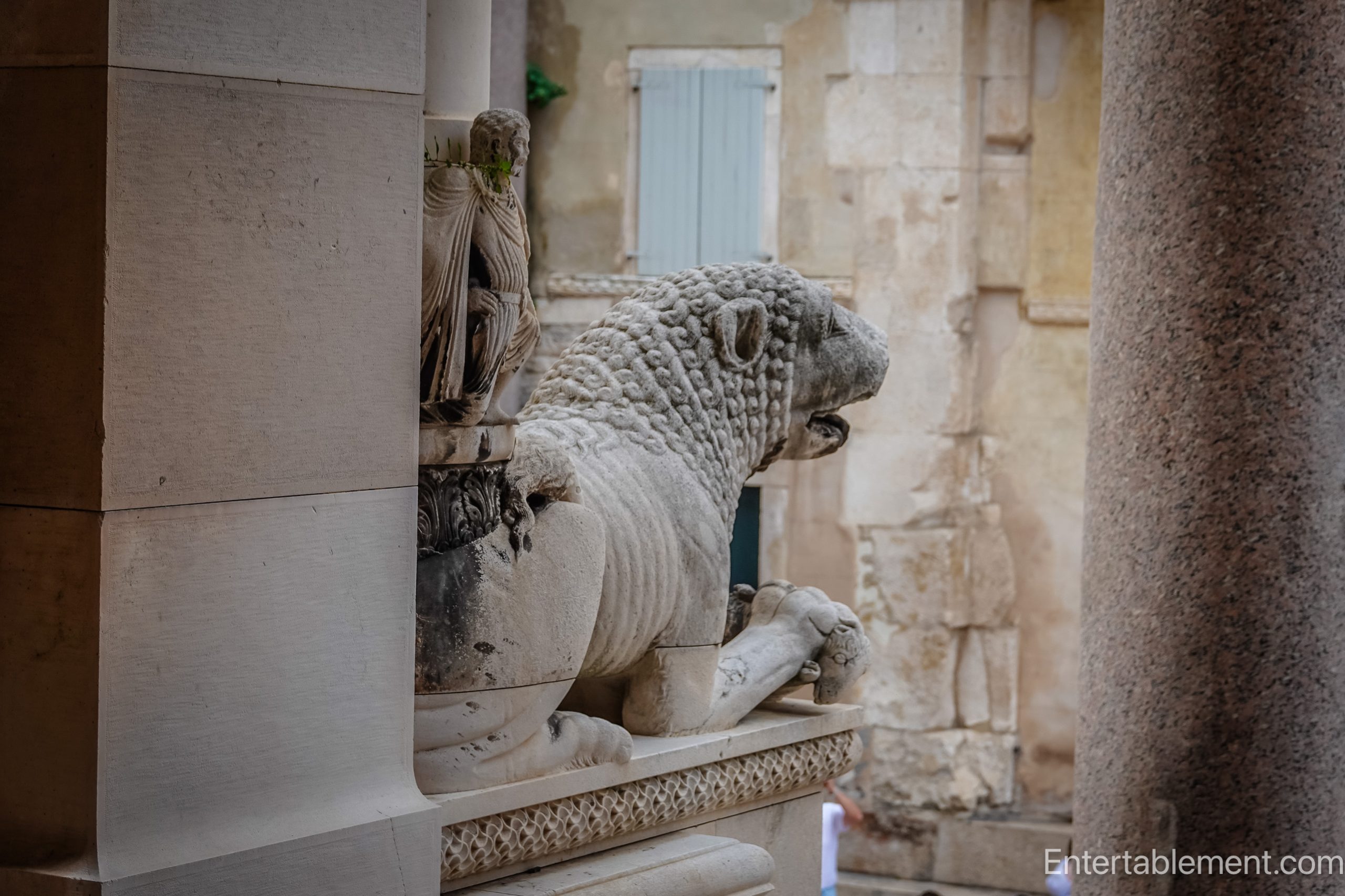
Diocletian’s Palace
Partly, the persecution reflected the logic of Diocletian’s reforms. He was trying to restore order through clearer hierarchy, stronger institutions, and renewed loyalty to the old Roman world. Christianity represented a community whose ultimate allegiance lay elsewhere.
The result was not unity. It was suffering, resistance, and a sharper sense among Christians that their faith stood in tension with imperial power. Within a decade, Constantine would reverse the direction entirely. The empire that Diocletian had tried to unify through traditional religion would begin to organize itself around Christianity instead.
The Emperor Who Retired
In 305, Diocletian did something almost unheard of in Roman history. He retired to a palace palace at Split, on the Adriatic coast of what is now Croatia.
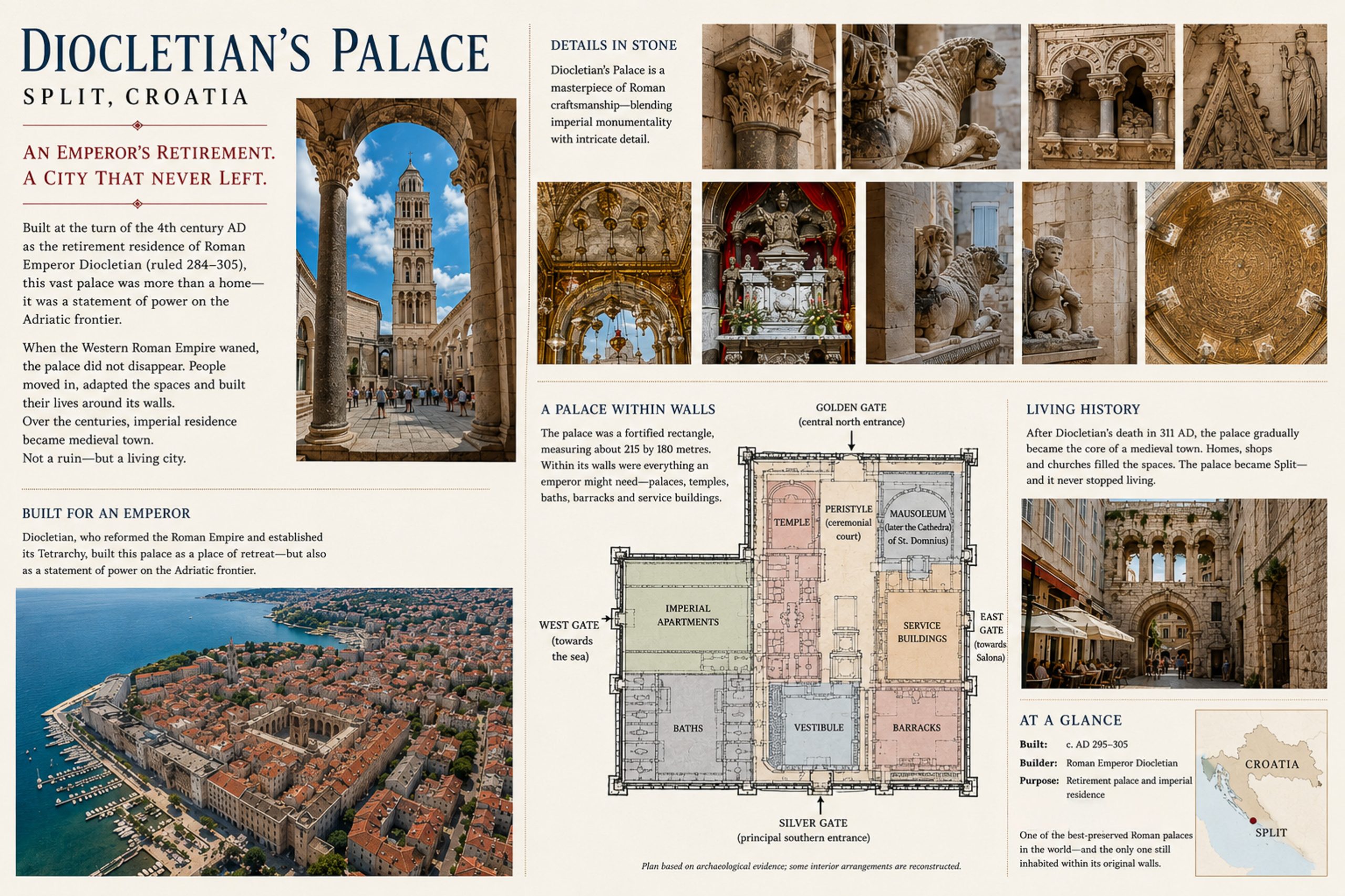
He and Maximian stepped down together, allowing their Caesars to become senior emperors. In theory, the Tetrarchy would continue according to plan. In practice, it quickly fell apart.
Ambitious men did not politely accept the roles assigned to them. Constantine, Maxentius, Licinius, and others fought for control. The carefully designed succession system could not survive the people inside it.
Later writers claimed that, when urged to return to power, he replied that if his visitors could see the cabbages he was growing, they would not ask him to resume the burdens of government. Whether he said it exactly that way hardly matters.

The story has survived because it captures something true. Diocletian had spent two decades trying to hold together the largest political structure in the world. Gardening must have seemed a reasonable alternative.
Diocletian — The Empire He Left Behind
Diocletian understood that the Roman Empire could not survive unchanged. The old model had relied too heavily on one ruler, one centre, and a political system that had evolved for a much smaller world. Diocletian responded by dividing responsibility, reorganizing administration, strengthening the army, rebuilding the tax system, and making imperial authority more formal and explicit.
He did not solve every problem. The Tetrarchy collapsed after his retirement. His price controls failed. His persecution of Christians became one of the clearest examples of how coercion can strengthen the identity it seeks to suppress. But his reforms endured in other ways.
The late Roman Empire became more bureaucratic, more centralized, more militarized, and more regional. Constantine would reunify it under one ruler, favour Christianity, and establish a new capital in the east.
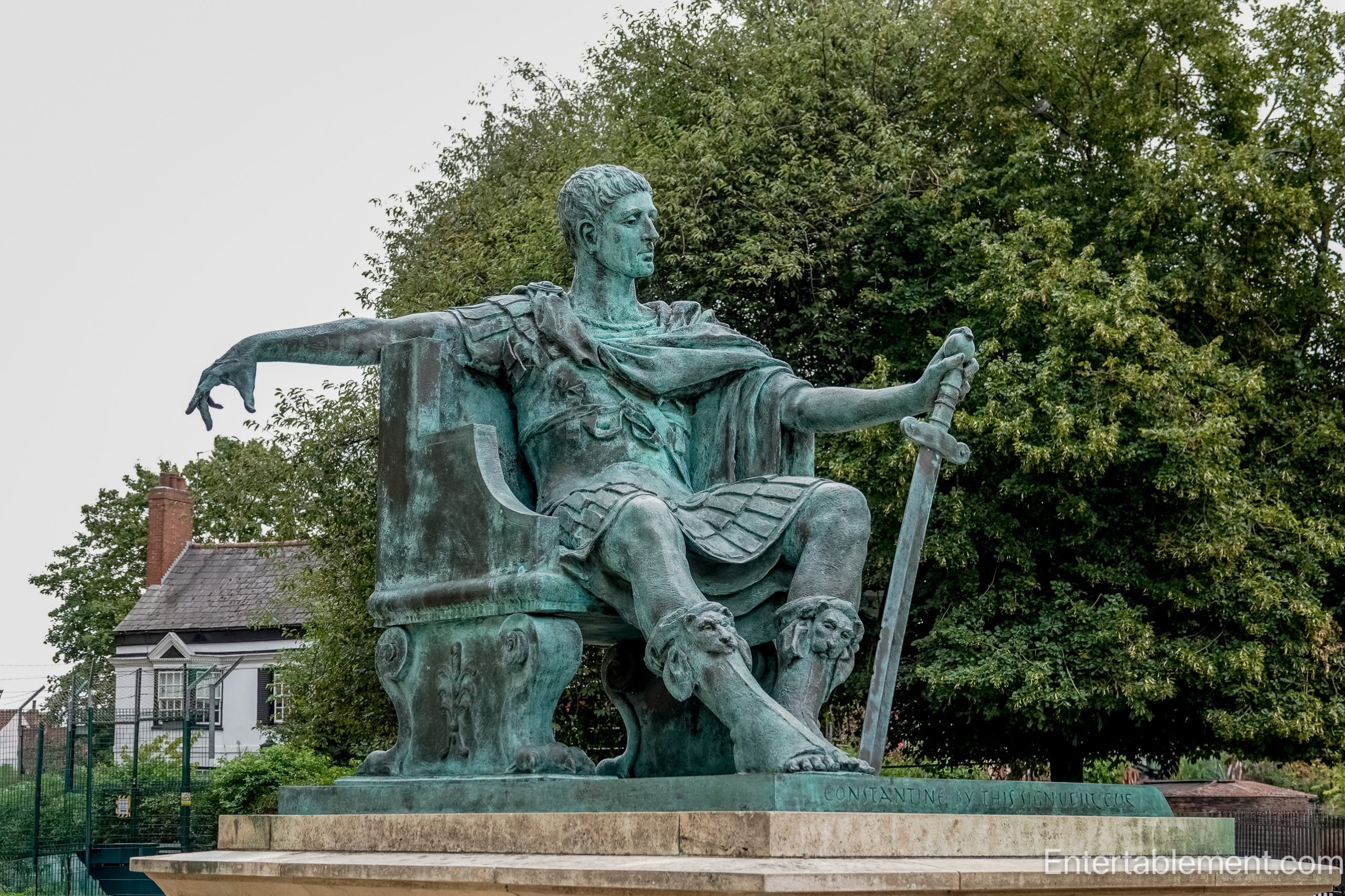
Emperor Constantine
Yet he did so within a framework Diocletian had largely created.
That is the link between the two men.
Diocletian asked: How can an empire this large be governed?
Constantine answered: By one ruler, one new faith, and a new centre of gravity.
Neither answer was complete. But together they explain why the Roman Empire did not simply vanish in the fourth century. It changed shape. And in the east, it would continue for another thousand years.
M