
The transformation of English architecture from the medieval Gothic to the grandeur of Baroque and ultimately to the refined symmetry of Classical Palladianism was a complex and fascinating journey.
Influenced by political shifts, technological advancements, and key architects, this evolution reshaped Britain’s built environment over three centuries.
Figures such as Christopher Wren, John Vanbrugh and Nicholas Hawksmoor, Thomas Archer, James Gibbs, and William Kent, played pivotal roles in this transition, blending old traditions with new innovations.
The End of Gothic and the Rise of Classical Ideas
By the early 17th century, Gothic architecture, with its pointed arches, ribbed vaults, and elaborate ornamentation, was waning in popularity. The Renaissance had sparked interest in the mathematical harmony of Classical architecture, first introduced to England by Inigo Jones (1573–1652).
Jones, heavily influenced by Andrea Palladio, designed buildings like the Queen’s House in Greenwich (1630s) and the Banqueting House in Whitehall (1619–22), which embraced Classical symmetry and proportions.
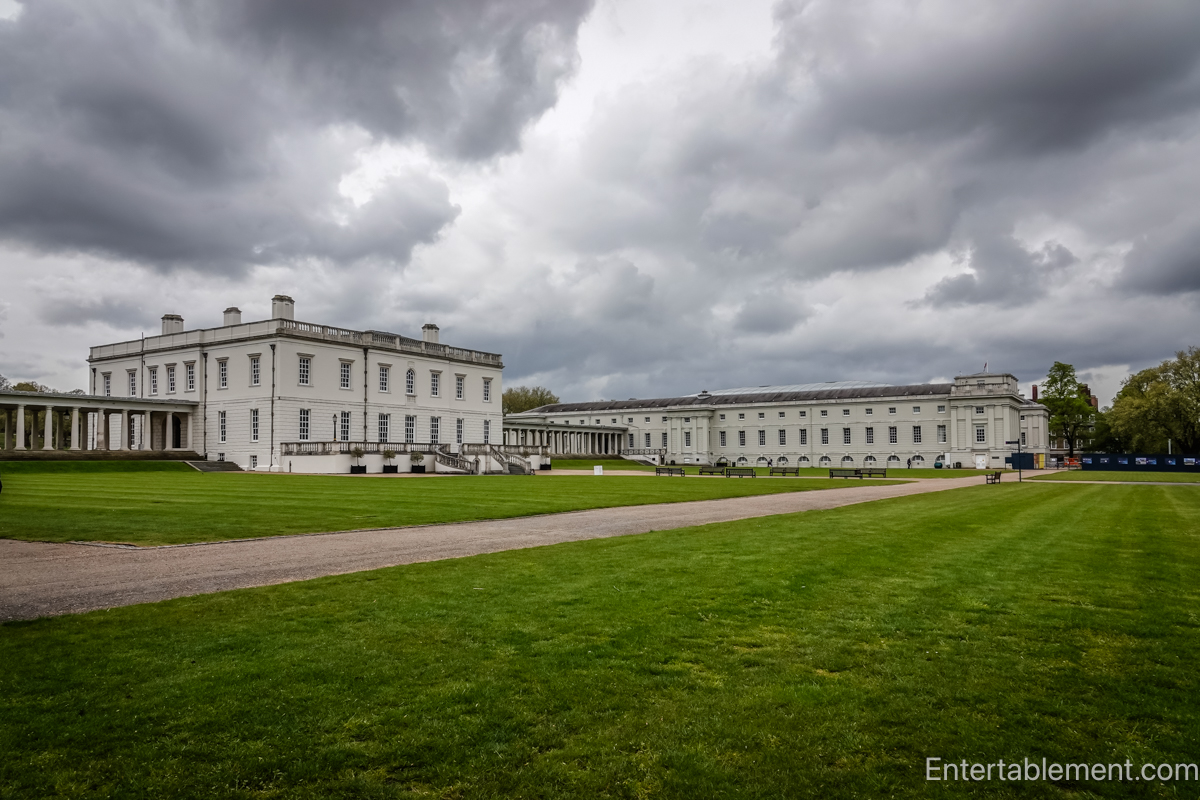
The Queen’s House, Greenwich
However, despite Jones’ contributions, Gothic and Tudor traditions lingered in English domestic architecture. The Civil War (1642–1651) and the Puritan rule of Oliver Cromwell (1649–1660) temporarily halted large-scale architectural development. It wasn’t until the Restoration of the monarchy in 1660 that new styles could flourish.
The Great Fire of London and the English Baroque (1666–1710s)
The Great Fire of London (1666) was a turning point. In the aftermath, Christopher Wren (1632–1723), already a respected scientist and mathematician, emerged as the country’s leading architect.
Tasked with rebuilding the city’s churches, Wren combined Classical grandeur with Baroque theatricality, as seen in his masterpiece, St. Paul’s Cathedral (1675–1710).

Wren’s work embraced:
- Dramatic domes inspired by St. Peter’s Basilica in Rome.
- Expansive colonnades that emphasized classical grandeur.
- Ornate detailing balanced with mathematical precision.
Wren’s protégés, Nicholas Hawksmoor and James Gibbs, followed his lead, designing numerous churches and public buildings that mixed Baroque energy with Classical elegance. Greenwich Hospital (1696–1712) and St. Mary-le-Bow (1671–1680) are prime examples.
Castle Howard and the High Baroque (1699–1712)
One of the most extravagant examples of English Baroque was Castle Howard, designed by John Vanbrugh with the assistance of Nicholas Hawksmoor.
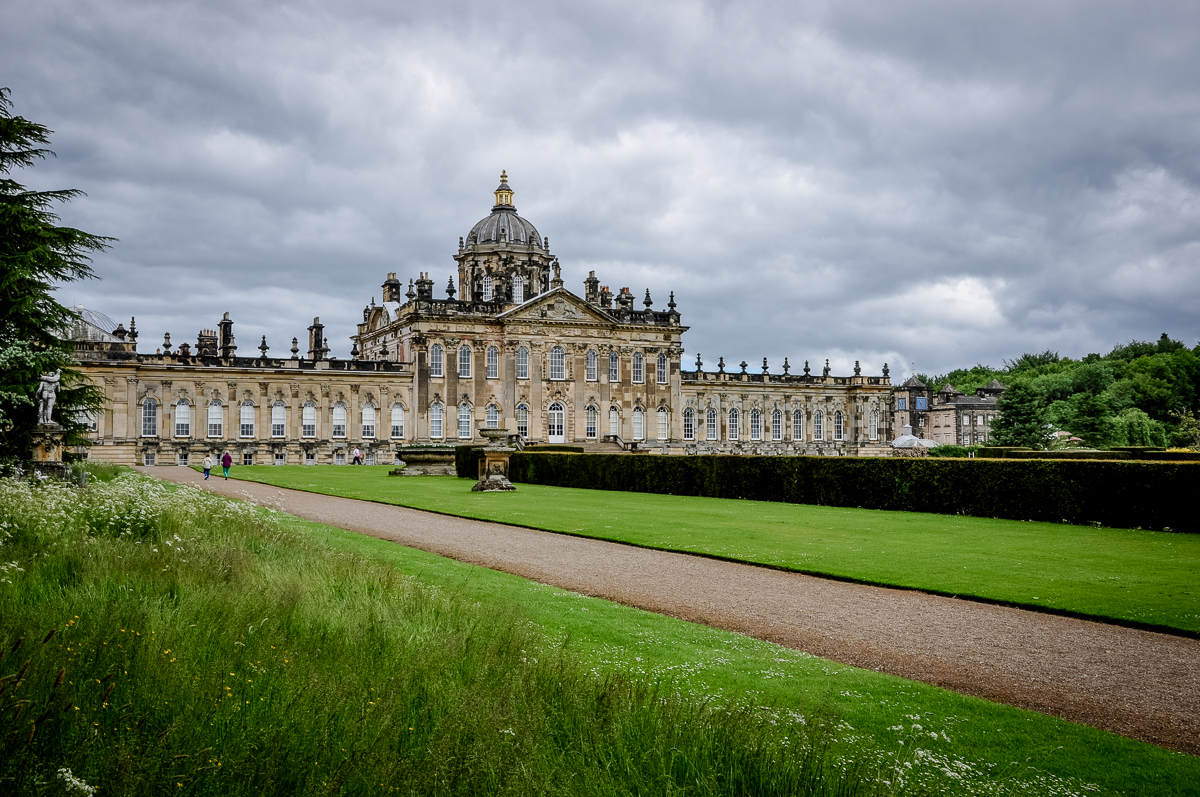
Built for Charles Howard, 3rd Earl of Carlisle, it showcased the monumental grandeur characteristic of the period:
- A central dome, inspired by Wren’s St. Paul’s Cathedral, dominating the skyline.
- Sweeping colonnades and pavilions, creating a sense of movement and theatricality.
- Richly decorated interiors, blending Baroque opulence with early Classical order.
Castle Howard, along with Blenheim Palace (1705–1722), marked the height of English Baroque, bridging the earlier Gothic influence with emerging Palladian ideals.
William Kent and the Shift from Baroque to Palladian Classicism (1710s–1740s)
While Wren and Hawksmoor infused architecture with Baroque dynamism, William Kent (1685–1748) led the transition toward a more restrained, structured aesthetic. Influenced by his travels in Italy and the patronage of Lord Burlington, Kent championed Palladianism, which favoured:
- Symmetry and proportion, directly referencing ancient Roman and Renaissance ideals
- Minimal ornamentation compared to Baroque’s elaborate flourishes.
- Grand yet disciplined interiors, often decorated with classical motifs and painted ceilings.
Kent’s work included:
- Chiswick House (c. 1725) – A textbook example of Palladian villa design.
- Holkham Hall (1734–1764) – A monumental country house inspired by Roman temples.
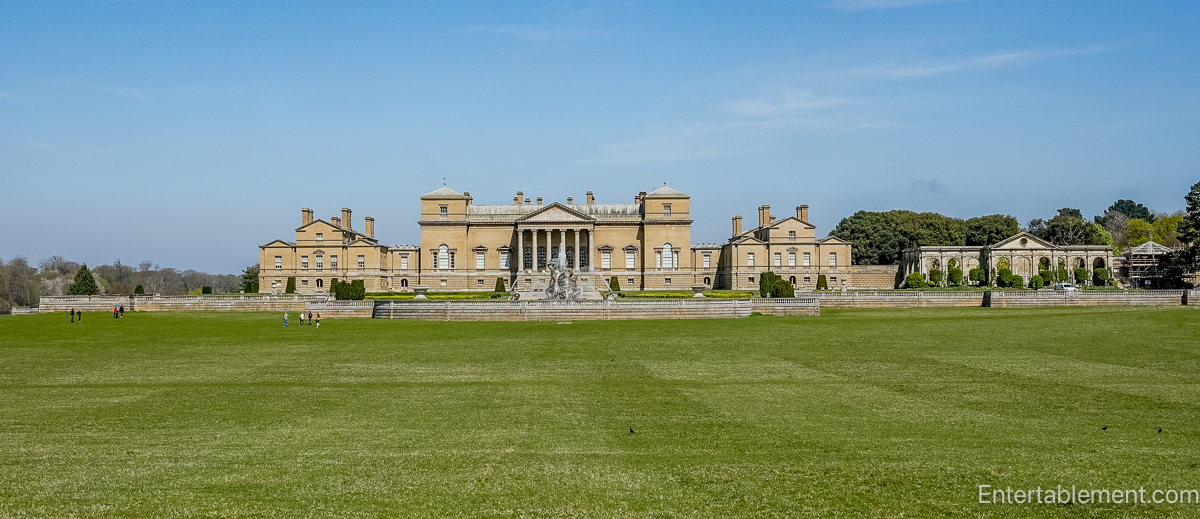
Holkham Hall

Holkham Hall Interior Hall
- Houghton Hall (c. 1722–1735) – Blending Classical architecture with rich interior decoration.
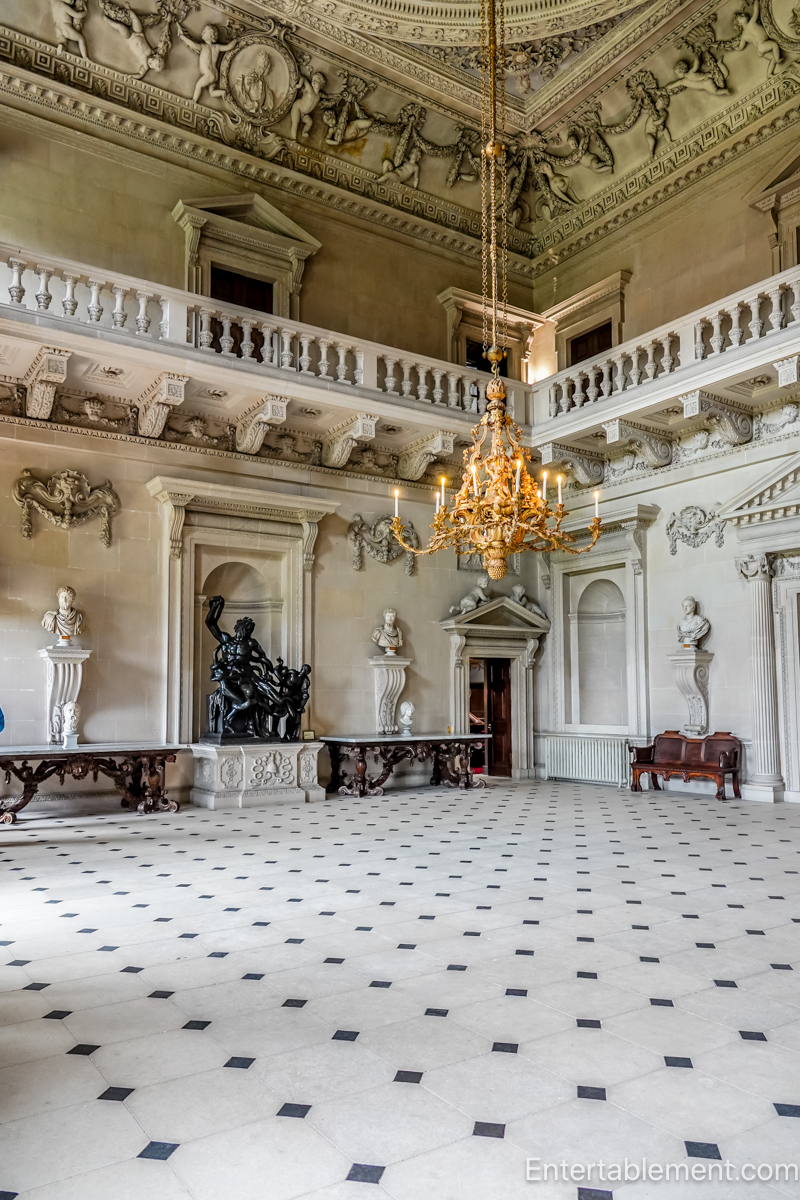
Houghton Hall
- Rousham House Gardens (1737–1740s) – Pioneering the English landscape garden style, rejecting rigid Baroque layouts for naturalistic designs.
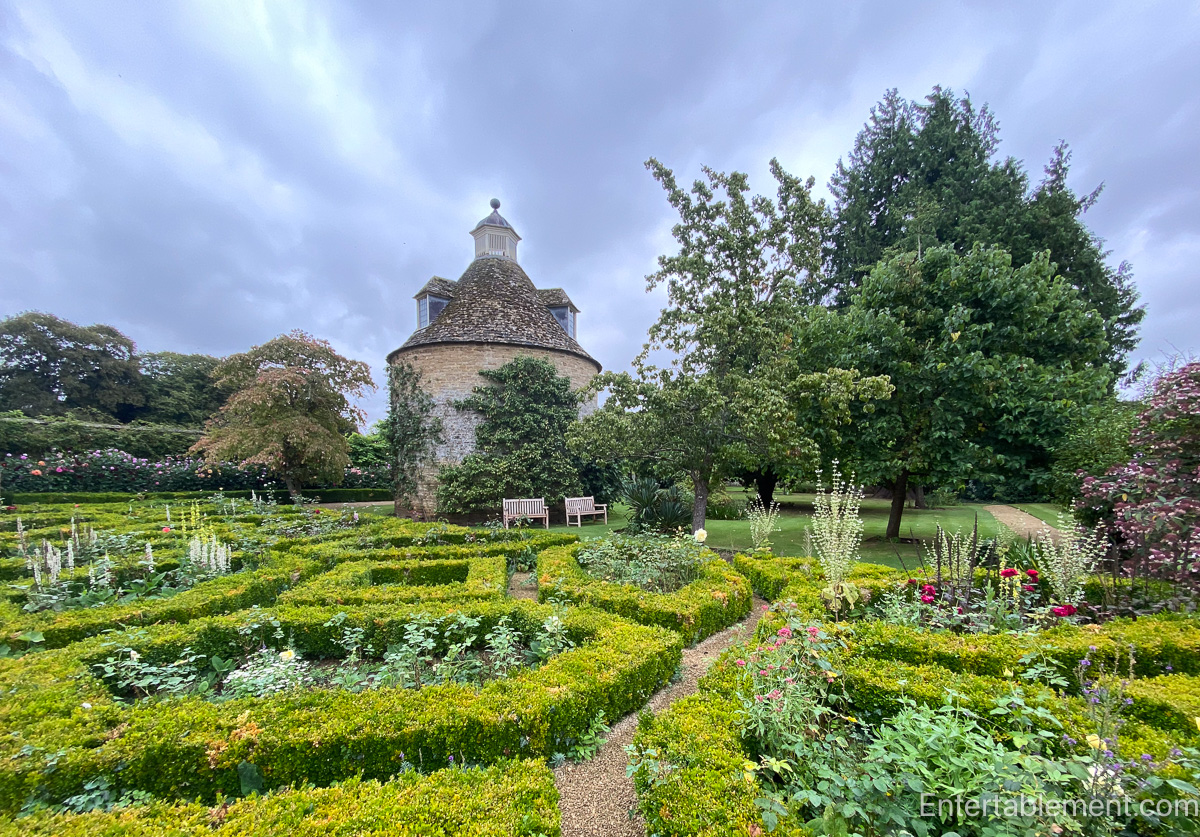
Rousham House Gardens
Though Kent retained some Baroque exuberance in his interiors, his architectural exteriors emphasized order, restraint, and Classical harmony.
The Rise of Neoclassicism (1740s–1800s)
By the mid-18th century, Robert Adam (1728–1792) and Lancelot “Capability” Brown (1716–1783) further refined Palladian and Neoclassical styles, moving away from Kent’s decorative tendencies toward a purer interpretation of antiquity.
- Robert Adam emphasized elegant, lightly ornamented interiors with pastel colour palettes. Examples of his work include Kenwood House, Harewood, Mellerstain, Hopetoun House and Newby Hall.
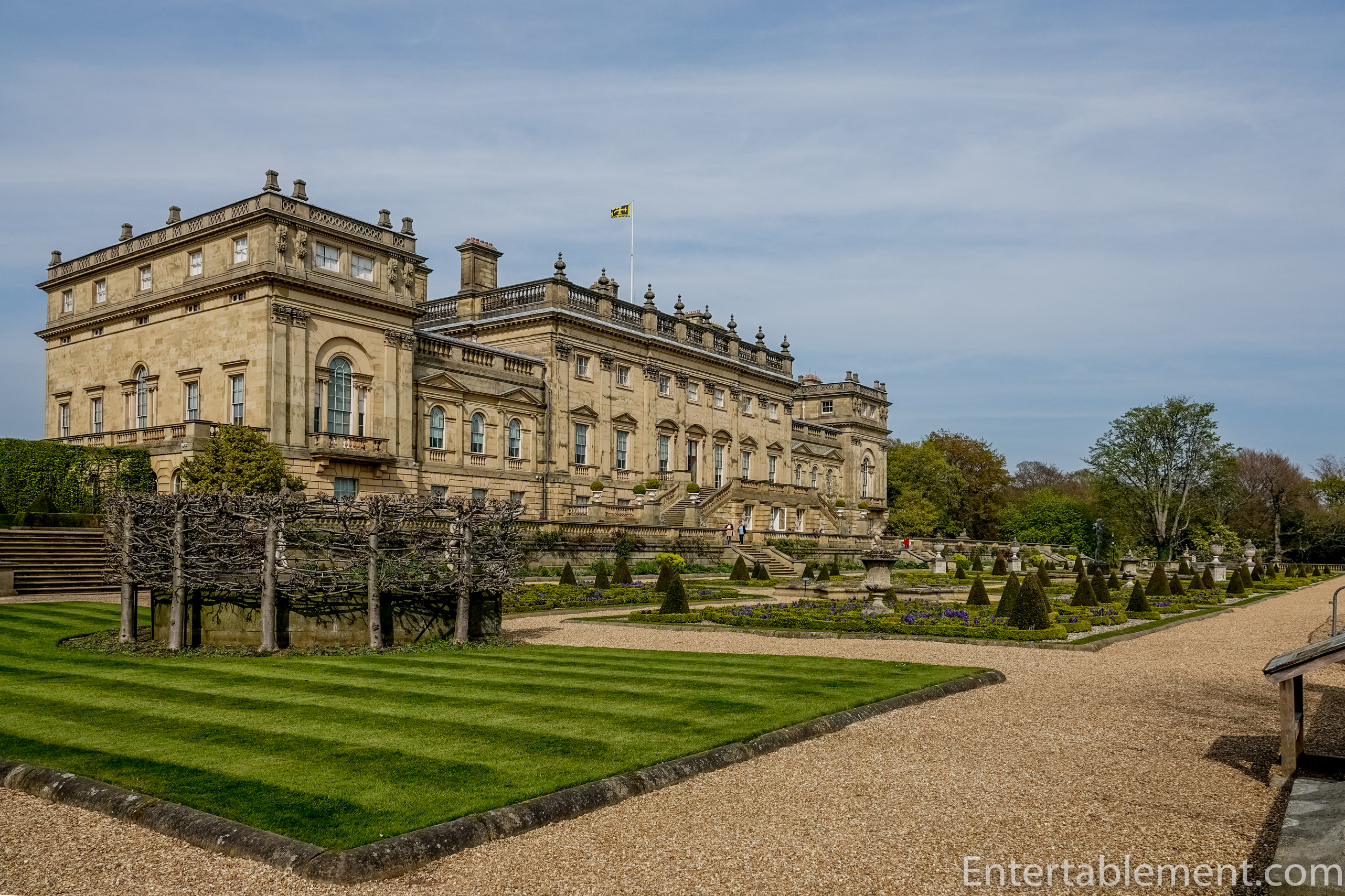
Harewood House

Harewood House
- Lancelot “Capability” Brown replaced Kent’s elaborate gardens with rolling, “natural” landscapes, marking the final departure from Baroque formality. Examples of his work are too numerous to mention; he was everywhere! Suffice to say that I doubt the man ever spent a night in his own bed, so tireless were his exertions.
By the late 18th century, Neoclassicism—influenced by excavations at Pompeii and renewed admiration for ancient Greece and Rome—became the dominant style, replacing Baroque’s theatricality with austere grandeur.
Conclusion
The transition from Gothic to Baroque to Classical was not an abrupt shift but an evolving dialogue between tradition and innovation. Christopher Wren blended Renaissance rationalism with Baroque spectacle, while William Kent adapted Classical ideals with a touch of theatricality. Meanwhile, Vanbrugh and Hawksmoor contributed to the high drama of English Baroque, making structures like Castle Howard and Blenheim Palace enduring testaments to the grandeur of the era. This journey ultimately led to the refinement of Neoclassicism, shaping Britain’s architectural identity for centuries to come.
This architectural evolution remains one of the most fascinating shifts in design history, bridging the medieval world with the refined elegance of the Enlightenment.