
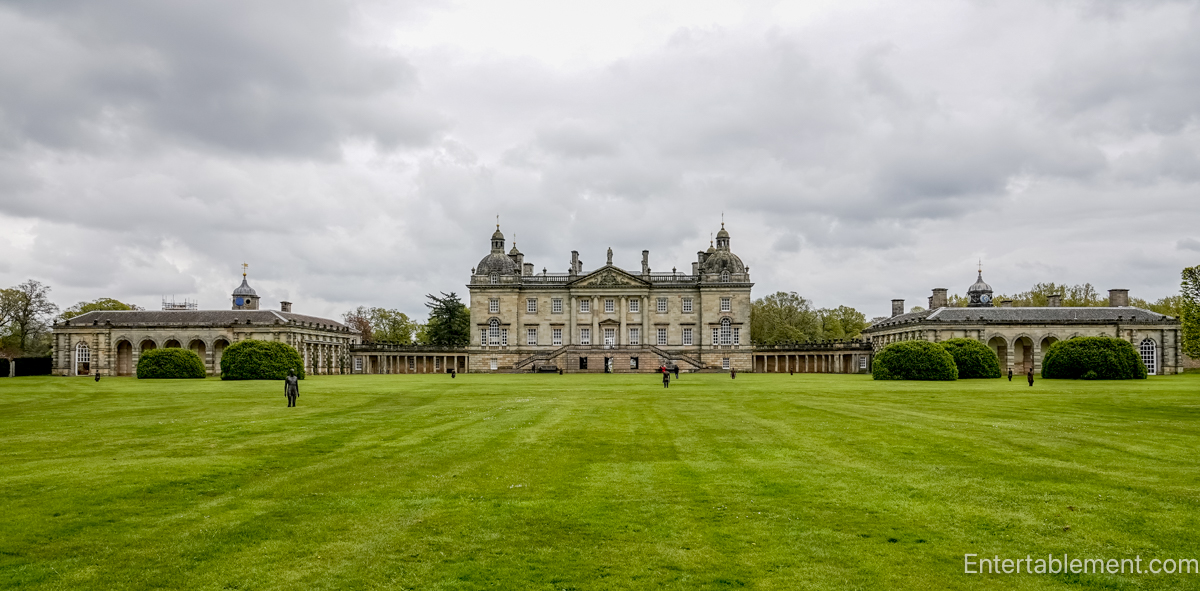
Nestled in the rolling countryside of Norfolk, Houghton Hall is a testament to the grandeur of 18th-century Palladian architecture. It’s easy to be dazzled by the symmetry, the scale, and the sheer elegance of it all. But behind every arch and column lies a mind—and a lineage of minds—thinking hard about how beauty should be built.
Architecture rarely erupts—it evolves.
For all the grandeur of a place like Houghton, what you’re seeing isn’t a single moment of genius carved in stone. It’s the product of centuries of accumulated thought. Each generation refines, reinterprets, sometimes rebels—but always builds on what came before. What feels like a grand leap forward is often the next, natural step in a very long conversation.
Houghton Hall doesn’t just reflect one man’s vision—it’s the echo of ideas handed down, argued over, and finally realized in stone.
So let’s take a moment to tip our hats to five of the great architectural thinkers whose ideas helped shape Houghton and its peers.
- Andrea Palladio, the Renaissance master who brought Roman proportion back to life;
- Inigo Jones, who gave England its first true classical buildings, starting with The Queen’s House in Greenwich
- Colen Campbell, the ambitious Scotsman who gave us Vitruvius Britannicus, the vision for a British classical ideal
- James Gibbs gave it a pragmatic grace that fit the English landscape
- And then came William Kent—the artist-architect who didn’t just design walls and furniture, but turned ceilings into scenes and doorways into theatre.
They weren’t just architects—they were translators of ideas across time and place. And in their hands, stone became story.
The History of Houghton Hall
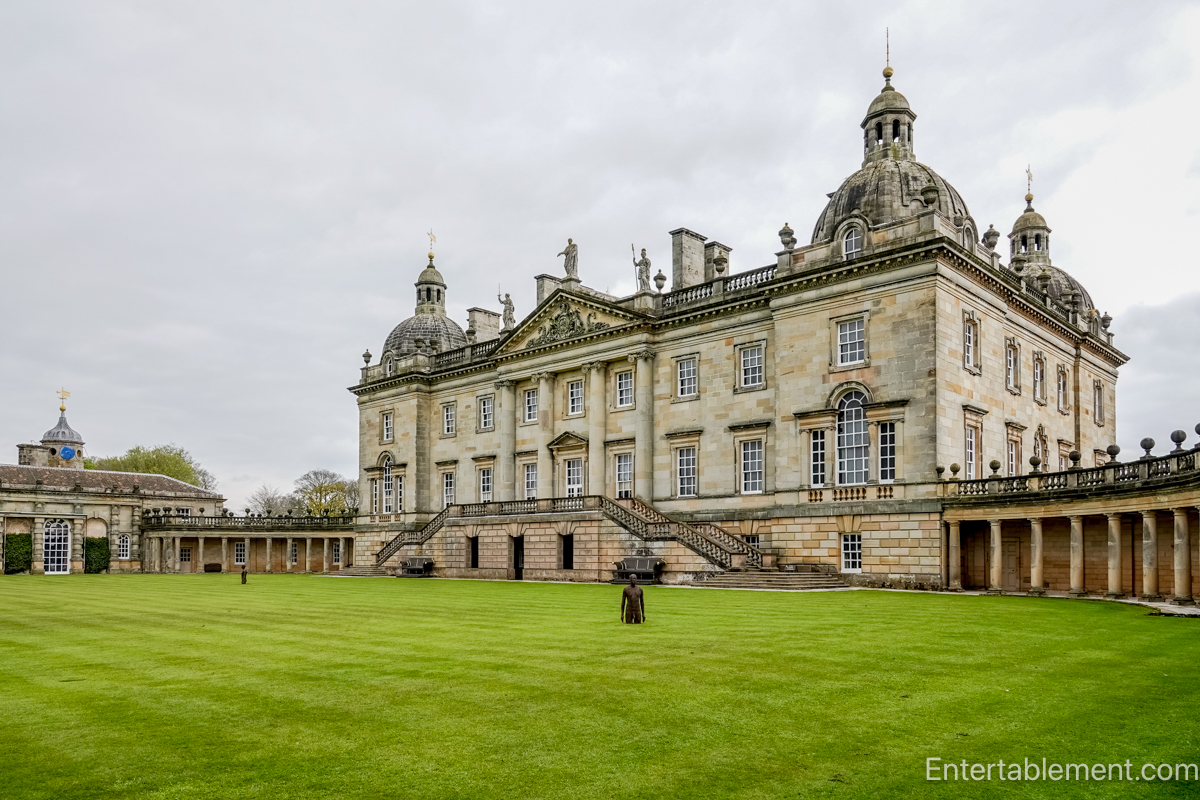
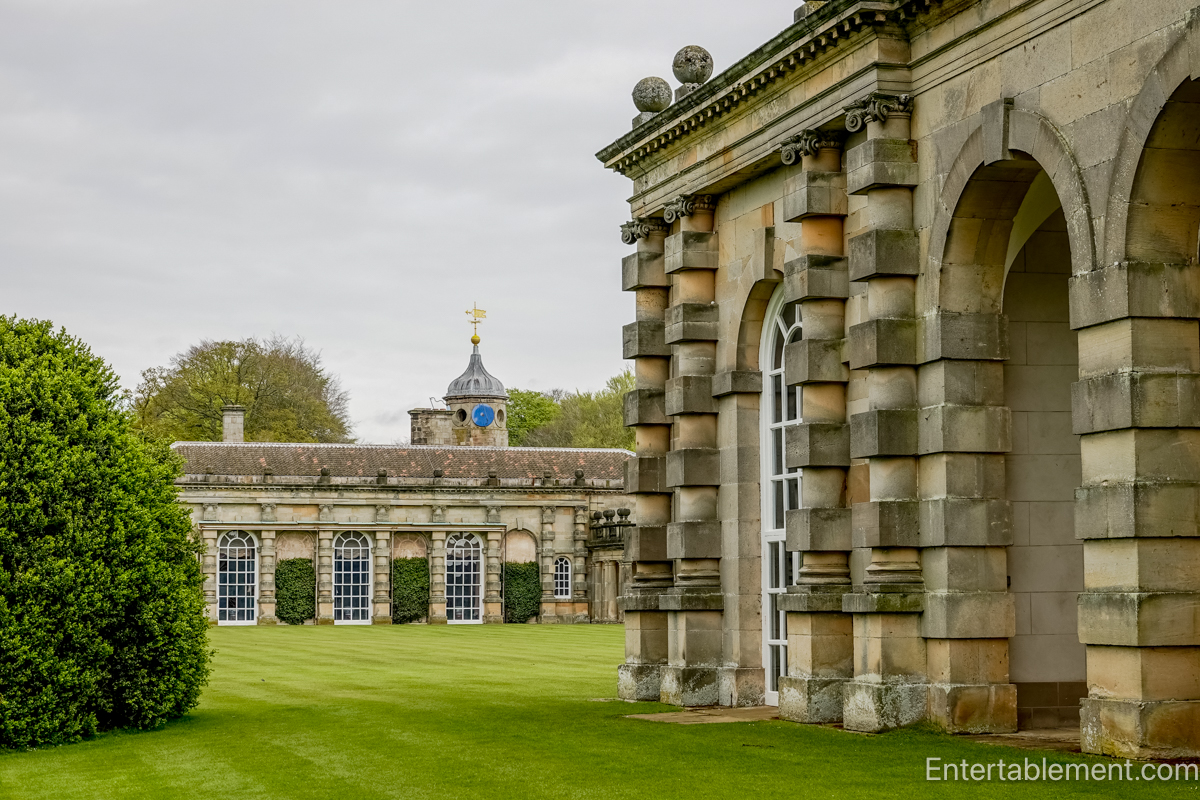
Houghton Hall was built between 1722 and 1735 as a statement of power and sophistication for Sir Robert Walpole. Britain’s first de facto Prime Minister. Colen Campbell and James Gibbs designed it in the Palladian style, and William Kent, a master of classical taste, provided the lush interiors.
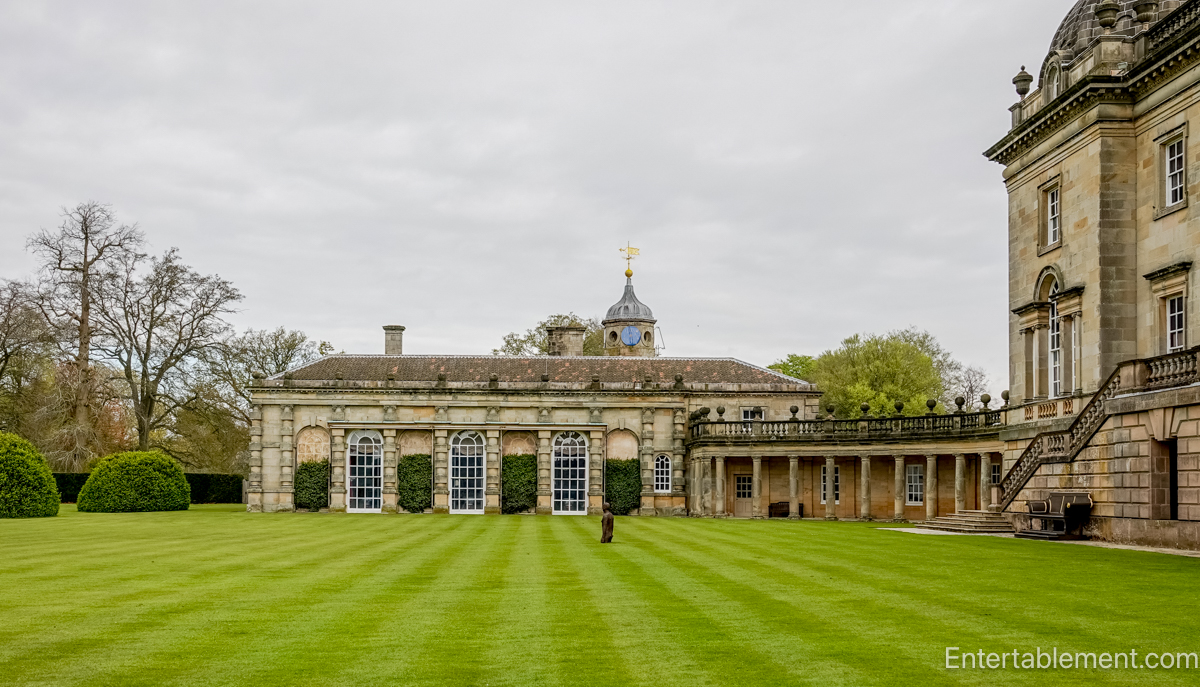
How exactly the house was financed remains a mystery; Walpole’s immense personal wealth was closely tied to his political influence. Indeed, records regarding the expenses incurred in building Houghton are close to non-existent. While some of his fortune came from landholdings, there were whispers that his time in office and control over government contracts contributed significantly to Houghton’s grandeur.
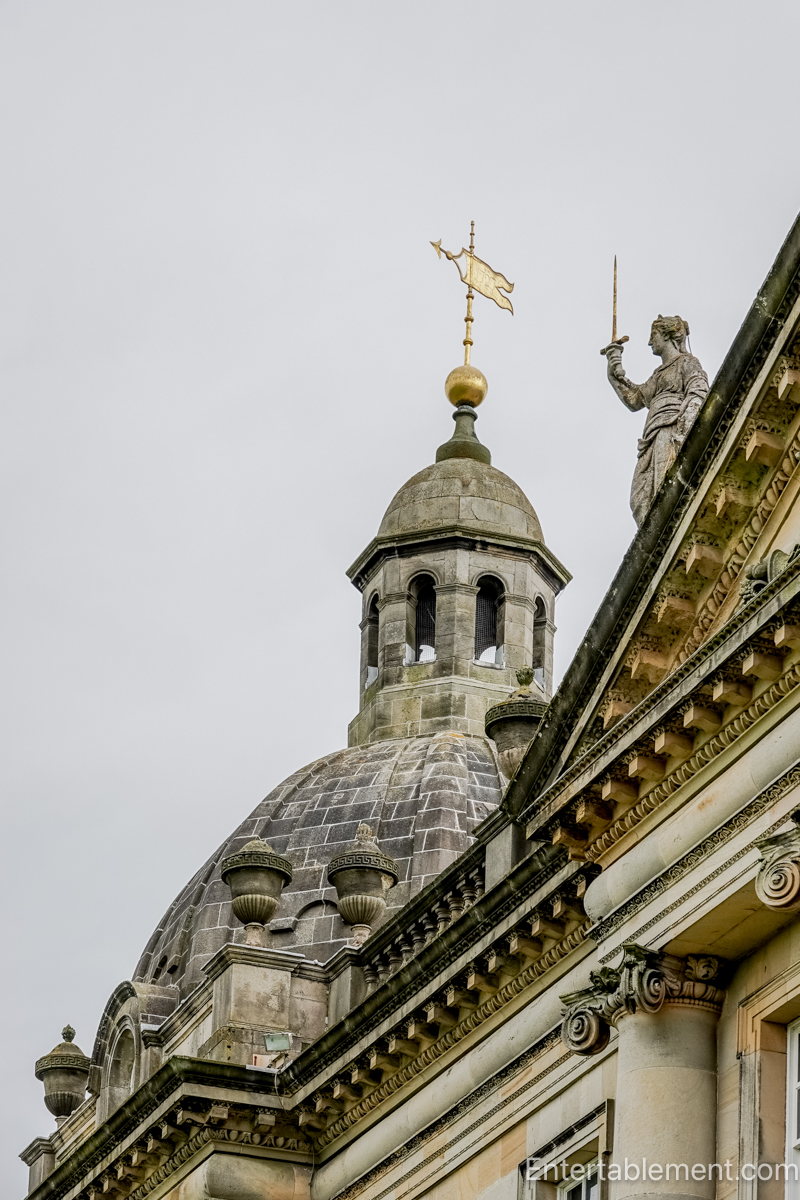
The house remained in the Walpole family until the late 18th century, when it passed to the Cholmondeley (pronounced “Chummley” —don’t ask…) family through marriage. Today, the Marquess of Cholmondeley continues to oversee its preservation, ensuring its artistic and architectural treasures remain accessible.
The Stone Hall
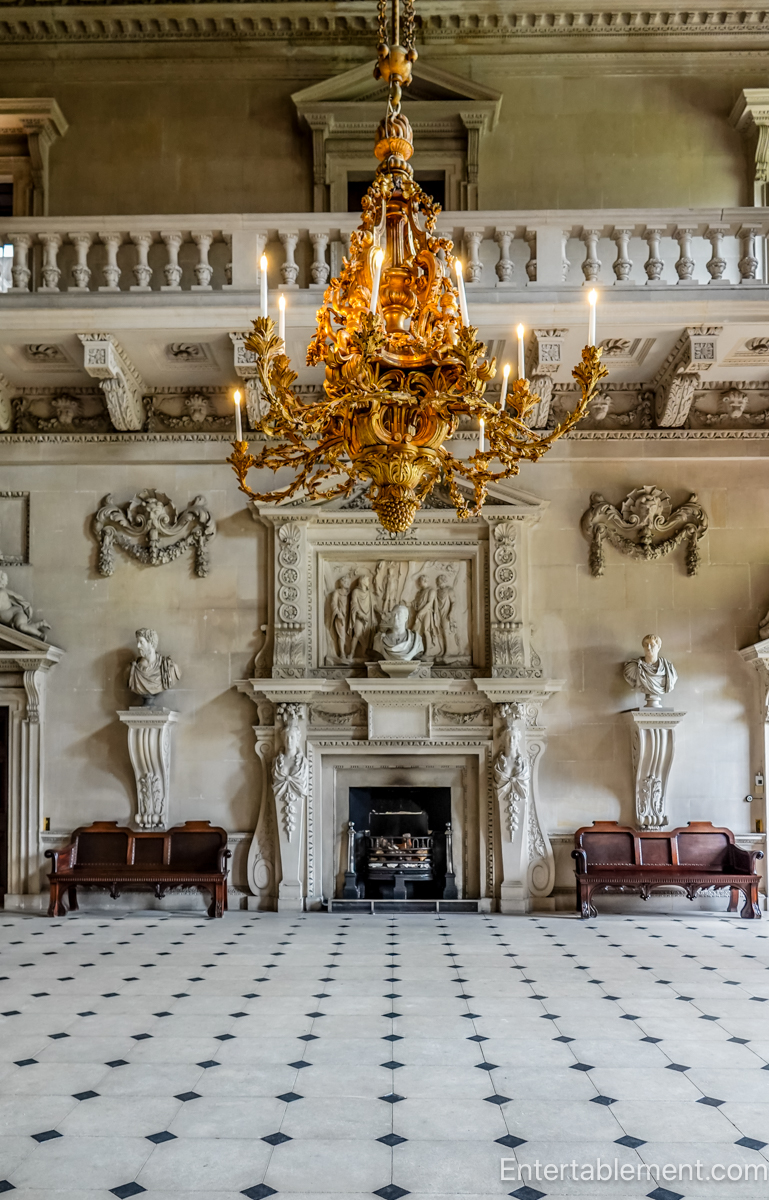
The Queen’s House, designed by Inigo Jones, inspired the double-height Stone Hall.
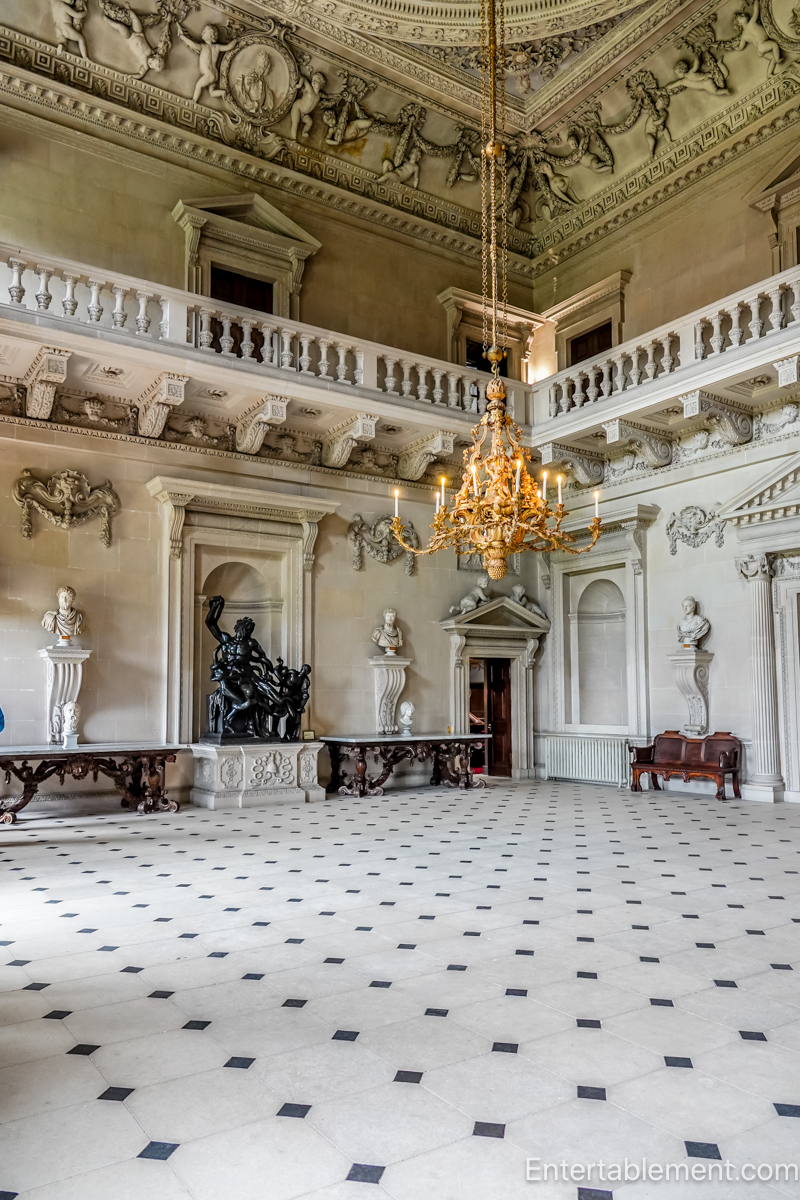
Colen Campbell proposed it, and William Kent revised the plan, adding ornaments and allegories in collaboration with J. M. Rysbrack, the leading sculptor of the day, who had recently arrived from Antwerp in 1720.
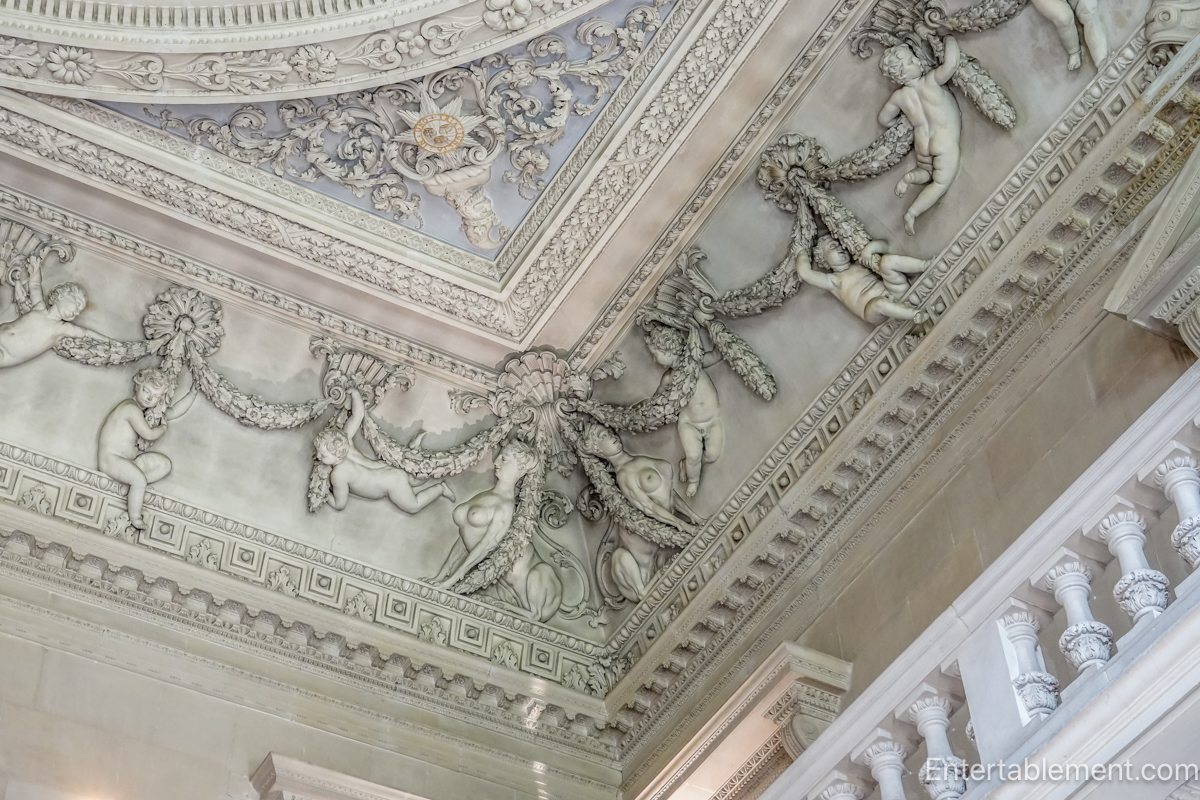
Where to start? Your eye is captured everywhere simultaneously.
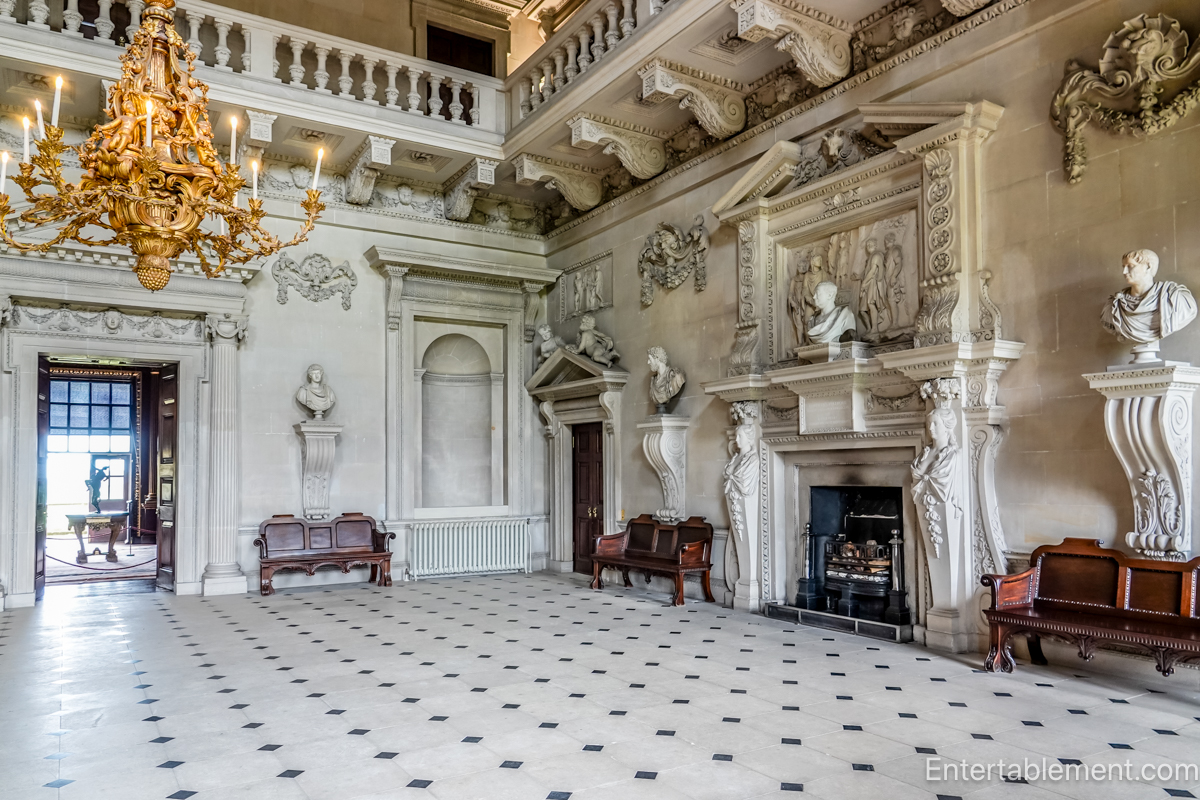
The white surroundings, despite being stone, are restful and inviting. The symmetry is very soothing; then, the details begin to pop out.
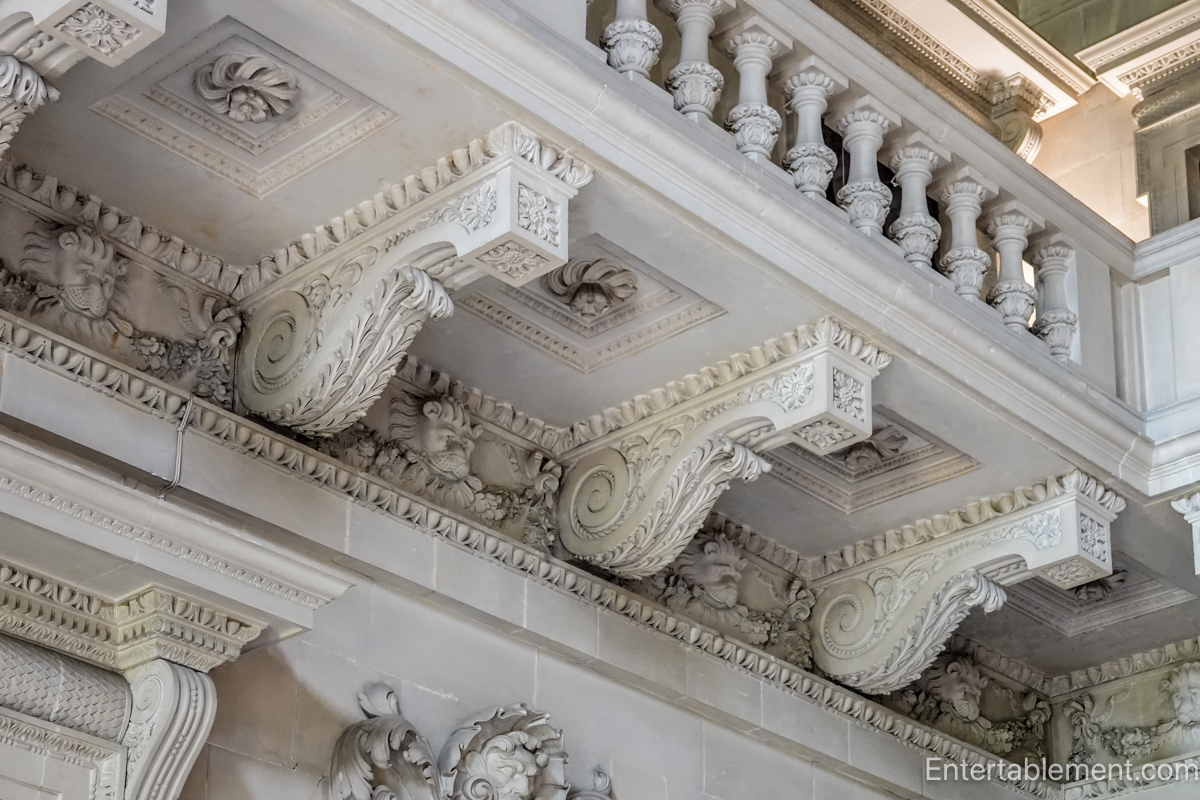
The lion faces between the corbels.
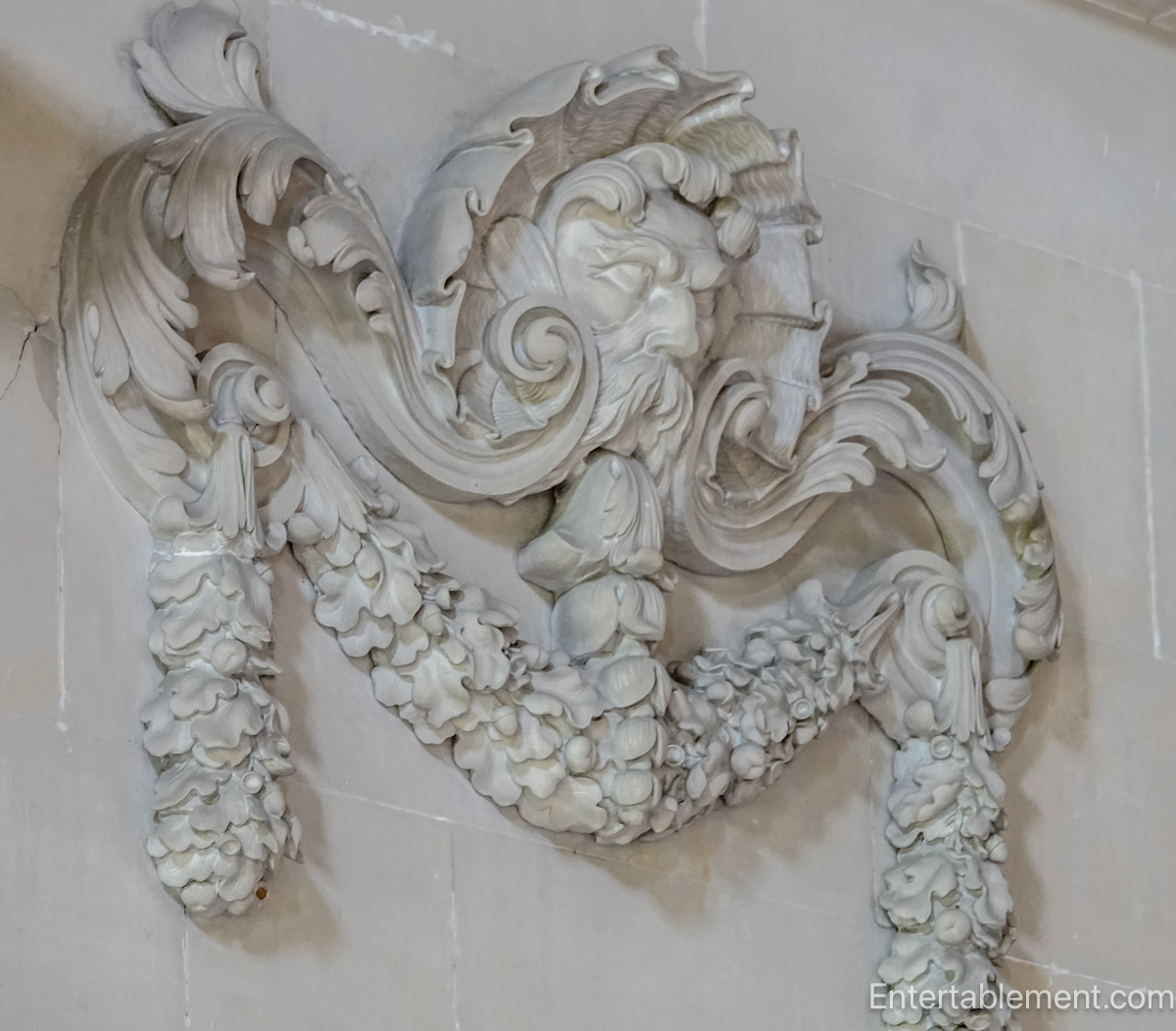
The faces of the gods in the swags.
And the putti adorning the pediments.

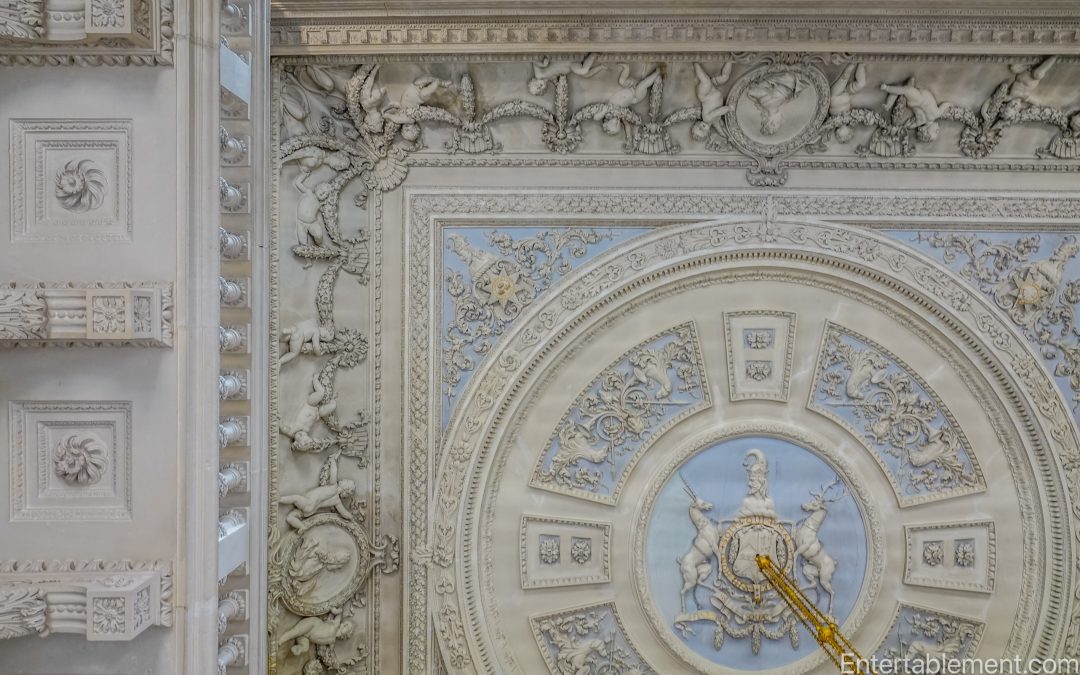
Looking up, the pale blue relief in the ceiling sculpture is breathtaking.

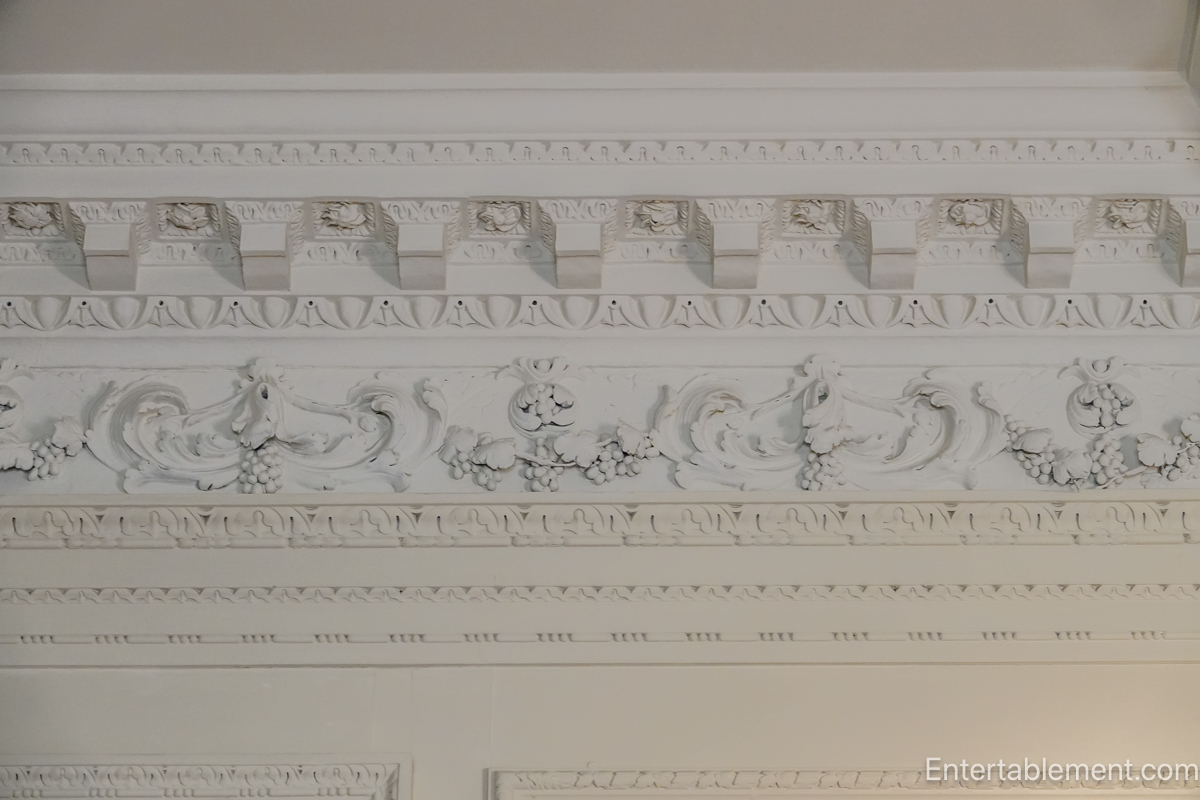
The plasterwork is by Giuseppe Artari, one of the leading Italian stuccadores in England in the 1720s. Robert Walpole knew whom to hire!

The Great Staircase
No tour of Houghton Hall tour is complete without pausing at the Great Staircase.

At first, it’s easy to miss! The door to it is tucked into a corner of the Stone Hall.
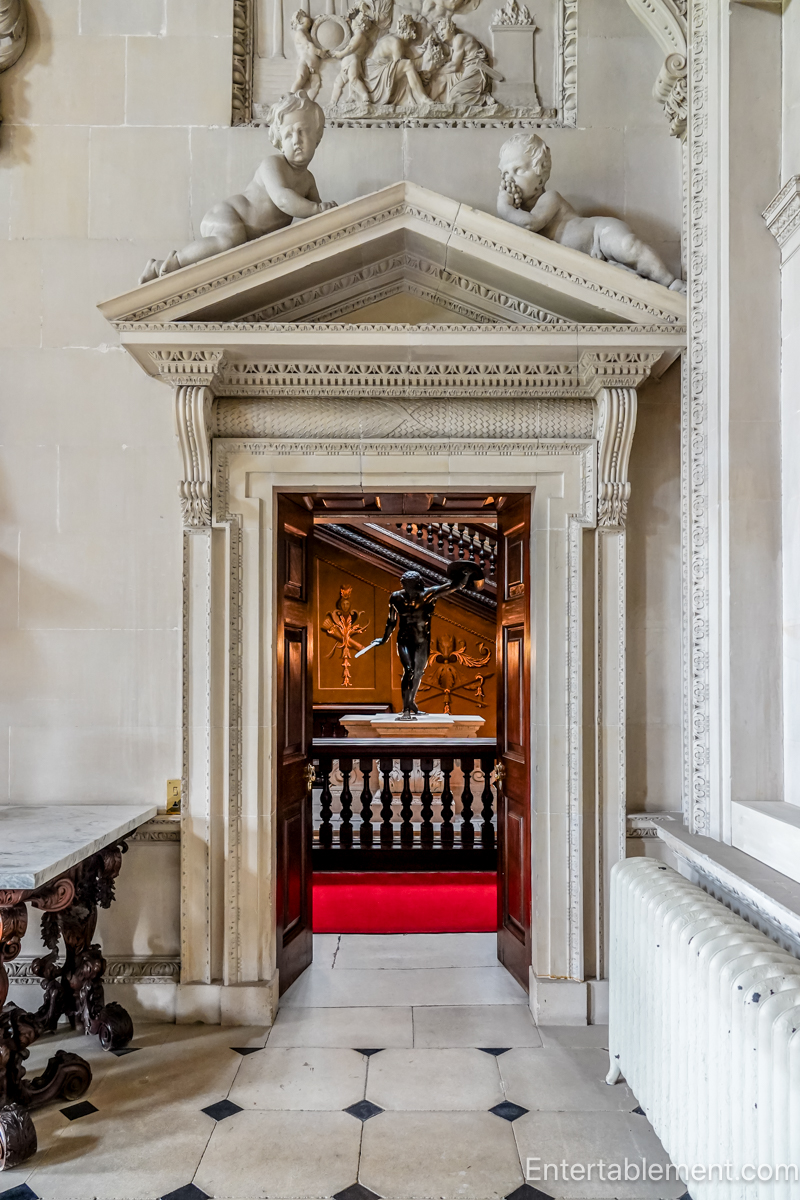
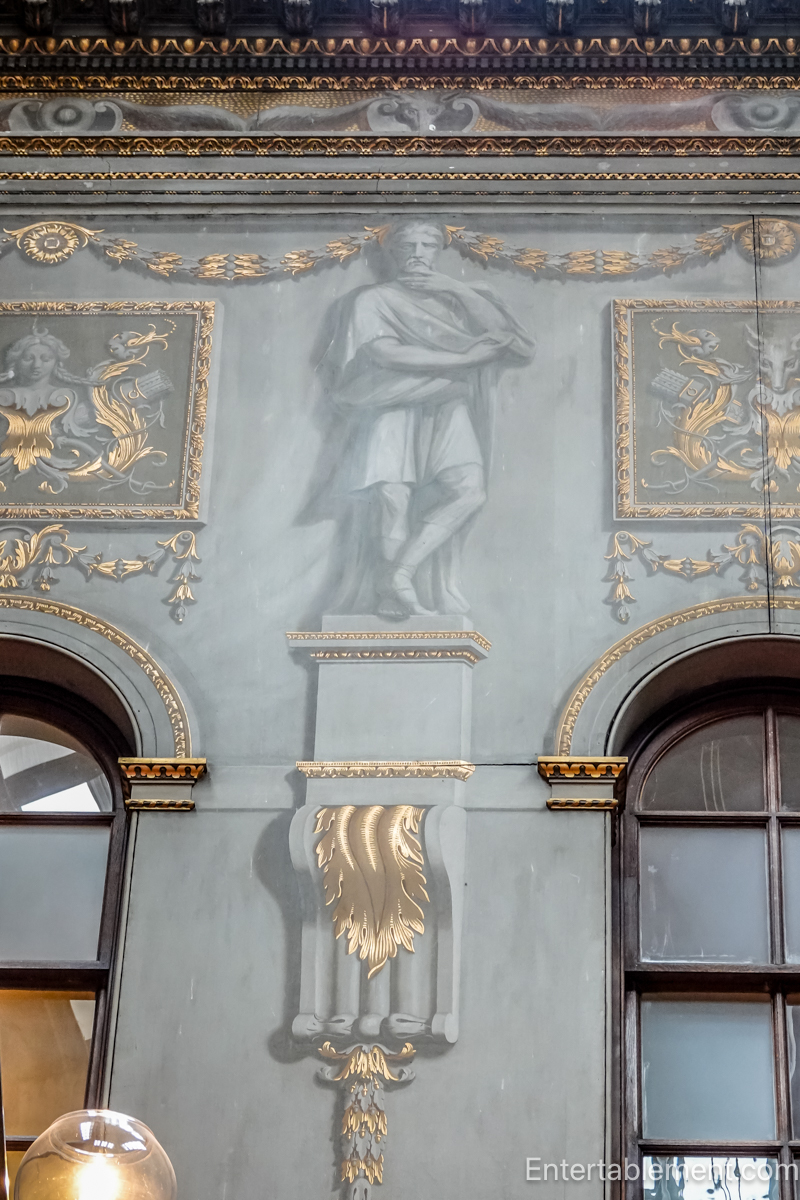
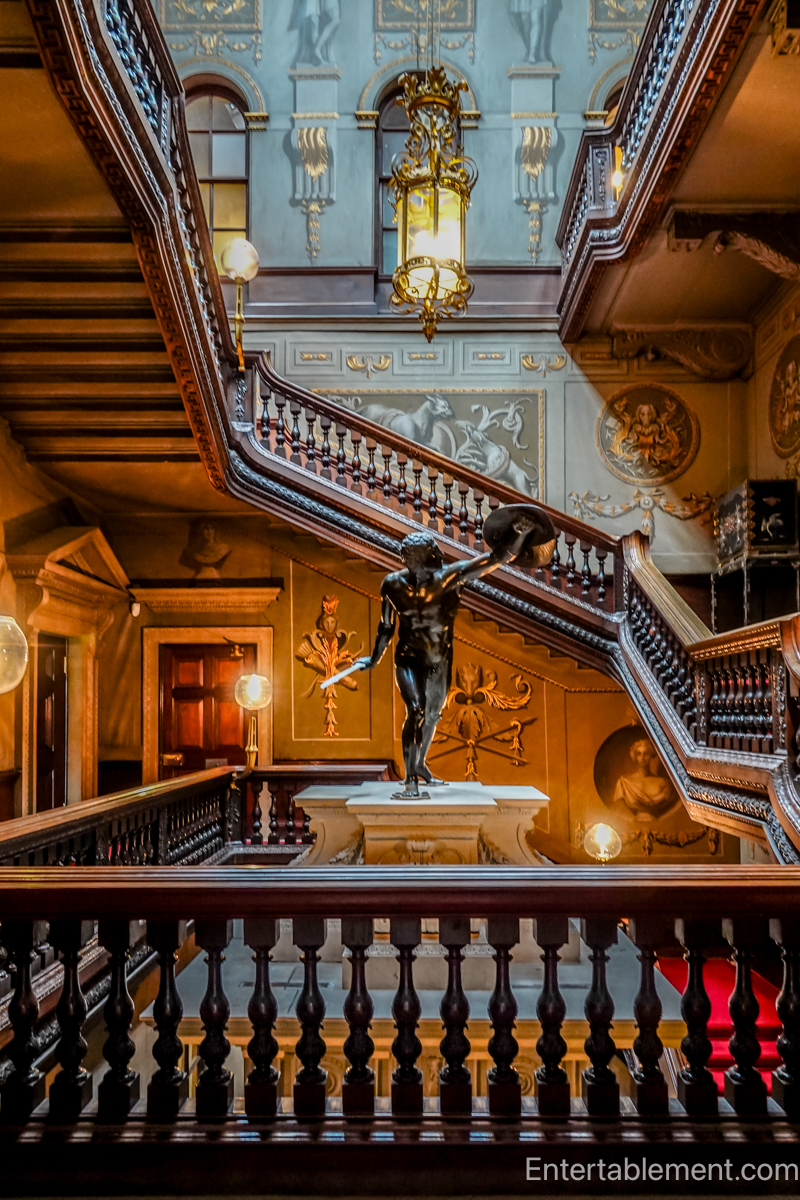
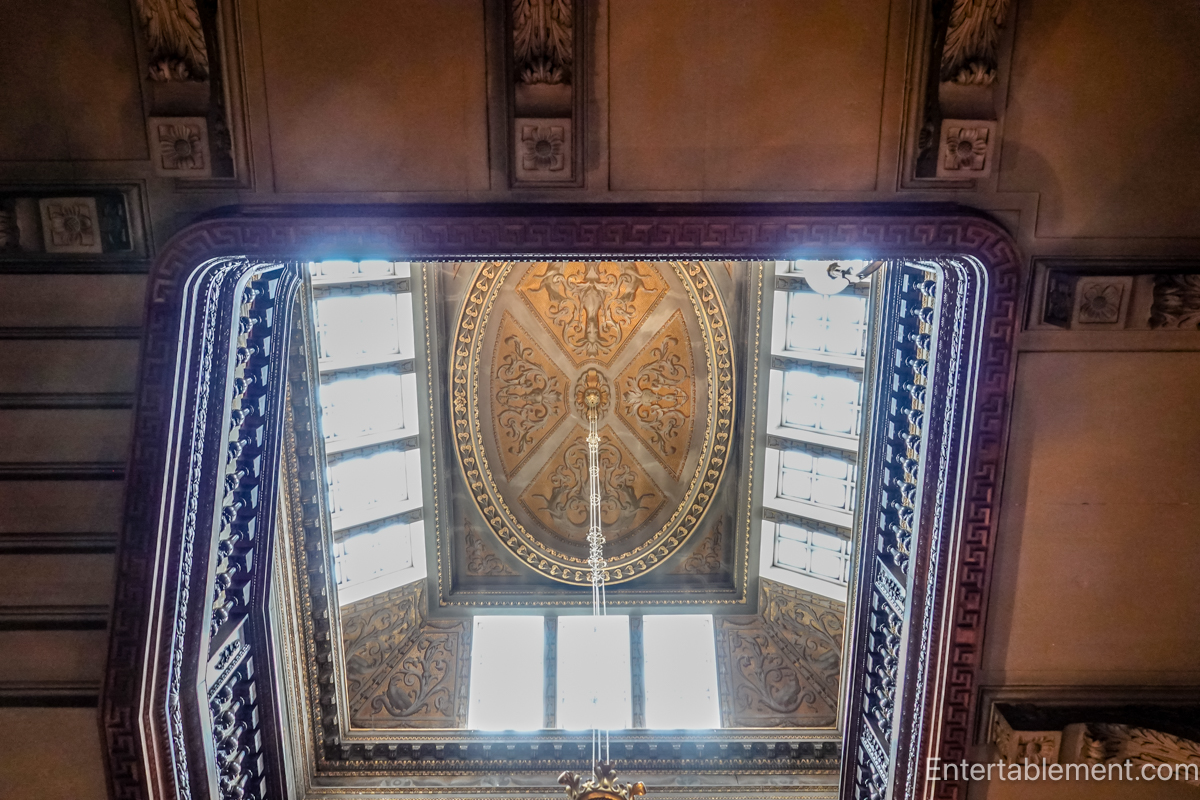
But go through and behold! A sweeping, double-height space with a richly carved wooden balustrade, intricate plasterwork, and walls painted en grisaille by William Kent.
A bronze copy of the Borghese Gladiator, the famous Roman statue, rises from the centre of the stairs. It was reproduced by Le Sueur before 1645 for the Earl of Pembroke’s Wilton House and given to Sir Robert by the 8th Earl. Nice housewarming gift.
The Saloon
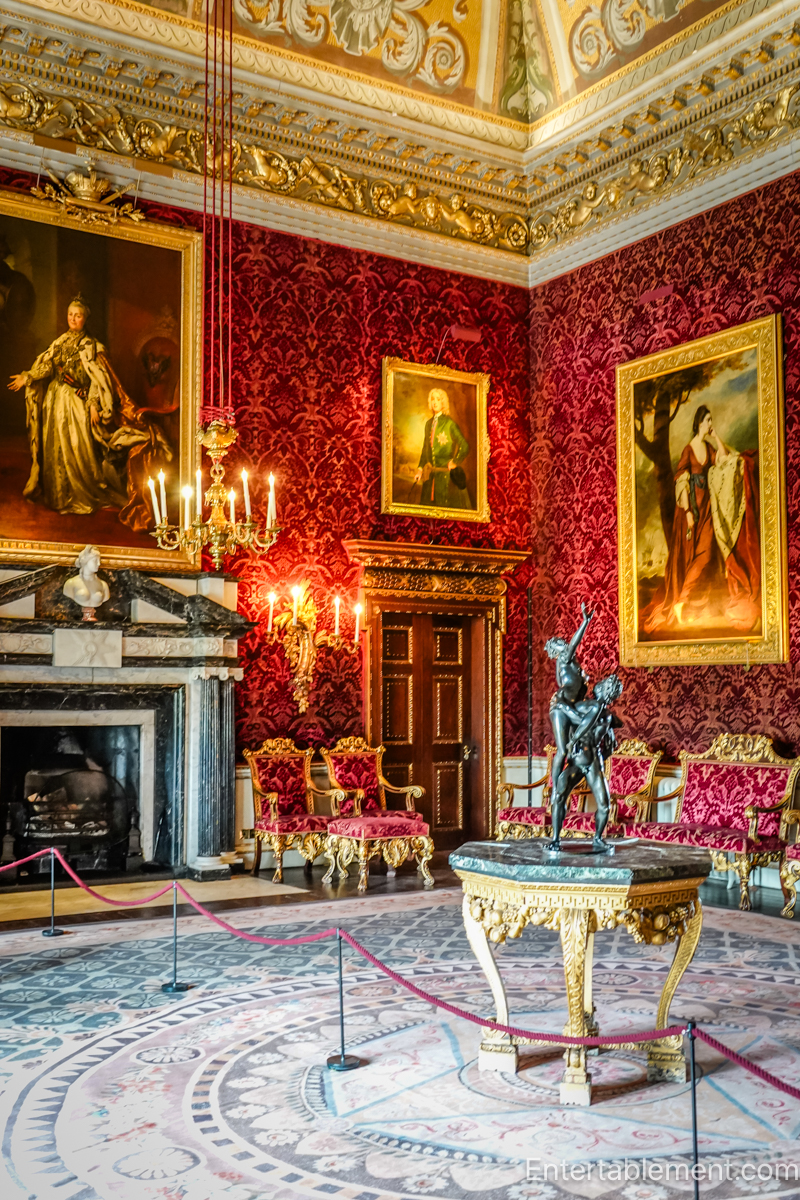
The Saloon is the largest of the reception rooms used on formal occasions and is a triumph of William Kent’s decorative genius. He was the first English decorator and later architect to design a quantity of furniture. Thomas Chippendale was far in the future.
The elaborate gilding and rich yet sturdy crimson materials portray the “state” character of the room.
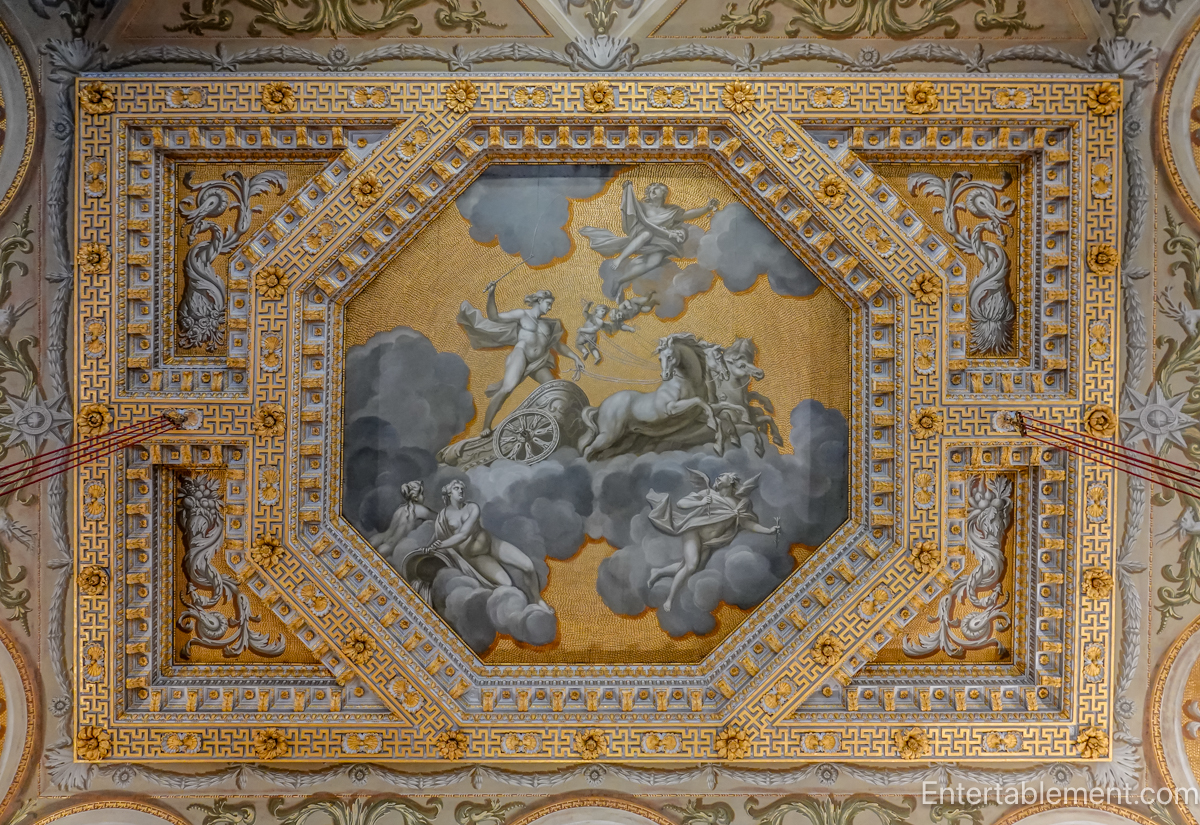
The gilded and painted ceiling makes this one of the most striking spaces in the house. The gods and goddesses sporting in the painted centre show Kent’s affection for allegory.
The doorcase is a work of art.
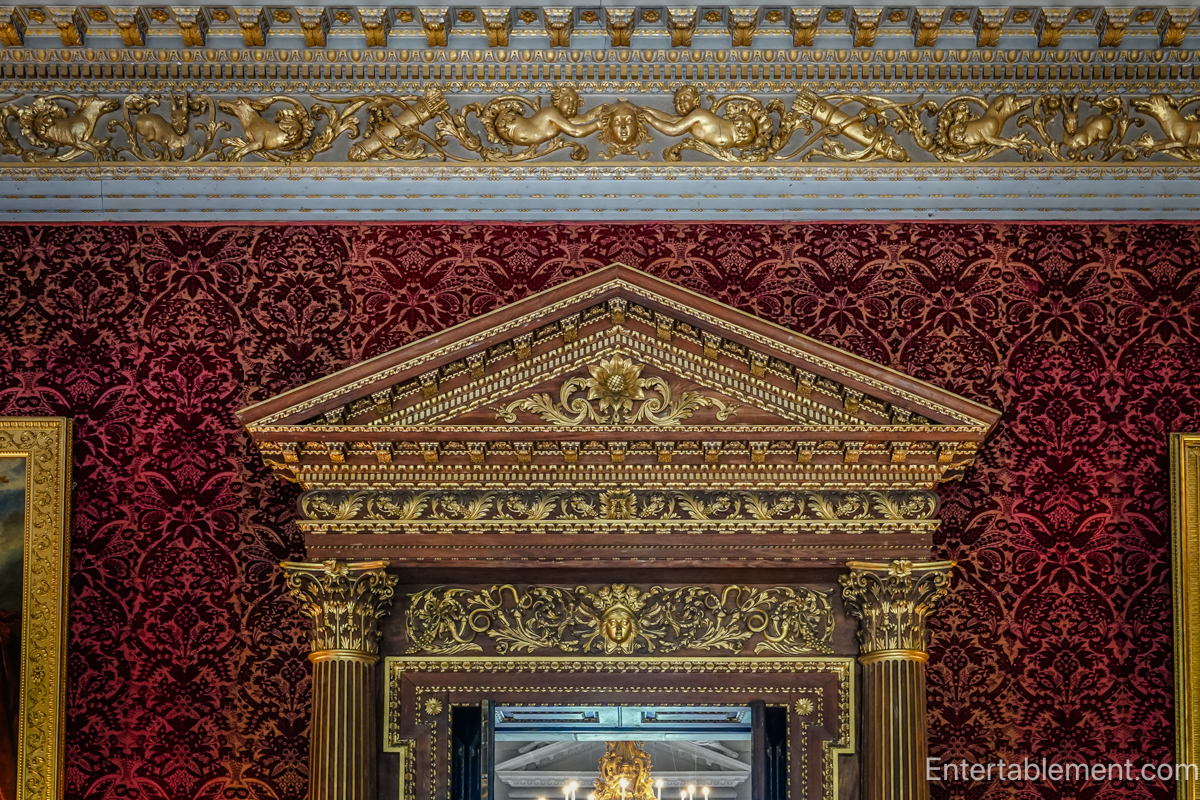
The frieze features numerous symbols of the chase, as Robert Walpole was an avid hunter. In his day, he hunted six days a week during the season with two Houghton packs of hounds. See the dogs, rabbits and quivers?

The White Drawing Room
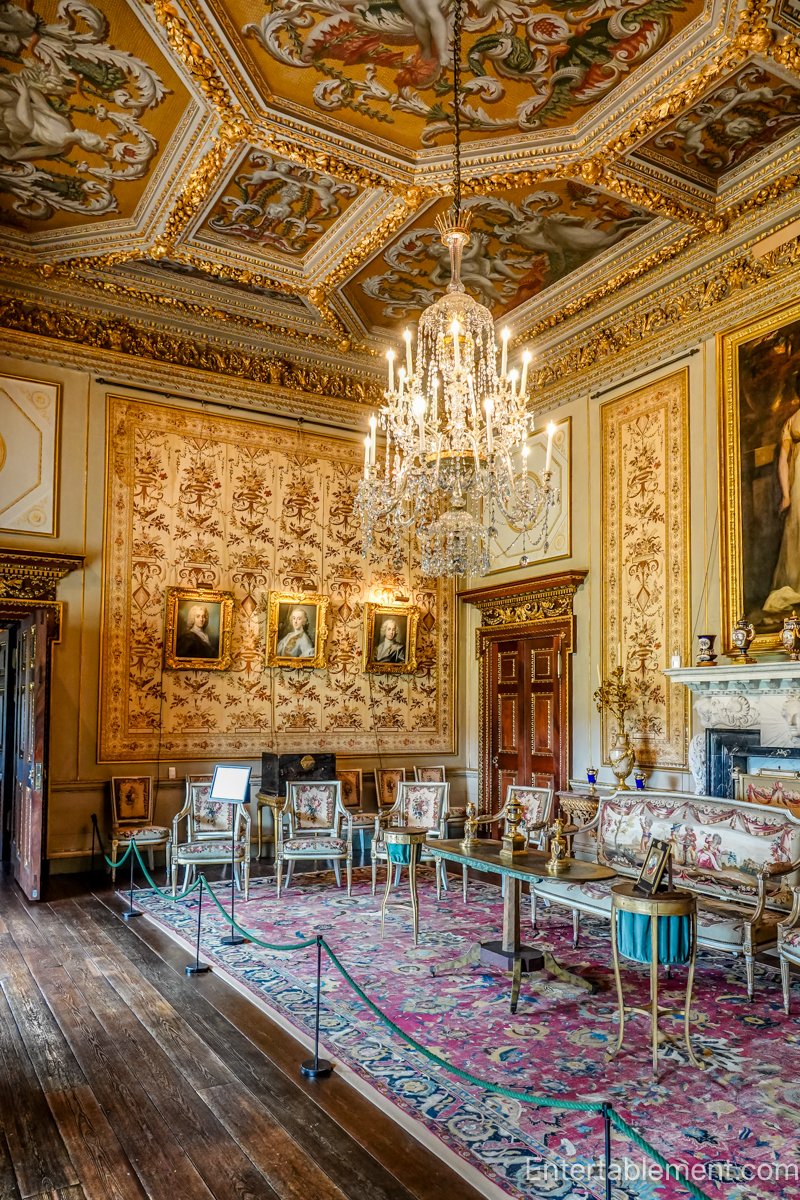
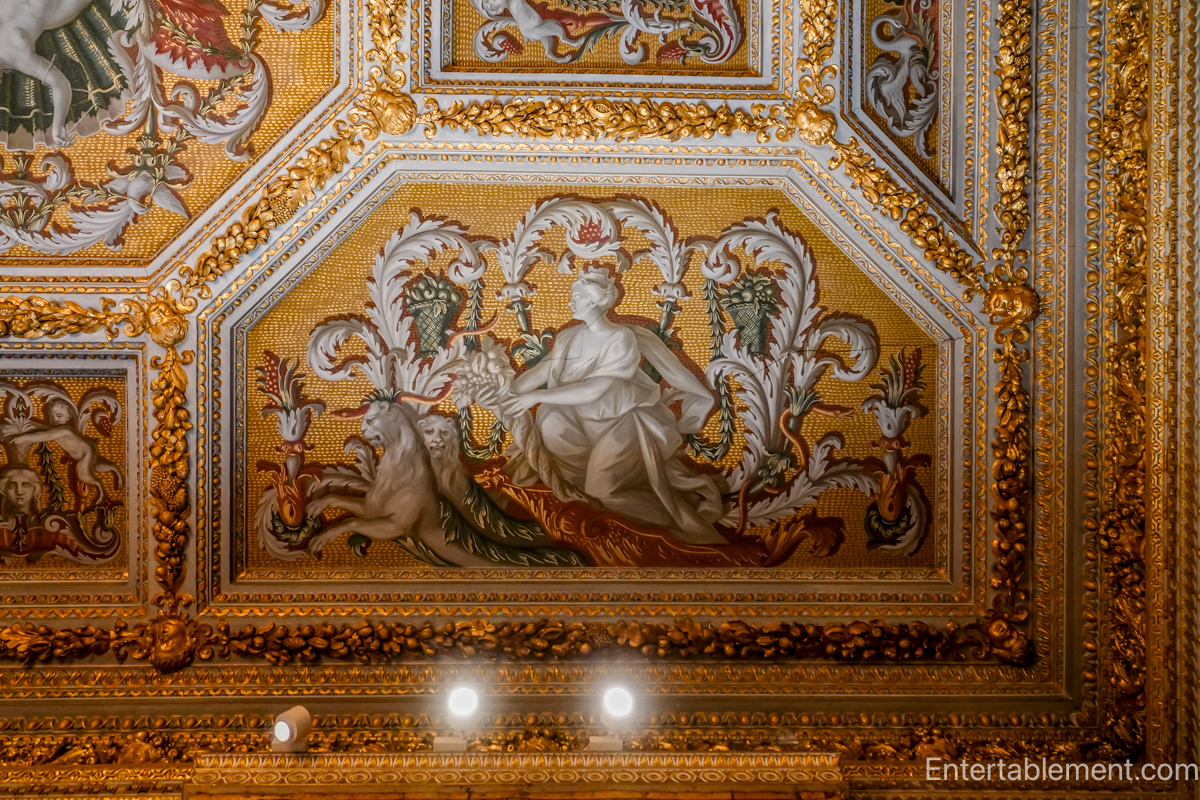
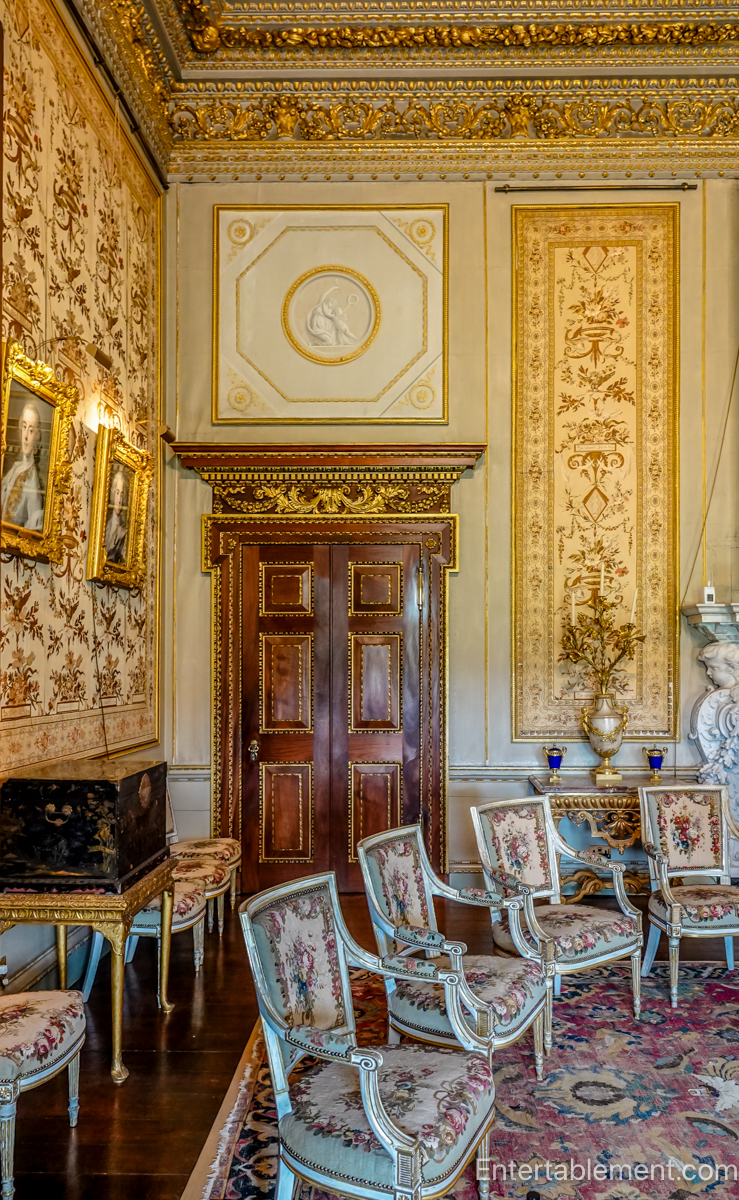
The White Drawing Room has changed more than any of the principal rooms since Sir Robert’s day. The brocaded silk hangings and valances were a gift from the Prince of Wales to the 1st Marquess in 1797. They’re an English version of a later Louis XVI pattern.

The Green Velvet Bedchamber
This richly appointed room is named for a spectacular state bed draped with deep green velvet. The room is relatively small, making it difficult to capture the entire space in a single shot. The picture below is from Houghton’s website.
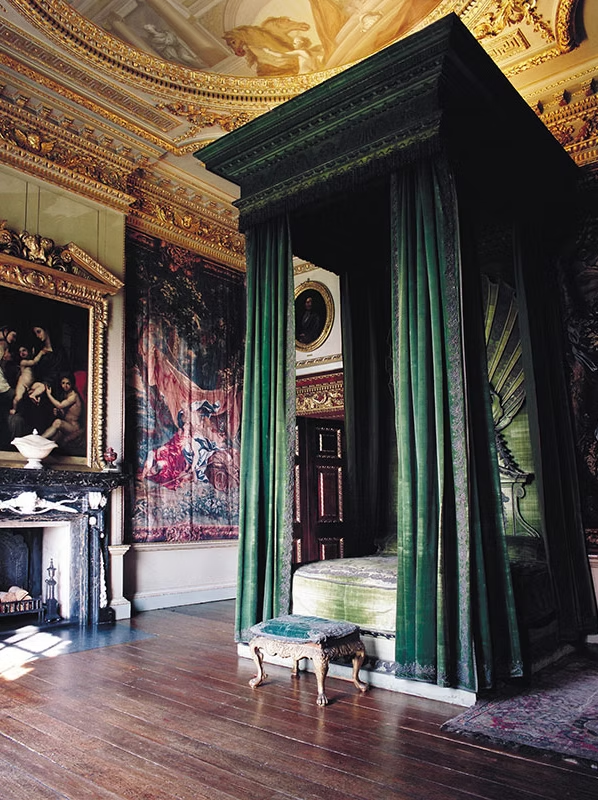
It apparently cost an absolute bomb. Sir Robert was quite cagey in destroying most of the bills for building and furnishing Houghton Hall. However, there is a surviving bill for the bed: £1,219 3s. 11d. in 1732 translates to more than £252,000.00 today. That is just the bed hangings – not the frame! It gives you some notion of what Houghton Hall cost.

Green is the colour associated with Venus and sleep; the shell headboard also stands for Venus.

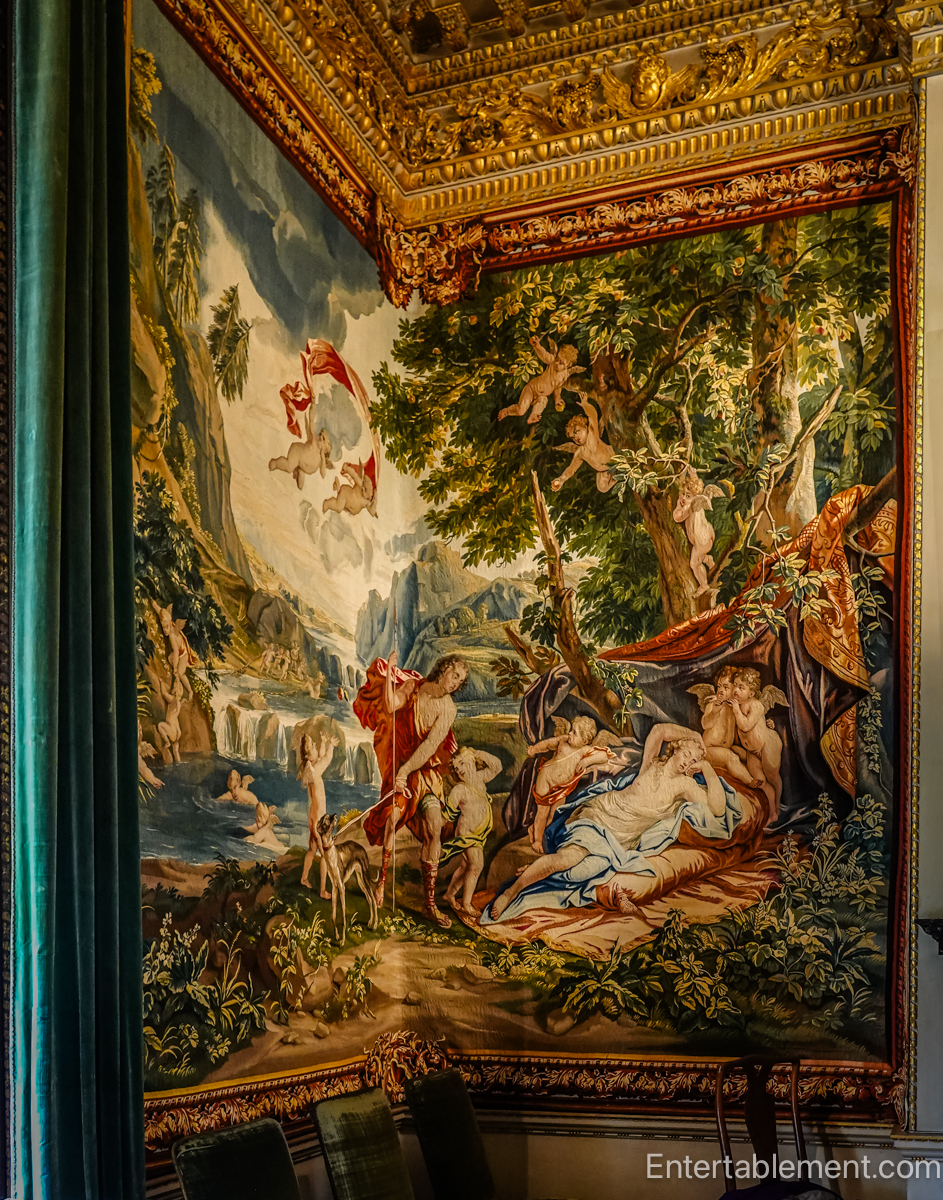
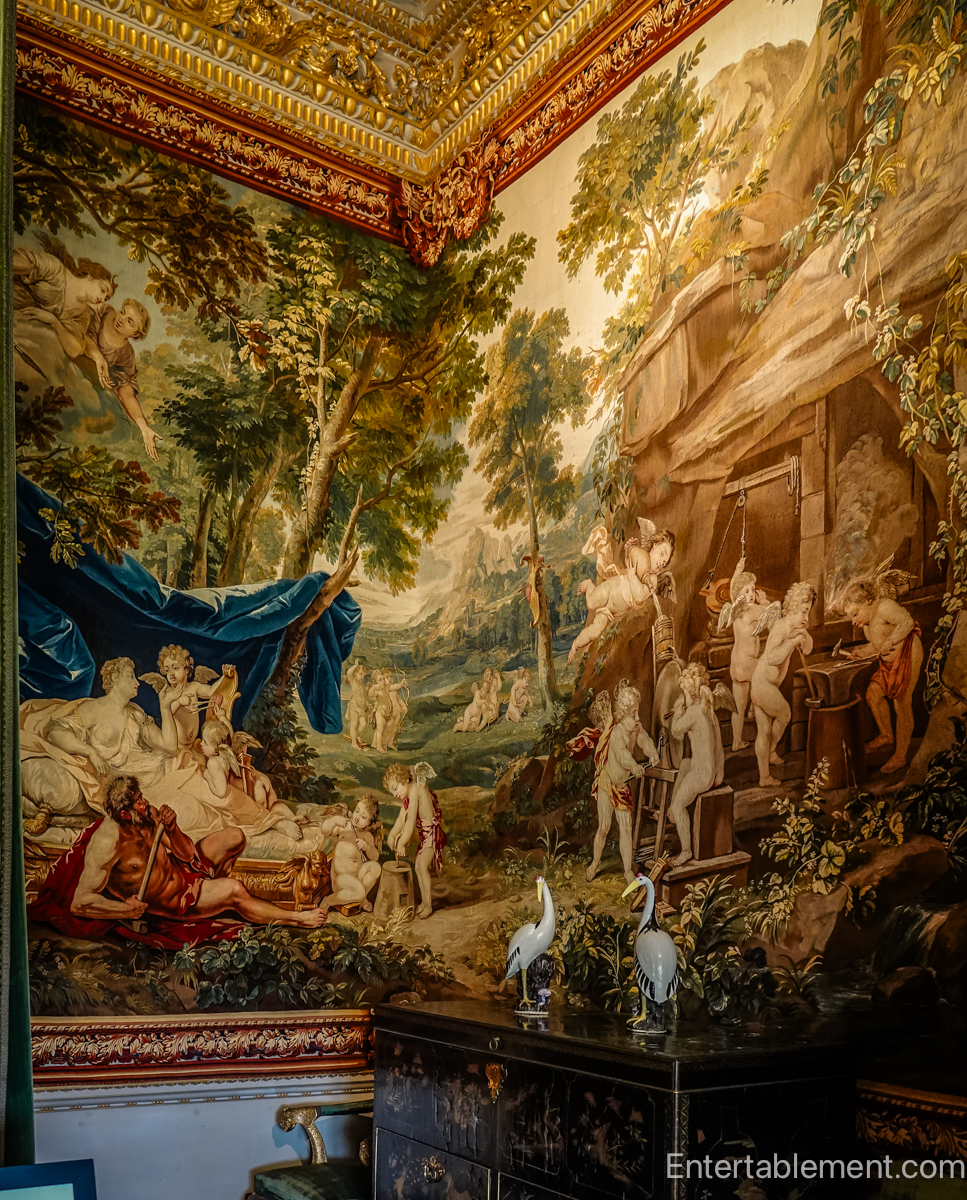
While the bed is indeed magnificent, what you really notice are the tapestries. The docent in the room very kindly helped me get photos of all the tapestries, quietly shifting furniture and pulling back curtains. She was marvellous.

They depict Venus and Vulcan, as well as Venus and Adonis, based on designs by Albano. Carefully made to fit the space perfectly, they even fit snugly when pressed into the corners.

The Tapestry Dressing Room
Built to act as a dressing-room for the State Bedroom, it was called the Van Dyck Dressing-Room in Sir Robert’s day.
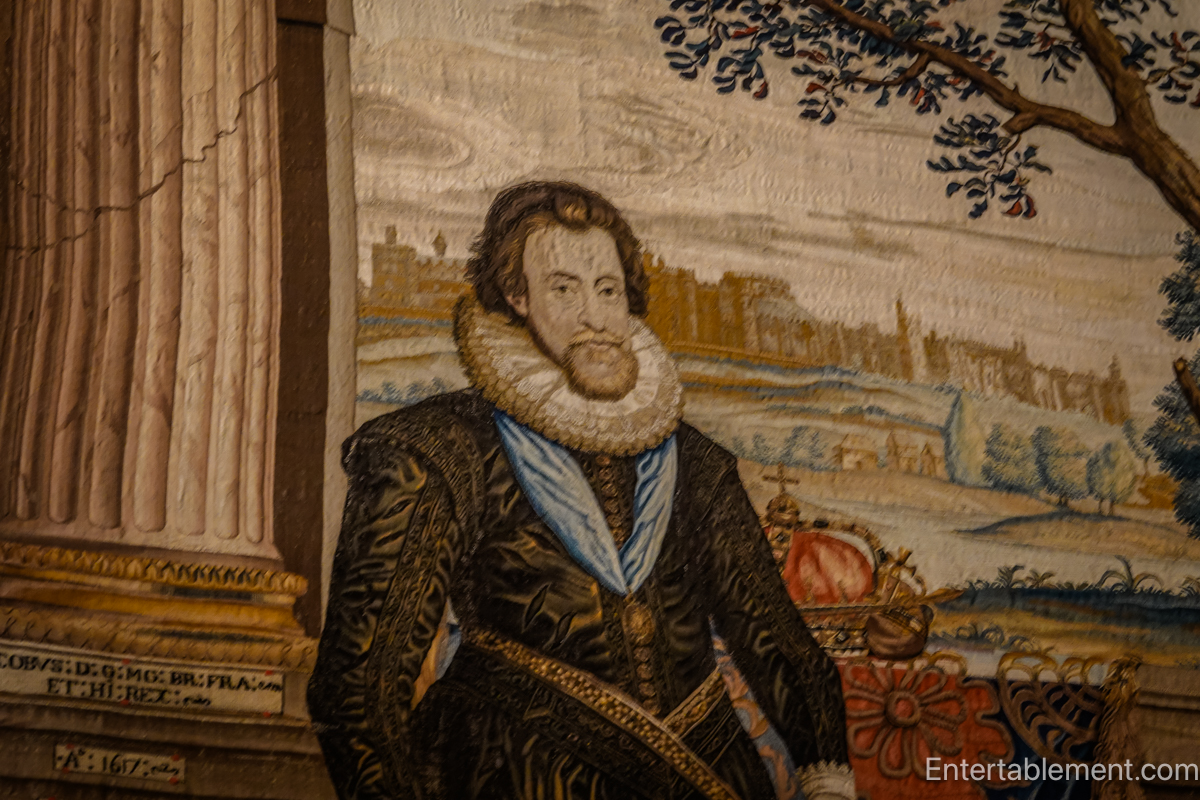
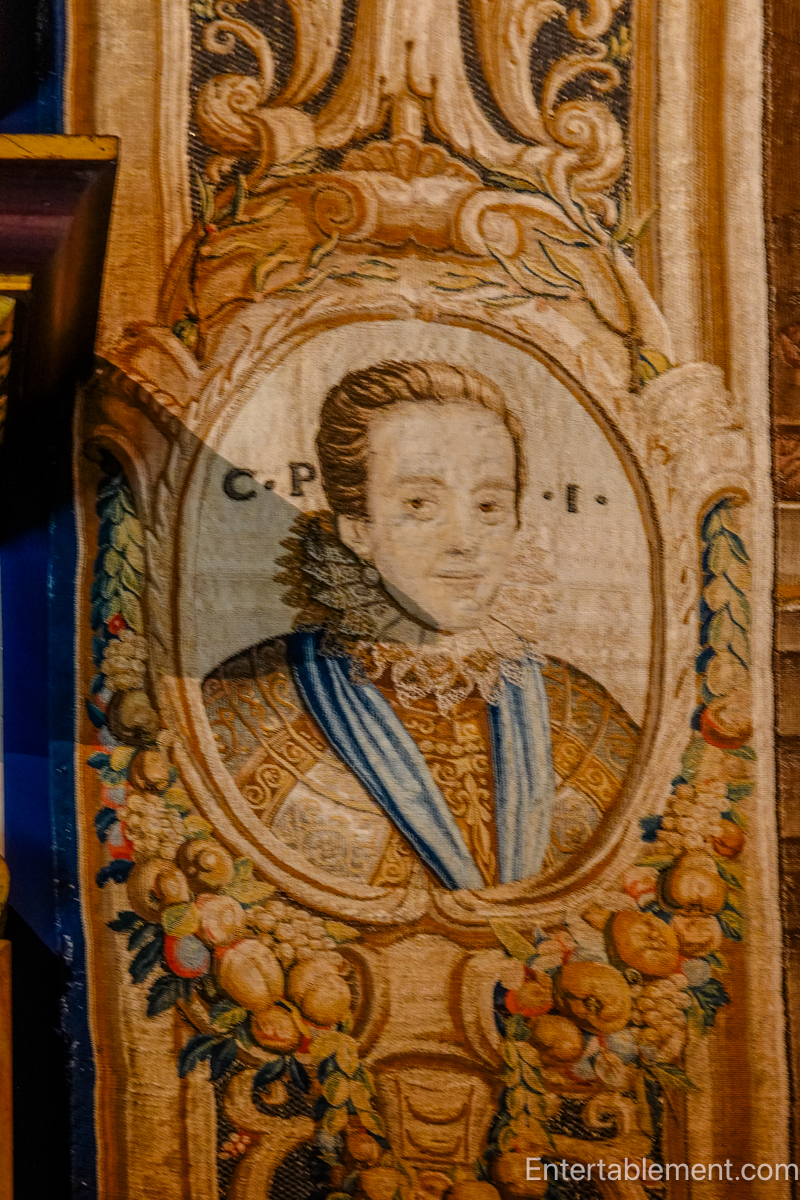
The set of five unique tapestries depicts portraits of James I/James VI of Scotland and Anne of Denmark (below). Medallions of Stuart children are sewn in the “pilasters” on the tapestries.
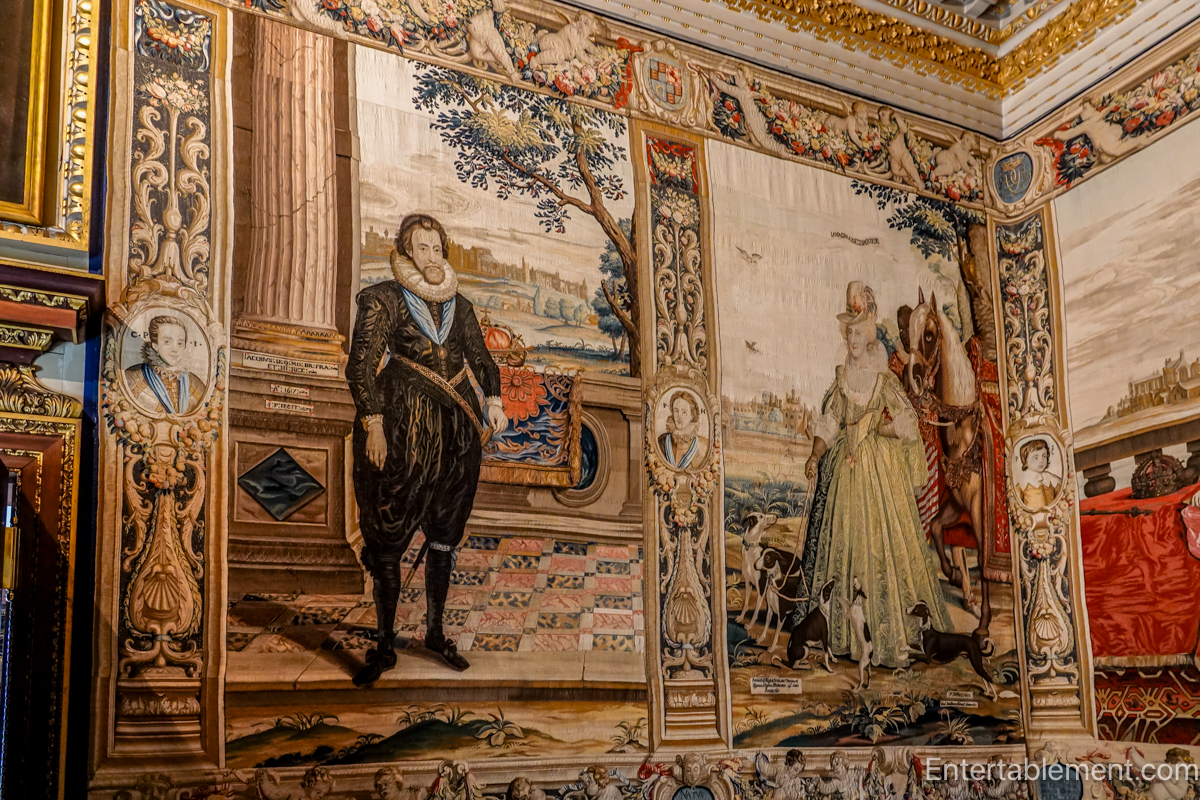
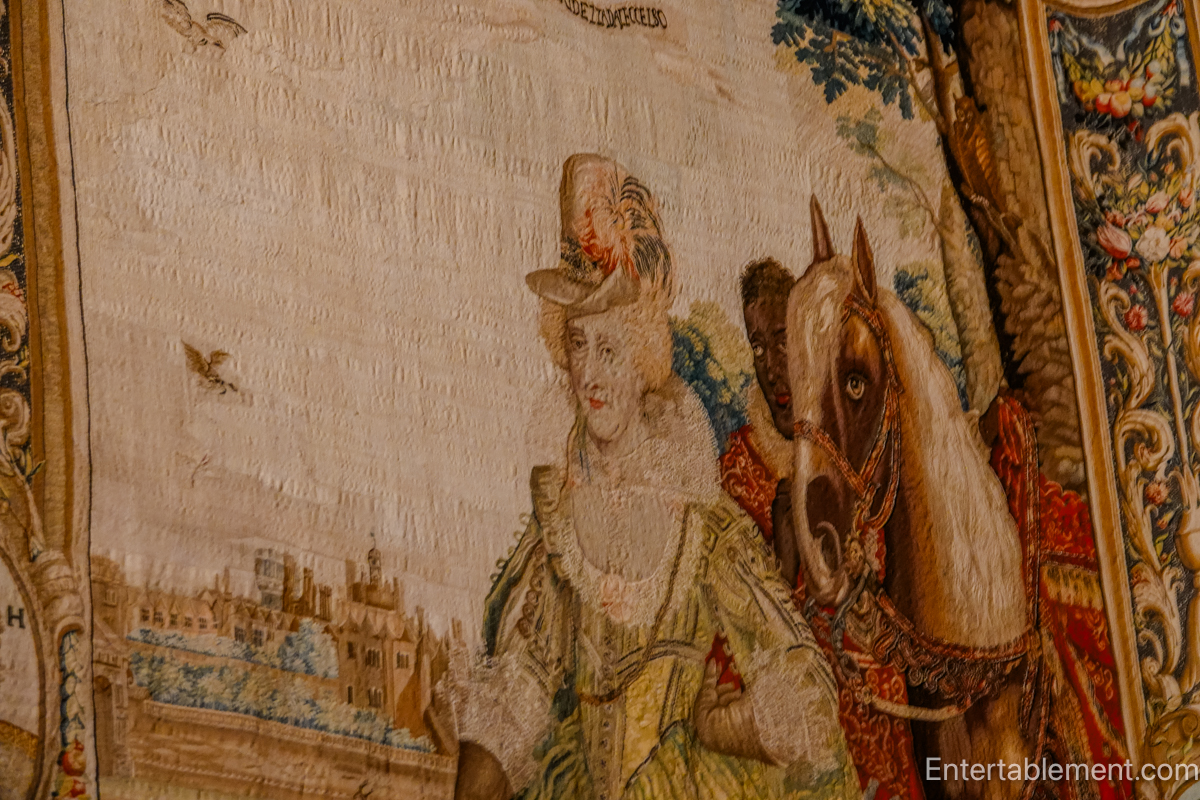

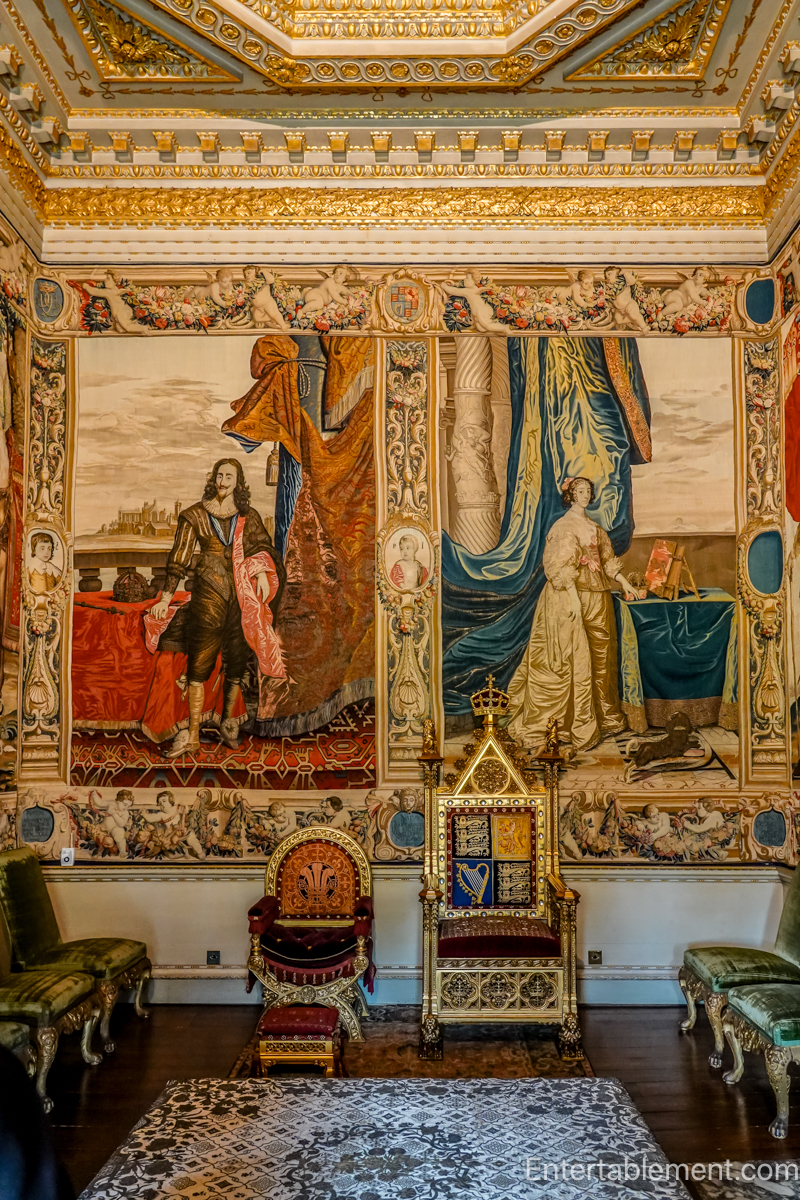
Here we have Charles I (beheaded in 1649) and Henrietta Maria (went into exile with her son, the heir, Charles II). Note the throne chairs; they were designed by A.W.N. Pugin for the House of Lords in 1847 and presented to the 5th Marquess of Cholmondley when he was the Lord Great Chamberlain to Edward VIII.
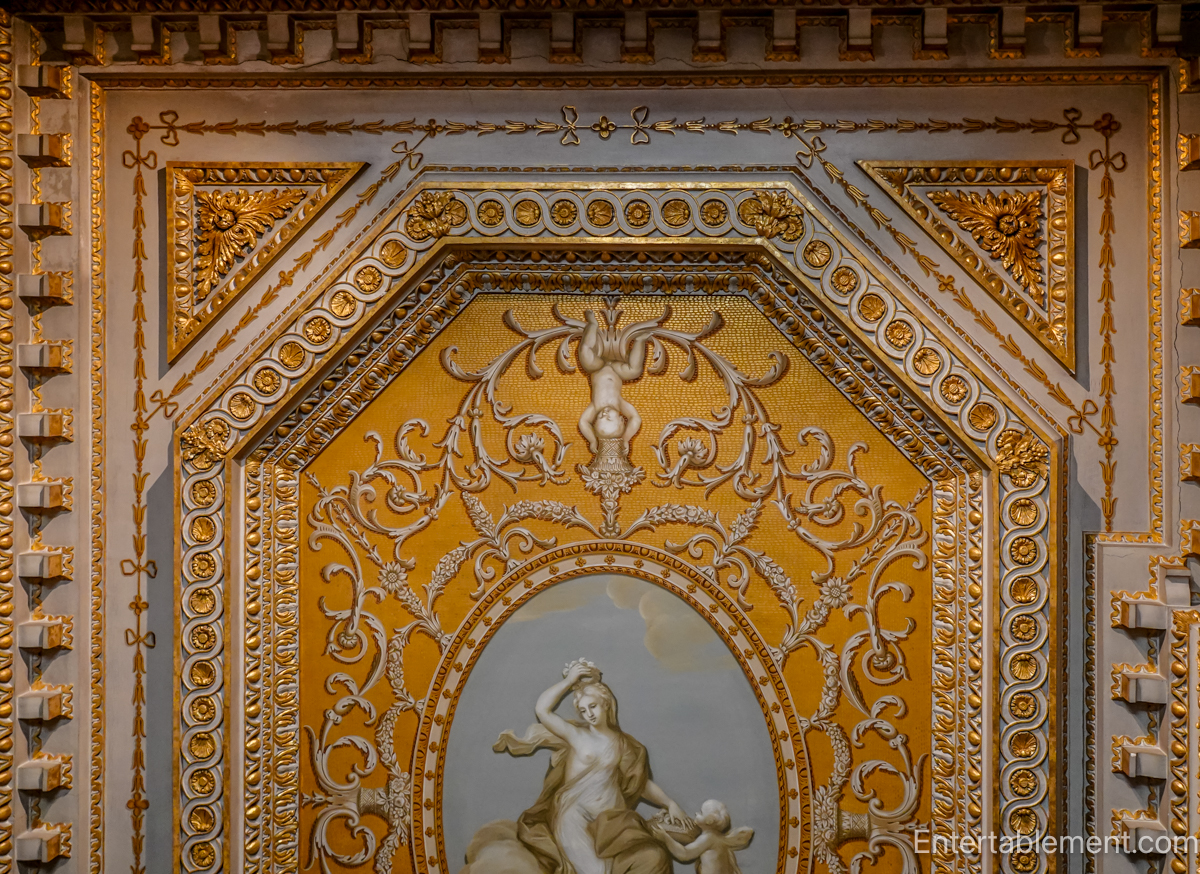
I didn’t get a picture of the tapestry of Christian IV of Denmark. However, I did manage to get a shot of the ceiling. Happy sigh.
The Embroidered Bedchamber
The last two rooms were just the warm-up! This room contains the original state bed at Houghton.

Sir Robert Walpole’s Arms are embroidered at the head of the bed.
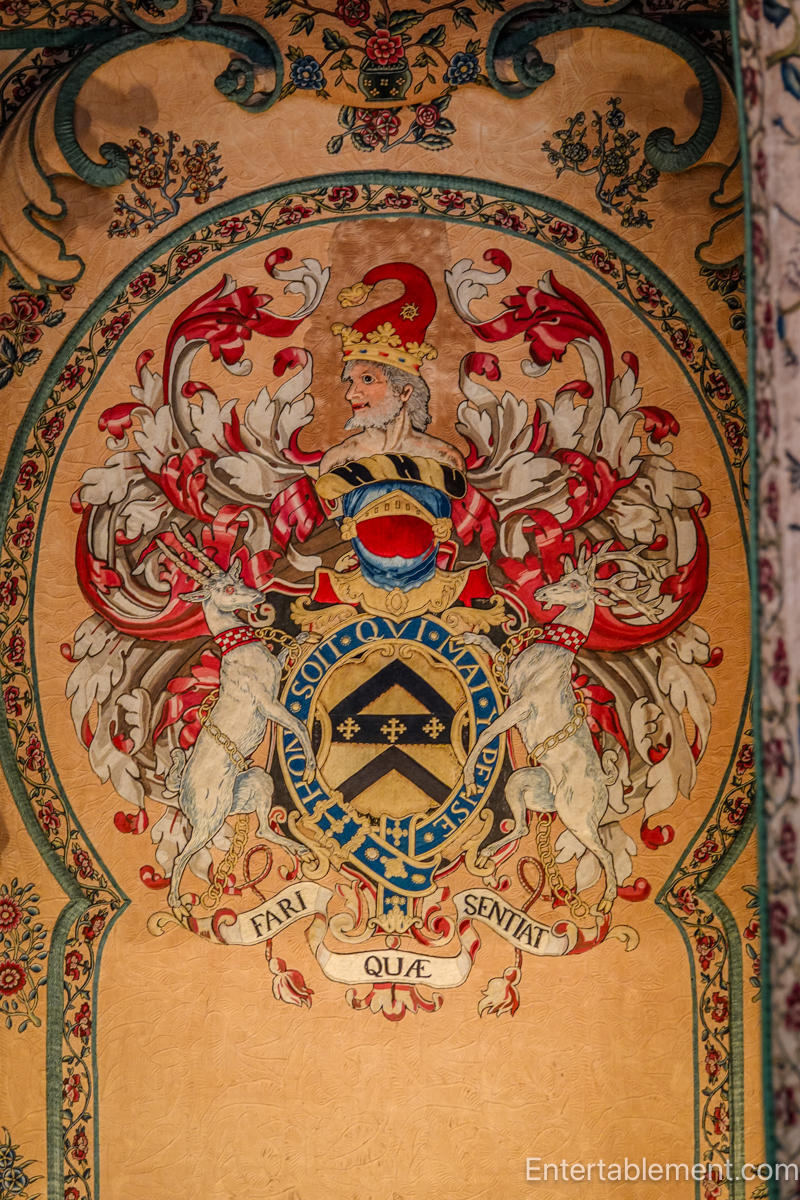
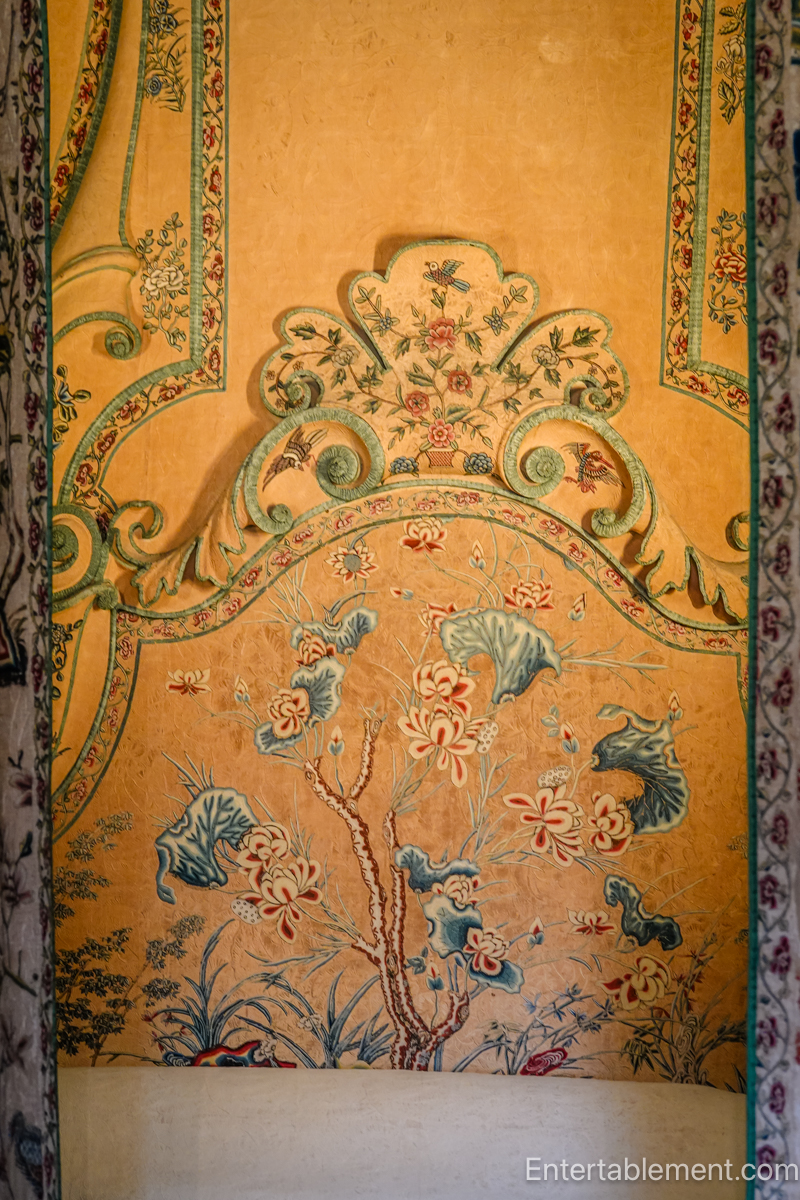
Below is floral embroidery on the headboard.
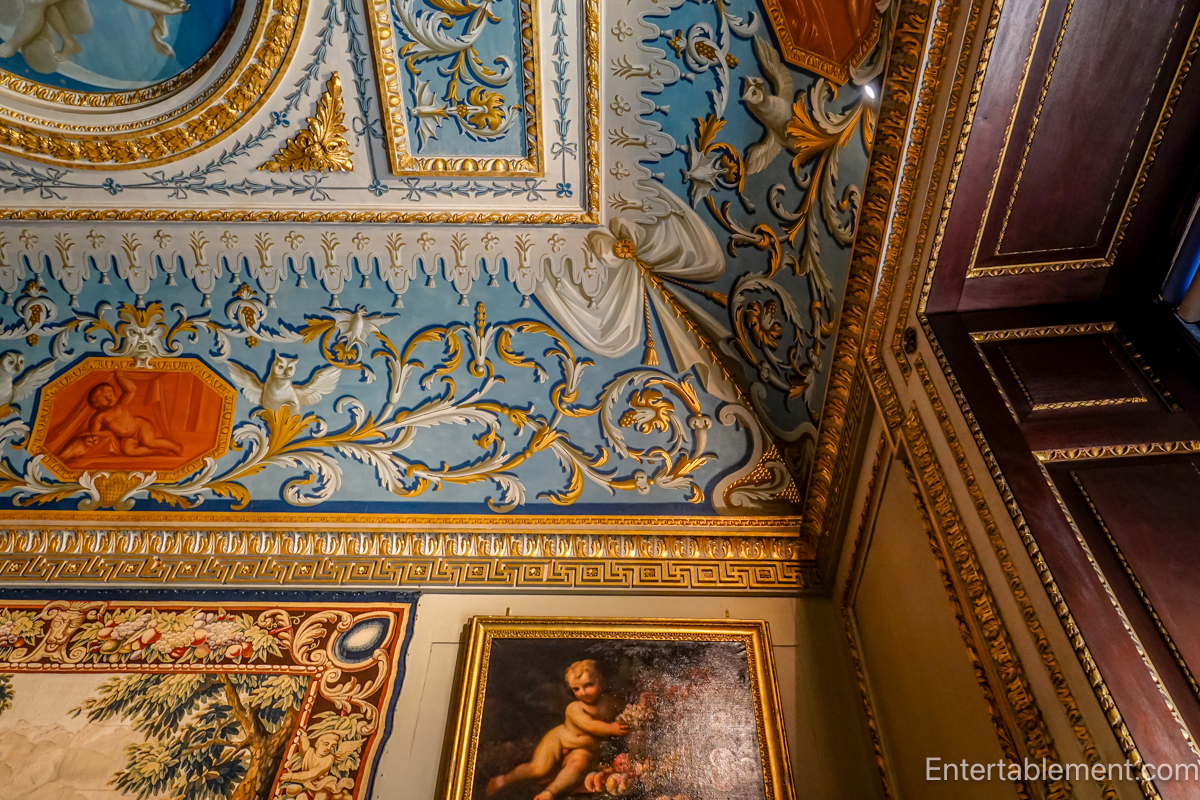
If all that isn’t enough to keep the room’s occupant amused, the ceiling will!

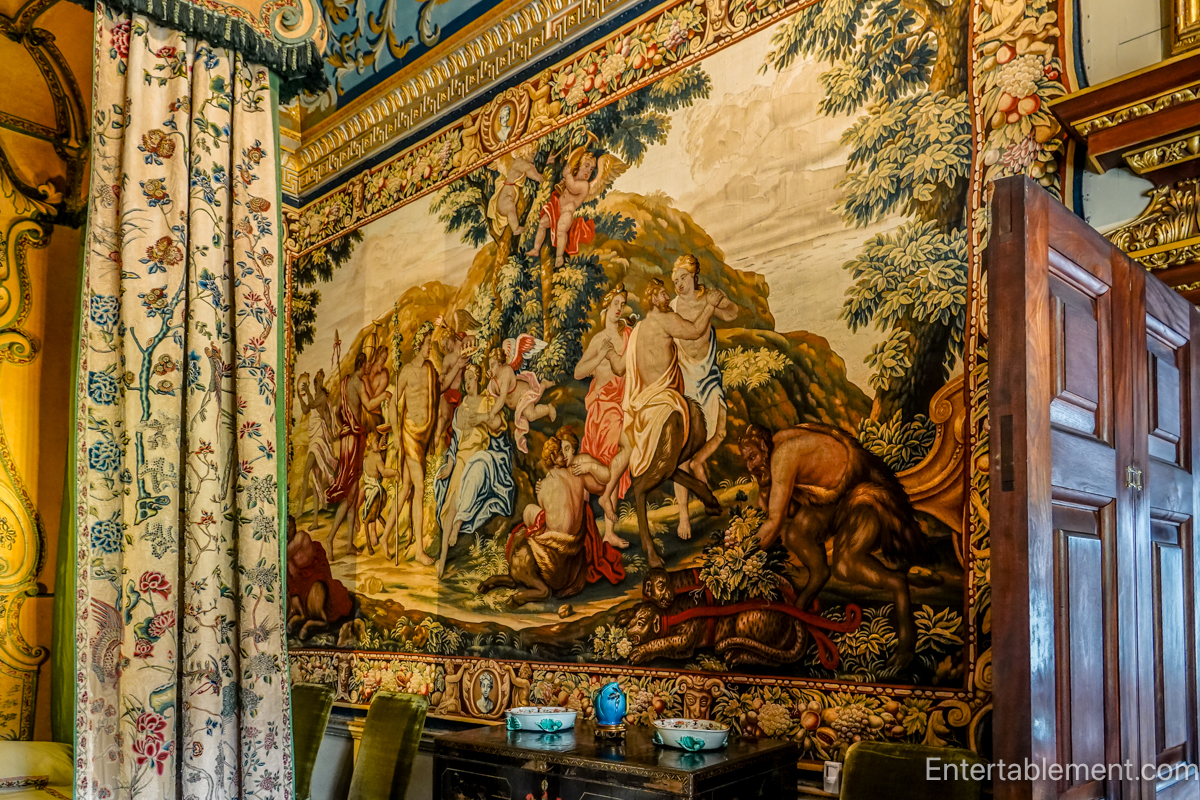
Or the tapestries! There is barely an inch without decoration.
The Cabinet
Somewhat ironically, this was my favourite bedroom. It wasn’t a bedroom at the outset; Sir Robert used it to display 51 of the smaller pictures in his 400+ collection. But when financial reverses led to the sale of a large portion of his collection to Catherine the Great, and he had the room re-wallpapered.
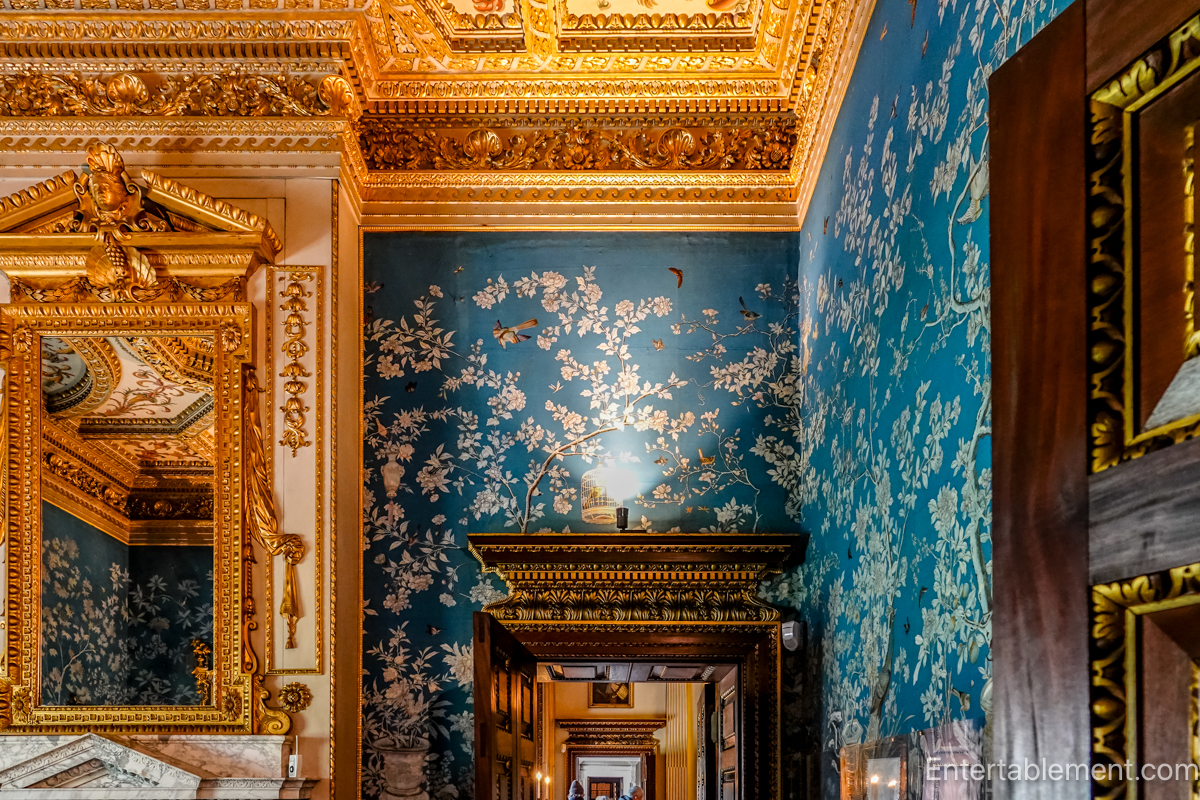
The bed is just pretty, not overwhelming. Apparently, it’s a child’s bed! It was given to Sir Robert by King George II and Queen Caroline, who were Godparents to his grandson.
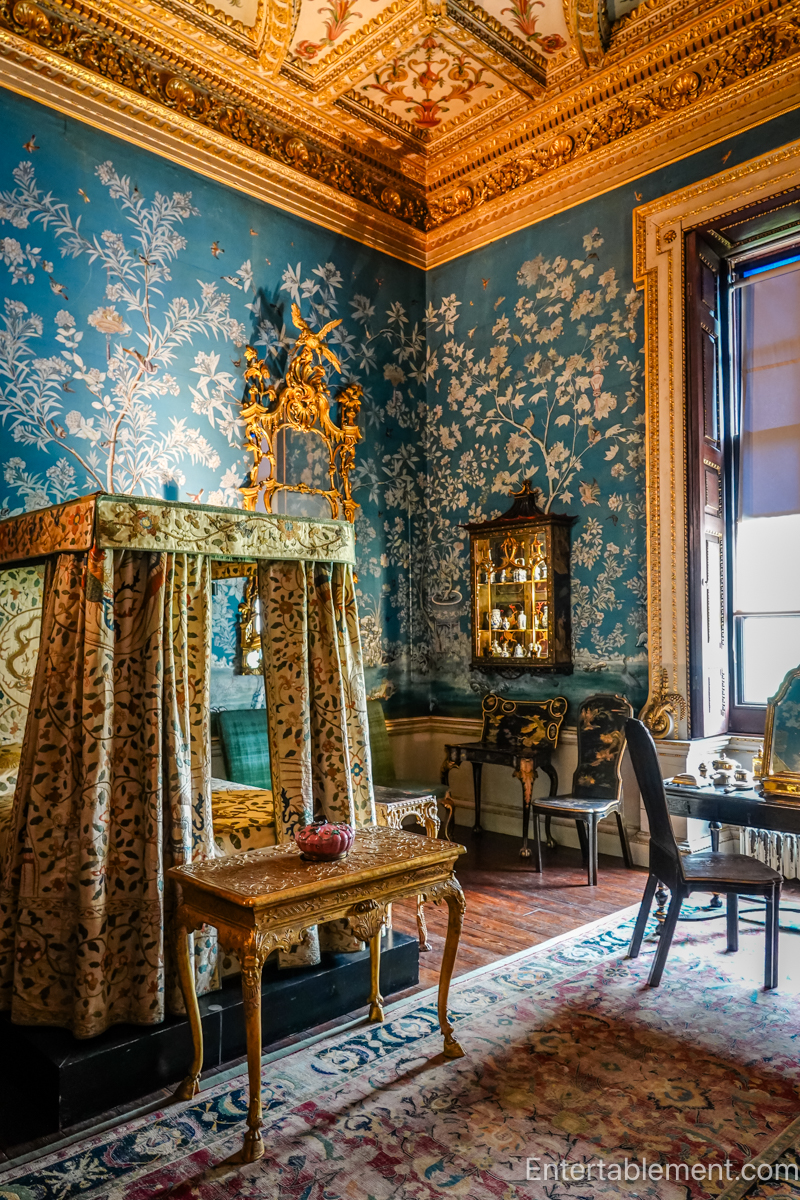
The wallpaper is simply stunning.

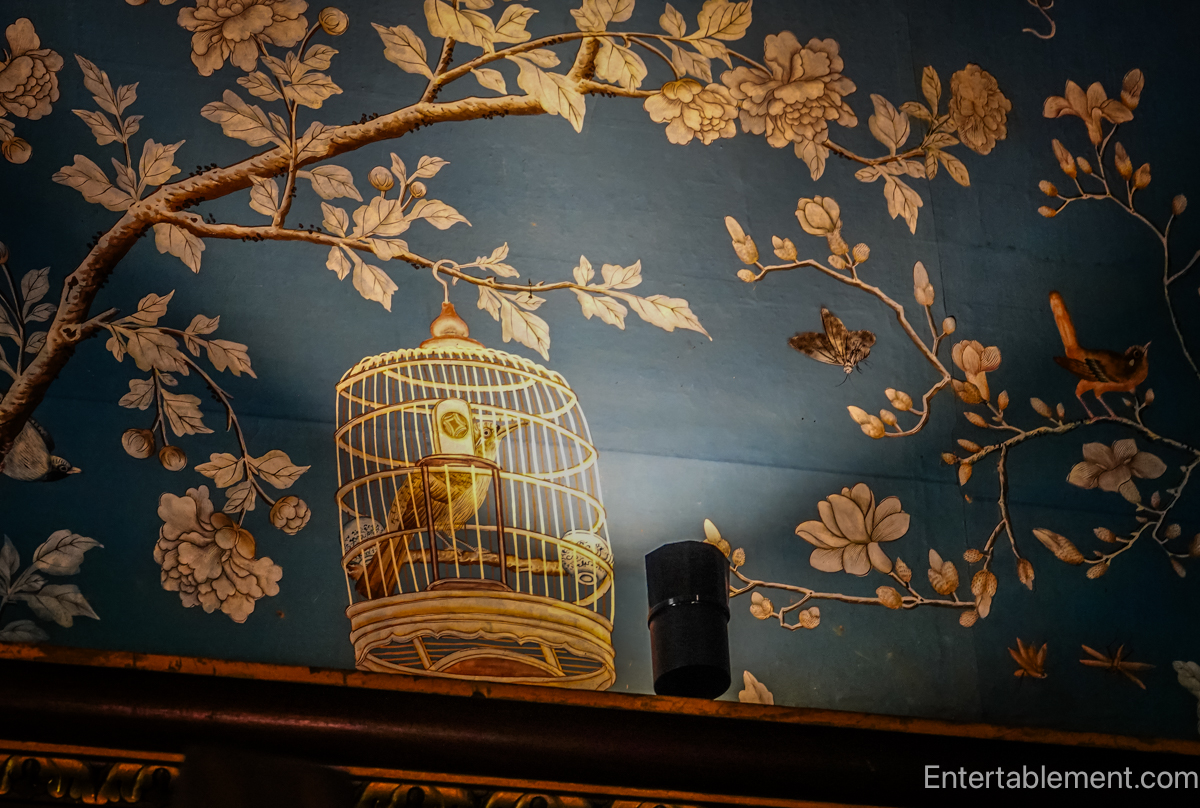
I’m a sucker for that particular shade of blue, and I love birds and birdcage motifs.

I would happily sit at that dressing table and get myself put together for the day.
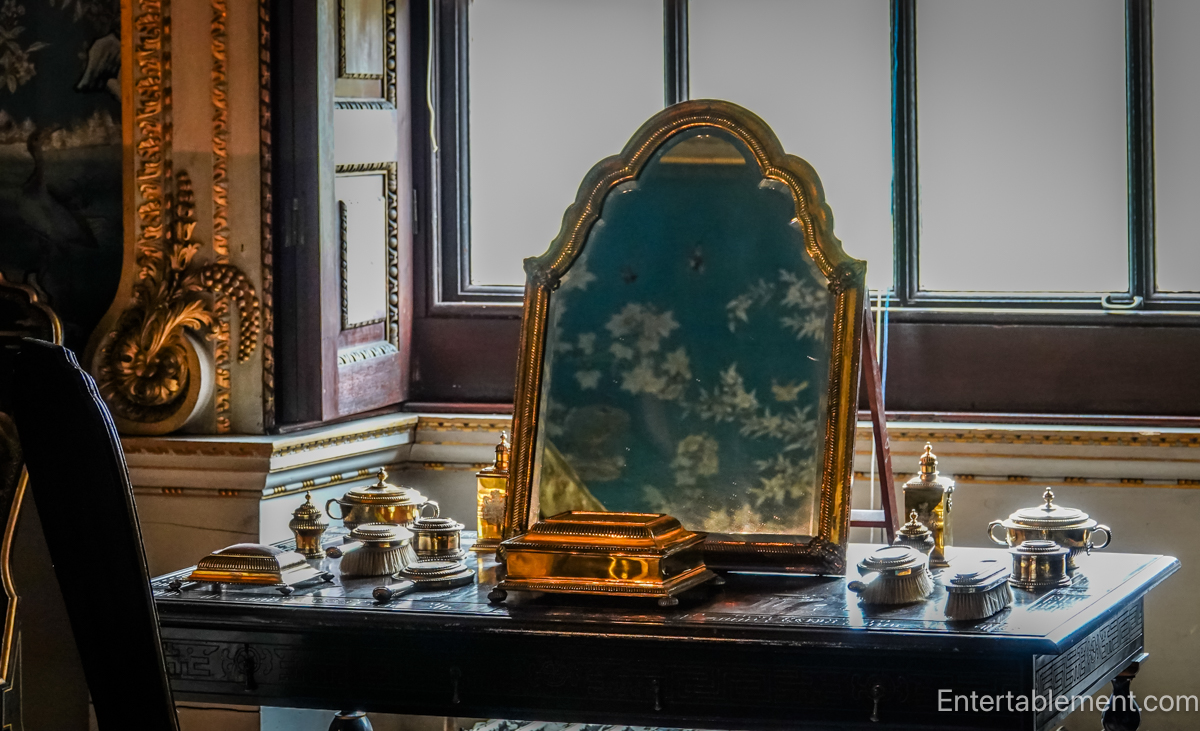
While gazing at the display of miniature china pieces.

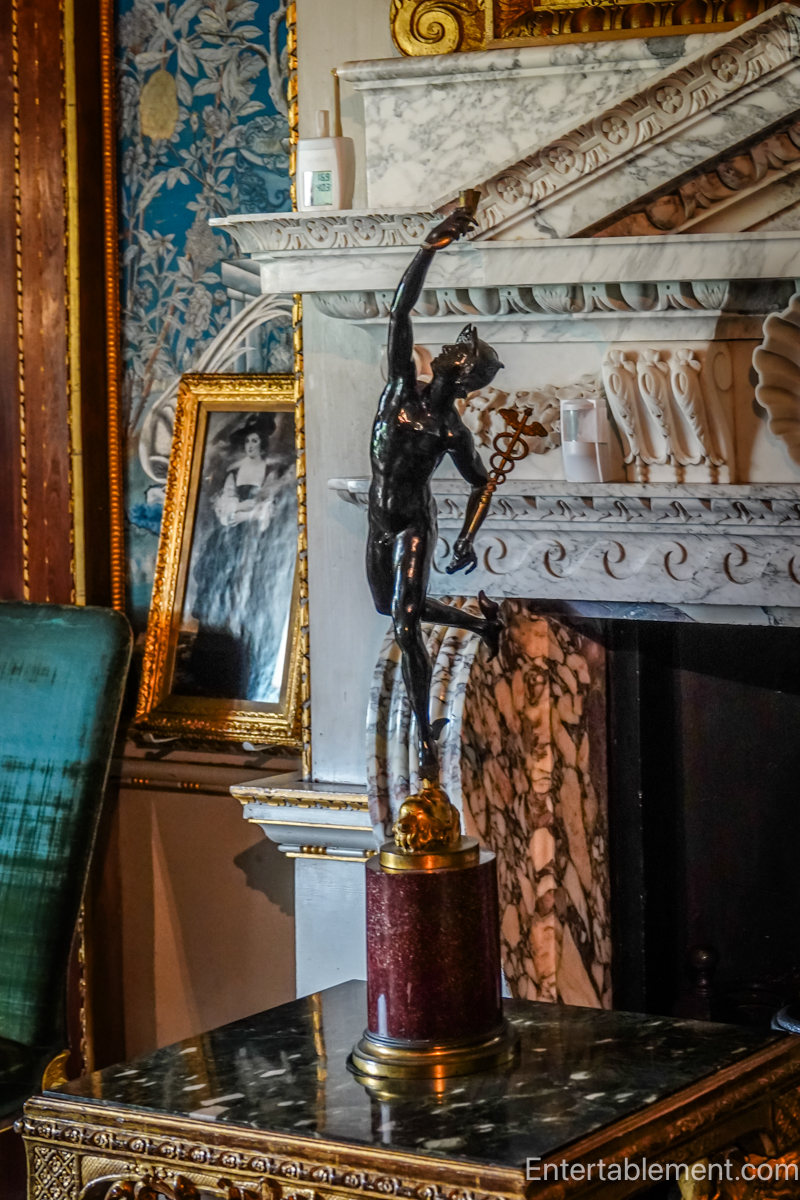
And looking up, the ceiling is exquisite. Holkham has the nicest guides, who answer all kinds of questions and offer helpful hints on how to get the best shots.

The Marble Parlour
Planned as a dining room in a series of state rooms, the Marble Parlour is exquisite.
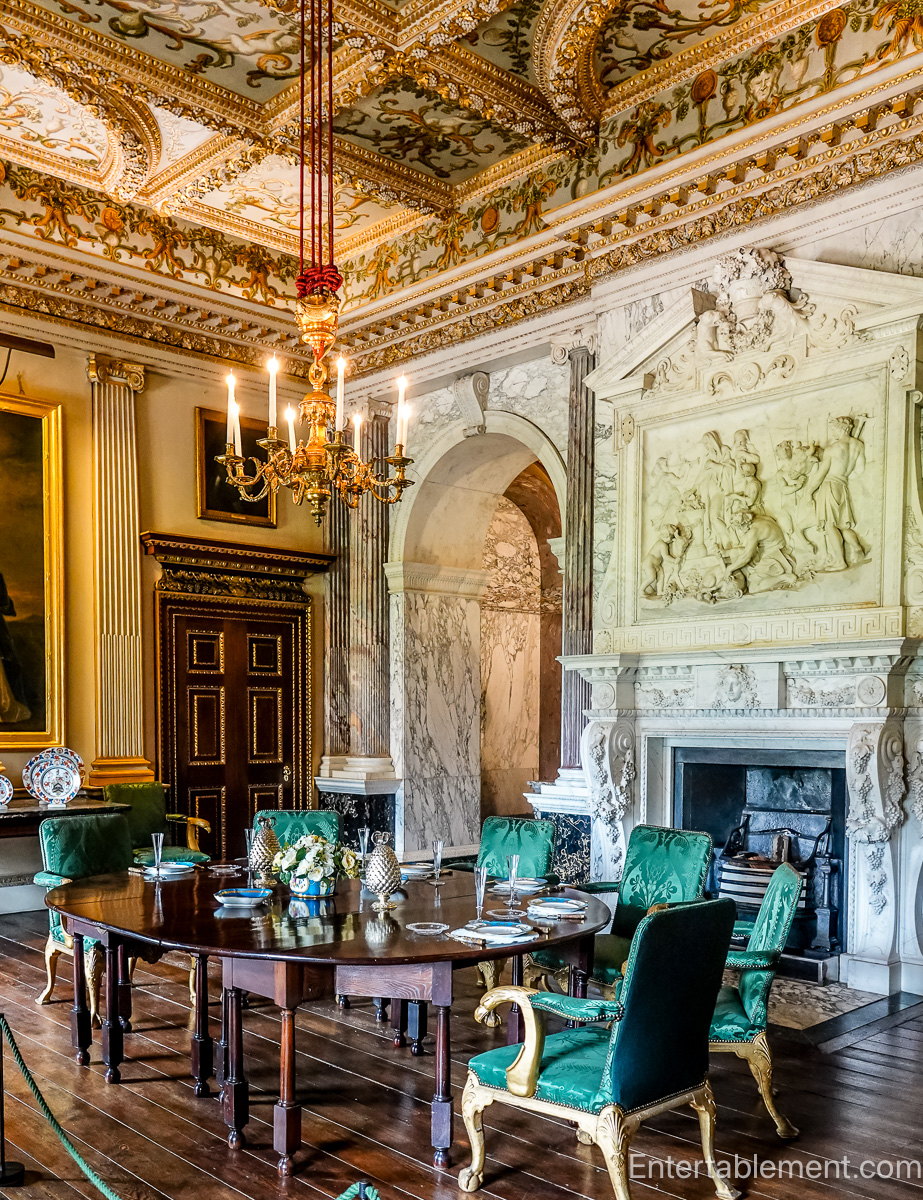
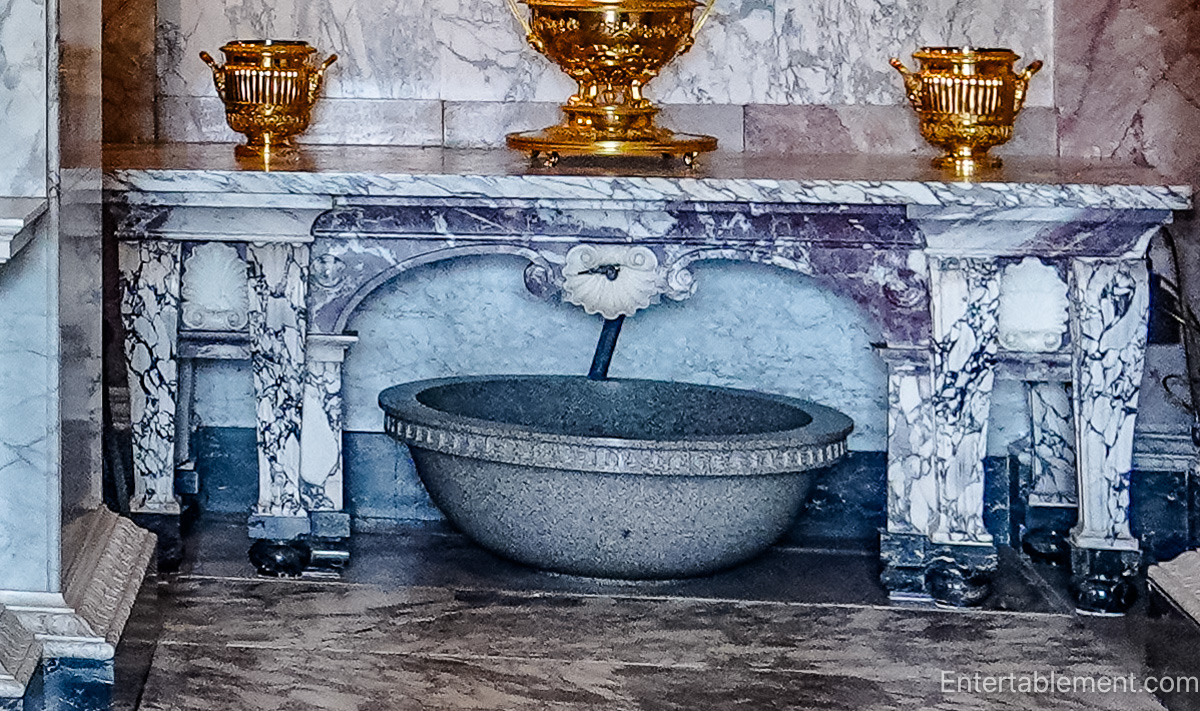
Behind the chimney breast is access for servants, just as Gibbs planned it, in a flash of practicality. I imagine the large grey marble container beneath the table acted as a wine cooler.

If you look carefully, you can see a tap in the shell in the centre of the table; it was for an especially strong beer called “Hogan”, which was piped up from the basement.
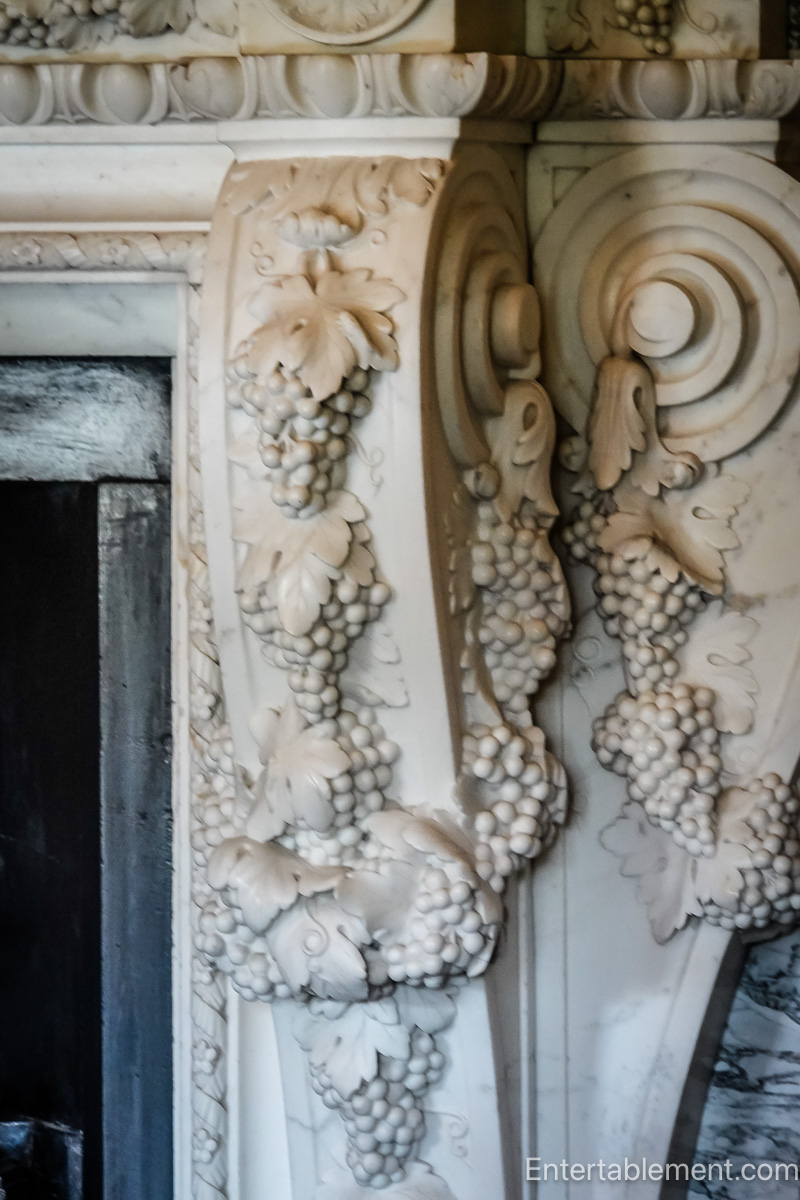
The room is dedicated to Bacchus, the god of wine.
The export china service on the side table has Sir Robert’s coat of arms emblazoned on it.

The china on the dining table is Sèvres.
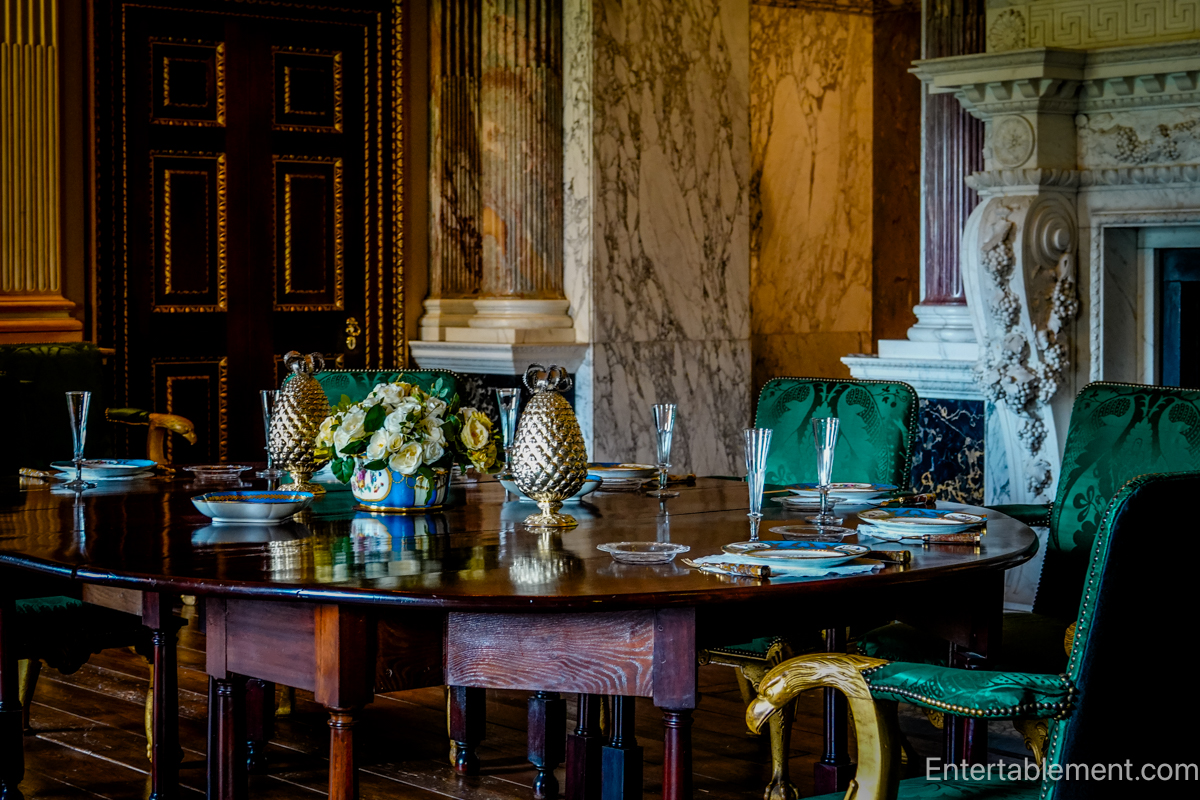
You can see the pattern a little more clearly here.

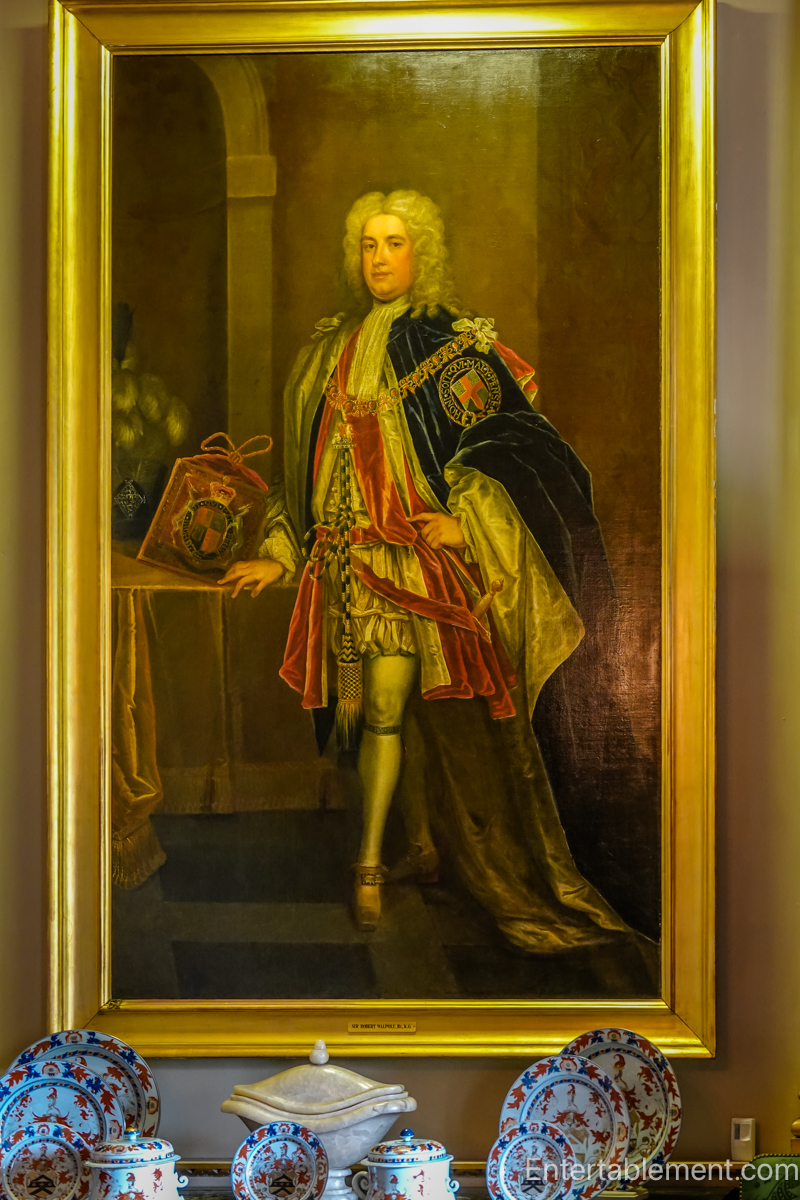
The portrait of Sir Robert in the robes of the Order of the Garter is “in the school of” Kneller.
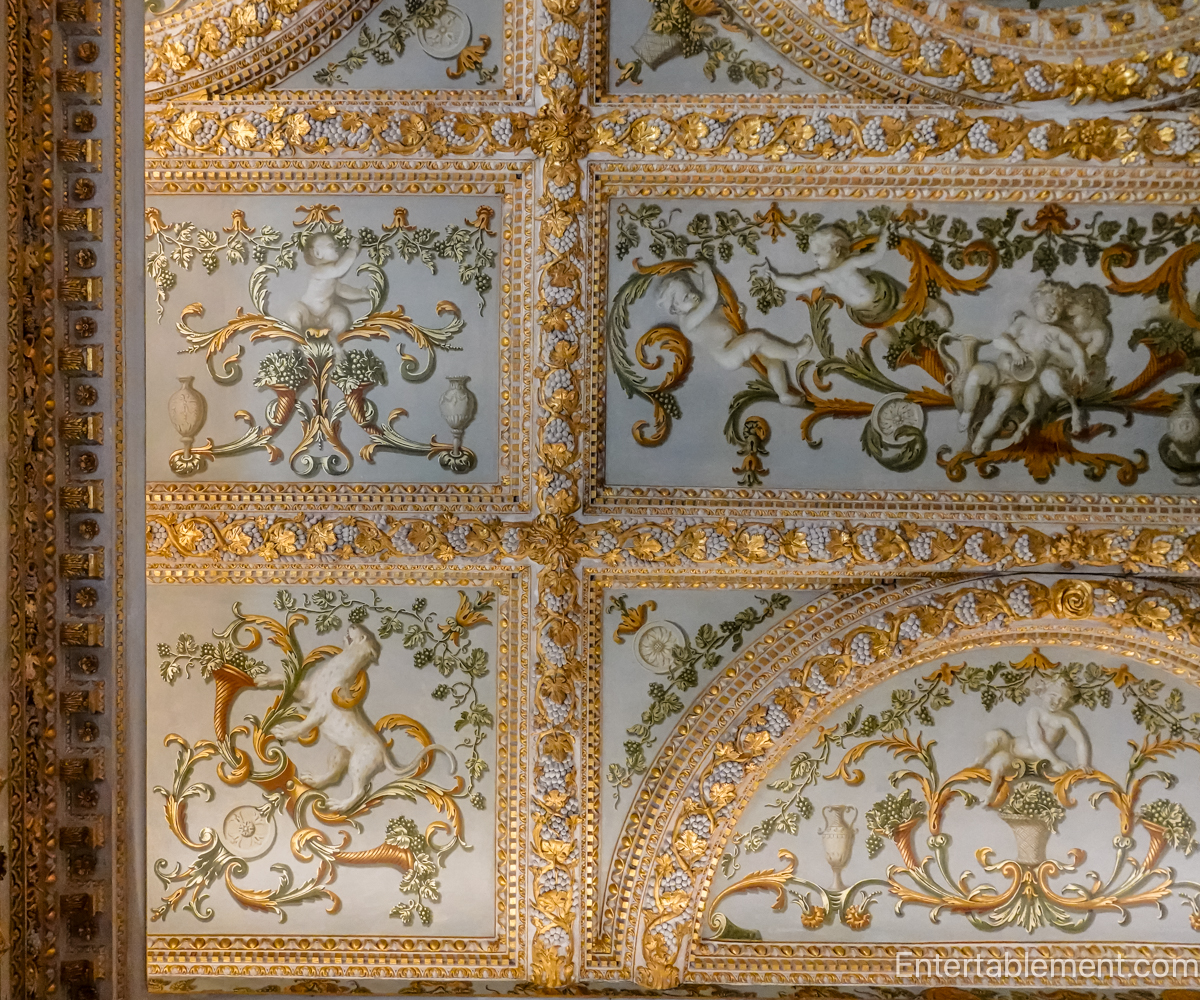
I’ve saved the best until last—another of Kent’s ceilings.
The Common Parlour
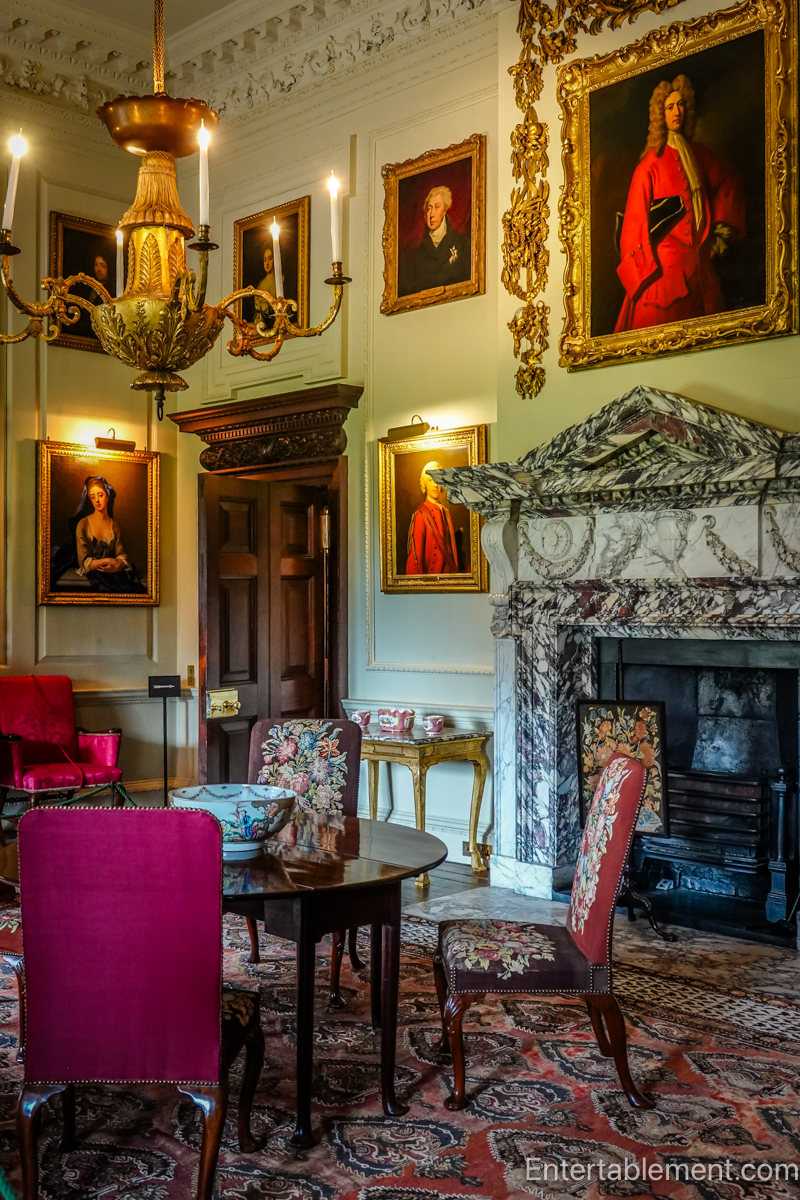
Despite its name, the Common Parlour is anything but ordinary. This space was designed for more relaxed gatherings and boasts a comfortable yet stylish aesthetic, featuring fine panelling and a selection of portraits that replaced the predominantly Italian pictures that hung here in Sir Robert’s day.
Lady Cholmondeley (née Sybil Sassoon) inherited the tapestry chairs from her brother Sir Philip Sassoon.
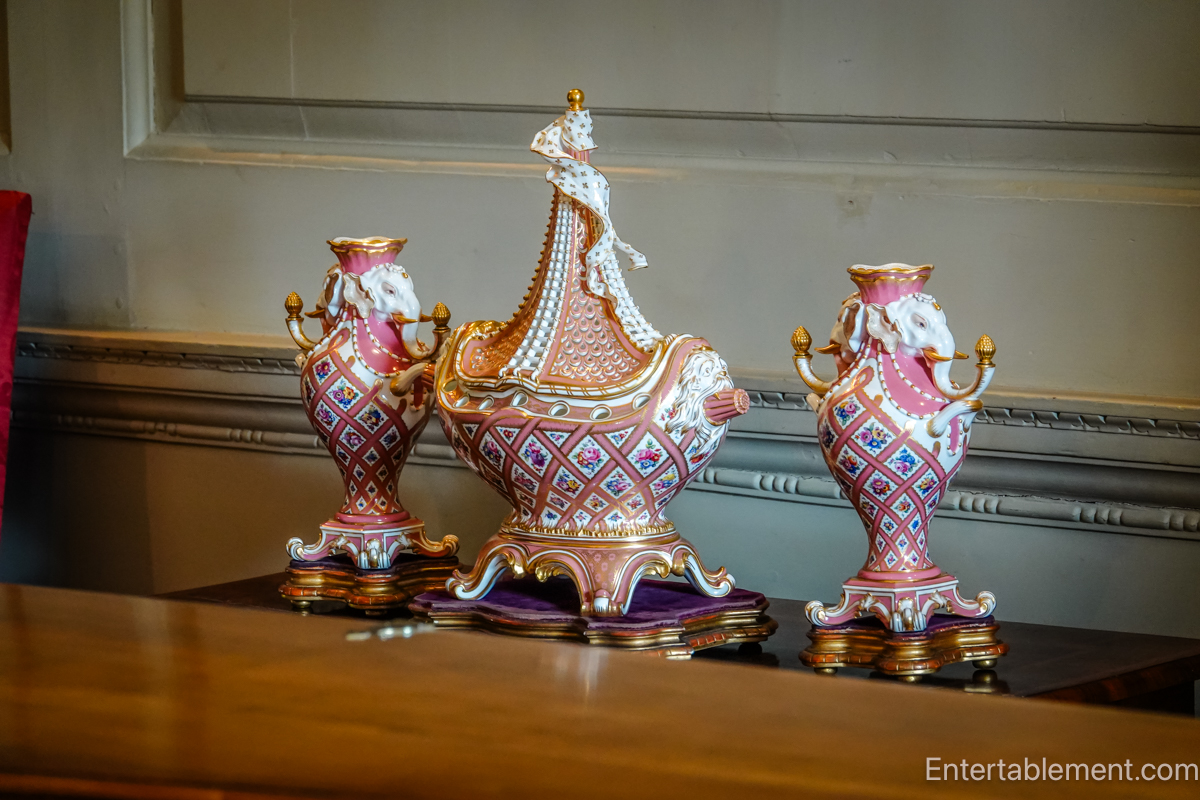
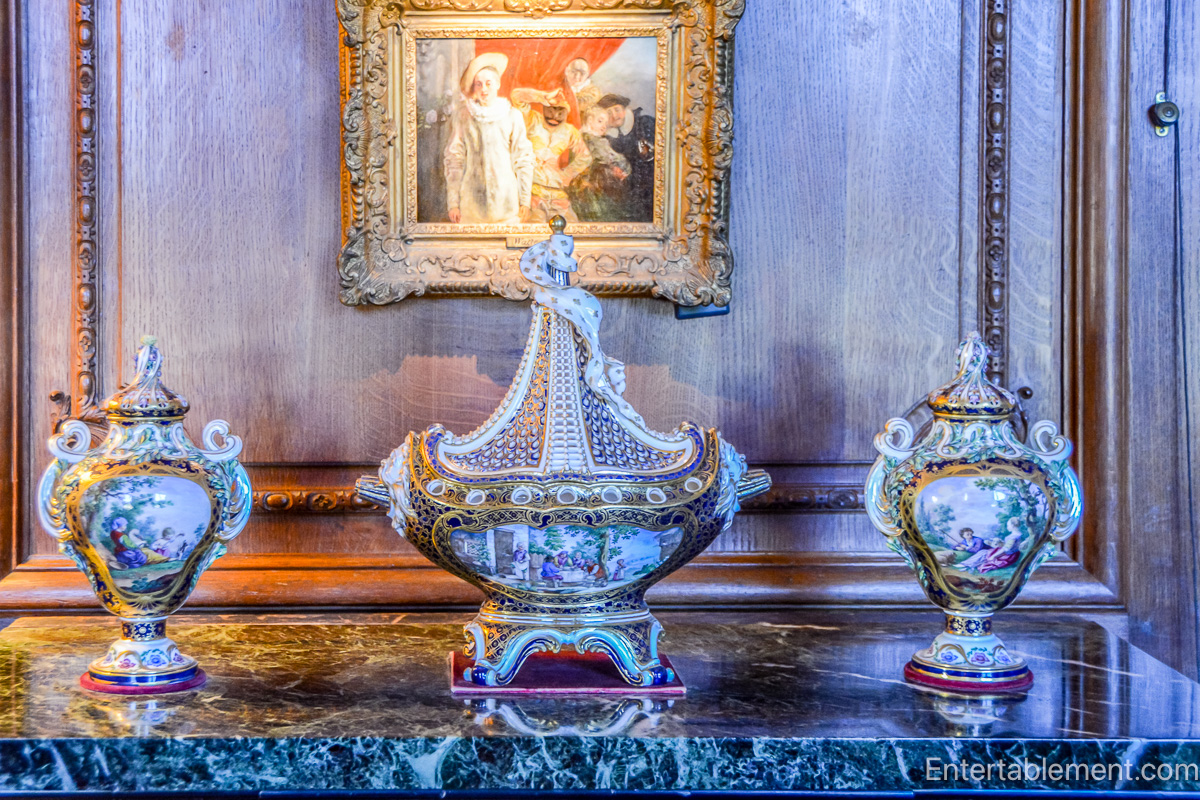
One of its most intriguing decorative elements is a striking pink-ground porcelain garniture set, featuring a central ship-shaped potpourri vase and two accompanying urns with elephant’s head handles.
While this set closely resembles the famed vaisseau à mât designs of 18th-century Sèvres, it is, in fact, a 19th-century reproduction by Minton. The originals, which were incredibly difficult to produce due to the fragility of soft-paste porcelain, often collapsed in the kiln.
Surviving examples, such as those on display at Waddesdon Manor (below), feature an intricate openwork design and delicately hand-painted reserves inspired by the Rococo style of François Boucher.
Minton’s version at Houghton Hall, though equally opulent, exhibits a denser lattice pattern and more structured modelling, reflecting the advances in 19th-century porcelain production.
The presence of this Minton set at Houghton Hall highlights the enduring fascination with 18th-century Sèvres designs among aristocratic collectors in the 19th century. While the originals were almost impossible to acquire, high-quality reproductions allowed grand houses like Houghton to display pieces that echoed the refinement and prestige of the earlier period.
Chinese Export Porcelain at Houghton Hall
Among Houghton Hall’s most exquisite treasures is a fine Chinese export porcelain punch bowl, dating to the Qianlong period (1736–1795). Decorated in the Famille Rose palette, it features a beautifully detailed narrative scene of figures in a scholarly or official setting, likely intended for the European market.

The reverse showcases delicately painted landscape cartouches, framed by gold embellishments against a richly patterned ground.

Large bowls like this were luxury items, often commissioned by European aristocrats who desired a touch of the exotic for their dining tables and salons. These pieces, whether used for serving punch at grand gatherings or as decorative centrepieces, symbolized both wealth and global connections. Unlike some export porcelain that bore European coats of arms, this bowl retains its purely Chinese aesthetic, suggesting it was an imported treasure rather than a custom commission.
Houghton’s collection of Chinese export porcelain is consistent with the Georgian era’s fascination with luxury goods from the East, reinforcing the estate’s status as a home of refined taste and global influence.
The Library
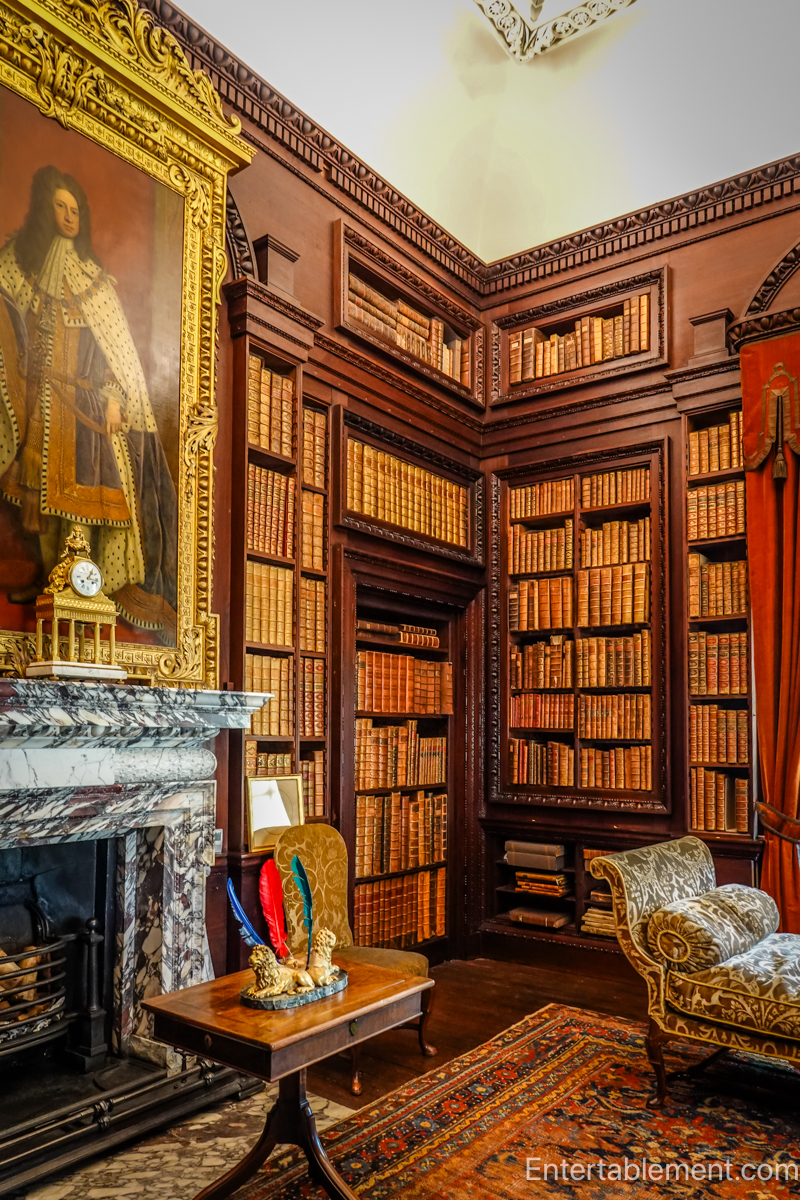
Houghton’s Library is a sanctuary of intellectual pursuit, lined with beautifully bound books and punctuated by rich mahogany shelving. It was originally known as the Study and adjoined Sir Robert’s small bedchamber. The ceiling is plain (for once), and the room is entirely fitted out in mahogany.
The faded gilding on the books softens the room’s austerity and provides a gentle glow.
The Arcade
The Arcade is on the house’s bottom level; at the end of the tour, you go through the door at the bottom of the stairs and out into the garden.
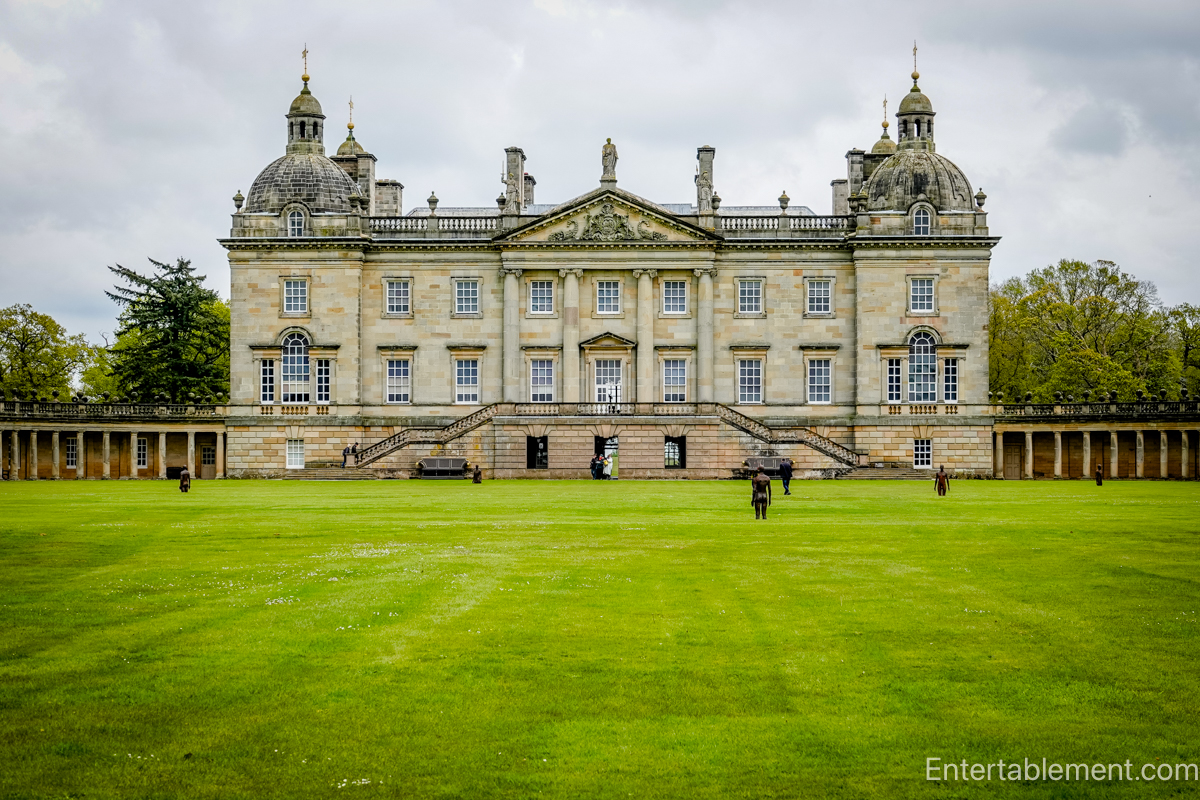
Ever the shrewd politician, Walpole used this space to entertain guests—particularly political allies—on hunting days, deliberately keeping them in the Arcade rather than inviting them upstairs to the more exclusive state rooms.
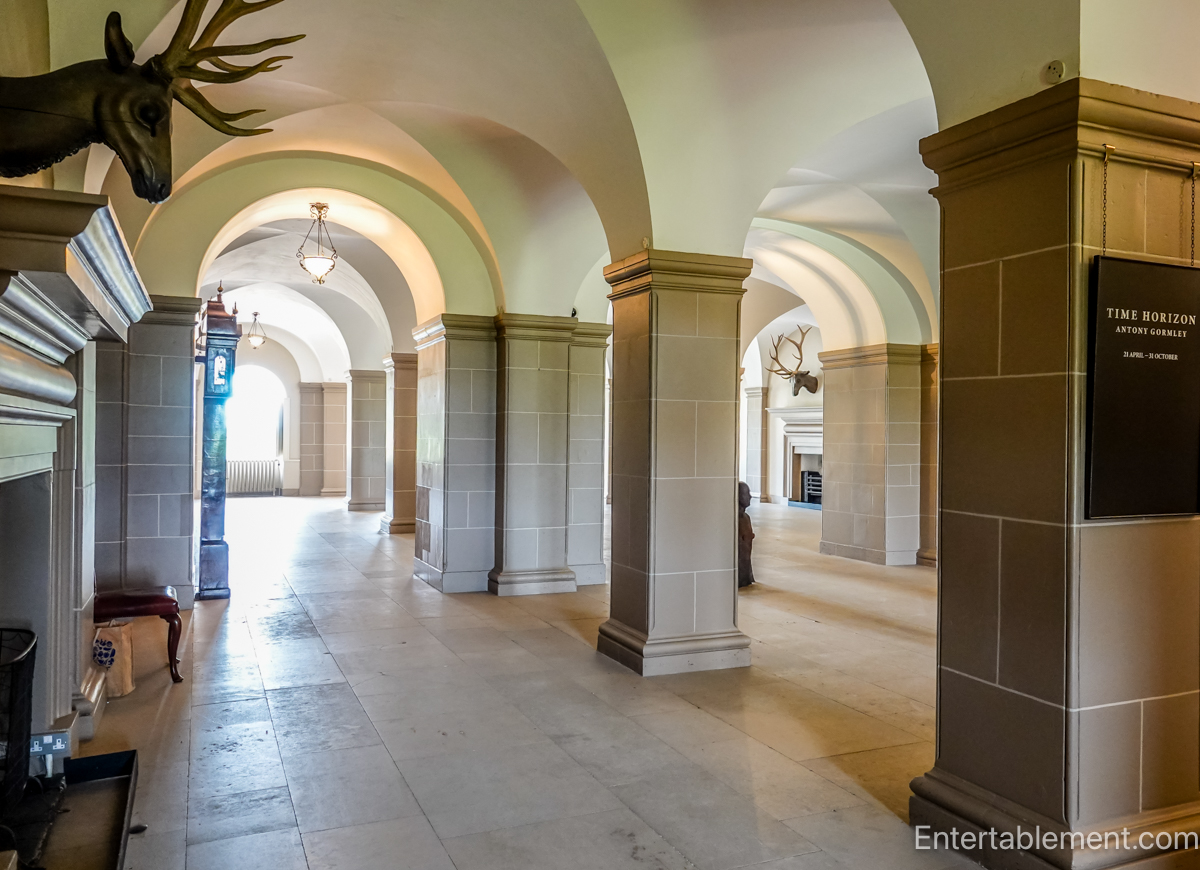
In its day, it was filled with simple mahogany benches and rail-back chairs.

Today, it is devoid of seating but still contains beautiful marble statuary.

The Walled Garden and Parkland
Houghton’s gardens are as lovely as its interiors.
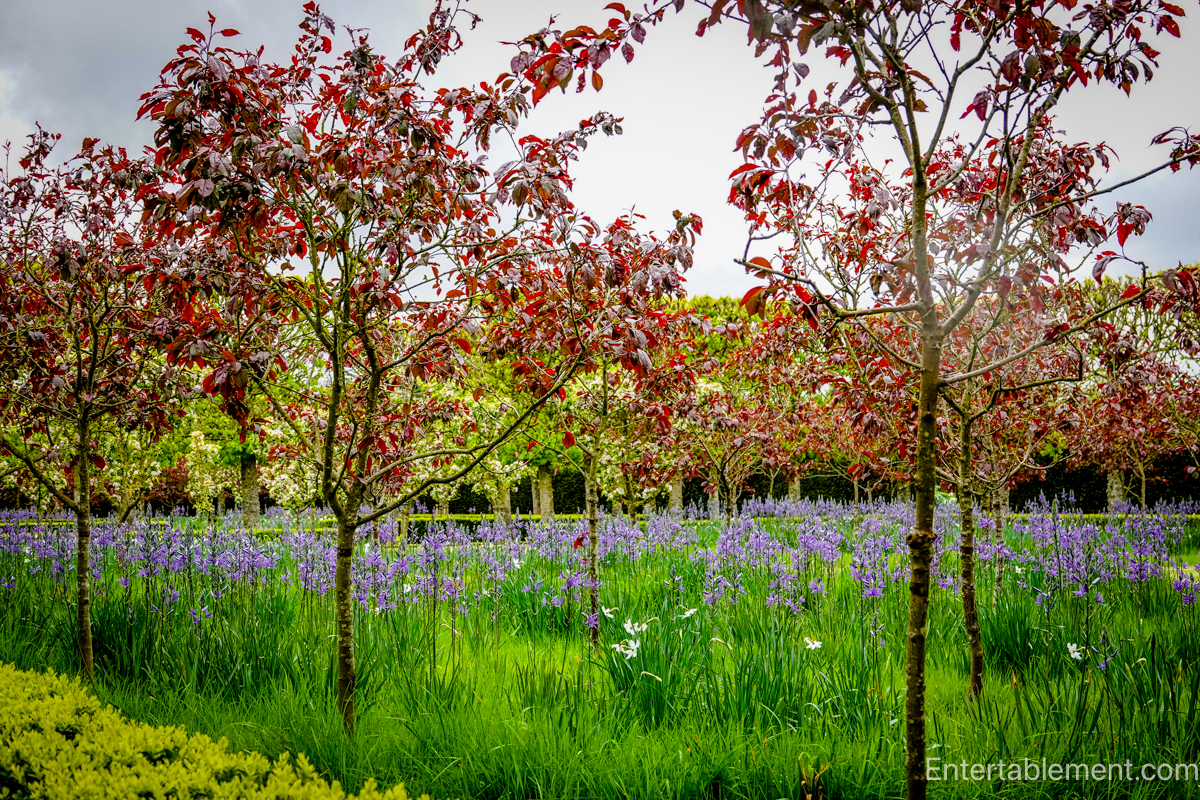
It was early spring when we visited, so the borders were still sporting their tulips.
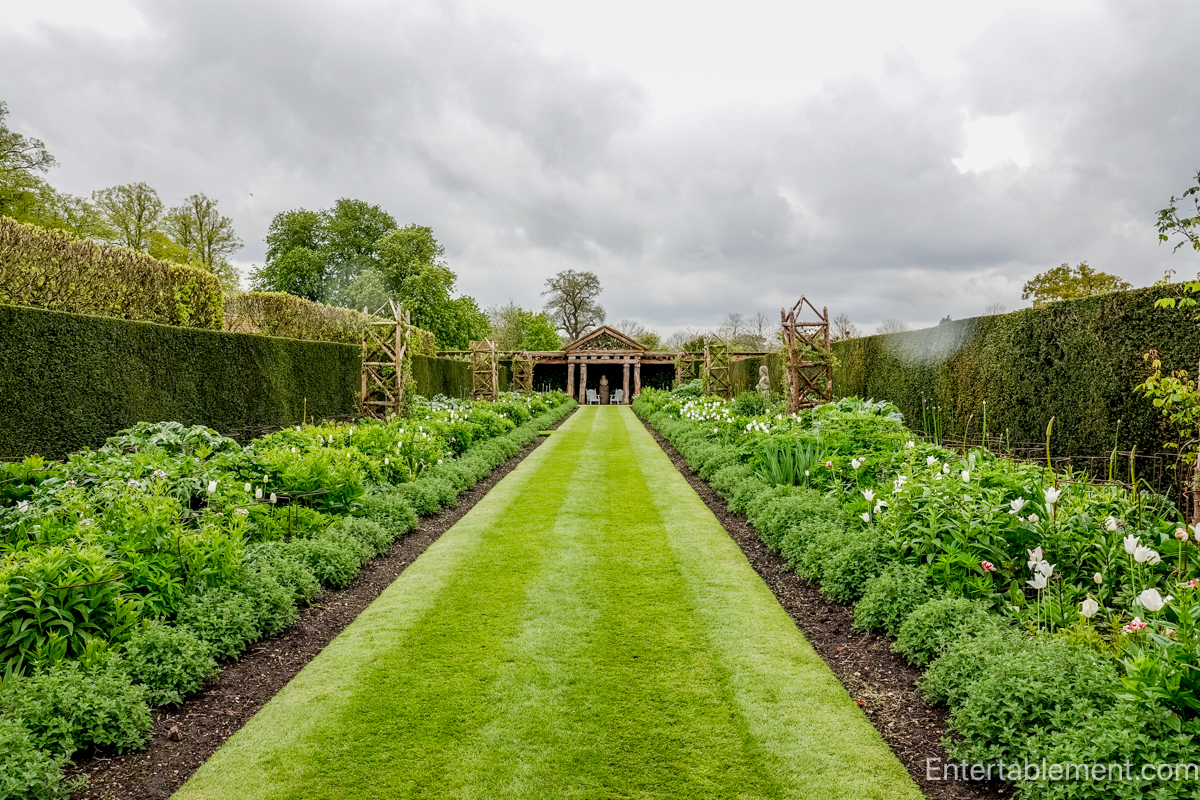
The cloud hedging was neatly clipped and very inviting.

In the 20th century, Sybil Sassoon, Marchioness of Cholmondeley, played a significant role in refurbishing both the gardens and parts of the house, ensuring their survival and continued splendour.
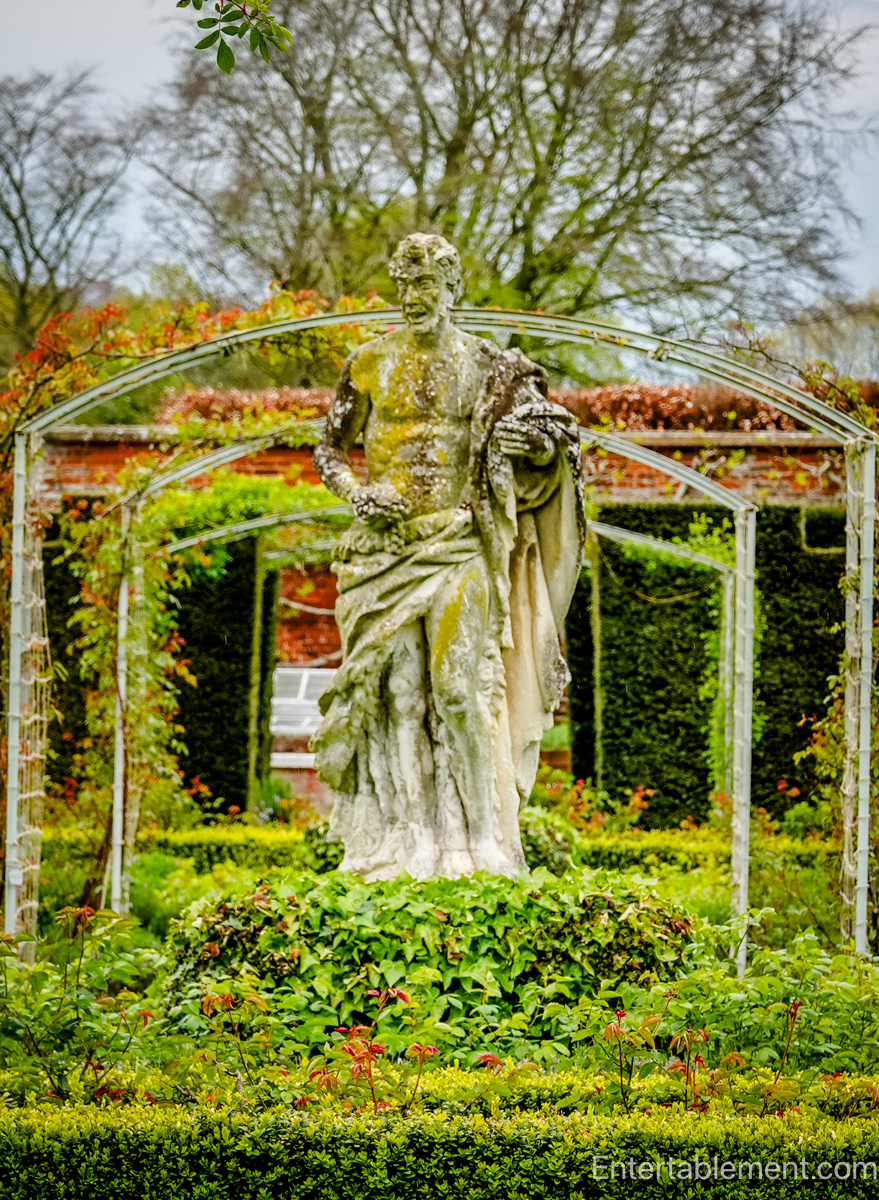


The walkway, lined with pleached trees, leads to the stables.


Where a lovely lunch and a hot cup of tea awaited us!

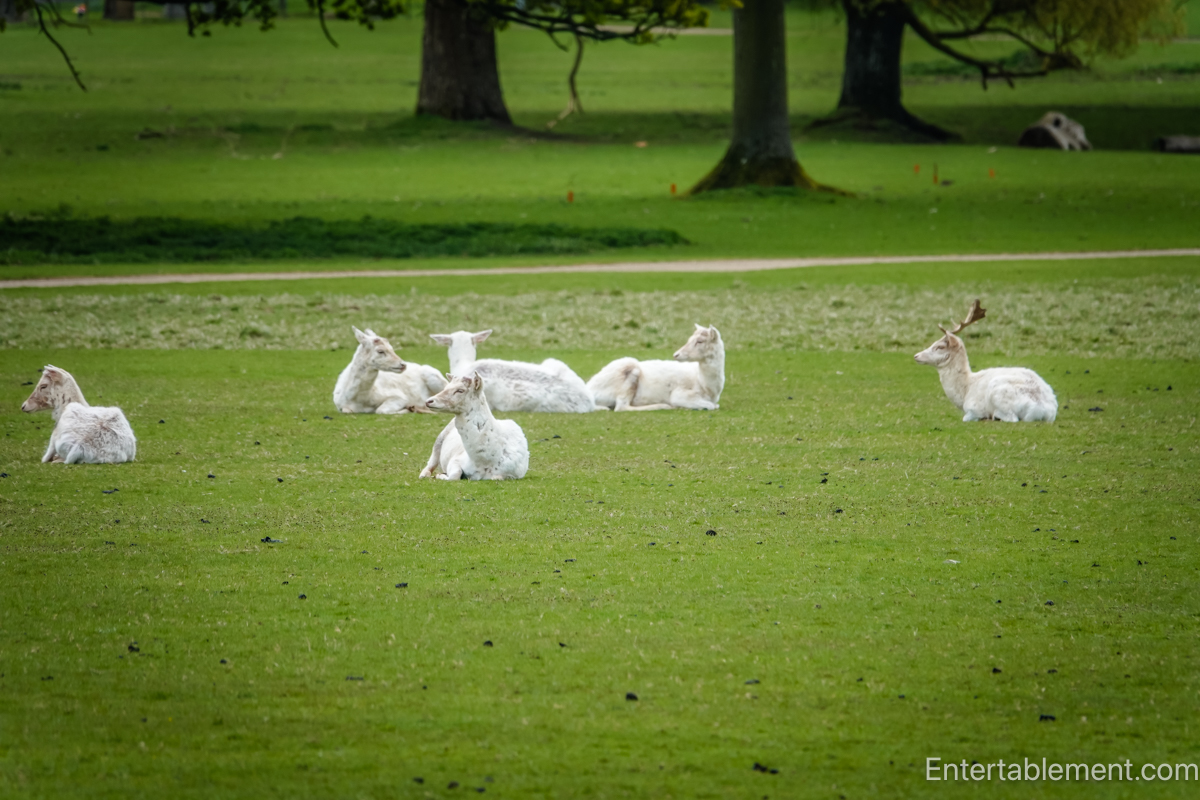
Beyond the stables, the estate’s parkland, dotted with herds of white fallow deer, stretches into the Norfolk landscape, providing a picturesque setting that perfectly complements the hall’s Palladian elegance.

Houghton Hall is not merely a stately home—it is a living monument to Britain’s political and artistic heritage. Sir Robert Walpole’s legacy and the Cholmondeley family’s custodianship have preserved this magnificent estate for future generations to admire. Whether wandering through its grand interiors, strolling through its gardens, or reflecting on its place in history, visitors to Houghton Hall are sure to be captivated by its splendour.
Who Built Beauty?
Wandering through the elegant galleries and grand proportions of Houghton Hall, you’re walking inside a conversation—one that spans Rome, the Renaissance, and Enlightenment Britain. This wasn’t just a house; it was an idea brought to life by a remarkable cast.
Andrea Palladio lent the blueprint for order and harmony. Inigo Jones brought Palladian elegance to England, wrapped in courtly drama. Colen Campbell published the vision for a British classical ideal. James Gibbs brought a pragmatic elegance that suited the English landscape. And then came William Kent—the artist-architect who didn’t just design walls and furniture, but turned ceilings into scenes and doorways into theatre.
At Houghton, you can see them all at work—trading ideas across time, stone by stone. It’s where ideals of beauty, power, and proportion converged to form something uniquely British—and utterly timeless.






Beautiful! And fascinating, Helen! Thanks for taking us on this tour with you – I’d love to see it in person someday!
It’s an incredibly beautiful house, Barbara. Still being privately owned, it’s not open all the time, so you have to be strategic about the visit. They don’t announce the opening times very far in advance, either. I hope you get to see it!