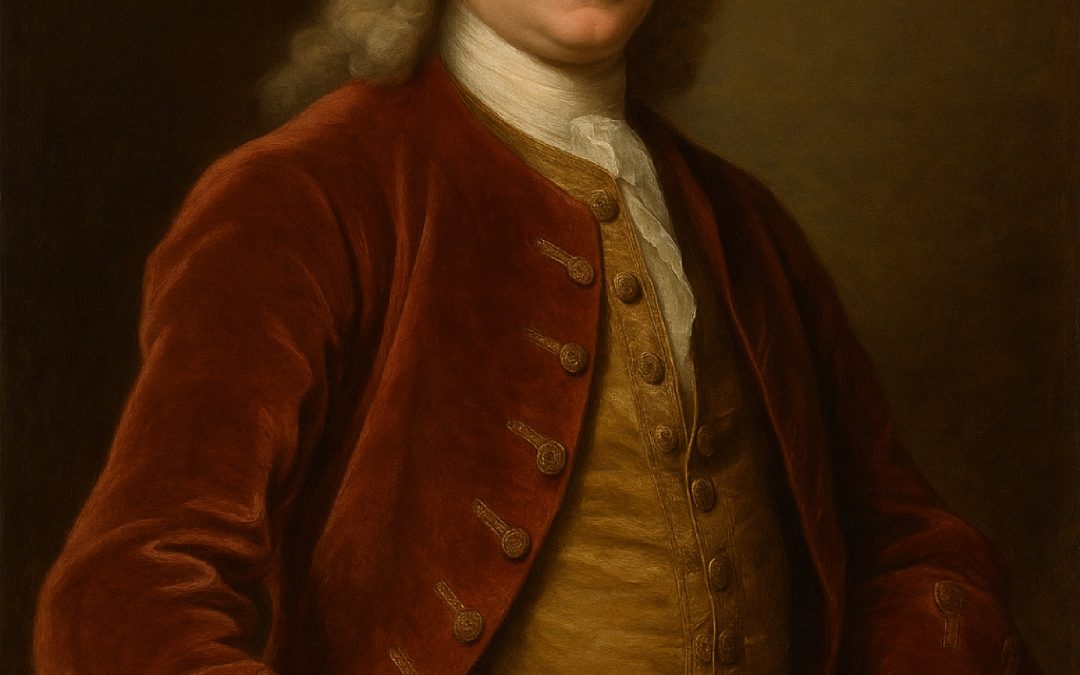
If Edward Coke helped define English law, Thomas Coke redefined what it meant to be an English gentleman. Scholar, traveller, architect, patron, and ultimately peer, the 1st Earl of Leicester left his mark not in courtrooms, but in bricks, marble, and the grandeur of Holkham Hall.
A Grand Tour that Built a Dream
Born into wealth and position, Thomas Coke inherited a vast estate at a young age. But it was his seven-year Grand Tour of Europe—arguably the most expensive and extensive of his generation—that shaped his vision. Coke collected antiquities, books, art, and above all, ideas. Rome and Palladio left an indelible mark on his taste.
Holkham Hall, begun in 1734, was the result: a monumental celebration of Classical architecture and Enlightenment values, made English. Coke didn’t just want a grand house, he wanted a statement. And Holkham delivered, with its vast Marble Hall, symmetrical wings, and a library that still resonates with the name of Edward Coke.
Politics, Titles, and a Long-Awaited Peerage
Coke’s political career was less successful. He served as an MP for Norfolk but was more comfortable among books than at the dispatch box. His long-delayed elevation to the peerage — finally granted in 1744, when he became Earl of Leicester — was a nod to his influence, but not necessarily his political clout.
The title was a revival, not a continuation. The original Leicester earldom (held by the Dudleys and forfeited under Elizabeth I) was gone. Coke’s version was something new: cultured, Classical, and intellectually ambitious.
Legacy in Stone
Today, Holkham Hall stands as a triumph of Georgian taste and ambition. Its Palladian design influenced English architecture for generations. But the man behind it — quiet, scholarly, deeply committed to Enlightenment ideals — is less well known.
Coke’s life reminds us that legacy can be built not only through battle or legislation, but through vision, curiosity, and a love of beauty anchored in reason.