Yes.
One of history’s great surprises is that the Normans who conquered England in 1066 were descendants of Vikings.
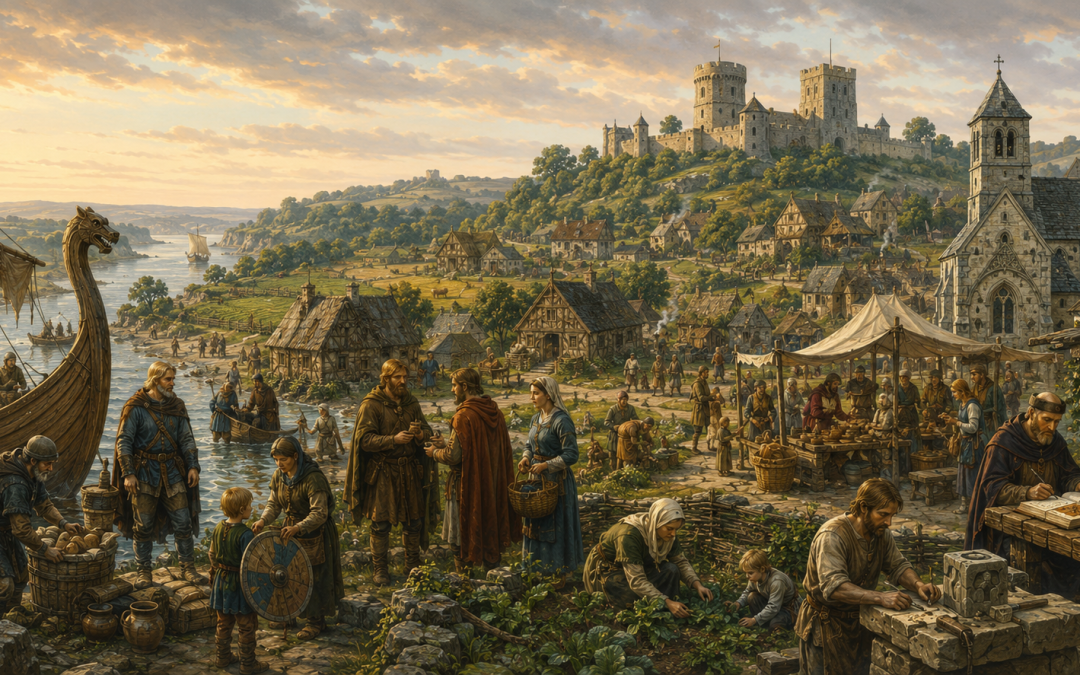
Their name comes from the word Northmen—the Norse raiders who began appearing along the coasts and rivers of Europe during the 8th and 9th centuries. In the early 10th century, a Viking leader named Rollo reached an agreement with the King of France. In exchange for land in northern France, he would defend the region from further Viking attacks.
The arrangement worked rather well.
Over the next century, these Viking settlers adopted Christianity, spoke French, married into local noble families, built churches and monasteries, and became some of the most capable rulers in Europe. Their territory became known as Normandy—the land of the Northmen.
History, of course, has a sense of humour. The descendants of the Vikings who once crossed the North Sea in search of wealth and conquest would eventually become some of Europe’s most peaceful and prosperous societies.
The monks of the ninth century would have found that outcome difficult to imagine. Watching longships appear on the horizon, one suspects they had a rather different view. The Viking Age might be summarized as:
“Nice monastery you’ve got there. It would be a shame if something happened to it.”
By the time William the Conqueror was born around 1028, however, the Normans looked far more French than Viking. They spoke French, followed French customs, and governed a prosperous duchy. Yet their energy, ambition, and military skill still reflected their Scandinavian origins.
Which means that the Norman Conquest of England in 1066 was not simply a French invasion. It was, in a sense, the latest chapter in a story that began centuries earlier with Viking longships.
History’s great lesson may be that given enough time, even Vikings become respectable.
- Related Post: Conquest in Stone — How the Normans Rebuilt England