

Most people know Harold Godwinson for one thing: losing the Battle of Hastings.
History has not been especially kind to Harold. Overshadowed by William the Conqueror‘s victory, he is often remembered simply as the last Anglo-Saxon king—the man standing in the wrong place at the wrong moment when the Norman invasion arrived.
Yet Harold’s story is far more interesting than a single battlefield defeat.
Born around 1022, Harold was the son of Godwin, Earl of Wessex, one of the most powerful men in England. Through political skill, military ability, and family connections, Harold rose to become the dominant figure in the kingdom during the reign of Edward the Confessor. By the time Edward died in January 1066, Harold was arguably the most experienced and capable leader in England.
His accession to the throne, however, was immediately contested by not one challenger, but two.
Across the Channel, William, Duke of Normandy, claimed that Edward had promised him the crown.
Meanwhile, Harald Hardrada, King of Norway, asserted his own claim through earlier dynastic agreements. Hardrada was no peripheral figure. A veteran commander and one of the last great Viking-age rulers, he arrived in England with a substantial fleet and a serious claim to the throne.
Harold suddenly found himself defending his kingdom against two formidable rivals.
The Battle of Stamford Bridge
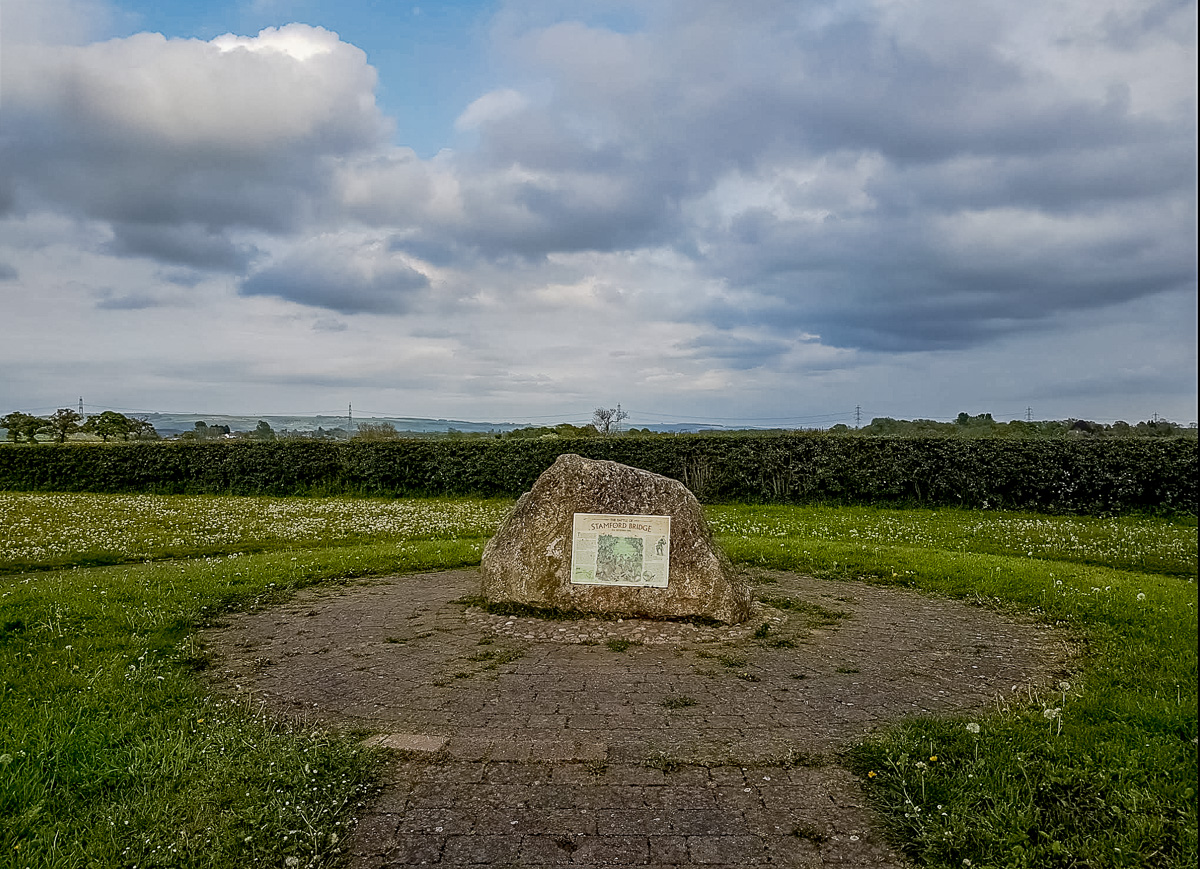
In September 1066, Hardrada invaded northern England. Harold marched his army hundreds of miles north and met the invaders at Stamford Bridge. There he won a decisive victory, defeating one of the most formidable warriors of the age and ending the Norwegian threat.
It should have secured his place in history; instead, it became the prelude to tragedy.
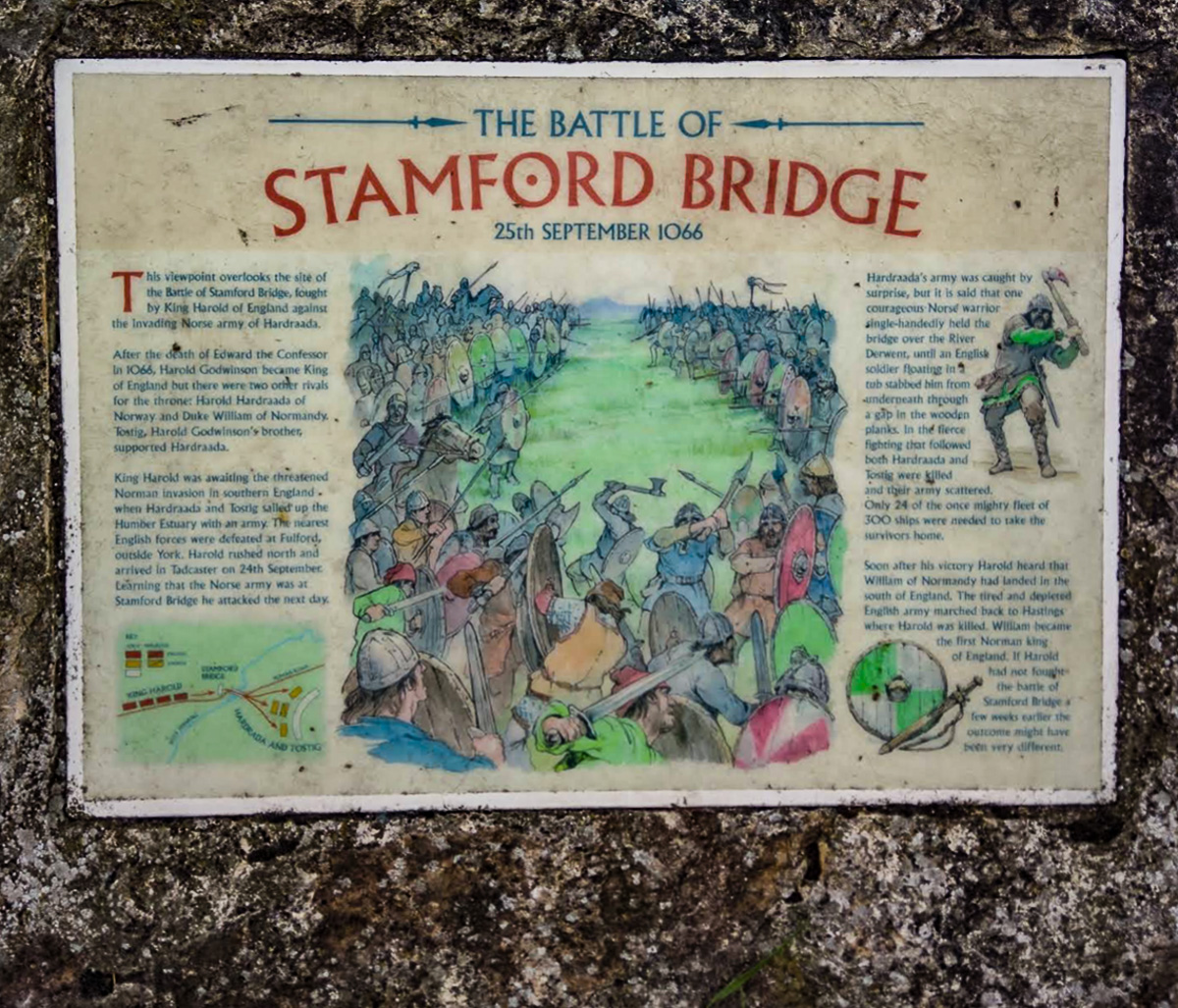
Adding to the drama was Harold’s own brother, Tostig, who had allied himself with the Norwegian king after falling out with the English court.
Familes…

What followed was one of the most extraordinary years in English history.
The Battle of Hastings
Only days after Stamford Bridge, news arrived that William had landed in Sussex. Harold turned his army around and marched south once again. Exhausted, depleted, and facing a fresh enemy, he met the Normans at Hastings on 14 October 1066.
The Battle of Hastings was not fought by vast armies on an epic battlefield. It was fought by a few thousand men on an ordinary Sussex hillside. Yet from that modest field emerged a different England.
Looking across the field today, it is difficult to imagine that the fate of a kingdom was decided here. Nothing in the landscape hints at the significance of what occurred. The grass has long since reclaimed the dead, and the trees have forgotten the noise of battle.

The battle lasted most of the day. Harold’s army fought stubbornly, holding the high ground and repeatedly repelling Norman attacks. Yet by evening the English line had broken. Harold was killed, and with him ended centuries of Anglo-Saxon rule.
The manner of his death has become legend. Medieval accounts disagree on the details, though the famous image of Harold struck in the eye by an arrow remains one of history’s most enduring scenes. What is certain is that his death marked a turning point not only for England but for Europe.
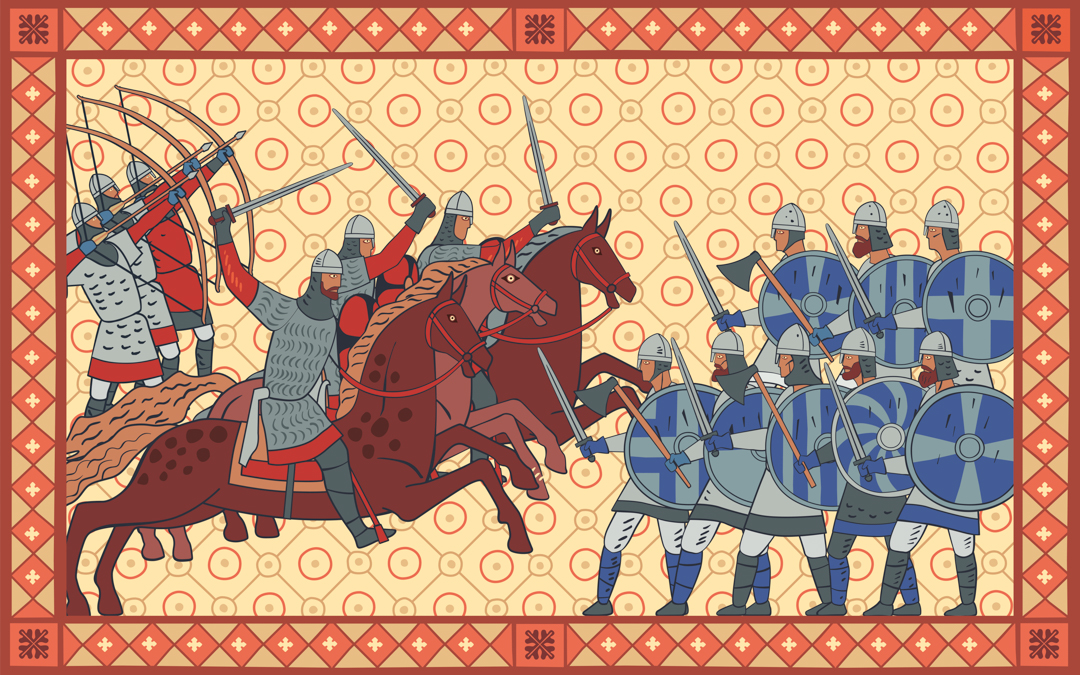
Bayeux Tapestry, Battle of Hastings
Harold’s defeat often obscures his achievements. He was an able commander, a skilled politician, and a ruler confronted by an almost impossible situation. Few kings have faced two major invasions in a single year. Fewer still have defeated one before confronting the other.
His story reminds us that history is not always shaped by failure or success alone. Sometimes it turns on timing, circumstance, and the narrowest of margins.
What Might Have Been
Had Harold prevailed at Hastings, England might have developed very differently. The Norman castles, cathedrals, aristocracy, and language that reshaped the kingdom may never have arrived in the same form. The course of English history could have followed another path entirely.
Instead, Harold became something far less common: a king remembered not for the world he created, but for the world that disappeared with him.
The fascinating question is not why Harold lost. It is how close he came to winning—and how differently England might look had he done so.