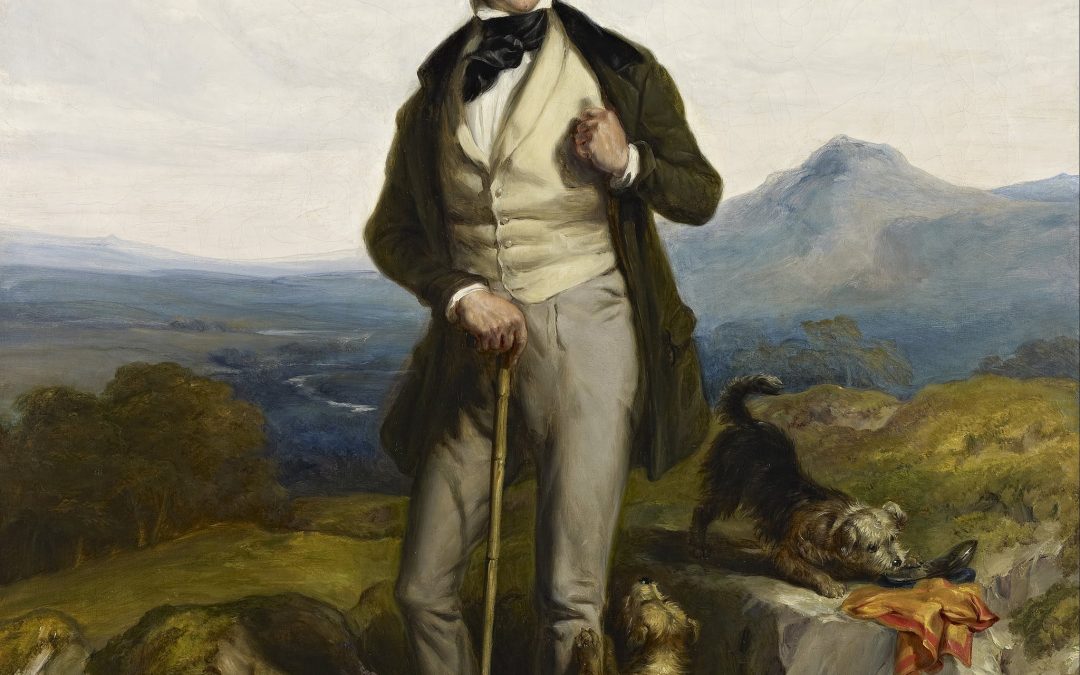
Sir Walter Scott didn’t just write novels—he revolutionized storytelling. As the father of the historical novel, he blended actual events with fictional characters, bringing history to life like never before. His sweeping tales of heroism, rebellion, and romance captivated readers worldwide, shaping literature, national identity, and even fashion trends. Let’s dive into the life and legacy of the man who made history thrilling.
Born in Edinburgh in 1771, Scott faced challenges from the start. A childhood battle with polio left him with a permanent limp, but that never slowed him down. While other boys ran outside, Scott immersed himself in Scotland’s folklore, ballads, and history.
After studying at the University of Edinburgh, he became a lawyer, but his heart belonged to literature. His fascination with Scotland’s past would soon transform into poetry—and later, into the novels that would define his career.
From Poet to Novelist
Scott first made waves as a poet. His long narrative works—
- The Lay of the Last Minstrel (1805)
- Marmion (1808) (Oh, what a tangled web we weave, when first we practice to deceive.) I know what you’re thinking—that’s Shakespeare, not Sir Walter Scott—but it was indeed Scott.
- The Lady of the Lake (1810) (which sparked a Scottish tourism boom)
—cemented his reputation. But when Lord Byron burst onto the literary scene, Scott realized the world had a new favourite poet. Instead of fading into obscurity, he did something remarkable—he pivoted to prose fiction. And in so doing, he created an entirely new genre.
The Waverley Novels: How Scott Invented Historical Fiction
In 1814, Scott published Waverley, a novel set during the Jacobite uprising of 1745. Readers were hooked. For the first time, a novel seamlessly combined actual historical events with fictional characters, making history feel personal and immediate. It was a game-changer.
Scott followed with a string of bestsellers, including:
- Rob Roy (1817) – A thrilling tale of adventure and rebellion.
- The Heart of Midlothian (1818) – A gripping legal drama based on actual events.
- Ivanhoe (1820) – A medieval romance featuring Richard the Lionheart and Robin Hood made chivalry fashionable once more.
- The Bride of Lammermoor (1819) – A dark, gothic tragedy that inspired Donizetti’s opera Lucia di Lammermoor.
His books explored national identity, tradition vs. progress, and the cost of honour. Writers like Dickens, Tolstoy, Hugo, and Dumas took notes. Scott had set the standard for historical fiction.
More Than a Writer: Shaping Scottish Identity
Scott didn’t just tell Scotland’s story—he helped shape its modern identity. His books glorified Highland culture, making kilts and tartans symbols of Scottish pride. But his influence went beyond the page.
In 1822, King George IV visited Scotland—the first royal visit in nearly two centuries. Scott orchestrated the entire spectacle, ensuring the king appeared in full Highland dress, fueling a national revival of Scottish traditions. Without Scott, the romantic image of Scotland we know today might not exist.
The Fall: Financial Ruin and a Race Against Time
Success didn’t last forever. In 1826, disaster struck—his publisher collapsed, leaving Scott with enormous debt. Instead of declaring bankruptcy, he did what he did best: he wrote his way out of it.
In a feverish bid to repay creditors, he produced novel after novel, pushing himself to the brink. His health suffered, and in 1832, he died at his beloved Abbotsford House, the grand estate he had designed as his dream home.
The Legacy of Sir Walter Scott
Even today, Scott’s influence looms large.
Did you know he was one of the first global literary celebrities? He originally published novels anonymously as “The Author of Waverley,” keeping his fiction a mystery. He even coined the term “Wars of the Roses,” proving his impact went beyond storytelling.
If you ever visit Abbotsford House, you’ll step into the world he built—filled with books, artefacts, and the echoes of the past he so vividly brought to life.
Scott’s novels continue to inspire writers, historians, and storytellers. Whether through Ivanhoe’s medieval battles or Rob Roy’s rebel spirit, his stories remind us that history isn’t just facts and dates—it’s human drama, passion, and adventure.
Would historical fiction exist without Sir Walter Scott? Maybe. But it certainly wouldn’t be the same.