

Francis Walsingham wasn’t just a statesman—he was the mastermind behind England’s first true intelligence network. As Elizabeth I’s principal secretary and spymaster, he protected the realm from Catholic plots, foreign threats, and internal conspiracies. His work laid the foundations for modern espionage, making him one of the most influential figures of the Elizabethan era.
Early Life and Rise to Power
Born around 1532 into a well-connected Protestant family, Francis Walsingham studied at Cambridge before going into exile during the reign of the Catholic Queen Mary I. When Elizabeth I ascended the throne in 1558, Walsingham returned to England and quickly gained prominence. His skills in diplomacy and intelligence caught the queen’s attention in 1573; he became her principal secretary, a position that put him at the heart of Elizabethan politics.
The Architect of Elizabethan Espionage
Walsingham recognized that England was vulnerable to Catholic plots, particularly those supported by Spain and the Pope. He built an extensive spy network across England and Europe to counter these threats. His agents infiltrated Catholic circles, intercepted coded messages, and used double agents to foil assassination attempts against Elizabeth.
One of his most significant successes was uncovering the Babington Plot in 1586—a Catholic conspiracy to assassinate Elizabeth and place Mary, Queen of Scots, on the throne. By using intercepted letters and cypher decryption, Walsingham secured the evidence needed to have Mary executed, eliminating a major threat to Elizabeth’s rule.
Walsingham worked closely with William Cecil, Lord Burghley, and later with Robert Cecil, 1st Earl of Salisbury, both of whom continued his intelligence work after his death. The Cecil family ensured that espionage remained a critical tool in statecraft, bridging the gap between Elizabethan intelligence methods and the structured agencies that would emerge in later centuries.
The Defeat of the Spanish Armada
Walsingham also played a key role in countering the Spanish threat. His intelligence network provided crucial information on Spain’s military, giving England the advantage before the Spanish Armada set sail in 1588. With knowledge of Spanish movements, the English navy could outmanoeuvre and ultimately defeat the Armada, securing Elizabeth’s reign and England’s survival. The horrendous weather, which, powerful though Walsingham was, was beyond his capabilities to produce and helped enormously in the defeat.
Methods of a Spymaster
Walsingham’s intelligence was years ahead of its time. His methods included:
- Intercepting and decoding letters – Using cryptographers to break encrypted messages.
- Double agents and informants – Recruiting individuals inside enemy networks.
- Entrapment and forgeries – Using false letters to draw out conspirators.
- Torture and interrogation – Extracting confessions from captured enemies.
While ruthless, his approach was effective—England remained free from major Catholic uprisings during Elizabeth’s reign.
The Cost of Security
Walsingham’s achievements came at a moral cost. His intelligence network relied not only on cryptography and informants but also on surveillance, entrapment and, in some cases, torture authorized under Elizabethan law. Catholics who remained loyal to Rome often lived under suspicion, and the line between genuine conspirators and those caught up in the wider campaign against recusancy could become blurred. By modern standards, many of Walsingham’s methods would be regarded as an unacceptable overreach of state power. Yet within the context of sixteenth-century Europe—an age of religious wars, political assassinations and dynastic rivalries—they were viewed by many contemporaries as legitimate tools of state security.
The Birth of Modern Intelligence
While many of Walsingham’s more coercive methods rightly belong to the sixteenth century, his systematic approach to intelligence gathering was remarkably forward-looking. His use of informants, cryptography, coded communications, counter-espionage and international intelligence networks established principles that would influence later intelligence services. His belief that reliable information was essential to national security has echoed through the centuries, shaping the work of organisations such as MI5 and MI6.
Walsingham’s collaboration with William and Robert Cecil ensured England’s intelligence efforts did not die with him. The Cecils carried his methods into the reigns of James I and beyond, helping establish a tradition of organized surveillance that would later evolve into Britain’s official services.
Legacy: The Father of Modern Espionage
Walsingham died in 1590, his finances drained from years of personal investment in intelligence operations. Though often overshadowed by more famous figures, his contributions to national security, intelligence gathering, and statecraft shaped the future of espionage. He is an excellent example of The Power Behind the Throne.
Today, Walsingham is remembered as the father of modern intelligence, a man who saw espionage not as a dishonourable act but as a necessity for national survival. His legacy endures in intelligence agencies worldwide, from MI6 to the CIA, proving that information is often the most powerful weapon of all.



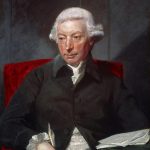



Walsingham may have been the “father-figure” of English spy-craft, but he was a paranoid ,intolerant thug, who approved the most appalling methods of punishment for those who, (and while by no means approving the Roman Catholic Church), fell foul of his warped insular isolationist ideas, and while never approving of the ideas of deposing or assassinating Elizabeth, yet the whole English religious and political attitude of the time was to ram through the Church of England, with its Acts of Supremacy and Uniformity, in opposition to the wishes of so many, in other words, very often on an unwilling population, while admitting that the Marian persecutions of those who had voluntarily reformed, (1553-58), were absolutely and likewise totally unacceptable.
Thank you for taking the time to leave such a thoughtful comment.
I think you’ve raised an important point. My intention was to focus on Walsingham’s significance in the development of intelligence and statecraft rather than to present him as a moral exemplar. However, you’re quite right that his achievements came at a considerable human cost, and I have now updated the article to acknowledge that more explicitly.
Walsingham operated in a Europe shaped by religious wars, political intrigue and genuine fears of invasion and assassination. That context helps explain many of his actions, but it doesn’t necessarily justify them by modern standards. His use of surveillance, entrapment and torture would rightly attract strong criticism today.
One of the challenges I enjoy most in writing about historical figures is trying to understand them within the world they inhabited while also recognizing that many of their actions may not align with our own values. Walsingham, like many influential people in history, was both effective and deeply controversial.
Thank you again for contributing to the discussion. Comments like yours help make the articles more balanced and, ultimately, more useful for everyone who enjoys history.