Some people cannot tolerate disorder. They walk into a room and immediately begin organizing it. They notice inconsistencies that everyone else has simply learned to live with. When something is confusing or unpredictable, they instinctively ask, “Surely there must be a better way.”
Nearly four thousand years ago, one Babylonian king seems to have possessed exactly that cast of mind. His name was Hammurabi.
Though history remembers him as a lawgiver, I suspect he would have thought of himself as a problem solver.
When Trust Reached Its Limits
Imagine lending grain to your neighbour. Not to your brother or your cousin, but to someone from another town whom you’ve met only once or twice. If the harvest fails and he cannot repay you, what happens next?
It depends. Perhaps the local elder will rule in your favour. Then again, he might favour the borrower because their families have known one another for generations. Or perhaps another town would reach an entirely different conclusion. Even if everyone is trying to be fair, justice is unpredictable.
And unpredictability has consequences. If you cannot anticipate how disagreements will be settled, you become reluctant to lend, invest, build or trade beyond the circle of people you already know. Civilization remains small because trust remains small.
Hammurabi seems to have understood that.
Writing Down the Rules
When he became king of Babylon around 1792 BC, Mesopotamia was already ancient.
Writing had existed for over a thousand years. Farmers had mastered irrigation. Merchants carried goods between cities. Temples and palaces kept detailed records. Civilization had become increasingly sophisticated.
It had also become increasingly complicated. The old ways of settling disputes—through personal relationships, local custom or the judgement of individual rulers—were no longer enough for a society that was growing richer and more interconnected.
Hammurabi did not invent the law. Kings had been issuing laws for centuries. His insight lay elsewhere.
He understood that justice worked best when people knew what to expect.
Making Justice Predictable
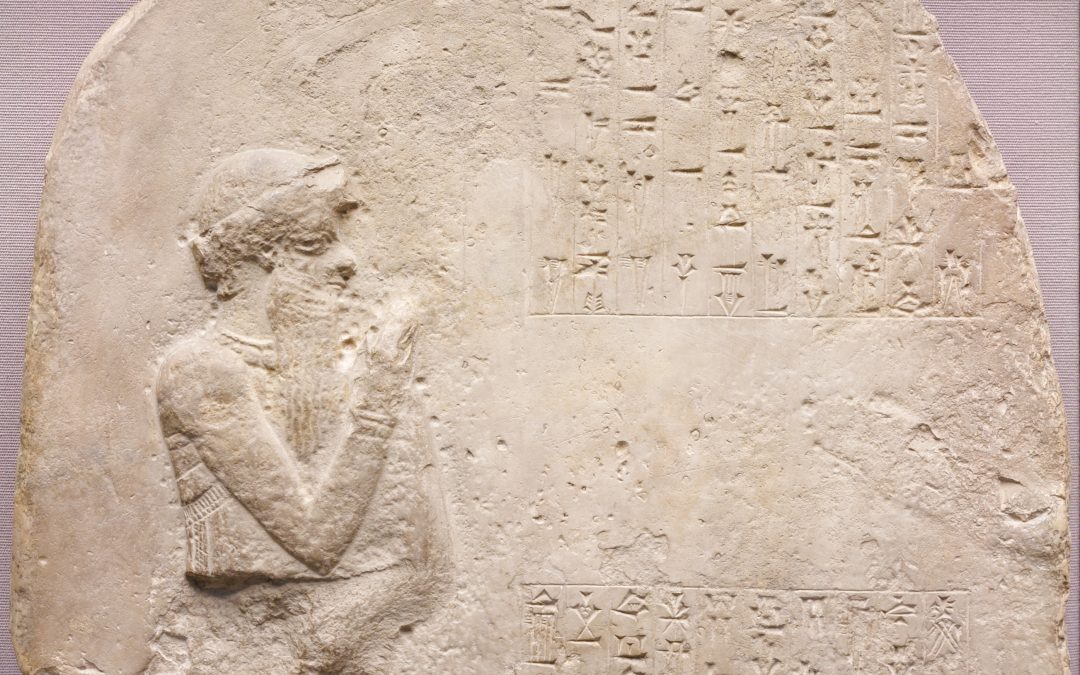
At some point during his reign, he ordered nearly three hundred legal decisions to be carved into a great stone monument more than seven feet high. Today we know it as the Code of Hammurabi.
Modern readers often encounter only its most dramatic passages.
“An eye for an eye.”
It is certainly memorable.
Yet if that is all we remember, we miss the larger achievement. Most of the Code concerns remarkably ordinary problems.
- What happens if a builder constructs a house that later collapses?
- Who pays if an irrigation canal floods a neighbour’s field?
- How should an inheritance be divided?
- What wages should be paid?
- What happens if goods are damaged in transit?
It reads less like a catalogue of punishments than the accumulated experience of a civilization trying to answer a thousand practical questions.
Some of Hammurabi’s answers strike us as harsh. Others seem unfair, particularly where different social classes received different treatment, and we should not pretend otherwise—the ancient world was not the modern world.
But perhaps we should judge Hammurabi less by whether every law matches our own values than by the question he was trying to answer.
How can strangers trust one another?
That was the real innovation.
By carving the laws into stone, Hammurabi accomplished something subtle but profound. Justice became public. People could know the rules before they found themselves standing before a judge.
The law became something larger than the individual ruler. It was no longer entirely dependent upon memory, personality or whim.
Was it perfect? Not at all. But … was it predictable? Far more than before. Sometimes civilization advances not because people become better, but because uncertainty becomes smaller.
There is something quietly revealing about Hammurabi himself. Many rulers are remembered for victories in battle. Others for magnificent buildings. Hammurabi’s greatest monument was neither. It was a list. Hundreds of carefully considered decisions about everyday life.
That tells us something about the kind of man he was. He seems less interested in glory than in making the machinery of society work a little more smoothly.
It is not the most romantic form of leadership, but it may be one of the most enduring.
The Quiet Power of Predictability
The same instinct still shapes our lives. We sign contracts with people we have never met. We hire builders, purchase homes, start businesses and make investments because we assume there are known rules governing what happens if things go wrong. Most days we scarcely think about those rules at all. Like clean drinking water or reliable electricity, they work best when they become almost invisible.
The great stone stele bearing Hammurabi’s laws survives today in the Louvre Museum in Paris. Visitors often stop to admire its age.
I suspect Hammurabi would have preferred that they noticed something else. Not the stone—the idea. That civilization flourishes when people can trust not simply one another, but the systems that govern them.
Long before stock exchanges, insurance policies or written constitutions, one Babylonian king recognized a simple truth. If people know what to expect, they are far more willing to work together.
Sometimes the most powerful innovations are not spectacular. Sometimes they simply make cooperation a little easier.