
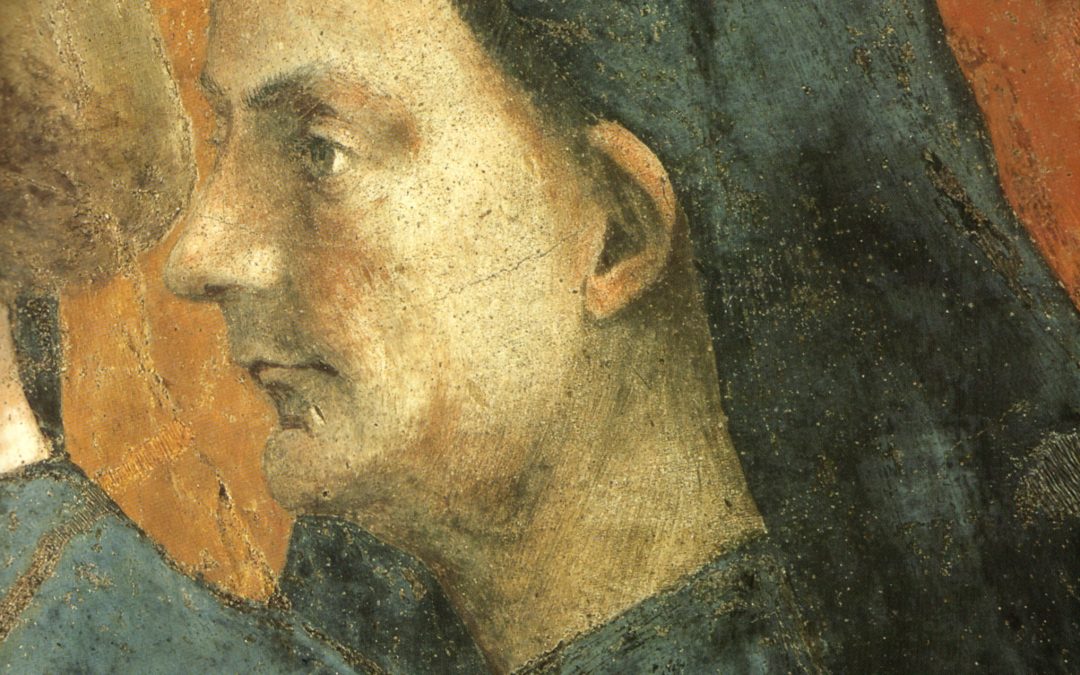
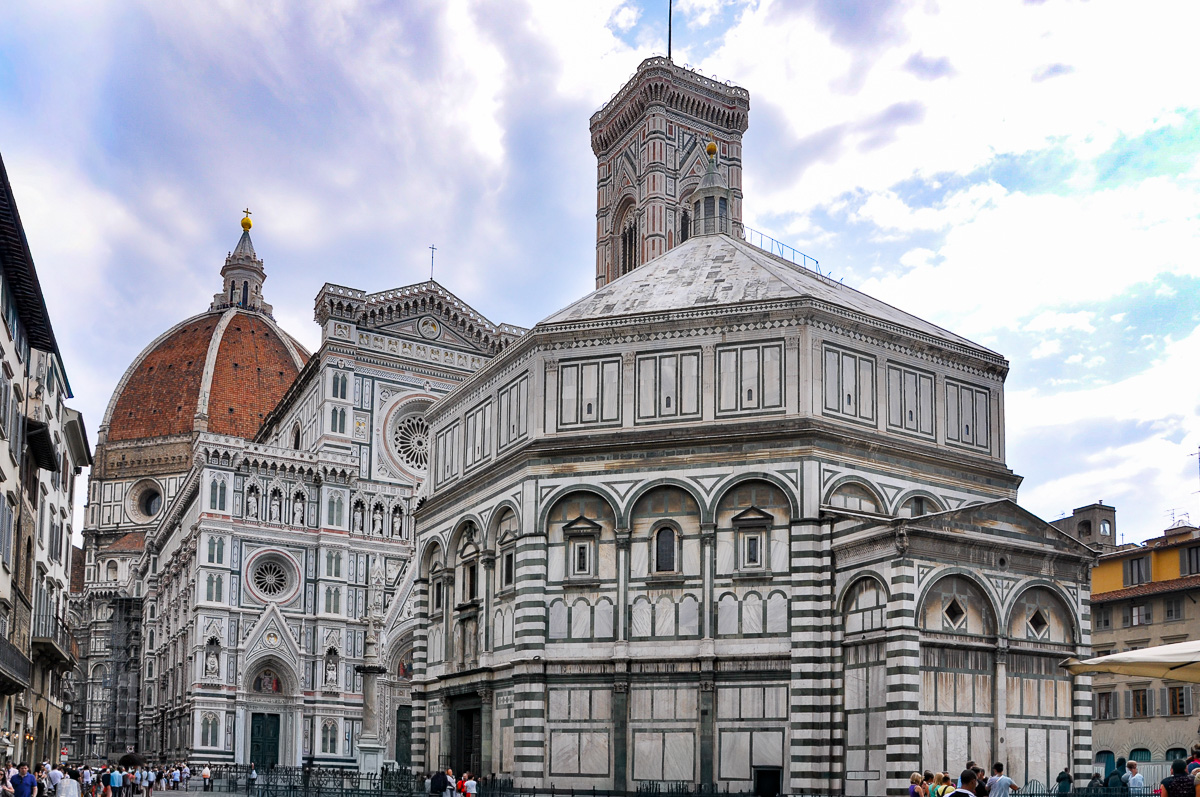
When construction began on Florence’s cathedral in 1296, its builders had extraordinarily ambitious plans. They intended to create one of the largest churches in Christendom, crowned by a magnificent dome that would dominate the city’s skyline.
There was just one problem. Nobody knew how to build the dome.
The proposed structure was enormous, spanning more than forty metres. Conventional construction relied on temporary wooden supports, known as centring, to hold the masonry in place until the structure could support itself. But building such an extensive framework would require immense quantities of timber, and supporting it so high above the cathedral floor presented formidable difficulties.
For more than a century, the problem remained unresolved. The cathedral continued to rise, but the vast opening where the dome was supposed to stand remained unfinished.
Then, in 1418, Florence’s cathedral authorities announced a competition to find a solution. Among those who came forward was Filippo Brunelleschi, a Florentine goldsmith who had never built anything remotely approaching this scale.
He proposed constructing the dome without the conventional wooden framework.
It was an audacious idea. But Brunelleschi was convinced it could be done, and he had spent years developing the knowledge and practical skills to attempt it.
A Goldsmith with Other Ideas
Brunelleschi had been born in Florence in 1377, the son of a notary. Rather than following his father into a professional career, he trained as a goldsmith, learning to work with metals, cast bronze and construct intricate objects. It was a practical education that demanded precision, mathematical understanding and considerable ingenuity.
In 1401, he had entered a competition to design bronze doors for Florence’s Baptistery, losing to another talented goldsmith, Lorenzo Ghiberti. Brunelleschi subsequently turned his attention increasingly towards architecture and engineering. According to his early biographer, Antonio Manetti, he travelled to Rome with the sculptor Donatello, studying the surviving buildings of antiquity. The Pantheon, with its enormous concrete dome, offered particularly compelling evidence of what earlier engineers had accomplished.
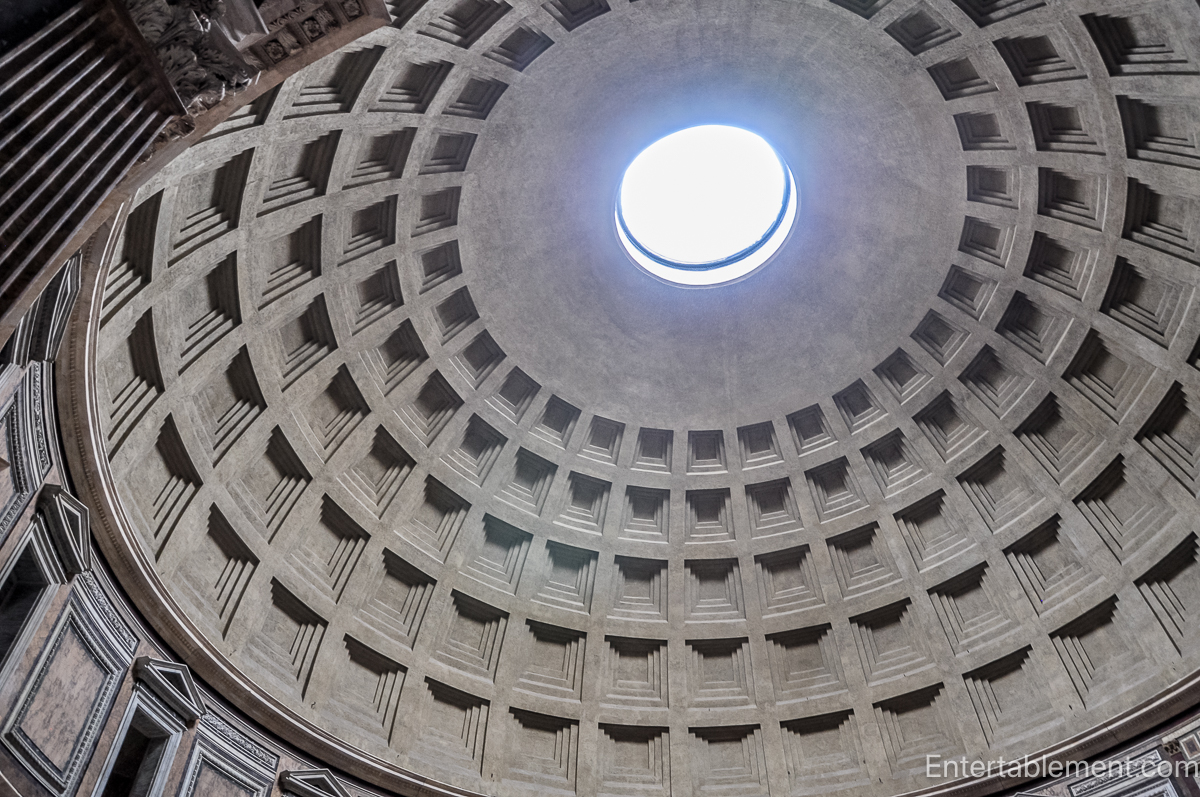
His studies of ancient buildings went beyond measuring their proportions to investigating how they had been constructed. He was interested not simply in their appearance, but in the practical principles that made them possible. By the time Florence announced its cathedral competition in 1418, he had spent years developing the skills and understanding needed to tackle its extraordinary challenge.
Building Without a Safety Net
The solution involved two interconnected shells. The inner shell provided much of the structural strength, while the outer protected the building from the weather and gave the dome its distinctive profile. A system of ribs and reinforcing elements helped stabilize the structure, while its pointed shape directed the enormous weight downward. He also developed an ingenious herringbone brickwork pattern that helped maintain stability as construction progressed.
But designing the dome was only part of the problem. Someone had to lift thousands of tons of building materials more than fifty metres above the cathedral floor. Brunelleschi devised remarkable hoisting machines, including an ox-powered device that could raise and lower heavy loads without requiring the animals to reverse direction. He also developed equipment to manoeuvre materials into position high above the ground.
Construction began in 1420, with Brunelleschi and his old rival Ghiberti initially appointed to oversee the work together. Their partnership was uneasy, and Brunelleschi gradually assumed the leading role. He was famously protective of his methods and had a reputation for considerable stubbornness, although some of the more colourful stories about his dealings with Ghiberti may have been embellished by later biographers.
As the dome rose, Brunelleschi had to coordinate workers, manage materials and continually monitor the structure. His achievement lay not simply in imagining an ingenious solution, but in developing the machinery, techniques and working methods needed to make it a reality.
An Achievement That Changed Florence
In 1436, sixteen years after construction began, Florence’s cathedral dome was sufficiently complete for the church to be consecrated by Pope Eugenius IV. Rising above the city, it was a triumph of mathematical reasoning, practical craftsmanship and engineering ingenuity.
Brunelleschi’s influence extended beyond the cathedral. His designs for the Ospedale degli Innocenti, San Lorenzo and other Florentine buildings introduced a new architectural language inspired by classical proportions, geometric clarity and harmonious spaces. These principles would influence generations of Renaissance architects throughout Italy and beyond.
His achievement also reflected the ambitions and resources of Florence itself. The powerful wool guild had overseen the cathedral’s construction for generations, drawing upon the city’s commercial wealth and skilled craftsmen. Brunelleschi supplied the ingenuity that finally completed a project begun long before his birth.
When he died in 1446, Brunelleschi was buried in the cathedral he had helped complete, an exceptional honour for a man whose career had begun in a goldsmith’s workshop. Nearly six centuries later, his dome still dominates Florence’s skyline, a magnificent reminder of what can happen when curiosity, practical skill and determination come together to solve a seemingly impossible problem.