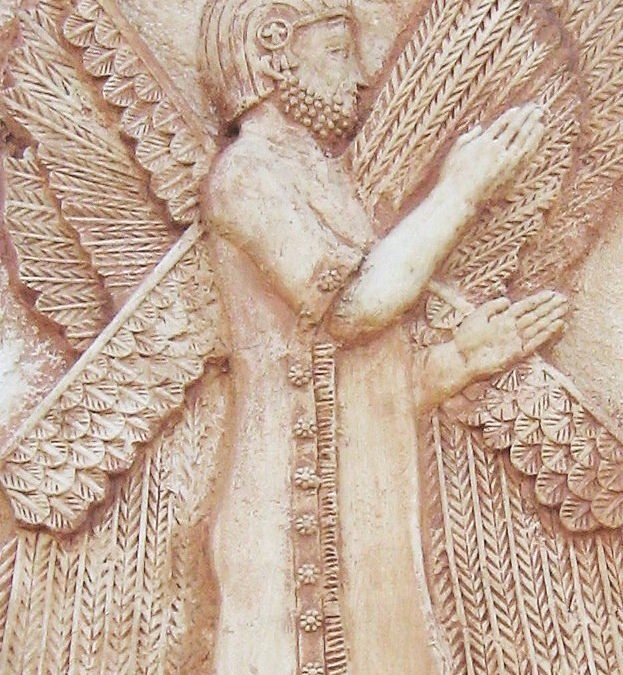
The ancient Greeks loved a good origin story, and Herodotus gives Cyrus one of the best.
According to the historian, Cyrus survived an order for his execution as an infant, was secretly raised by a shepherd, and first revealed his true nature while playing “king” with the village children. Whether the story is literally true is impossible to know. Yet its survival tells us something important. Long before psychologists spoke of personality or leadership, people were already trying to explain why certain individuals seemed destined to lead.
The Confidence to Rule Differently
Some people command obedience through fear. Others seem to inspire loyalty almost wherever they go.
More than 2,500 years after his death, Cyrus the Great still occupies a curious place in history. He was undoubtedly a conqueror, yet many of those who wrote about him—Persian, Greek and Jewish alike—remembered not only what he accomplished, but the kind of ruler they believed him to be. They described a man who was confident without being reckless, ambitious without being needlessly cruel, and powerful enough to show restraint when others might have reached for force.
History has a habit of polishing remarkable people into legends, and Cyrus is no exception. Yet legends usually grow around a kernel of truth. In his case, that truth seems to have been an unusual ability to persuade people that joining his empire was preferable to endlessly resisting it.
That is not how empires usually worked.
A Different Kind of Conqueror
When Cyrus inherited the small Persian kingdom of Anshan in the sixth century BC, the ancient Near East was dominated by larger and older powers. Within little more than twenty years he defeated the Medes, conquered the wealthy kingdom of Lydia and finally entered Babylon itself in 539 BC.
By the time he died, he ruled the largest empire the world had yet seen. Military brilliance alone, however, cannot explain why that empire endured.
History is filled with conquerors who won spectacular victories only to watch their empires collapse almost as quickly as they had appeared. Winning battles is difficult. Governing millions of people who neither speak your language nor worship your gods is far more challenging.
Cyrus seems to have understood that from the beginning.
Confidence Without Uniformity
Most empires have been tempted by the same solution. If people are different, make them less different. Impose your language. Your customs. Your religion. Your rulers.
Cyrus chose a remarkably different path.
When he entered Babylon, he did not destroy its temples. He presented himself as the legitimate successor to its ancient kings and honoured many local religious traditions. Most famously, he allowed displaced peoples—including the Jewish community exiled in Babylon—to return home and rebuild their temple in Jerusalem.
This was not modern democracy, nor should we pretend otherwise. Persia remained an empire, taxes were collected, rebellions were crushed and the king’s authority was absolute.
Yet Cyrus appears to have understood something surprisingly practical. People are often more willing to cooperate when their identity is respected rather than erased. That required confidence. An insecure ruler demands that everyone become like him. A confident ruler can allow people to remain themselves.
Building Trust at Scale
The empire that emerged under Cyrus did not depend upon endless military occupation. Local governors administered distant provinces, roads connected cities separated by thousands of kilometres and royal couriers carried messages across extraordinary distances.
Like Hammurabi before him, Cyrus was reducing uncertainty.
Merchants could trade across vast territories. Local communities largely retained their own traditions. Different peoples found themselves participating in a political system that was larger than any they had previously known.
Civilization had reached another milestone. It was learning how to cooperate across extraordinary differences.
The Measure of a Leader
A clay cylinder, discovered among the ruins of Babylon, has become one of the most famous artefacts from the ancient world. The Cyrus Cylinder records his conquest of the city and describes the restoration of temples and displaced peoples.
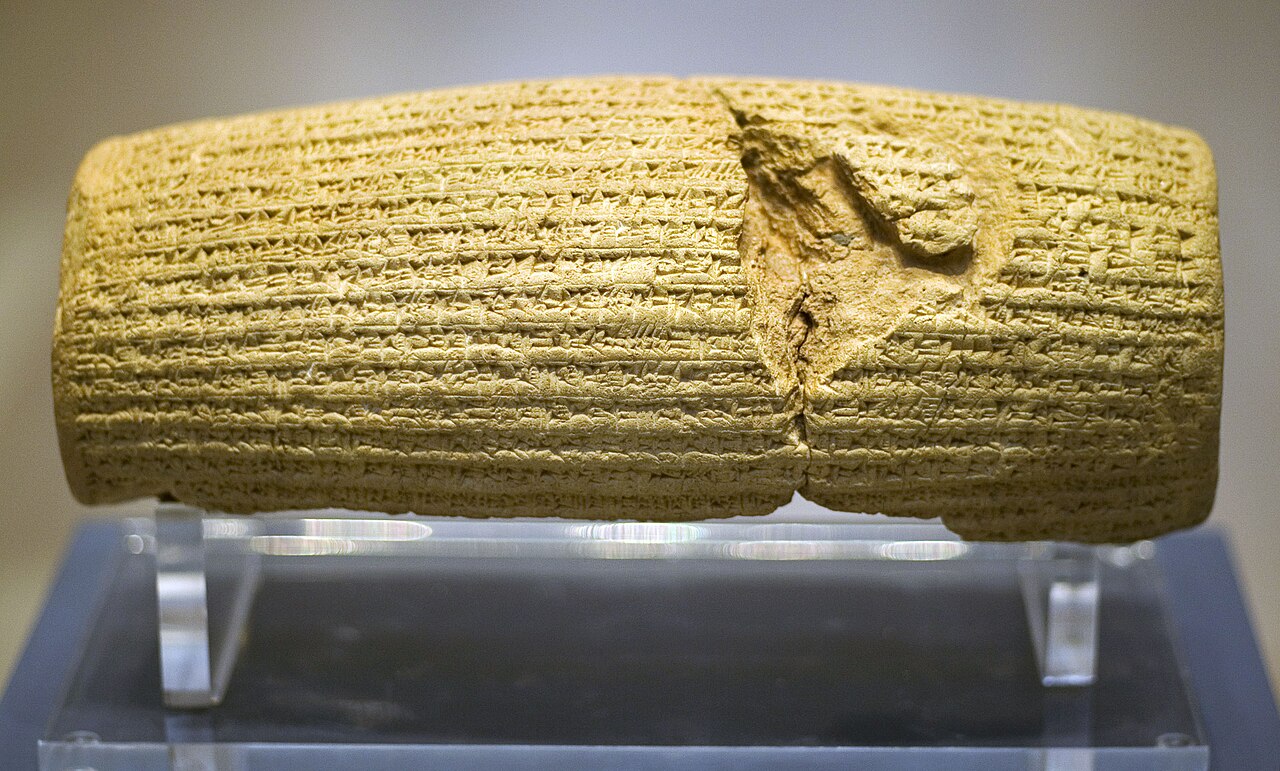
It has sometimes been called the world’s first charter of human rights, although that probably asks more of a sixth-century BC royal inscription than it can reasonably bear. Like many royal inscriptions, it was also intended to present the king in a favourable light.
Even so, it reveals something revealing. Cyrus wanted to be remembered not simply as a conqueror, but as a restorer of order. That aspiration alone distinguishes him from many rulers before and after.
An Inheritance That Still Matters
Every diverse society eventually encounters the same question.
How do people with different languages, beliefs and customs live together without constant conflict?
There has never been a permanent answer — every generation must find its own.
But Cyrus recognized something that remains profoundly relevant. Lasting political communities are built not only upon strength, but upon legitimacy. People cooperate more readily when they believe their identity has a place within the larger whole.
Though his empire eventually disappeared, as all empires do, the idea did not. The strongest societies are not always those that demand complete uniformity.
Often they are those that become remarkably good at managing difference.