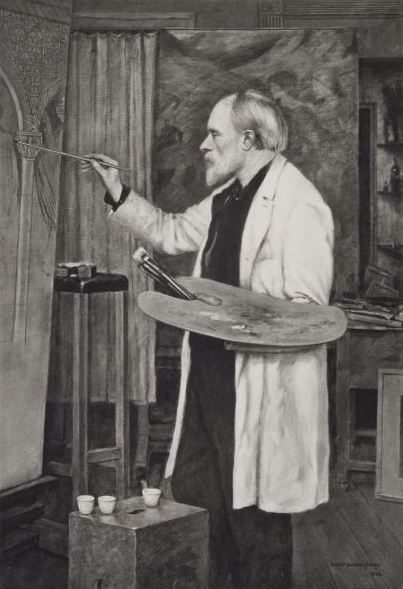
Walk into almost any Victorian church in England and, if the sun is shining, there is a good chance Edward Burne-Jones will introduce himself before anyone mentions his name.
Light pours through one of his stained-glass windows, filling the stone with deep blues, glowing reds and warm golds. Visitors often stop without quite knowing why. The colours soften the building, the figures seem almost alive, and for a few moments the church becomes something more than stone and mortar.
Burne-Jones understood that beauty could change not only how a building looked, but how people experienced it.
An Unexpected Calling
Born in Birmingham in 1833, Burne-Jones did not set out to become an artist. As a young man at Oxford, he intended to enter the Church. There he met another student, William Morris, and the two formed a friendship that would shape both their lives.
Together they immersed themselves in medieval literature, Gothic architecture and the writings of John Ruskin. Ruskin argued that great art reflected the moral health of a society, while the medieval world seemed to offer a vision of craftsmanship that industrial Britain was beginning to lose.
Neither young man followed his original path. Instead, together with Ruskin, they became central figures in what would later be known as the Arts & Crafts movement,
Burne-Jones’s influence extended beyond art. Through his wife, Georgiana MacDonald, he became uncle by marriage to Rudyard Kipling, whose mother, Alice MacDonald, was Georgiana’s sister. Although they belonged to different generations, both men shared a fascination with myth, storytelling and the enduring power of English identity. It is one of those unexpected family connections that reminds us how closely knit Victorian artistic and literary circles could be.
A Different Kind of Progress
The nineteenth century transformed Britain. Factories produced goods more quickly than ever before. Railways shrank distances, cities expanded and prosperity grew. Yet many people wondered whether something valuable had been left behind. Much of the new decoration felt hurried and anonymous. Everyday objects were increasingly made by machines rather than by skilled craftspeople whose individual character could still be seen in their work.
Burne-Jones never argued that Britain should abandon progress. He simply believed that craftsmanship, imagination and beauty should continue to have a place within it.
Working with William Morris and Morris & Co., he designed stained glass, tapestries, furniture, ceramics, textiles and book illustrations that combined traditional craftsmanship with remarkable artistic imagination. Their ambition was not simply to make beautiful things. It was to remind people that beauty itself enriches everyday life.
Churches Filled with Light
Today, Burne-Jones is probably encountered most often in churches rather than galleries. His windows appear in cathedrals and parish churches across Britain and around the world. Their graceful figures, rich colours and quiet sense of dignity remain instantly recognizable more than a century after they were created.
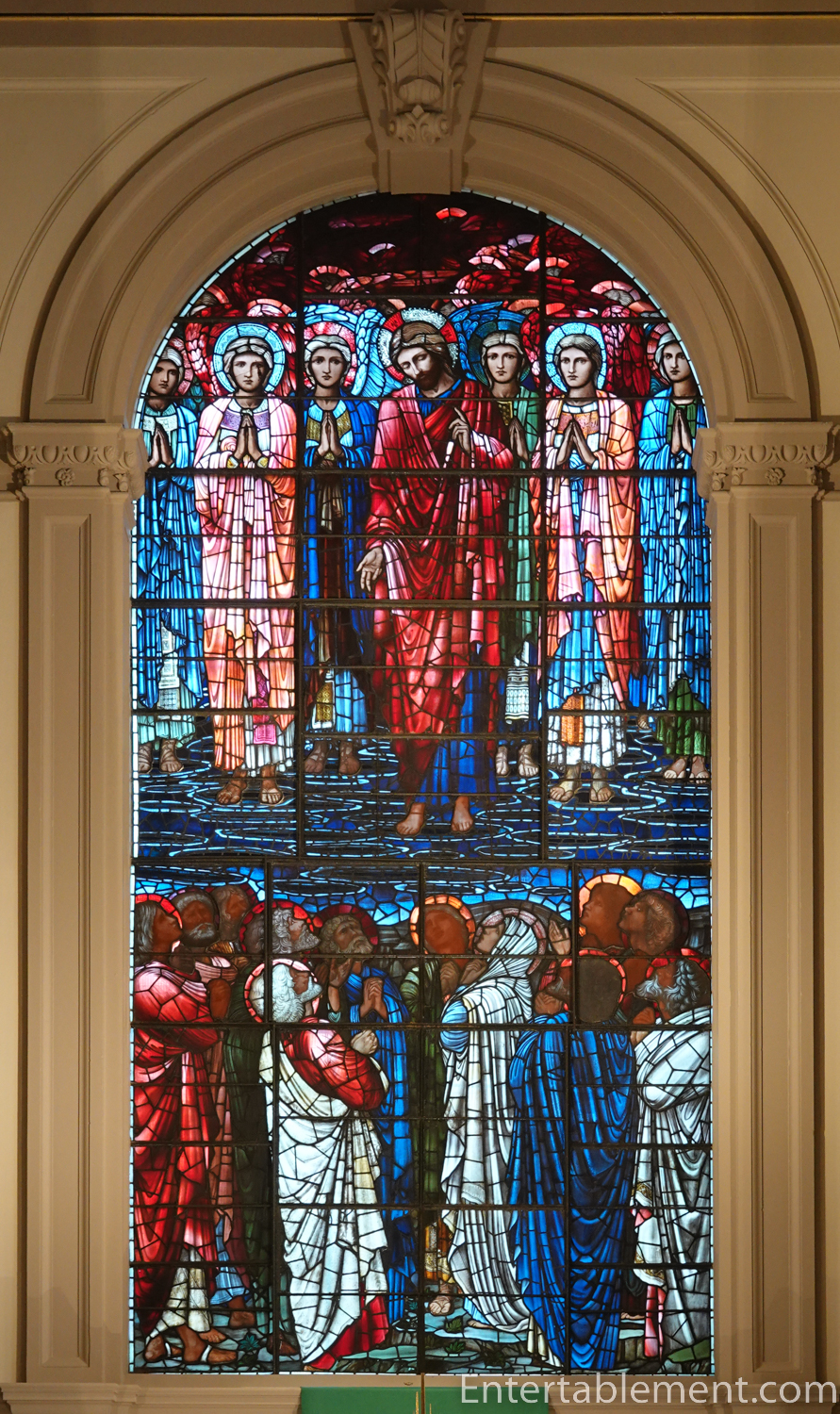
The Resurrection Window at Birmingham Cathedral
For visitors, they often become one of the most memorable parts of the building itself.
The glass tells familiar biblical stories, but it also invites something rarer in a busy world: the chance to pause, look carefully and simply enjoy what skilled hands and thoughtful design can create.
More Than Decoration
It is easy to dismiss beauty as something pleasant but unnecessary; Burne-Jones would have disagreed. He believed that the places in which we live, work and worship shape us in subtle ways. Roads, bridges and laws help civilizations function, but beauty helps make them places where people actually want to live.
That conviction became one of the defining ideas of the Arts & Crafts movement, influencing architecture, design and craftsmanship that can still be seen in places such as Hidcote Manor and Kelmscott Manor.
An Enduring Legacy
Edward Burne-Jones did not seek political office, command armies or write laws. Instead, he left behind something more subtle. He reminded a rapidly industrializing society that progress need not come at the expense of beauty, and that craftsmanship is not a luxury added after everything else is finished. It is one of the ways a civilization expresses what it values.
Every generation inherits the world it has been given. Burne-Jones chose to leave it a little more beautiful than he found it.