
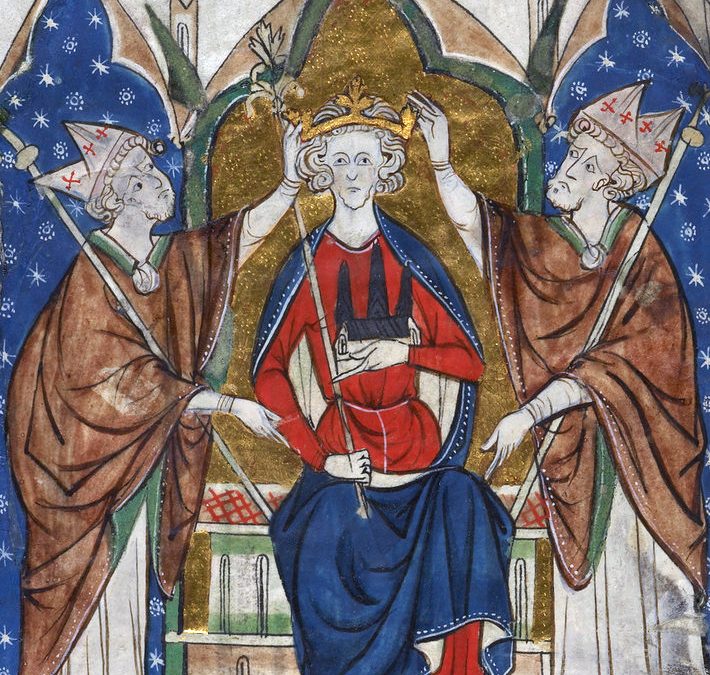
History can be unkind to kings who are neither conquerors nor revolutionaries, and Henry III suffers particularly from the comparison.
His father was King John, whose reign produced Magna Carta. His son was Edward I, the formidable builder of castles and architect of the mature medieval state. Between them stands Henry III, often remembered as weak, extravagant, or ineffective.
Yet such judgments overlook something important. Henry ruled England for more than half a century during one of the most prosperous and creative periods of the Middle Ages.
If Edward I represented the mature medieval state, Henry III presided over the age in which that state flourished.
The Paradox of Henry III
When Henry inherited the throne from King John in 1216, he was only nine years old. The kingdom was emerging from civil war. His father’s reputation was in ruins. Parts of England remained in rebellion. The survival of the monarchy itself was not guaranteed.
Yet over the following decades England recovered.
- Population expanded.
- Trade increased.
- Market towns grew.
- Forests were cleared.
- New land was brought into cultivation.
Across much of the kingdom, prosperity rose. The England that emerged was wealthier, more populous, and more sophisticated than the one Henry inherited.
The most visible symbol of this confidence still stands in London.
Henry’s rebuilding of Westminster Abbey transformed a royal church into one of the masterpieces of Gothic architecture.
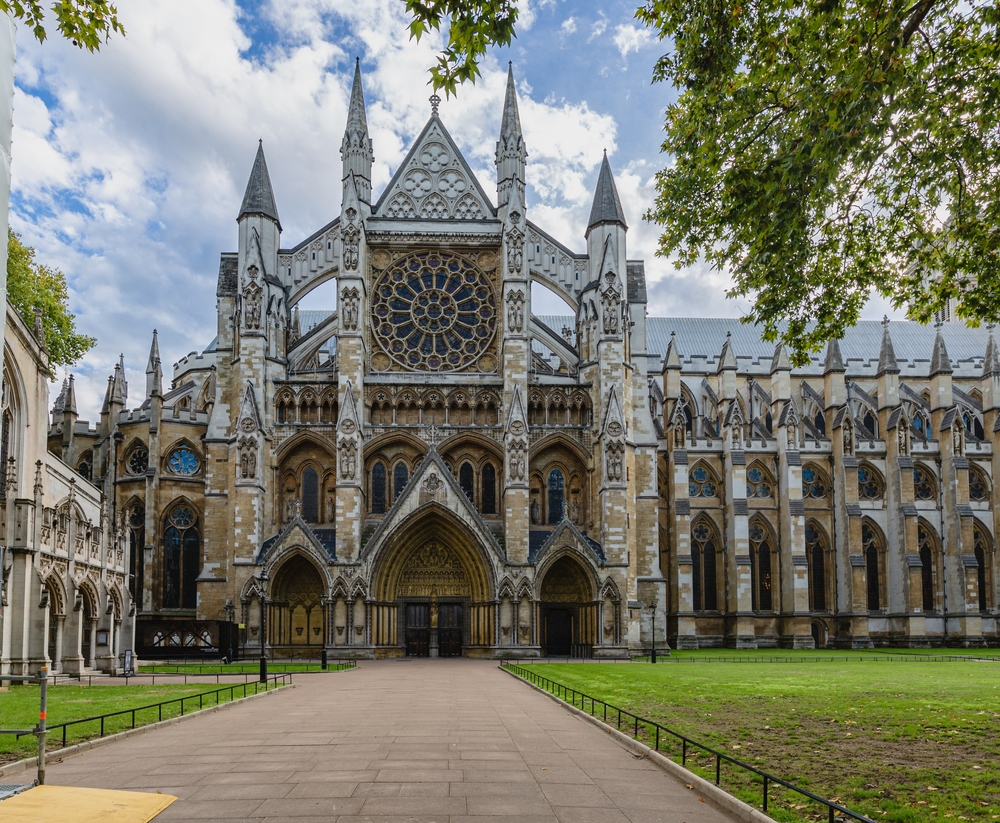
The project reflected more than personal piety; it expressed a civilization growing in wealth, ambition, and technical capability.
The soaring arches and luminous spaces of Gothic architecture represented a society increasingly confident in its future.

Sometimes Questionable Judgment
Yet prosperity did not eliminate political tensions.
Henry’s greatest challenge was not economic management but trust. Unlike his grandfather Henry II or his son Edward I, he often struggled to maintain the confidence of his leading nobles. Generous and conciliatory by temperament, he could also be inconsistent. Promises were made, revised, and revisited. Agreements that appeared settled sometimes became unsettled once more.
Over time, confidence in the king’s judgment began to erode.
The most striking example was Henry’s acceptance of the Papacy’s proposal that his younger son Edmund should become King of Sicily. The scheme promised prestige and influence, but required resources England could scarcely afford. As costs mounted and success remained elusive, many of Henry’s subjects concluded that their king’s aspirations had outrun his practical judgment.
The episode was about more than money. It raised a troubling question: was Henry governing according to the realities of his kingdom, or according to the world he wished existed?
Constitutional Confrontation
The resulting tensions produced one of the most significant constitutional confrontations of the Middle Ages.
Opposition eventually coalesced around Simon de Montfort, Earl of Leicester. Initially presenting himself as a reformer seeking to restrain royal excess, de Montfort forced Henry to accept sweeping limitations on his authority. Yet power has a habit of changing those who acquire it. After defeating the king at the Battle of Lewes in 1264 and holding him captive, de Montfort increasingly governed in Henry’s name, raising uncomfortable questions about whether reform and personal ambition had become entangled.
The conflict reached its climax after de Montfort’s death at the Battle of Evesham in 1265. Many of his supporters continued the struggle from Kenilworth Castle, one of the strongest fortresses in England and a castle Henry himself had earlier granted to de Montfort.

The resulting siege lasted nearly six months, becoming one of the longest in medieval English history. Despite vast expenditure and overwhelming force, the king ultimately discovered that military victory alone could not restore peace. The eventual settlement emerged through negotiation and compromise, culminating in the Dictum of Kenilworth. It was a reminder that England’s political problems could not simply be battered into submission.
In this sense, Henry’s reign occupies a fascinating position. It was an age of growth, but also an age of negotiation. The kingdom was becoming too large, too wealthy, and too complex to govern solely through personal authority. Consultation, compromise, and institutions mattered increasingly.
Henry did not always navigate these changes successfully.
Civilization Has a Long Arc
Yet the very conflicts of his reign reveal how much England had evolved since the Norman Conquest. By the time of his death in 1272, England possessed thriving towns, expanding commerce, flourishing religious institutions, growing administrative capacity, and a political culture increasingly accustomed to consultation.
The kingdom was stronger than the one he had inherited. Within months, his son Edward I would begin shaping that inheritance into one of the most capable states in medieval Europe.
Henry III rarely commands the attention given to more dramatic rulers. Perhaps that is because prosperity is less theatrical than conquest.
Civilizations are not built by warriors alone; sometimes their greatest advances occur during long periods of growth, stability, and patient development.
Henry III was not the hero of a great medieval drama. He was neither the weak fool of older histories nor the great statesman his admirers sometimes imagine. Deeply religious, ambitious for his kingdom, and devoted to the ideals of kingship, he nevertheless struggled to match aspiration with practicality. Yet from the conflicts of his reign emerged institutions, habits of consultation, and political compromises that would shape England for centuries.
If Edward I inherited a stronger kingdom, it was partly because Henry’s successes had allowed England to flourish—and partly because Henry’s failures had revealed the limits of royal authority.
In that sense, Henry III remains one of the most consequential rulers of the Middle Ages: not because he resolved England’s constitutional questions, but because he helped ensure they would continue to be asked.