

Some rulers seem destined for greatness; Edward II was born into expectations.
His father was Edward I, one of the most formidable kings England ever produced. He conquered Wales, campaigned relentlessly in Scotland, strengthened royal administration, and left behind a landscape dotted with castles that still dominate the horizon. To his contemporaries, he appeared almost larger than life.
Being the son of such a man was never going to be easy; being his successor proved even harder.
Edward II’s reign is often remembered as a catalogue of failures: military defeat in Scotland, bitter political disputes, powerful favourites, baronial rebellions, deposition, imprisonment, and a mysterious death. Few medieval kings have acquired such an unfortunate reputation. Yet the story is more complicated than simple failure.
Edward’s reign raises a question that would echo repeatedly through English history:
What happens when a king cannot become the ruler his kingdom expects?
The Weight of a Crown
When Edward became king in 1307, England appeared strong. The kingdom was wealthier and more centralized than it had been a century earlier. Royal government functioned with increasing sophistication and the legal system expanded. Parliament met regularly. The machinery of the state was growing more capable and more complex. And success creates its own expectations.
Edward inherited not only a kingdom but a role;
- His nobles expected a warrior king.
- His subjects wanted authority.
- His officials looked for leadership.
In short, another Edward I. That was a difficult standard for anyone to meet.
Edward II appears to have possessed different strengths and interests from his father. Contemporary chroniclers and later historians alike struggled to understand him. He enjoyed close personal friendships, preferred court life to campaigning, and often seemed more interested in personal relationships than political management.
These qualities were not necessarily defects. Unfortunately, they were not the qualities England most needed in 1307.
The Favourite Problem
No discussion of Edward II can avoid the subject of Piers Gaveston.
Gaveston was charming, capable, ambitious, and intensely unpopular among many of England’s leading nobles. Edward’s attachment to him became one of the defining controversies of the reign.
Modern readers sometimes struggle to understand the intensity of the reaction. The problem was not simply personal affection. Kings were expected to distribute favour carefully. Patronage was one of the principal currencies of medieval politics. When powerful nobles believed a favourite was receiving disproportionate influence, tensions quickly escalated.
Edward repeatedly recalled Gaveston from exile despite growing opposition. The result was a cycle of confrontation that damaged trust on all sides. Whether the king and Gaveston were friends, political allies, or something more remains a matter of historical debate. What mattered politically was that many contemporaries believed Edward was placing personal loyalty above effective governance.
Once that perception took hold, it proved difficult to shake.
Bannockburn
If Gaveston created political problems, Scotland created a national one. Edward inherited his father’s long-running struggle to dominate Scotland. It was an expensive and difficult undertaking even for Edward I.
For Edward II, it became a disaster. In 1314, English forces confronted Robert the Bruce at Bannockburn. Their defeat was decisive.
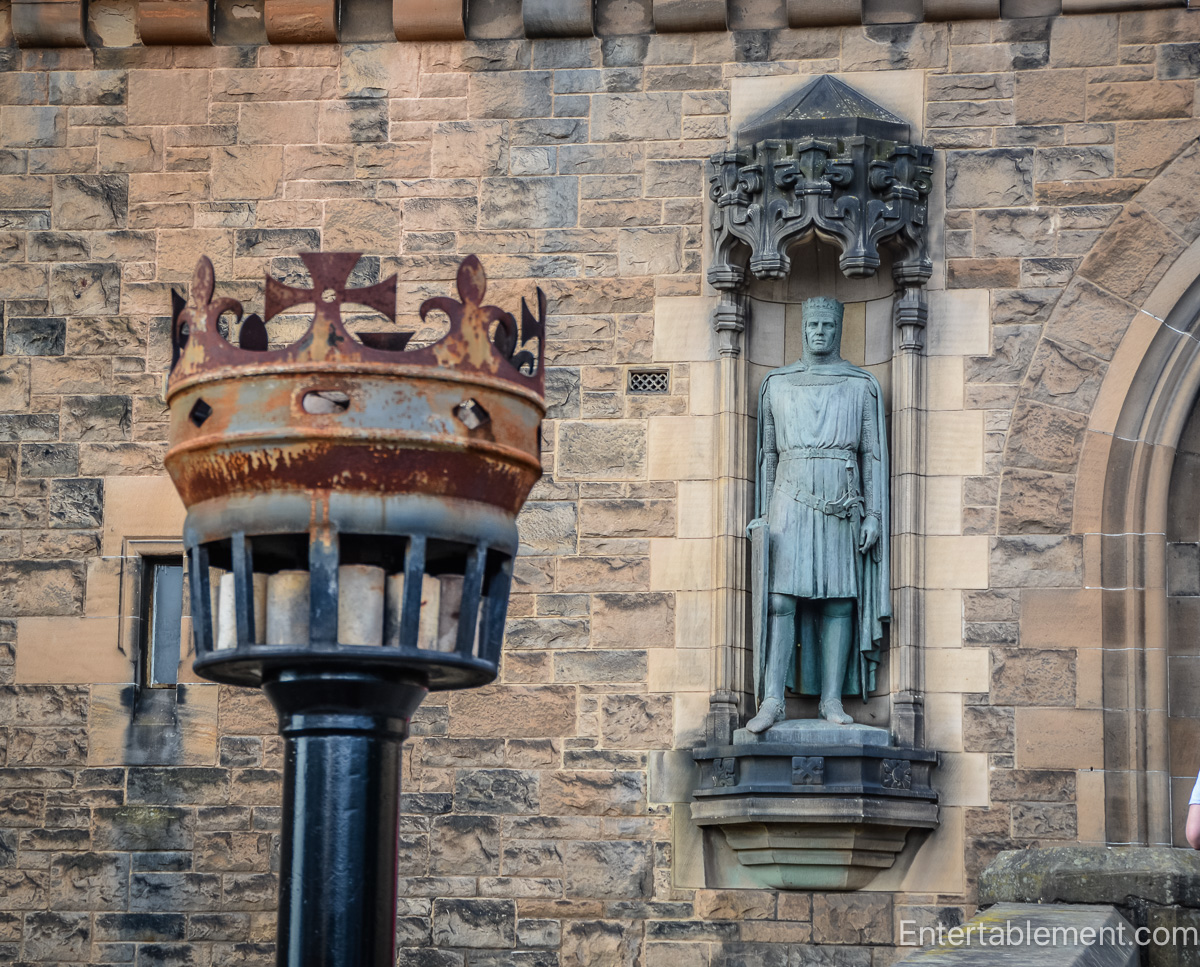
Robert the Bruce, Edinburgh Castle
Military setbacks were hardly unknown in medieval Europe. Yet Bannockburn became something larger than a lost battle. It damaged royal prestige and strengthened the perception that Edward lacked the qualities expected of a medieval king.
The comparison with his father became impossible to avoid.
A Kingdom Under Strain
The years that followed brought further difficulties. Famine struck northern Europe between 1315 and 1317. Economic pressures mounted. Political rivalries intensified and new favourites emerged and old grievances deepened. England was not yet experiencing the catastrophes of the fourteenth century, but the first cracks were beginning to appear.
What makes Edward’s reign so important is that many of the tensions that would later define the century were already visible. They encompassed questions of authority, legitimacy, competence and ultimately about the relationship between ruler and ruled.
The kingdom was changing; Edward struggled to change with it.
The Queen and the Rebel
The final act of Edward’s reign reads almost like a historical novel. His queen, Isabella of France, travelled abroad on diplomatic business and refused to return. Instead, she formed an alliance with Roger Mortimer, one of Edward’s opponents, and in 1326, they invaded England.
Remarkably little resistance followed. That fact alone reveals how far Edward’s authority had eroded. Within months, the king was captured. Soon afterward, Parliament declared that he was no longer fit to rule, one of the most dramatic depositions in English history.
While his son became Edward III, the father disappeared from power.
Berkeley Castle
Edward spent his final months as a prisoner, much of it at Berkeley Castle in Gloucestershire. What happened next remains one of the great mysteries of medieval England.
The traditional story claims that Edward was murdered in September 1327. The details became increasingly sensational with retelling and may owe more to later legend than contemporary evidence. Some historians have even suggested he may have survived longer than generally believed, but the truth remains uncertain.
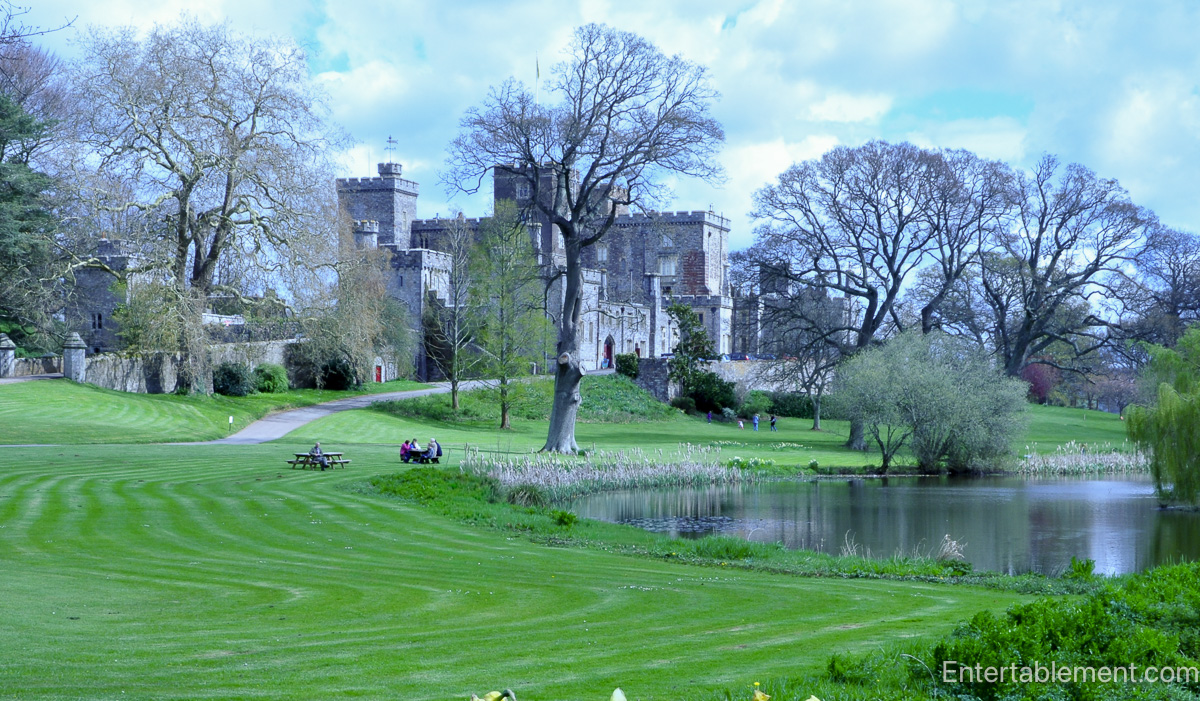
What is certain is that a king who had begun life as the heir to one of England’s greatest rulers ended it in captivity.
A Failure of Confidence
Edward II is often remembered as a failed king, and there is truth in that assessment. But failure alone does not explain his significance.
His reign exposed weaknesses that had been bubbling beneath the surface of the medieval state. It revealed how dependent royal authority remained upon trust, competence, and political credibility. A powerful kingdom could not compensate indefinitely for a ruler who struggled to command confidence.

Edward II’s Tomb
The consequences would echo throughout the fourteenth century. In that sense, Edward II was not simply the end of one story, he was the beginning of another.
The great stress test of medieval England was about to begin.