
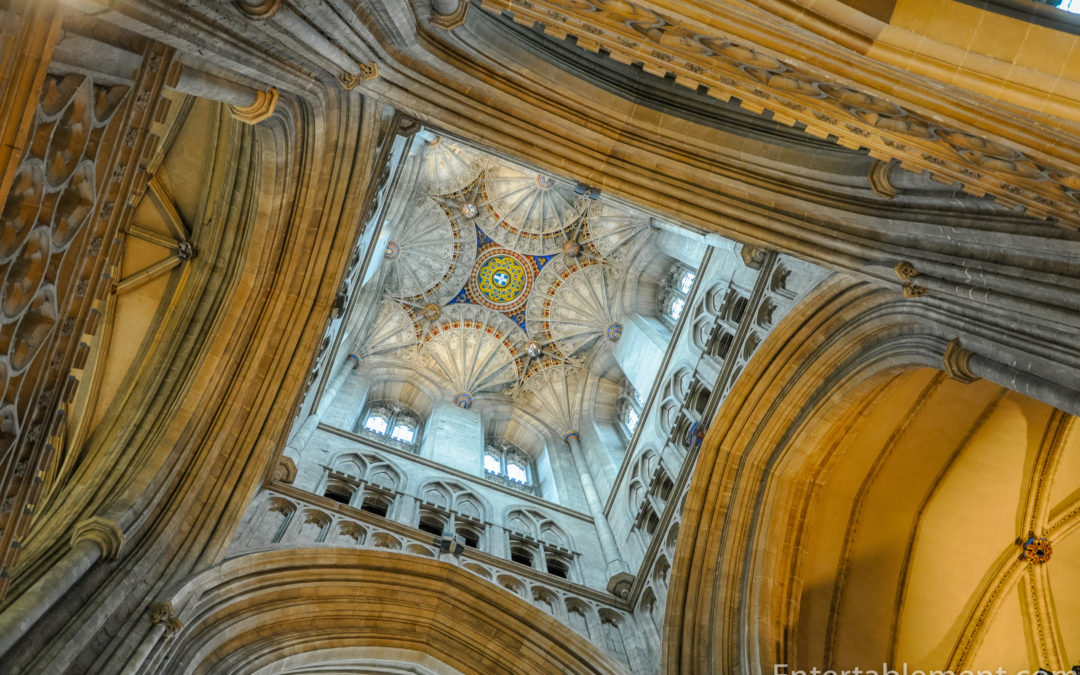
Canterbury Cathedral is magnificent in and of itself. Still, it’s probably most famous for being the site of the murder of Thomas à Becket, the Archbishop who repeatedly clashed with King Henry II (husband of Eleanor of Aquitaine, a pretty powerful woman in her own right) over whether or not the Church was above the law of the land.

Their main conflict was over the treatment of clergy who committed secular crimes: Henry argued that the legal custom in England allowed the king to enforce justice over these clerics; Becket maintained that only church courts could try the cases.

Formerly very good friends, the argument became deeply personal. By reputation, Henry was stubborn and held a grudge; Becket (no saint himself), was apparently vain, ambitious and overly political. Neither of them was willing to back down. Henry became increasingly exasperated with Becket, and was heard to exclaim, “Will no one rid me of this turbulent priest?”
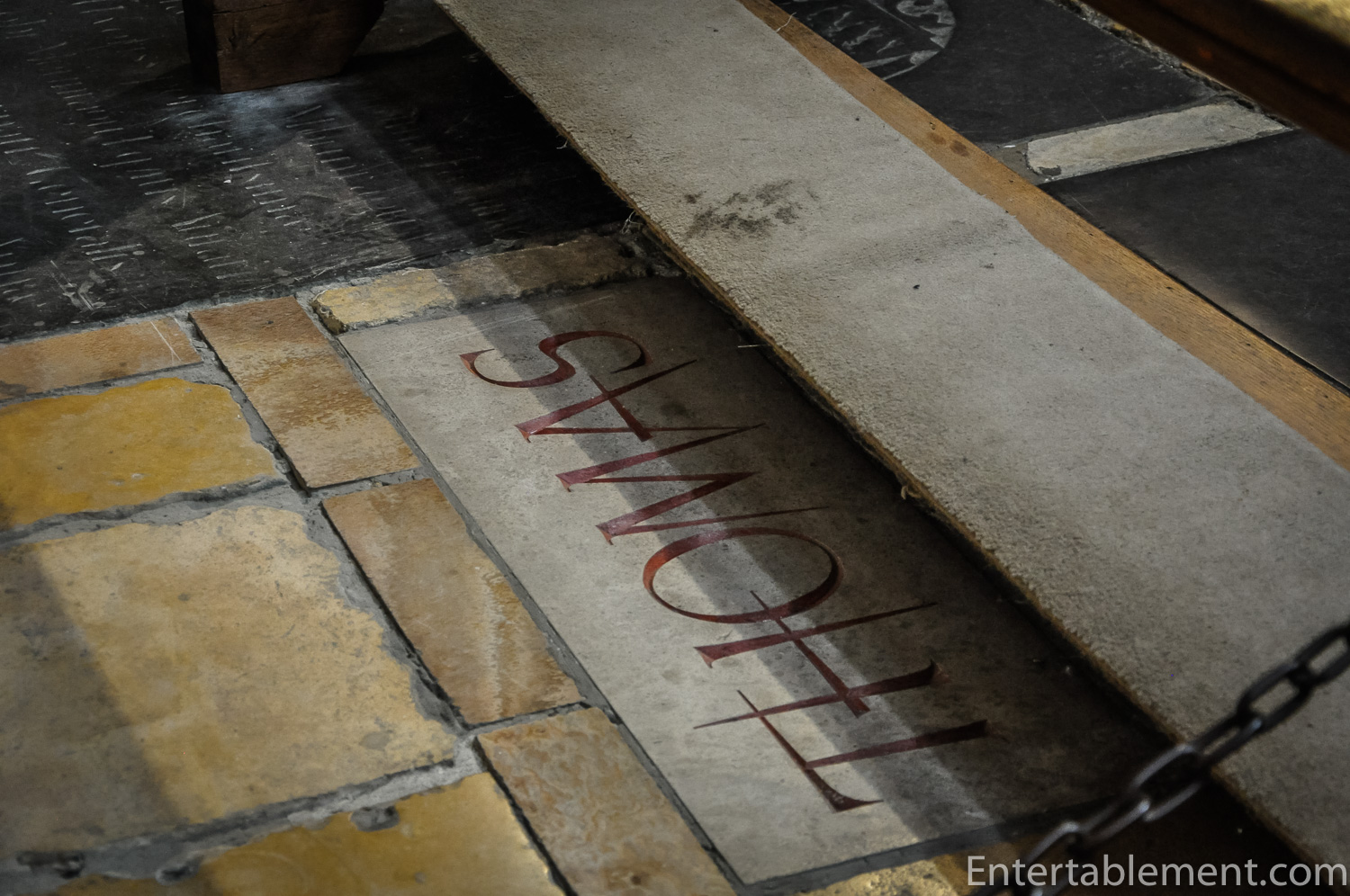
Four of his knights (probably not the sharpest knives in the drawer, it turns out) took it upon themselves to do just that. Their original intention was to confront and if necessary, arrest Becket, but the situation took a turn for the worse. On December 29, 1170, the foursome burst into the Cathedral. In the ensuing scuffle, wherein Becket refused arrest by these relatively low-born knights, they whacked off the top part of Thomas Becket’s head right in front of the altar.

There is a plaque on the cathedral floor commemorating the spot. It’s all very disturbing, even almost a thousand years later.
There was a large public outcry and even Henry was apparently horrified by the knights’ actions. Although Becket had not been popular in life, he was declared a martyr by the local monks. He was canonized in 1173, empowering him even more greatly in death than he had been in life. Oh, the irony!
To follow, on July 12, 1174, Henry performed a public act of penance at Canterbury. This included a public confession of his sins; each bishop gave him five blows, and the 80 monks administered three blows with an iron rod. Henry offered gifts to Becket’s shrine and spent the night in a vigil at Becket’s tomb. Couldn’t have been any too comfortable.

I’ve always found Henry II to be one of the most interesting of the British Monarchs. To balance the sense of horror you may feel at all these goings-on with Thomas Becket, he was also the King who first introduced the concept of common law.
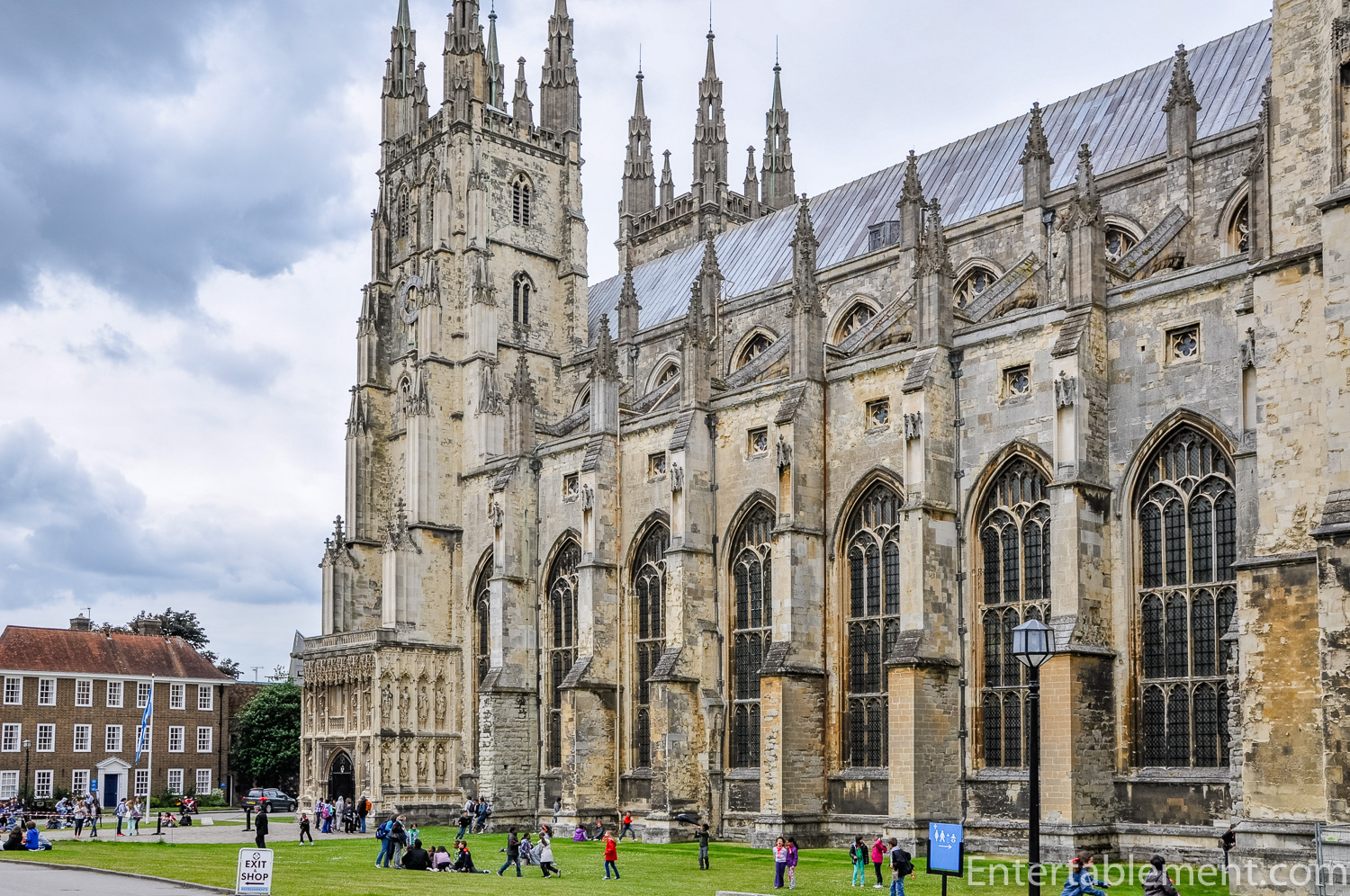
Back to The Cathedral and Metropolitical Church of Christ at Canterbury, as it is officially known. Besides being a World Heritage Site, it’s the seat of the Archbishop of Canterbury, leader of the Church of England.

Founded in 597, the original church was much smaller, likely a nave, possibly a narthex, and some side chapels. That building was replaced in the 9th or 10th century with a much larger structure, which was then badly damaged during Danish raids on Canterbury in 1011. Those marauding Vikings!

The Archbishop at the time, Ælfheah, was taken hostage and eventually killed at Greenwich on April 19, 1012. He was the first of Canterbury’s several martyred bishops, the others being Simon Sudbury (beheaded during the peasant’s revolt in 1328), Thomas Cranmer (put to death by burning in 1556) and William Laud (executed in office in 1645). Looking down the list of Archbishops of Canterbury from 597 to today, it’s been a surprisingly hazardous profession! In the earlier years, especially, it was not a job that seemed to present many opportunities for a pension.
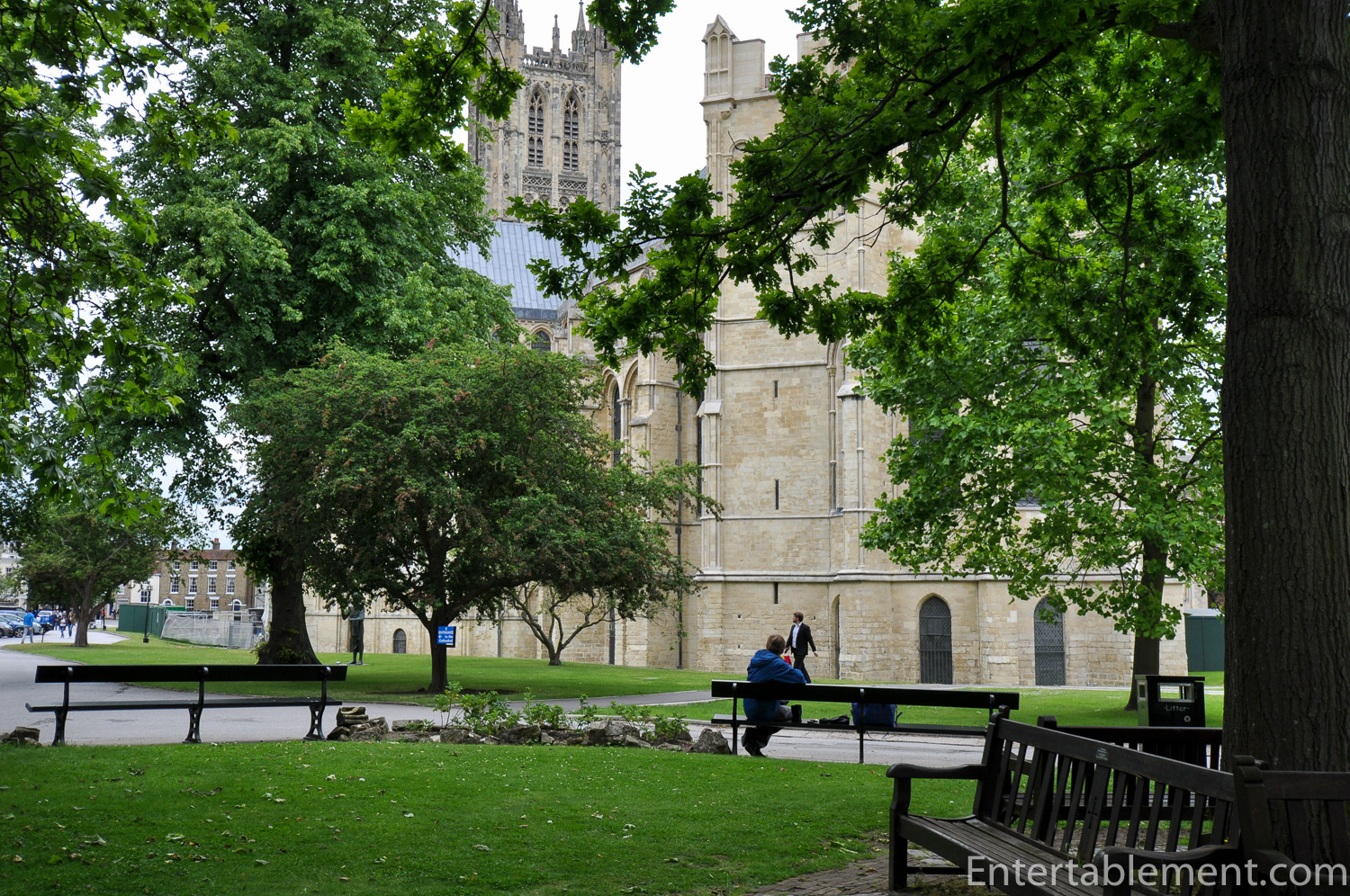
After the Viking raids, repairs took place but seemed to be somewhat in vain, as the cathedral was destroyed by fire in 1067, a year after the Norman Conquest. The first Norman archbishop, Lanfrac, cleared the ruins and began anew, basing his design closely on the Abbey of Saint-Étienne in Caen, where he had previously been abbot. Using stone brought from France, the builders seem to have worked at breakneck speed, as the new cathedral was dedicated in 1077.

The Cathedral’s troubles continued. In September 1174, the choir was severely damaged by fire. I’m inclined to wonder if Thomas à Becket’s ghost had anything to do with the Bad Building Karma. Certainly, his death had an influence on the reconstruction, He was held as a martyr, and a steady flow of pilgrims to the site brought many donations, a la Canterbury Tales by Geoffrey Chaucer.
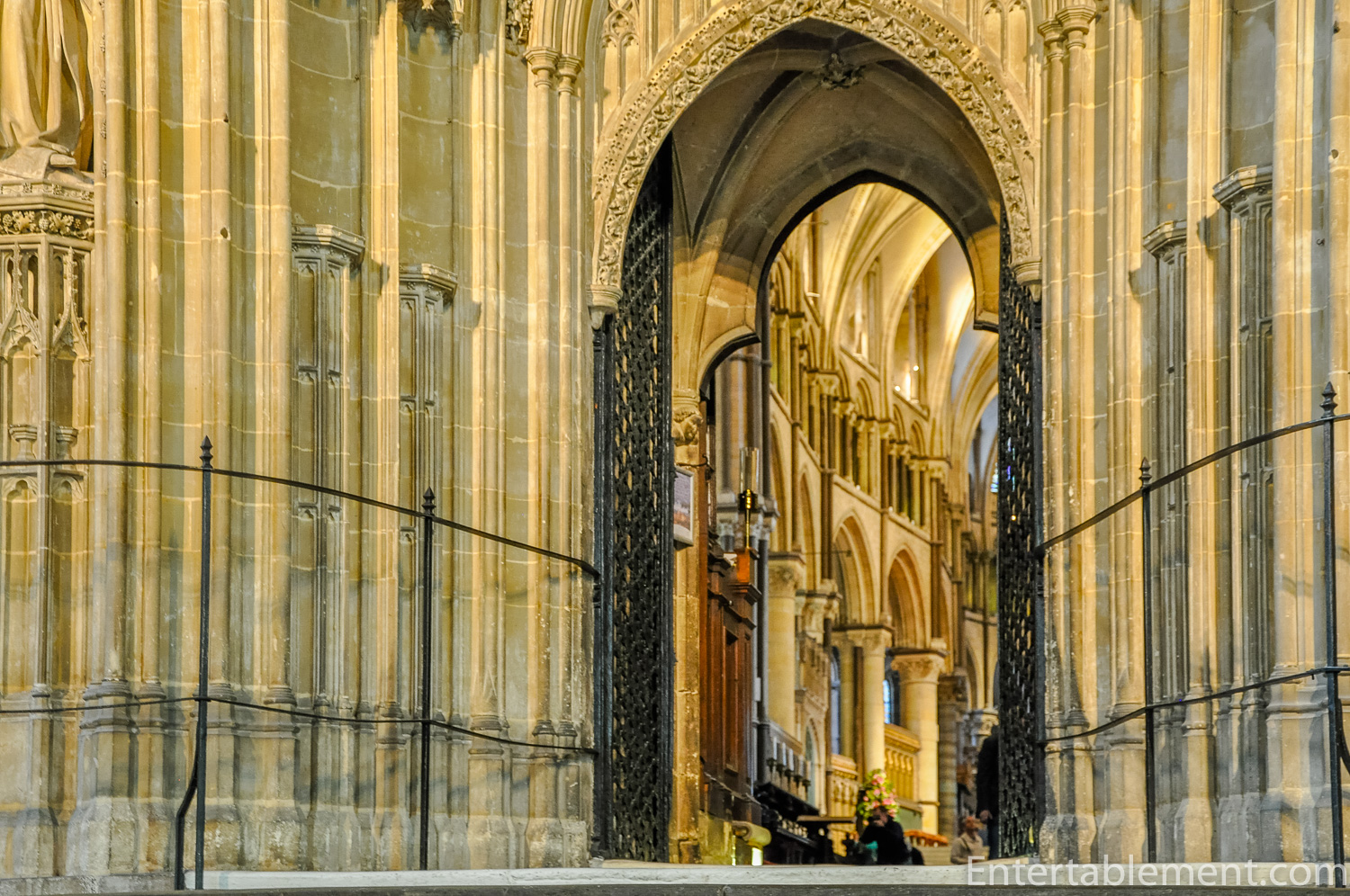
When the major reconstruction began, the cathedral was much enlarged to deal with the pilgrim-flow. The crypt had survived with no damage, and in the new build, the outer walls of the choir were increased in height by 12 feet’. The plan left the round-headed Norman-style windows intact.
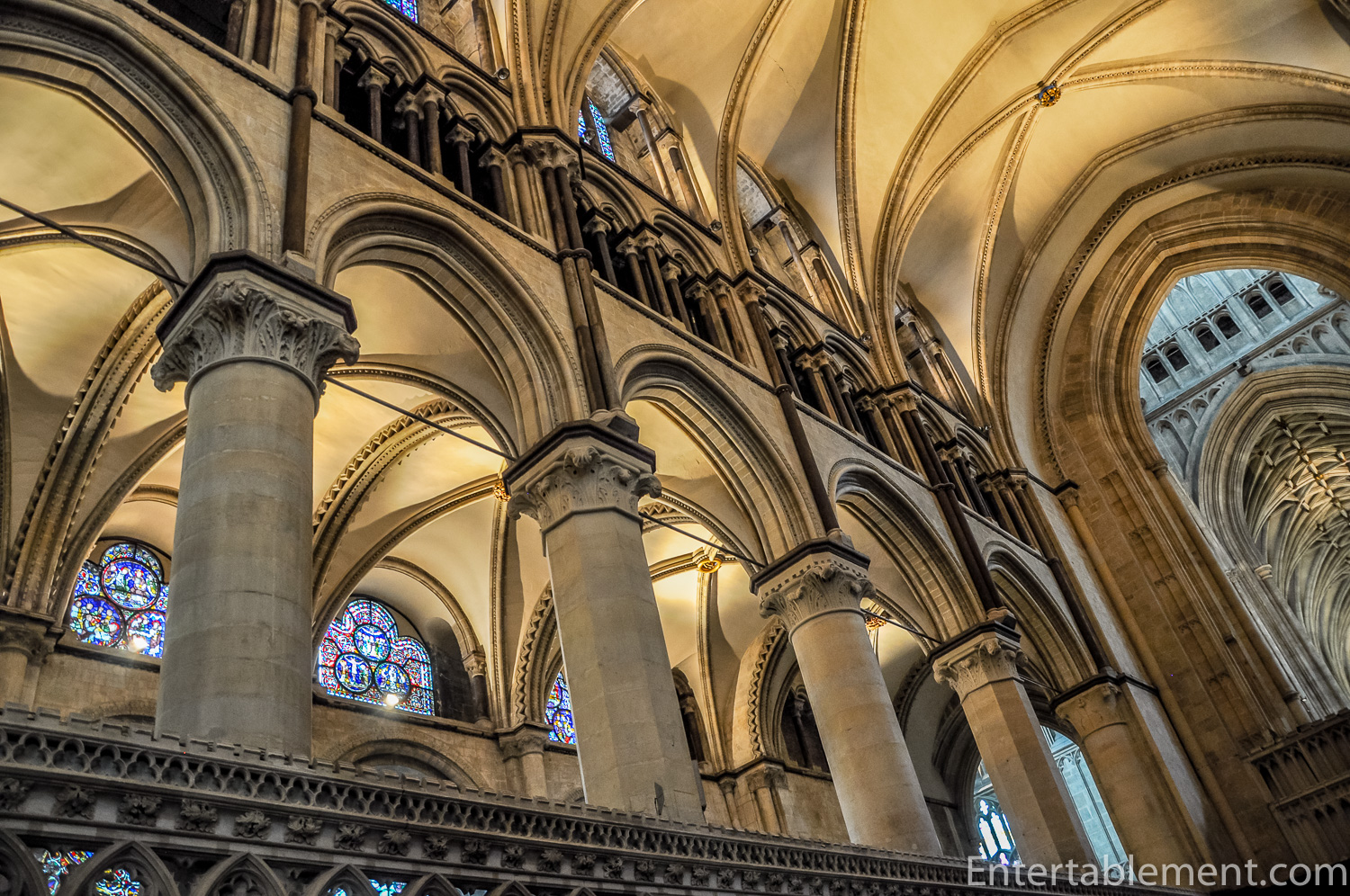
The new Gothic style held sway everywhere else, complete with pointed arches, rib vaulting and flying buttresses. (Don’t you love the term “flying buttress”? I always get a vision of winged backsides jetting off into the distance.)


By 1180, the choir was back in use.
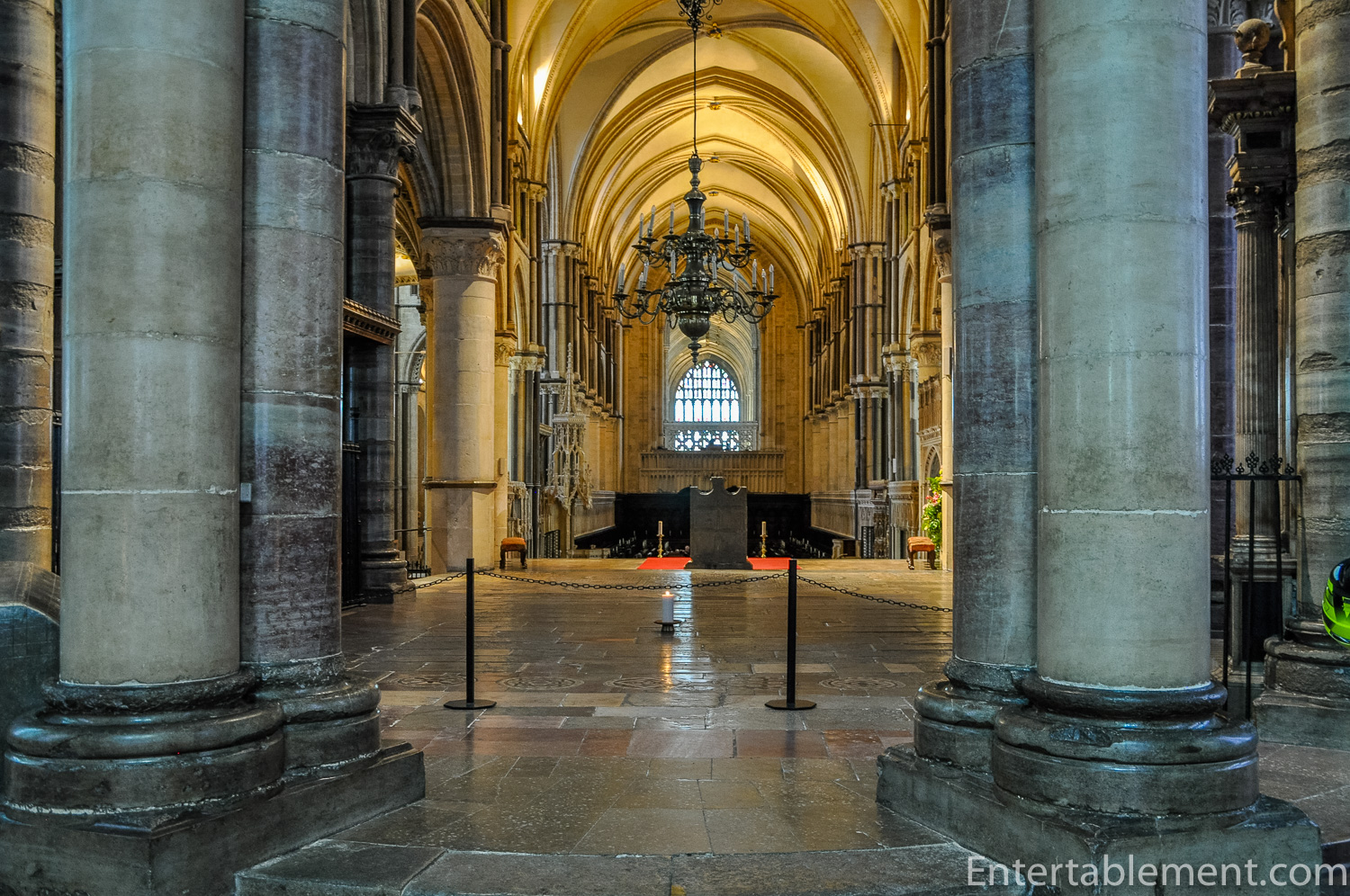
Sometime between 1180 and 1184, the present Trinity Chapel was built to house the shrine of St Thomas à Becket, placed directly above Becket’s original tomb in the crypt. Though work on the chapel was completed in 1184, Becket’s remains were not moved from his tomb in the crypt until 1220.
They were not to remain in peace; the shrine was removed in 1538. To add insult to injury, King Henry VIII summoned the dead saint to court to face charges of treason. Having failed to appear, he was found guilty in his absence, and the treasures of his shrine were confiscated, carried away in two coffers and 26 carts.
You can see the light on the floor in the Trinity Chapel, marking the spot where the shrine once stood.
Though seemingly a crazy act, Oliver Cromwell’s corpse was treated even more badly. Having been buried with due pomp and circumstance at Westminster Abbey, Cromwell’s body was later disinterred for posthumous execution on the orders of Charles II. After hanging “from morning till four in the afternoon”, it was cut down and the head placed on a 20-foot spike above Westminster Hall (the location of the trial of Charles I, who was himself beheaded under the auspices of Cromwell). This goes a long way to explaining the grudge held by Charles II. Sometime between 1674 and 1703, a storm broke the pole upon which Cromwell’s head stood, throwing it to the ground. It remained in the hands of private collectors and museum owners until 25 March 1960. I can just imagine the conversations after dinner: “Would anyone like to see Cromwell’s head? It’s in my private collection.” It was ultimately buried at Sidney Sussex College in Cambridge.
At the far eastern end of the nave, another chapel was added to house additional relics of Becket, including what is widely believed to have been the top of his skull, struck off during his assassination. The chapel became known as “Corona” or “Becket’s Crown”. It’s the rounded bit right at the back and beyond the several flights of steps.

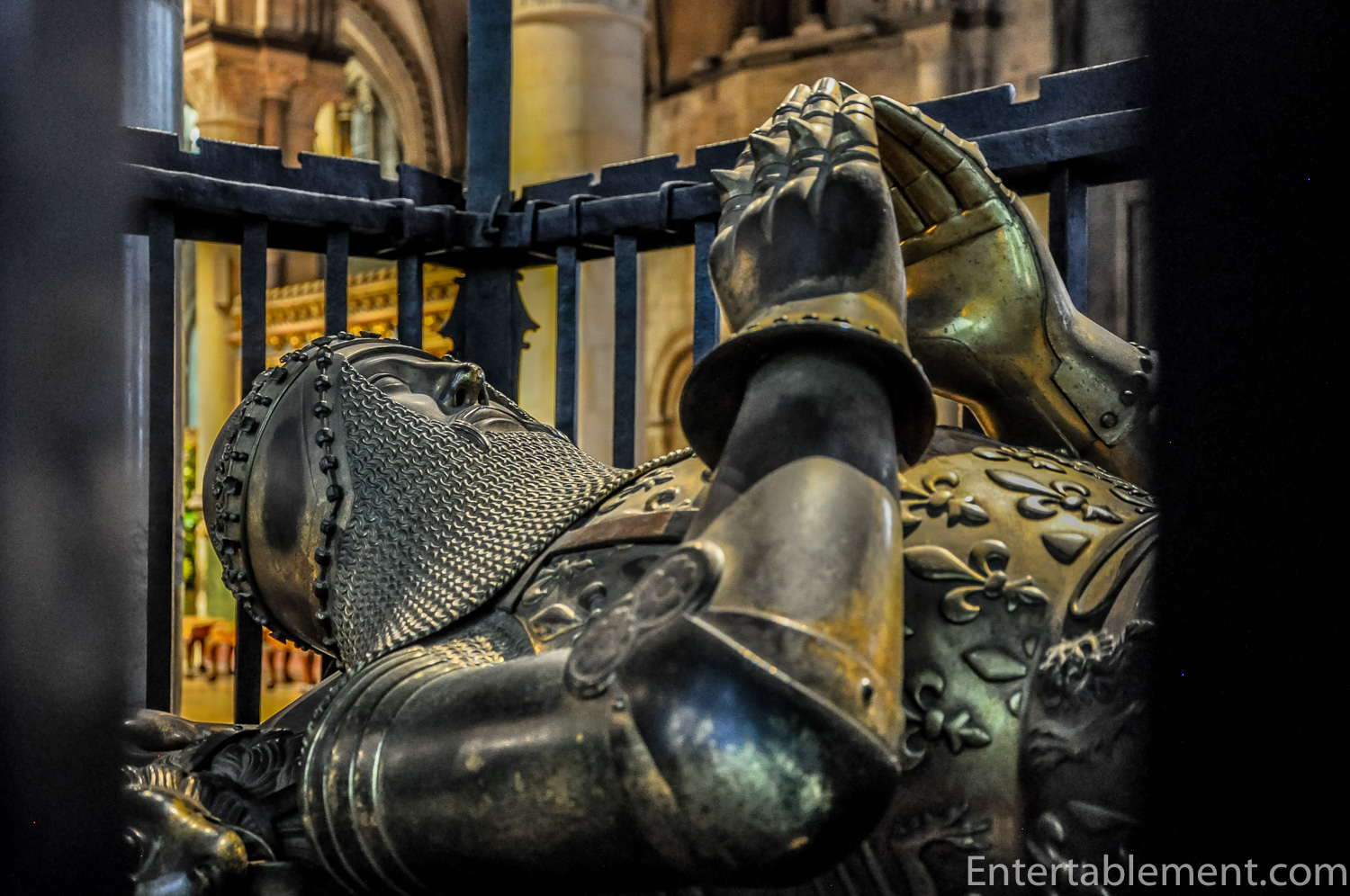
The tomb of Edward Plantagenet (The Black Prince) is also in Trinity Chapel. Isn’t it wonderful? It’s so lifelike you’d think he could get up and walk.

On a side note, I was interested to learn that Edward, the eldest son of King Edward III, was both Duke of Cornwall and Prince of Wales—the same titles once held by King Charles III before he became king. Today, those titles have passed to Prince William, who was created Prince of Wales in 2022.
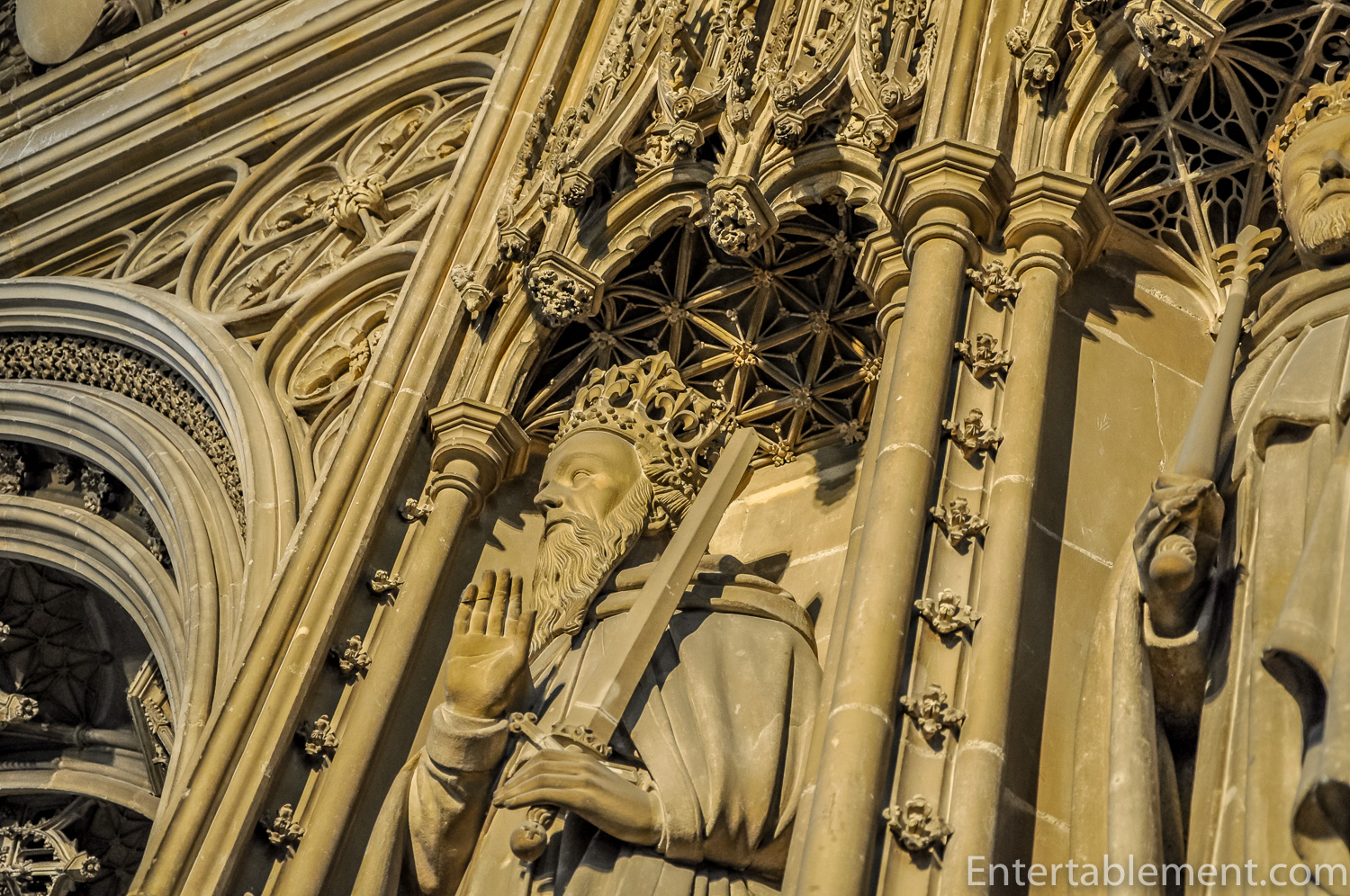
The stone choir screen was added in the early fourteenth century. Many of its statues survived the religious upheavals of the Reformation, when images in churches were often damaged or destroyed under the reforms introduced during Thomas Cromwell’s ministry. (He was a distant relative of the later Oliver Cromwell.)

All in all, Canterbury Cathedral came through that period quite well, unlike some of its brethren, like Ely, where scarcely a statue remains unscathed.
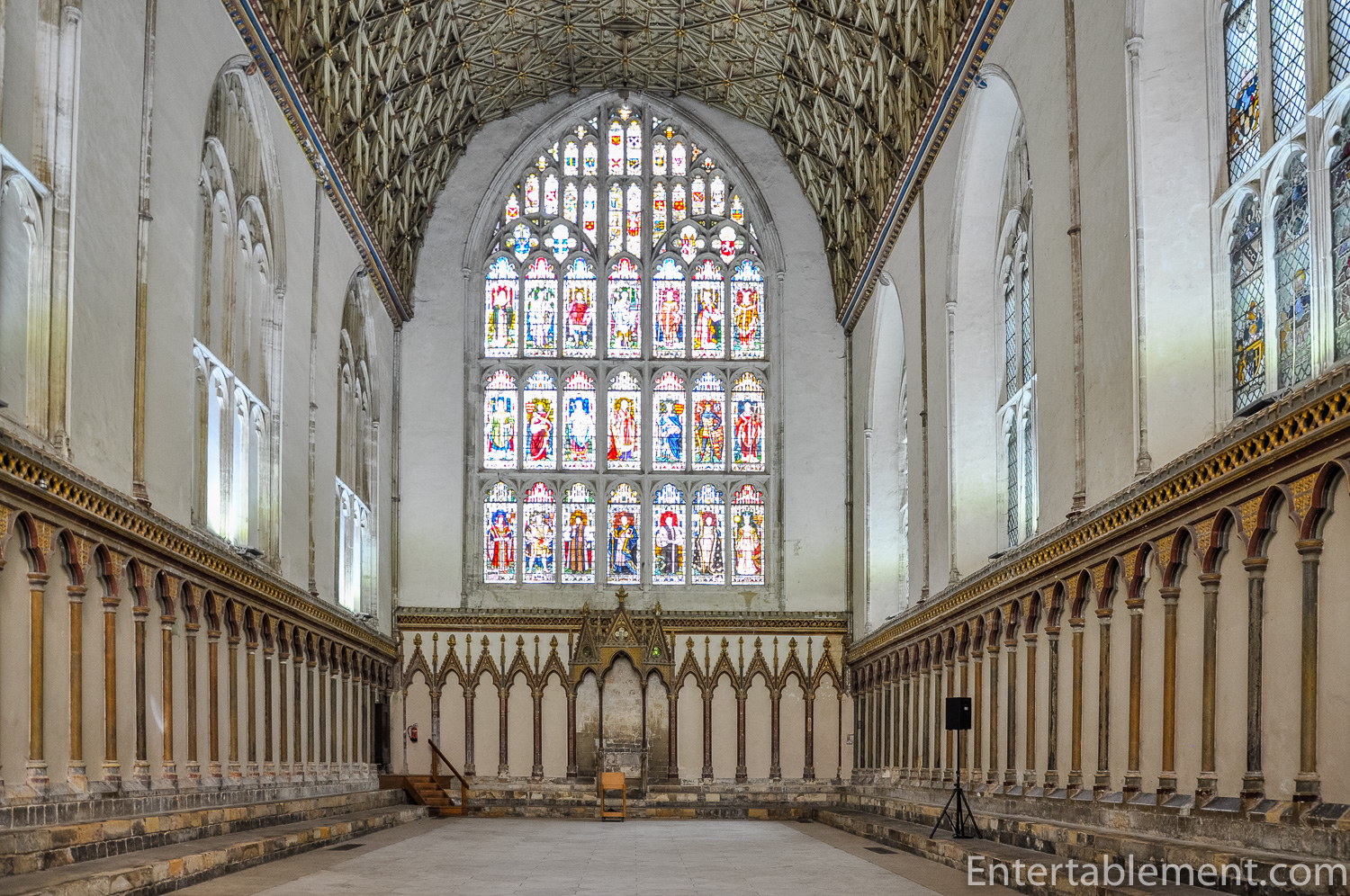
Also dating from this period is the Chapter House. Unlike many English cathedrals, whose chapter houses are octagonal, Canterbury’s is rectangular. It’s rather bare and chilly, but the stained glass is magnificent—and unusual. Rather than Victorian replacements, these windows are the originals, dating from 1405.
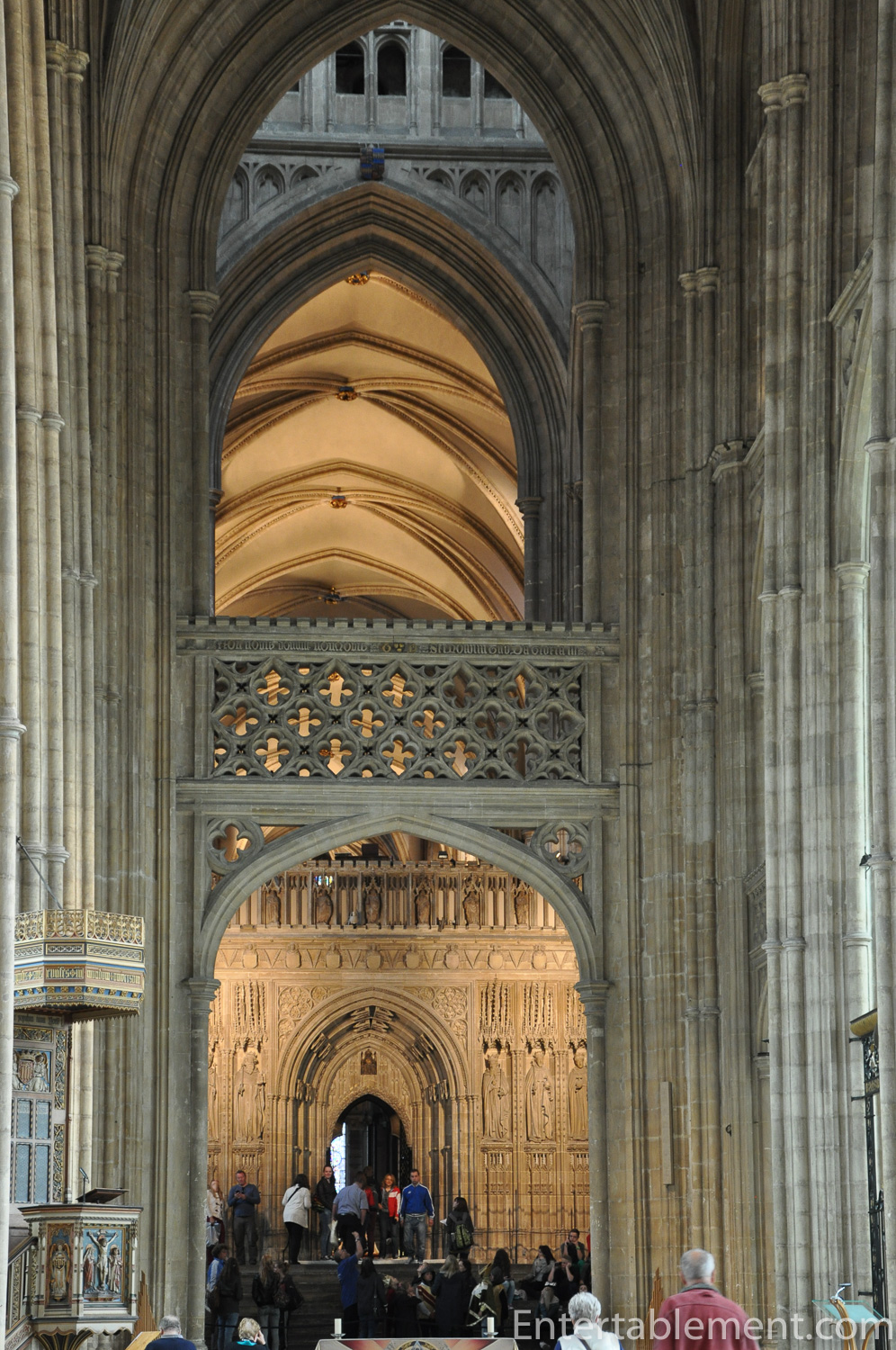
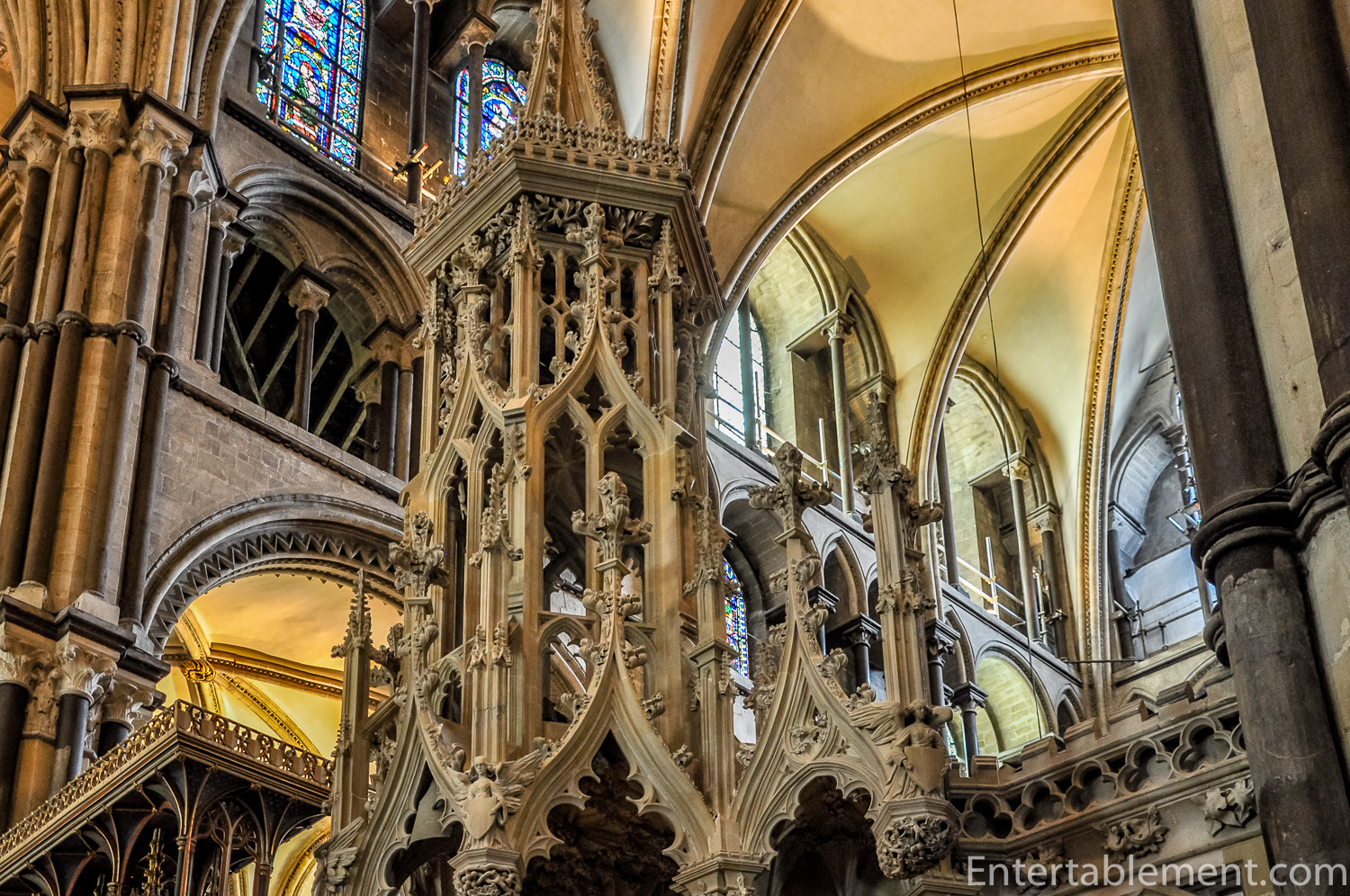
Our tale of bad luck continues… The cathedral was seriously damaged by an earthquake in 1382, losing its bells and tower, affectionately known as a campanile. The rebuild is gorgeous, though, What a view upwards!

I’m always intrigued by all the details – the acanthus leaves at the top of the columns, the tooth-saw mouldings, the peaks and whorls and curlicues. These are all carved out of stone by hand. It must have taken hours with a great deal of skill and patience.

The “furnishings”, including the pulpit, are also incredibly detailed.


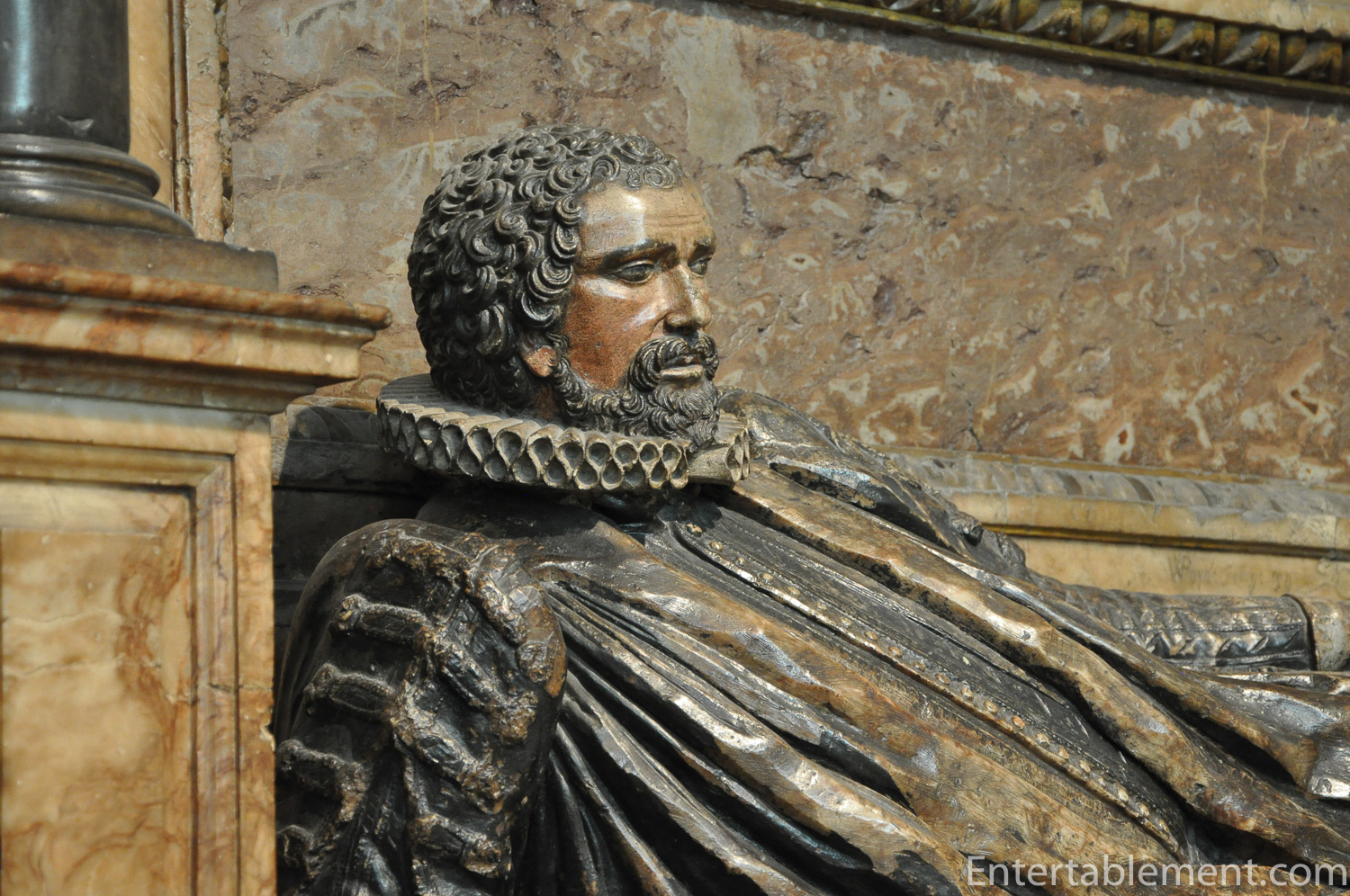
Here we have Sir John Boys (c. 1535–1612), a distinguished lawyer, Recorder of Canterbury, Member of Parliament and steward to five successive Archbishops of Canterbury. He founded Jesus Hospital, an almshouse for the poor that still serves the city today. His unusually lifelike monument, with the figure reclining on one elbow rather than lying formally in prayer, reflects the growing Renaissance interest in portraying individuals as they really were. In many ways, Sir John represents the capable administrators whose steady work helped England’s institutions endure long after kings and bishops had come and gone.
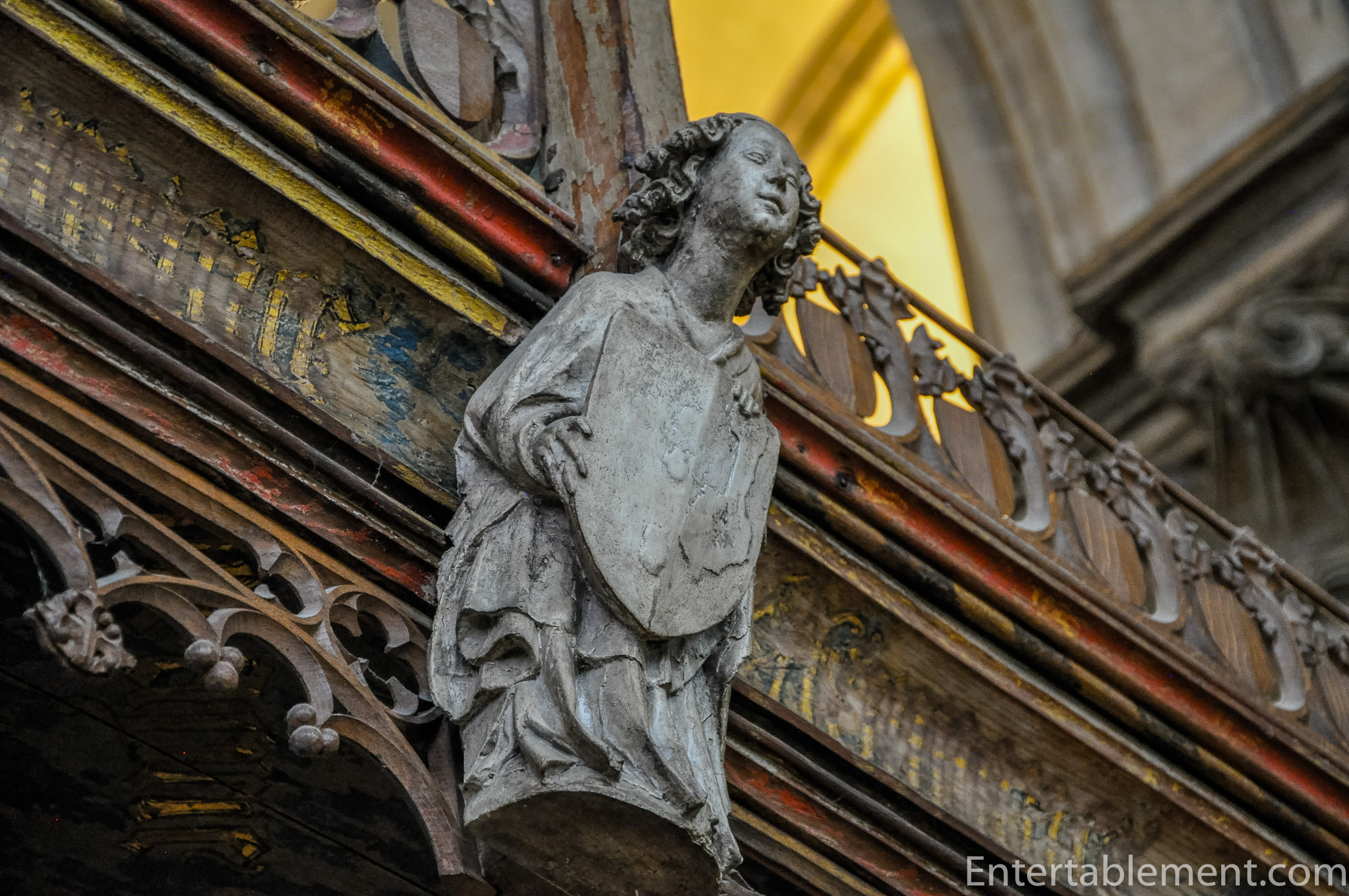
An intensely sincere angel soars from the heights.
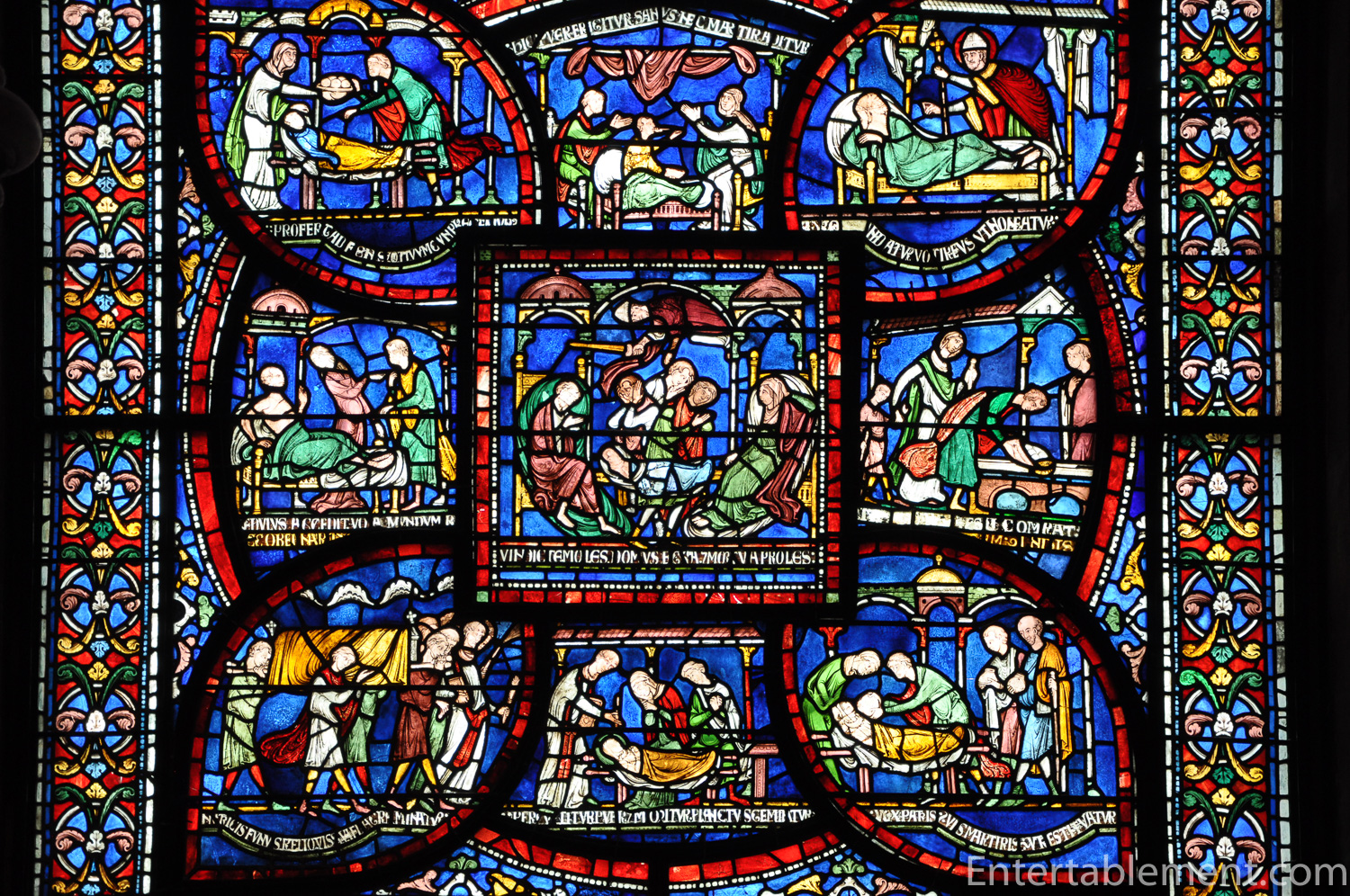
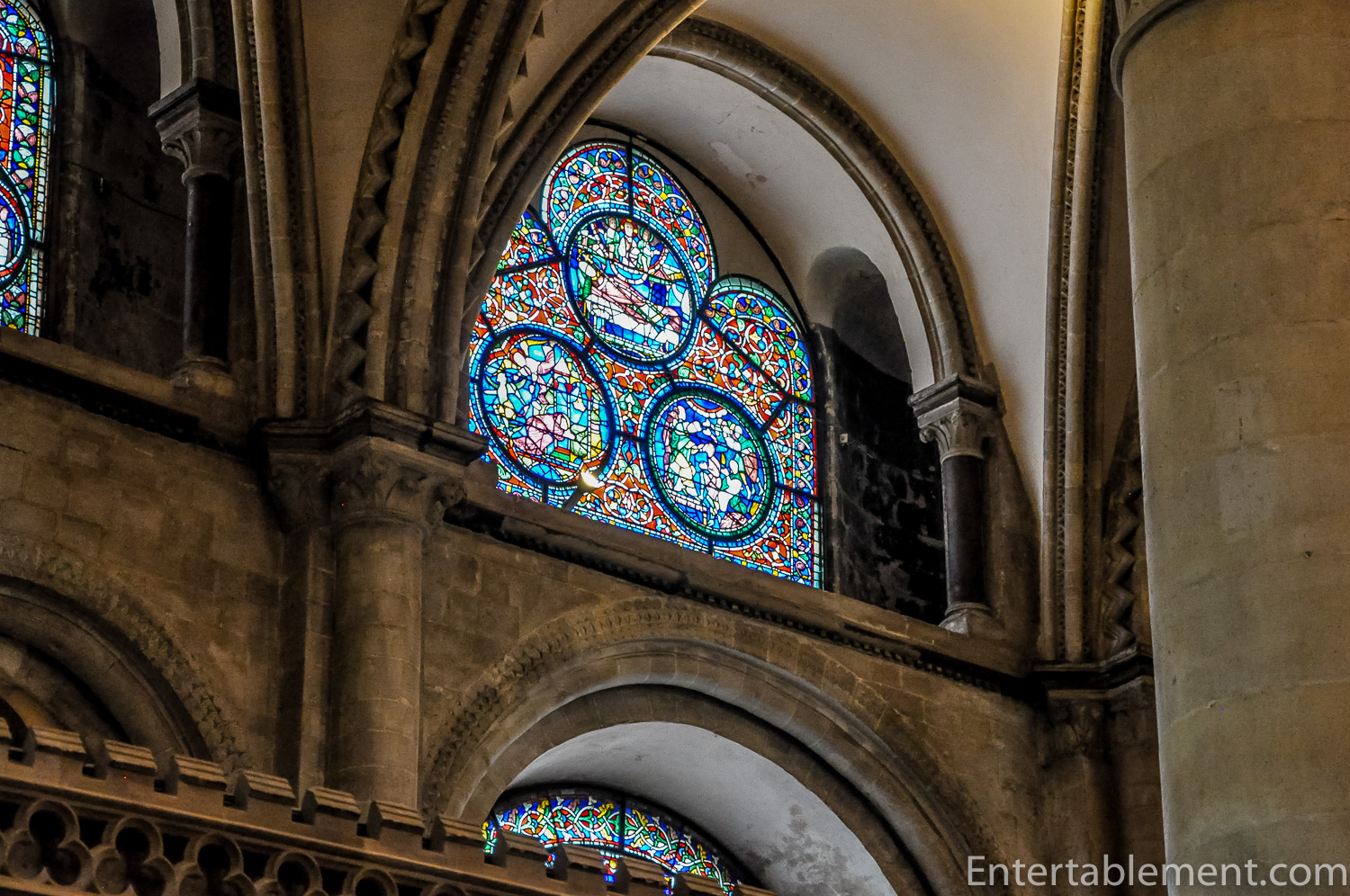
The stained glass covers over 1200 square metres, much of it medieval, some dating back to the 12th century, requires a lot of preservation. The Cathedral has its own stained glass studio. It must be a fascinating job for the lucky eight people who work there.



Now to the cloisters, always one of my favourite stops. The originals dated from 1070-77, but went the way of all flesh and were rebuilt between 1397-1444.

The cloisters formed the heart of the monastic community, linking the cathedral to the buildings where the monks ate, slept, studied and went about the routines of daily life. At Canterbury they lie to the north of the cathedral, whereas most English cloisters were built on the south side to catch the sun and shelter from the wind. I imagine Canterbury’s monks found theirs a decidedly chillier place. Brrrr.

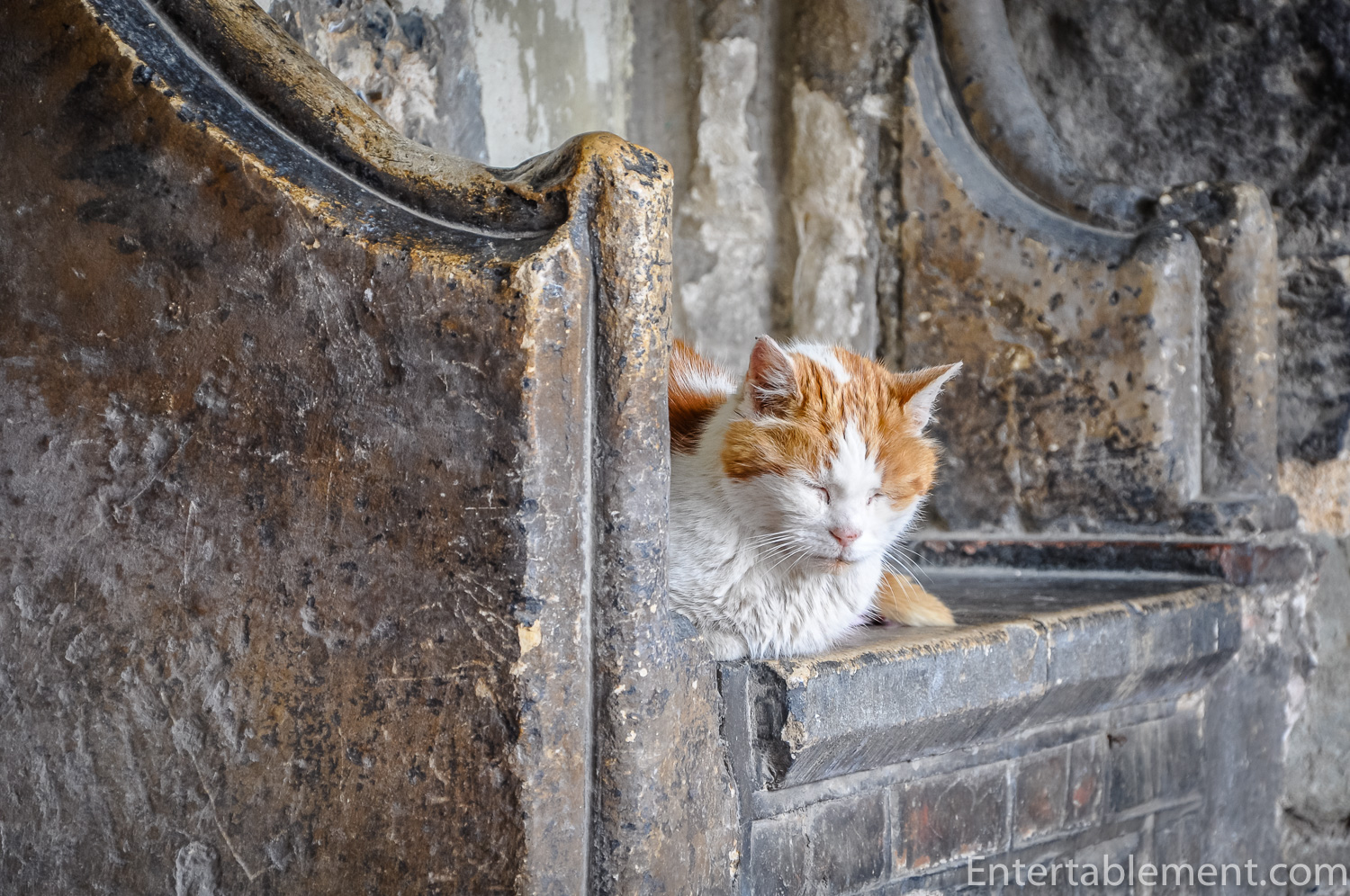
Here we came upon, Laptop, the Cathedral cat. He was a battle-scared old wreck, as my father would have said. Louis, the Cathedral Cat at Wells, had a much cushier life. Also, a ginger tom cat, he lived in the Cathedral shop and was much coddled. Poor old Laptop seemed more of a street-dweller, though he had his own feeding bowl and cushion in the cloisters. Given the rather violent history of the cathedral, I thought his scrappy appearance was very fitting.
Looking up, the ceilings in the cloisters are beautifully rendered.


Here is a view of the cloisters from the outside.

You can see the ruins of some of the older structures which would have supported the inhabitants.
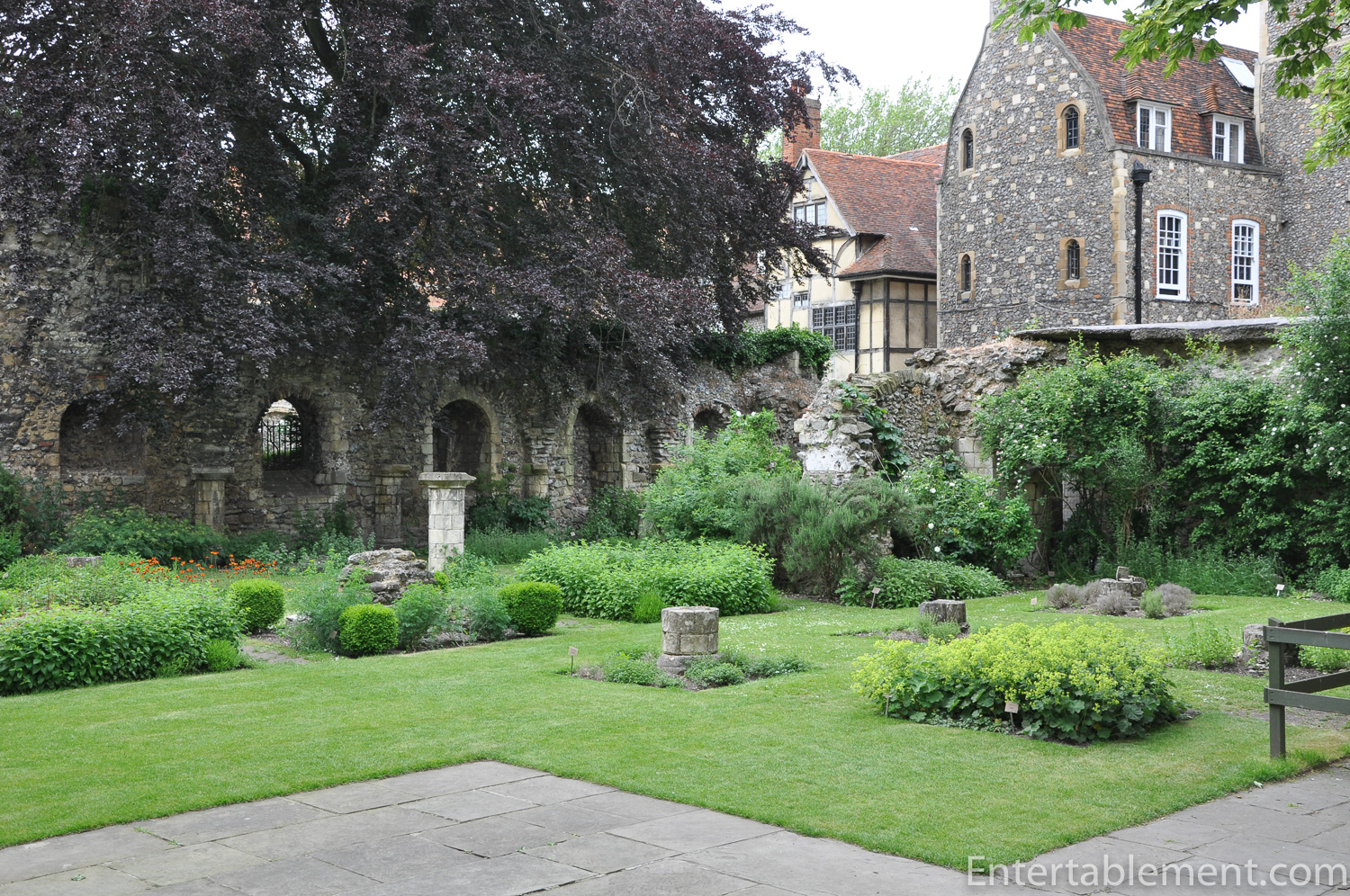
Some of the buildings have been rebuilt, and I imagine provide offices and living quarters for the current inhabitants.

We visited the town a bit after touring the Cathedral. It doesn’t seem to have changed much from what you would envision from the days of Geoffrey Chaucer’s Canterbury Tales. with narrow streets and timbered buildings.
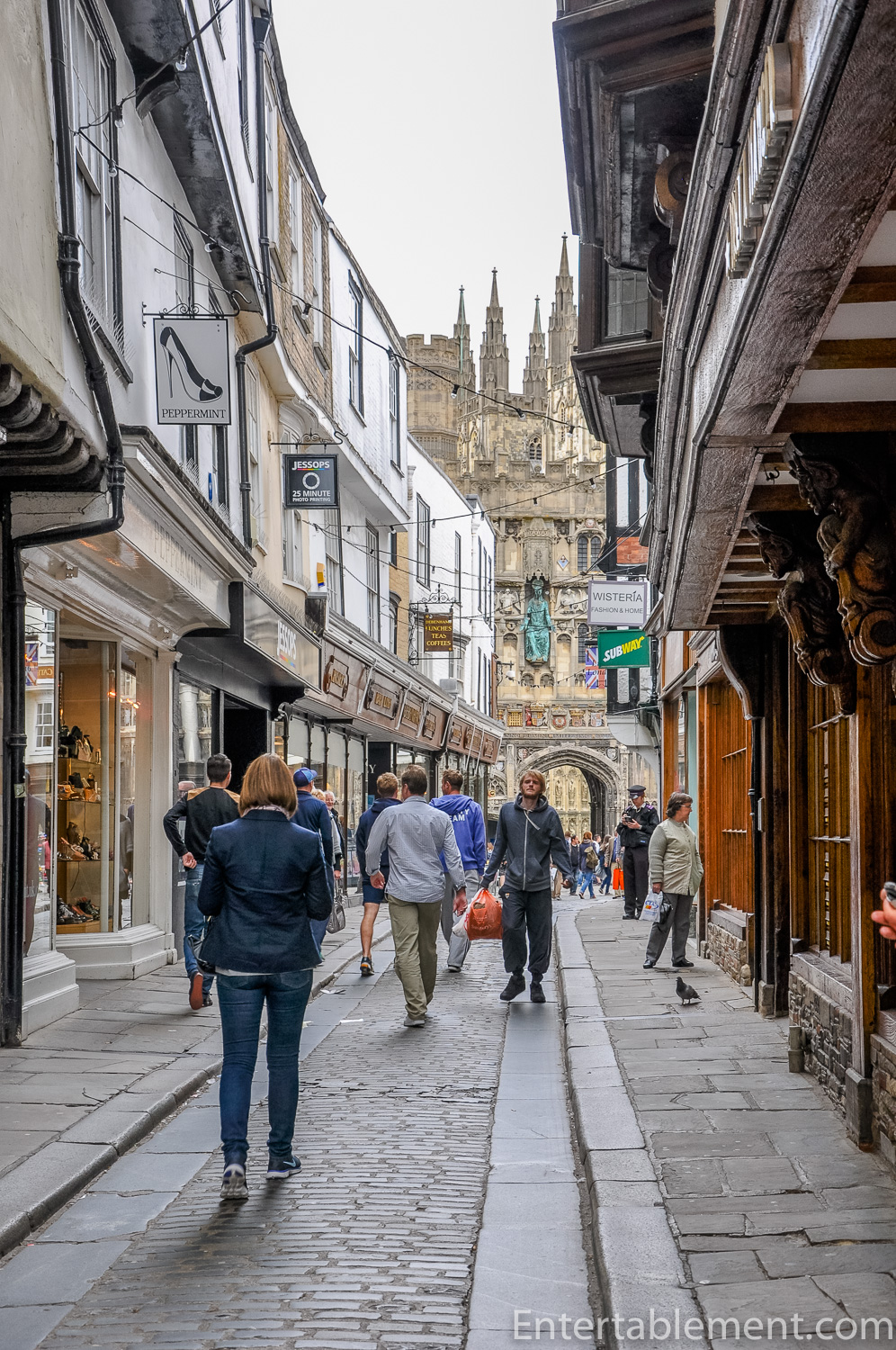
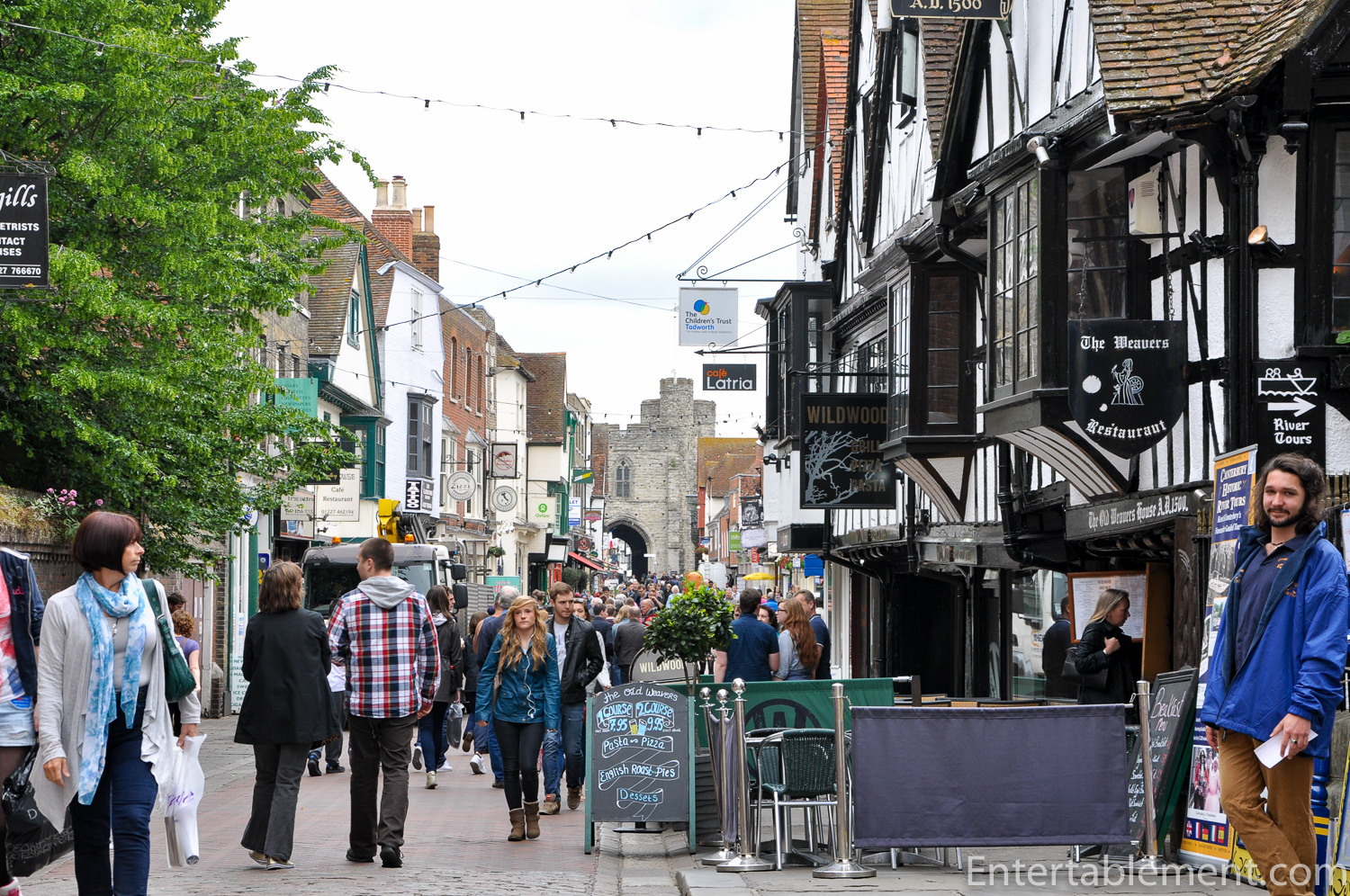
And that concludes our of Canterbury Cathedral.
For historic mystery lovers, I greatly enjoyed the fascinating series of whodunits by Ariana Franklin, the first of which is the Mistress of the Art of Death. To quote Amazon: In medieval Cambridge, England, Adelia, a female forensics expert, is summoned by King Henry II to investigate a series of gruesome murders that has wrongly implicated the Jewish population, yielding even more tragic results. As Adelia’s investigation takes her behind the closed doors of the country’s churches, the killer prepares to strike again.”






Being a history buff and an Anglophile, I thoroughly enjoyed this post! The pictures are beautiful and the history and architectural information was wonderful.
I remember a story of a cathedral being built (in France, I believe) where someone asked one of the artisans (who happened to be working on some ceiling decoration) why he was putting so much care and detail into something that would not be seen up close by anyone, and the response was, “God sees.”
I’m so glad you enjoyed the post, LuAnn. I love photographing cathedrals, and am on a quest to snap all 42 of the Anglican Cathedrals in England, and am now in the low 30s (I’ve done some extra abbeys and churches, along the way, too). Of course the photos from my earlier days could stand some improvement, so no doubt I’ll revisit a few. It’ll be a never ending project, I can just see it. lol.
Oh, what a beautiful quote about the artisan at the French cathedral. It perfectly captures the spirit of the work. I’ve also been intrigued at how much of a sense of humour they displayed. The carving under the misericords (those little perchy seats in the choirs) often depict animals, green men, or faces of local dignitaries in very undignified positions. I’ve seen a backgammon game, animals roasting the hunter instead of the other way round, things like that. There is something fascinating and unique about every one of them.
Thanks for visiting!
Liebe Helen Kain,
vielen Dank für deine wunderschöne Arbeit. Nachdem Politik und Corona das Reisen nicht einfacher gemacht haben, ist dein Werk eine echte Hilfe und Erinnerung.
Vielen Dank und alles Gute
Thank you so much for your lovely note! I really enjoy doing the travel blogs, and can’t wait to get back to both traveling and writing them. I’ve been hesitant to publish travel blogs during Covid, as I thought it was rubbing salt in the wounds for trapped travel enthusiasts, but you give me good reason to resume. Have a wonderful day.
Dear Helen Kain,
Thank you so much for this. As others have said, the pictures are lovely.
I used to live near Canterbury, though I seldom visited the cathedral.
One story which I picked up from somewhere, was that the Shrine of Thomas Becket became such a place of pilgrimage for ordinary people, that the Church grew worried that it would overtake the cult of the Virgin Mary and that Becket’s Shrine disappeared in one night.
By the way, your “Ruffed Gentleman” could most certainly not have been Geoffrey Chaucer (c. 1343 – 1400). He was not Elizabethan (about 1600) but very Mediaeval .
Best wishes
Hi Luke! Thank you for your comment. What an interesting story about the disappearance of Becket’s shrine. He was a controversial figure in real life, so it makes sense that it continued after his death, upsetting Church authorities. And thank you for your observations about Geoffrey Chaucer – you’re so right! I should have twigged to the wholly unlikely time frame given the Elizabethan ruff. Canterbury is one of the earlier Cathedrals I photographed and very much learned as I went along. I am spending quite a lot of time these days on the Medieval period. Utterly fascinating.