It is easy to picture Rome at its height — luxurious baths, roads stretching to eternity, and spectacles in the Colosseum — an empire that seems to have been running perfectly well. Which makes its “fall” feel abrupt, almost inexplicable.
But Rome did not stop because it failed all at once; it stopped because it could no longer keep everything going.
While England was learning how to endure, and Gaul was quietly discovering how to carry on, Italy was confronting the problem at its source.
Rome had not withdrawn from the world in a single motion. It had begun to contract — pulling resources inward, abandoning what it could no longer defend, and concentrating what remained around the Mediterranean core. This was not a strategic choice so much as a forced calculation.
Armies were stretched thin across too many frontiers. New groups were moving into the empire from the east, sometimes as enemies, sometimes as allies who required land and payment. Tax revenues were under strain, and internal conflicts consumed energy that might once have been directed outward. Something had to give.
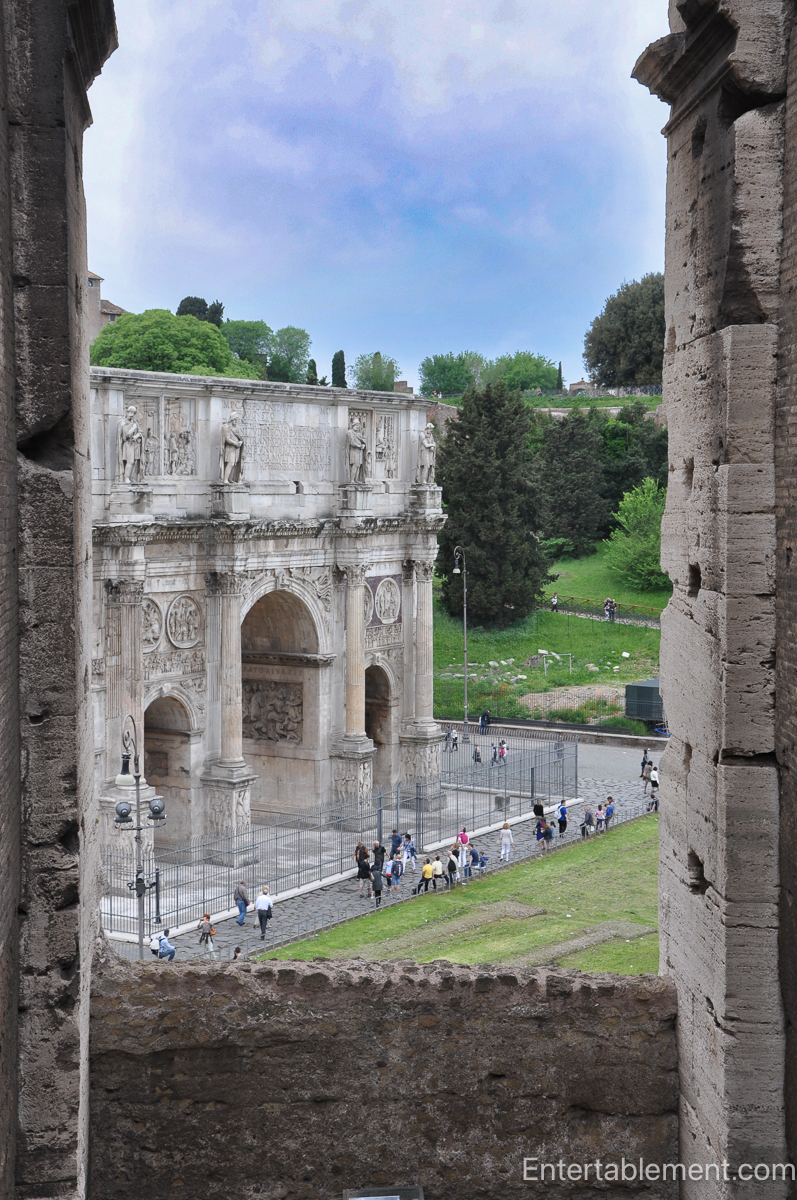
The Arch of Constantine, seen from within the Colosseum
Britain, distant and expensive to supply, was one of the first places to be let go. Italy was what remained, and what remained was not stable.
By the time the Western Roman Empire formally ended in 476, the peninsula did not empty out or begin again from scratch. Cities remained inhabited and roads were still used. Roman law continued to shape how disputes were settled and Latin remained the language of administration and learning. The past here was not a ruin, but it was an inconvenience, constantly in the way.
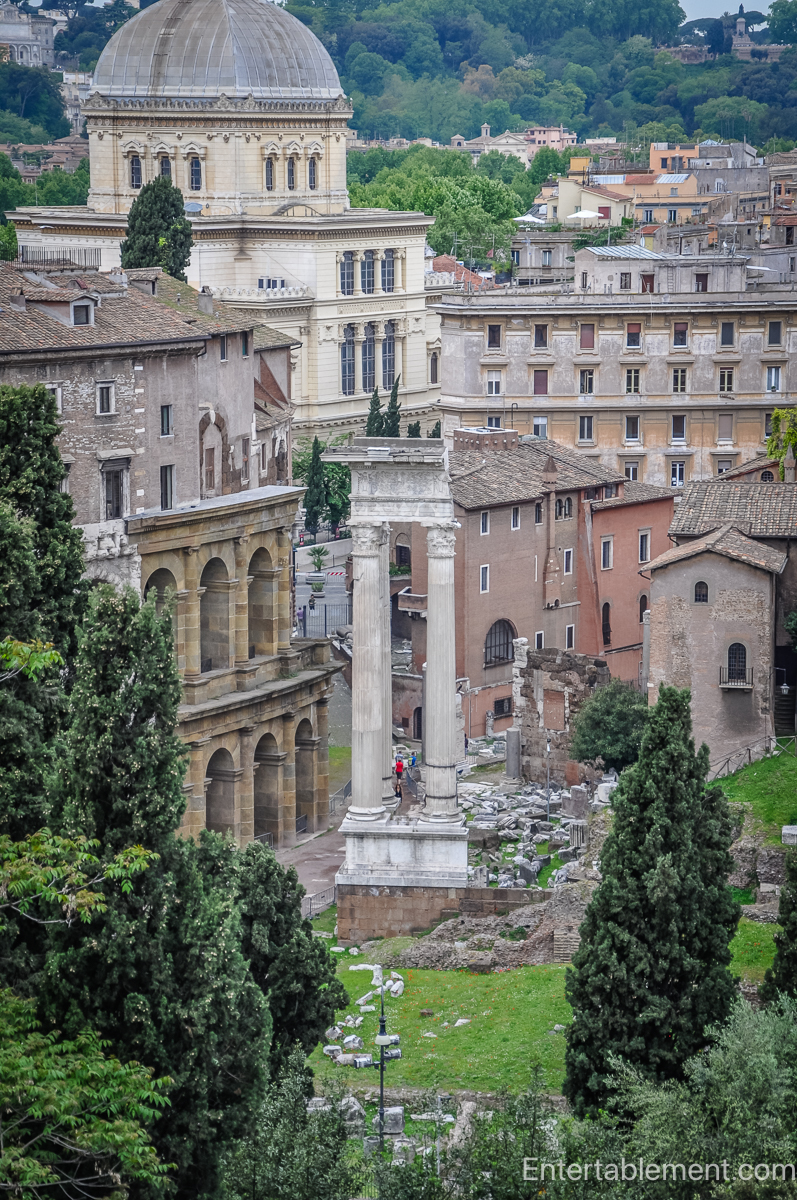
The Roman Forum
The Empire Without an Emperor
For a time, this strange continuity worked surprisingly well. Under the Ostrogothic ruler Theoderic the Great, Roman administration continued with remarkably little interruption. Senators still met in Rome, taxes were collected and officials performed their duties. The machinery of empire hummed along, even though the emperor himself was no longer present. Italy had not restored Rome, but it had learned how to keep the system running.

Then came the attempt to reverse history. In the 6th century the Byzantine emperor Justinian I launched an ambitious campaign to reconquer Italy for the Eastern Roman Empire. The project was grand in conception and devastating in practice. The long Gothic War wrecked the compromise that had allowed Italy to function. Cities were damaged, agriculture faltered and populations shrank.

When the Byzantines finally prevailed, they ruled from afar with limited resources and little local trust. Italy was still sophisticated, and it was exhausted.
Power Without a King
Unlike England or France, Italy never recentralized under a single monarch. There was no decisive moment — no William the Conqueror — that reset the political order. Instead authority fractured sideways. Cities began to govern themselves. Places like Florence, Venice, Genoa, Milan, and Siena were not rebelling against kings so much as solving the problem of their absence. They were also drawing on a much older Mediterranean habit.
Long before Rome became an empire, the region had been a world of city-states: Greek, Etruscan, Phoenician, and Roman. When western imperial authority weakened, Italians did not have to invent a new political form from scratch. Authority settled back into the scale at which it could still be made real: a defended town, its bishop, market, local elites, surrounding countryside, and the roads or rivers that connected them..

Venice
Trade required rules, contracts needed enforcement, and disputes called for arbitration. If no distant ruler could provide those things, the city would. What emerged were the famous Italian city-states: politically inventive, legally intricate, and fiercely protective of their autonomy.
Power here tended to be negotiated rather than imposed. Courts were replaced with councils, and law competed with lineage. Wealth gradually became as important as land. It was not a peaceful system, but it was extraordinarily productive.
Authority had not disappeared, but outcomes were increasingly shaped elsewhere. In the movement of goods, the extension of credit, the reliability of agreements, and the accumulation of local decisions, a different kind of order asserted itself. No one was in charge of the whole, yet patterns formed, and stability, of a kind, appeared.

Florence
Italy became a civilization of management rather than command.
And Then There Is the Pope
Hovering uneasily in the middle of this world was the Papacy. The Bishop of Rome was not only a spiritual authority, he was also a territorial ruler, governing lands that became known as the Papal States. This placed the pope in a complicated position.

Spiritually, the papacy claimed authority across Christendom. Politically, it was simply another Italian power — negotiating alliances, collecting taxes, and occasionally raising armies, and the tension never entirely disappeared. In this environment the Church became exceptionally skilled at administration. As canon law expanded, documents multiplied. Authority was increasingly asserted through legal argument and institutional procedure rather than through force alone.
Centuries later, when the papacy temporarily relocated to Avignon, the great papal palace there looked less like a welcoming residence than a fortress of stone and paperwork. It reflected an institution that had learned to defend itself.
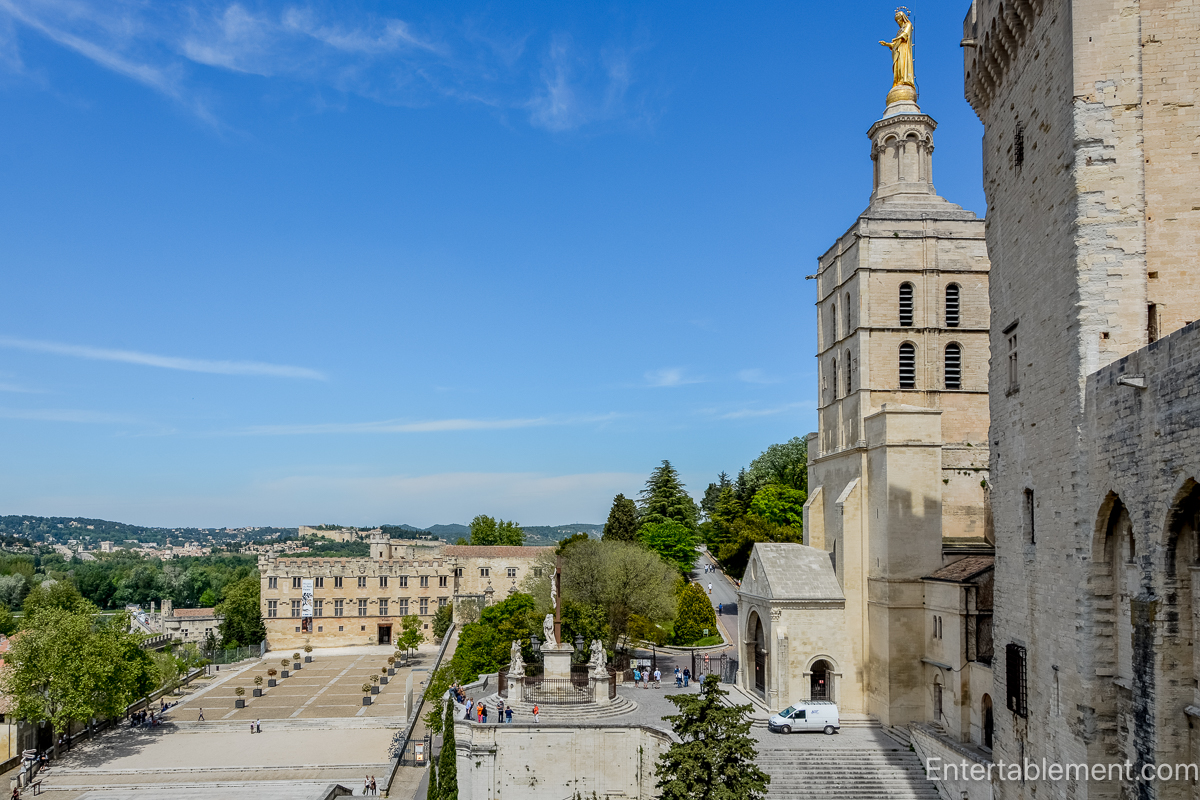
Palais des Papes, the seat of the papacy during the Avignon Papacy (1309–1377)
What Italy Was Really Inventing
From one perspective, Italy might appear to have failed to become a unified kingdom. From another, it was experimenting with alternatives.
Without a king to absorb political conflict, Italian society developed other mechanisms:
- banking instead of taxation
- contracts instead of commands
- diplomacy instead of decree
- art, law, and architecture as expressions of civic identity
This environment proved fertile for innovation.
The Renaissance did not appear in Italy because the peninsula was unusually peaceful or harmonious. It appeared because debate never ended and authority was never fully settled. Ideas mattered.
In Parallel, Not in Sequence
It can be tempting to imagine these stories as a single progression. But the early medieval world was not moving in a straight line.
While England was learning endurance — building habits and institutions that allowed society to survive repeated disruptions —Italy was negotiating complexity. Meanwhile Gaul was developing yet another solution, gradually concentrating authority around kings and courts so effectively that French eventually became the language of diplomacy across Europe.
The three regions and three different responses to the same historical shock.
The Argument Never Ends
Walk through the ruins of the Roman Forum, where medieval churches and Renaissance palaces stand among the remnants of imperial temples, and the Italian approach becomes visible. Rome never quite disappears here. It is argued with, built upon, repurposed, and occasionally ignored.

The Roman Forum, once the political and social heart of ancient Rome.
Italy does not solve the Roman problem. It lives with it. When Rome never quite leaves the room, no one is ever allowed to stop the conversation. In Italy, that conversation was built into walls, negotiated in councils, recorded in ledgers, and carried forward in institutions that outlasted any single ruler.
Long after the empire contracted, the habit of organizing complex life without a single centre of command remained. It is there, quietly, in the fabric of the cities — and in the churches that continued to give that complexity a visible form.
- Previous in the series: Paris—Where Gaul Keeps Going
- Next in the series: Conquest in Stone—How the Normans Rebuilt England