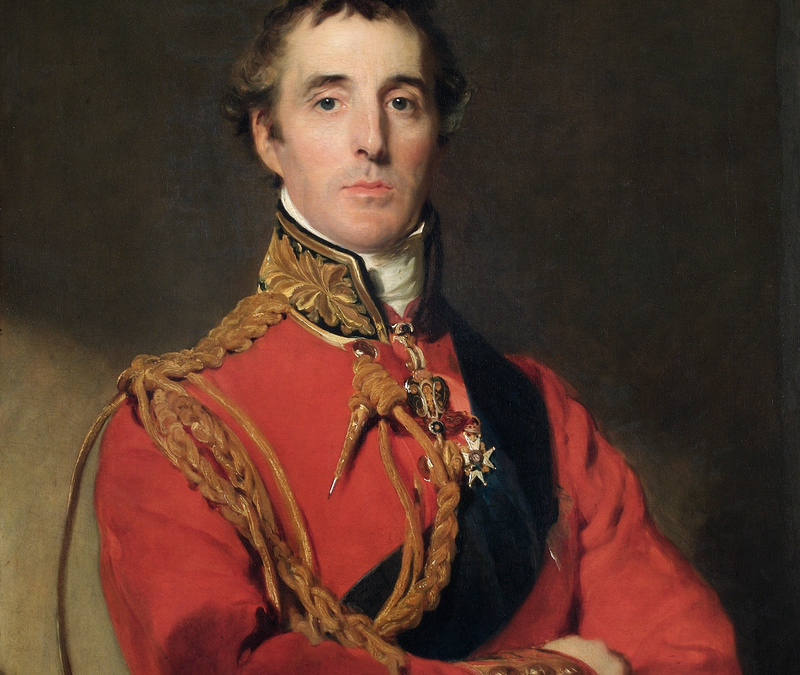
Arthur Wellesley, 1st Duke of Wellington, is best known as the man who defeated Napoleon at Waterloo, but his impact on Britain extended far beyond the battlefield. Wellington, a masterful general, shrewd politician, and two-time Prime Minister, helped shape Britain’s military, political, and social landscape in the 19th century.
The Rise of a Military Genius
Born in 1769, Wellington came from an Anglo-Irish aristocratic family and received military training at the Royal Academy of Equitation in France. He first gained prominence in India (1796-1805), where his campaigns against the Marathas established him as a brilliant strategist.
His true test came during the Peninsular War (1808-1814) against Napoleon’s forces in Spain and Portugal. Wellington’s defensive tactics, particularly his use of fortified lines at Torres Vedras, crippled the French, leading to their eventual retreat from the Iberian Peninsula.
The Victory at Waterloo
At the Battle of Waterloo, Wellington’s defining moment came on June 18, 1815. He commanded a coalition of British, Prussian, and allied troops and held firm against repeated French assaults until Prussian forces under Blücher arrived to turn the tide. Napoleon’s defeat ended his rule and cemented Wellington’s status as Britain’s greatest military hero.
When asked about the battle’s intensity, Wellington famously called it “the nearest-run thing you ever saw in your life.”
The Transition to Politics
After his military career, Wellington entered politics, serving as Prime Minister from 1828 to 1830 and again in 1834. As a politician, he was more pragmatic than innovative, often reluctant to embrace change but ultimately recognizing its necessity.
Key Political Achievements:
- Catholic Emancipation (1829): Though initially opposed, he pushed through the Roman Catholic Relief Act, allowing Catholics to hold public office. This move prevented unrest in Ireland but alienated many Tory supporters.
- The Reform Act of 1832: Wellington staunchly opposed parliamentary reform, believing it would weaken the aristocracy’s influence. His resistance contributed to his political downfall, paving the way for Lord Grey’s government to pass the act.
Despite his reluctance in politics, his sense of duty kept him engaged, and he remained influential in government until his death.
Relationships with Key Figures
Wellington’s strong personality and military mindset sometimes made him difficult to work with.
- Queen Victoria respected Wellington but found him somewhat gruff and blunt. His straightforward nature and lack of deference to courtly traditions strained their relationship. However, she recognized his importance and valued his counsel in later years.
- King George IV contrasted starkly with Wellington, indulging in excess and luxury, which the Iron Duke despised. Their relationship was cold and distant, with Wellington often frustrated by the King’s lack of discipline.
- Sir Robert Peel was a close political ally, and Wellington was crucial in supporting Peel’s government, particularly in advancing Catholic Emancipation.
- Napoleon Bonaparte, his greatest adversary, reportedly respected Wellington’s military abilities. While they never met in battle after Waterloo, Wellington was a key advocate for Napoleon’s exile to St. Helena.
- Richard Wellesley, 1st Marquess Wellesley, Wellington’s older brother, was an accomplished statesman in his own right, serving as Governor-General of India and later Foreign Secretary. Their relationship was complex—Richard was ambitious and often frustrated that his younger brother’s military fame overshadowed his political achievements. However, Wellington respected his brother’s intellect and contributions to Britain’s imperial expansion.
The Iron Duke: Character and Legacy
Nicknamed the Iron Duke for his military resolve and stern demeanour, Wellington was known for his discipline, dry wit, and unshakable sense of duty. He was admired yet often feared, and his austere personal life contrasted sharply with the indulgent habits of his contemporary, King George IV.
In later years, he became a revered elder statesman, serving as Lord Warden of the Cinque Ports, a ceremonial role that reflected his standing in British society. In this capacity, he took up residence at Walmer Castle, where he eventually died in 1852.
A Lasting Influence
Wellington’s legacy endures in military history and British national identity. His leadership at Waterloo symbolized Britain’s triumph over tyranny, and his political career reflected the challenges of adapting to a rapidly changing world. His former London residence, Apsley House, remains a testament to his legacy.
As a soldier and a statesman, Wellington exemplified duty, resilience, and strategic brilliance—a figure whose influence on Britain remains undeniable.