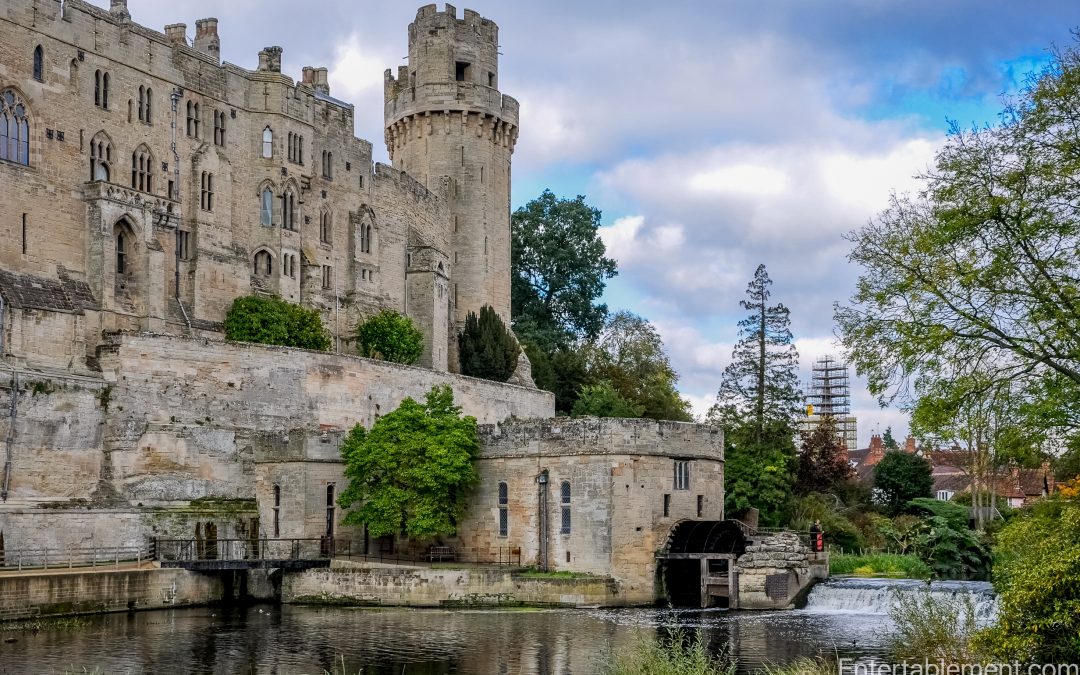
At Warwick Castle the past does not feel distant. The towers rise solidly above the River Avon, their thick stone walls suggesting permanence and authority. Castles were built to project exactly that impression. Strength. Stability. Control.
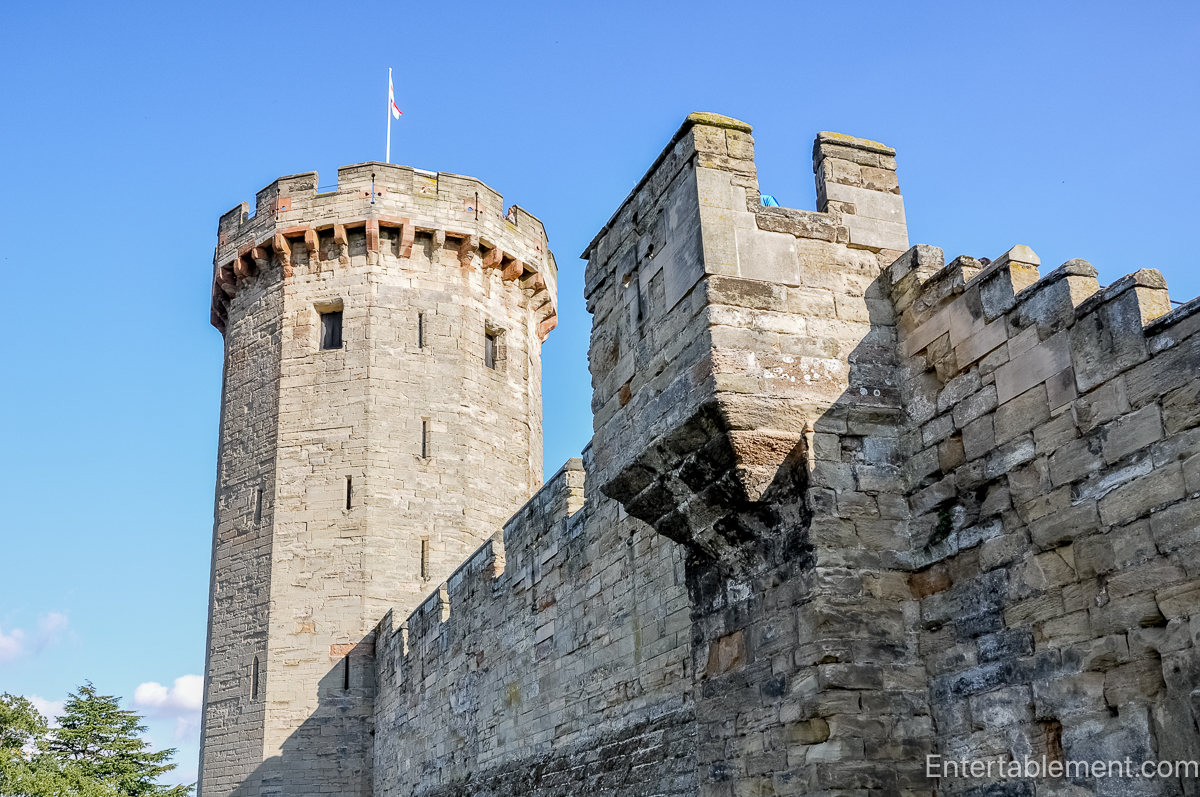
Yet the history that unfolded here tells a more complicated story.

The fifteenth century in England was a time when kings were deposed, restored, and replaced with unsettling regularity. Noble families gathered armies, shifted alliances, and occasionally decided that the man wearing the crown should be someone else entirely.
Historians know this turbulent period as the Wars of the Roses. And few places illustrate its dynamics more vividly than Warwick.
The Kingmaker
During the wars one of the most powerful figures in England was not a king at all, but a nobleman: Richard Neville, 16th Earl of Warwick.

Warwick controlled enormous lands and commanded large private armies. His influence was so great that contemporaries and later historians gave him a remarkable title: The Kingmaker.
He helped place Edward IV on the throne, overthrowing the weak and troubled Henry VI.
But politics during the Wars of the Roses rarely remained stable for long. Warwick eventually fell out with Edward and switched sides, briefly restoring Henry VI to the throne. In the end Warwick himself died in battle.
The title Kingmaker captures the instability of the age. Power no longer flowed neatly through established institutions. It shifted instead through the decisions of powerful individuals and the alliances they could assemble.
A Castle Built for War
Walking through Warwick Castle today, it is easy to imagine the military world that shaped it.
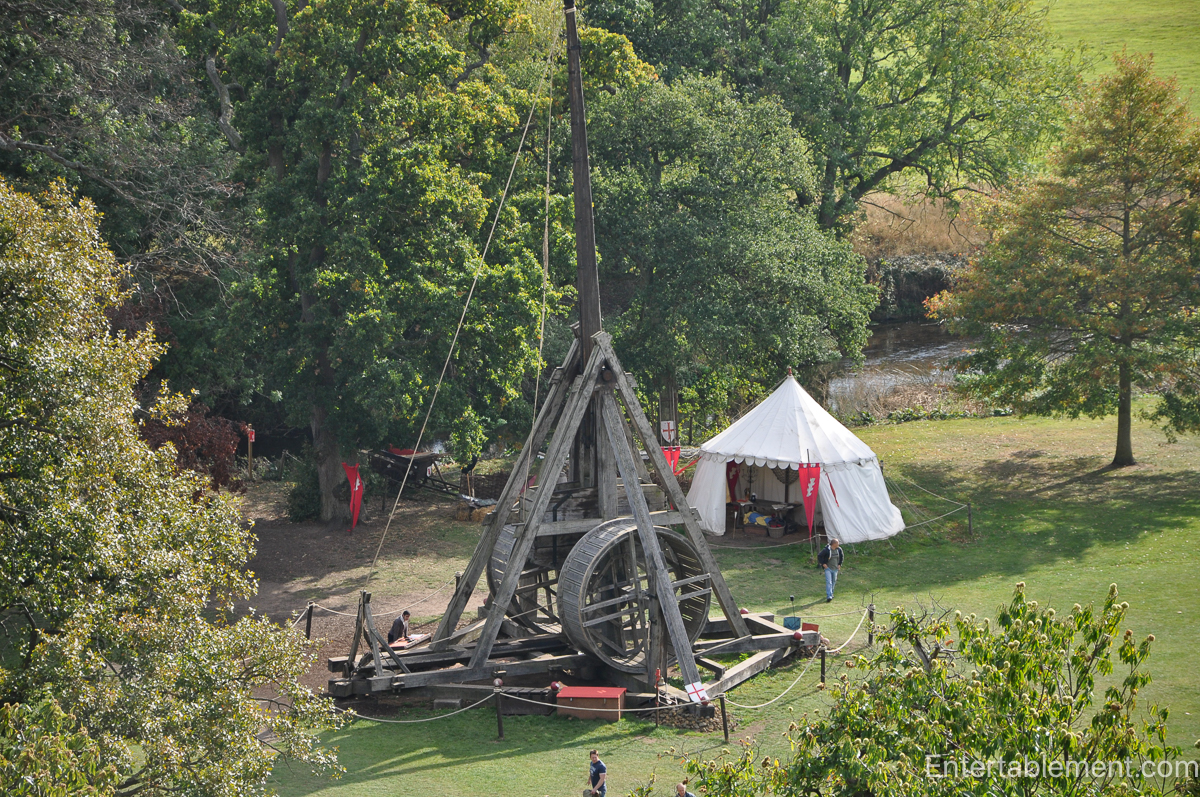
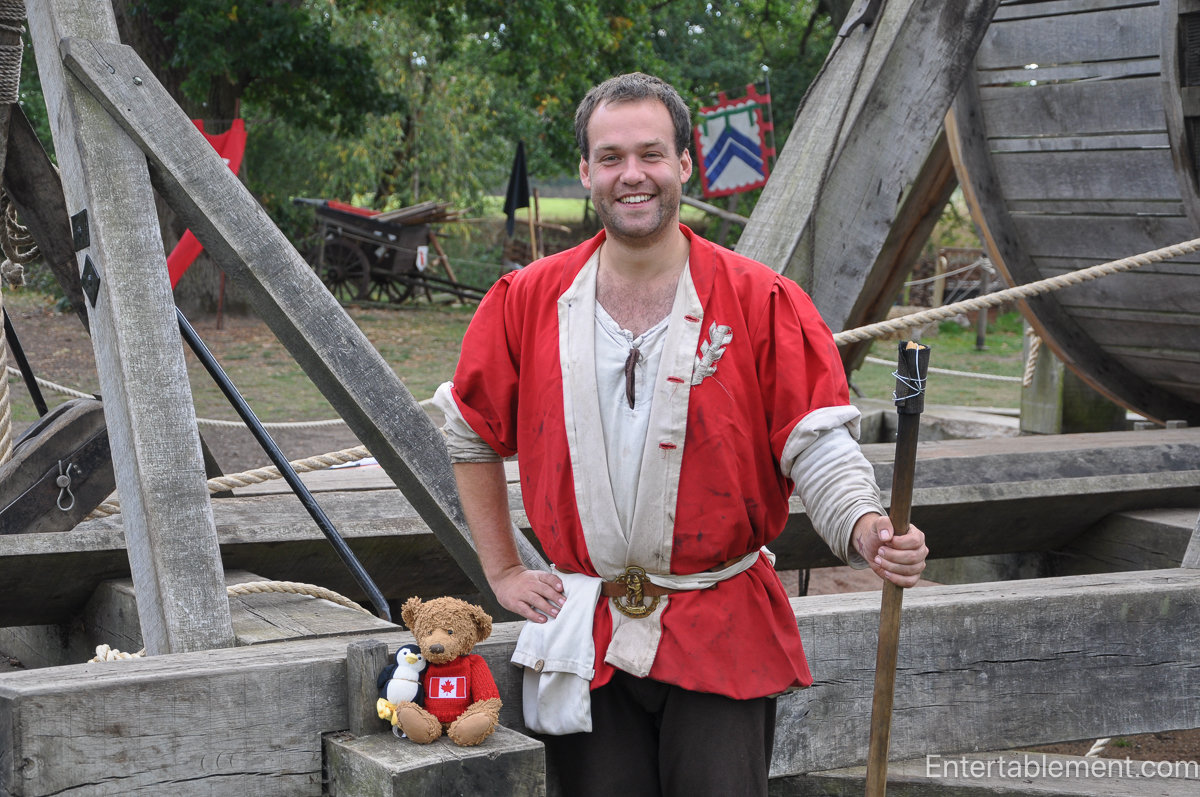
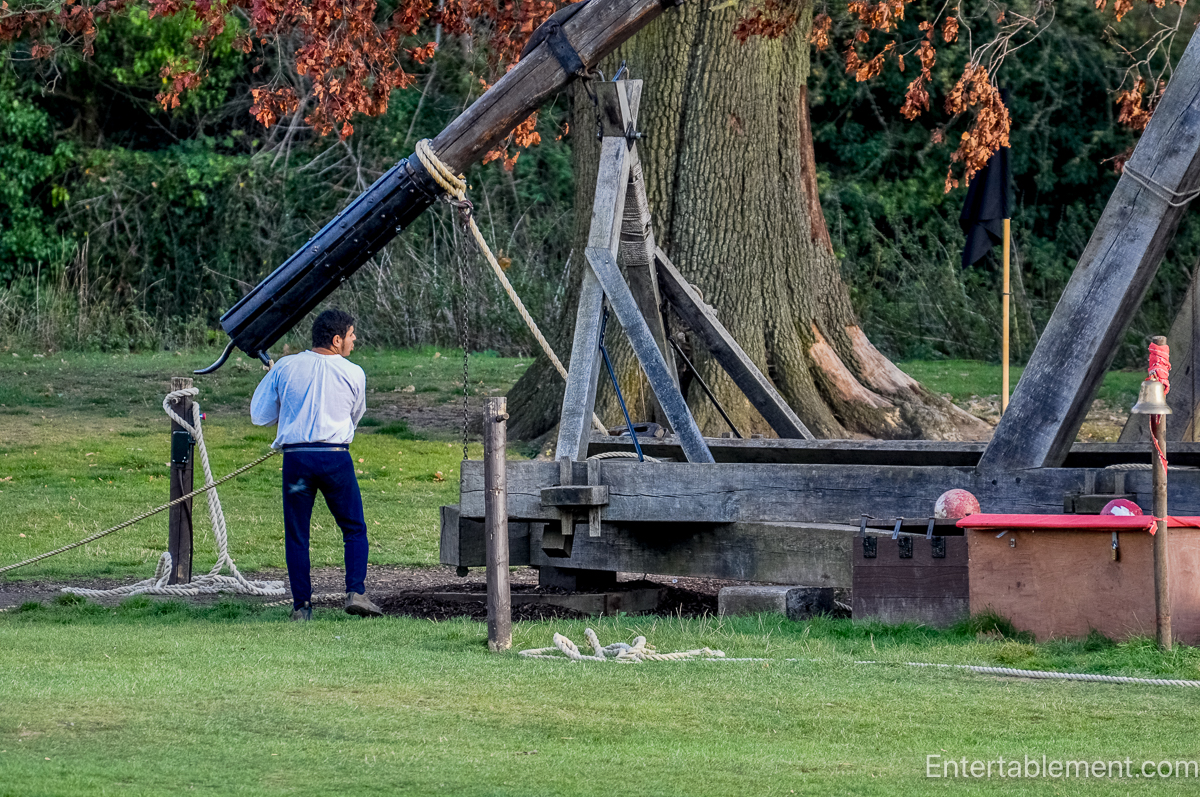
During a visit several years ago, a massive trebuchet dominated the grounds, complete with its own Trebuchet Master (Teddy was very envious and asked to be included in any instruction that might be forthcoming).
This reconstruction of a medieval siege engine demonstrates how castles were attacked and defended.
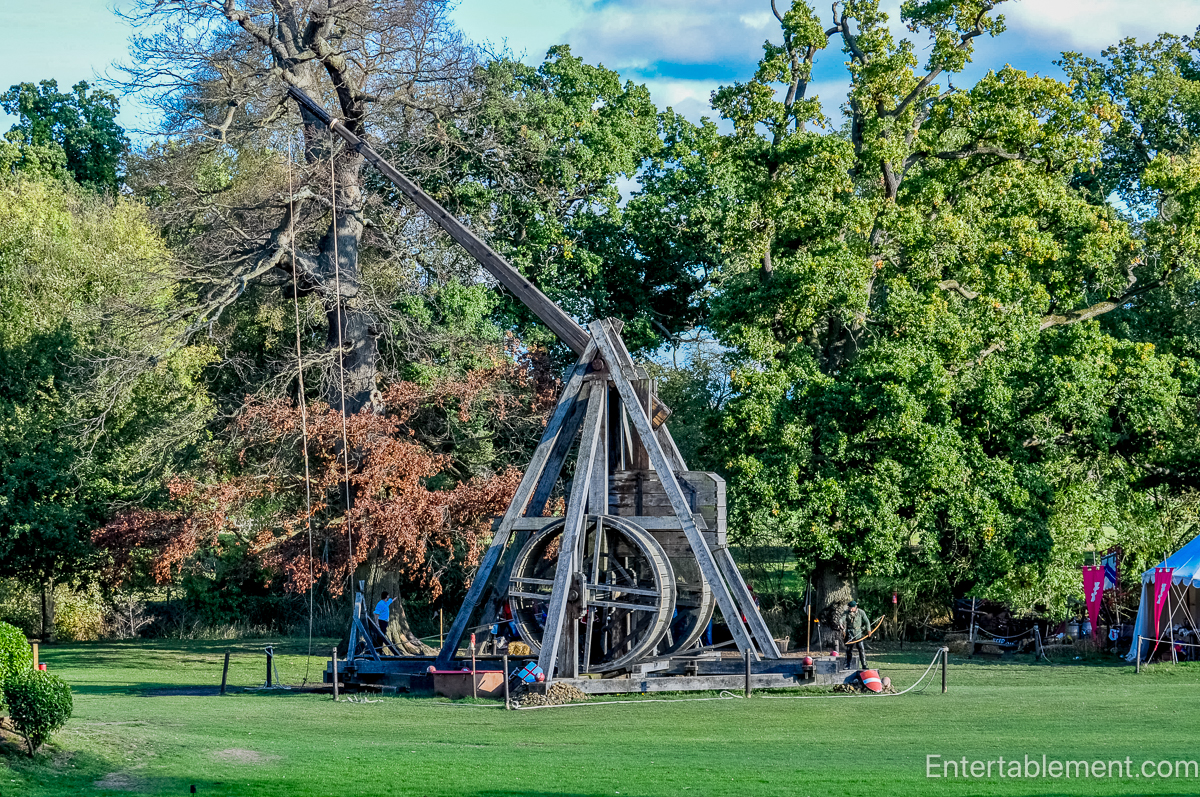
The large wooden wheels are essentially human hamster wheels
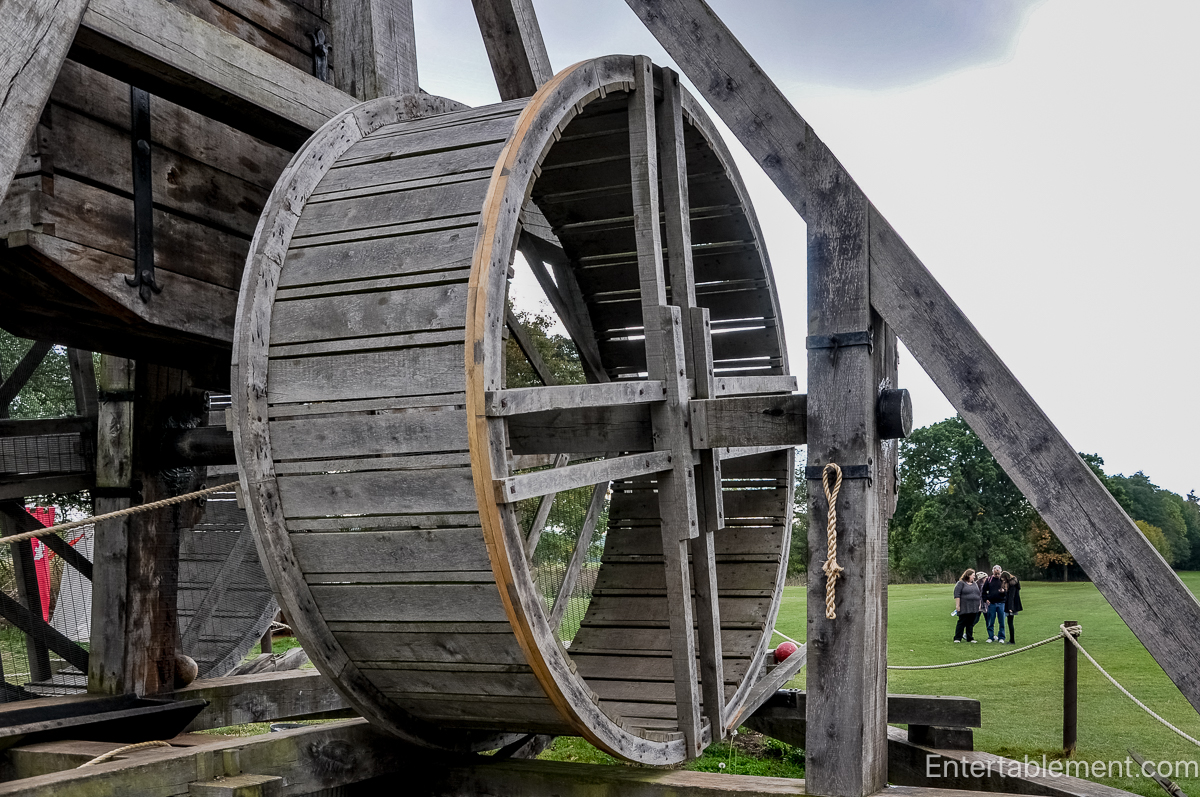
Crew members walk inside them to wind the throwing arm down against the massive counterweight.
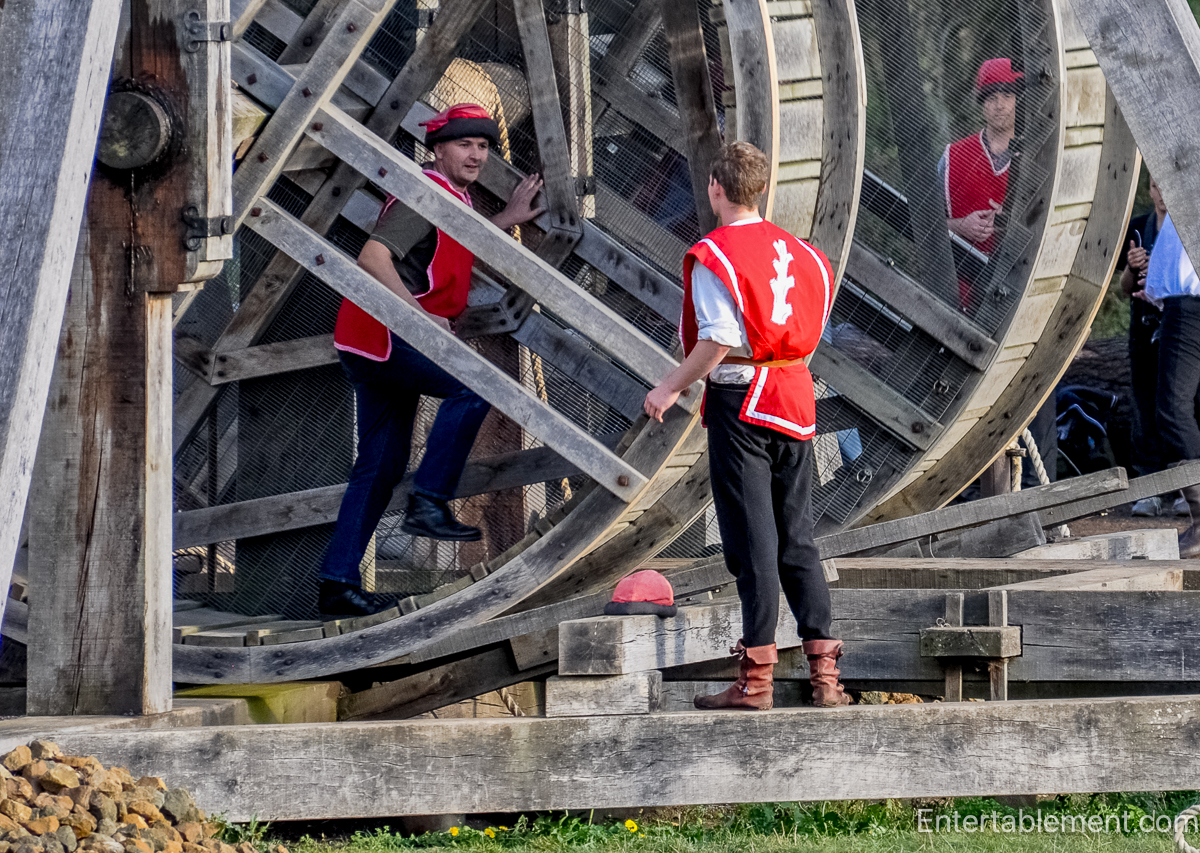
In real medieval sieges this process could take 10 to 20 men depending on the size of the machine.

The trebuchet works by harnessing gravity. A heavy counterweight drops, swinging a long arm upward and launching a stone across remarkable distances.

The sling pouch where the stone sits is interesting.

The sling lengthens the throwing arm at the moment of release, dramatically increasing the projectile’s speed.

That elegant bit of physics is why trebuchets could throw 100–300 lb stones more than 200 metres, far more efficiently than earlier catapults. The trebuchet is precisely the kind of weapon that made castles like Warwick evolve thicker walls and complex gatehouses. Siege warfare was essentially an engineering contest between builders and destroyers.
Watching the demonstration makes one thing clear: medieval warfare was as much about engineering as bravery.

Nearby, guides explained the tools of another famous medieval weapon: the English longbow. They showed the different arrowheads used in battle. Some were designed to penetrate armour; others were intended to tear through unprotected flesh.
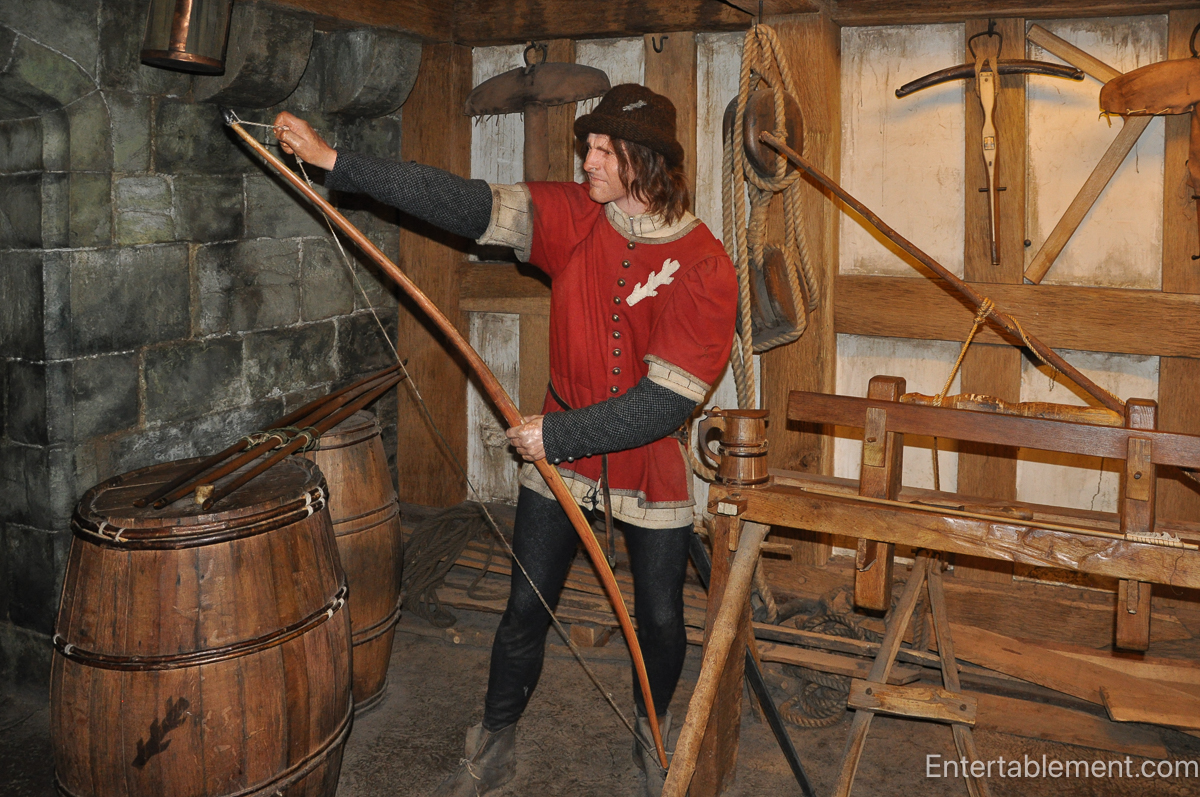
One guide described the archers themselves. Years of training produced men whose bodies were transformed by the weapon they used.
“They were about four feet wide and four feet tall,” he said with a grin, spreading his arms across his chest. “All shoulders.”
The longbow was not just a weapon. It was a lifetime’s discipline.
Training for Knighthood
Elsewhere in the courtyard, another instructor was introducing a group of children—mostly ten-year-old boys—to the basics of swordplay. He demonstrated the four fundamental movements, encouraging them to mimic each one with wooden practice swords.
Then came the ceremony.
The children lined up solemnly to be “knighted.”
“Repeat after me,” the instructor said gravely.
“I swear.”
“I swear,” the boys echoed.
“Quite a lot.”
There was a moment of confusion.
“Quite a lot??”
“You do!?” the instructor replied with mock outrage, sending the entire group into laughter.
The moment captured something essential about places like Warwick. They are not only monuments to past conflicts; they are also places where people rediscover the human stories behind them.
An Owl Learns the Routine
Warwick also hosted a falconry display during our visit.

One of the younger owls appeared to be new to the routine.

Released from the falconer’s glove, he flew up onto a window ledge and awaited instructions.

He then swooped down toward the lure—then missed it entirely.

For a moment he looked faintly puzzled. Then he hopped onto the target, puffed himself up, and gazed proudly at the audience as though everything had gone exactly according to plan.

Medieval courts prized falconry as a symbol of status and control. Yet moments like this remind us that even the most carefully staged displays have comic moments and ways of revealing the unexpected.
When Order Breaks Down
The Wars of the Roses were not simply a series of battles between rival families. They were the result of something deeper: a breakdown in political legitimacy.

When the authority of the crown became uncertain, powerful nobles stepped into the gap. Alliances shifted, loyalties changed, and the stability that castles were meant to symbolize began to erode. Warwick Castle still stands as a reminder of that world.
Its towers were built to resist siege engines like the great trebuchet that now demonstrates medieval warfare on the lawn.
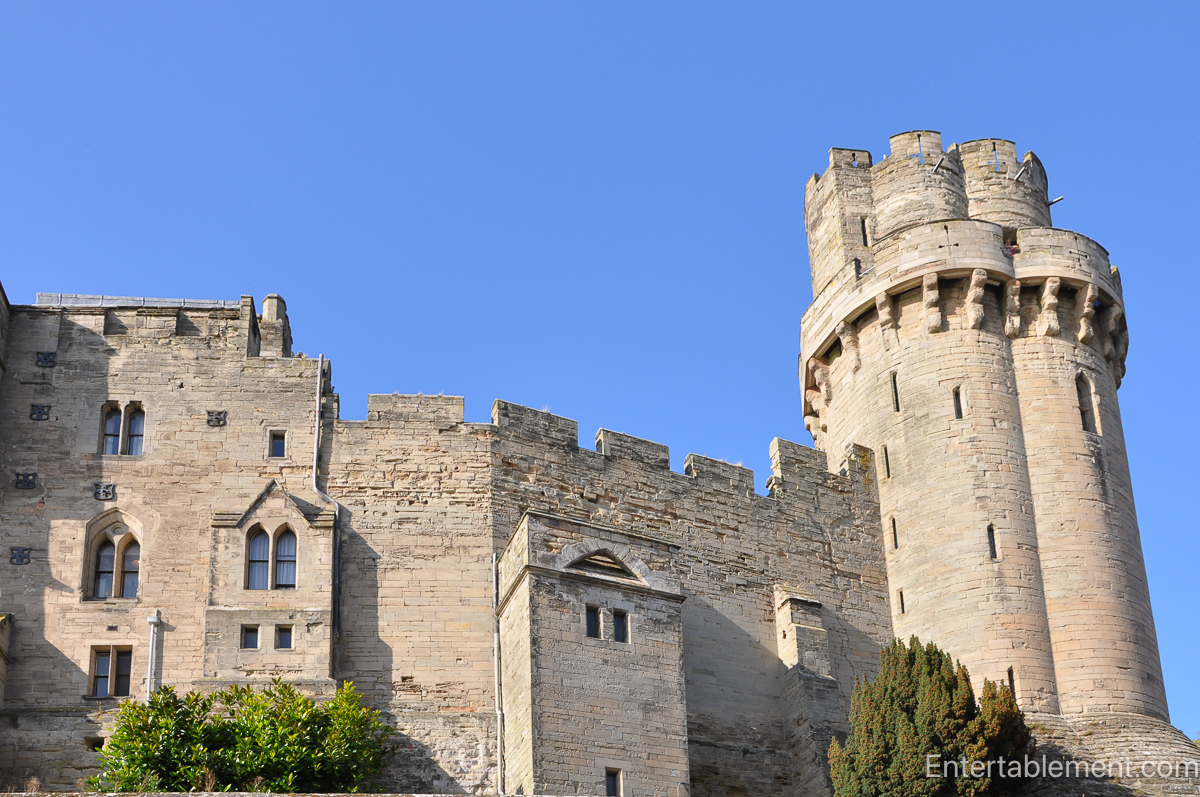
Yet the greatest threat to England’s stability during the fifteenth century did not come from machines or armies. It came from the shifting loyalties of the people who held power.

The End of the Wars
The conflicts eventually ended in 1485 at the Battle of Bosworth Field, when Richard III was defeated by Henry VII.
With that victory the Tudor dynasty began. A generation later, Henry VII’s son would become one of the most famous—and controversial—monarchs in English history: Henry VIII.

Henry VIII
The world of the Tudors, with its palaces, religious upheavals, and political dramas, was shaped in many ways by the instability that preceded it.
Standing in the shadow of Warwick’s walls, it is not difficult to see how one era gave way to the next.
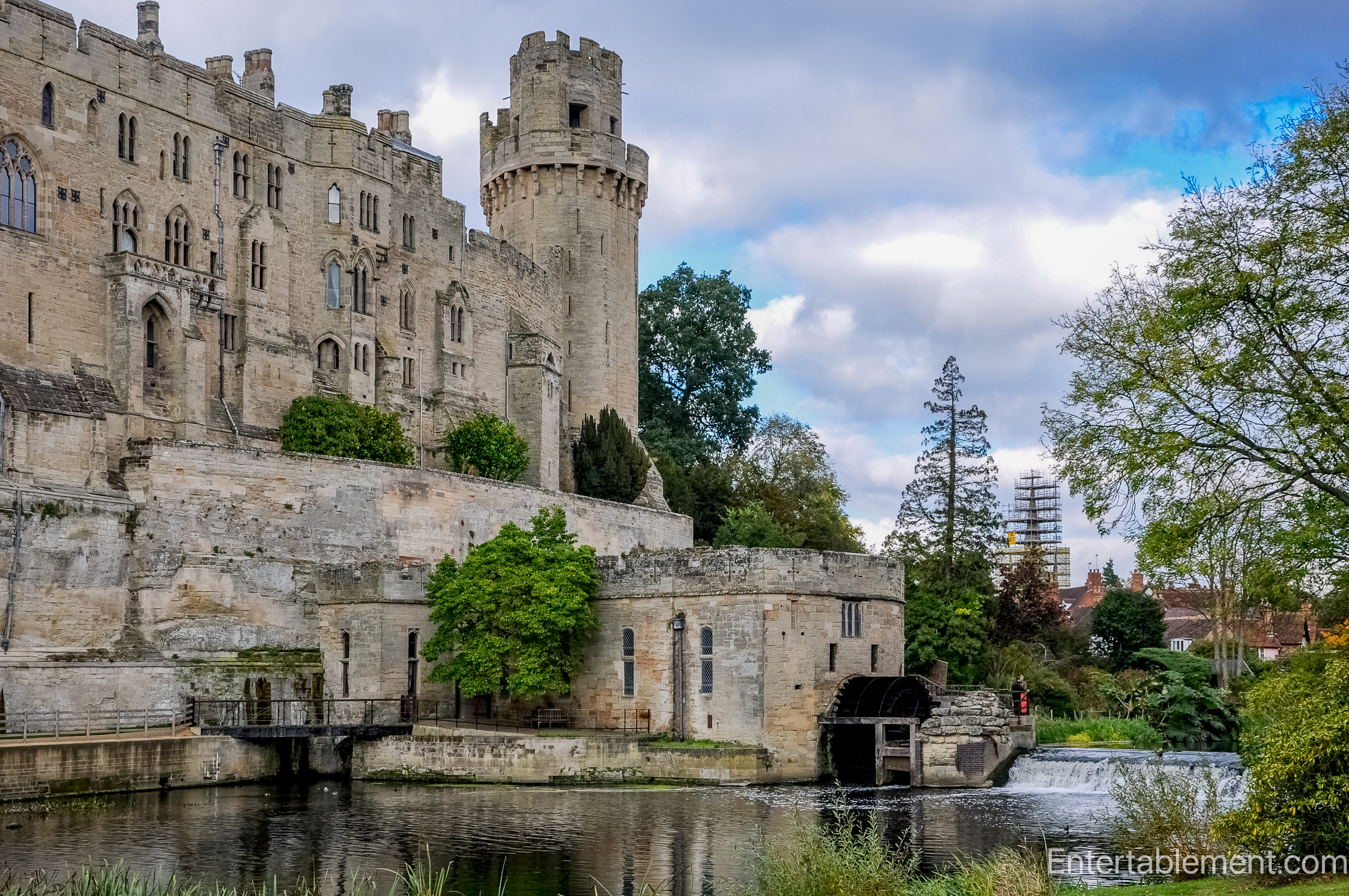
History rarely moves in straight lines.
More often, it shifts—sometimes abruptly—when the balance of power begins to change.
A Note on Visiting Today
For many years the castle was operated by Tussauds (of Madame Tussaud’s waxworks fame), which developed a series of historical displays and demonstrations designed to bring the medieval world to life. Visitors saw working siege engines, falconry displays, or guides enthusiastically recreating the atmosphere of the Wars of the Roses.
Ownership later passed to Merlin Entertainments, the company behind attractions such as Legoland and the London Eye. Under Merlin the castle has gradually shifted toward a more theme-park style experience, with large-scale events, light shows, and seasonal attractions designed to appeal to family audiences.
The result is still lively and entertaining, though rather different from the historically focused demonstrations many earlier visitors remember. That said, the castle still hosts lively events—during a more recent visit, an excellent jousting display captivated my granddaughters.
My eldest granddaughter Maddie, who was ten at the time, quickly grasped the complicated alliances of the Wars of the Roses—who switched sides, who replaced whom, and why it mattered. I must admit I was impressed.
It turns out the story of rival kings, shifting loyalties, and dramatic battles still captures the imagination, even six centuries later.
The w finally ended in 1485 with the victory of Henry Tudor at the Battle of Bosworth Field.
The dynasty he founded would produce one of England’s most famous—and controversial—monarchs: Henry VIII.
Standing on Warwick’s walls today, the countryside appears calm and untroubled.
It is hard to imagine that these fields once lay at the centre of a struggle in which the fate of kings—and the future Tudor dynasty—hung in the balance.