In the summer of 2012 archaeologists began excavating a small municipal parking lot in the city of Leicester.
The site had once been occupied by the medieval Greyfriars Friary, though centuries of urban change had long since erased any visible trace of the monastery. The dig was modest in scale and initially exploratory, intended simply to determine whether any remains of the friary might still survive beneath the modern surface.
Within days the archaeologists uncovered a skeleton.
The bones showed unmistakable signs of violent injury. Several wounds appeared to have been inflicted by bladed weapons, while the spine revealed a pronounced curvature caused by scoliosis. As the evidence accumulated, an extraordinary possibility began to take shape.
The remains might belong to Richard III, the last English king to die in battle.
DNA analysis eventually confirmed the identification, linking the skeleton to a living descendant of Richard’s sister, Anne of York — a Canadian cabinetmaker named Michael Ibsen.
More than five centuries after his death, the defeated king had been found beneath a parking lot. His story leads directly back to one of the most consequential battles in English history: the Battle of Bosworth Field.
A Kingdom Exhausted by War
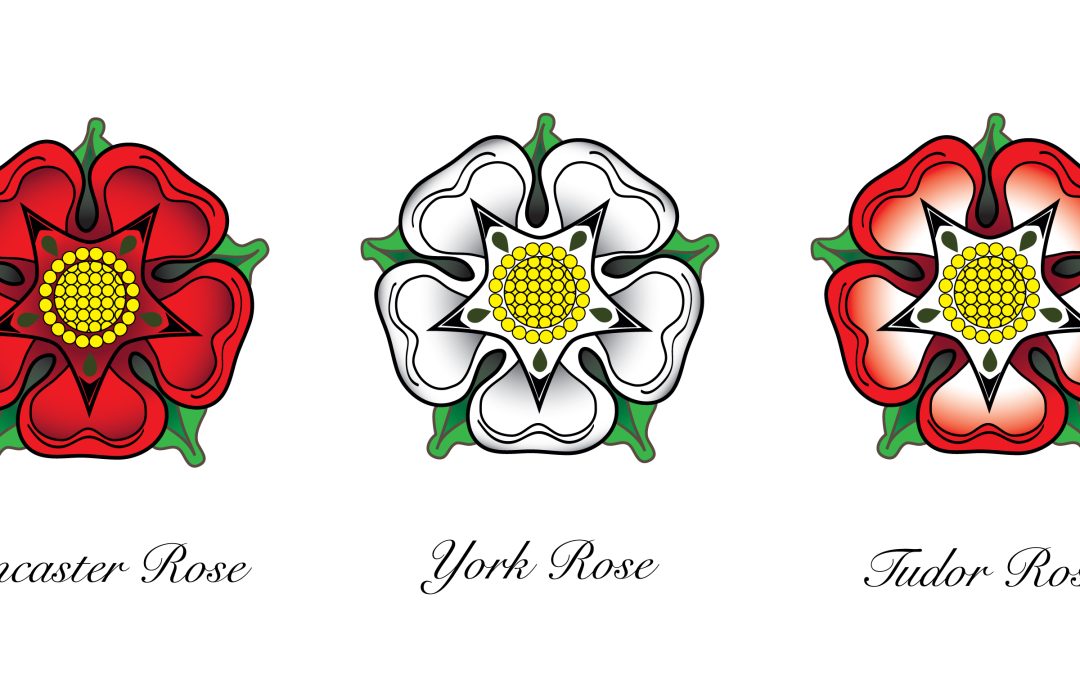
By the summer of 1485 England had endured decades of intermittent conflict between rival branches of the Plantagenet royal family. The struggles later known as the Wars of the Roses had produced shifting alliances, contested successions, and a succession of kings whose authority was frequently challenged.
When Richard III took the throne in 1483, the political atmosphere was already tense. His accession followed the death of his brother, Edward IV, and the brief, uncertain reign of Edward’s young son, Edward V.
The disappearance of Edward V and his younger brother — the princes later associated with the Tower of London — cast a long shadow over Richard’s rule and helped alienate several powerful figures who might otherwise have supported him.
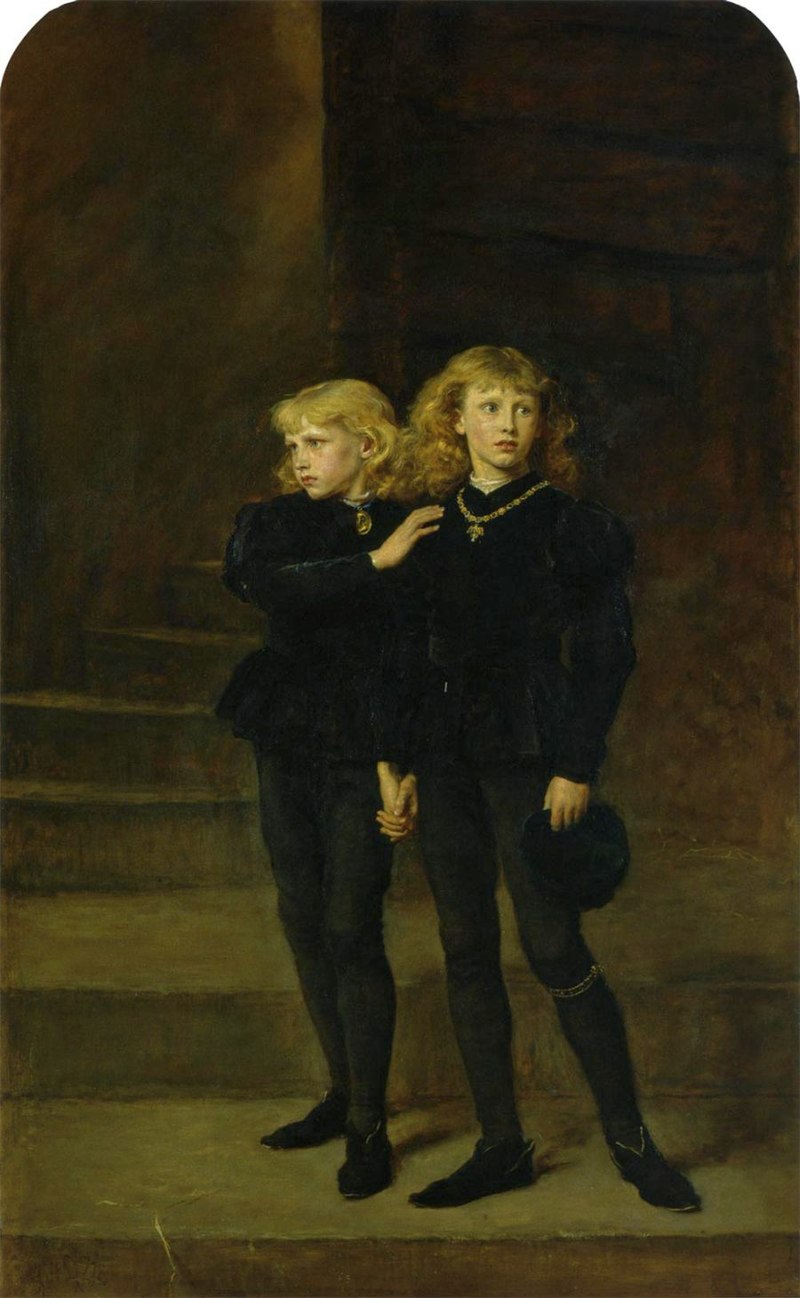
Princes in the Tower
Among those watching events from abroad was a distant Lancastrian claimant whose prospects had once seemed remote. His name was Henry VII.
The March Toward Bosworth
Henry had spent much of his life in exile in Brittany and France, where he survived the turbulence of English politics by remaining largely beyond its reach. Yet by the mid-1480s discontent with Richard III had created an opportunity.
In August 1485 Henry landed in Wales with a small force of supporters and began marching eastward through the Midlands, gathering additional followers as he went. Richard responded quickly, assembling a larger royal army and moving to intercept the challenger. The two forces eventually met near the village of Market Bosworth.
Even on the morning of the battle, however, the outcome remained uncertain. Several powerful nobles — most notably the Stanley family — had not yet committed themselves decisively to either side. In the volatile political environment of the late fifteenth century, such hesitation could prove decisive.
The Battle
The battle itself unfolded in a manner that reflected the uncertainties surrounding it. As the armies clashed, Richard recognized an opportunity to strike directly at Henry, whose position on the battlefield was comparatively exposed. Gathering a group of mounted knights, the king launched a bold charge in an attempt to kill his rival and end the conflict in a single decisive moment.
For a time the attack came dangerously close to succeeding. Yet the shifting loyalties that had characterized the Wars of the Roses once again altered the course of events. When the Stanley forces finally intervened, they did so in Henry’s favour, surrounding the king and cutting off his escape.
Richard III was killed in the fighting, becoming the last English monarch to die on the battlefield.
A Crown in the Mud
Later tradition holds that Richard’s crown was discovered among the fallen on the battlefield and placed upon Henry Tudor’s head, proclaiming him the new king. Whether or not the moment unfolded exactly that way, the symbolism captured an important truth.
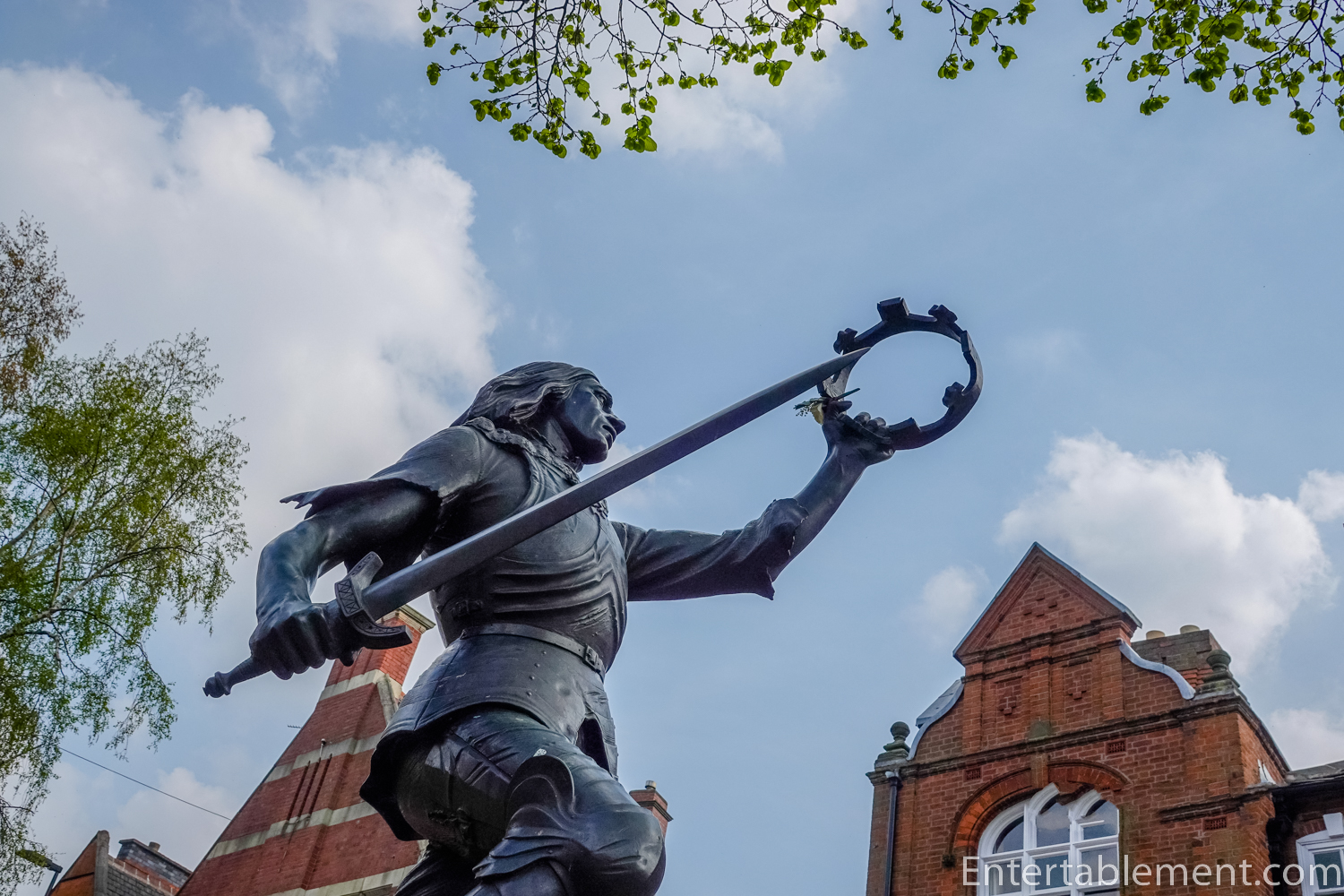
Statue of Richard III outside Leicester Cathedral
With Richard’s death the Plantagenet dynasty came to an end, and the Tudor era began.
The King Beneath the Parking Lot
For centuries Richard III’s burial place remained uncertain. The Franciscan friary where he had been interred disappeared during the upheavals of the sixteenth century following the Dissolution of the Monasteries, and the exact location of his grave faded from memory.
The discovery in Leicester in 2012 therefore resonated far beyond the archaeological community.
Today Richard III lies once again beneath a royal tomb, this time in Leicester Cathedral, not far from the site where his remains were rediscovered.

Standing in the quiet space of the cathedral, it is easy to forget that the man buried there once died at the centre of a battle that reshaped the course of English history.
The conflict that ended his life brought the Wars of the Roses to their conclusion and placed a new dynasty on the throne.
From that victory would eventually emerge the Tudor world of Henry VIII, Elizabeth I, and the many figures whose stories continue to shape the historical landscape of England.