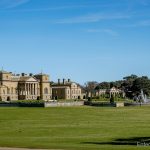
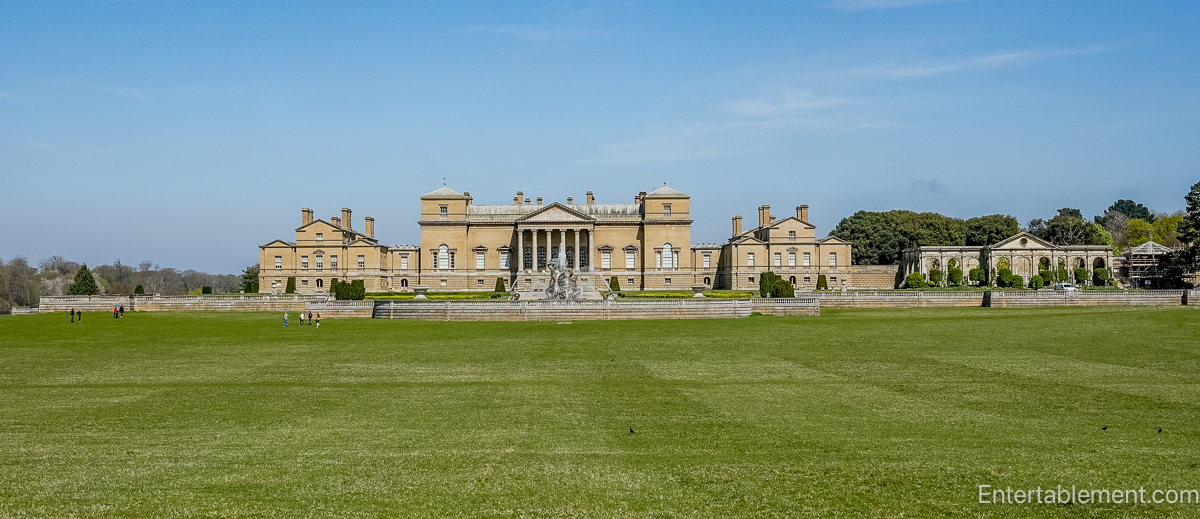
Tucked along the windswept north coast of Norfolk, Holkham Hall is a marvel of 18th-century Palladian architecture—majestic yet restrained, classical yet rooted in the rhythms of working land. It’s a house that wears its ideals proudly: harmony, balance, and enlightened stewardship.

But more than that, Holkham tells a story of continuity across generations, each leaving an indelible mark on its bricks, books, and barley.
The Idea Before the House
When Thomas Coke, first Earl of Leicester returned from the Grand Tour in the early 18th century, he brought back more than statues and sketches.
What he had seen in Italy — above all in the work of Andrea Palladio — suggested that architecture might do something more ambitious than impress. It might express a way of thinking about proportion, order, and the authority of the past.

The interpretation of Palladio for an English setting was already underway, shaped by figures such as Richard Boyle, 3rd Earl of Burlington. Begun in 1734, Holkham Hall was realized through the work of William Kent, and is still hailed as one of the purest examples of Palladian design in Britain.
The Marble Hall — Rome, Reconsidered
The interiors are breathtaking in their classical symmetry.

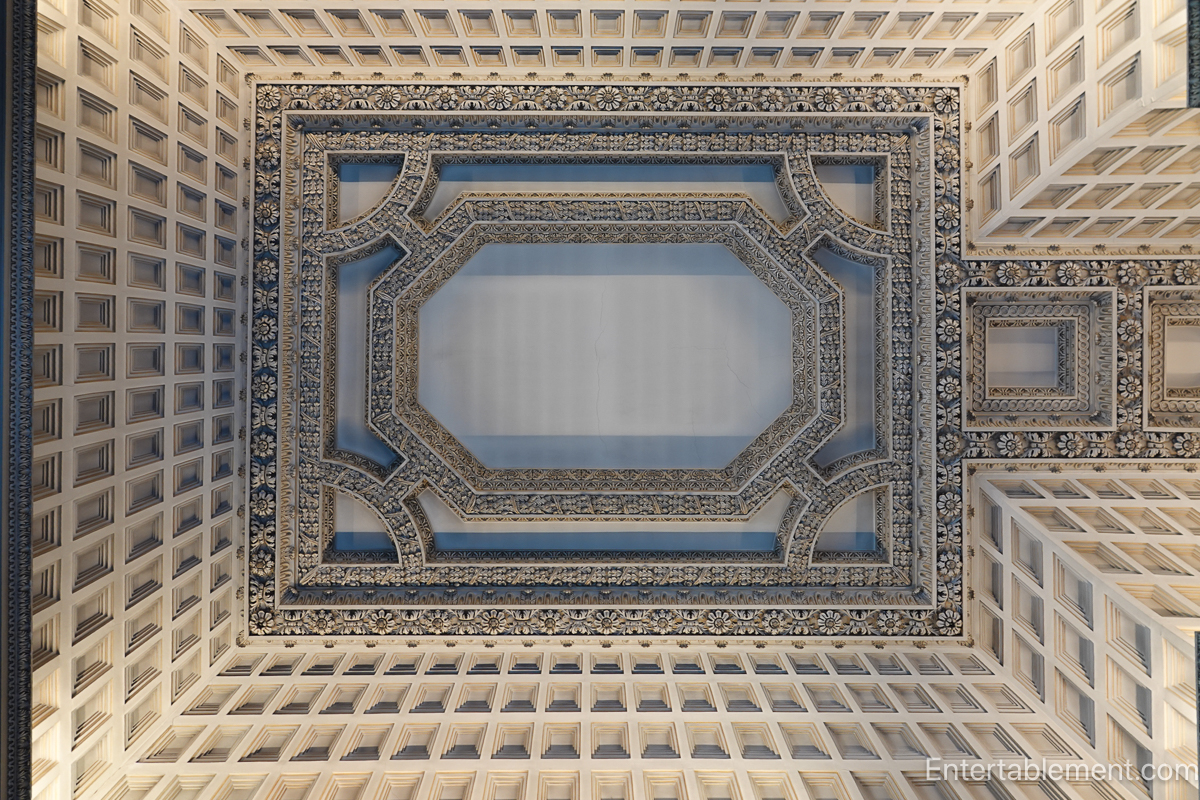
The Marble Hall, with its coffered ceiling is the last word in grandeur.
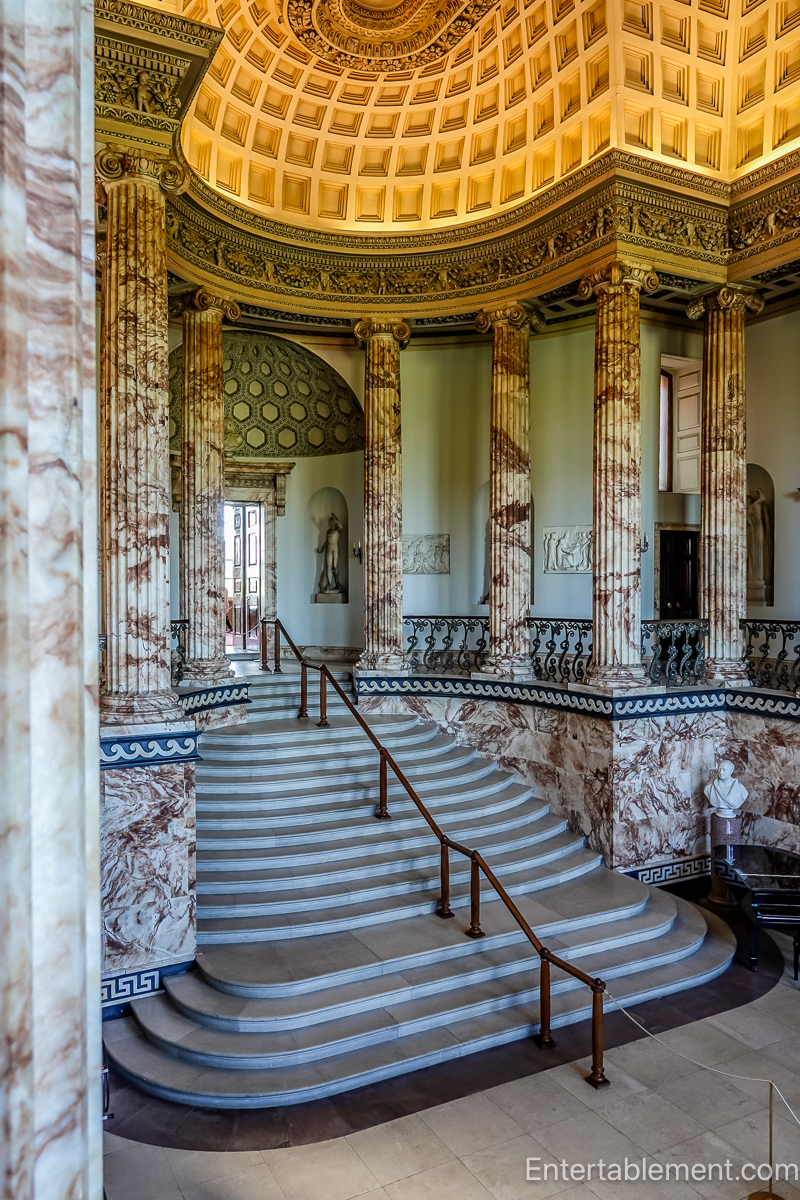
The staircase sweeps upward to the gallery surrounding the hall and the rooms beyond.
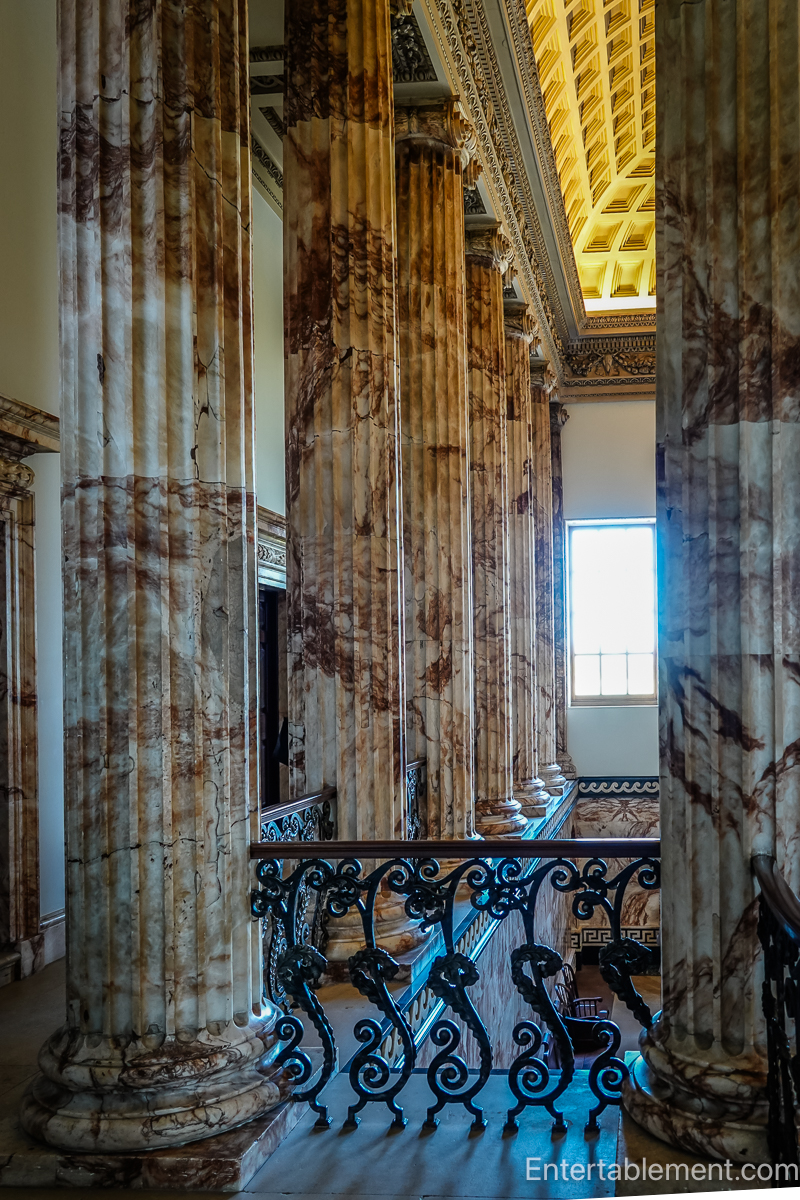
The fluted columns and wrought iron balustrade line the gallery above.
The Saloon — Balance, Softened by Light
From there, the house resolves inward, towards the Saloon. If the Marble Hall sets out the argument, the Saloon seems to consider it more quietly.
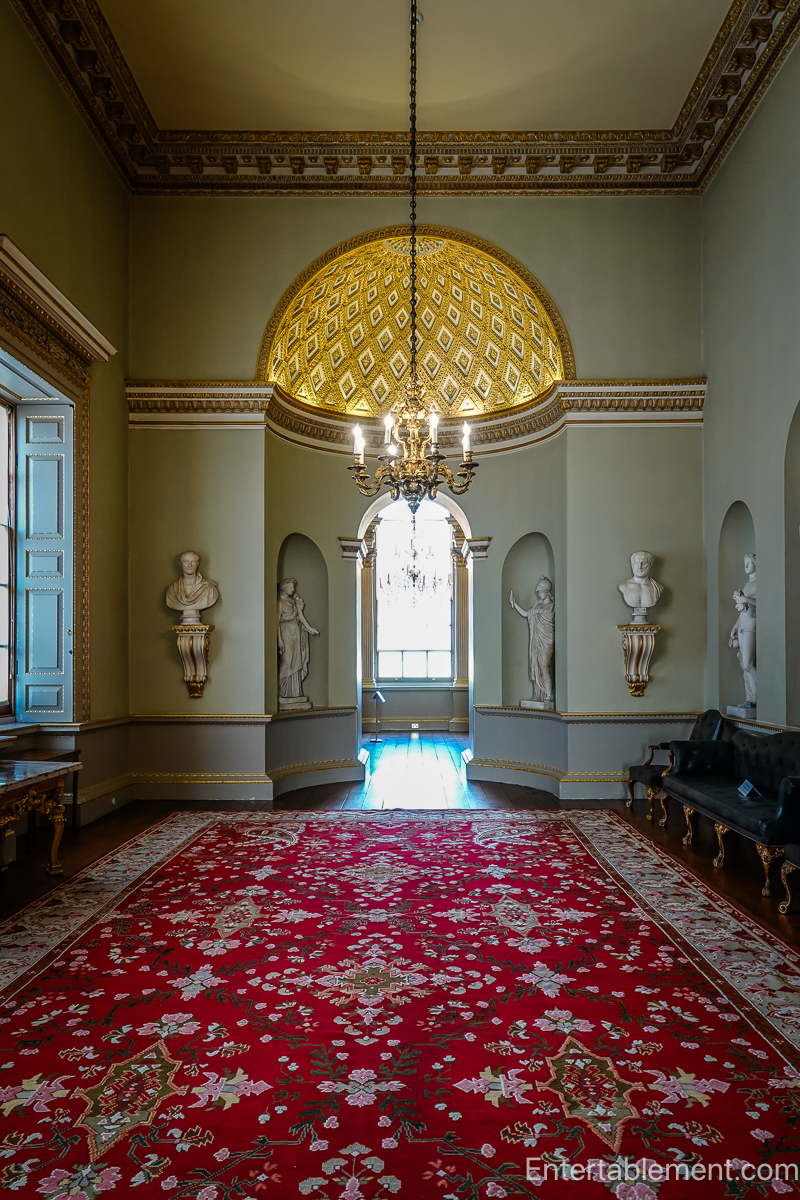
The dome lifts the space without dominating it, and the light—filtered through carefully placed windows—softens what might otherwise feel austere.

The geometry is precise but also forgiving.
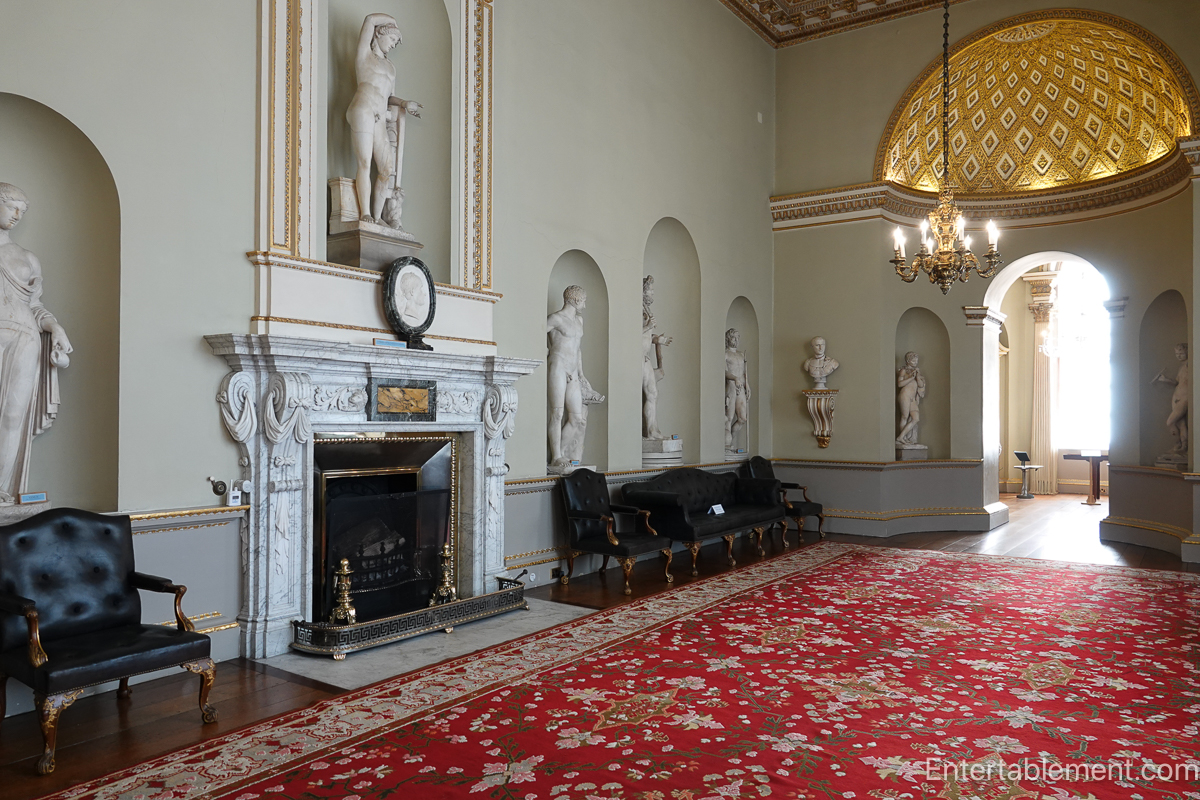
While not a space that invites curling up to read a book, the softly coloured paint and breathtakingly elegant statues are restful.

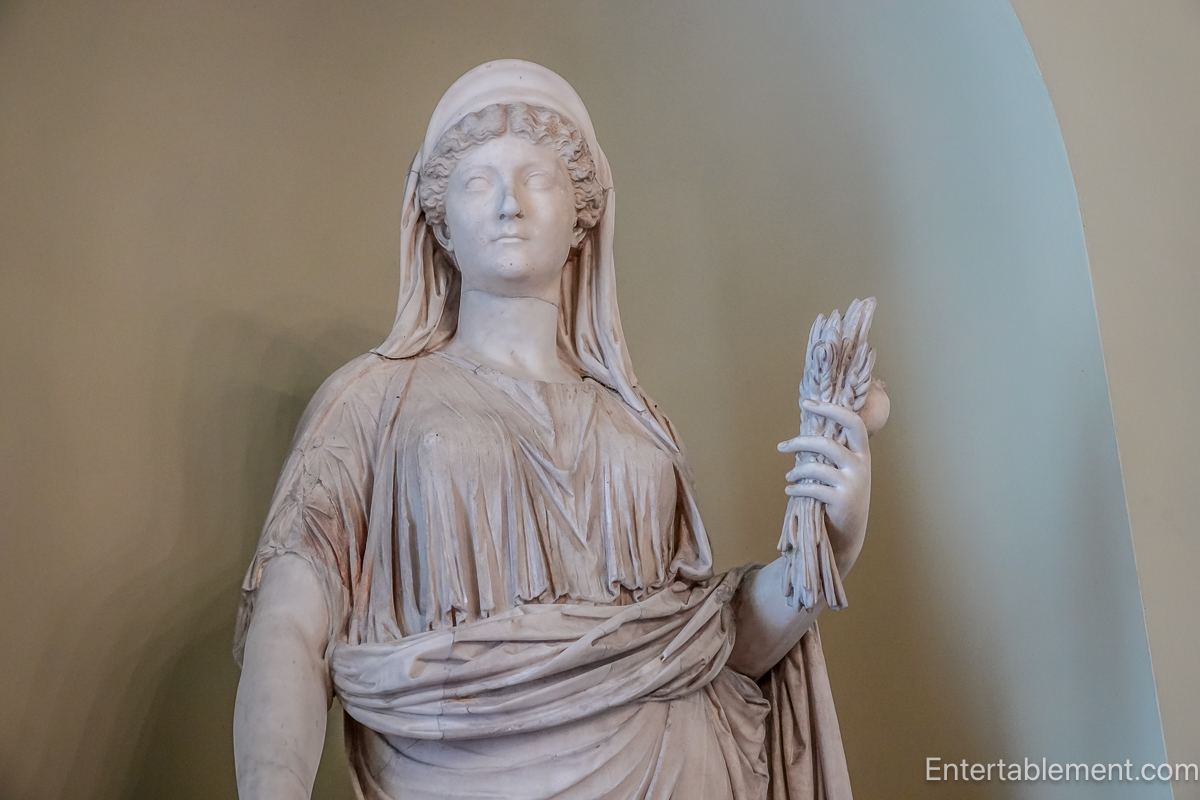
Enfilade — A Sense of Movement
Standing in one doorway, how the house unfolds becomes apparent. Rooms align. Doorways frame one another. In the distance, a state bedroom comes into view, held in place by perspective as much as by walls.

This principle—the enfilade—creates a subtle sense of movement. Each space suggests the next, its architecture unfolding over time.
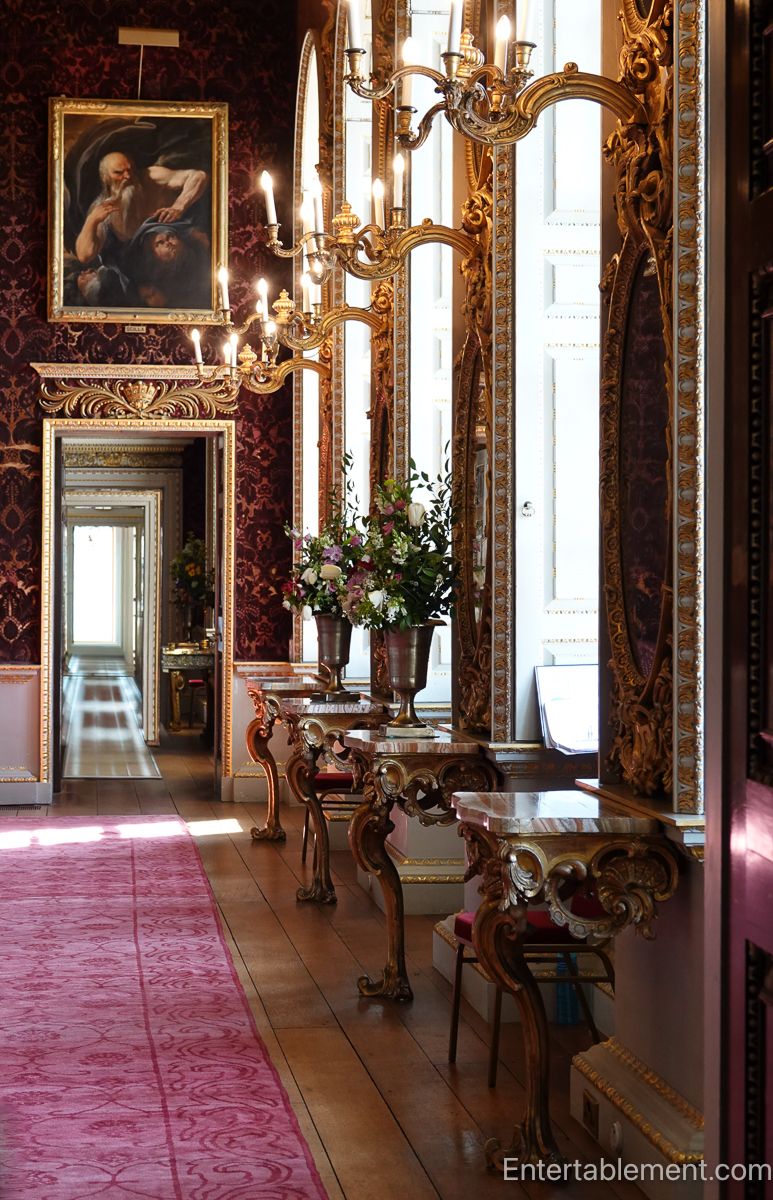
The State Rooms
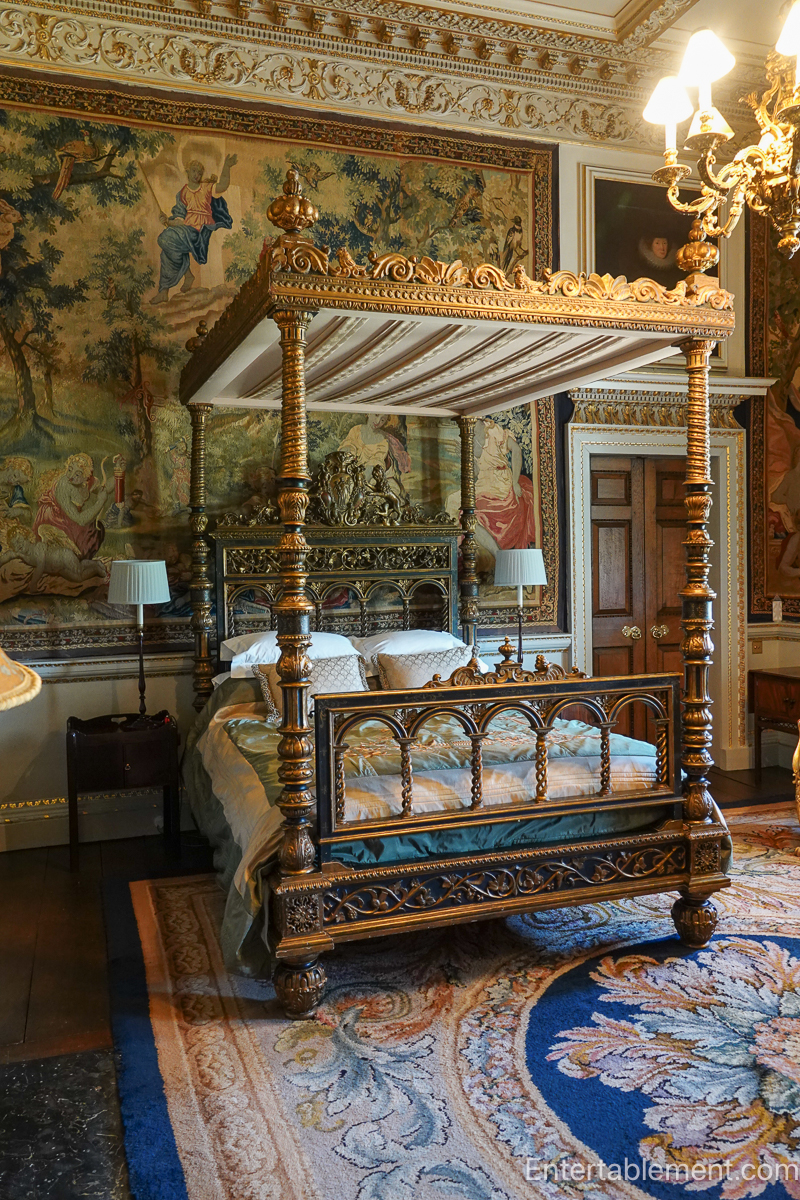
The state rooms introduce a different texture. The great bed, elaborately carved and carefully positioned, inevitably draws the eye. Clearly a statement piece, it’s less about sleep than presence.
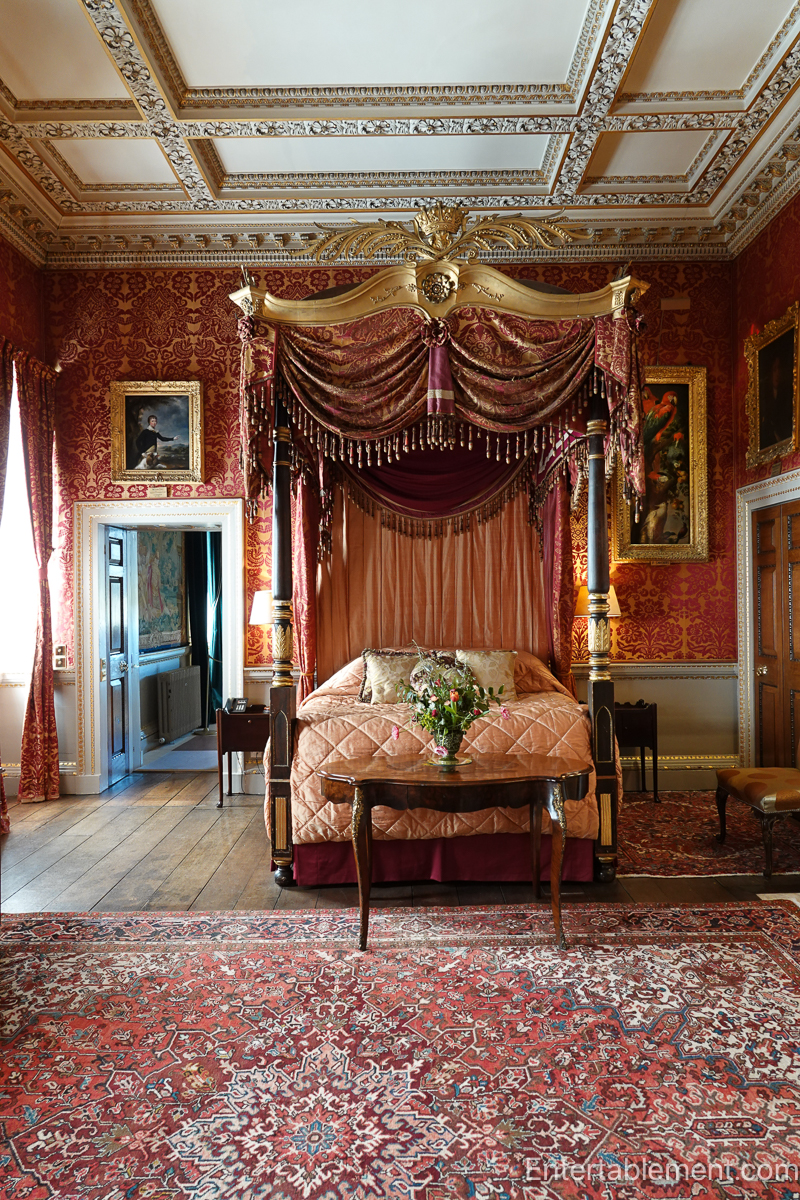
Having said that, the richness of the fabrics and the delicacy of the floral displays are undeniably luxurious.

Tapestries and colourful fabrics soften the geometric structure of columns and cornices.
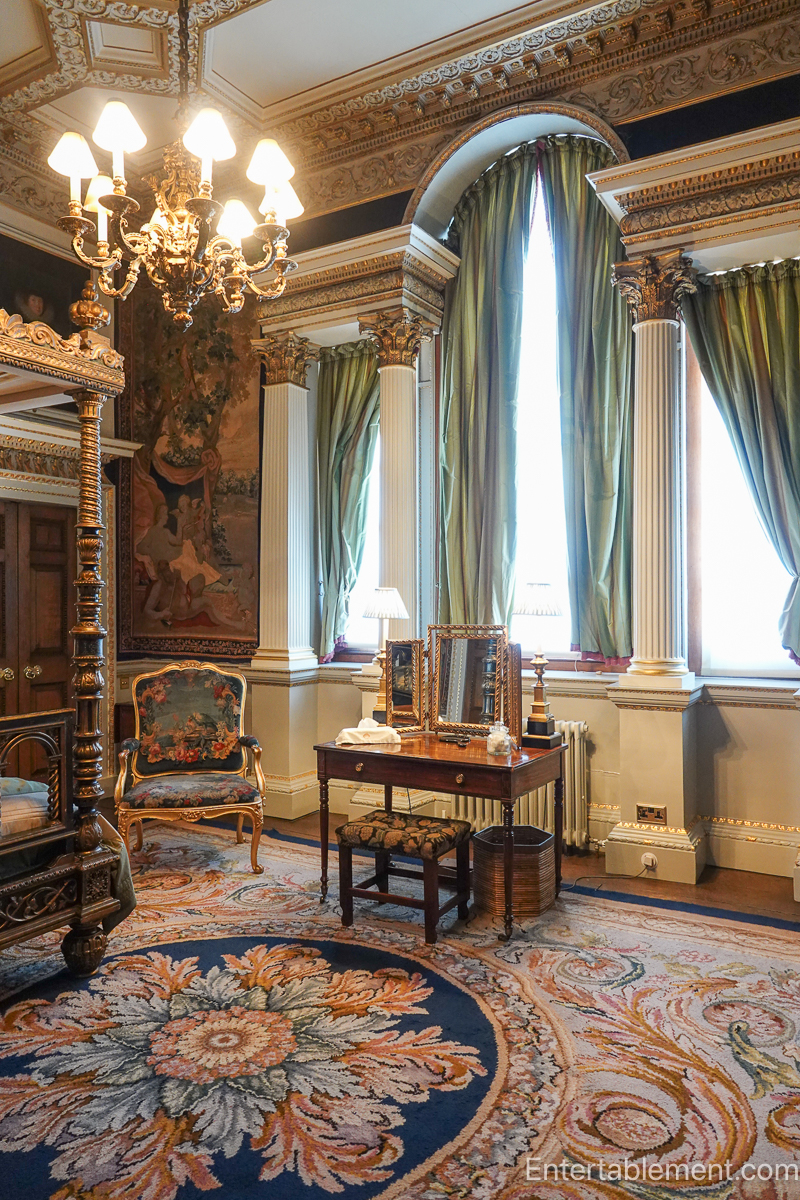
Scenes unfold across the walls with figures, landscapes, and fragments of imagined worlds.
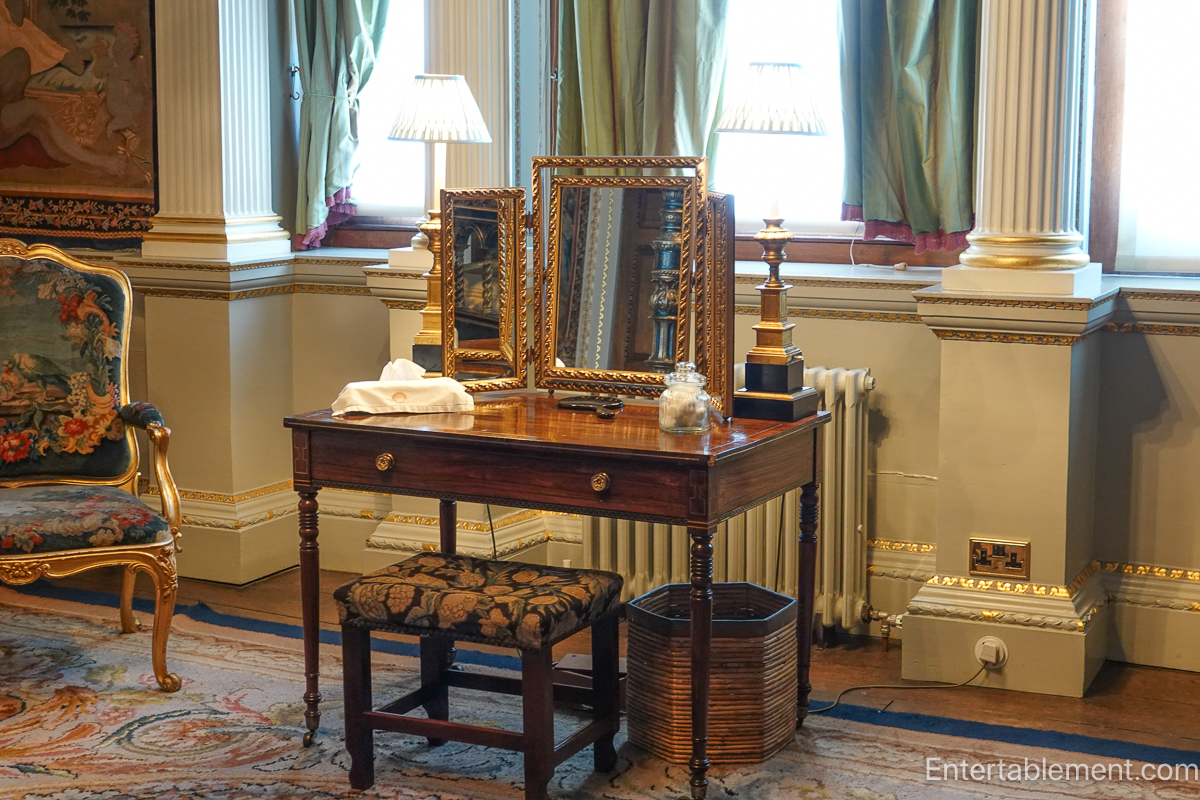
The dressing table with its trifold mirror and shaded lamps add warmth and intimacy to the vast space.
In the next room, the elaborately crested tester is crowned, quite literally, with a coronet.

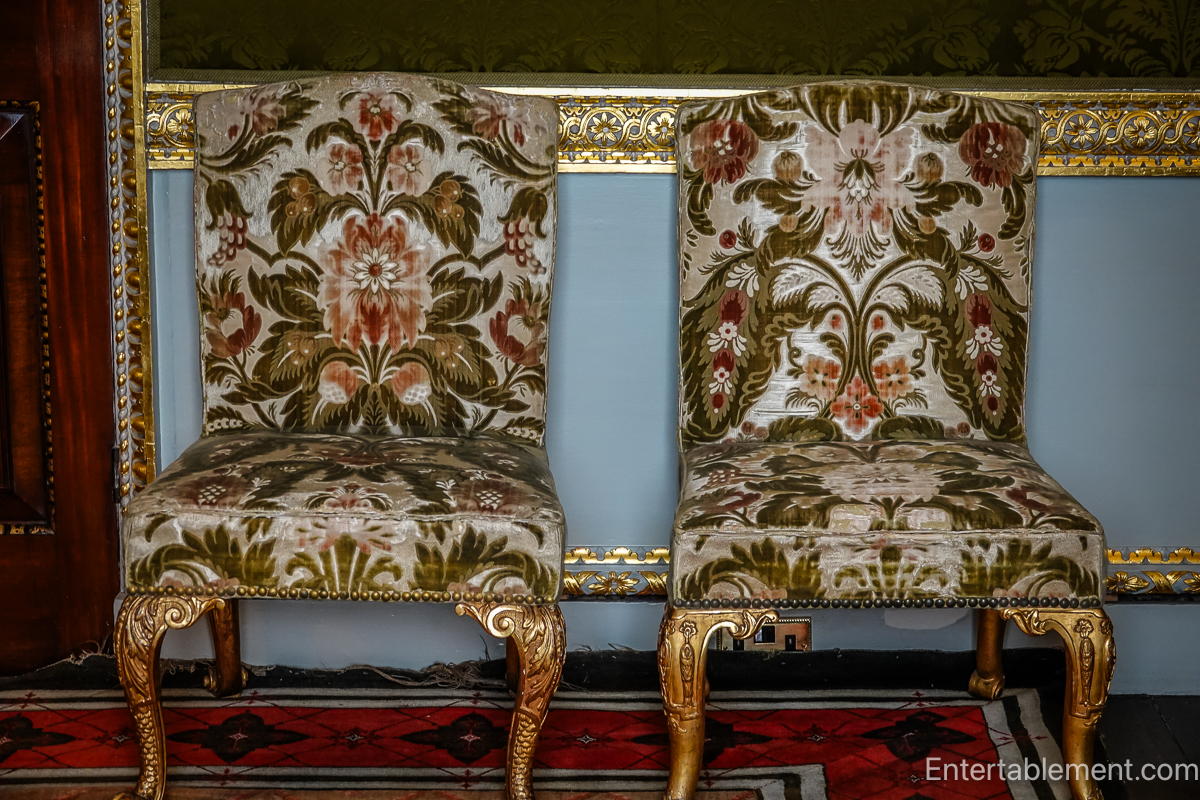
The rich fabric is carried over to upholstered and gilded chairs.
The tester on the bed in the third state room displays three ostrich feathers emerging from a gold coronet. Most closely associated the Prince of Wales, it is one of the most recognizable heraldic badges in Britain, and is traditionally accompanied by the motto Ich Dien (“I serve”).
In houses of Holkham’s scale and period, heraldry operated on several levels at once: political alignment, proximity (real or aspirational) to the Crown, and demonstration of fluency in a shared visual language of authority. But by the 18th century, however, designers like William Kent employed this symbolism more as fashion than political statement.

The Details — A Language, Repeated at Every Scale
It is easy, in a house like Holkham, to become overwhelmed with the grandeur of the architecture — columns, sculptures and coffered ceilings.
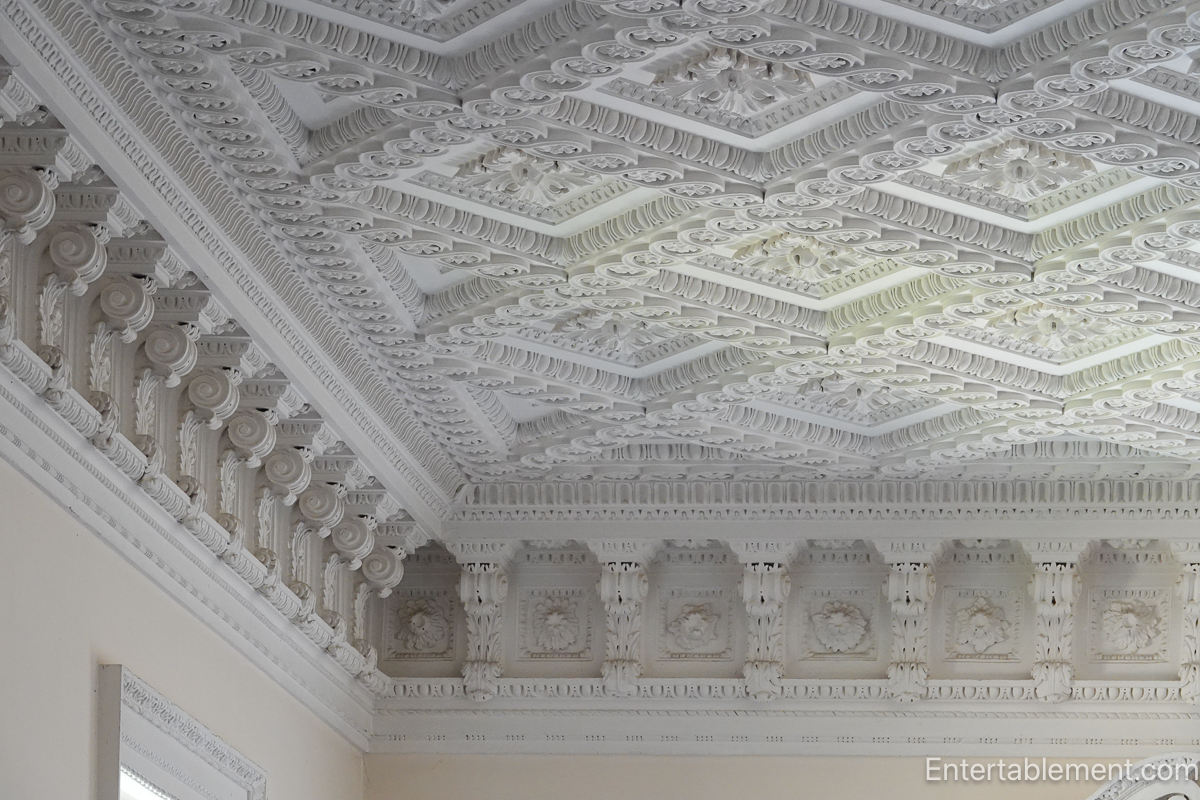
Happily, there are plenty of smaller details to enchant the eye.
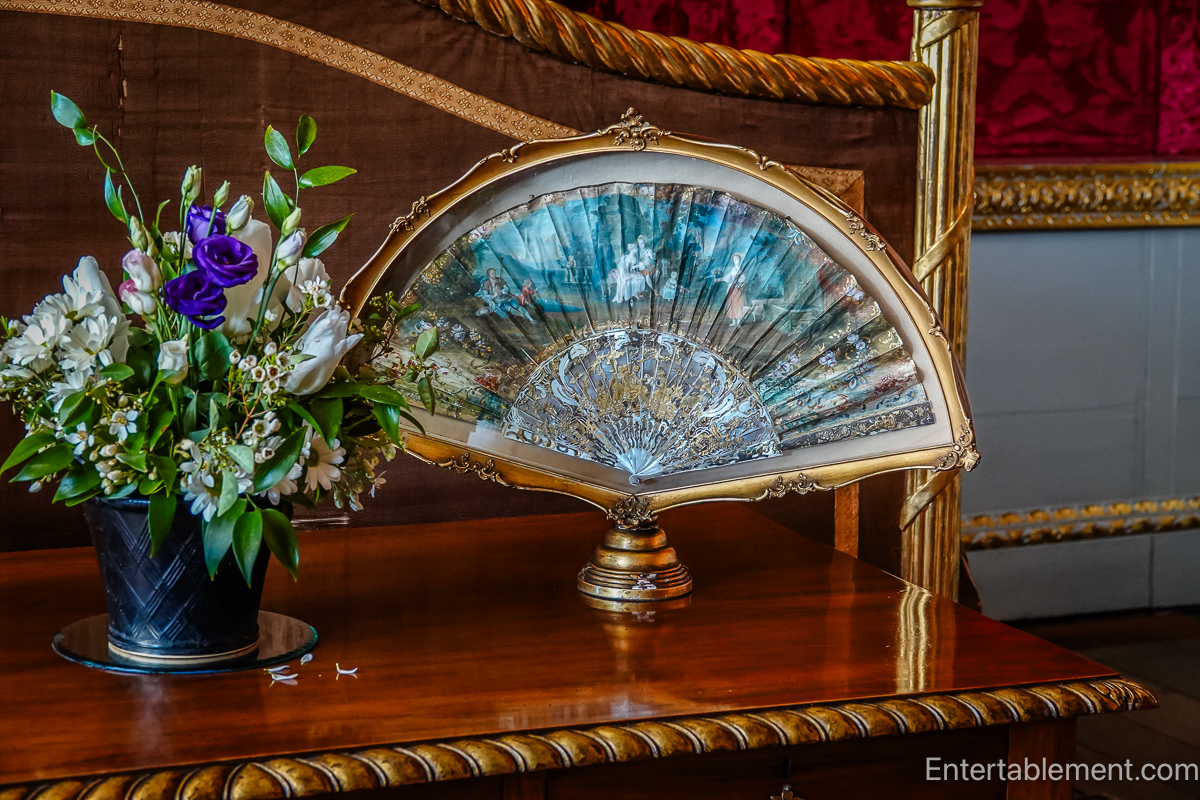
A fireplace with its figures, garlands, and fragments of classical narrative displays extraordinary delicacy.
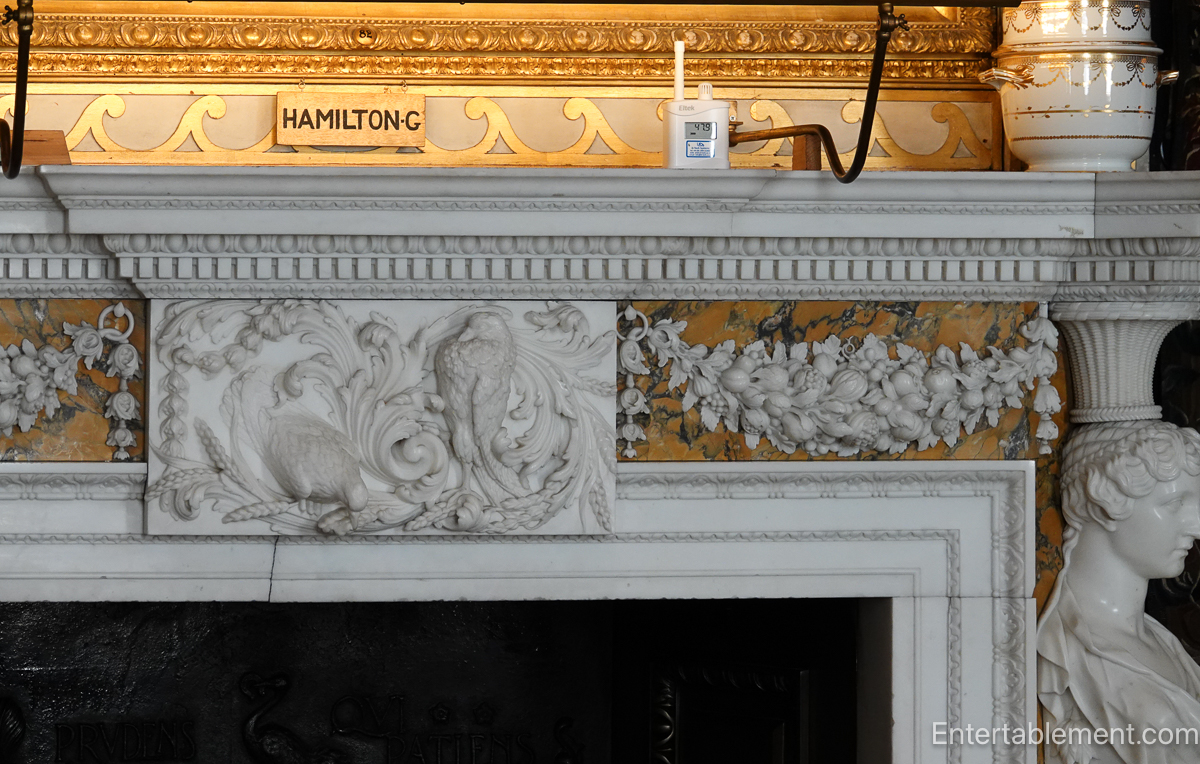
Dogs and beehives, are apparently a recurring temptation over the centuries.
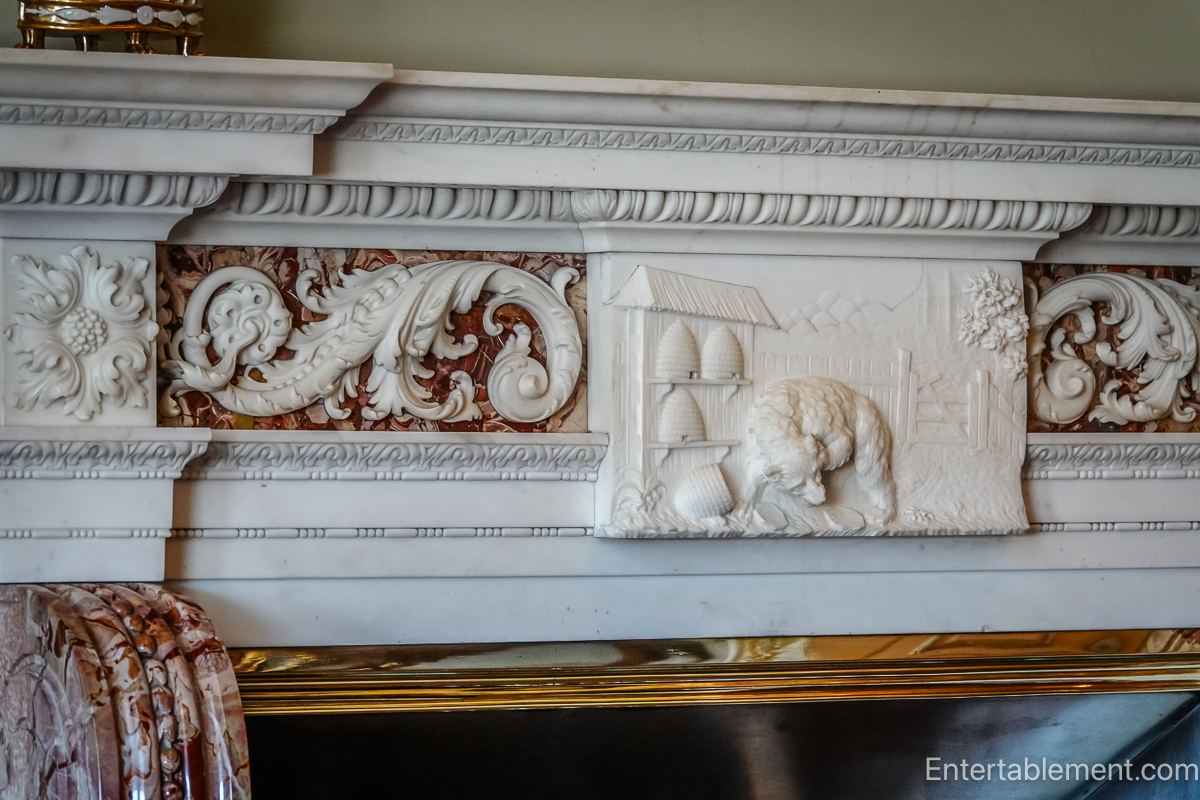
Marquetry unfolds into intricate patterns of birds, foliage, and scrolling forms that echo, in miniature, the structure of the rooms themselves.

Even something as ordinary as a door handle sits within a larger language of proportion and material.
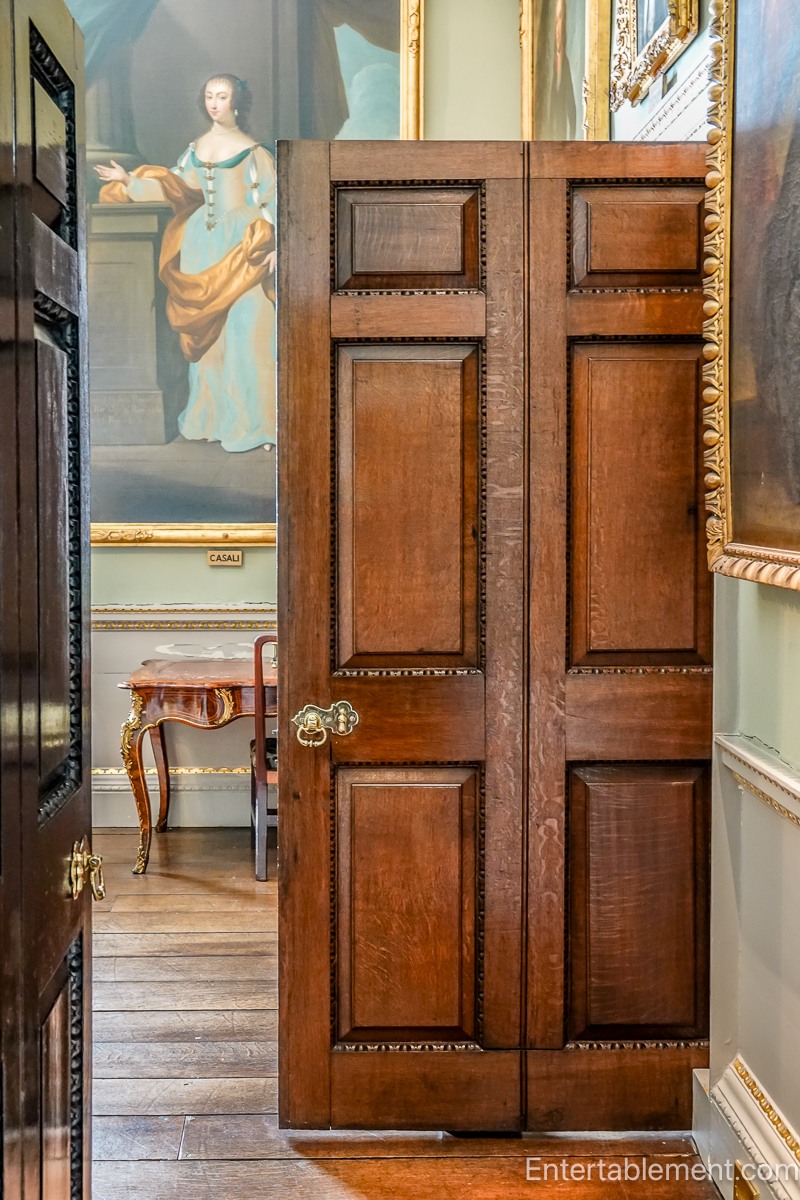

Nothing seems incidental. The parts coordinate beautifully to an harmonious whole.

A Bathroom Among Tapestries
At first glance, it feels almost surreal—a freestanding tub set within a room lined entirely in tapestry. This was the “Holy Hannah!” moment for me. I have seen some elaborate bathrooms in these stately homes, but Holkham takes the biscuit.
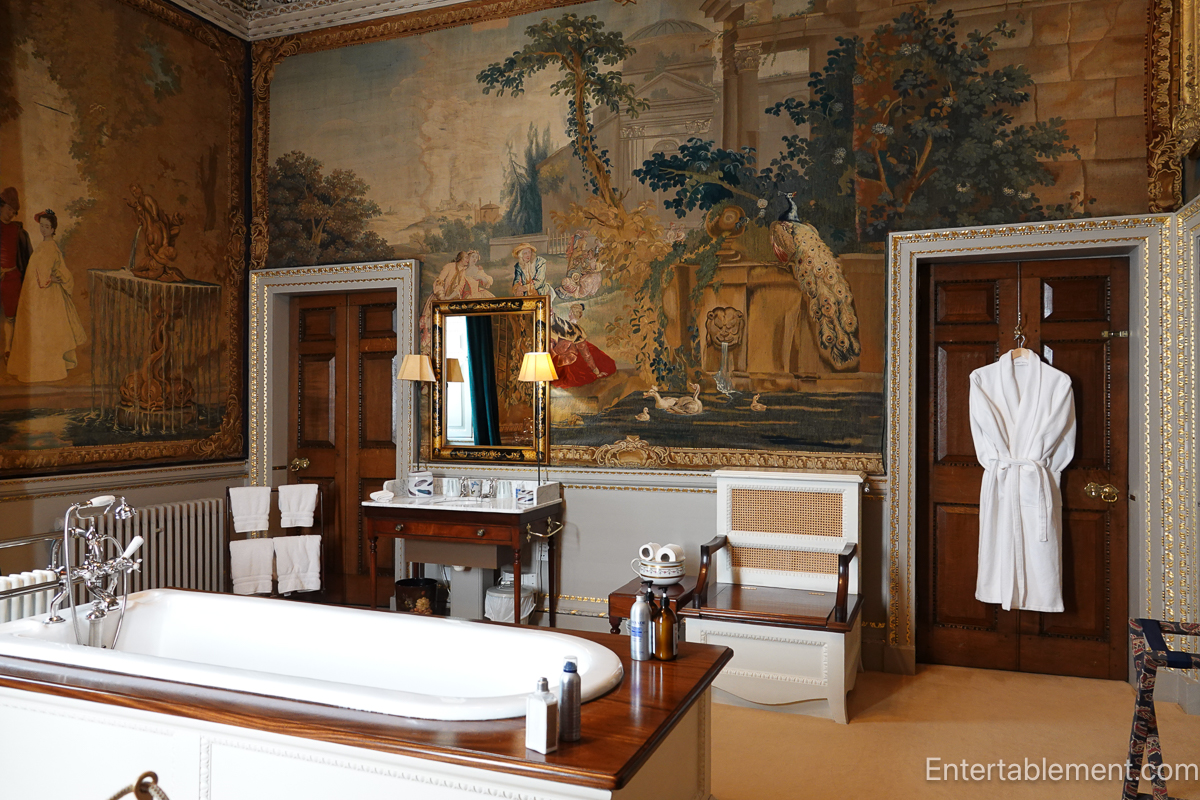
A peacock perches above a classical fountain; figures wander through an imagined landscape.
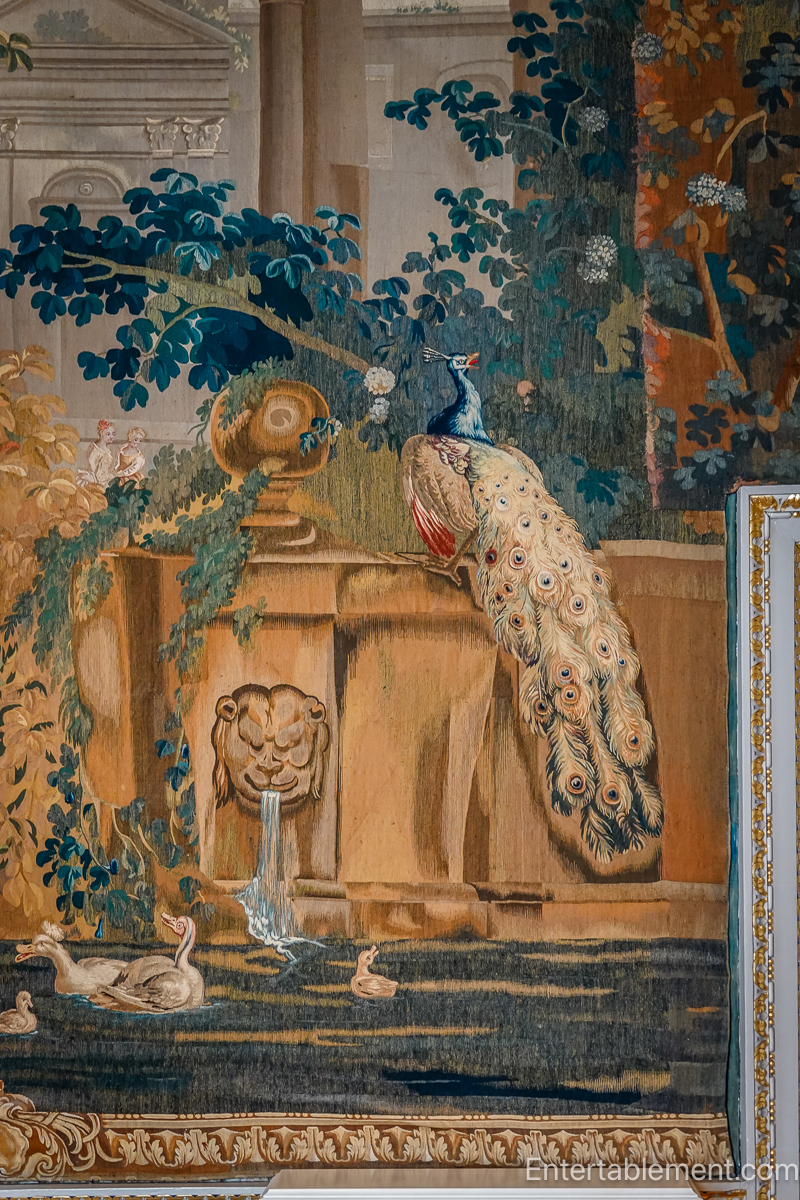
When Holkham was conceived in the 18th century, bathrooms in any modern sense did not exist. Washing was portable: hip baths were brought before the fire, servants lugged cans of hot water to fill the bath, screens were arranged to afford privacy (and ward off the drafts). Then plumbing returned to civilization in the 19th century (ancient Romans everywhere were slapping their foreheads), bathrooms were fitted into existing rooms — often a dressing room — or fitted into cupboards installed along one wall.

By the 20th century, expectations had shifted. Deborah Cavendish, Duchess of Devonshire insisted that Chatsworth be equipped with modern bathrooms throughout. Guests might admire history—but they expected hot water.
Libraries, Legacies, and Law
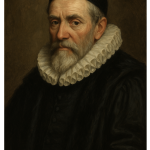
The house also honours the legacy of Sir Edward Coke (1552-1634), the formidable jurist who laid the groundwork for constitutional law. As Attorney General under both Elizabeth I and James I, Coke stood squarely in defence of common law as a limit on arbitrary power.
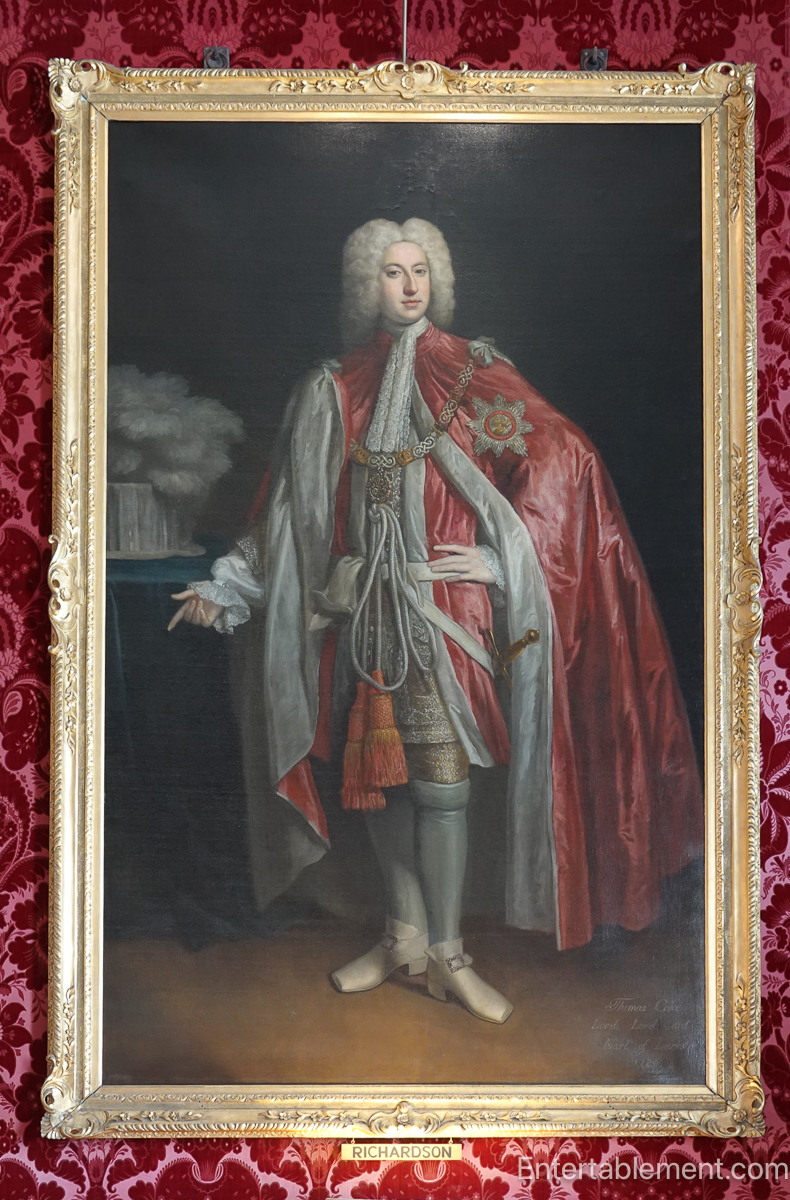
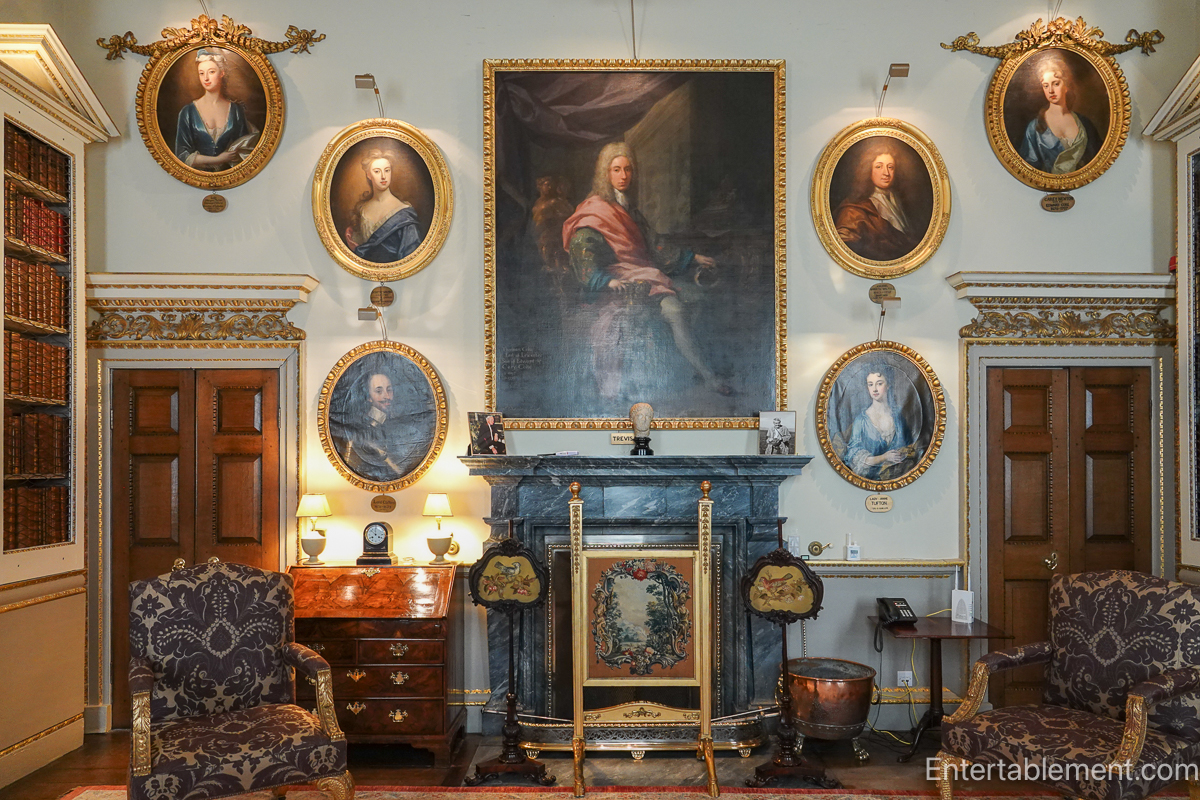
His works—meticulously shelved in the library—bridge the Coke family’s political, legal, and agricultural influence across centuries.

Above the fireplace in Holkham’s library hangs a striking mosaic of a lion overpowering a leopard — classical in subject, but not quite what it first appears. It is not an ancient Roman piece brought back intact, but an 18th-century acquisition in the Roman manner, collected during the Grand Tour. Inspired by motifs uncovered in places such as Pompeii, it reflects the period’s fascination with antiquity, not as something to copy blindly, but to study, adapt, and integrate.
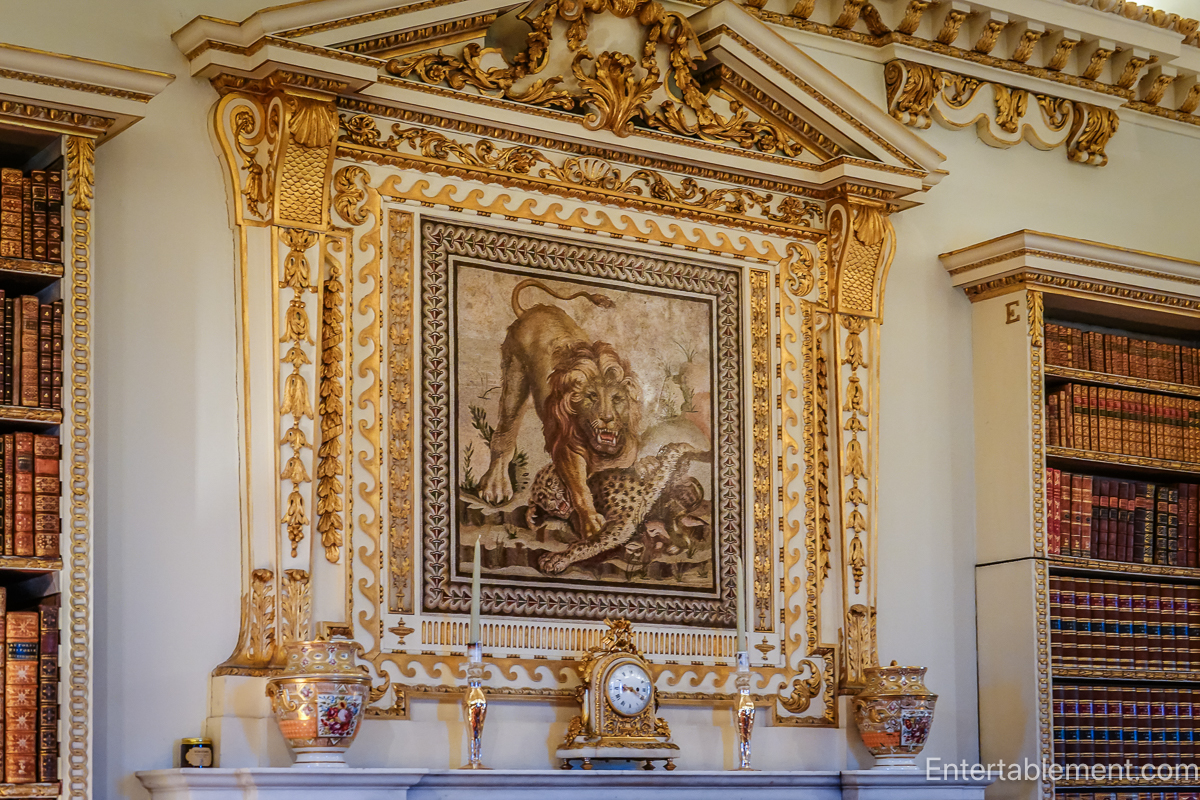
It is also, as one particularly enthusiastic docent made clear, very much in keeping with the spirit of the Coke family; assertive, purposeful, and not without a certain confidence in its convictions.
Below Stairs — The House in Motion
The kitchens are a marvel of Georgian efficiency, emphasizing the scale of the house and all that went into making it function. Above stairs, everything appears effortless — rooms unfolding one into another in immaculate progression. Below, the work required to sustain that perfection becomes visible.
The great table runs the length of the room, worn smooth by use. Ranks of copper pans line the walls, each one polished to a quiet glow.

The monstrous range, solid, black, and quietly formidable, is a later arrival, part of the 19th-century shift toward controlled heat and increasingly sophisticated kitchen systems. What we are seeing is not a single moment in time, but a working space that has adapted, layer by layer, to the demands placed upon it.
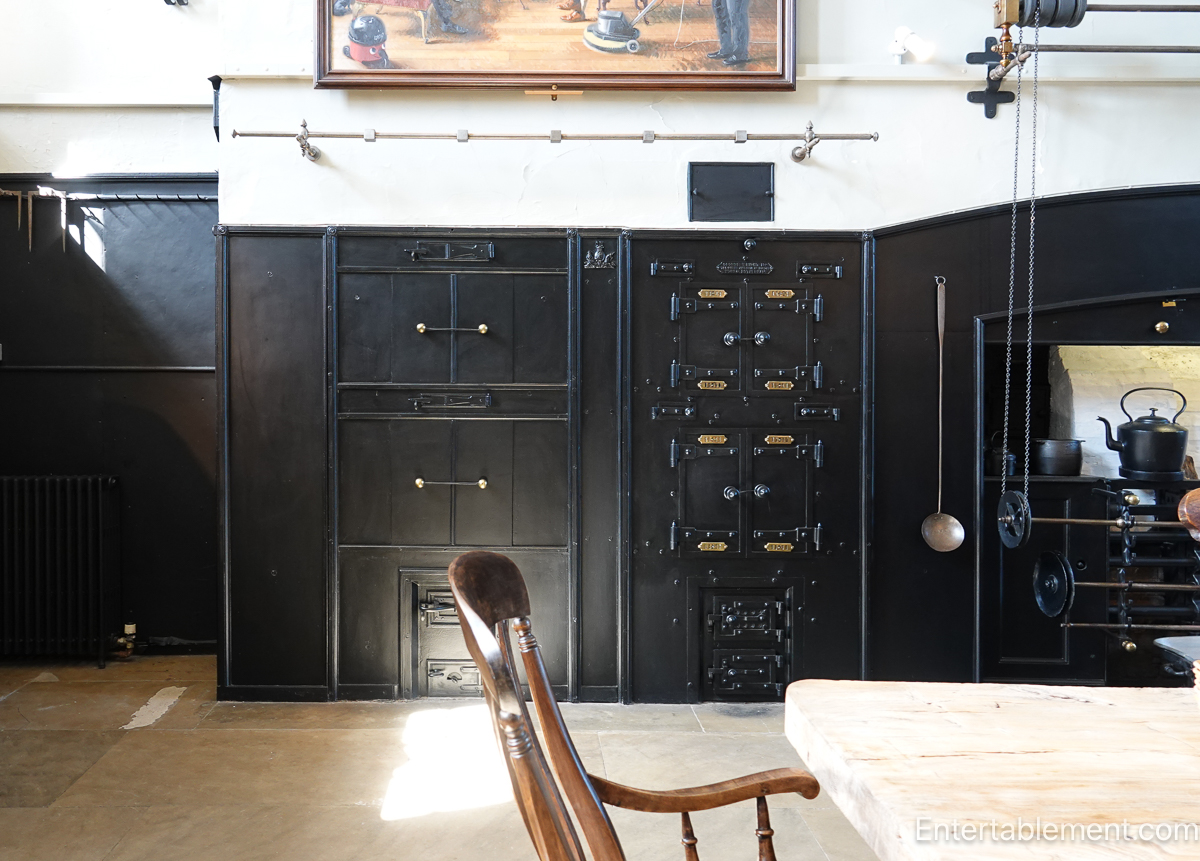
Nothing here is accidental; it’s a different order of design, concerned with efficiency, repetition and rhythm. And yet, it has its own kind of beauty.
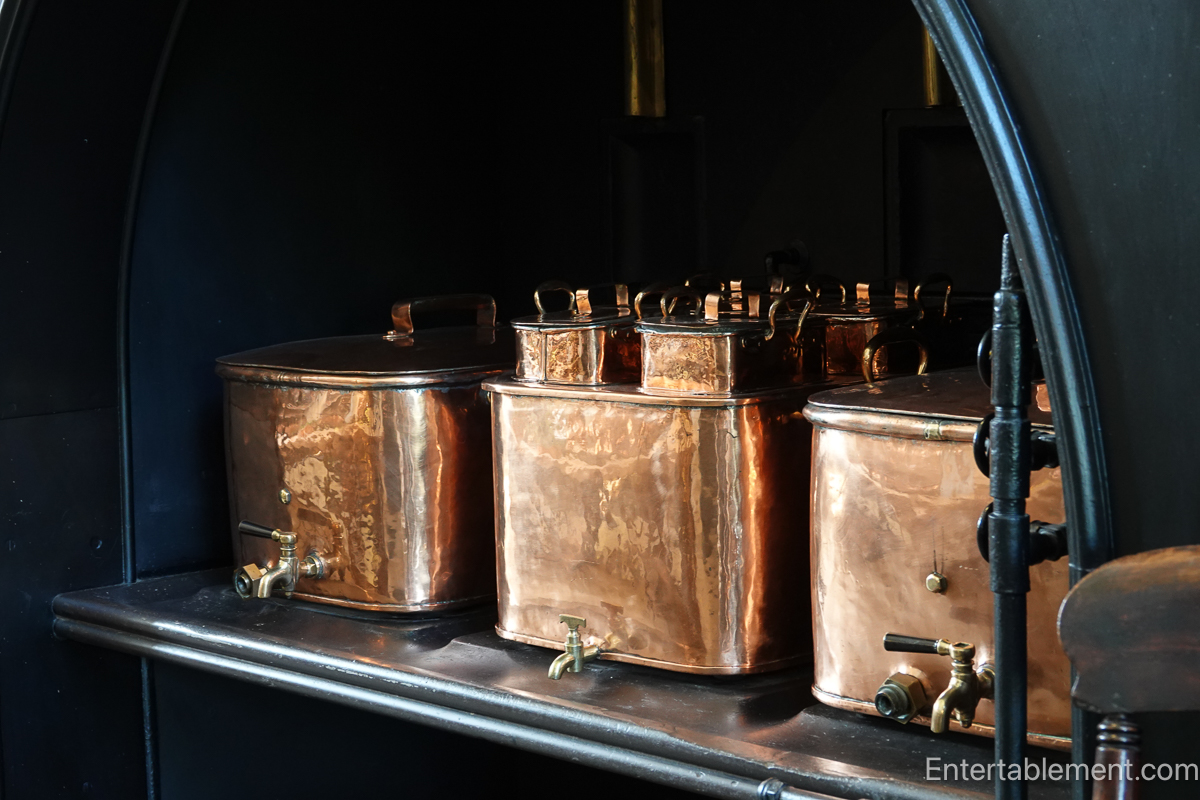
The kitchens were, in effect, a system, depending on timing, hierarchy, and an extraordinary degree of coordination. Meals that appeared upstairs as if by magic were the result of labour measured in sequences: preparation, cooking, plating, delivery, all moving in careful alignment with the life of the house above.
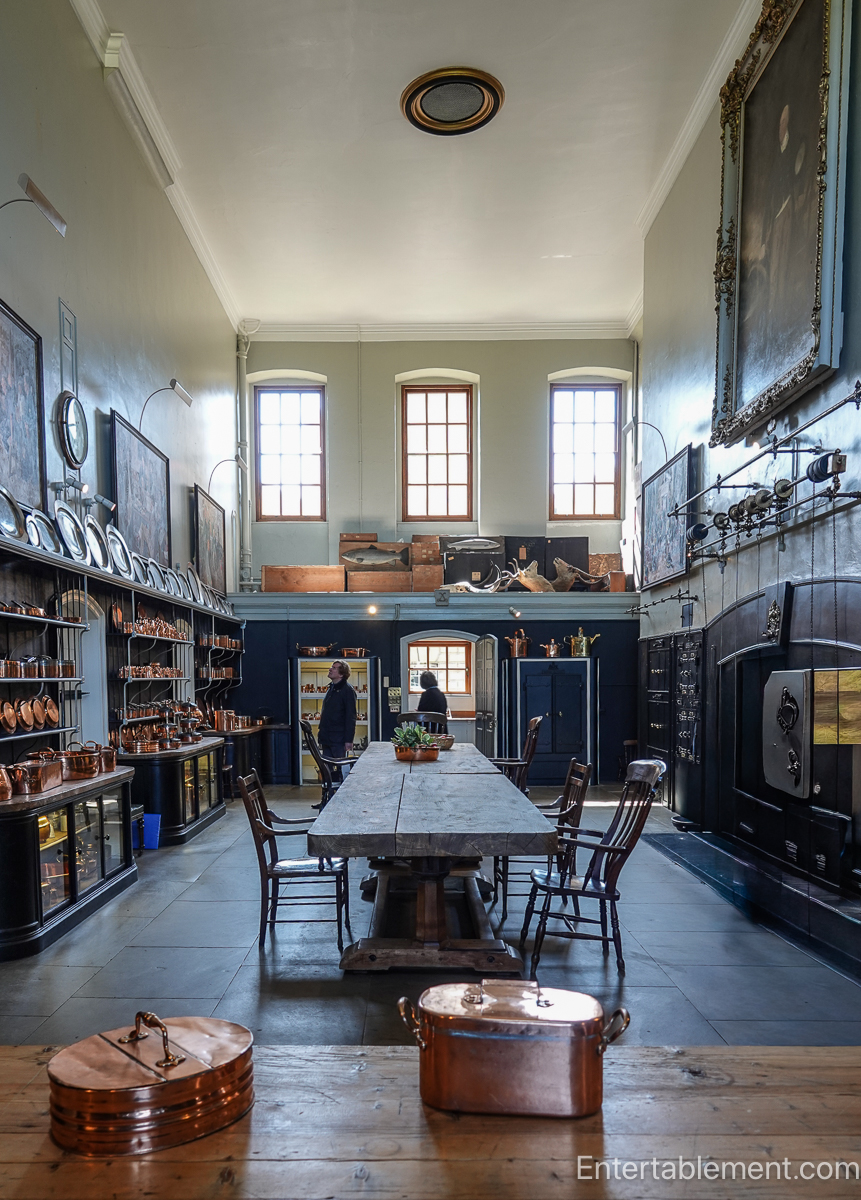
Even the social structure is built into the plan. As the steward’s rooms remind us, there were distinctions within the staff as carefully observed as those among the family and their guests. The house functioned because everyone knew their place within it.
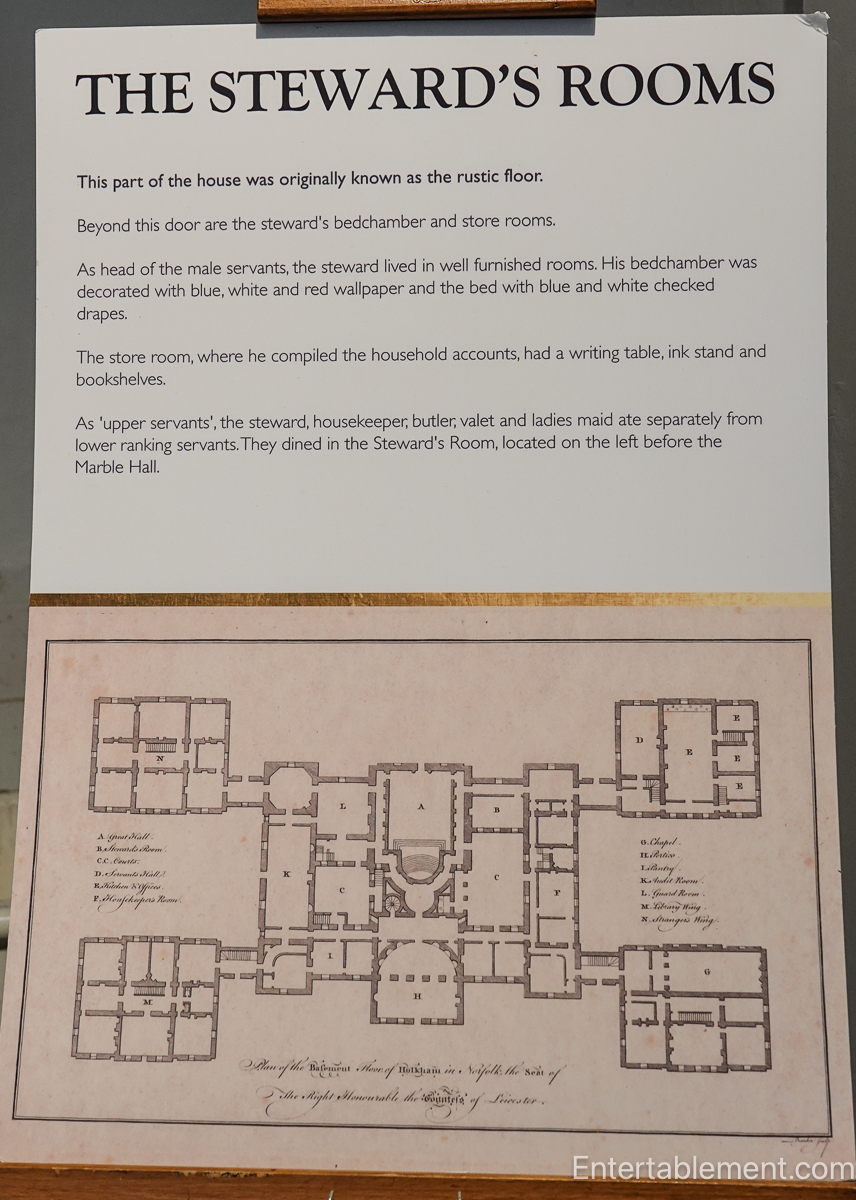
Standing here, it becomes clear that Holkham is not simply a composition of rooms, but an organism—one in which the visible and invisible parts are equally essential.
A Moment, Unexpected
Just as we leaving, something quite unexpected occurred. A young girl sat down at the piano in the Marble Hall and began to play — a piece I half-recognized, one of those modern classics, lyrical and just familiar enough to catch at you.
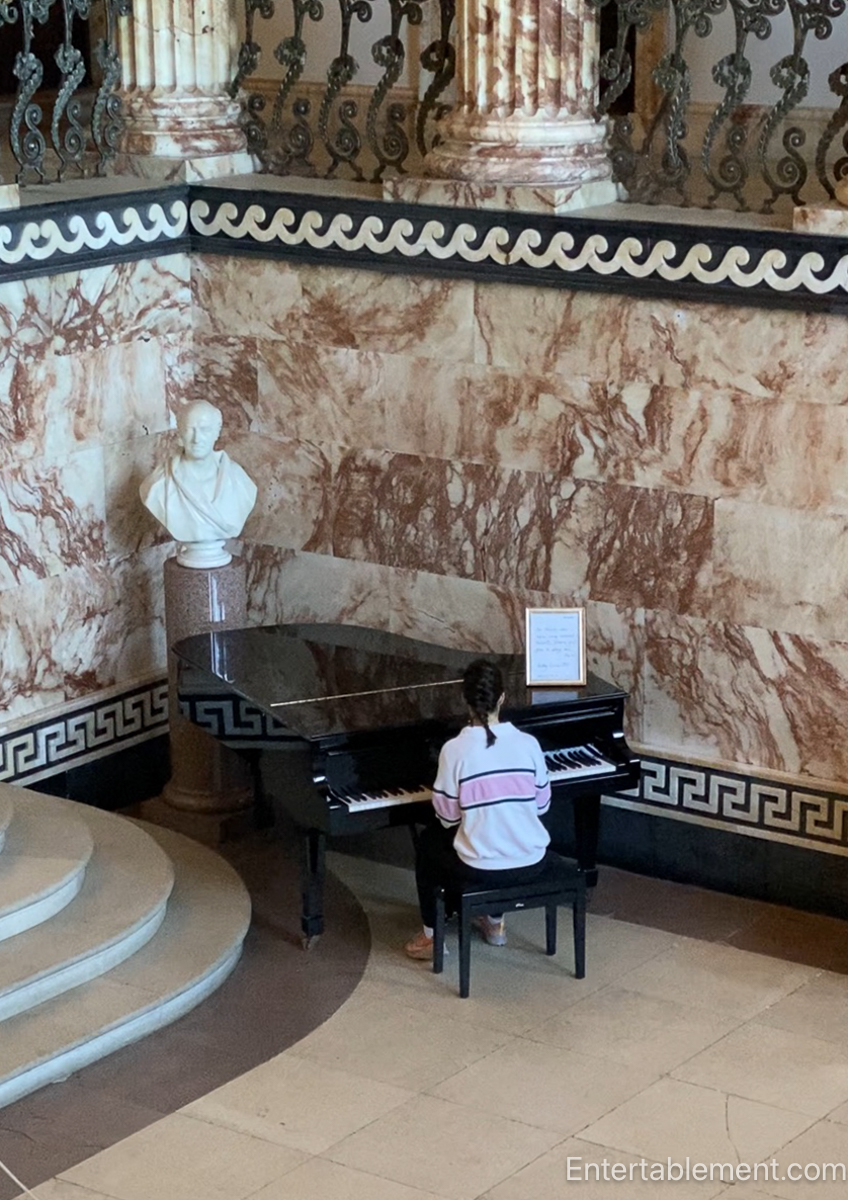
It is difficult to explain why this felt so different from everything that had come before. Perhaps it was the scale of the room, grand and almost abstract in its perfection. Perhaps it was the sound itself, rising up to that coffered ceiling. Or perhaps it was simply the contrast between all that carefully constructed order and something immediate, unstudied, and entirely human.
She played easily, almost without effort, and without any sense that she was performing. There was no attempt to draw attention, only a quiet enjoyment of the instrument and the room. And yet the effect was unmistakable.
For a few minutes, the house seemed to shift. People stopped moving. Conversations fell away. The Marble Hall, so carefully composed, so assured in its symmetry, became, quite simply, a place to listen.
When she finished, there was a brief pause, as though the room itself were reluctant to let the sound go. Then came the applause, spontaneous and warm. She looked up, momentarily startled, as if only then realizing she had not been alone.
A Living Legacy
Many great houses evolve gradually, absorbing the preferences of successive generations. Holkham accommodates change carefully, without losing sight of what it set out to be; it is still owned by the family, who continue the dual stewardship of land and legacy. Visitors can explore not just the grand rooms and temple-like façades, but the estate’s thriving farming operations, wildlife initiatives, and ambitious sustainability goals.
The house, it turns out, was only part of the story.
The Reluctant Aristocrat
If the first Coke gave form to an idea in stone, another would take that same impulse and apply it beyond the walls. Thomas William Coke, 1st Earl of Leicester (1754–1842), often known as “Coke of Norfolk”, shaped Holkham’s reputation just as profoundly.
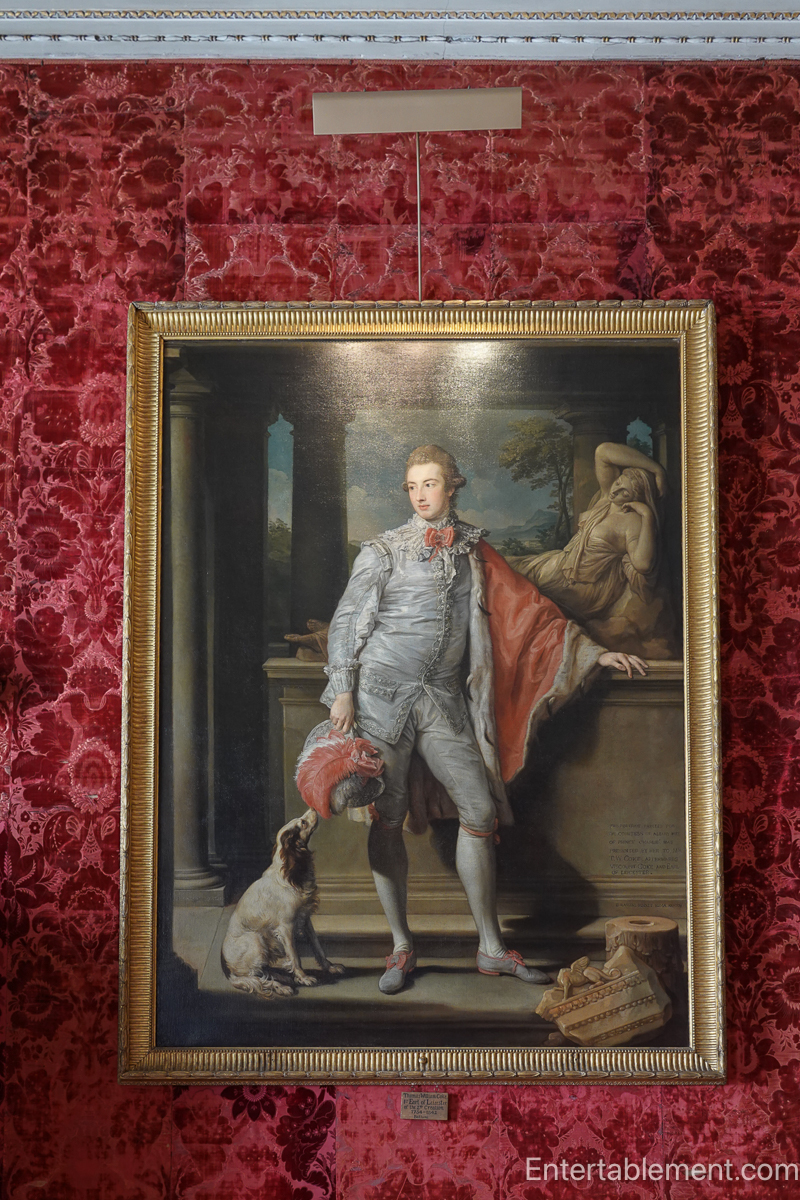
An agricultural reformer and staunch Whig, he is best remembered not for inherited titles (he famously turned down a peerage for decades), but for experimental farming methods, generous tenancies, and his annual “sheep shearings,” which became seminars in progressive agriculture.

He believed landownership came with responsibility—to the soil, the animals, and the people. Coke of Norfolk’s Holkham was not merely an estate; it was a proving ground for Enlightenment ideals. He would transform Holkham into a centre of agricultural innovation, rethinking the relationship between land, tenant, and owner in ways that would have lasting influence.
Stay tuned! We will explore how Holkham evolved under his guidance in the next blog.