
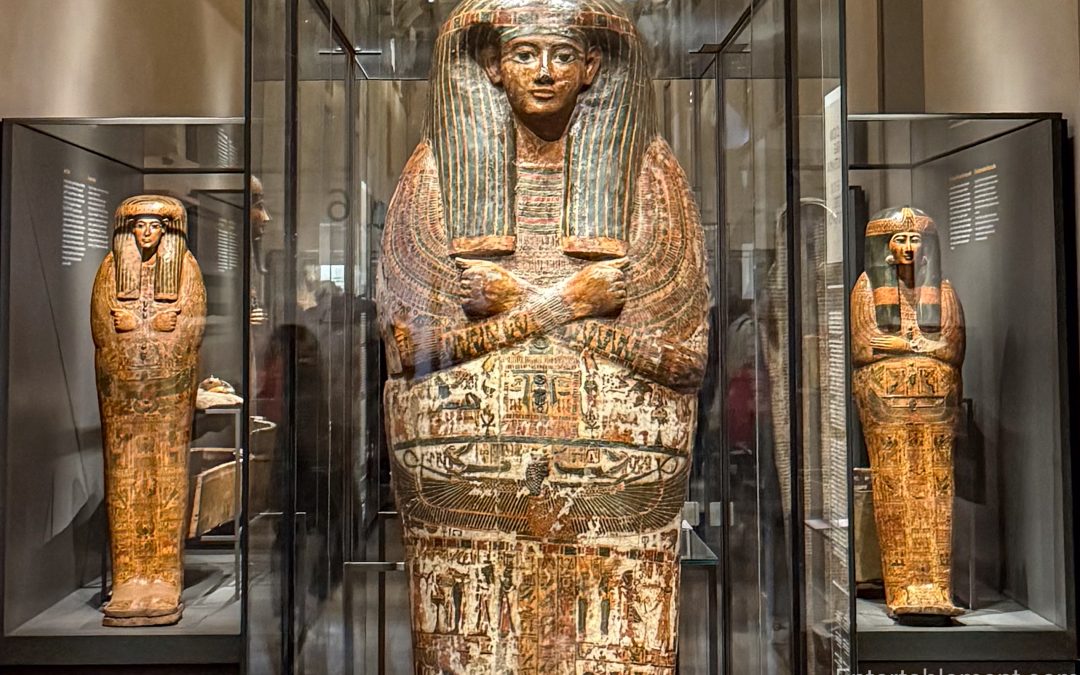
Turin was not supposed to be the point.
This was a Northern Italy trip with friends — Bill and Maura — the kind of people who have already seen most things, lived in most places, and are not easily impressed. Americans, but only technically so: twenty-three years stationed overseas, mostly in England, with interludes in Belgium and Portugal. Bill spent his working life navigating the slow-motion earthquakes of corporate sales, mergers, and reorganizations. Maura is the embodiment of calm steadfastness with a wicked sense of humour. The perfect travel companions.
She had always wanted to see Lake Como, and the boys were dying to go to the Italian Grand Prix. It all fit. As it turned out, the Italian Grand Prix was a badly organized logistical nightmare and profound disappointment — but that is another story. Trips always include bits of “oh…wasn’t expecting THAT”—good and bad.
Routes, destinations, hotel and self-catering options were considered, discarded or confirmed, then booked. From Lake Garda’s exquisite Palace Hotel Villa Cortine, to four days in Como, on to a self-catering on Lake Maggiore, through Milan to see the magnificent cathedral, we arrived in Turin, our penultimate destination. Slightly travel-worn and more than a little footsore. Bill and I, (the logistical people) paused, looked at each other, and said, “Remind me — why are we in Turin?”
The hotel was supremely comfortable, the food excellent. We settled in. The following morning, setting out on foot, we toured the long, elegant shopping arcade.
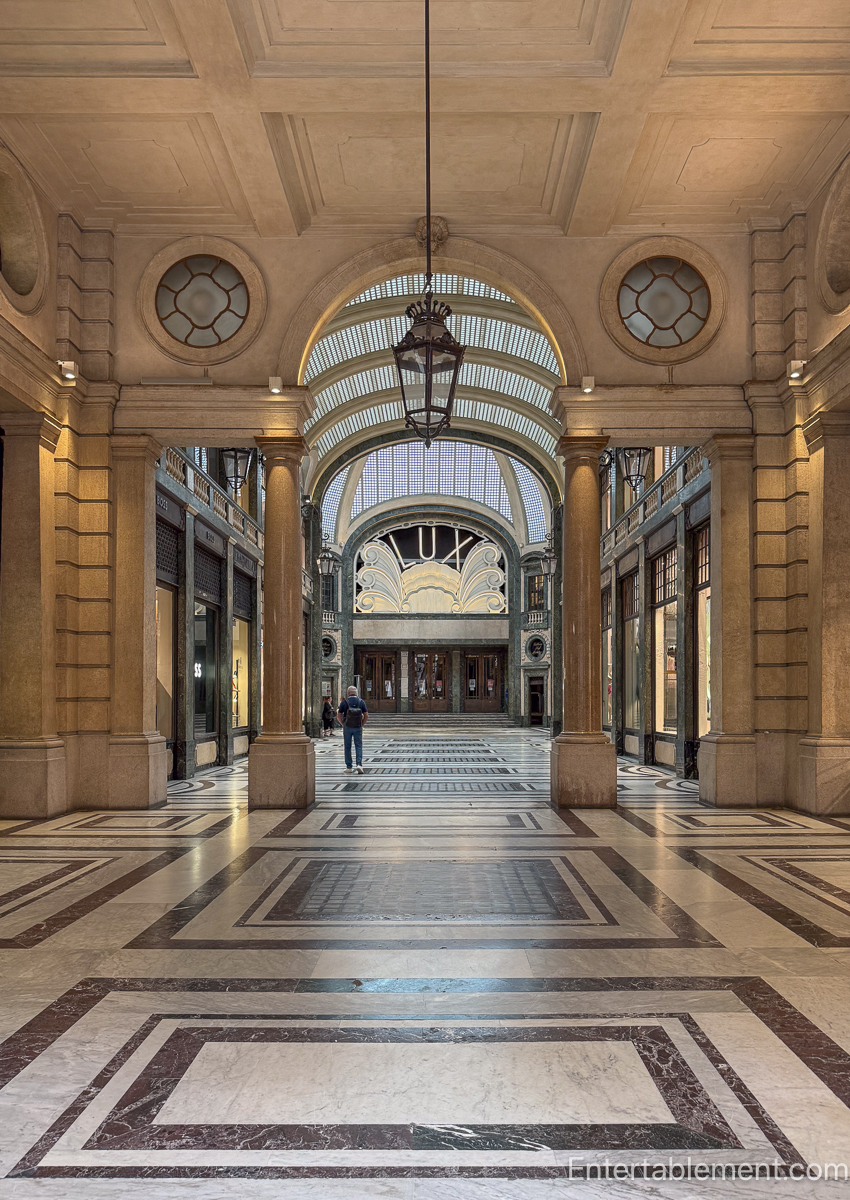
We next stumbled onto the Museo Egizio, for which Turin is famous, according to a bit of online digging I had done the previous evening. Tickets were readily available. We had not prepared in any way or had any feeling that that this was going to matter. It was simply there. It was open. And we went in.
Within minutes, it became one of the highlights of the entire trip.

Not because it was flashy or cleverly staged. Au contraire: it was calm, serious, and utterly uninterested in entertaining us. What it offered instead was competence — a civilization explaining itself without apology, sentimentality, or drama.


If I had thought of Egypt at all, it had been because of the pyramids. Those grand, awe-inspiring symbols of greatness. But this was something very different. Not Egypt as spectacle. Egypt as system.

Tools. Lists. Instructions. Labour organized into guilds and shifts, paid not in abstraction but in food, drink, and clothing. Work was specialized. Knowledge was passed from father to son. Names survived because the systems they served endured.
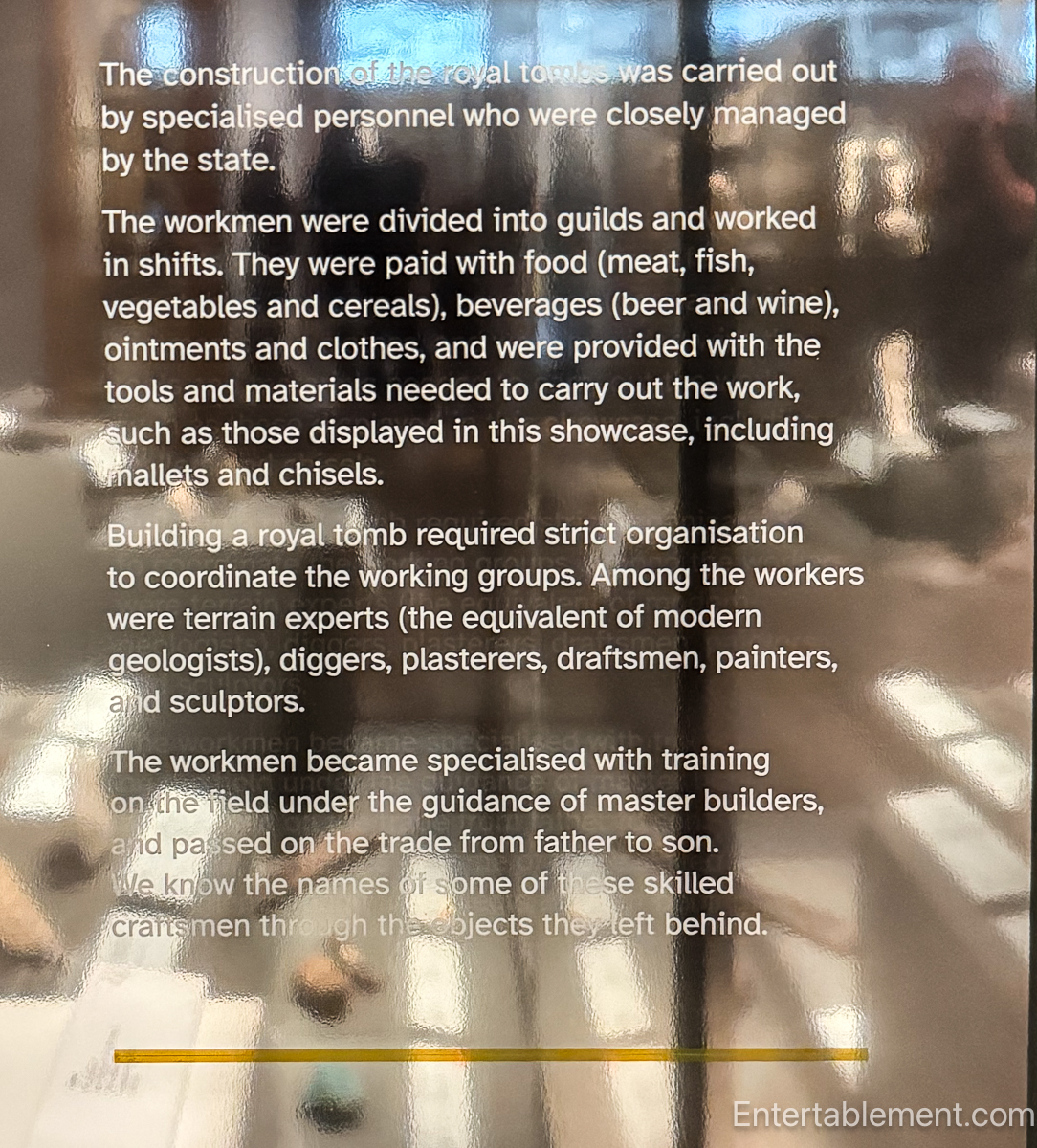
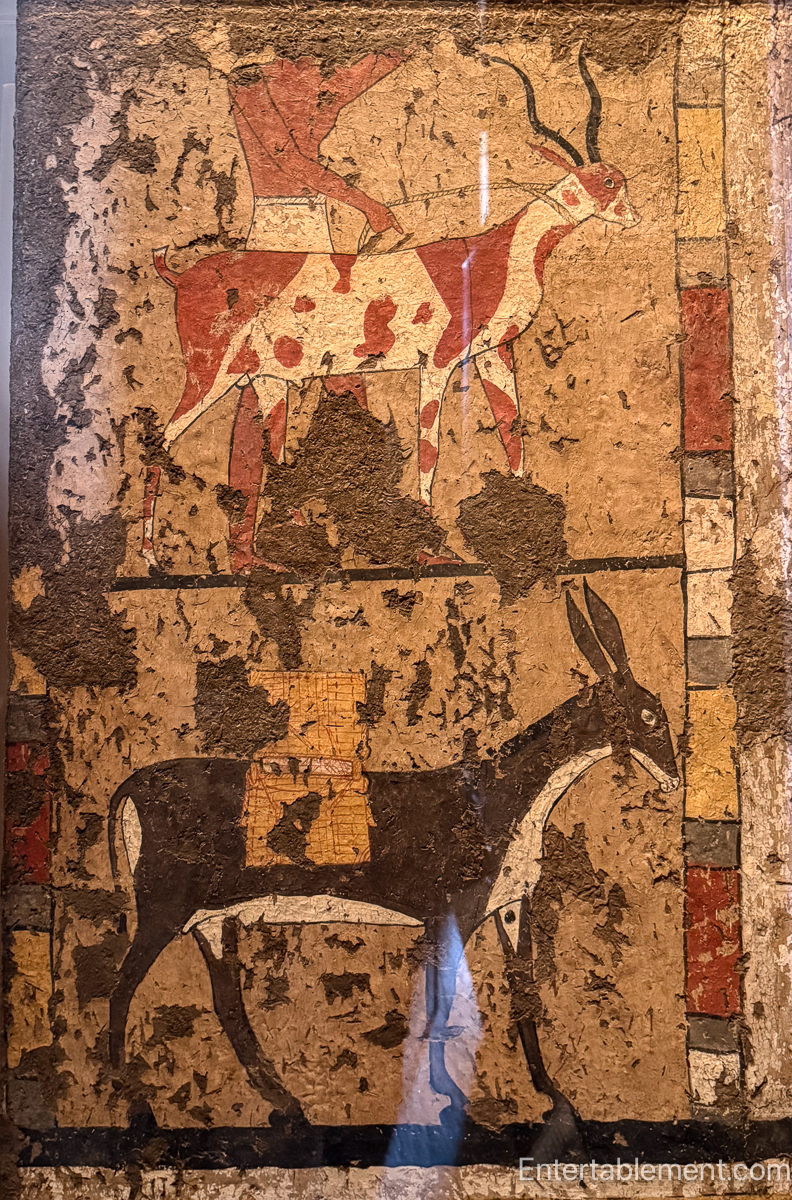
The tombs themselves were not conceived primarily as monuments to death. They were designed as continuations of life. Monumental burial required strict organization — diggers, plasterers, draftsmen, painters, sculptors — but what filled the spaces was not fantasy. It was work scenes, banquets, music, transport, counting, carrying, rowing. Not aspiration, but provision.
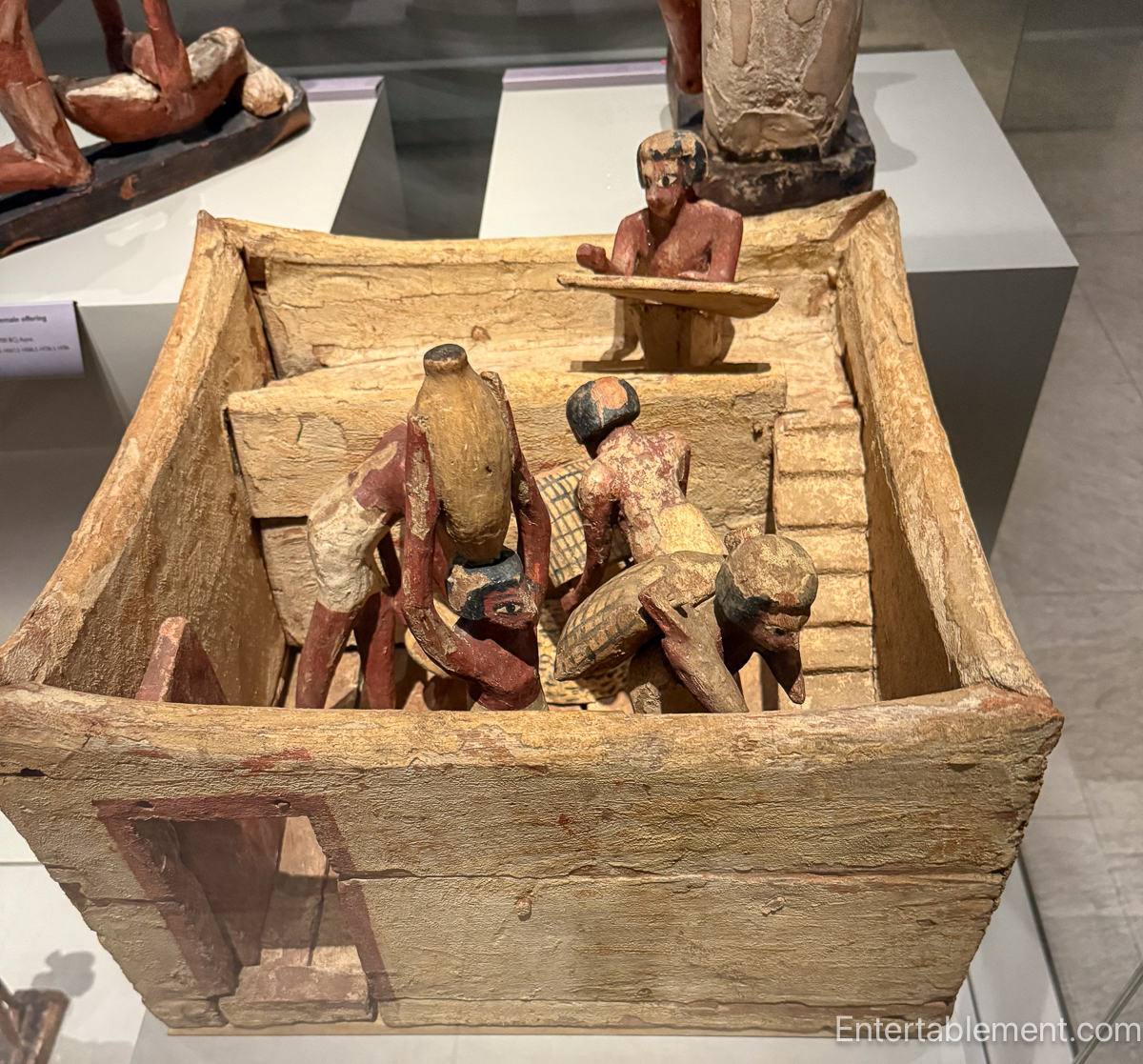
It is tempting to say that what we see now is ordinary because the precious things were stolen — that gold and jewels were stripped away by tomb robbers, leaving behind the practical residue of daily life. But that misses the point. The Egyptians included these things deliberately. Death was not imagined as an ending, but as the beginning of another journey — one that still required sleeping, eating, working, and being cared for.

Beds and linens were necessities, not symbolic stand-ins. Food was sustenance. Helpers were provided as labour — ready to stand in when the deceased could not work.
Again and again, the dead are shown seated before tables laden with offerings: bread, meat, jars of drink. Nothing theatrical. Simply what was required.
Even the afterlife, it turned out, required administration. I was hugely amused to see how early bureaucracy had taken root in civilization—and extended its tentacles into the afterlife.
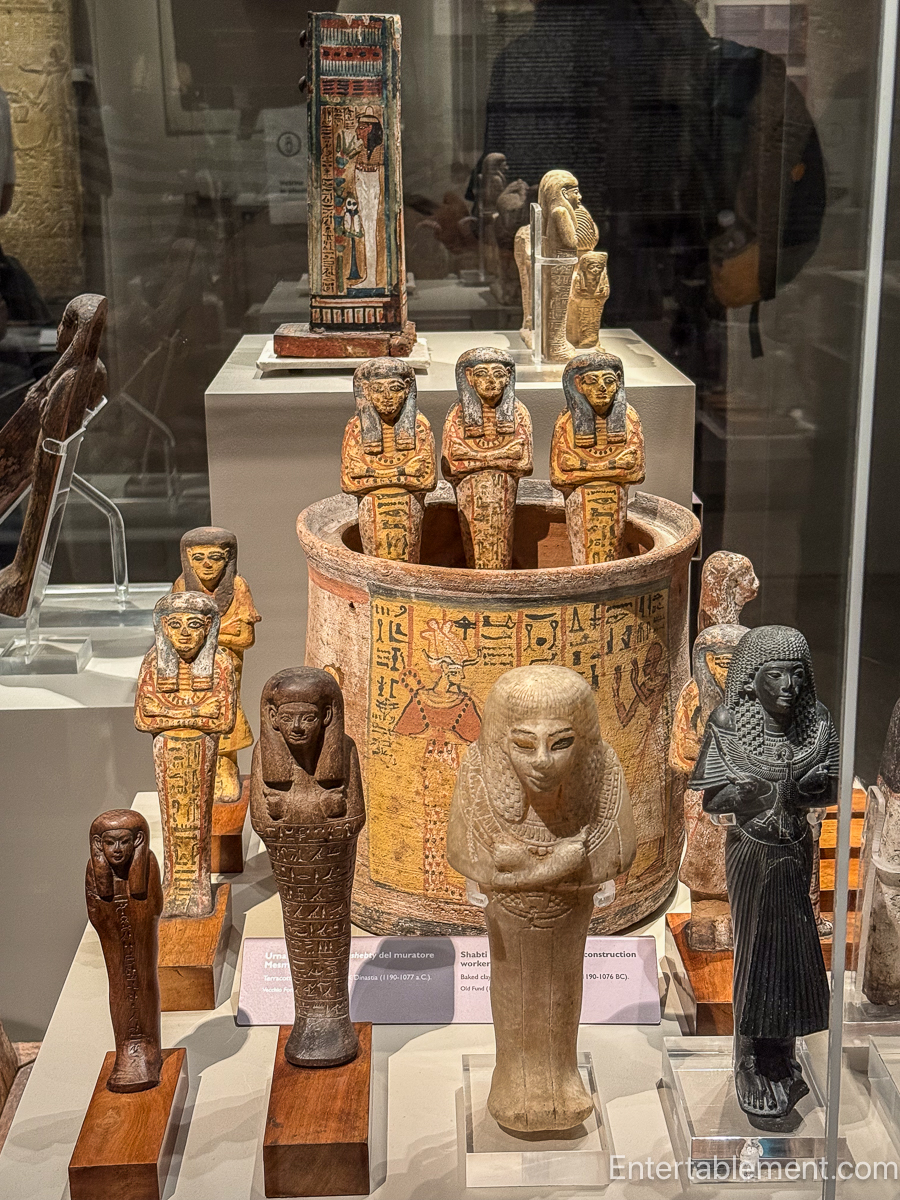
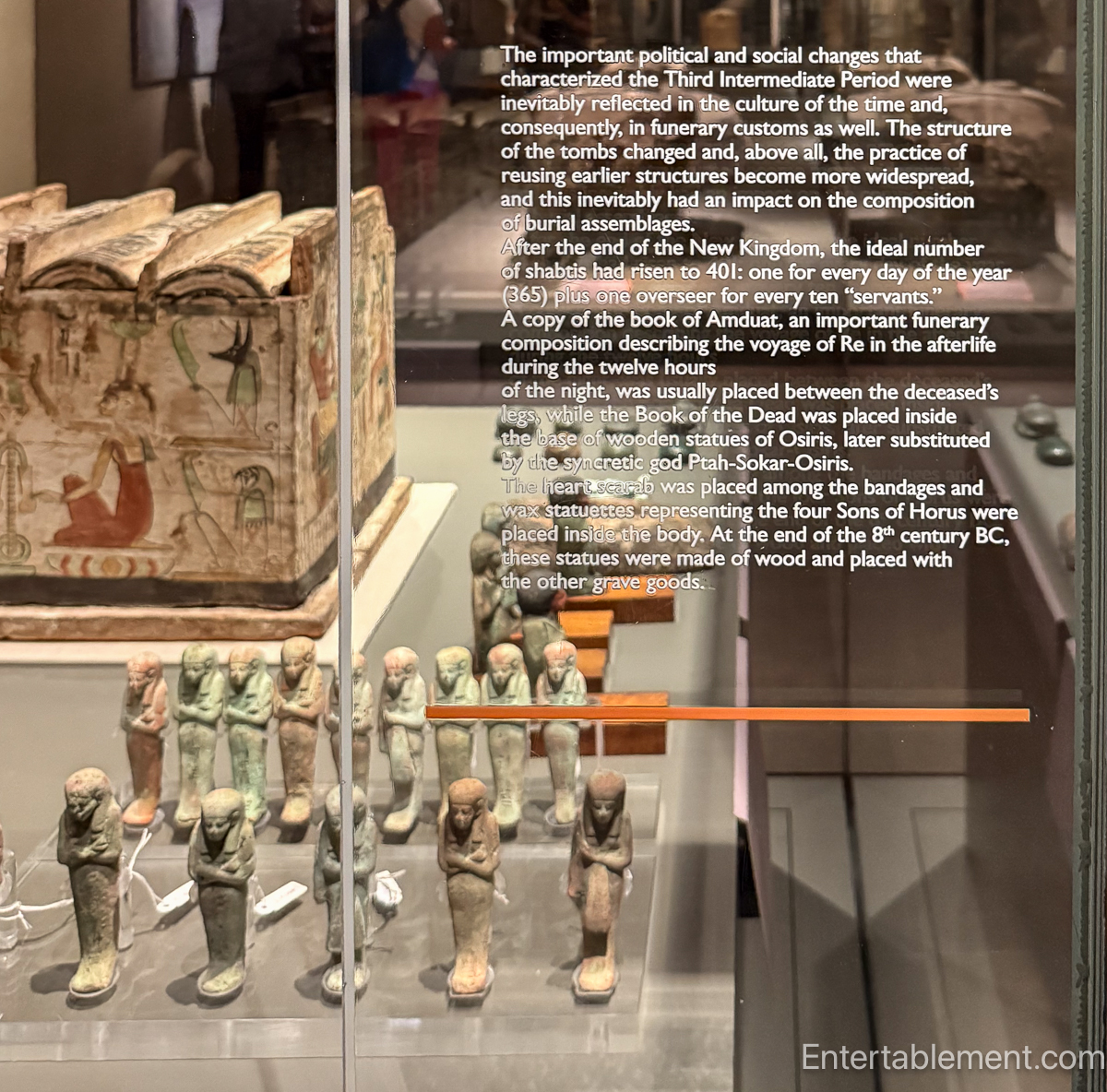
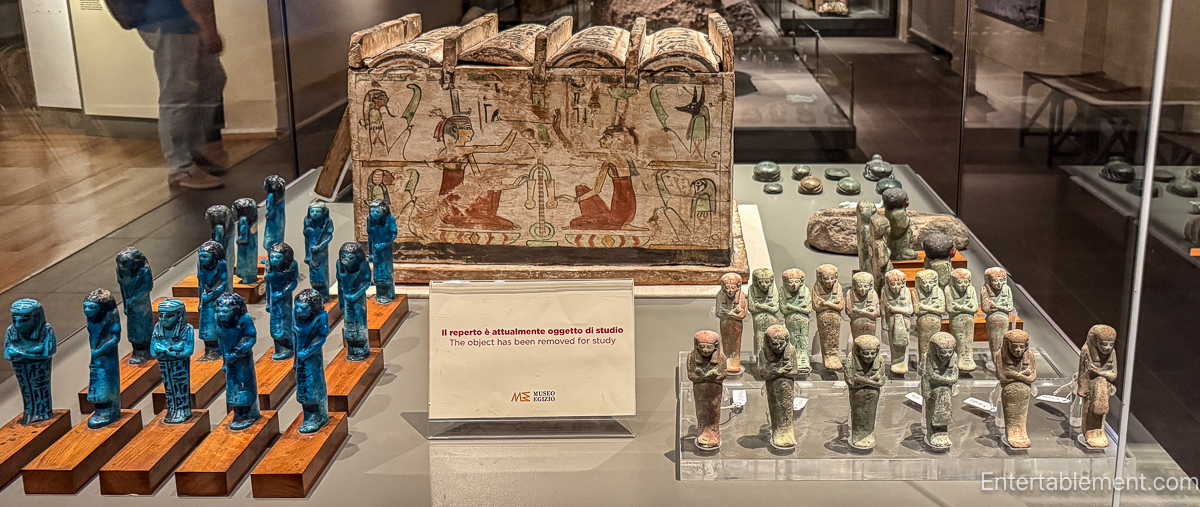
The shabtis — small mummiform figures equipped with agricultural tools — were intended to replace the deceased if summoned to work in the netherworld. Over time, their numbers increased until a standard emerged: 365 figures, one for each day of the year.
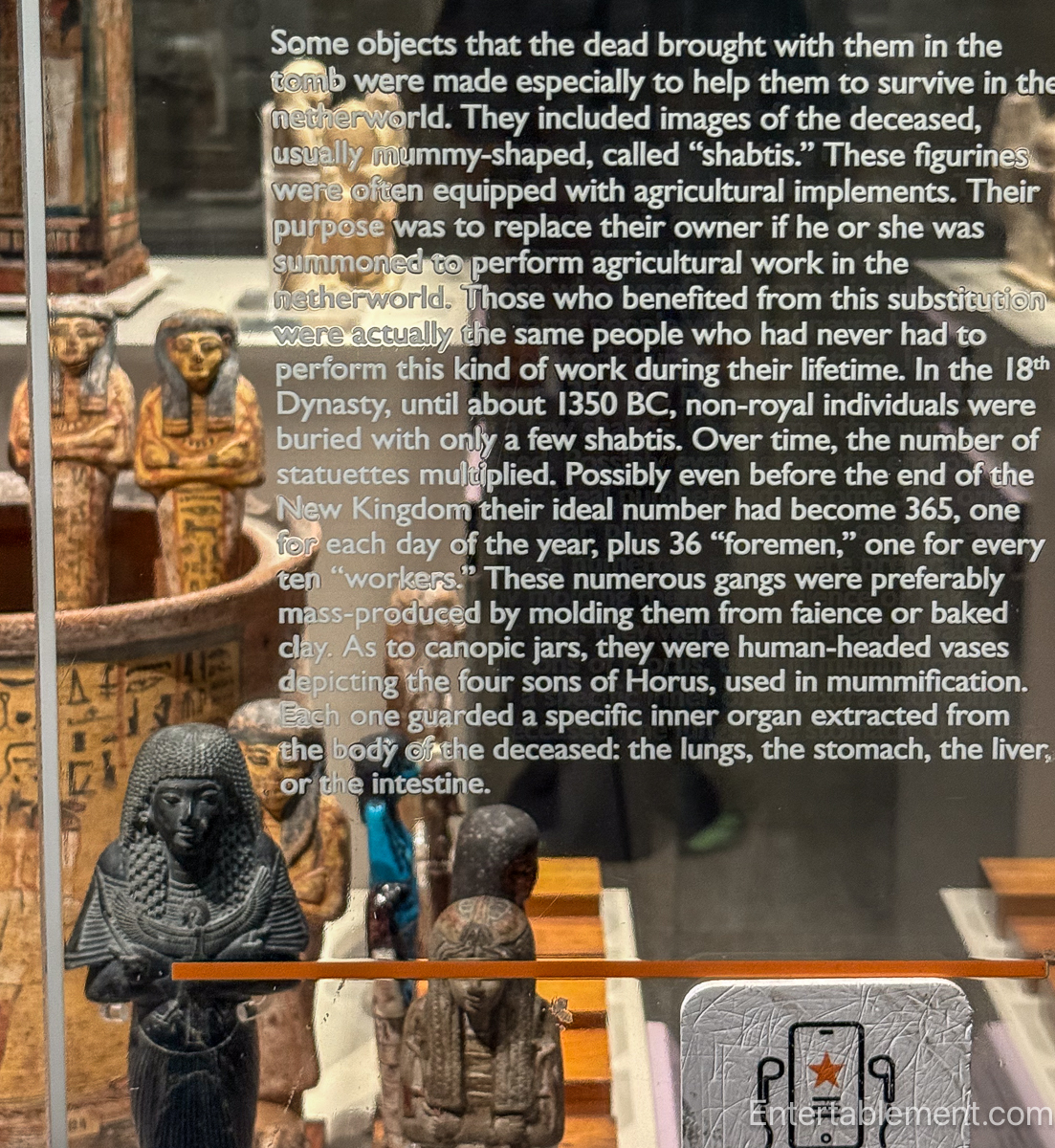
But labour, ancient Egyptians clearly understood, does not organize itself. So supervisors were added — one for every ten workers — creating a complete hierarchy of eternal agricultural provision.
Government bureaucracy, it seems, has a very long history.
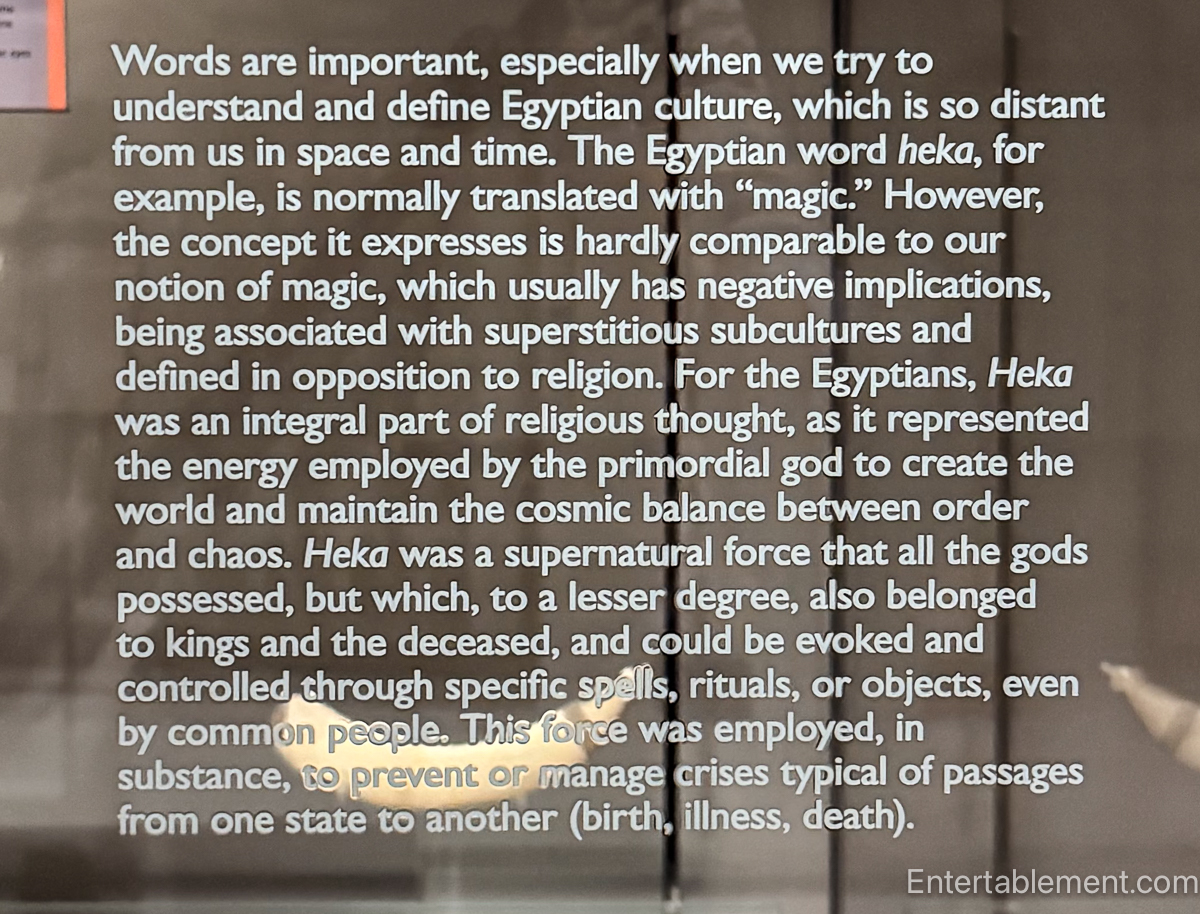
The museum texts were clear and informative. Words mattered. They explained that heka, so often translated as “magic,” was not superstition but energy — the force used to create and maintain balance between order and chaos. It could be invoked through objects and ritual to manage moments of uncertainty and instability: birth, illness, death. Not hysteria. Management.
The goal was not transcendence, but participation. To travel with the sun god through the night. To rise again in the morning. To keep things going.
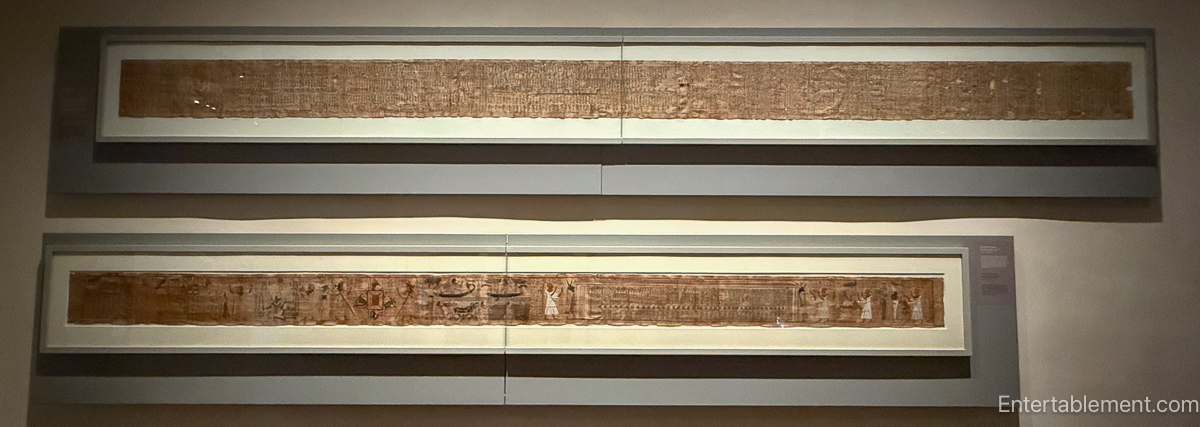
The Book of the Dead reinforces this same sensibility. It was not a single book, but a collection of spells, instructions, and guidance — customized, commissioned, and placed with the deceased to help them navigate what came next.
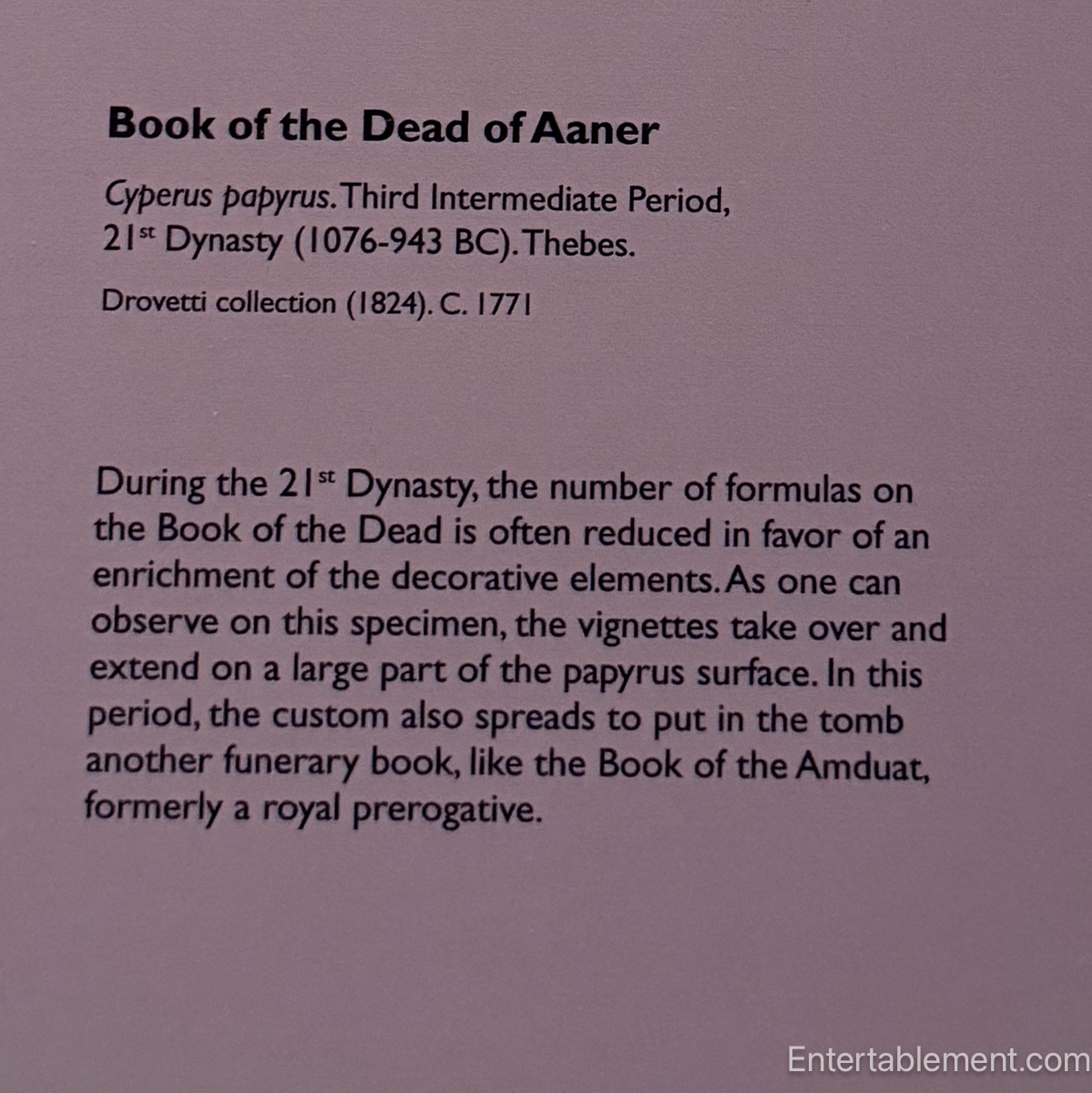
These were preparation. The afterlife, like life, involved gates, decisions, risks, and responsibilities, and one was expected to arrive equipped.

It turns out that the Book of the Dead is less a mystical text than a manual — a way of ensuring that nothing essential was left to chance.
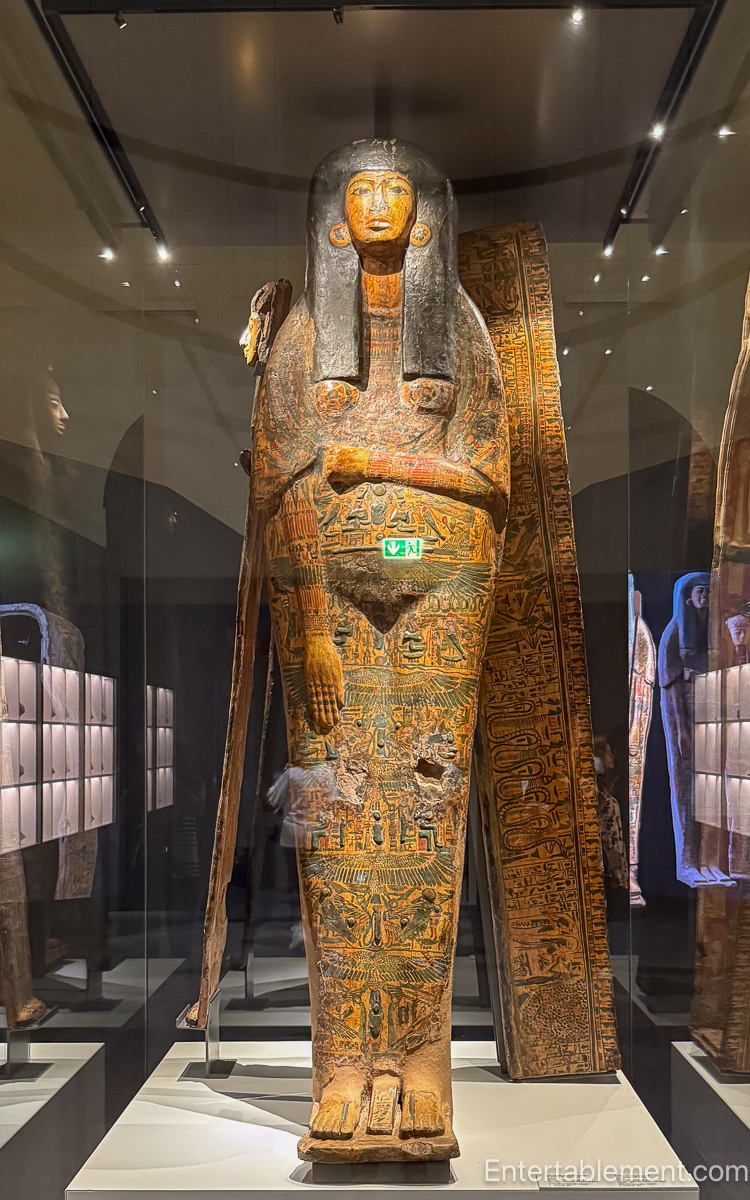
Before the Book of the Dead existed as papyri placed in tombs, the instructions were written on coffins themselves. The painstaking detail is incredibly beautiful.


Coffin shapes evolved. Anthropoid forms emerged — the deceased aligning themselves with Osiris, and through him with the daily cycle of the sun.
Then there were the beds. Actual beds, not symbolic ones.
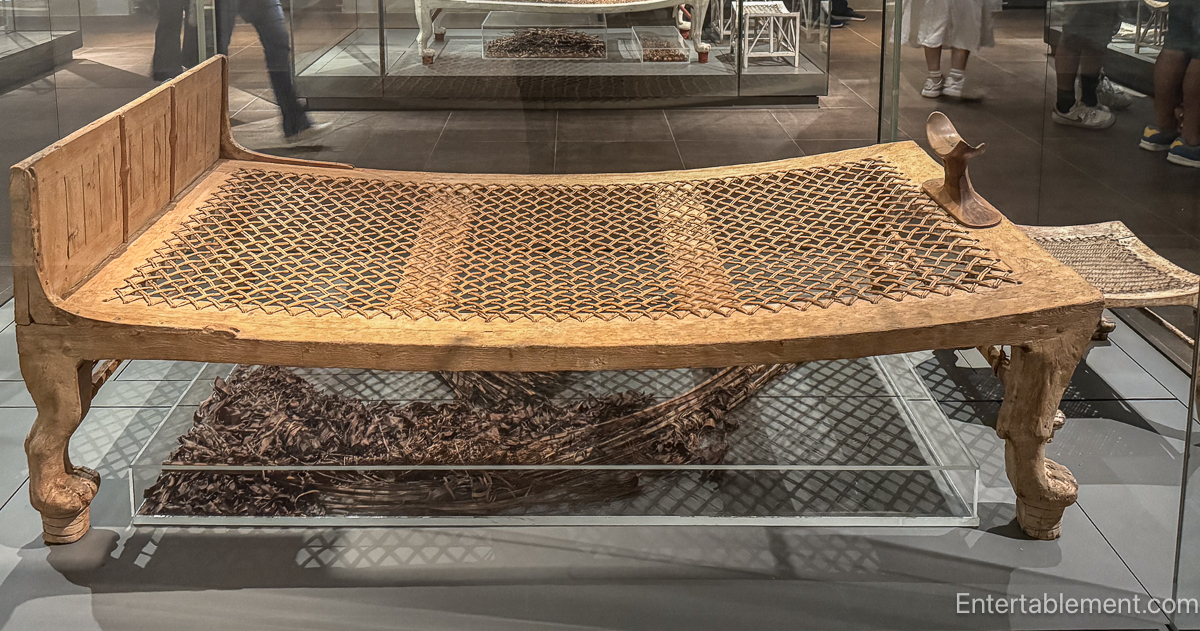
One larger, one smaller — his and hers — found in the tomb of Kha and Merit, an upper-class couple whose burial was discovered intact in 1906. Linen sheets, blankets and towels. A woven plant-fibre mattress. A wooden headrest instead of a pillow (not the most comfortable, perhaps, but clearly in vogue). The bed legs carved as lion paws — protective, because sleep and dreams were understood as a vulnerable border between worlds.
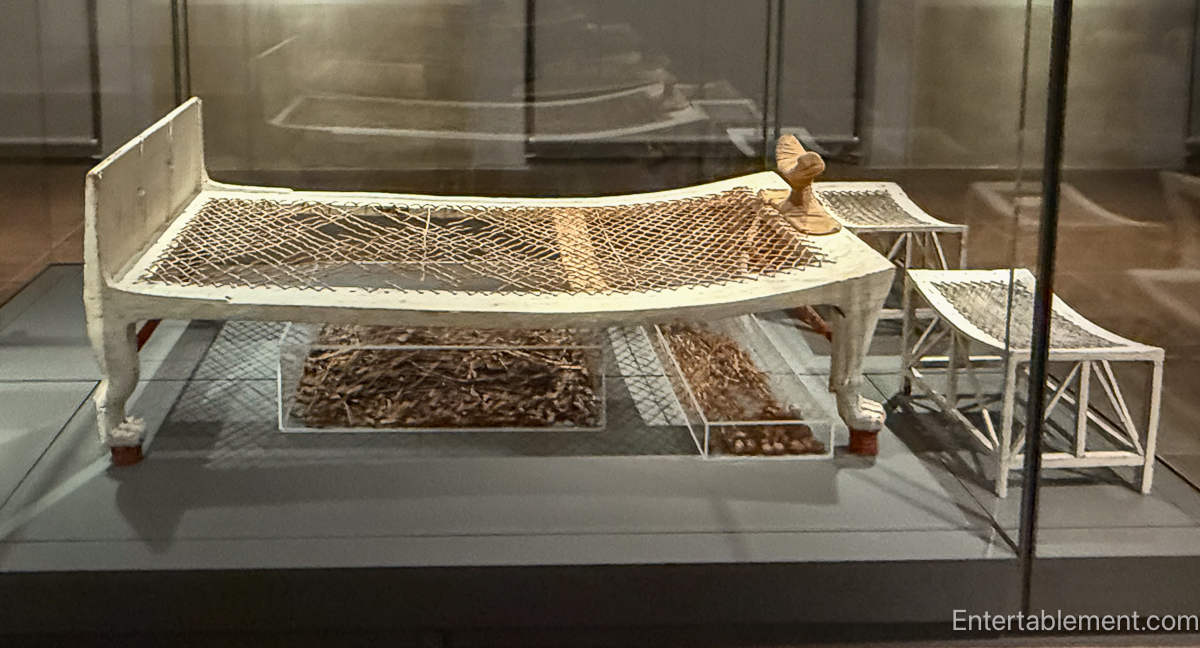
Comfort mattered. Not symbolically. Practically.
Standing there, looking at those beds, I thought of my grandmother.
Born in England in 1895, she never raised her voice or even fussed. She cooked, knit, and did jigsaw puzzles through every upheaval. She could make a roofing tile taste good. The world might be at war, in Depression, on fire, but supper would appear and it would be delicious.
In Britain, the gravest social indictment is not that you are wrong, or even cruel, but that you have upset people. The emphasis is not on expression, but on consequence. Not on feeling, but on management. Keep Calm and Carry On.
I realized, standing there, that this might also explain my long affection for Elizabeth Peters’ Amelia Peabody series. Amelia — Sitt Hakim, as she is called — is an accidental Egyptologist with an unwavering commitment to domestic order. She urges her husband, Emerson, to find a “suitable tomb’ in which they can set up housekeeping during excavations. After all, they must retire to eat and rest during a busy day of digging and cataloguing. She also demands the donkeys be thoroughly washed and treated humanely. The dehabieh (houseboat on which they live) must be comfortably stocked and the camp be run without hysteria. Excavation, in her world, is not romance. It is logistics, housekeeping, and competence under pressure. She also solves many murders, but that’s a sideline. 🙂
Walking through the Egyptian museum in Turin, that sensibility felt suddenly ancient rather than quaint and faintly outdated. Here was a civilization that survived for millennia by organizing life — and death — with care, restraint, and generosity.
We had come to Turin almost by accident. We entered the museum without expectation. But what we encountered there was not foreign at all. It was the long view. People throughout history have cultivated food, stored it for the off-season, cooked and served it, assigned and carried out work, and made beds.
It gives me tremendous confidence that, however precarious things may feel, people have coped before — and are doing so right now.
This essay is part of The Continental Thread — a series exploring how authority, culture, and daily life reorganized themselves as Europe moved from Roman order to the modern world.
Next in the series:
Greece — When Life Moved Into the Open





This was such an eye opener on the Egyptian culture. I’m so glad we stumbled upon it and enjoyed a wonderful lesson in Egyptian history. We also unexpectedly enjoyed Turin. It must have been the travelling companions that we were with namely you and Glenn!
Wasn’t it? The unexpected is often the best. I will never forget us driving into Turin, struggling to find the hotel, and then wondering out loud, how did we get here? The whole trip was such fun. Looking forward to the next one. 🙂 You are THE BEST travelling companions.
I love it when you take us along on a trip. How very interesting. Were all of the signs in Turin in English?
I am so glad you enjoyed it! The highway signs are in both Italian and English, Myrna. And the vast majority of people in the service industries speak excellent English. We had no problem finding out what we needed to know.
Wow! I had no idea…what a beautifully written, colorful tour you have given us! Thank you! (Note to self: must visit Turin!)
Clearly, neither did we! LOL!