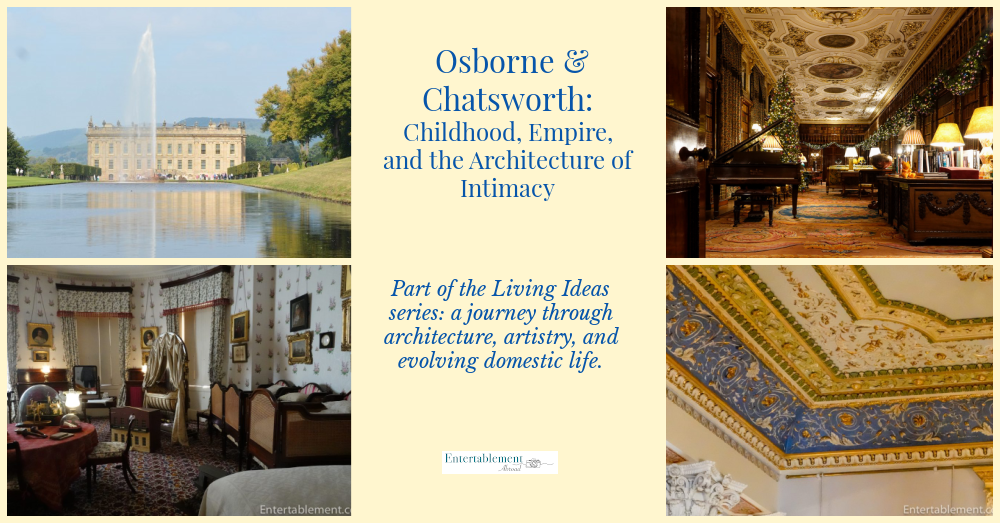
Where Villandry and Cheverny reflected the Enlightenment’s faith in reason and domestic refinement, Osborne House and Chatsworth embody a time that was more emotionally expressive, morally instructive, and confident in its imperial power These are homes not just of high ceilings and heavy drapes, but of ideas—about family, childhood, duty, and dominion.
Osborne House: Victoria’s Private Performance
Osborne is domestic monarchy cast in Italianate stone. Commissioned by Queen Victoria and Prince Albert as a private retreat, it offered a vision of royal life apart from court pomp—one grounded in the values of industry, sentiment, and family. Its exterior evokes a Mediterranean villa; its interiors are a carefully staged middle-class ideal, scaled up to queenly proportions.
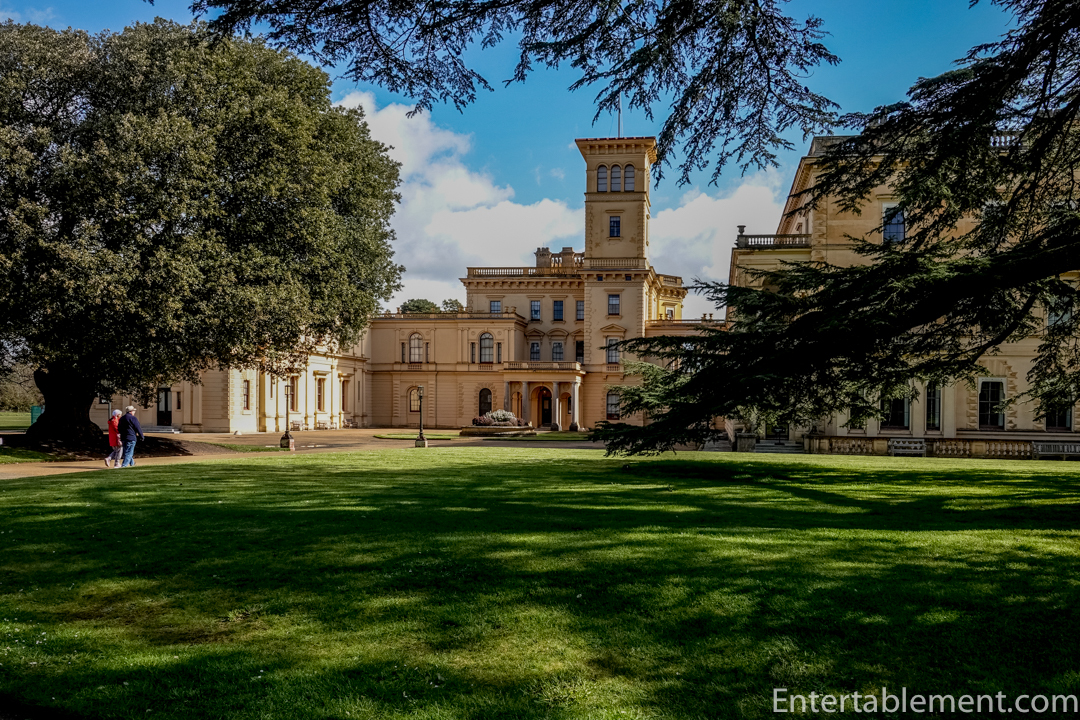
What makes Osborne particularly revealing is its emotional messaging. The extensive children’s wing reflects Albert’s belief in structured, progressive education. There are schoolrooms and nurseries, a small kitchen garden for the children, even a scaled-down Swiss cottage where they were encouraged to learn “real” skills. It’s a vision of childhood steeped in Romantic ideals: innocence, formation, and moral usefulness.

Nursery at Osborne House
Yet for all its humility, Osborne was also a training ground for imperial values. The Durbar Room, added in 1890, is a deeply ornate space designed to showcase India’s contribution to the Empire, featuring columns, carved elephants, and peacock motifs. In one house, we see the full range of Victorian duality: domestic modesty on one hand, global authority on the other.
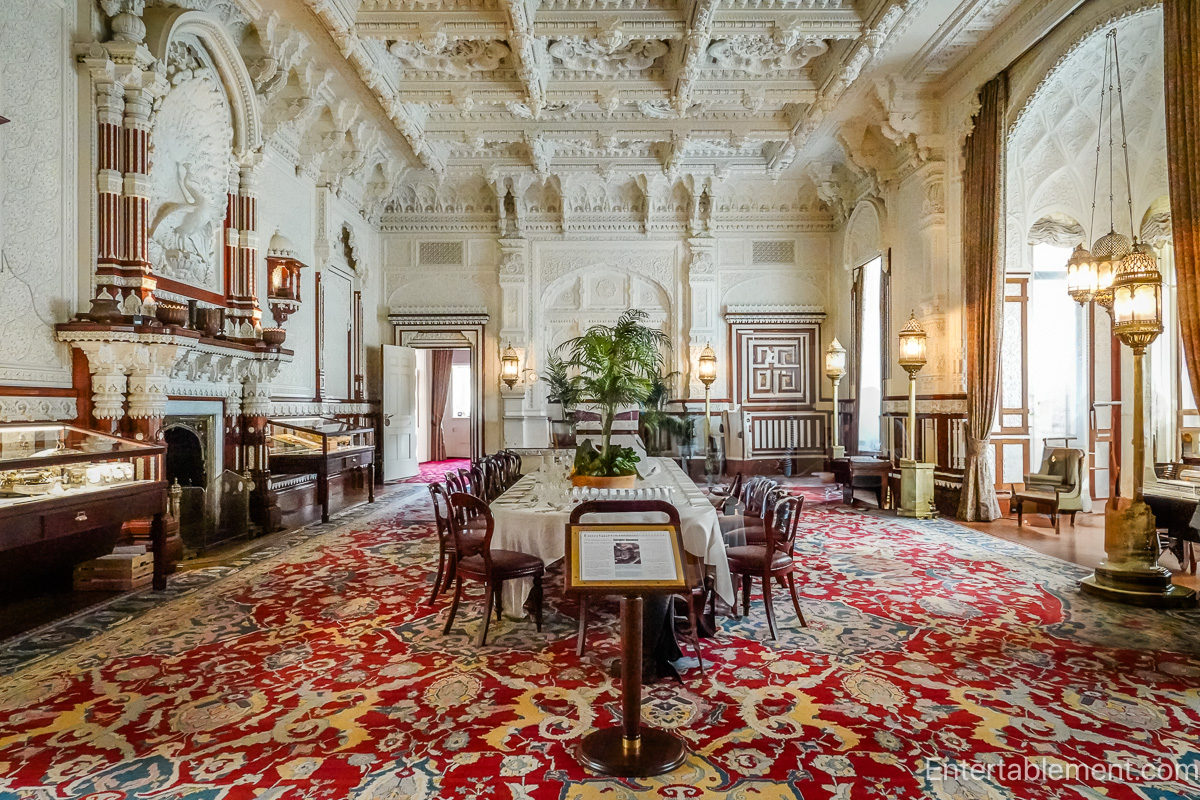
The Durbar Room at Osborne House
Chatsworth: Civility, Splendour, and Sentiment
If Osborne is a queen’s refuge, Chatsworth is an aristocratic manifesto. Originally erected as a showpiece of English Baroque grandeur, Chatsworth was later softened by 19th‑century Victorian additions. The grand yet comfortable North Wing and transformed interiors—like the library and sculpture gallery—bring Enlightenment values of openness, sociability, and intellectual comfort to a once purely declarative estate
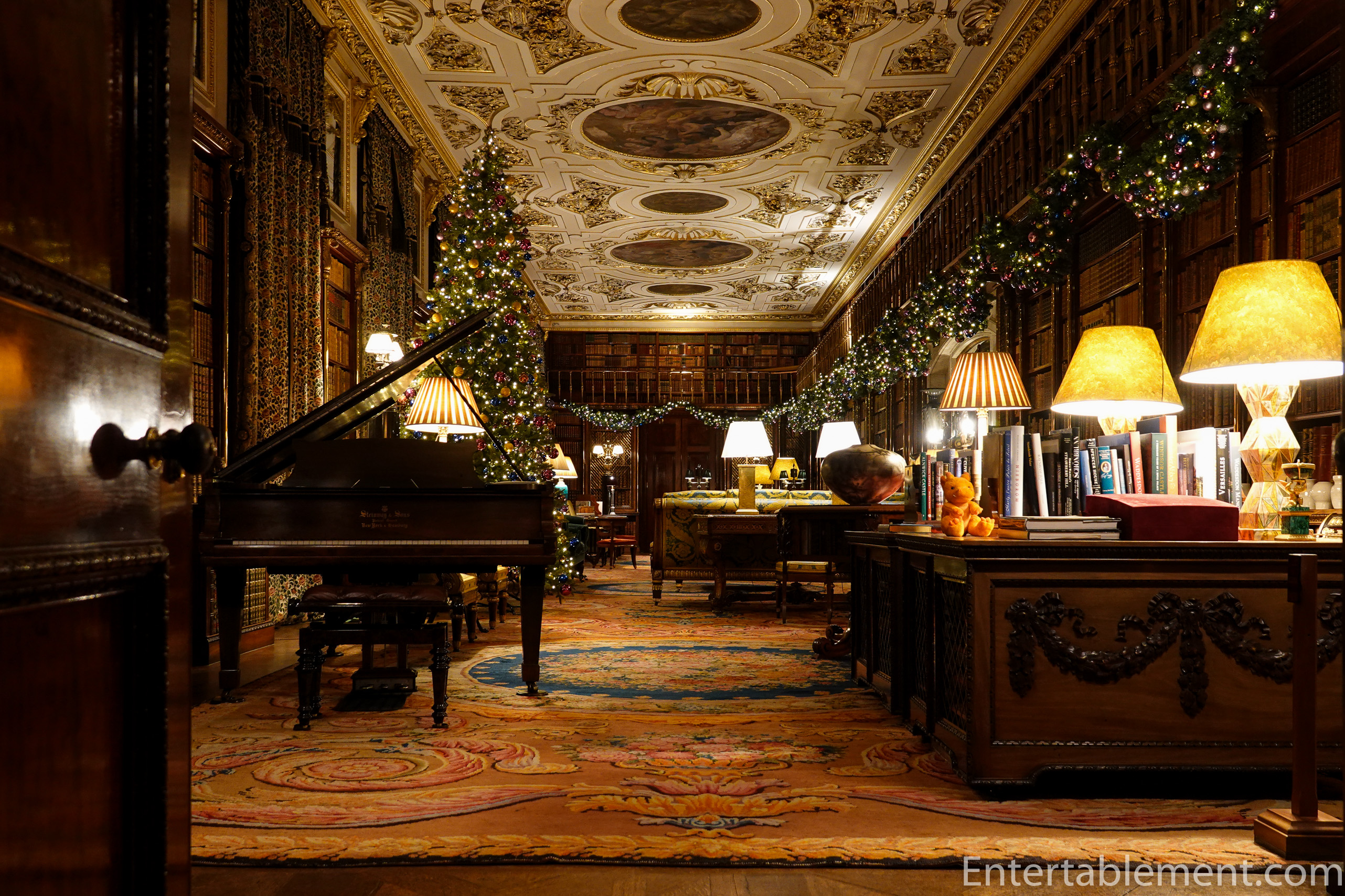
Library at Chatsworth

Sculpture at Chatsworth
Portraits abound, but so do comfortable chairs. The grand staircase offers a theatrical perspective, but it leads to bedrooms that show increasing attention to individual comfort and taste. There’s still hierarchy here, but it’s softened, elegant, and emotionally legible.
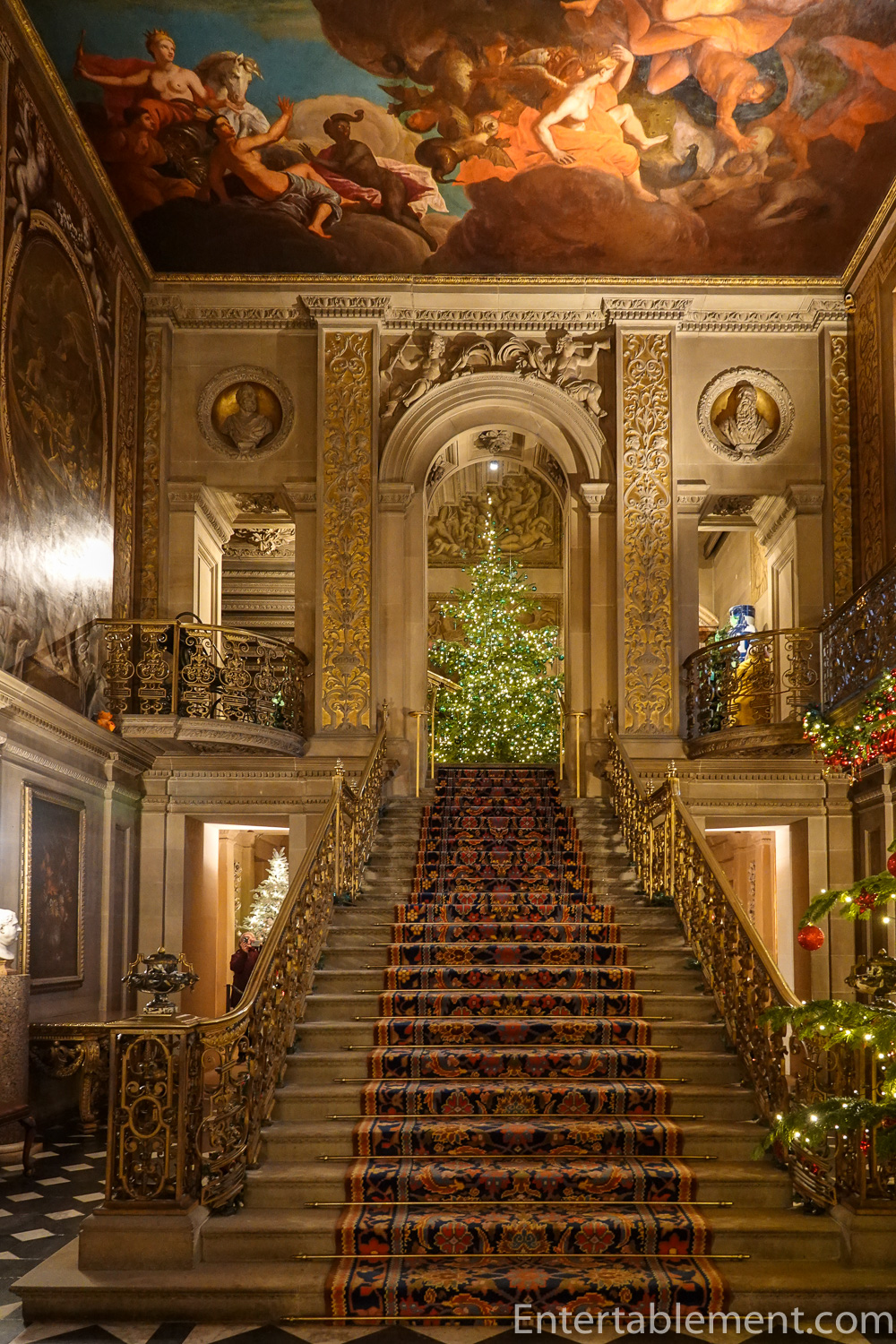
The nursery rooms at Chatsworth, now partially reconstructed for visitors, echo the same shift seen at Osborne: the child not just as heir, but as a person.

Wallpapers, playrooms, and dolls’ houses express an era in which the family became a moral theatre, with the home its stage.

From Enlightenment to Sentiment: A Cultural Inflection Point
What links Osborne and Chatsworth is their embodiment of Victorian ideals shaped by the Enlightenment but filtered through Romanticism, industrialization, and empire. They continue the trajectory that began at Villandry and Cheverny: the move from public grandeur to private meaning. Yet they also mark a cultural inflection point. If the 18th century idealized reason and balance, the 19th century enshrined feeling, progress, and control. The home became a symbol not just of taste, but of moral order and social mission.
In Osborne and Chatsworth, we see how those values were reflected in the physical space. Bedrooms became sanctuaries. Nurseries became laboratories of virtue. Even wilder and more picturesque gardens reflected a shift from geometry to organic symbolism.
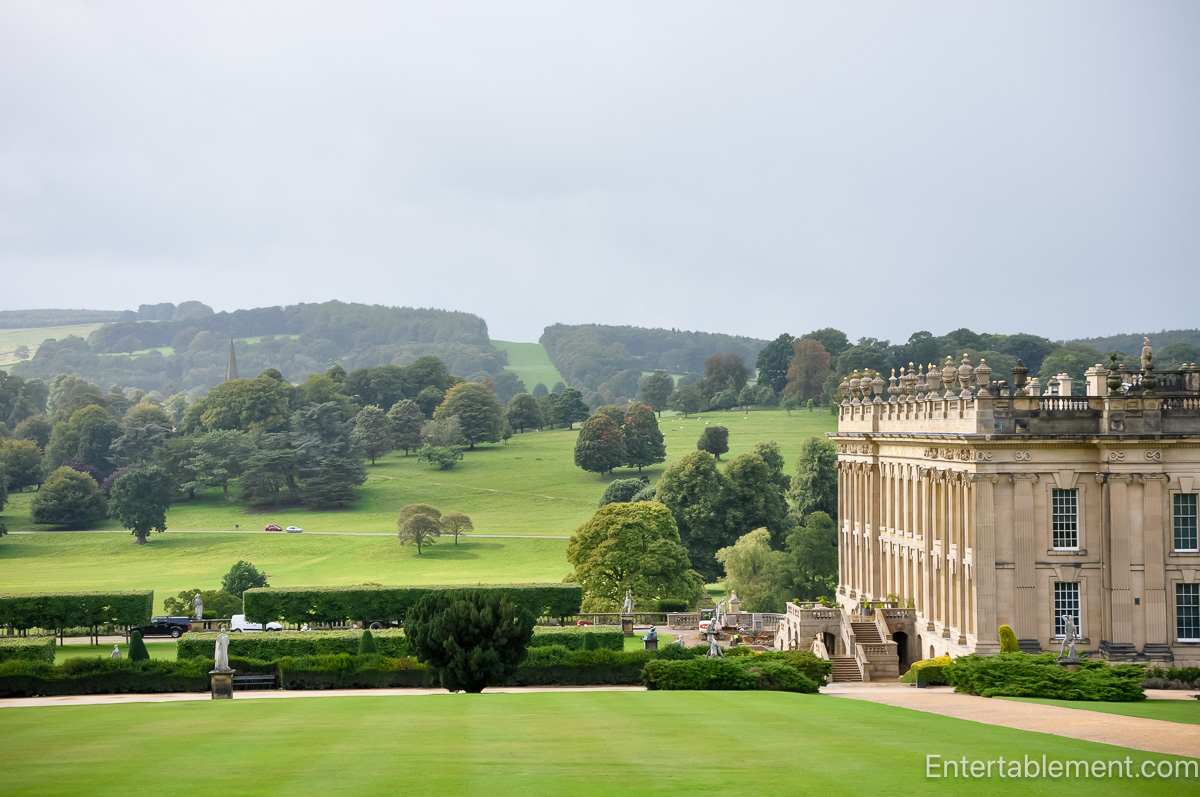
These were not merely great houses. They were living diagrams of how the Victorians saw the world—and their place within it.
This is the second post in the series “ Living Ideas: How homes have expressed power, identity, and ideals—from fortified castles to country retreats, from salons of state to Shingle-style porches. An exploration of how domestic life evolved over centuries—what changed, what endured, and why home has always meant more than shelter.
Curious how this series began? Start with our introduction: Living Ideas: A Personal Starting Point.
Next in the series: Burghley House: Kitchens, Ceremony, and the Invisible Class.