
Fascinating People
History is shaped by ideas, but ideas rarely emerge on their own.
Behind every turning point stand individuals who imagined something new, challenged accepted wisdom, exercised remarkable leadership or preserved knowledge that might otherwise have been lost. Some were rulers, others scholars, inventors, explorers, reformers or artists. A few transformed the world during their own lifetimes. Others planted seeds whose full significance would only become apparent centuries later.
The Fascinating People collection follows these remarkable lives across the Five Acts of civilization.
Great individuals never act in isolation. They inherit the world they are born into, respond to its opportunities and crises, and leave an inheritance of their own for those who follow.
From the earliest civilizations to the modern age, each biography explores the same enduring question:
How did one person’s choices change the course of civilization?
Act I – Inheritance
Every civilization begins with individuals who see possibilities that others overlook.
The earliest rulers, lawgivers, scholars and builders established patterns of leadership and inquiry that later generations inherited. These biographies explore the people who helped lay the foundations upon which civilization itself would grow.
No Results Found
The page you requested could not be found. Try refining your search, or use the navigation above to locate the post.
Act II – Building the Kingdom
Civilizations grow because people build institutions that outlast them.
Kings and queens, administrators, generals, architects, merchants and visionaries transformed scattered communities into organized kingdoms capable of sustaining prosperity, justice and culture. These biographies explore the people who built the structures that allowed civilization to flourish.
No Results Found
The page you requested could not be found. Try refining your search, or use the navigation above to locate the post.
Act III – The Stress Test
History is shaped as much by crisis as by success.
During war, plague, political upheaval and social collapse, character is tested and difficult choices become unavoidable. Some leaders failed spectacularly, while others preserved what mattered most. These biographies explore the individuals whose decisions influenced civilization when it faced its greatest trials.
No Results Found
The page you requested could not be found. Try refining your search, or use the navigation above to locate the post.
Act IV – Reinvention
Recovery seldom happens by accident.
Reinvention depends upon individuals willing to challenge accepted wisdom, embrace new ideas and rebuild institutions that no longer serve society. These biographies introduce the men and women whose imagination and courage helped civilization begin again.
No Results Found
The page you requested could not be found. Try refining your search, or use the navigation above to locate the post.
Act V – Civilization Compounds
The greatest advances rarely result from a single breakthrough.
They emerge as generations build upon discoveries made by those who came before. Scientists, entrepreneurs, educators, artists and reformers transformed inherited knowledge into lasting progress. These biographies celebrate the people whose contributions multiplied the inheritance of civilization for everyone who followed.

Walter Scott: The Man Who Invented the Historical Novel
Sir Walter Scott didn’t just write novels—he revolutionized storytelling. As the father of the historical novel, he blended actual events with fictional characters, bringing history to life like never before. His sweeping tales of heroism, rebellion, and romance...
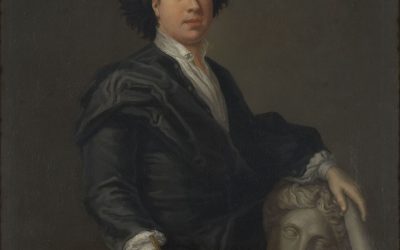
William Kent (1685–1748)—Architect, Designer, and the Father of the English Palladian Style
Early Life and Training Born in Bridlington, Yorkshire, in 1685, William Kent began his career as a painter and was apprenticed to a coach-painter before securing sponsorship to study in Italy. His time in Rome exposed him to the classical ideals of architecture and...
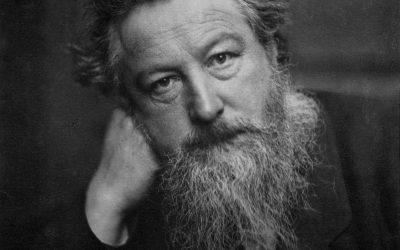
William Morris — The Visionary Behind the Arts and Crafts Movement
William Morris had an impressive, diverse resume: craftsman, entrepreneur, and political thinker. As a pioneering force in art, design, and social reform, he shaped the Arts and Crafts Movement, championing traditional craftsmanship over industrial mass production....

Winston Churchill: The Power of a Younger Son in Politics
Introduction: Churchill's Place in the Aristocracy Winston Churchill is best remembered as Britain's wartime leader, but his aristocratic background shaped his path long before he stepped into 10 Downing Street. As the grandson of the 7th Duke of Marlborough,...

Queen Victoria’s Nine Children: Europe’s Royal Dynasty
Queen Victoria was not just the ruler of Britain—she was the matriarch of a dynasty that spread across Europe. Her nine children married into the royal houses of Germany, Russia, Denmark, Sweden, and beyond, earning her the nickname Grandmother of Europe. But beyond...