
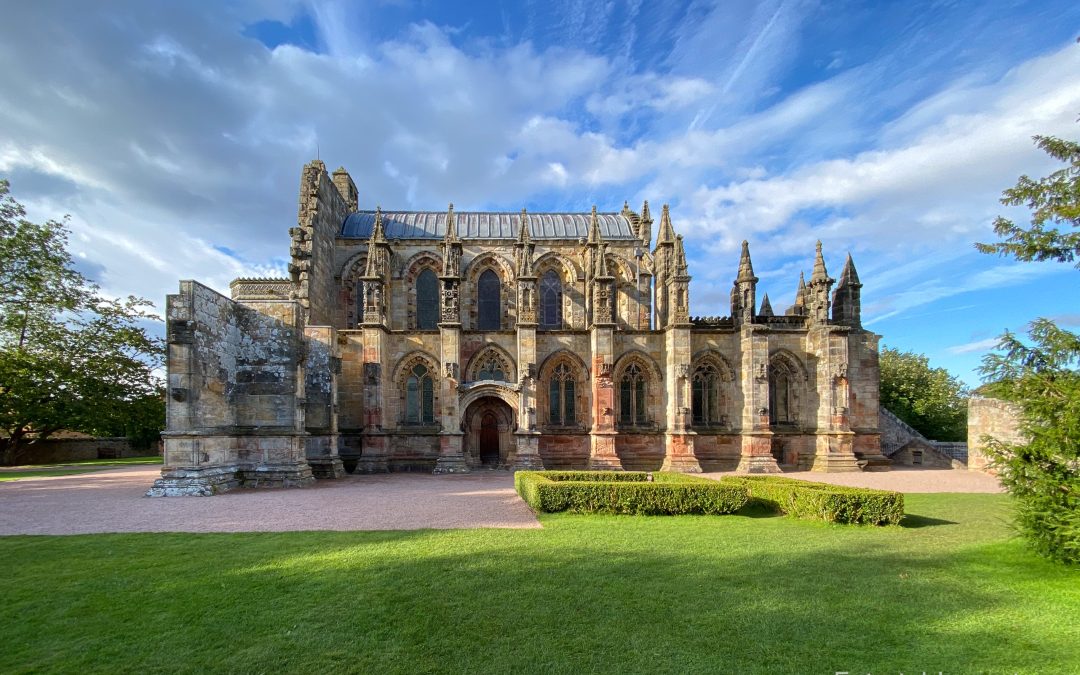
Visiting Rosslyn Chapel was like being admitted briefly into a secret. Nestled in the Scottish countryside near Edinburgh, the chapel is known for its unparalleled architectural splendour, rich history, and intriguing legends.
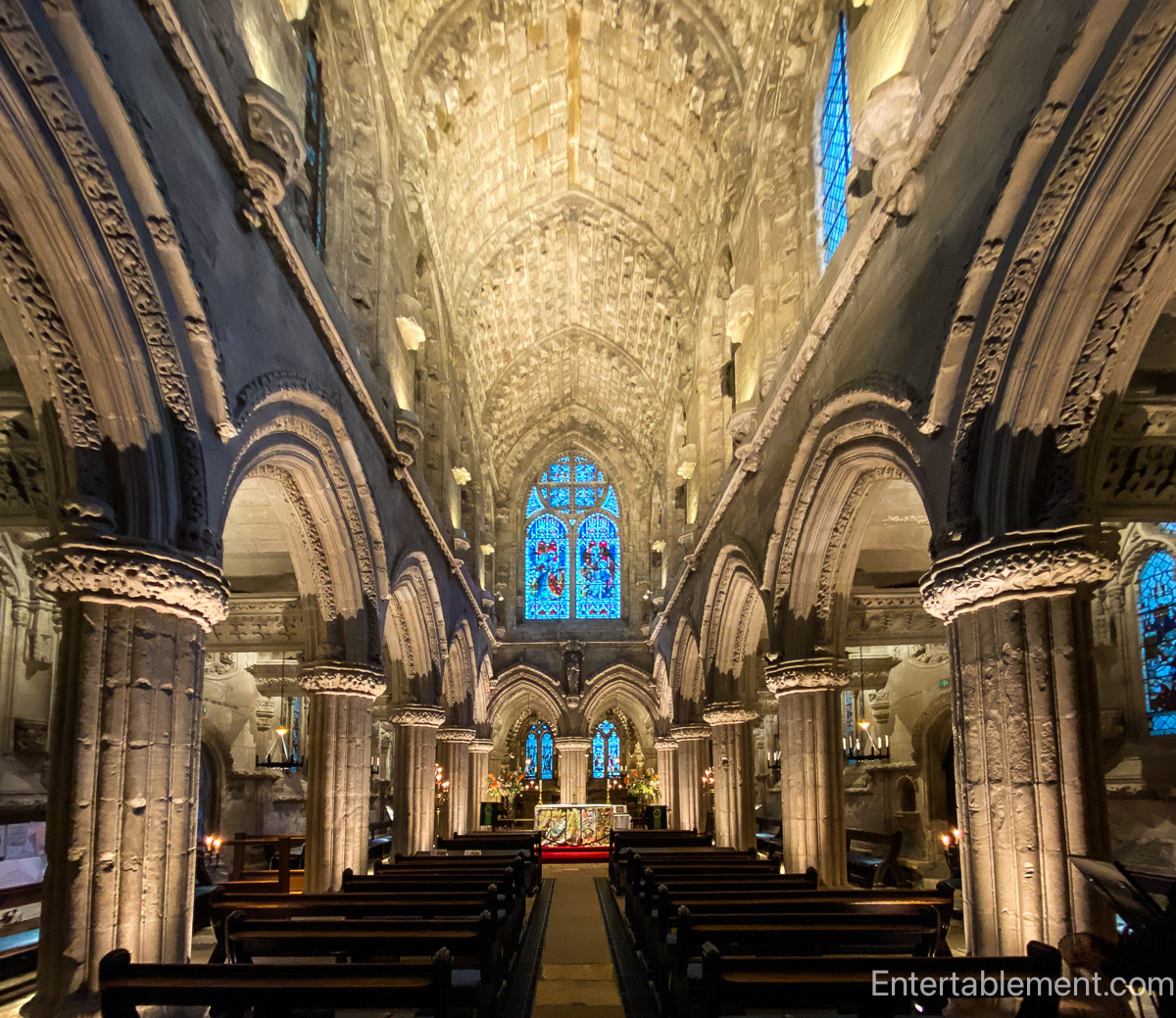
Founded in 1446 by William Sinclair, 1st Earl of Caithness, this stunning chapel has captivated visitors for centuries with its intricate carvings and connection to stories of the Knights Templar, the Freemasons, and the Holy Grail.
Beyond the myths, Rosslyn Chapel is a masterpiece of medieval craftsmanship, a testament to the skill and imagination of the stonemasons who created its astonishing details.
The Architectural Marvel of Rosslyn Chapel
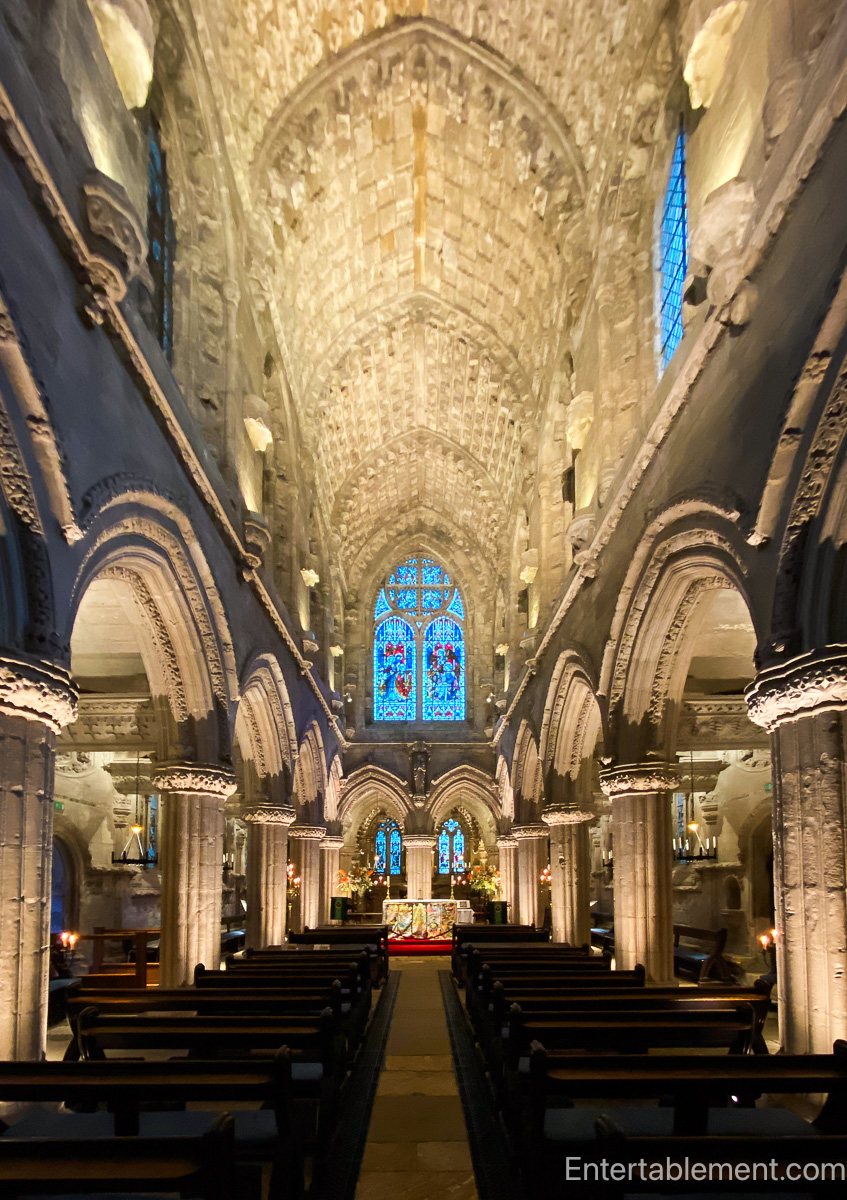
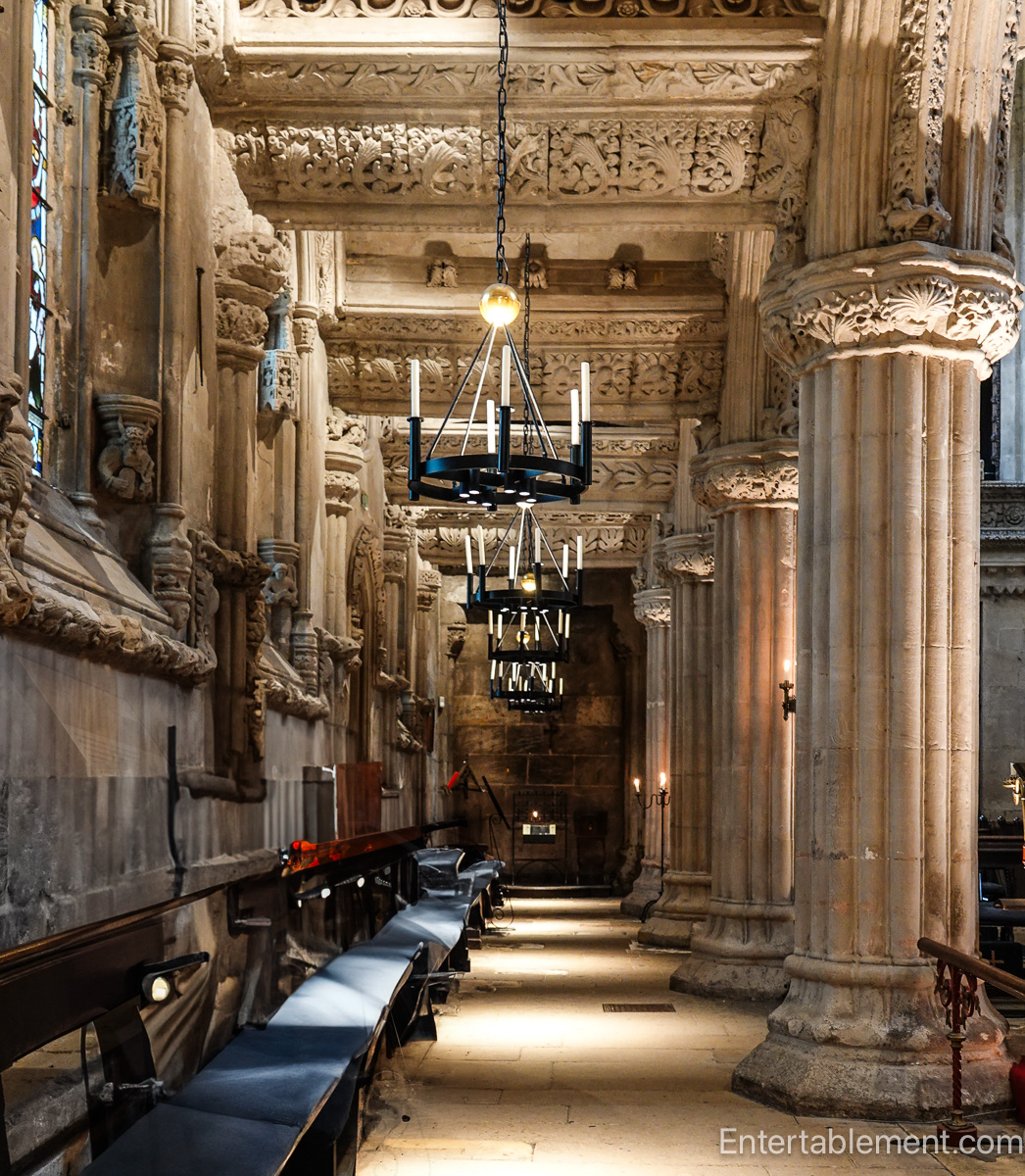
From the moment you step inside, Rosslyn Chapel overwhelms you with its sheer intricacy. Every surface seems adorned with delicate carvings—flowers, angels, biblical scenes, and symbols whose meanings have been endlessly debated.
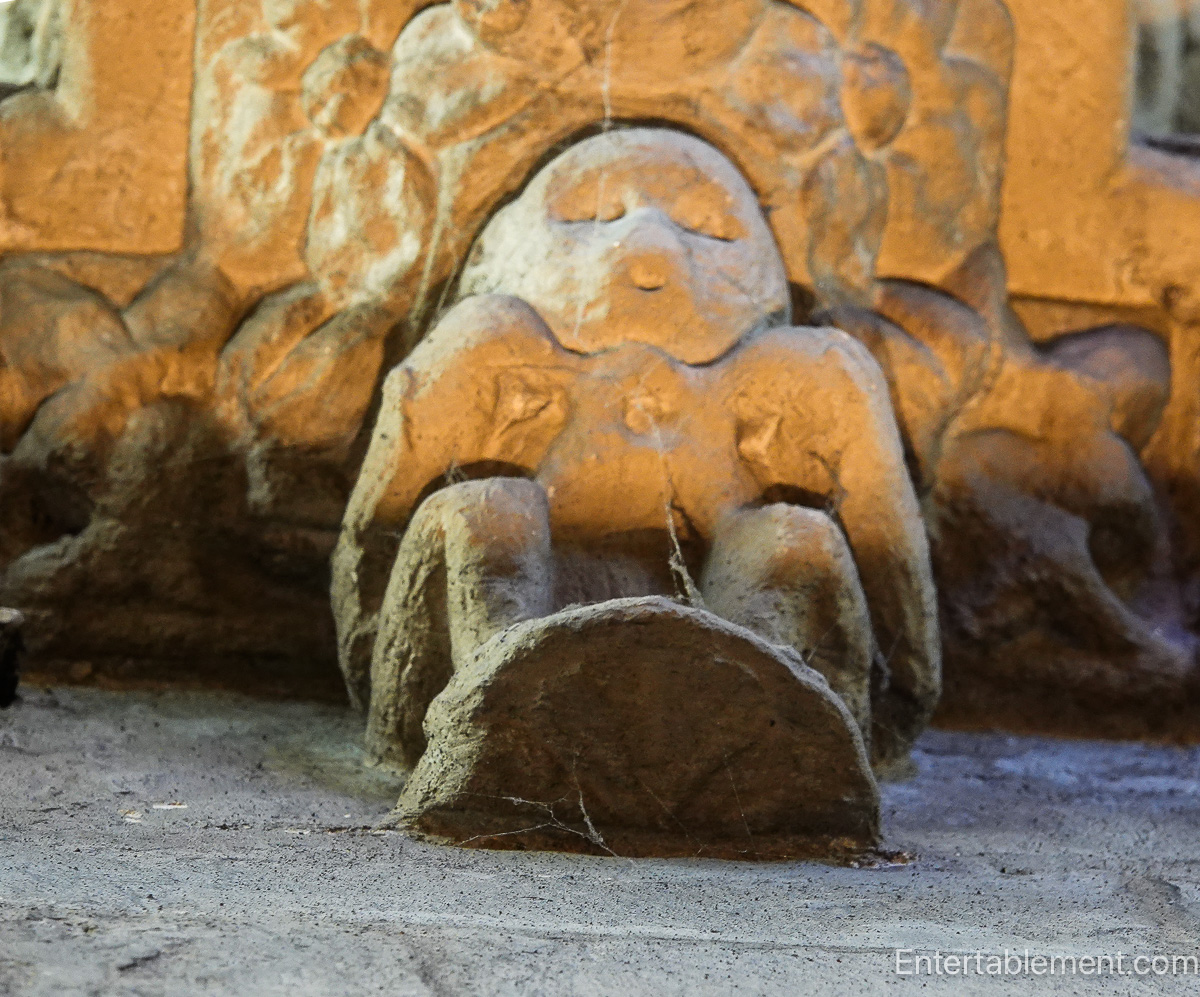
We were fortunate to experience the chapel on a private tour — the only way photography is permitted — which allowed time to linger beneath the carvings and notice details that might otherwise slip past. I always “see” better with a camera in hand.
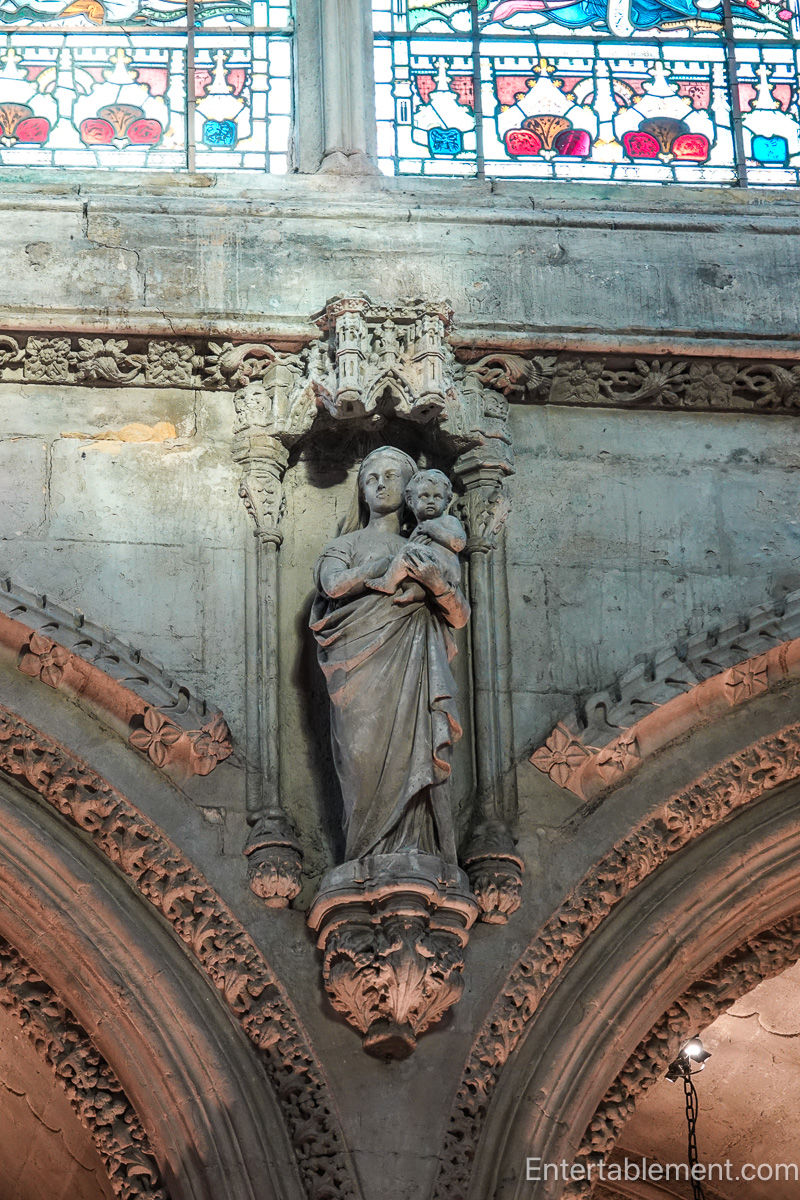
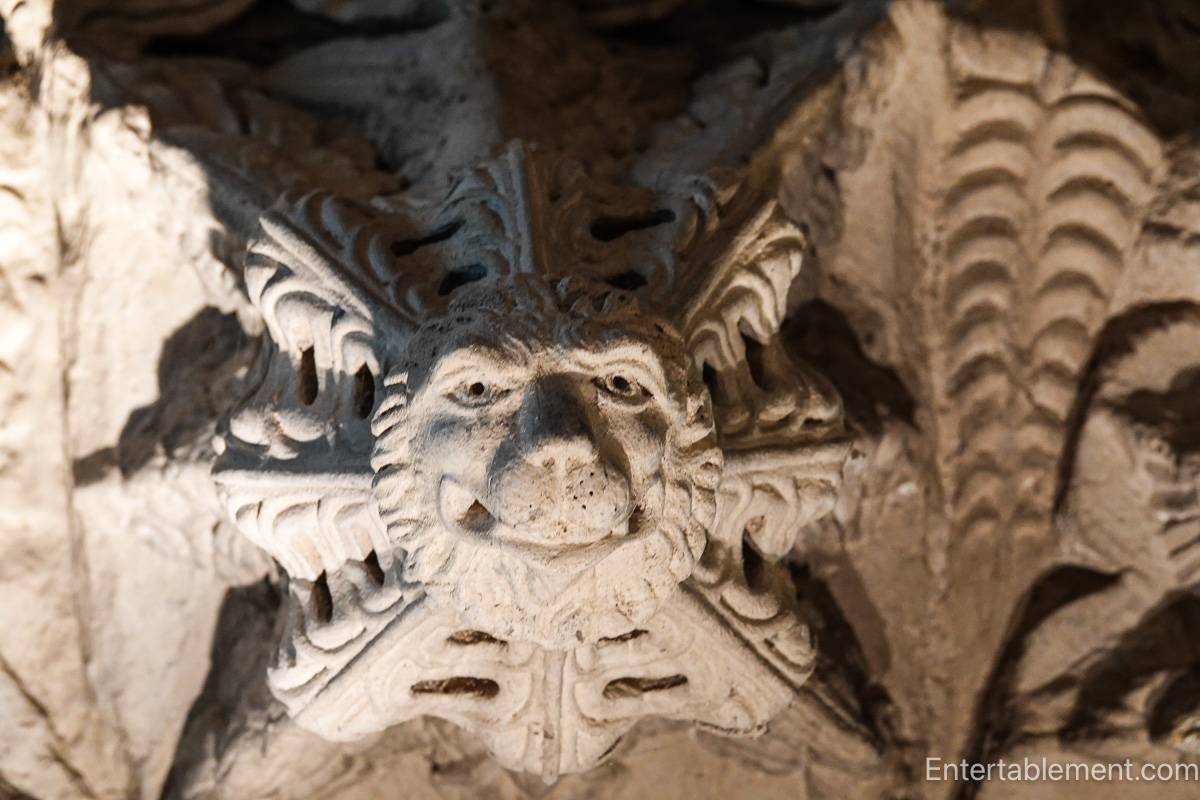
Scattered throughout Rosslyn Chapel are more than a hundred Green Men — watchful stone faces entwined with leaves, vines, and blossoms. Their expressions range from serene to mischievous, as if caught between the human and the natural world. The Green Man is an ancient figure, one whose roots stretch far beyond medieval Christianity into older pagan traditions that honoured the rhythms of growth, decay, and rebirth.
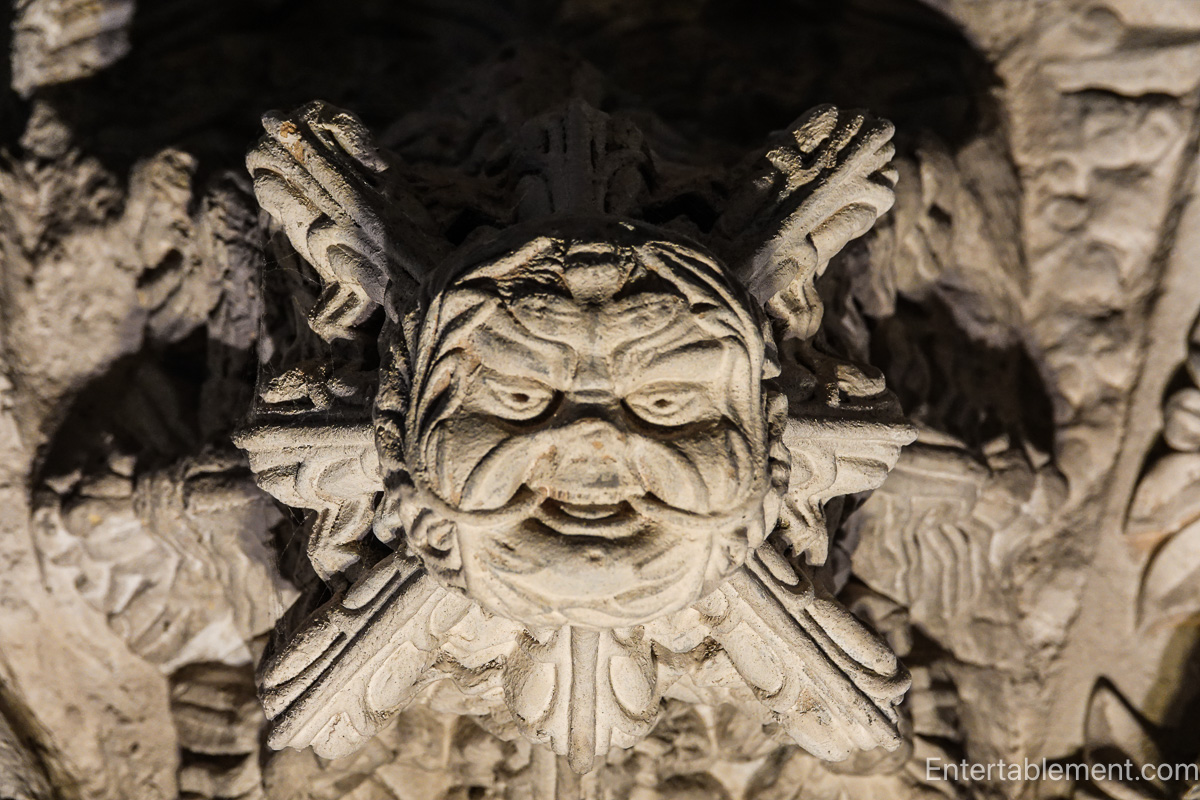
The Green Men of Rosslyn embody nature’s persistence. Even within sacred walls of faith and doctrine, the living world continues to push through, leaf by leaf, suggesting a medieval understanding of spirituality that wove humanity and nature together.
The Apprentice Pillar: A Masterpiece of Legend
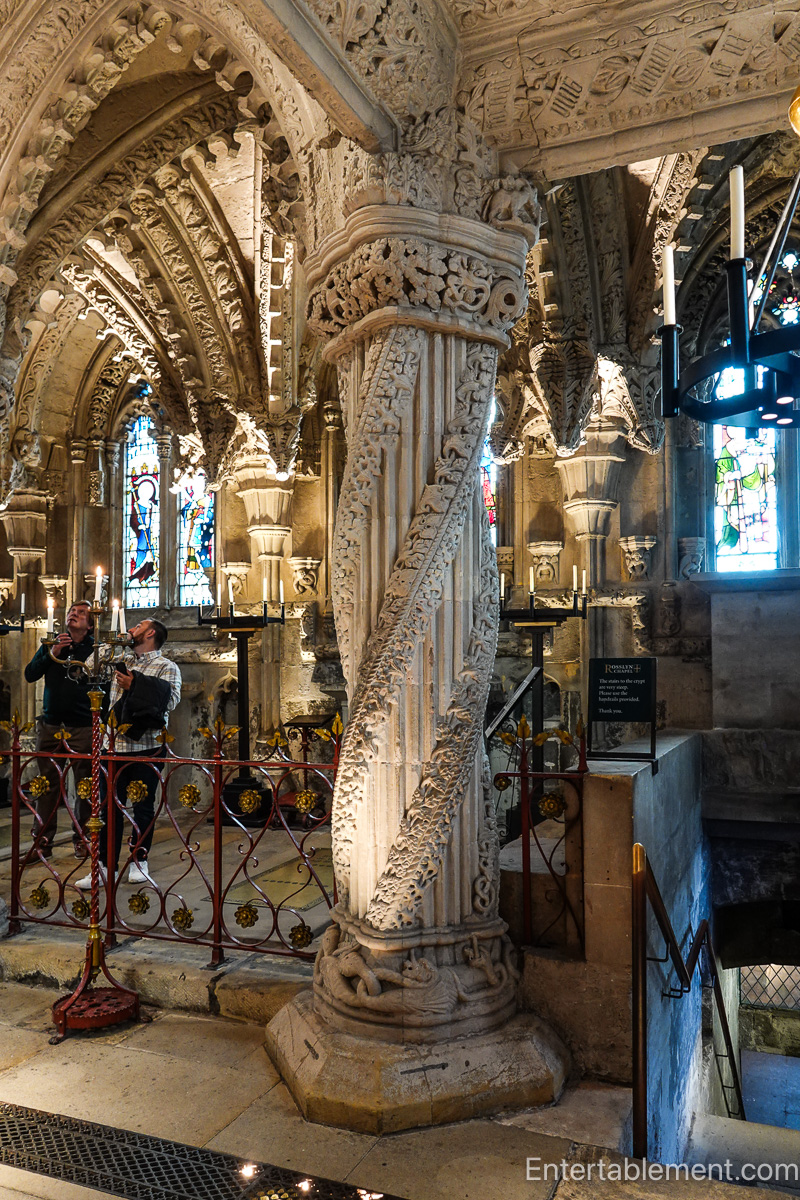
The legend goes that the master mason, who was working on the Rosslyn chapel, carved the pillar shown below. It doesn’t look too shabby, does it? But he then decided to travel abroad to seek inspiration before proceeding further.
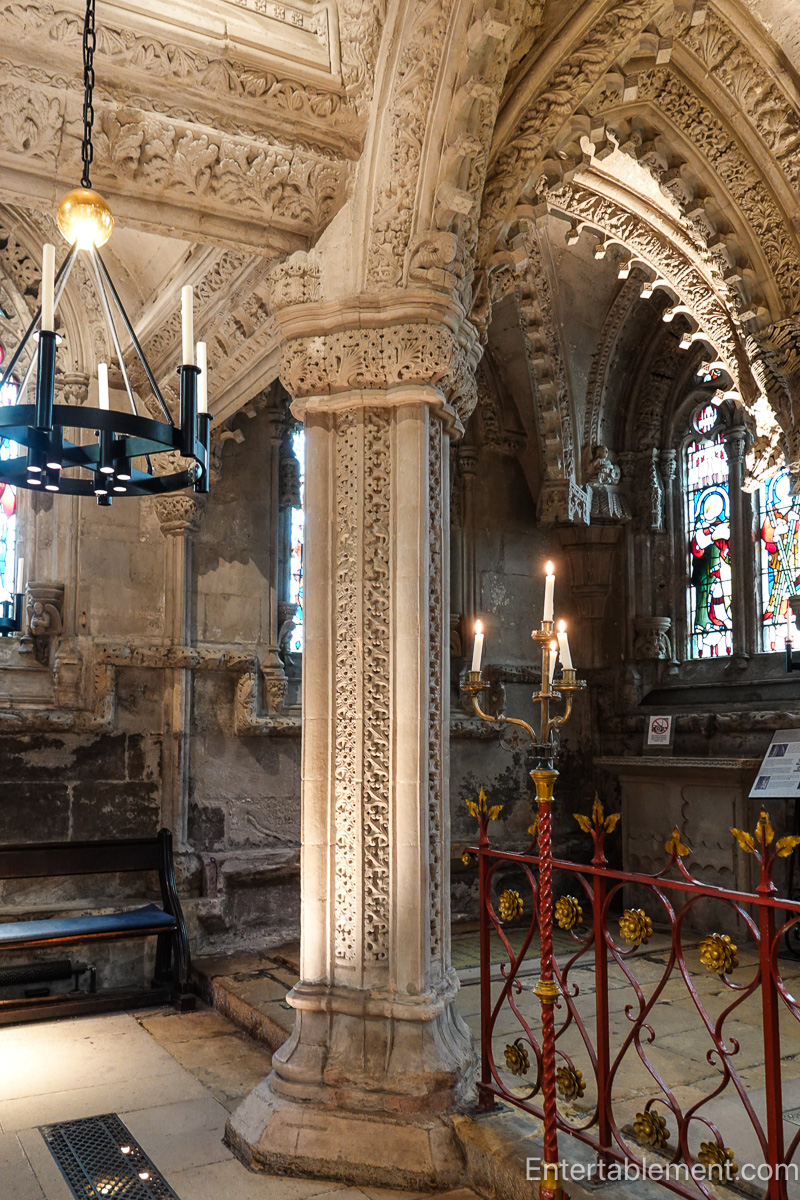
In the master’s absence, the apprentice, inspired by a dream, carved this pillar—the medieval equivalent of “hold my beer.” Rosslyn’s most famous feature is a stunningly ornate column wrapped in spiraling, vine-like carvings.
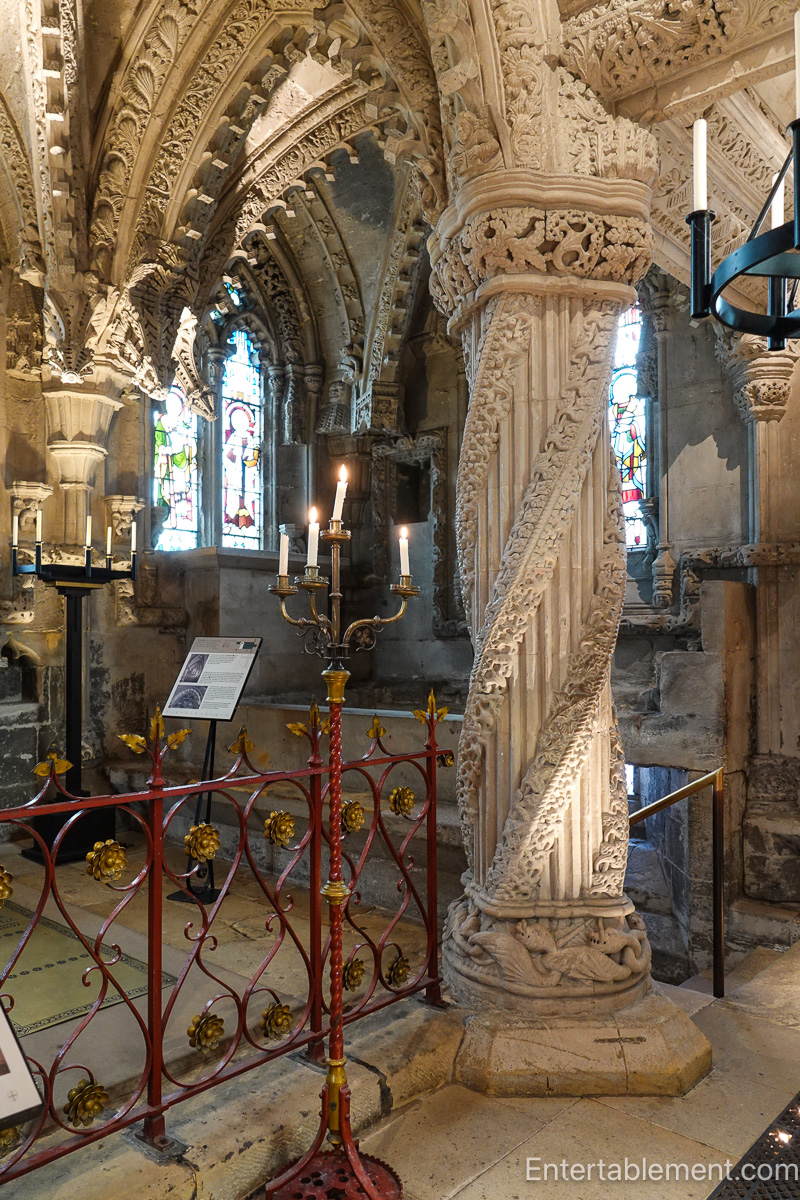
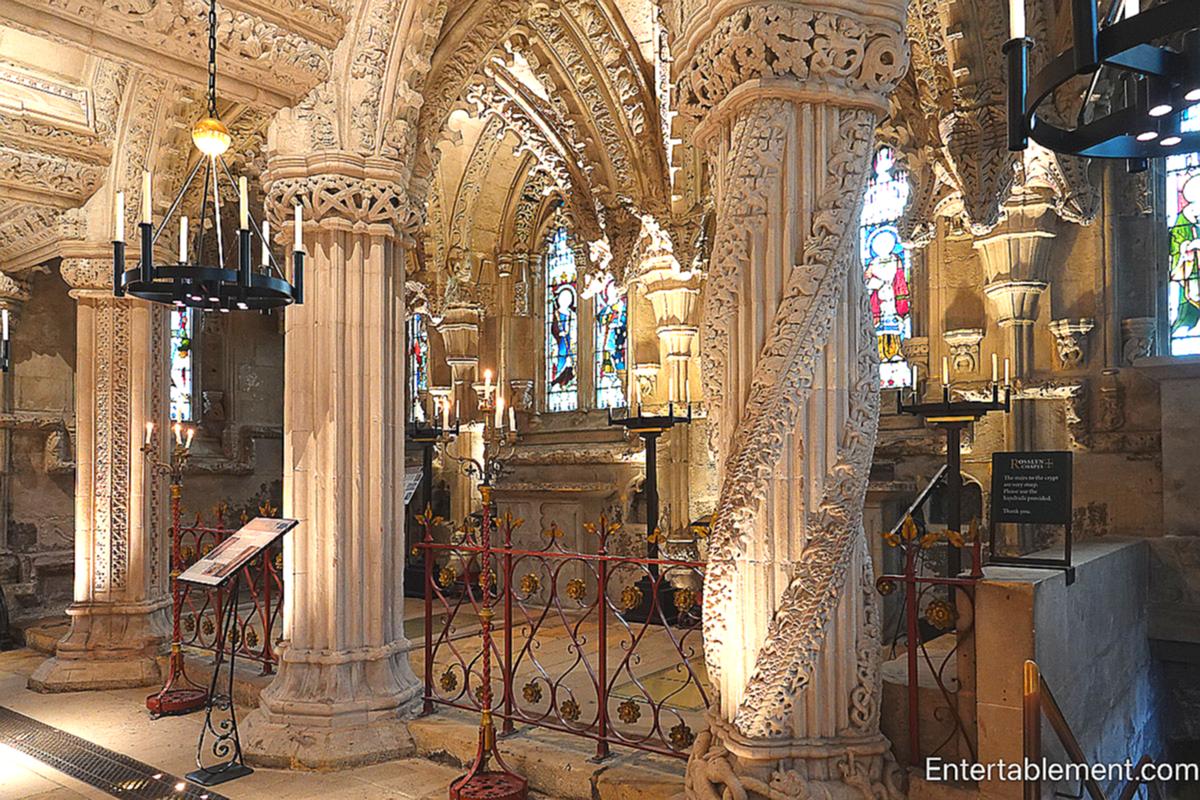
You can compare them in the photo below —master on the far left, apprentice on the right. I don’t know who was responsible for the middle pillar.
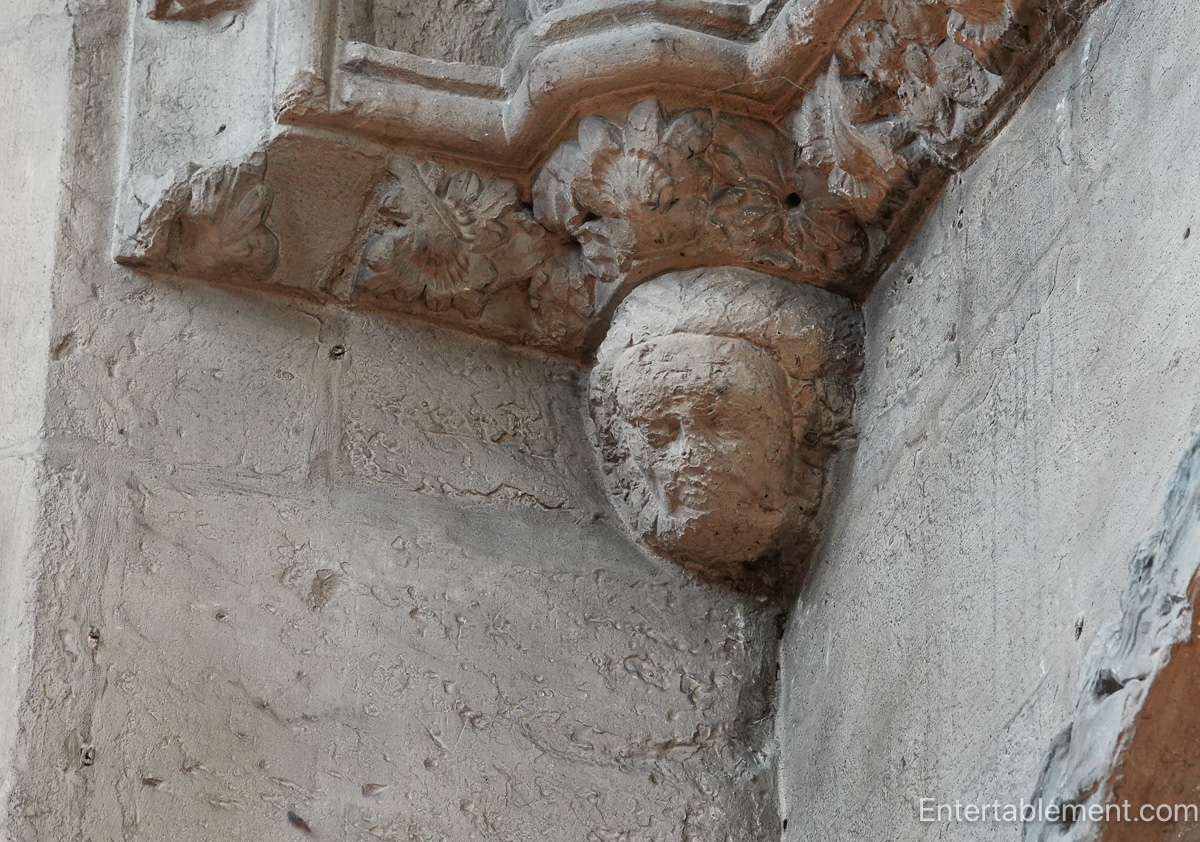
Upon his return, overcome with jealousy, the master struck the apprentice dead. And his punishment is forever commemorated in another carved head, gazing toward the pillar.
A further theory suggests that the pillar’s spiraling design resembles a DNA helix, fueling speculation about hidden knowledge encoded in the chapel’s architecture. Coiling around the base of the pillar are eight dragons. They may refer to the Norse Yggdrasil tree, which symbolized the connection between heaven, earth, and the underworld—a nod to the Sinclair family’s Norse ancestry.
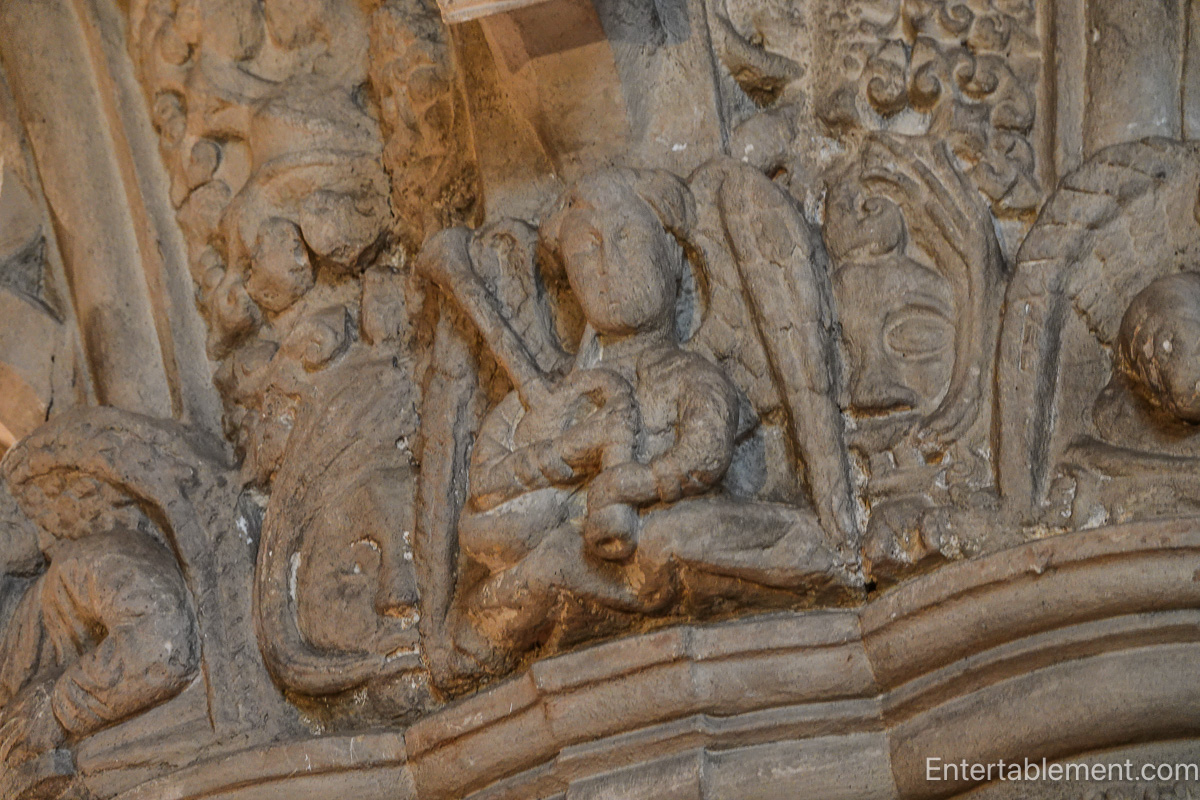
There is no end of detail to admire. One of my favourites was the angel playing bagpipes carved at the top of the Mason’s Pillar.
The Seven Deadly Sins and Dance of Death
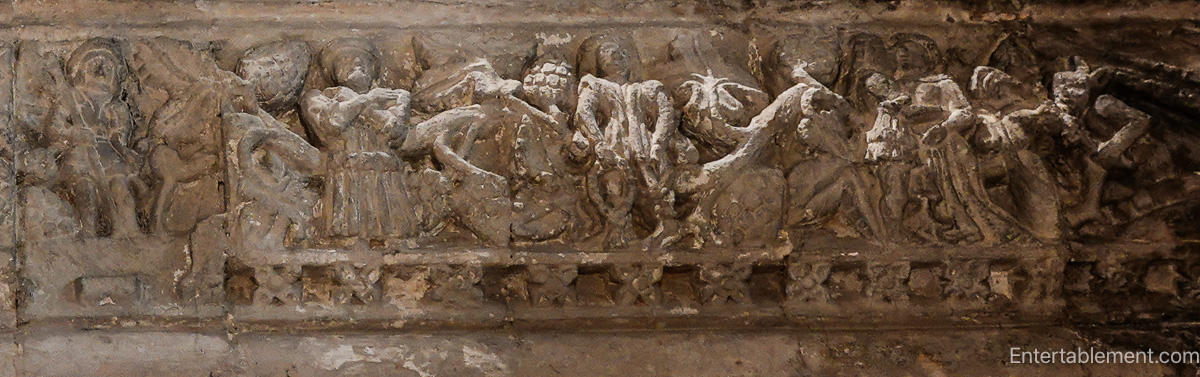
Rosslyn Chapel is filled with medieval iconography warning of the consequences of sin—a very popular topic of sermons in the Middle Ages. The expressive figures performing symbolic acts reinforce the Church’s lessons for an often illiterate congregation. The lintel below shows a sequence of seven sections of carvings depicting the Seven Deadly Sins, illustrating medieval teachings on morality.
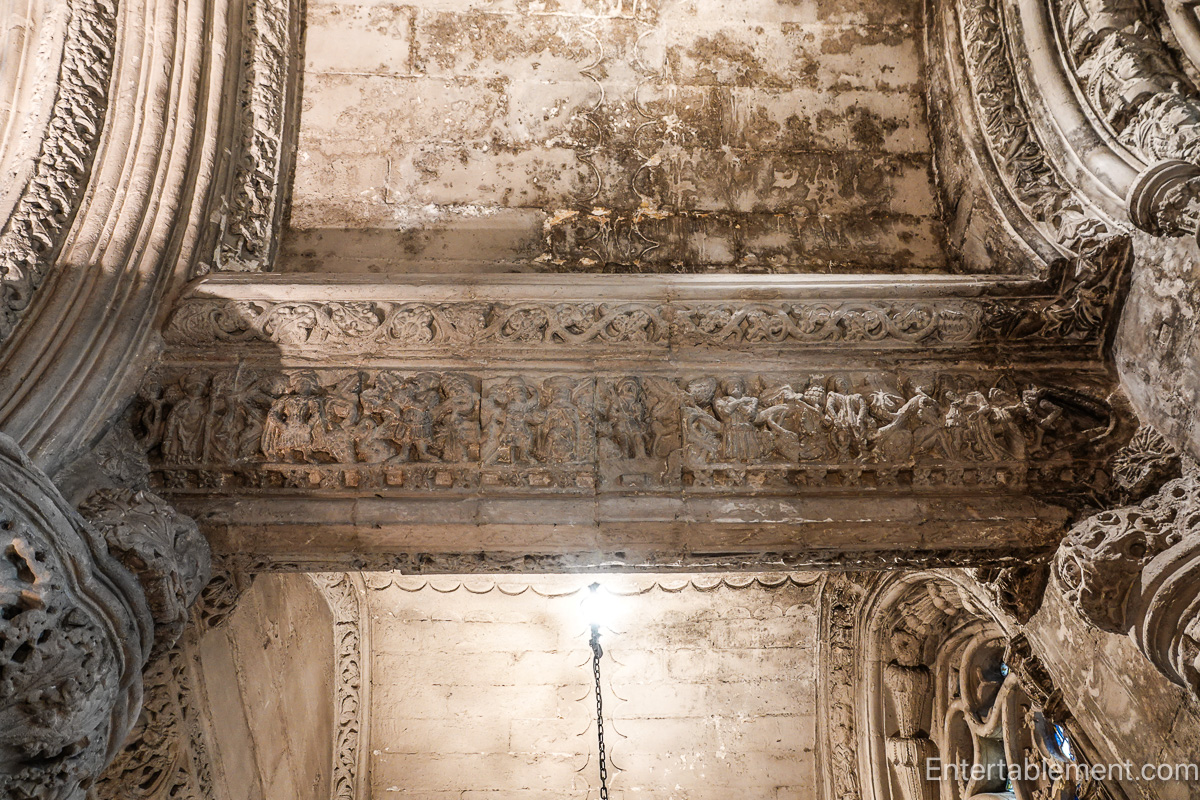
The first three show Pride, Gluttony, and Charity (transposed with Greed).
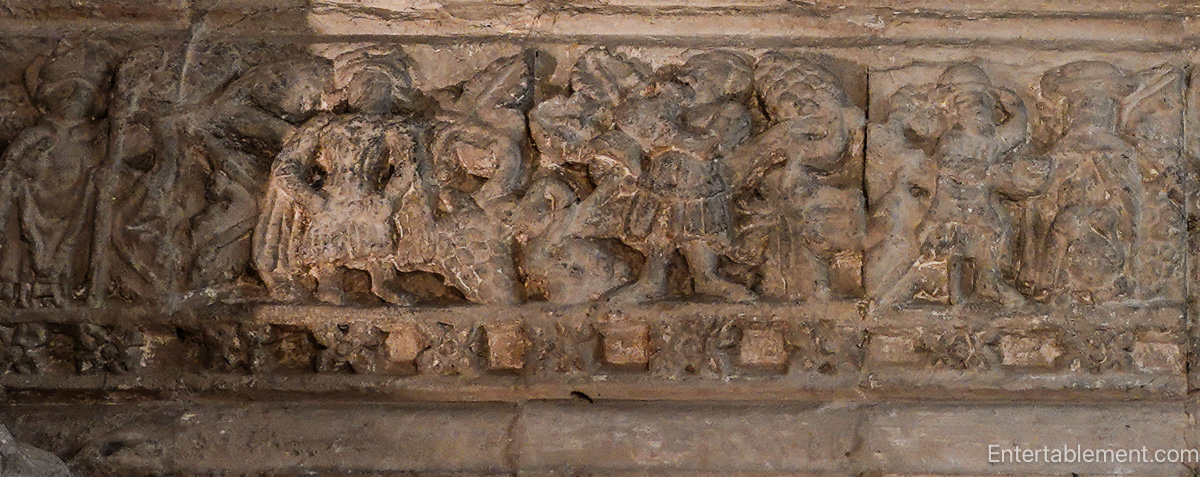
The subsequent four show Anger, Envy, Sloth, and Lust,
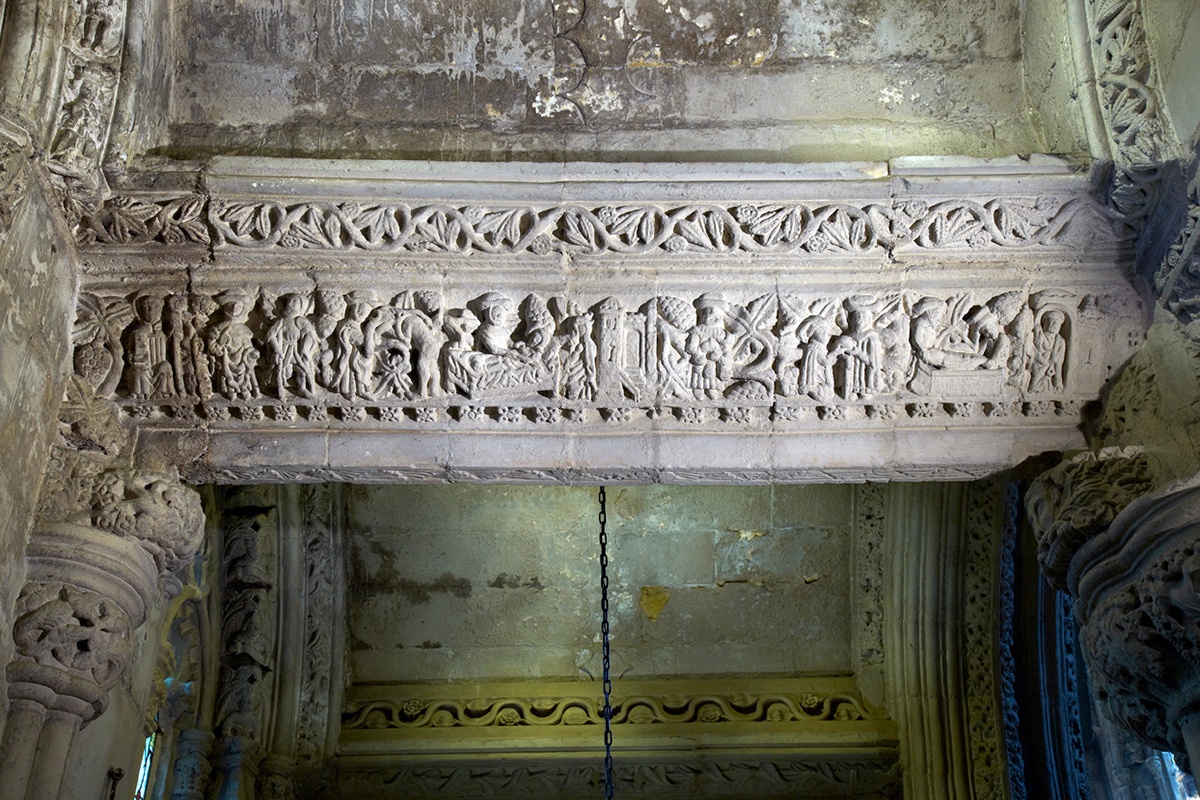
For balance, there is another lintel showing the seven acts of mercy. From left to right, you will see a bishop performing the following acts of mercy:
1. Helping the needy
2. Clothing the naked
3. Looking after the sick
4. Visiting those in prison
5. Avarice (misplaced from the seven deadly sins)
6. Feeding the hungry
7. Burying the dead
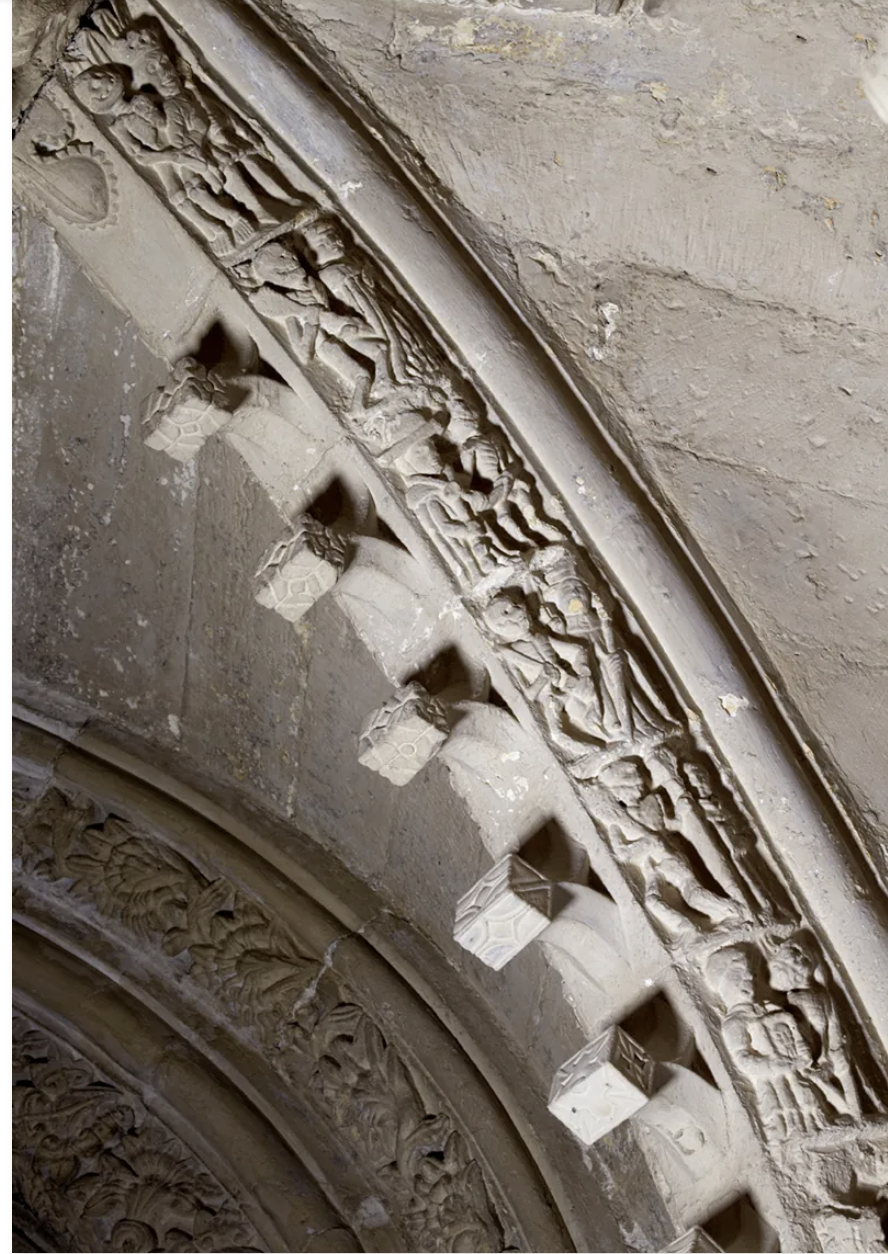
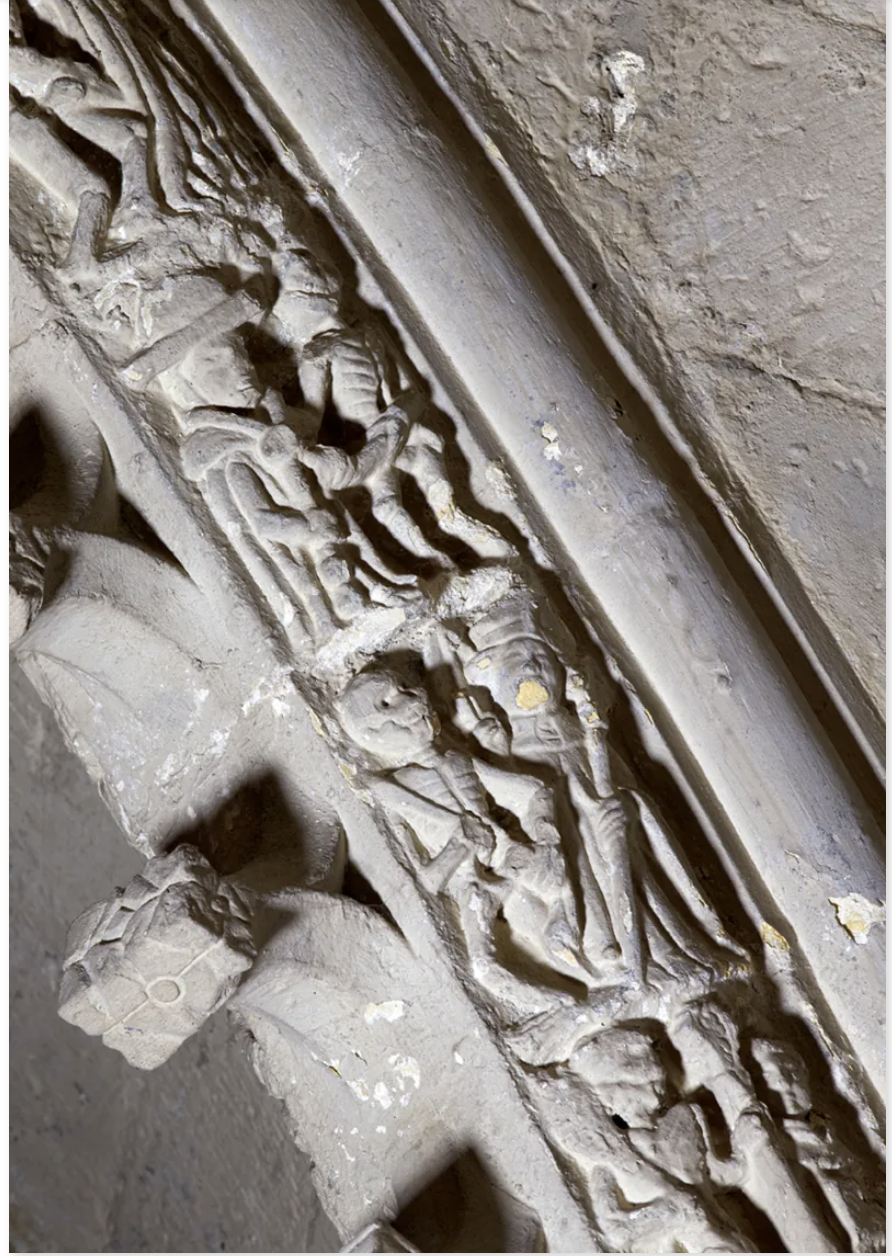
Then, we have the Dance of Death, skeletons leading people from all walks of life to their inevitable fate. This medieval motif, common in the late 14th and 15th centuries, reflected the fragility of life, especially in the wake of the Black Death.
The Angel with a Heart: Robert the Bruce
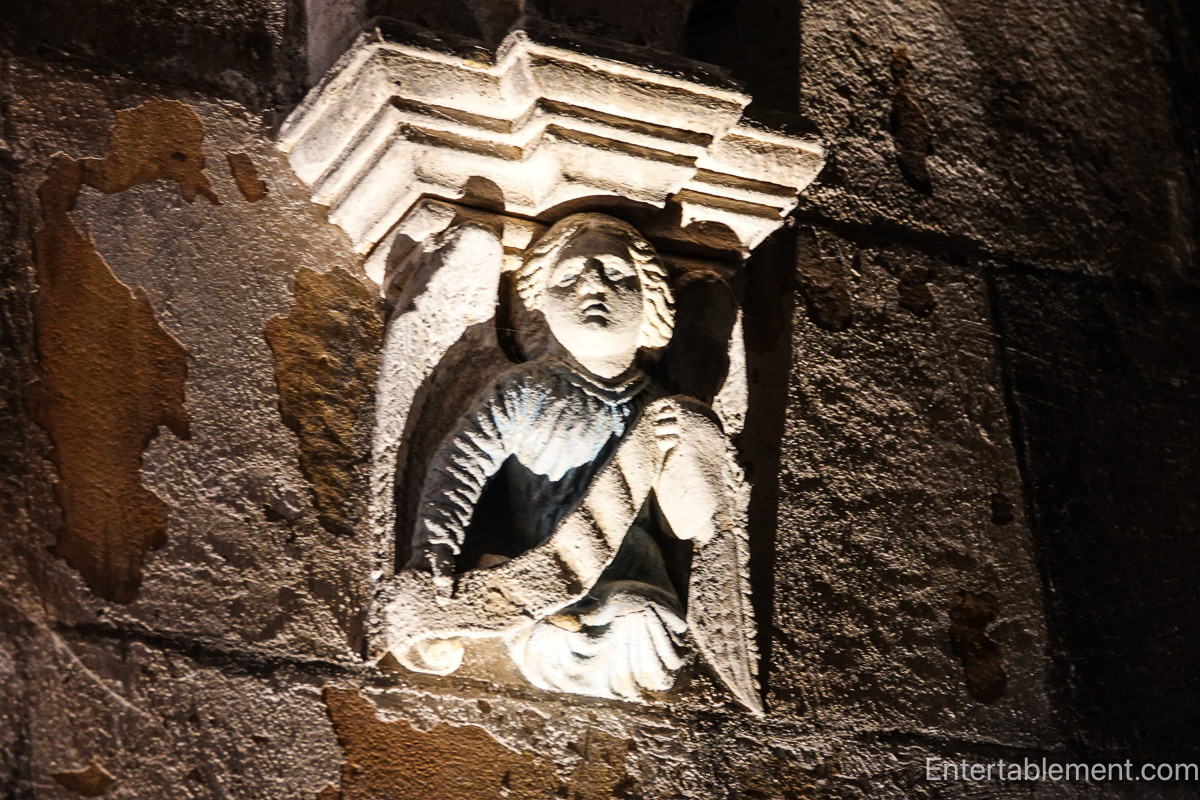
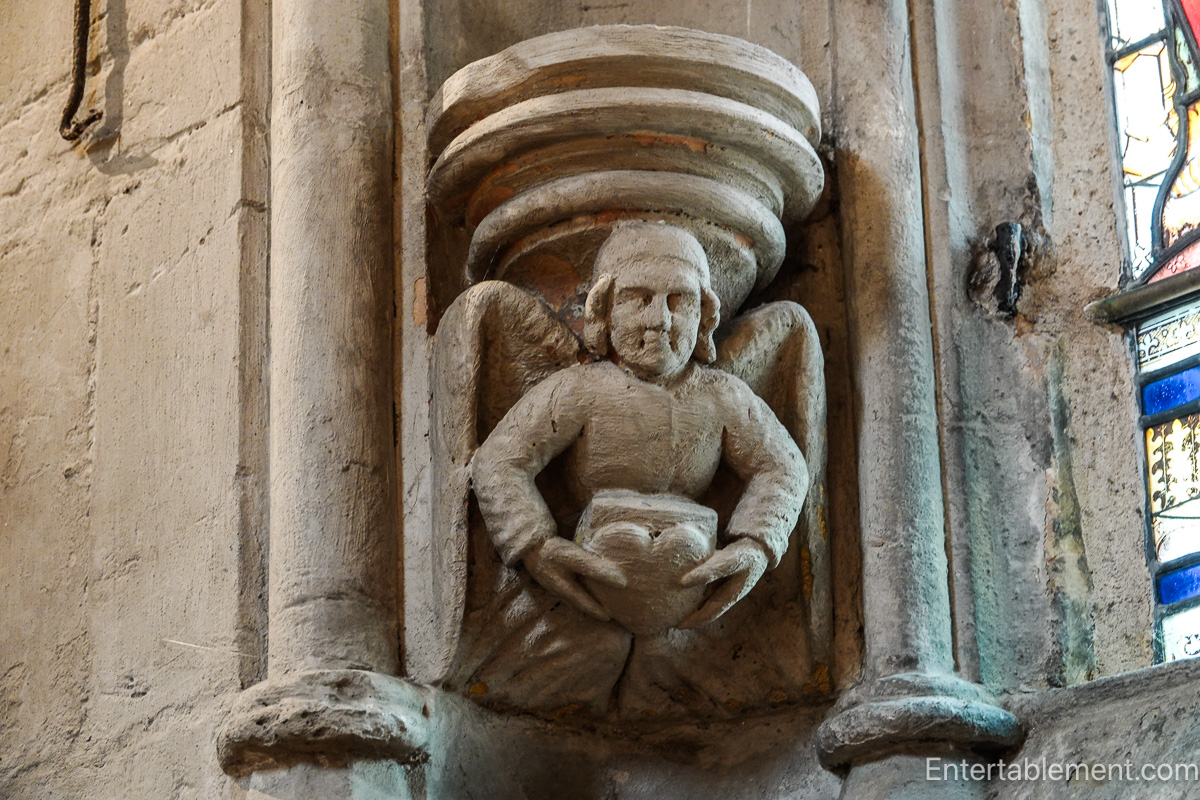
The angel holding up a heart is said to represent the heart of Robert the Bruce (1274-1329). Sir Henry St. Clair (1275-1336) and his brother William fought beside Robert the Bruce at the Battle of Bannochburn in 1314.
The Ceiling: A Heavenly Tapestry in Stone
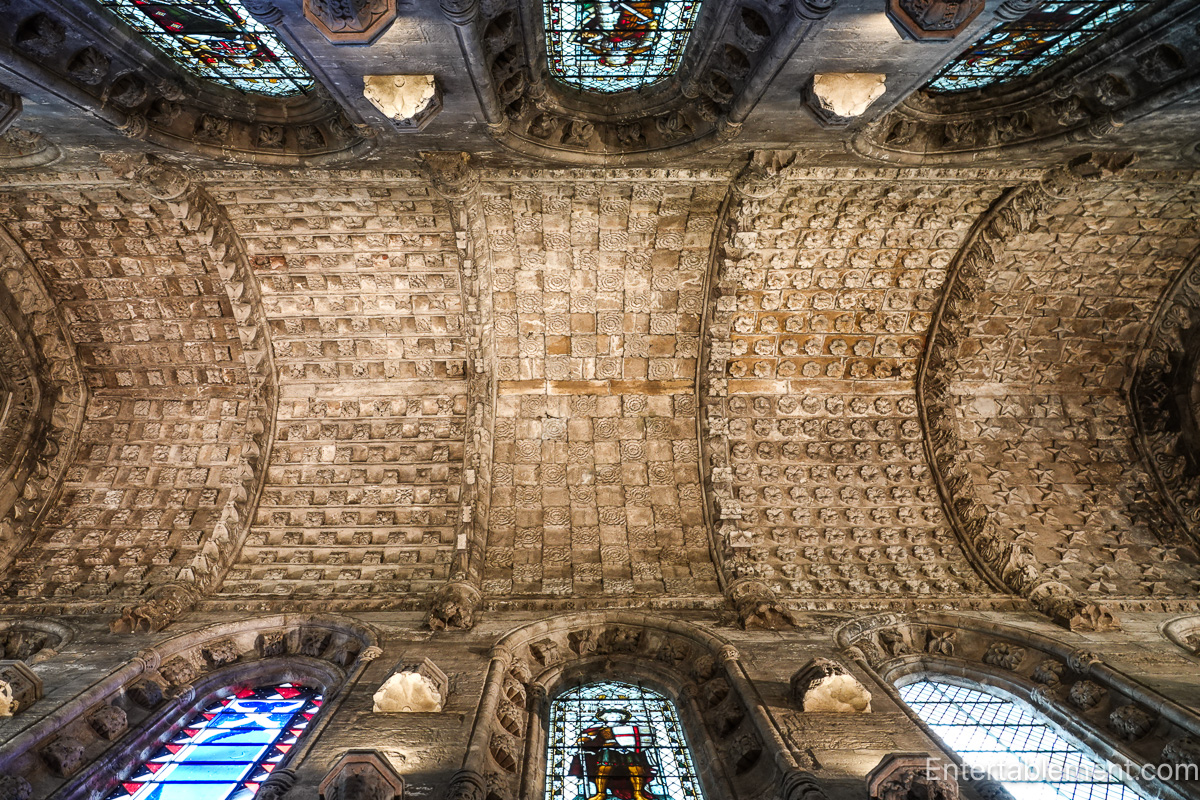
The chapel’s ceiling is a wonder in itself. A checkerboard of carved stone features over 100 unique designs, including the famous ‘musical cubes’, which some believe to be part of a coded melody hidden within the architecture.
Legends and Mysteries: The Holy Grail, the Templars, and Hidden Treasures
Rosslyn Chapel has been a magnet for legend seekers, particularly after Dan Brown’s The Da Vinci Code popularized that it may hold secrets related to the Knights Templar and the Holy Grail. Though no evidence confirms this, the Sinclair family’s connections to the Freemasons and medieval crusaders have fueled speculation that Rosslyn is more than just a beautiful place of worship—it might be a hiding place for lost relics, knowledge, or even sacred treasure.
One of the most tantalizing myths is that exiled Templar knights fled to Scotland in the 14th century, escaping persecution in France. Some believe they brought the legendary Templar treasure, including the Holy Grail, sacred relics, and ancient manuscripts. While no treasure has ever been found, carved symbols within the chapel, including two riders on a single horse, the seal of the Templars, have only fueled the mystery.
A Beehive in the Stone: A Hidden Surprise
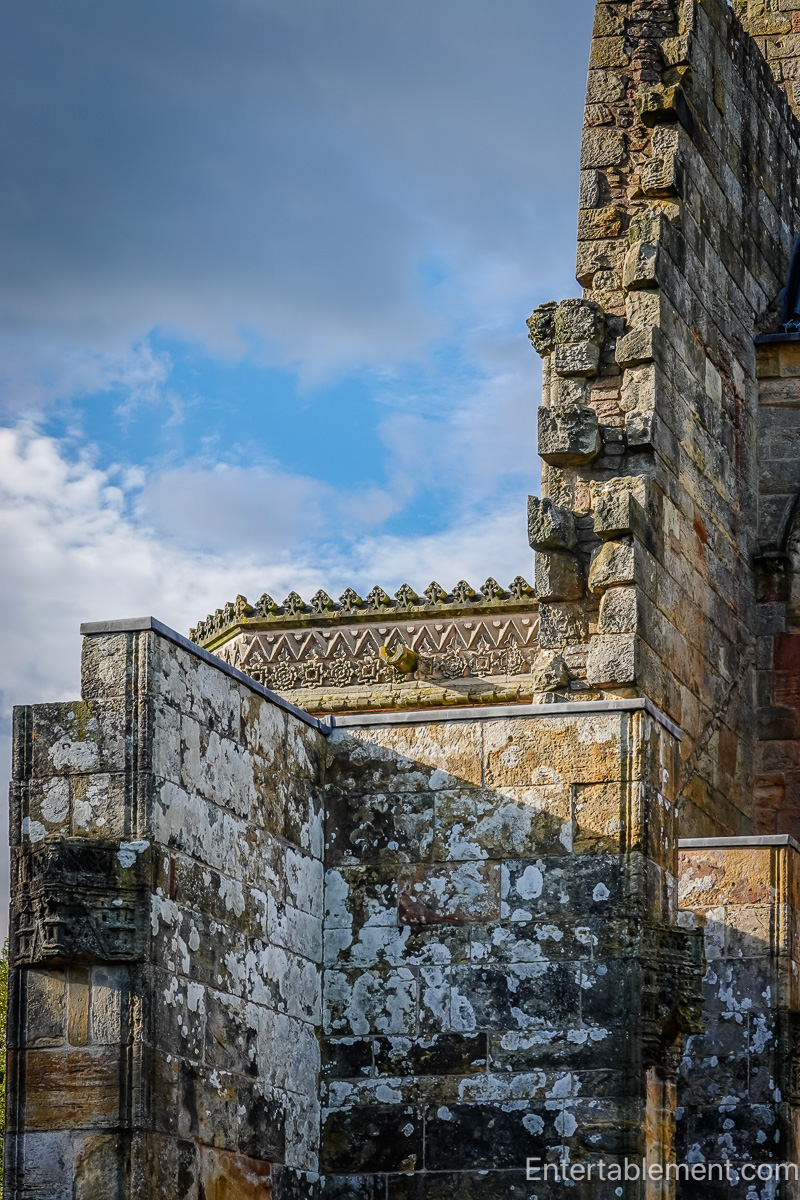
During restoration efforts, workers discovered a surprising feature hidden in the chapel’s exterior stone pinnacles: centuries-old beehives! The one in the north pinnacle has a hole carved in the centre of the flower with a hollowed out area behind it, about the size of a gas cylinder, which holds a beehive.
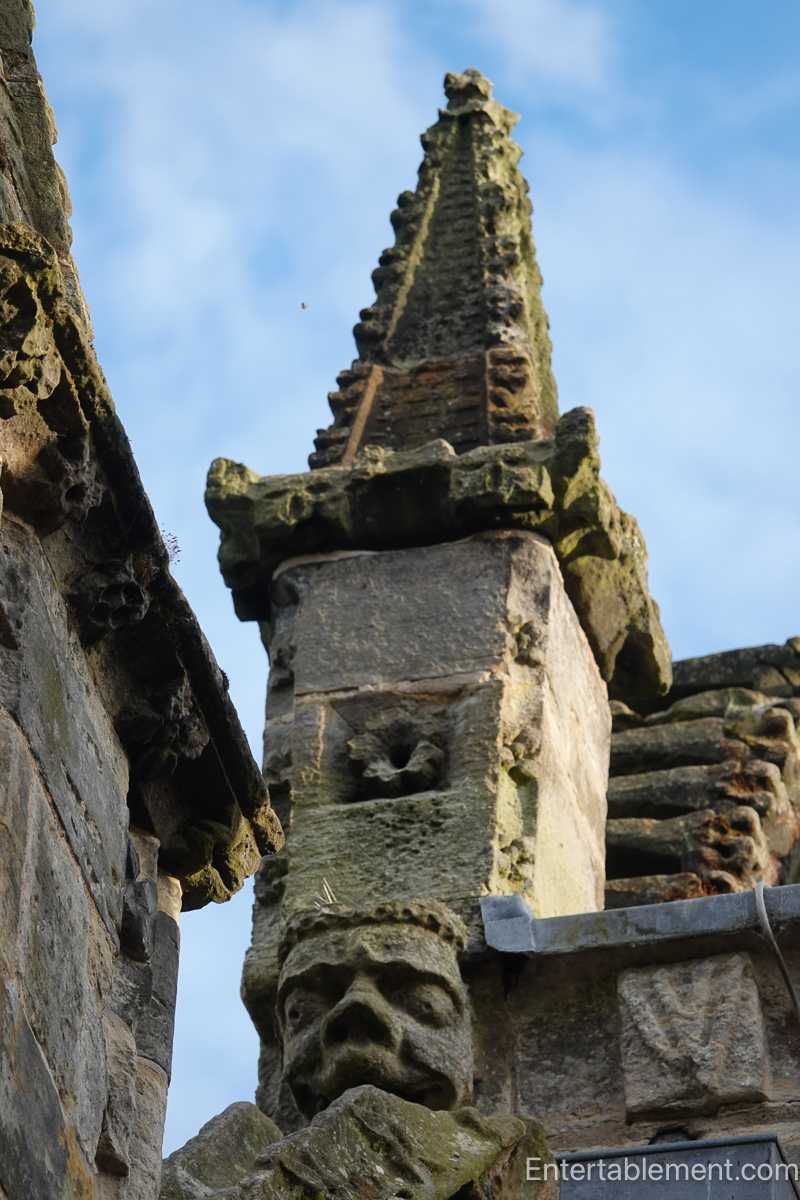
The one in the south tower is without bees, as the entry hole is not fully formed. Bummer.
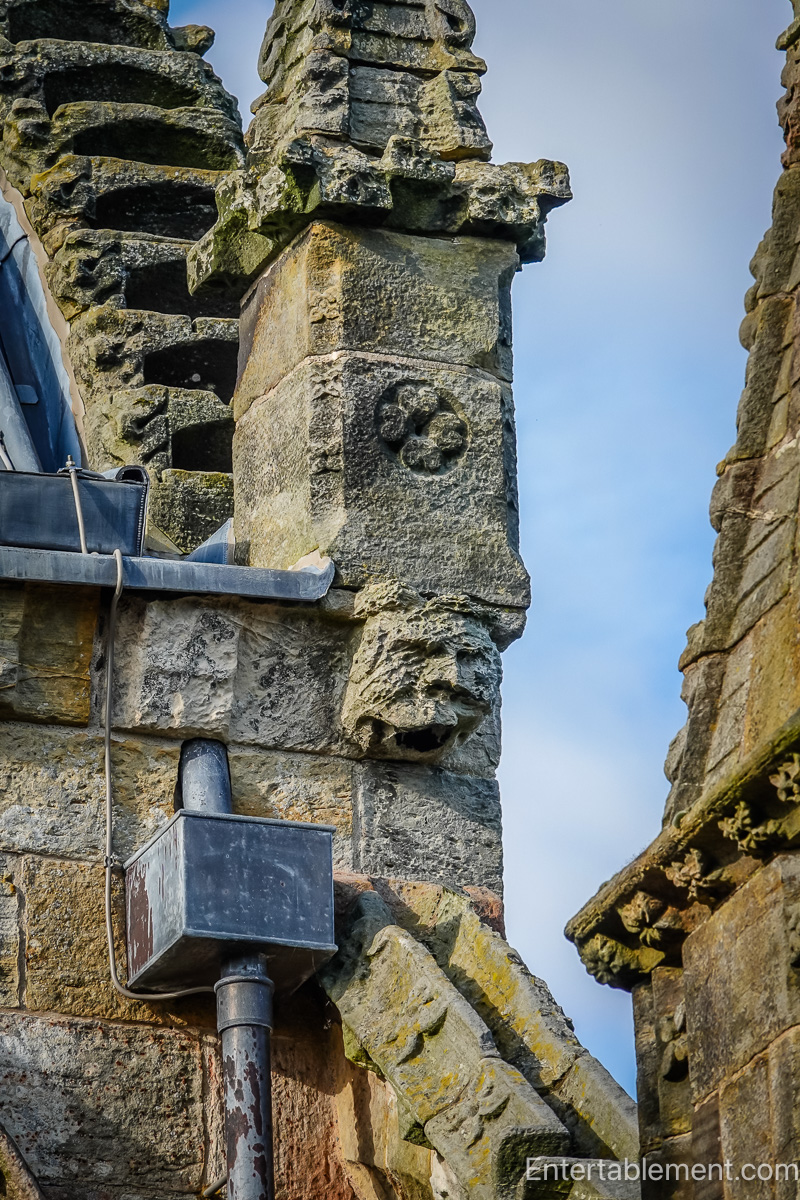
Built intentionally by the original stonemasons, the secret chamber provided a safe home for bees, reflecting medieval connections between churches and honey production. The hidden beehive—still visible today—adds yet another layer to Rosslyn’s air of mystery and ingenuity.
Maize Carvings: A Pre-Columbian Connection?
Among Rosslyn’s most debated carvings are a series of plant motifs that some believe resemble maize — a crop native to the Americas and unknown in Europe at the time the chapel was built. If true, these carvings would pose an extraordinary question: how did a New World plant find its way into 15th-century Scottish stone?
Some researchers believe that Henry Sinclair, an ancestor of the chapel’s founder, may have travelled to North America in the 14th century. As well, we know that Viking longships crossed the Atlantic centuries earlier, reaching North America around the year 1000. These offer tantalizing glimpses into alternative histories of exploration.
Whether Rosslyn’s carvings reflect direct knowledge, secondhand stories, or symbolic interpretation, they invite us to consider how ideas — like seeds — may travel farther than history records.

A Chapel Rescued: Restoration and Preservation
Despite its beauty, Rosslyn Chapel fell into disrepair over the centuries, suffering from exposure to the harsh Scottish climate.

By the 19th century, it was overgrown with ivy, with a damp, algae-covered ceiling, and was largely neglected.

While some restoration efforts were undertaken in the 1860s, a comprehensive conservation strategy was not developed until the establishment of the Rosslyn Chapel Trust in 1995.

A Giant Umbrella to Combat Damp
A significant challenge in restoring Rosslyn Chapel was dampness. Over the centuries, moisture had seeped into the stone, creating an ideal environment for moss, lichen, and algae to flourish. In 1997, a protective canopy, acting like a giant umbrella, was erected over the building to dry out the chapel. This remained in place for 13 years!!, allowing the walls and intricate carvings to dry naturally before further restoration could begin.

Roofing and Structural Repairs
While the canopy helped to reduce dampness, other structural issues had to be addressed. The original lead roof, installed in the 1950s, had suffered severe cracking due to time and exposure. Skilled stonemasons painstakingly removed the damaged asphalt layer and replaced it with new leadwork, ensuring the chapel’s barrel-vaulted ceiling was properly protected for generations to come.

Conserving the Delicate Carvings
Once the chapel had dried, expert conservators began repairing and cleaning the intricate stone carvings. This involved:
- Filling cracks with a special reversible acrylic to prevent further weather damage.
- Using a synthetic binder to strengthen crumbling stone without altering its appearance.
- Employing laser technology to gently remove harmful deposits absorbed by the carvings over centuries.
These efforts revealed the chapel’s original glory, uncovering details obscured for decades. By 2012, the major conservation work was completed, securing Rosslyn Chapel’s future as one of Scotland’s most remarkable historic sites.
The Crypt: Fragments of the Past
Beneath Rosslyn Chapel lies the crypt, which has fueled much speculation. Legend holds that a deep vault beneath the chapel contains the remains of medieval St. Clair knights buried in full armor. Others claim it holds hidden treasures or sacred relics. While no excavations have confirmed these theories, the crypt contains historic stone fragments once part of the chapel, including carvings of the Engrailed Cross and Fleur-de-lis, symbols tied to the Sinclair family.


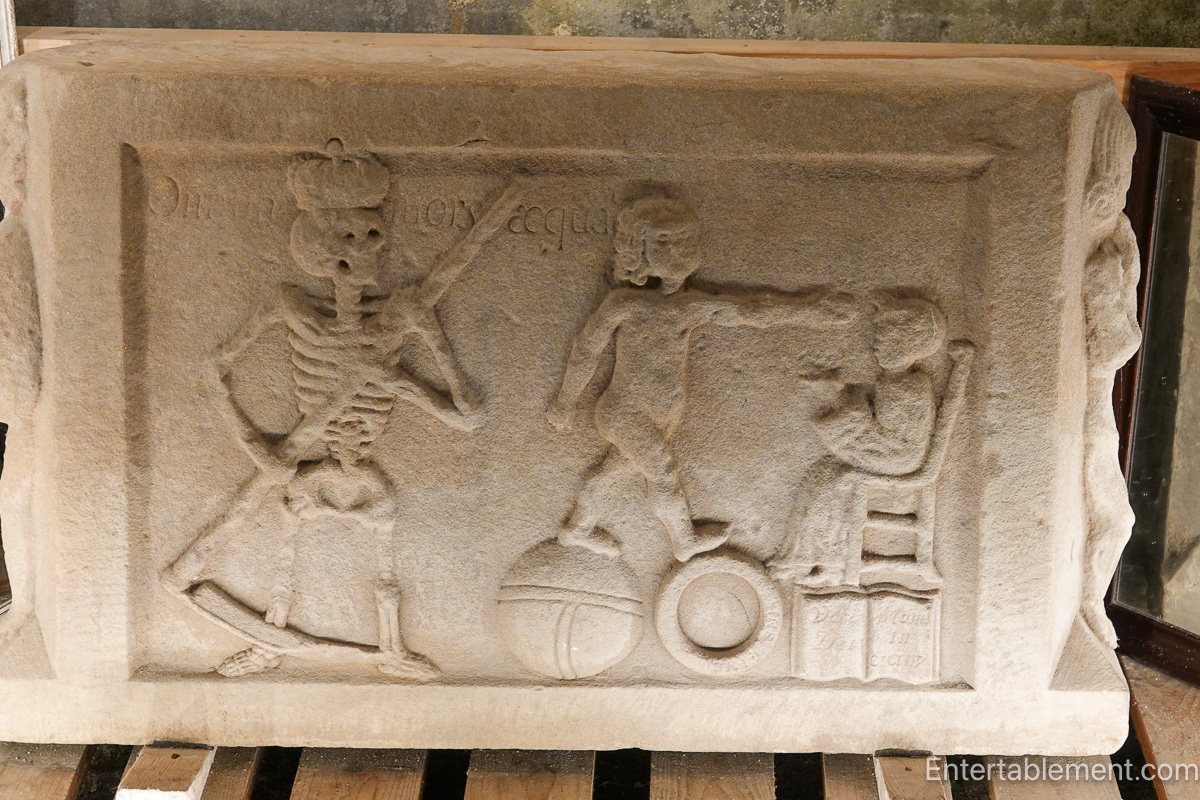
One of the most fascinating stones in the crypt is the ‘King of Terrors’, an intricately carved slab depicting the transition from life to death. The Latin inscription “Omnia Mors Aequat” translates to “Death renders all equal.” The skeleton wearing a crown and holding the sythe represents death. To the right, humans step off the earthly plane to the spiritual plane, met by judgement holding a book.
Windows on the Past: Rosslyn’s Stained Glass
Although much of Rosslyn Chapel’s interior dates to the 15th century, its stained-glass windows are a later addition. The chapel’s first known glazing occurred in 1736 when General James St. Clair undertook repairs. However, it wasn’t until 1867 that the 8th Earl of Rosslyn installed the first permanent stained-glass windows. These windows, crafted by Clayton & Bell of London, depict the twelve apostles and biblical scenes.
In 1869, the Earl commissioned additional glass for the chapel’s east window, illustrating the Resurrection of Christ. Other windows added in the 20th century include designs by William Wilson, featuring St. Andrew and St. George.

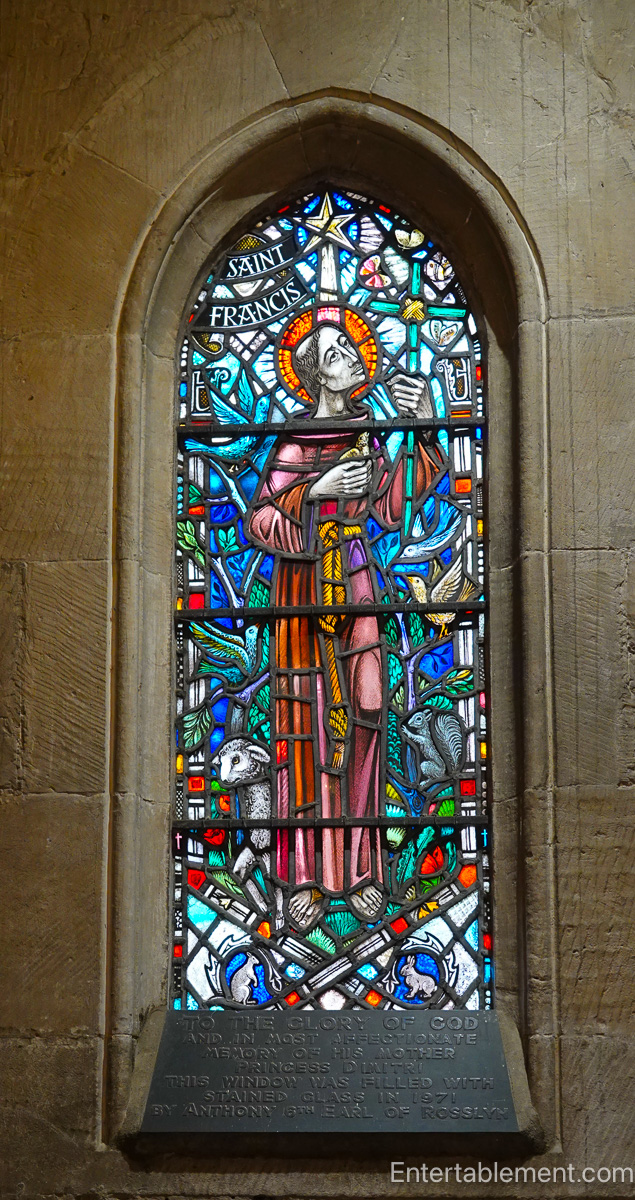
A later work was by Carrick Whalen, dedicated to St. Francis of Assisi. Look carefully at the photo; in the bottom left corner, you will note – yes, a kangaroo! The donor was of Australian heritage, so this feature was added, as unlikely as it is that St Francis of Assisi would have encountered one. Who says Aussies don’t have a sense of humour?
The Whispering Door: An Acoustic Secret
Another lesser-known feature of Rosslyn Chapel is the whispering door, an arched passage used for confessions. A priest standing on one side could hear the whispered sins of the confessor on the other due to the clever acoustics of the structure. The only words inscribed in the chapel appear near the crypt entrance, reading:
“Wine is strong. The King is stronger. Women are stronger still. But truth conquers all.”
This medieval inscription, meant to educate and impress both literate and illiterate worshippers, remains a striking testament to the power of truth.
There wasn’t much whispering when the family gathered for a picture in front of the doorway; Wine, yes, later. King? not in evidence. Women, check. Truth? Let’s hope so.

Visiting Rosslyn Chapel
A visit to Rosslyn Chapel is an unforgettable experience, whether you come for the history, the mystery, or simply to admire the breathtaking stonework.
The visitor center provides excellent insights into the chapel’s history and artistry, and the surrounding countryside is the perfect setting for reflection on the many layers of meaning within its walls.
Rosslyn Chapel remains one of Scotland’s most enchanting and enigmatic places—where faith, folklore and history meet to create something truly unforgettable.




Oh,WOW!!! Thank you so much for such a detailed and complete tour. I read and enjoyed it all immensely. You made it like being there. Our family was in Edinburgh- pressed for time- and missed this amazing site and sight!
I appreciate getting to go there with YOU!
You are so welcome Melinda! If you ever get back Edinburgh-way, I hope you get to visit Rosslyn. There is so much detail to see, it’s hard to take it all in.