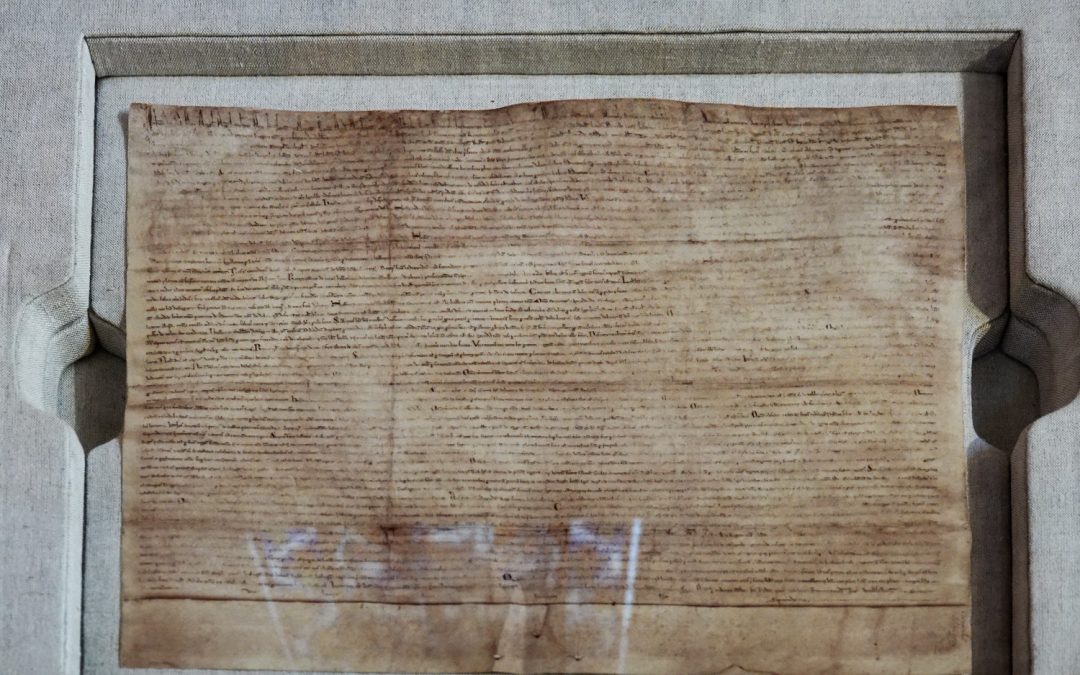
There’s something thrillingly unassuming about Lincoln’s copy of the Magna Carta. For such an iconic document, it’s not much to look at—just a modest sheet of medieval vellum covered in cramped Latin script. But don’t let its size fool you. This unpretentious parchment altered the trajectory of English law and liberty.
And Lincoln has cared for it through war, weather, and centuries of quiet guardianship.
A Document of Crisis
In 1215, King John was in trouble. Years of failed military campaigns, crushing taxes, and royal high-handedness had alienated the barons. When they finally rebelled, they didn’t just demand reforms—they drafted them.

The result was Magna Carta, a list of demands that became the cornerstone of constitutional law. No one—not even the king—was above the law. It asserted due process, limited arbitrary imprisonment, and protected certain property rights.
It was, in truth, a peace treaty. And like most peace treaties, it didn’t hold for long.
Why Lincoln?
Lincoln’s bishop at the time, Hugh of Wells, was one of King John’s royal administrators. He was also present at Runnymede when the Magna Carta was sealed. Lincoln’s cathedral and its influential clergy ensured one of the original copies was sent north—part of the king’s obligation to disseminate the charter throughout the realm.
And it’s not alone.
Lincoln also holds the Charter of the Forest (1217). This lesser-known but equally radical document extended the principles of Magna Carta to commoners and curbed abuses of royal forest law. The pairing of these two texts makes Lincoln unique: it doesn’t just speak to liberty for the elite, but for the many.
Legacy Over Time
Magna Carta was annulled almost immediately after it was sealed. But it refused to disappear. Reissued multiple times over the 13th century, it evolved from a baronial demand into a broader symbol of justice.
Its influence rippled outward: across the English Channel, into early parliamentary law, and centuries later, into the U.S. Constitution and Bill of Rights. That’s quite a journey for a peace treaty carefully inscribed in Latin.
Visiting the Vault
For centuries, Lincoln’s Magna Carta was stored in the Cathedral. It just…sat there in the hallway. You could walk right up to it and take a picture, which I did!
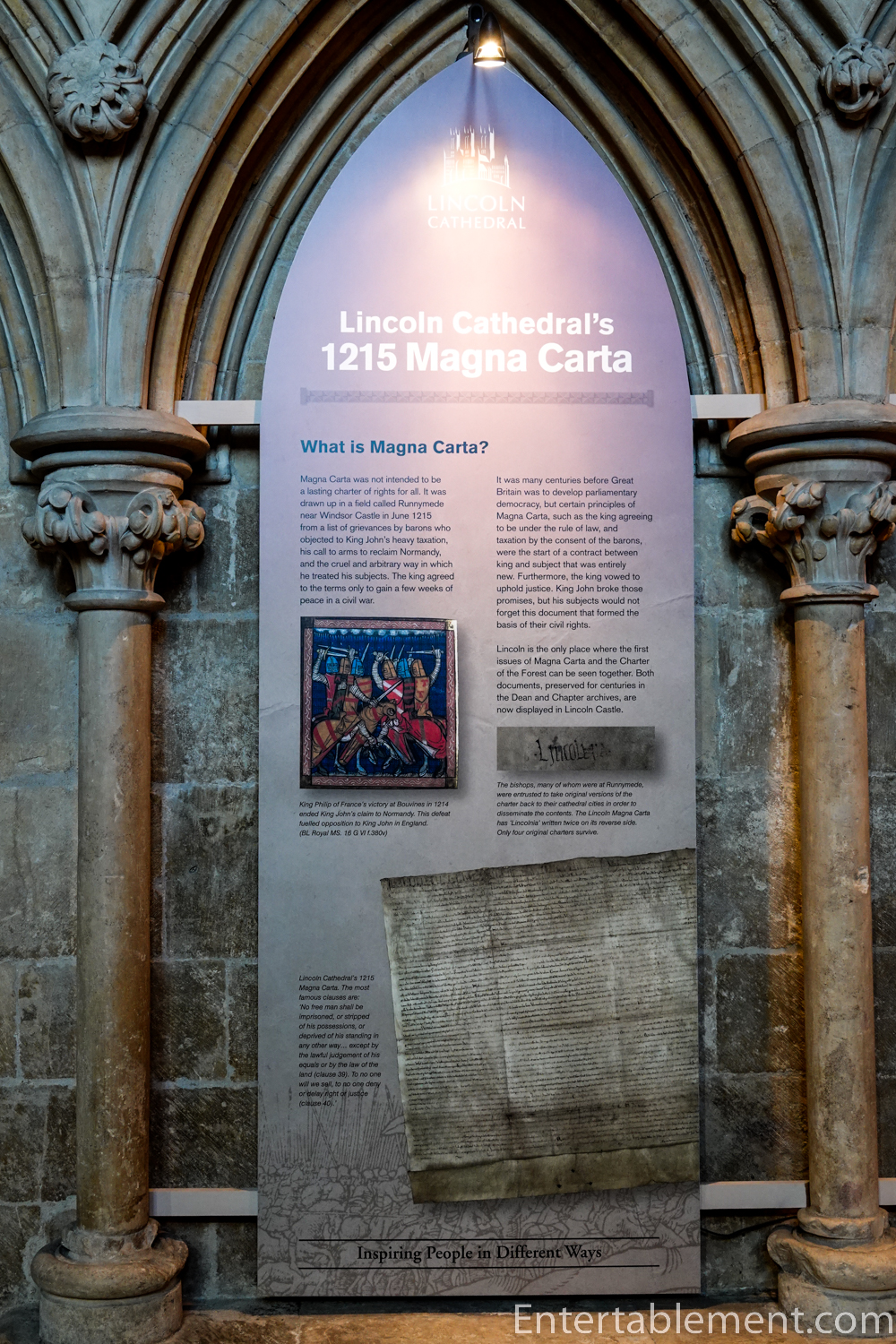

Now, it’s displayed at Lincoln Castle in a purpose-built underground vault. The presentation is striking—clean, reverent, and solemn without being grandiose.
No photos allowed, so I’m glad I snagged mine at the time. There is another copy in the Chapter House at Salisbury Cathedral.
Displays surround both copies to provide context—its creation, rejection, resurrection, and eventual deification in the Victorian age. But the document itself? It doesn’t shout. It states, quietly and firmly:
No one is above the law.