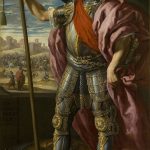
Mary I, often overshadowed by her half-sister Elizabeth I, was England’s first queen regnant to rule in her own right. Her short but dramatic reign (1553–1558) was defined by religious conflict, political intrigue, and personal tragedy. Though remembered by history as “Bloody Mary” for her persecution of Protestants, her life and rule were far more complex than that single label suggests.
A Childhood of Uncertainty and Betrayal
Born in 1516, Mary Tudor was the only surviving child of Henry VIII and Catherine of Aragon. As a princess, she enjoyed a privileged upbringing, receiving an education fit for a future ruler. Fluent in Latin, Spanish, and French, she was deeply religious and closely tied to her mother’s Catholic faith.
However, Mary’s world fell apart when Henry VIII sought to annul his marriage to Catherine in favour of Anne Boleyn. Declared illegitimate, stripped of her title as princess, and separated from her mother, Mary endured years of humiliation and emotional distress. She was forced to acknowledge her father as the head of the Church of England and accept her reduced status. Still, she never truly abandoned her belief in Catholicism or her legitimacy as heir to the throne.
Seizing the Crown: A Queen Against the Odds
After Henry VIII’s death, Mary’s position remained precarious. Her younger half-brother, Edward VI, a staunch Protestant, attempted to solidify Protestant reforms. As he lay dying in 1553, his advisors sought to exclude Mary from the succession, fearing she would reverse the Protestant Reformation. Edward’s will declared Lady Jane Grey, a Protestant noblewoman, as his heir instead.
Mary, however, refused to be cast aside. She rallied her supporters and, against overwhelming odds, raised an army. Her swift and decisive actions led to Jane Grey’s deposition after just nine days. Mary was triumphantly crowned queen, becoming the first woman to rule England in her own name.
The Restoration of Catholicism and the Marriage to Philip II
Determined to restore England to the Catholic faith, Mary repealed Protestant reforms and reintroduced papal authority. Her marriage to Philip II of Spain in 1554, intended to strengthen Catholic ties between England and Spain, proved deeply unpopular. Many feared Philip would dominate English affairs, and Mary’s perceived subservience to Spain weakened her authority.
Her reign was marred by the Marian Persecutions, during which hundreds of Protestants were burned at the stake for heresy, cementing her reputation as “Bloody Mary.” However, Mary saw herself as saving English souls, believing that only Catholicism could bring England back into God’s grace.
Among those caught in the religious strife were two towering figures of the English Reformation: Sir Thomas More and Thomas Cranmer.
- Thomas More, executed in 1535 for refusing to accept Henry VIII’s break from Rome, had been a loyal supporter of Mary’s mother, Catherine of Aragon. More’s unwavering Catholic faith and his canonization as a martyr made him a symbol of resistance against the Protestant Reformation. Mary sought to restore his legacy, seeing him as an example of the faith she hoped to revive in England.
- Thomas Cranmer, the Archbishop of Canterbury, was one of the architects of the English Reformation and a key figure in the spread of Protestantism under Edward VI. When Mary took the throne, he was arrested, tried for heresy, and ultimately burned at the stake in 1556. His execution and those of Bishops Ridley and Latimer became some of the most infamous moments of Mary’s reign.
These two figures illustrate the stark divide of Mary’s England—a kingdom torn between religious conviction and political necessity, where both Protestants and Catholics suffered for their faith.
Personal Tragedies and the Loss of Her Legacy
Mary’s greatest sorrow came from her phantom pregnancies—twice, she believed herself to be pregnant, only for no child to be born. These false pregnancies not only subjected her to personal humiliation but also left England without a Catholic heir. Her hopes of securing a lasting Catholic dynasty crumbled.
By 1558, Mary was gravely ill. She died that year, aged 42, heartbroken and convinced that she had failed in her mission to restore Catholic England.
Mary I’s Legacy: A Misunderstood Monarch?
While her reign is often judged harshly, Mary was a trailblazer as England’s first ruling queen. She proved that a woman could rule independently, setting the stage for her half-sister Elizabeth I’s far more successful reign. Though her religious policies were brutal, they were not unusual for the time—both Protestants and Catholics persecuted dissenters in the 16th century.
Ultimately, her most lasting legacy may be the lesson she provided for Elizabeth—the dangers of marriage, the volatility of religious strife, and the necessity of controlling her own destiny. While Elizabeth embraced Protestantism and crafted a different kind of rule, she undoubtedly learned much from Mary’s failures and struggles.
Mary I remains a complex and tragic figure—one who fought for her throne and ruled with conviction but ultimately could not reshape England’s destiny in her image.