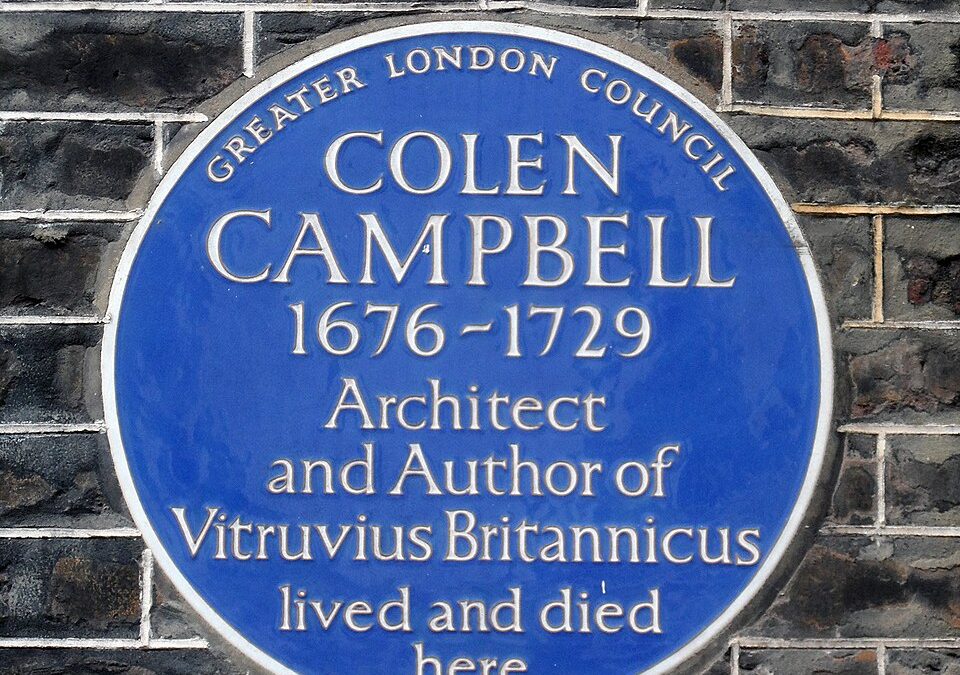
You might not know his name, but if you’ve ever admired the cool elegance of a Georgian façade—symmetrical windows, classical columns, that refined, orderly feel—you have Colen Campbell to thank. A Scottish architect and writer, Campbell wasn’t the loudest or flashiest figure of his time, but he was one of the most quietly influential.
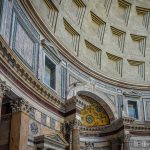
Before Campbell, English architecture was all dramatic Baroque flourishes—think domes, swirls, and lots of flair—Blenheim Palace and Castle Howard. But Campbell had a different vision. Inspired by the writings of Palladio and the rational clarity of classical Roman architecture, he thought English houses needed a bit more discipline—more harmony, less theatricality.

Blenheim Palace
So he did what any bold thinker might: he published a book. Vitruvius Britannicus (1715) wasn’t just a collection of architectural drawings—it was a manifesto in copperplate. It promoted clean lines, balanced proportions, and classical restraint. And it quickly became the handbook for the new elite.
Suddenly, Campbell was the man of the moment. He landed commissions from the powerful—he even helped design the original Burlington House on Piccadilly, historically the home of the Royal Society.

He also designed Wanstead House, the first great English country house in the Palladian style. Long since demolished, Wanstead is a remarkable tale of Georgian excess, featuring the fascinating and wicked protagonist Richard Child and his immensely wealthy yet powerless wife, Dorothy Glynne. Stay tuned for that one!
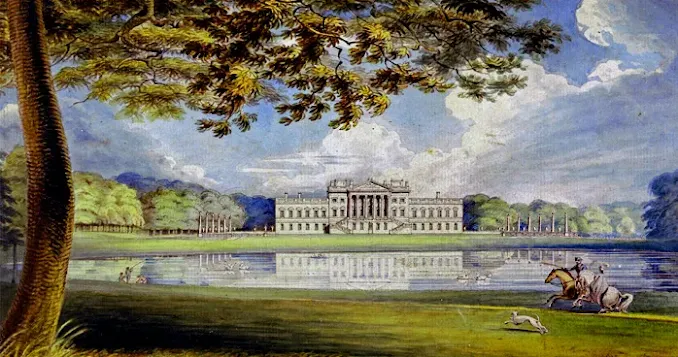
Wanstead House
Was Colen Campbell personally charismatic? Perhaps not. But his ideas had gravity. He made architecture thoughtful, rational, and—above all—aspirational. Campbell didn’t just build houses. He built a movement.