Of all the stunning châteaux in the Loire Valley, two stand as architectural marvels and case studies in Enlightenment thought brought home. Villandry and Cheverny may differ in atmosphere—one bright and intimate, the other precise and theatrical—but together, they articulate a world in transition: from absolutist display to domestic introspection, from court ritual to family refinement.

Villandry
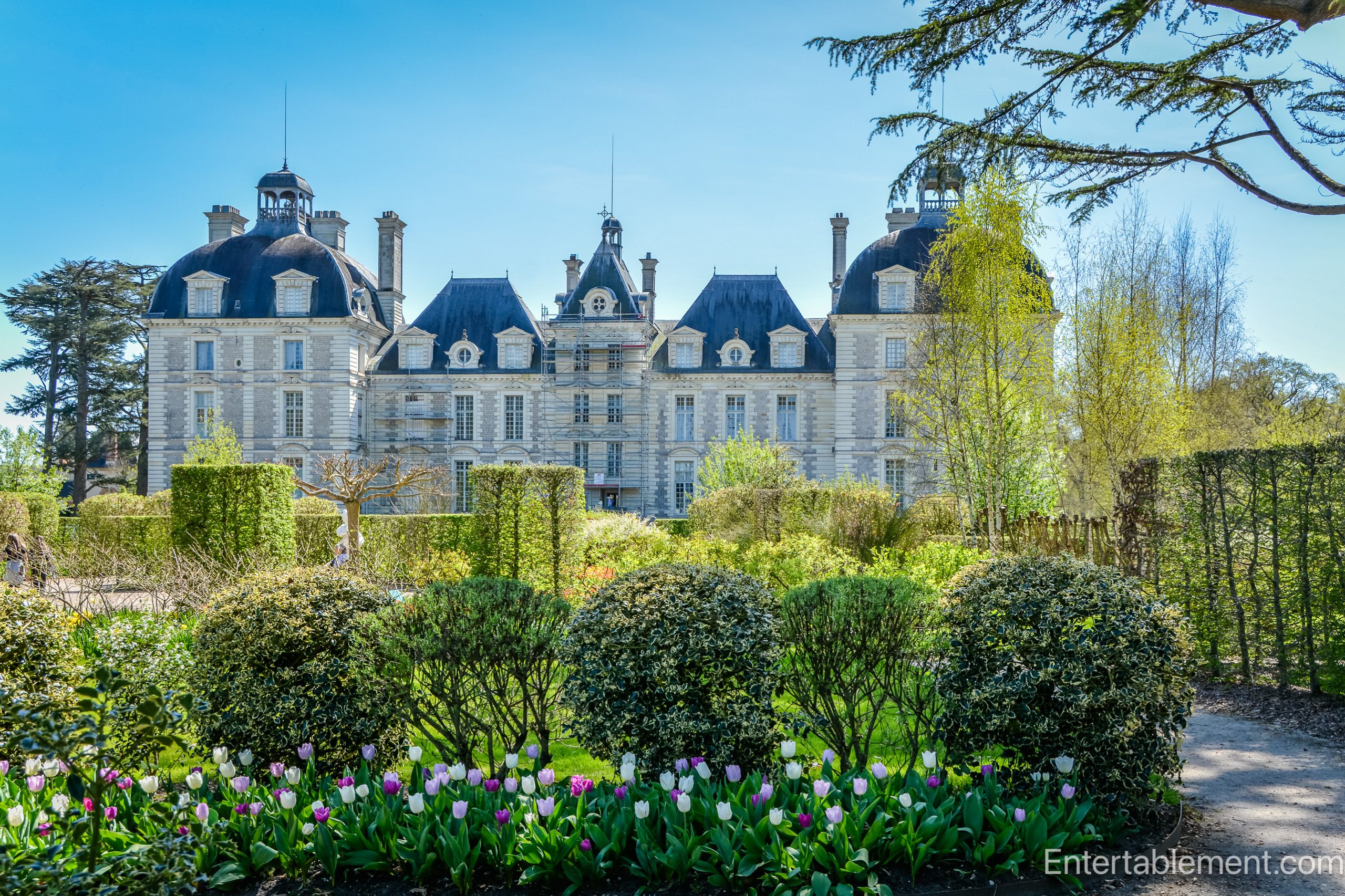
Cheverny
These houses are not simply historical artifacts; they are architectural arguments about what it means to live well, govern wisely, and educate oneself.
Enlightenment at Eye Level
The Enlightenment is often described in terms of philosophers and revolutions. But it’s a quieter story—perhaps more enduring—played out in spaces like these: salons where rational conversation replaced rigid ceremony; libraries where children studied Latin under the gaze of moral allegories; bedrooms where privacy, once unthinkable, became desirable.

Library at Cheverny
Enlightenment ideals were absorbed and refined across generations at Cheverny, famously one of France’s most continuously inhabited châteaux. Its rooms are still immaculately dressed—not to impress, but to welcome. The elegant salon, the jewel-box dining room, and the coordinated wallpapered bedrooms all speak to an evolving worldview: life as a curated, ordered, and emotionally resonant experience.
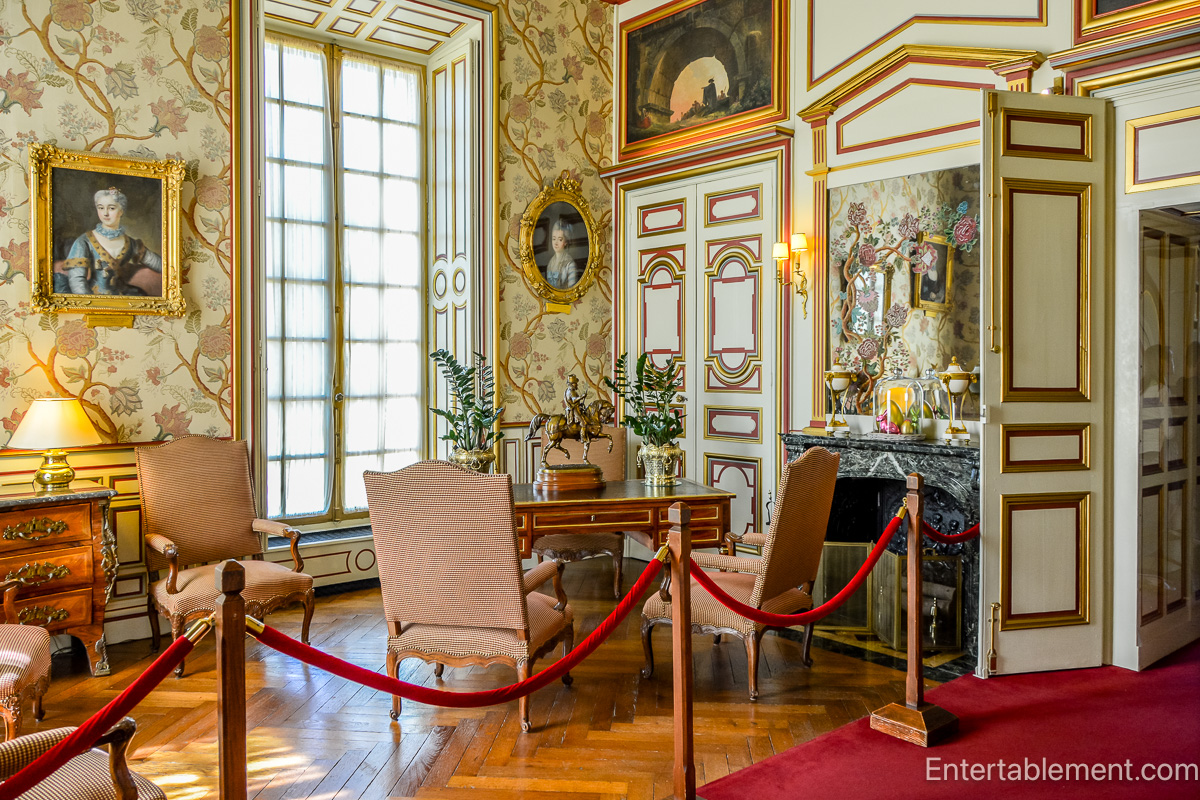
Salon at Cheverny
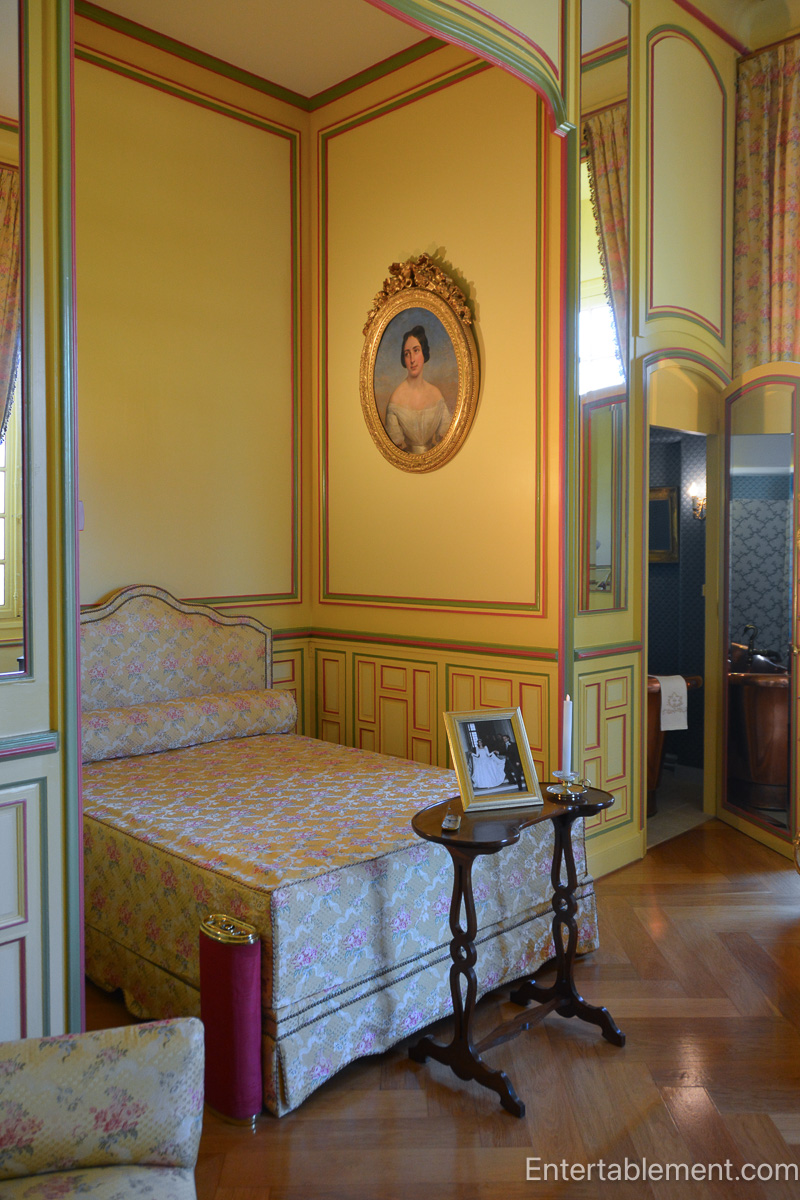
Bedroom at Cheverny
At Villandry, Enlightenment values find a more overt expression—not least because the château’s 20th-century restorers, Dr. Joachim Carvallo and Ann Coleman, approached the project with scholarly zeal and republican sympathy. Their aim was not to recreate a past courtly glamour, but to enshrine a philosophy of domestic virtue. The result is a house that blends Renaissance harmony with Enlightenment clarity.
The Bedroom as a Public Space
Before the 19th century, even the bedroom was never entirely private. It was a space of ritual, where guests were received in a semi-formal, intimate setting. At Villandry, we see several iterations of this hybrid purpose: the empire-style red room with its baldachin bed; the soft green chamber designed for repose and poise.

Empire-style bedroom at Villandry

18th-century bedroom at Cheverny
These are not just sleeping quarters. They are moral and aesthetic environments. The alcove bed, a particularly French invention, allowed visibility and retreat. It embodied the Enlightenment paradox: the desire to be seen and to reflect.
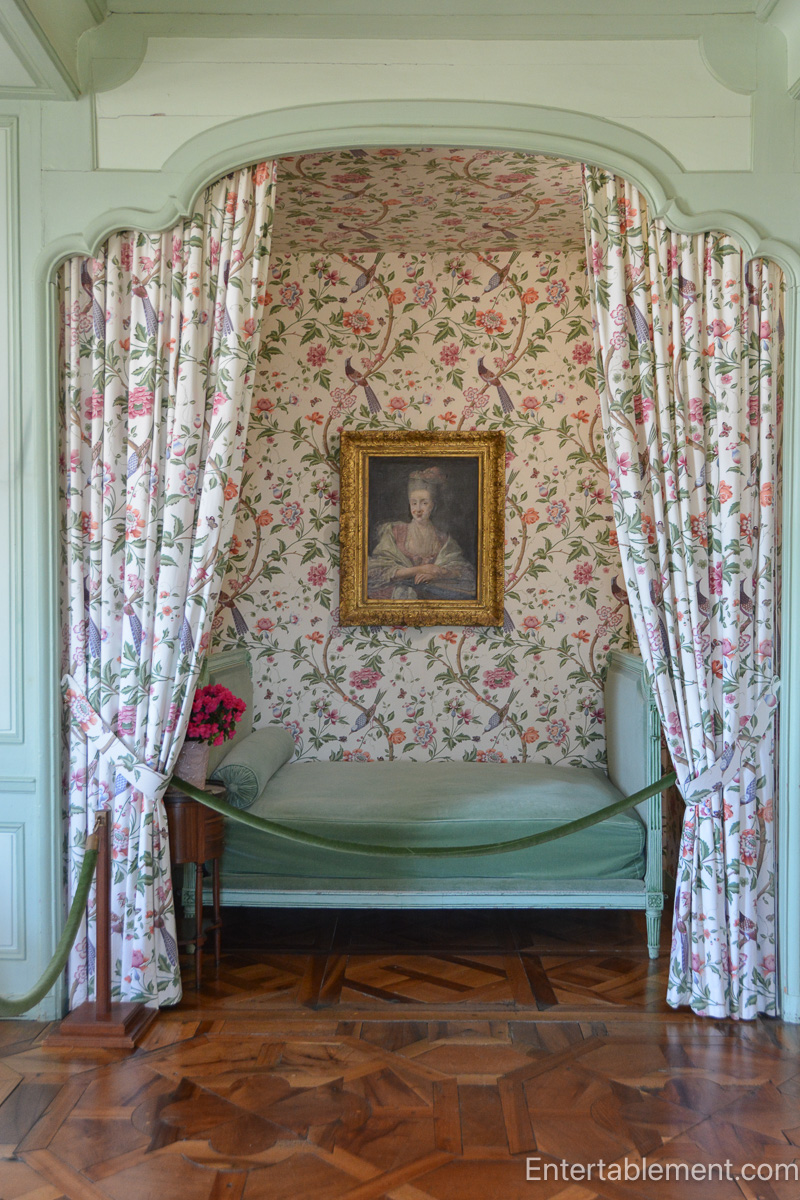
Alcove bed at Cheverny
A Child-Centred Cosmos
One of the most touching features of both homes is the space given to children, both physically and culturally.
Villandry’s nursery rooms, with their delicate wallpapers and miniature furnishings, evidence a seismic shift in cultural values.

Child’s bedroom at Villandry
No longer treated as miniature adults, children were seen as beings in formation, deserving of beauty, structure, and moral development.

Child’s bedroom at Villandry
This evolution parallels trends in English country houses of the same era, where nurseries and schoolrooms emerged as distinct areas within the domestic sphere. It reflects Rousseau’s Émile and the broader turn toward nurture over punishment.
The Dining Room as Theatre of Refinement
Both Cheverny and Villandry boast remarkable dining rooms, not grand in scale but exquisite in detail. At Villandry, porcelain vegetables spill from tureens; at Cheverny, the dining table gleams beneath an ornate painted ceiling.
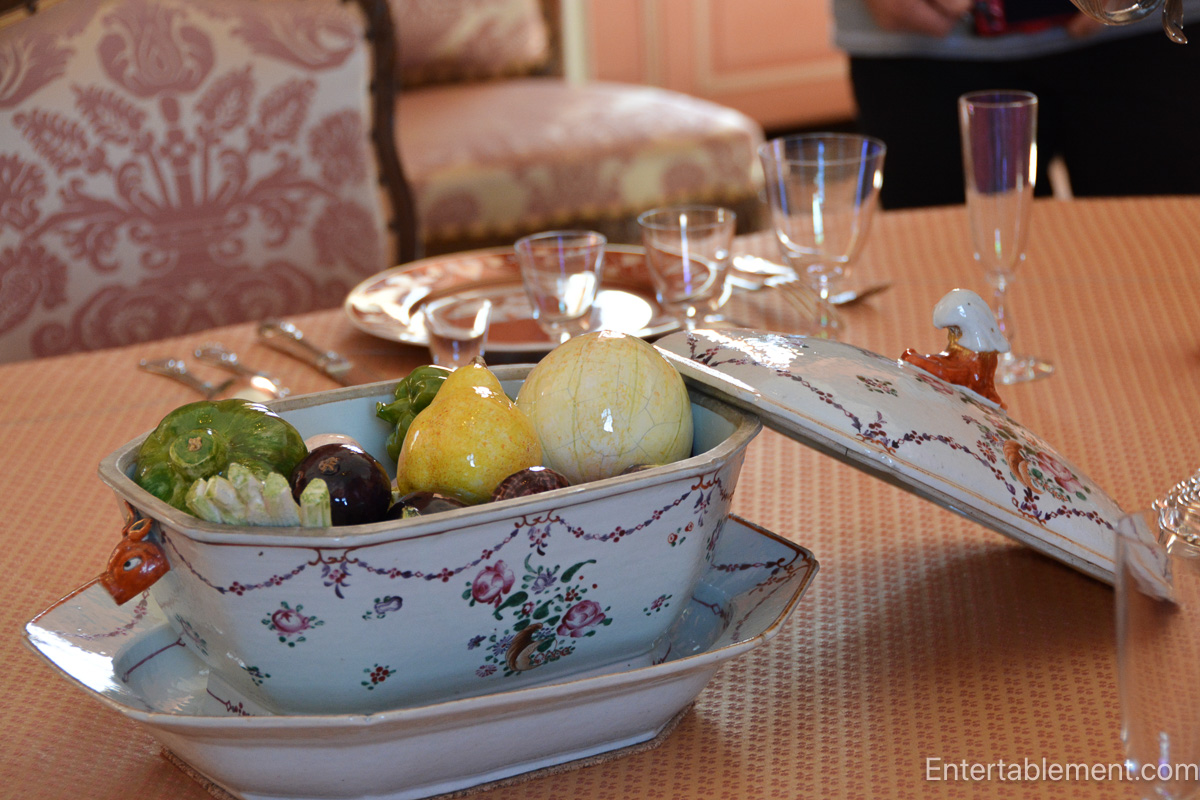
Dining room at Villandry
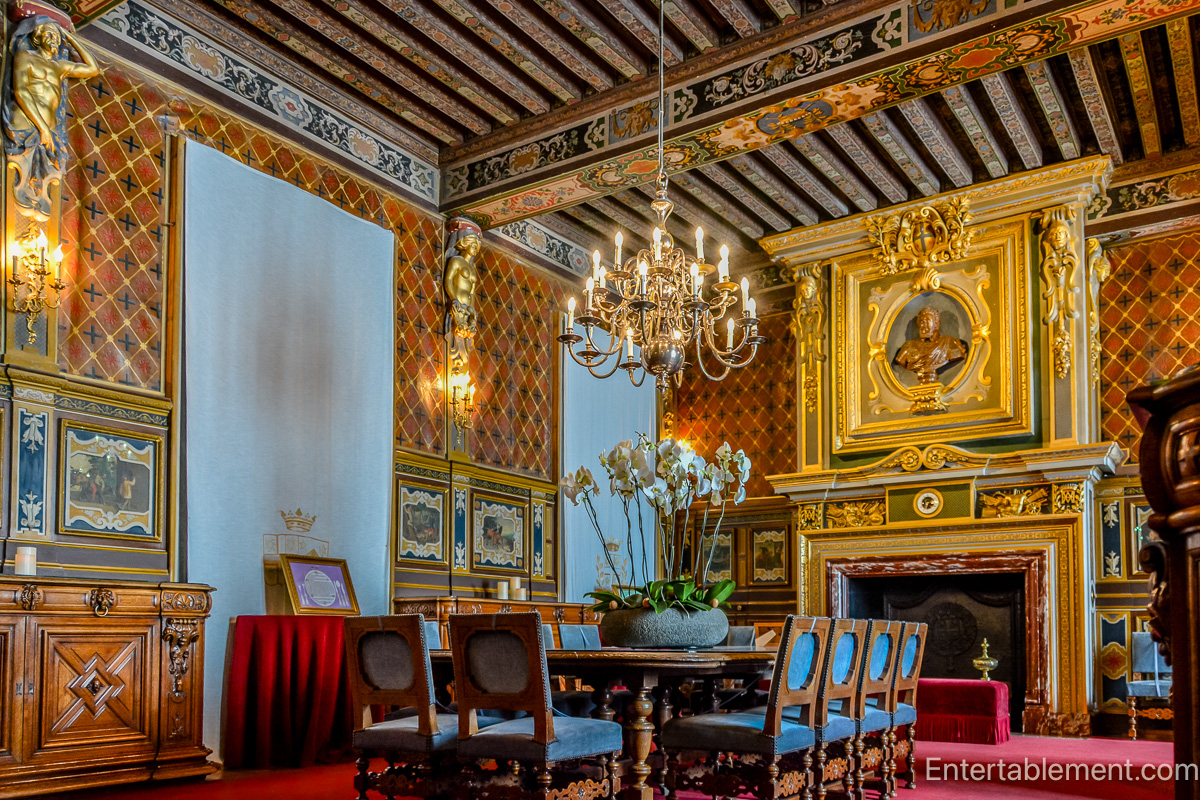
Dining room at Cheverny
Here, we do not see the medieval hall of public feasting but the Enlightenment table, which is orderly, intentional, and governed by etiquette. Dining becomes a performance, not of wealth but of taste. Each setting is a civics lesson. Each meal is a ritual of polite conversation.
The Kitchen, Reimagined
Curiously, Villandry’s kitchen reads most like a modern lifestyle fantasy. It has gleaming copper pots, symmetrical shelving, and a hearth of pre-industrial scale. It is not a scullery; it is a shrine to domesticity.
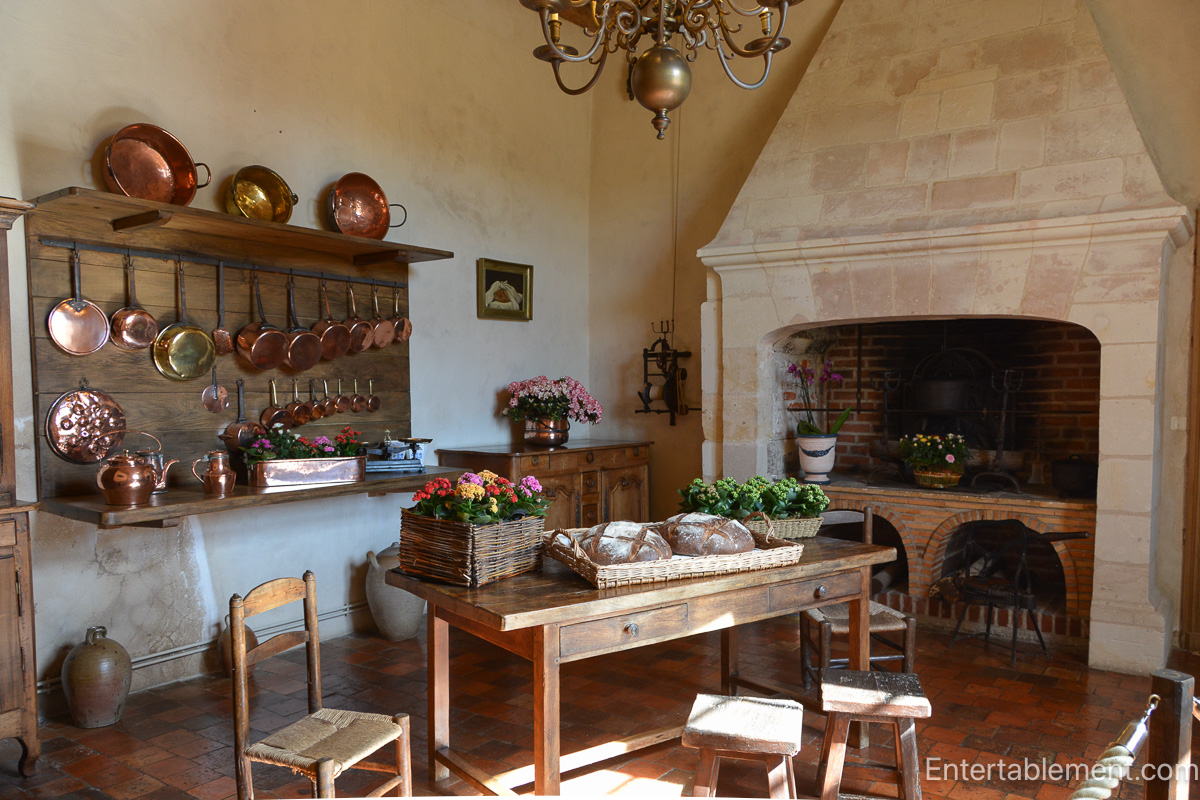
Kitchen at Villandry
While most historic homes preserve kitchens as sites of drudgery, Villandry’s celebrates order, warmth, and care. In this way, it echoes the Enlightenment ideal: even labour, properly structured and beautifully framed, can be ennobling.
Architecture as Moral Instruction
Ultimately, what unites Cheverny and Villandry is not a style but a stance. Each house asserts that beauty, order, and emotional resonance are not luxuries but virtues.
Symmetry calms the mind. Coordinated wallpapers and matching textiles teach visual harmony. A space that flows well invites rational thought and familial peace. These are homes designed not only to contain life, but to shape it as well.
This is the first post in the Living Ideas series — how homes have expressed power, identity, and ideals—from fortified castles to country retreats, from salons of state to Shingle-style porches.
Villandry & Cheverny—Enlightenment in Stone and Silk is the first in our Living Ideas series: an exploration of how domestic life evolved over centuries—what changed, what endured, and why home has always meant more than shelter.
Curious how this series began? Start with our introduction: Living Ideas: A Personal Starting Point.
Curious about the Enlightenment? Please visit What Was The Enlightenment?