
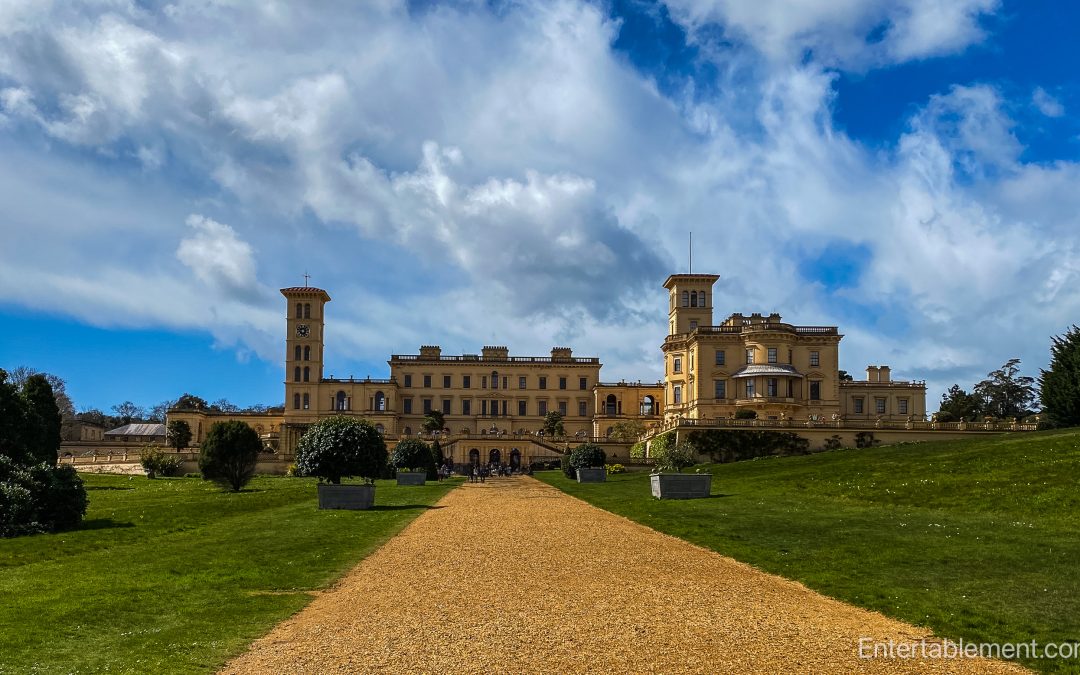
Tucked away on the Isle of Wight, Osborne House was more than just a royal residence—it was Queen Victoria’s sanctuary. Built between 1845 and 1851, the estate became the private retreat where Victoria and Prince Albert could escape the rigours of court life and enjoy time with their growing family.
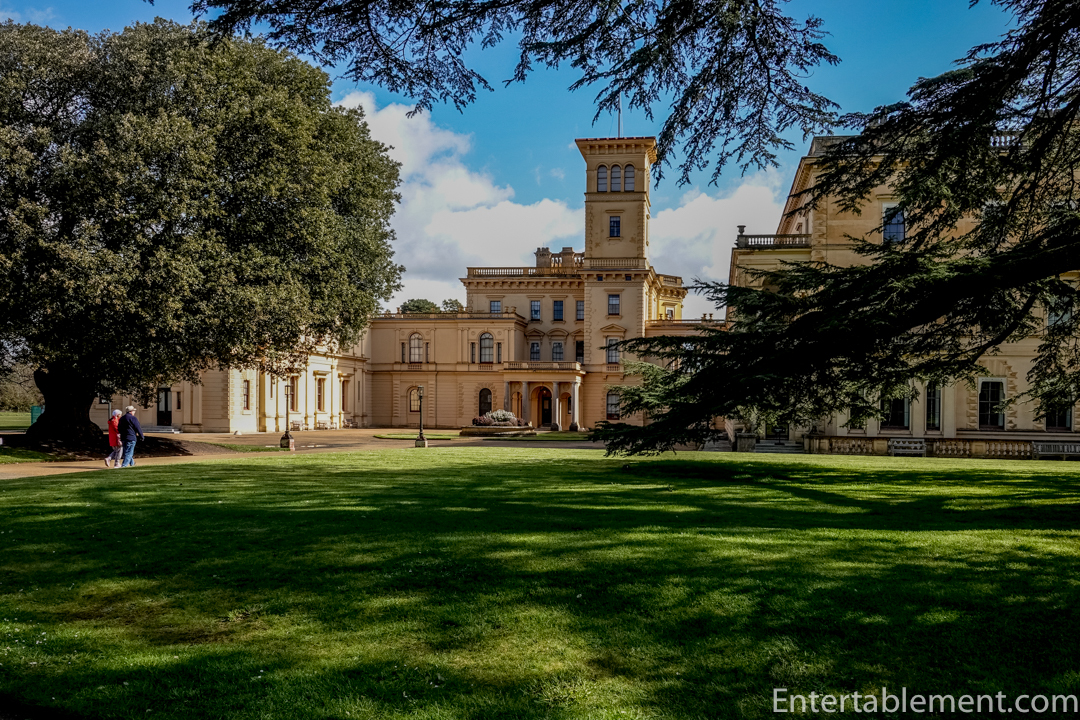
Unlike Buckingham Palace or Windsor Castle, Osborne was never intended for grand state occasions. Instead, it was a home—a place where the Queen could relax, her children could play, and Prince Albert could indulge his passion for architecture and landscape design.

Today, Osborne offers an intimate glimpse into royal domestic life, showcasing its grandeur and deeply personal touches.
A House Designed for Comfort and Elegance
Prince Albert played a significant role in designing Osborne, collaborating with architect Thomas Cubitt to create an Italianate villa inspired by the grand palazzos of the Mediterranean.
The result is a striking, sun-drenched facade with towers, terraces, and stunning sea views—a far cry from the cold, grey Gothic architecture favoured in earlier royal residences. Osborne was to be a home first and foremost, albeit a grand one.
Inside Osborne: A Blend of Grandeur and Intimacy
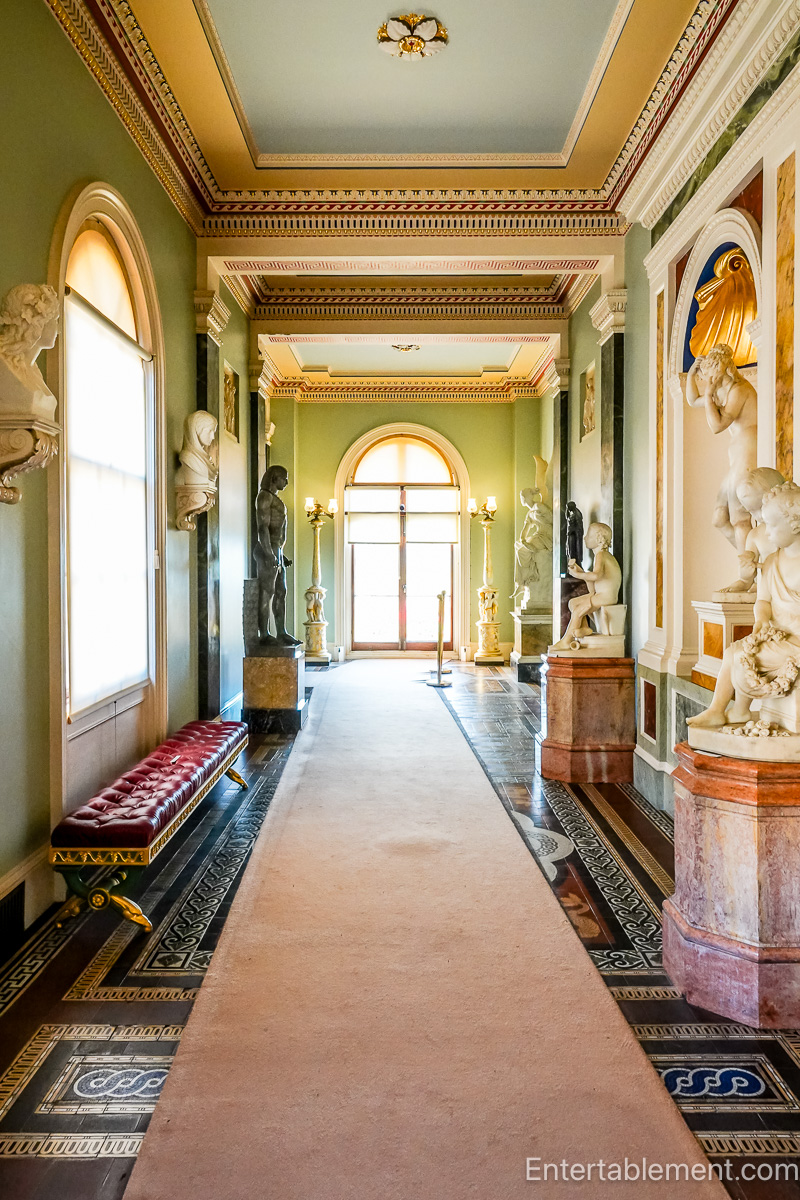
The Grand Corridor links the household, main wings, and Victoria’s private apartments.
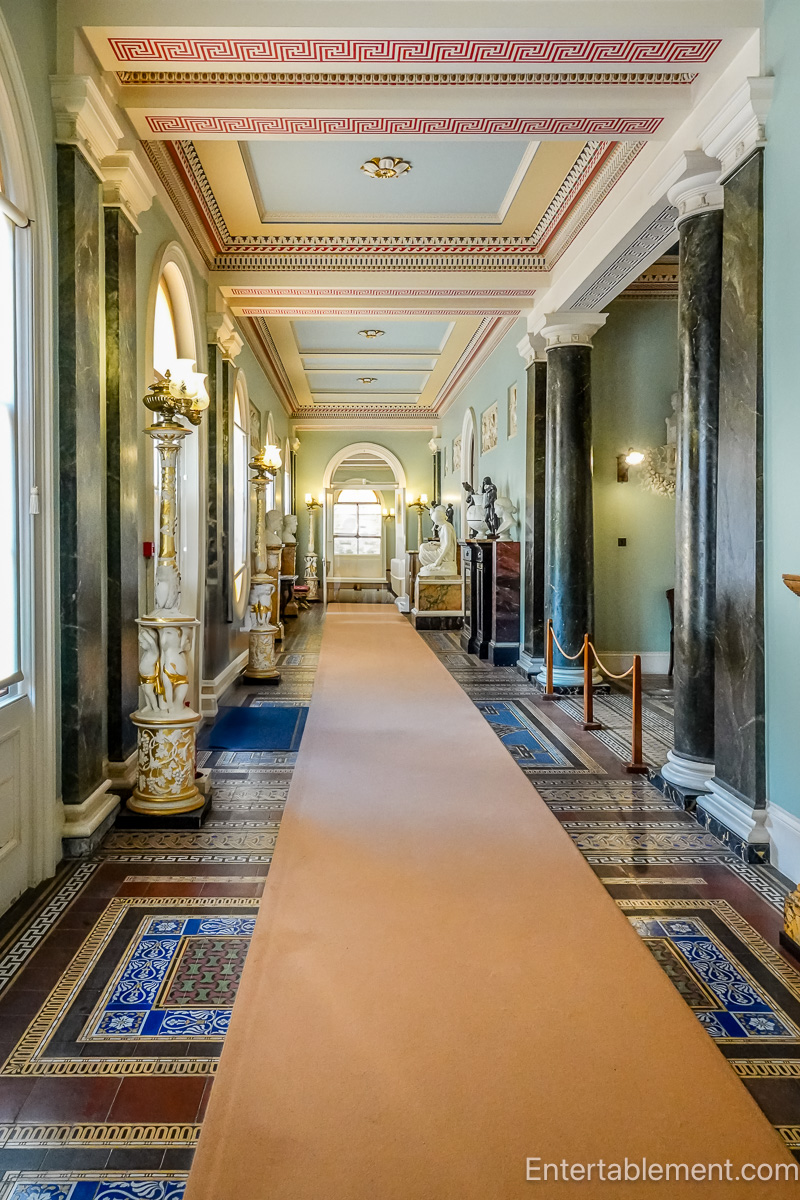
The decor reflects Albert’s fondness for Italian Renaissance design, with plaster copies of the friezes from the Parthenon.

The corridor was designed as a classic sculpture gallery, which was popular in the late 18th and 19th centuries. Most of the sculptures were produced by British and European artists who were alive then.
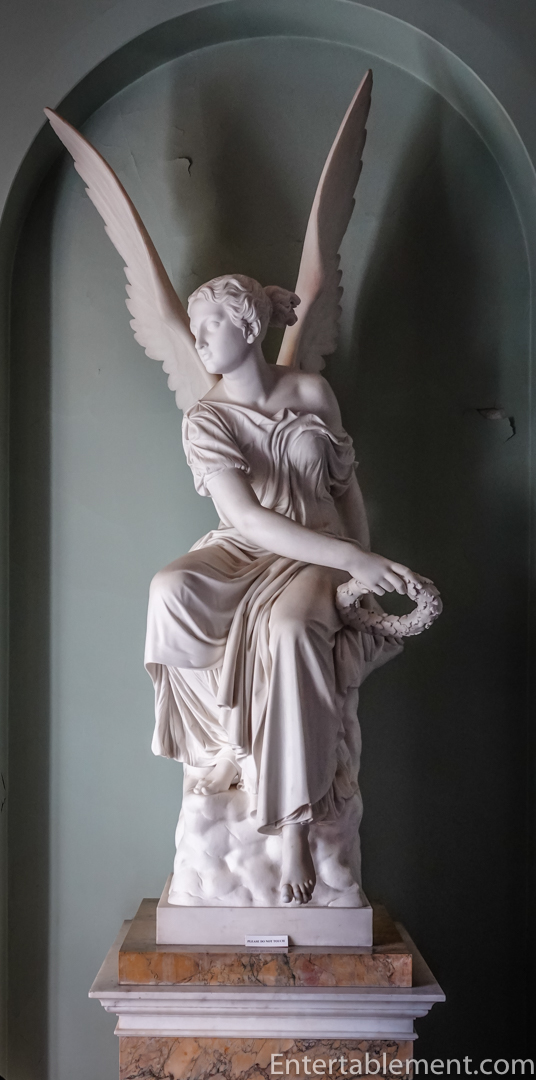


The Council Room
Queen Victoria’s Privy Council met at Osborne several times a year and used the Council room. I found the tiny table in the enormous room to be quite amusing. Prince Albert and Ludwig Gruner chose the colour scheme and elaborate decoration.

Alexander Graham Bell demonstrated his telephone here on January 14, 1878. The patent for the ‘phone was less than two years old then, but with Albert’s passion for technology, it was promptly installed at Osborne House.


The Audience Room
Before privy council meetings, Queen Victoria often received ministers in the Audience room.

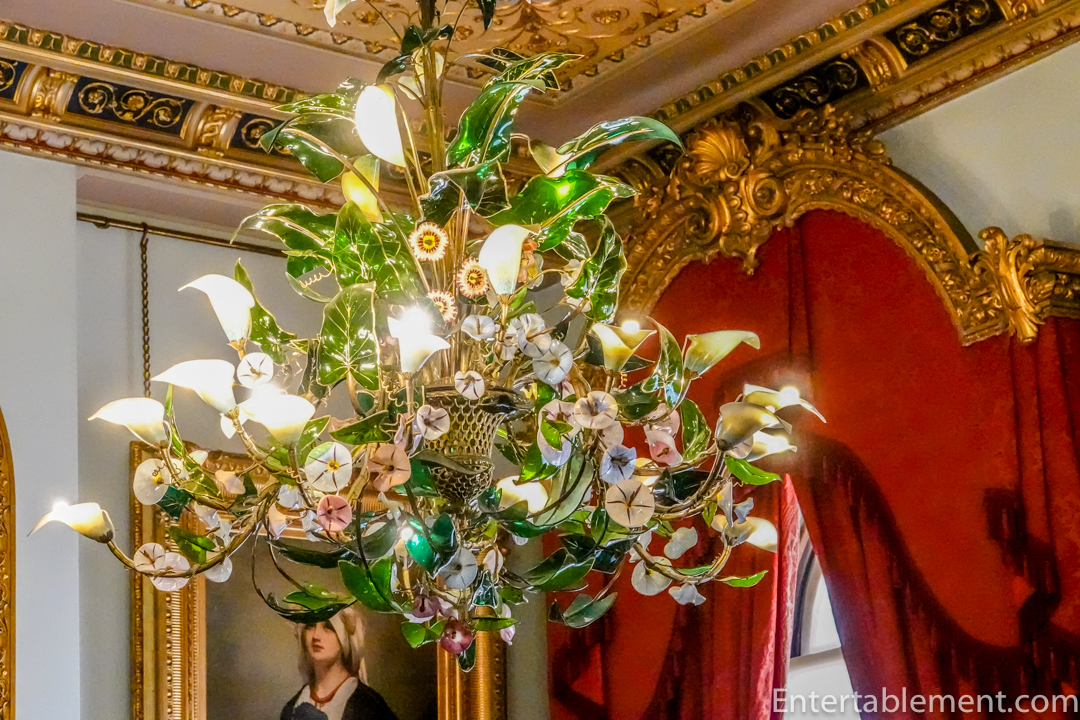
The chandelier, made of coloured glass and ormolu (gilt brass), includes Albert’s favourite flower, the convolvulus, and arum lilies climbing out of a basket.
The Grand Corridor continued
As we work our way toward the Pavilion, Cubitt’s more intimate family quarters, completed in 1845, we return to the Grand Corridor.
The Pavilion
Designed like a London Georgian townhouse, it was three floors above a basement containing the service rooms. On its main floor are the dining, drawing, and billiard rooms. English Heritage has an excellent map of how the house was laid out, which you can see here.
The Pavilion Staircase
The central hall is an elegant yet practical feature linked below with the more private areas above.
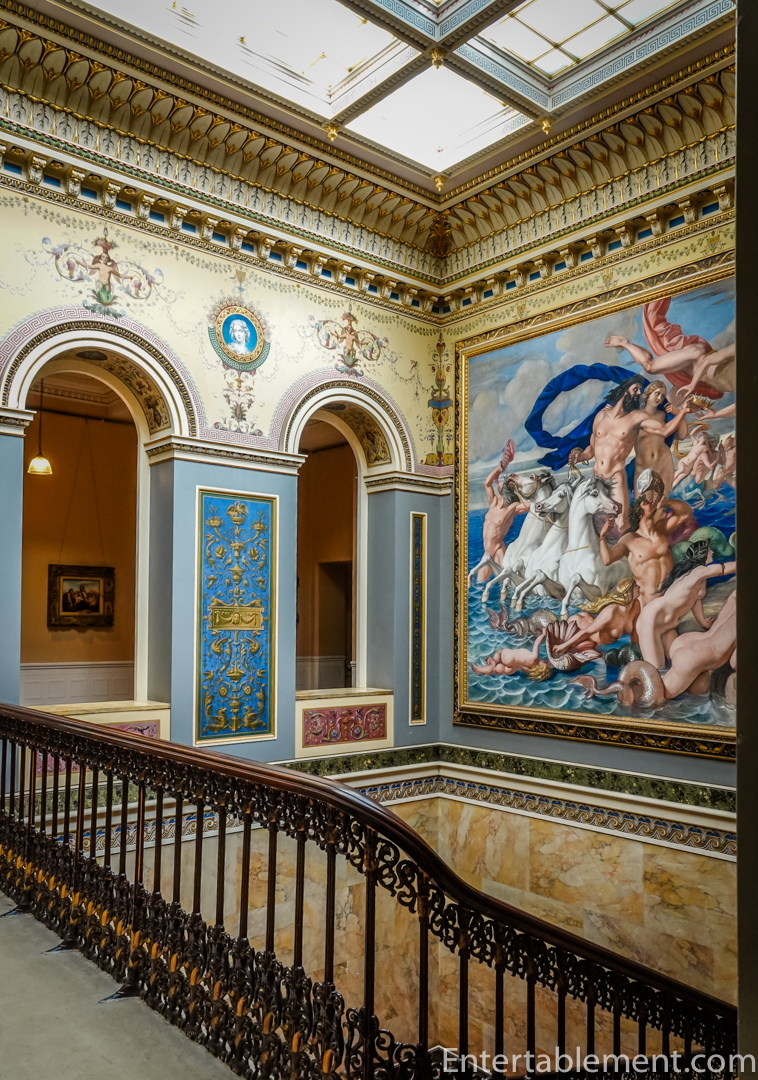
It might be a comfortable family home, but it is extremely elegant, with exquisite mouldings, frescoes, and artwork.

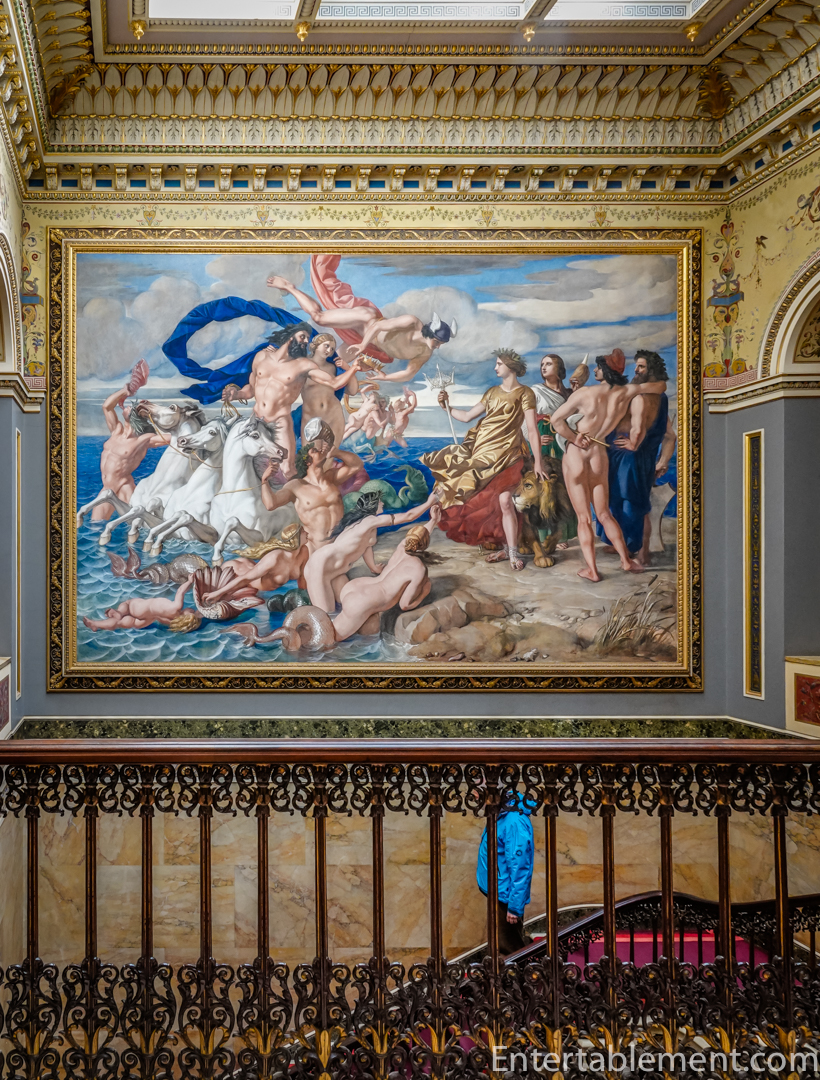
The staircase is top-lit by a skylight.

The Dining Room
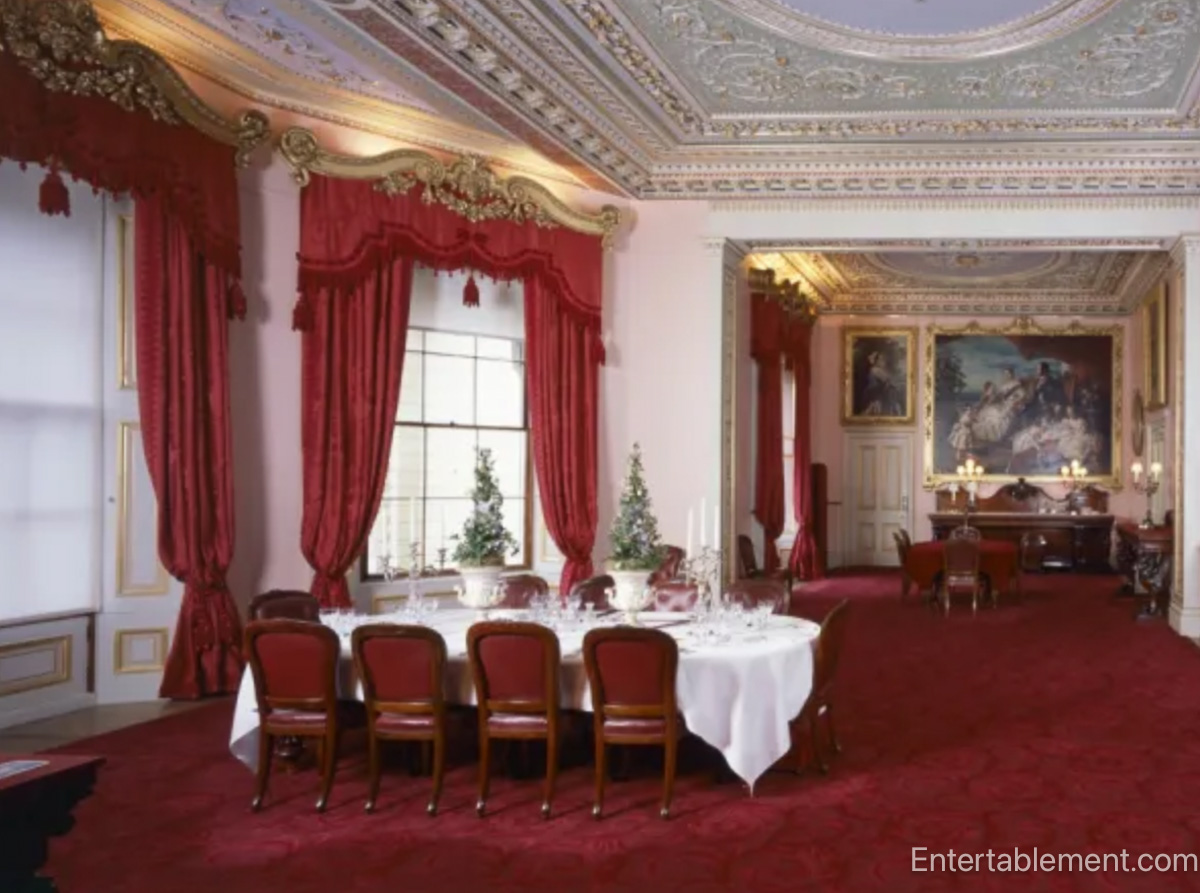
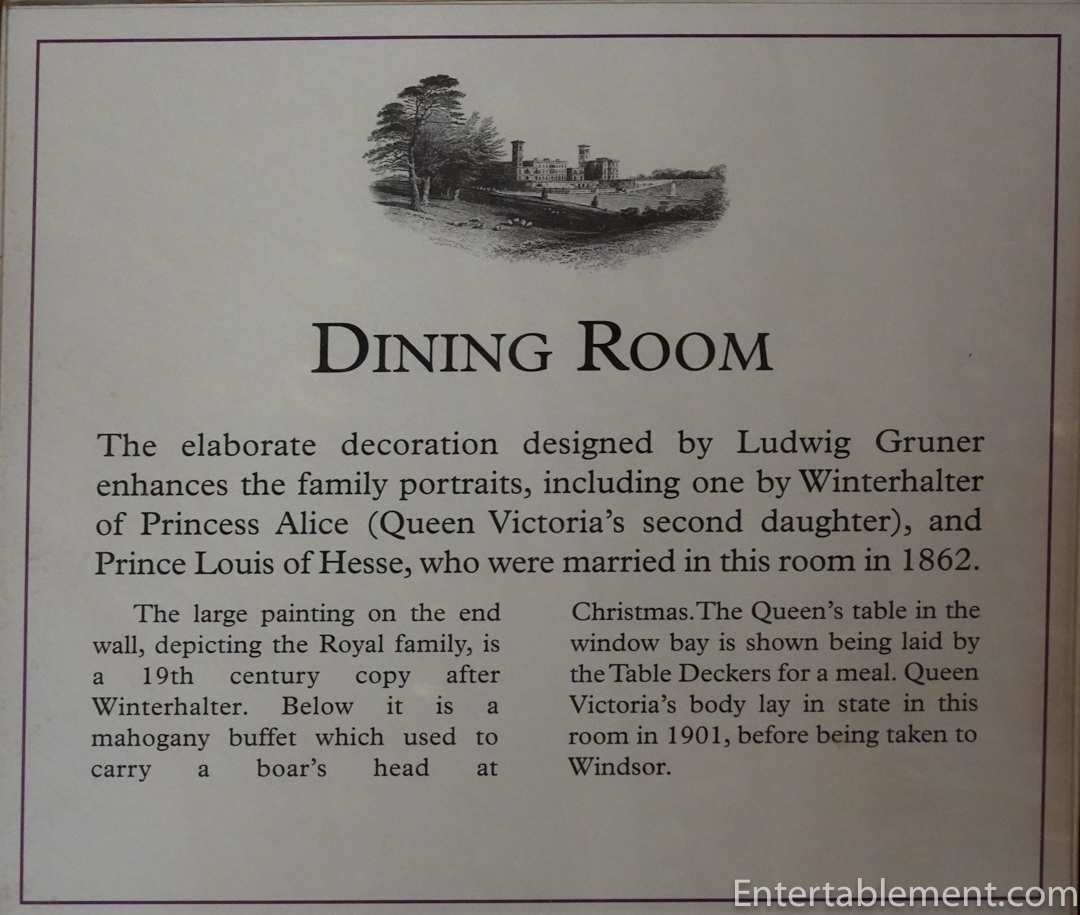
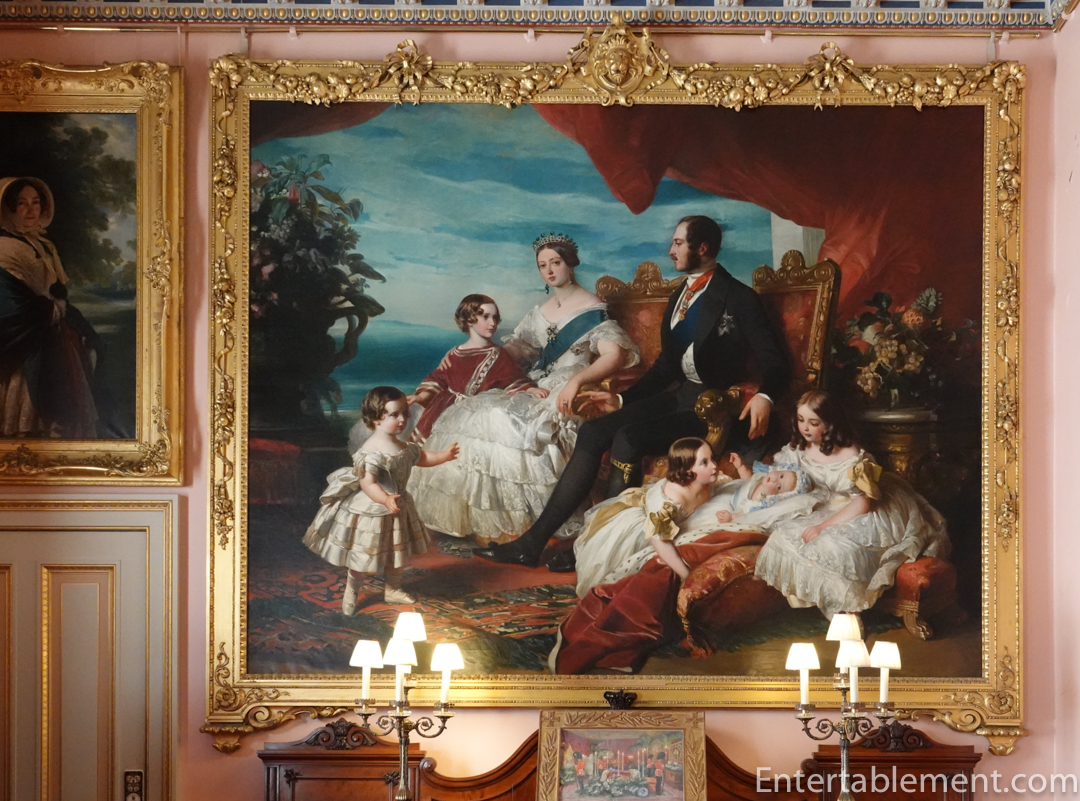
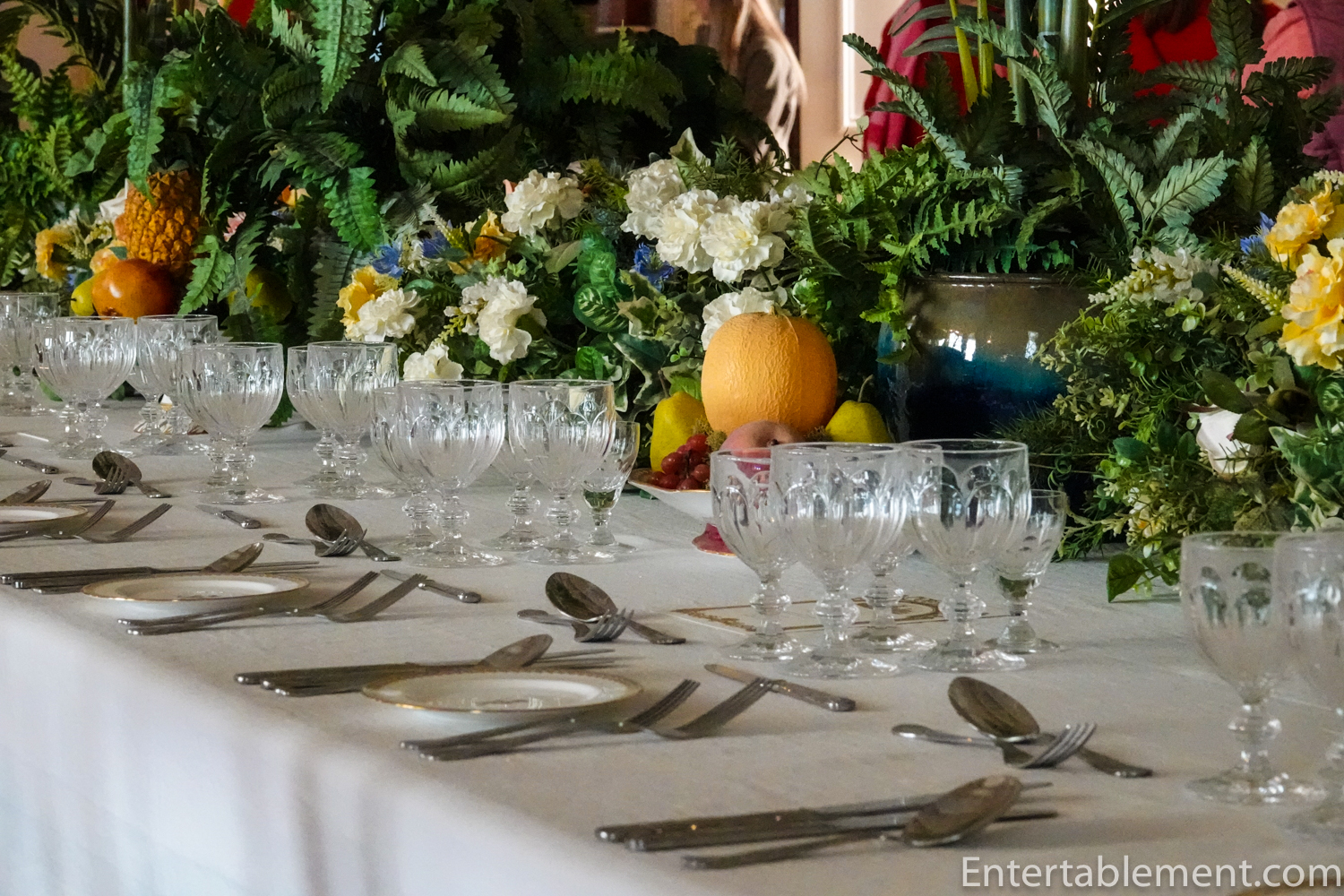
Ornate and deeply atmospheric, the dining room at Osborne showcases Victorian luxury at its height. Lavish red damask drapes, intricate plasterwork ceilings, and regal portraits set the tone for formal dinners and intimate family meals. Unlike the vast banquet halls of other royal residences, this space was used for daily dining and entertaining, complete with silver services, crystal settings, and a sense of ceremony. Prince Albert’s attention to detail is evident here, blending theatrical elegance with a strong sense of family life.

The Drawing Room
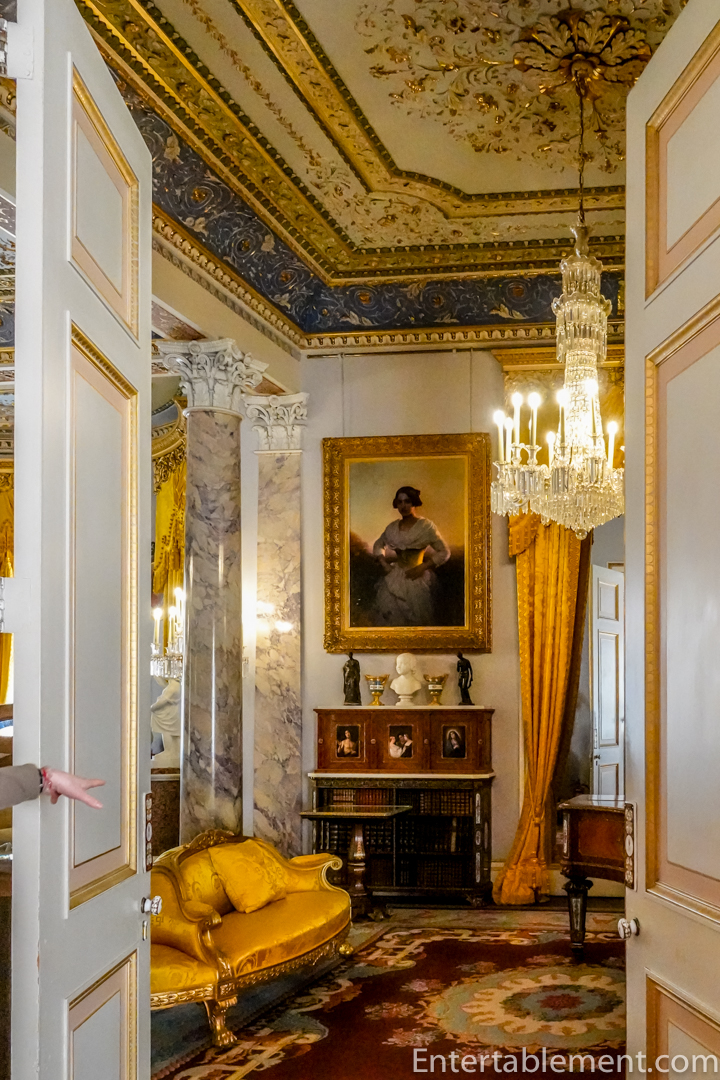
The royal family gathered in the drawing room for music, conversation, and relaxation. Queen Victoria especially liked the yellow colour scheme.

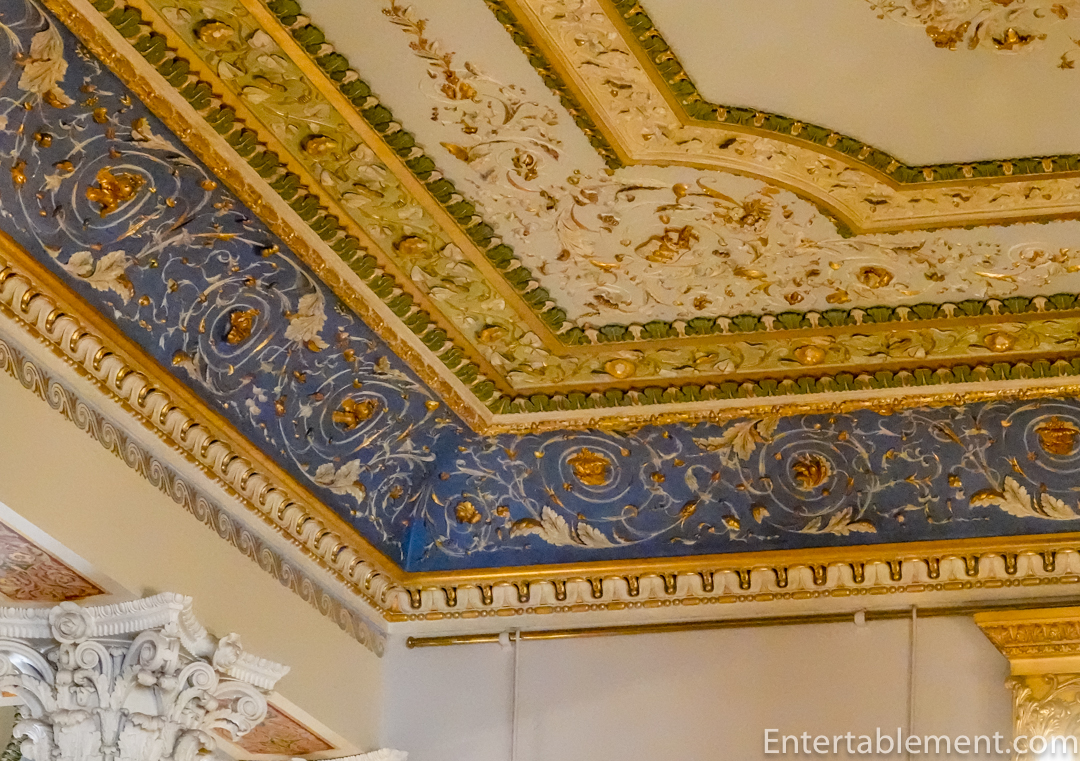
The gilded and painted coffered ceiling is exquisite.

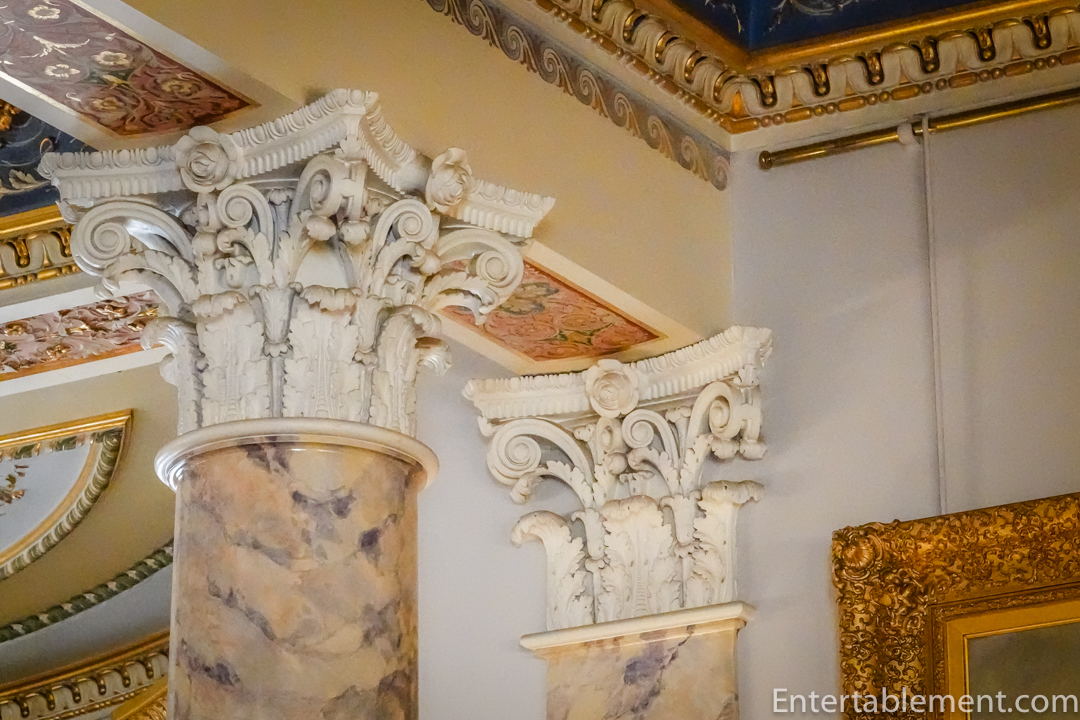
Visitors can see portraits of Victoria and Albert, their children, and other European royals, emphasizing Osborne’s role as a family home rather than just a royal estate.
The Billiard Room
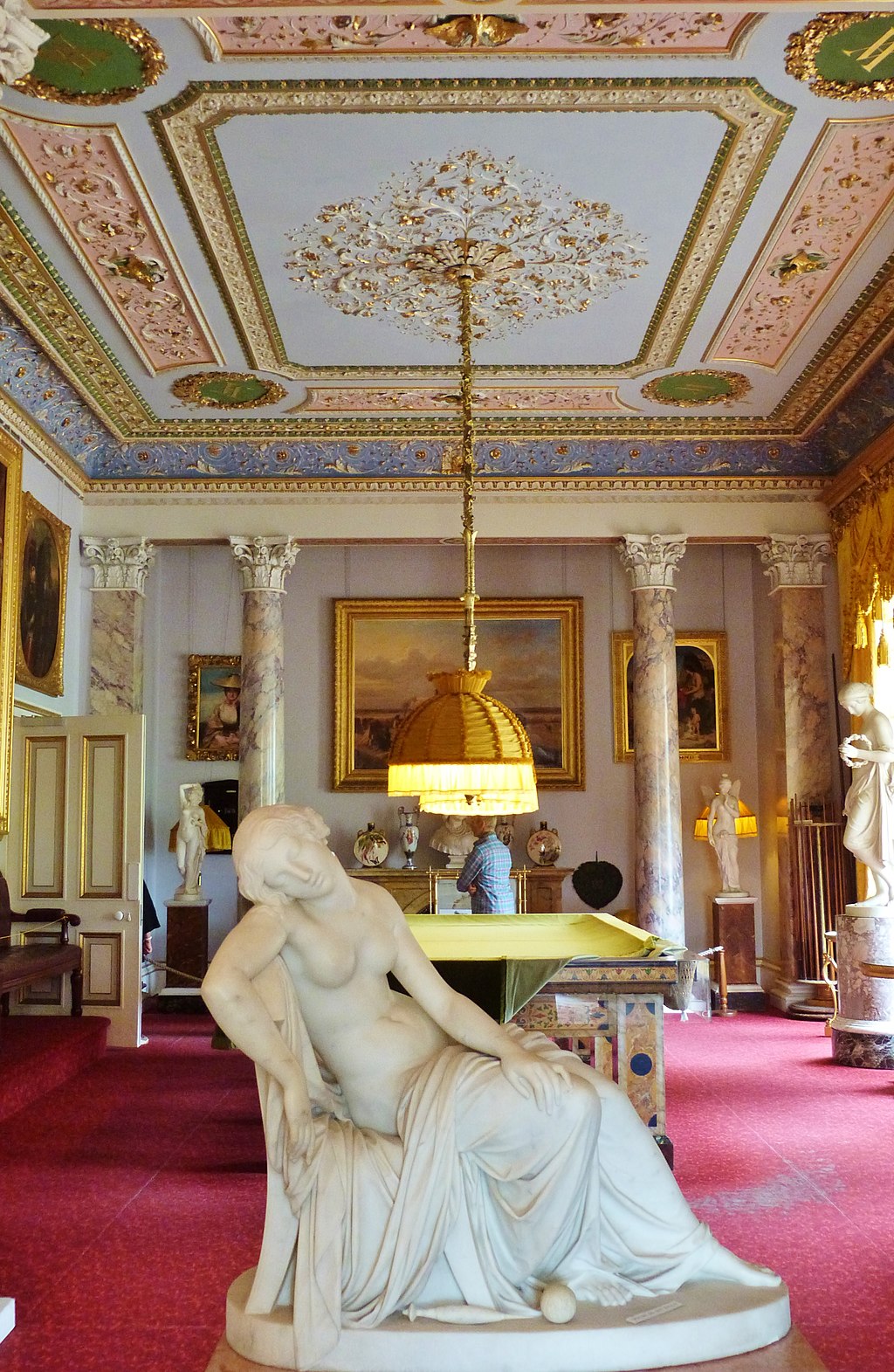
The adjoining Billiard room is a rare example of a dedicated men’s space at Osborne. It allowed gentlemen to relax and socialize in ways they could not in the more formal staterooms. Unlike the stiff protocol demanded in the royal palaces, the gentlemen in the billiard room at Osborne could sit down while waiting their turn at the table, though still technically in the Queen’s presence.
You can glimpse the enamelled legs on the table, resembling marble, with a frieze pattern designed by Albert.

Queen Victoria & Prince Albert’s Suites
Albert and Victoria each had their suites on the second floor. They worked together in Queen Victoria’s private sitting room, whose bay window faces across the terraces and parkland to the Solent. Despite Osborne being their “vacation home”, work did not cease; dispatch boxes arrived continually from London. They worked side by side at nearly identical desks; Victoria’s is on the left. If you look carefully, you will note that the drawers on Albert’s desk are shallower to accommodate his lanky frame.

One of the most poignant spaces in the house is the Queen’s bedroom.
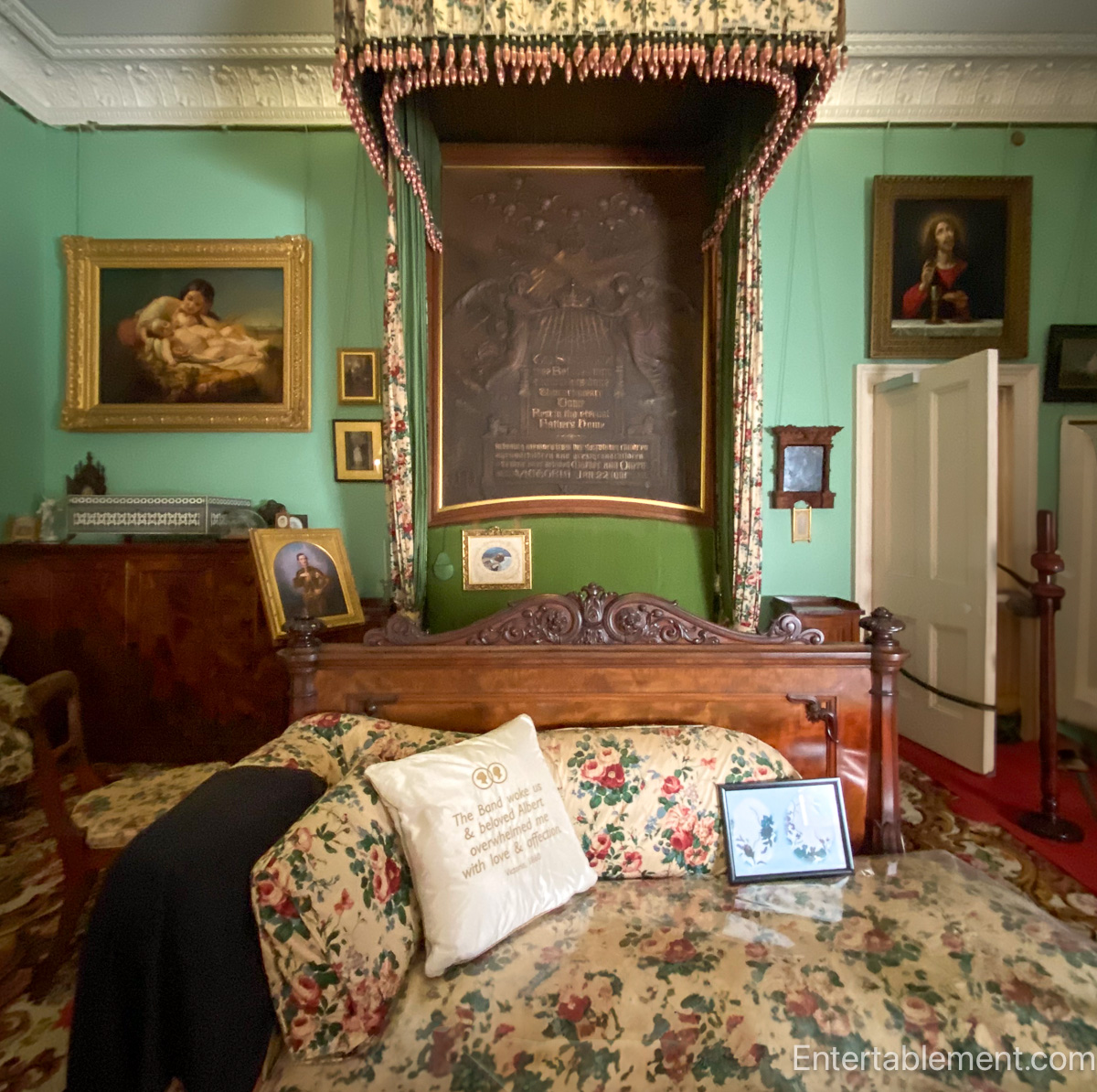
Here, the Queen passed away in 1901. Preserved much as it was at the time of her death, the room stands as a shrine to her memory, maintained at the request of her son, Edward VII.

The Nursery
Tucked away on the top floor, the nursery was home to Victoria and Albert’s nine children until they turned six. This was a deliberate choice—Albert, in particular, believed in keeping children separate from the formal world of adults until they were old enough to begin their education. See Queen Victoria’s Nine Children: Europe’s Royal Dynasty for more on their personalities and roles as adults in shaping the future role of Britain on the world’s stage.

Notice the three cribs in addition to the cradle! That’s a lot of small people at once. Here, they played, learned, and lived under the watchful eyes of their nurses and governesses.

The Durbar Room
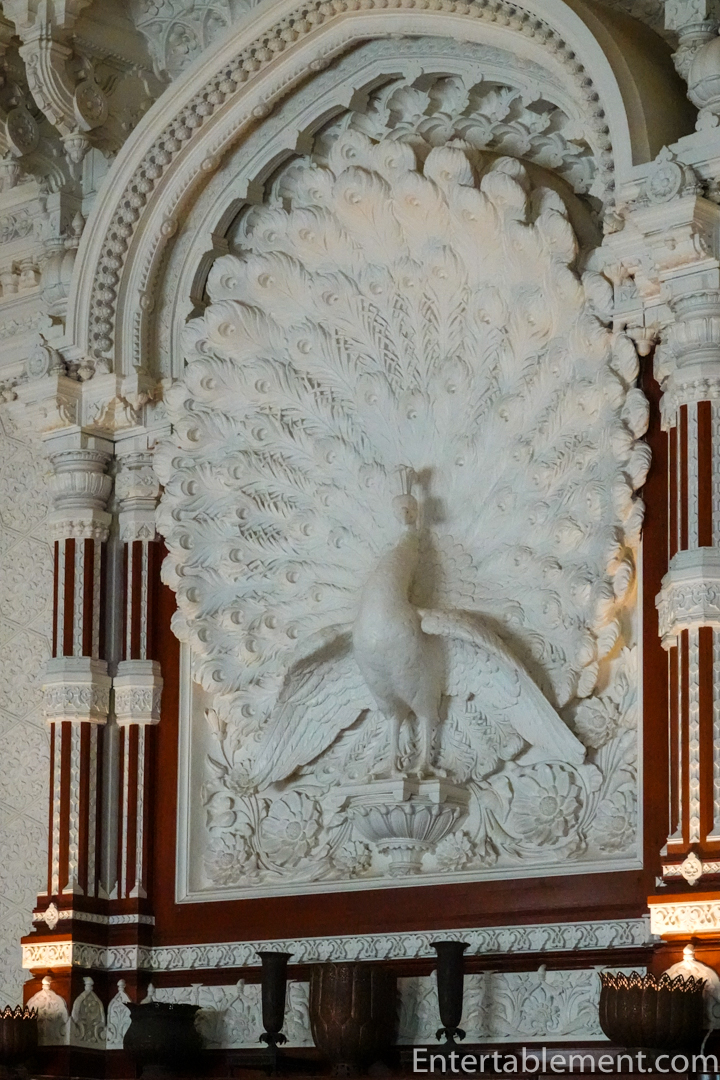
A striking departure from the rest of Osborne’s Italianate style, the Durbar Room was added in 1890 as a testament to Victoria’s status as Empress of India.
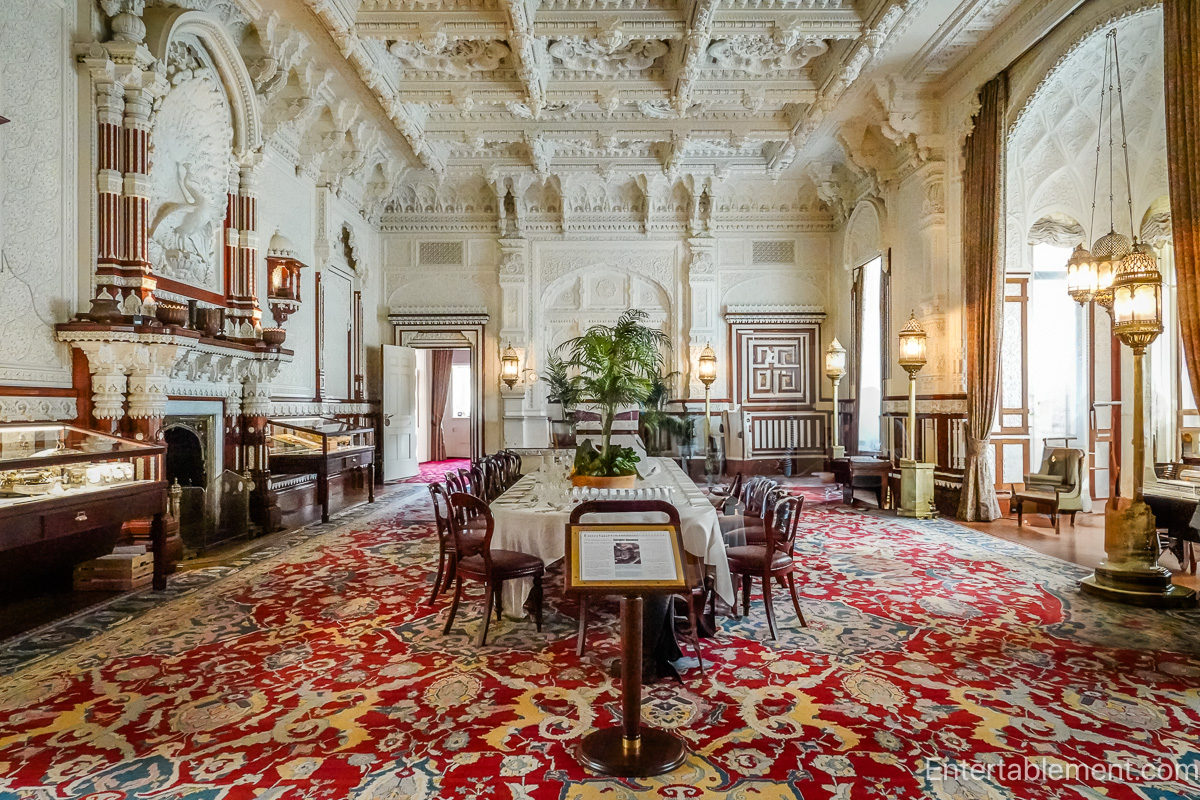
The room, designed by Lockwood Kipling (the father of Rudyard Kipling), is a masterpiece of Anglo-Indian design.

It features intricately carved white plasterwork and an opulent ceiling.

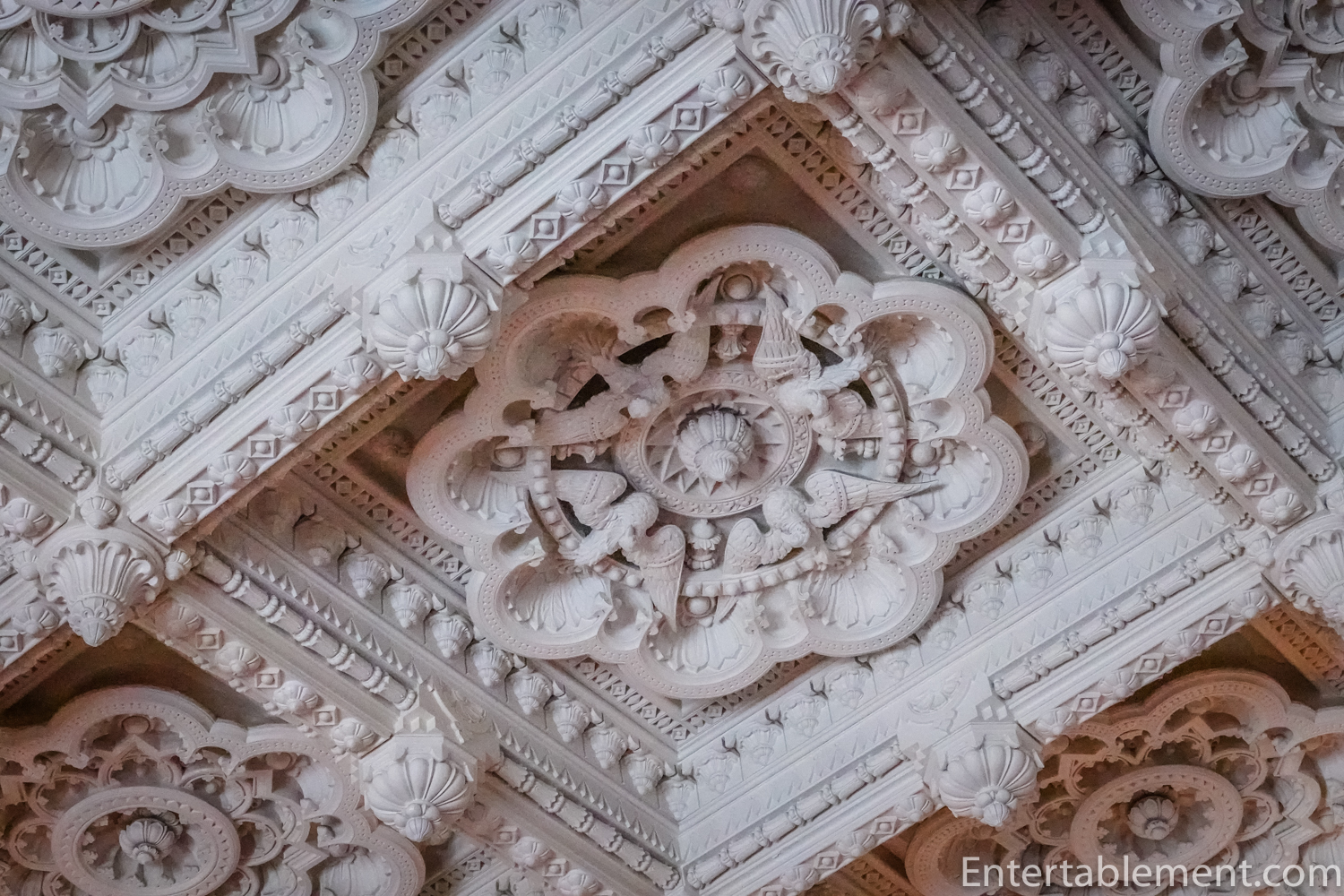
It served as a banquet hall and remains one of the most stunning rooms in the house.
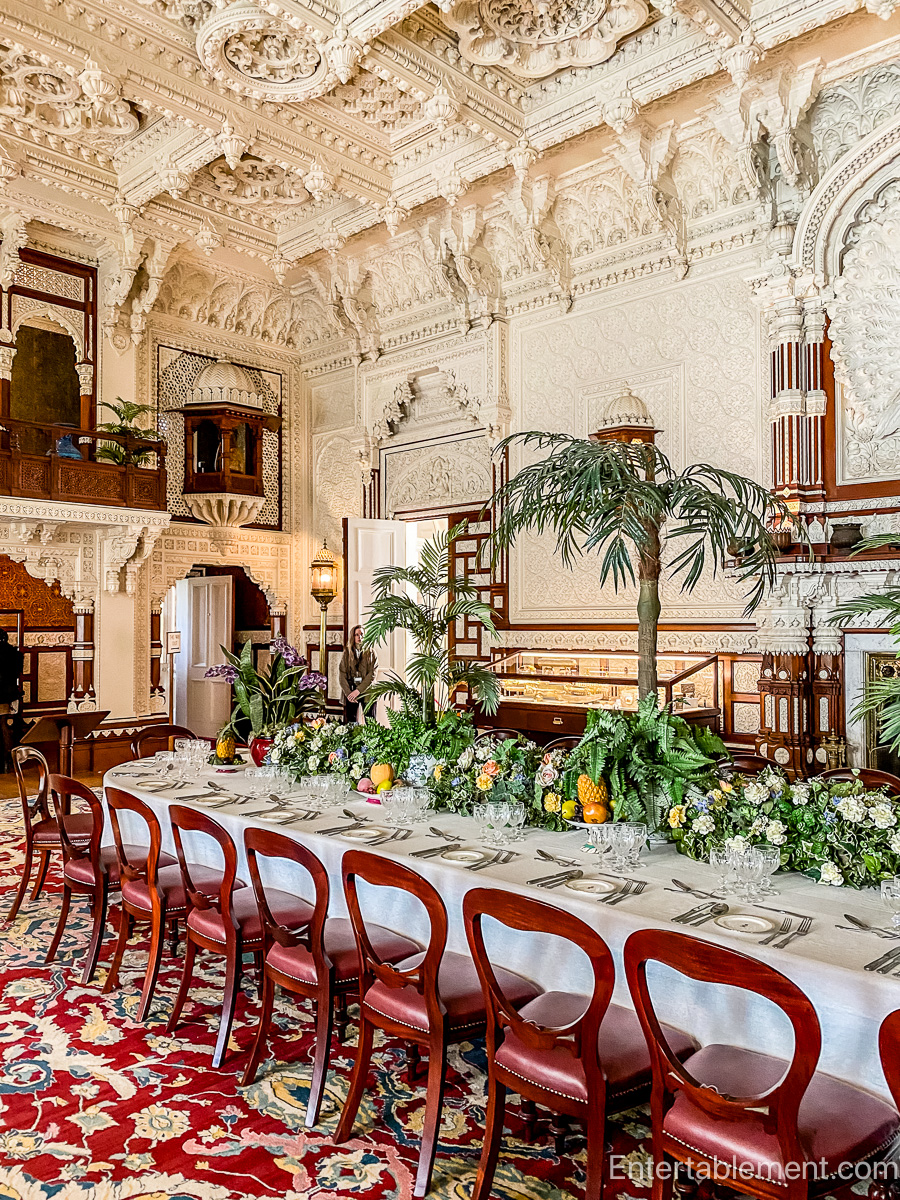
Princess Louisa suggested the peacock over the fireplace. It was quite a job! It took 26 craftsmen more than 500 hours to create.
The Gardens: A Reflection of Prince Albert’s Vision
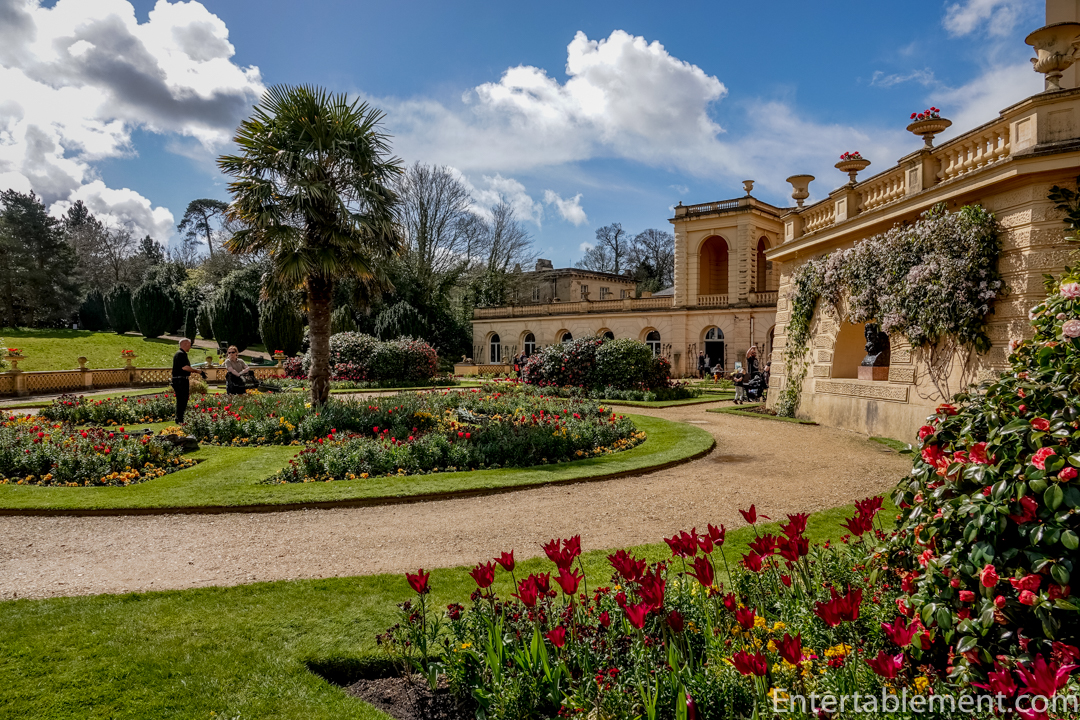
Osborne’s gardens were as carefully planned as the house itself, with Prince Albert taking an active role in their design. The formal terraces surrounding the house offer breathtaking views of the Solent, evoking the feel of an Italian coastal estate.
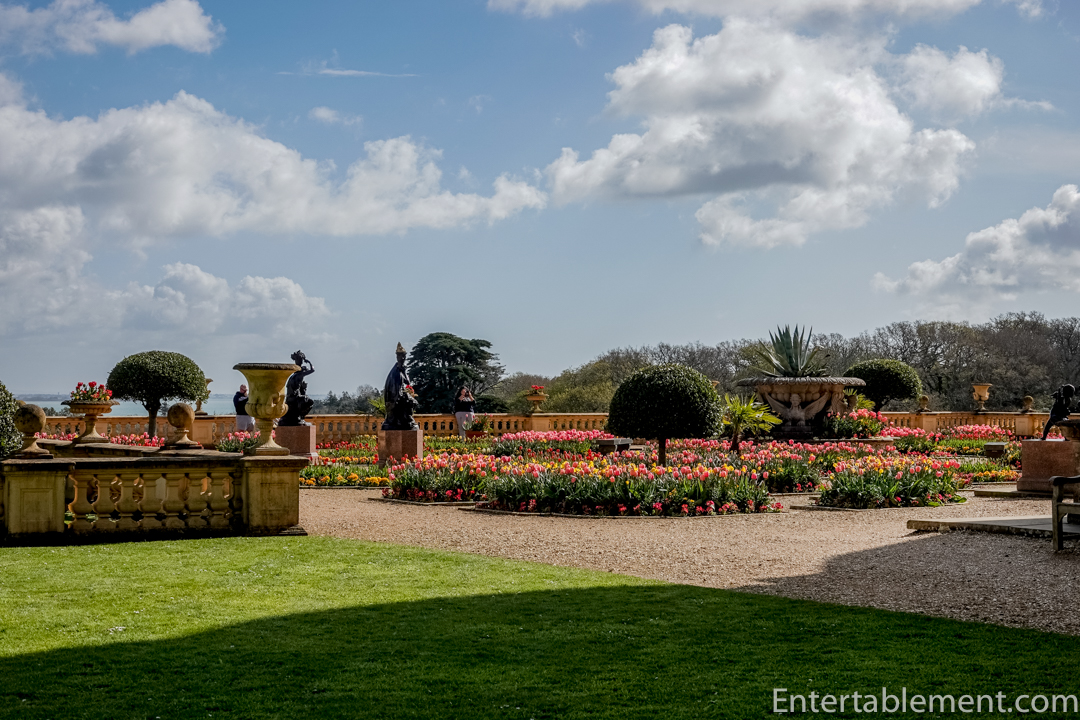

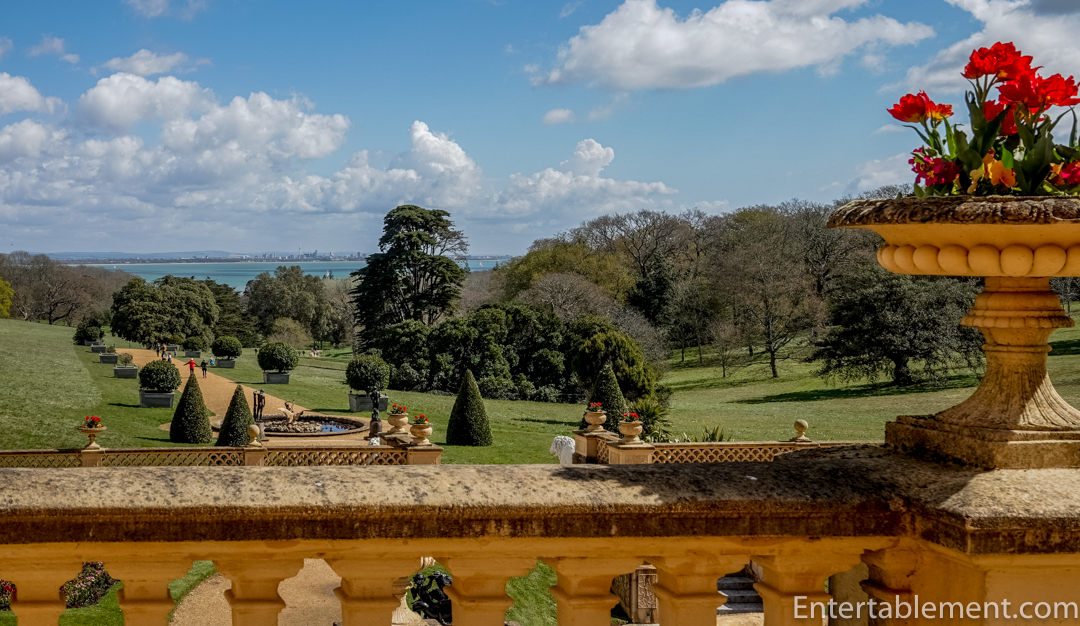
Italian Terraces – A blend of classical statues, fountains, and Mediterranean plants, these terraces were designed to bring a touch of the Riviera to the Isle of Wight.


Walled Garden & Pleasure Grounds – A working Victorian kitchen garden, still producing fruit, vegetables, and flowers just as it did in Victoria’s time.


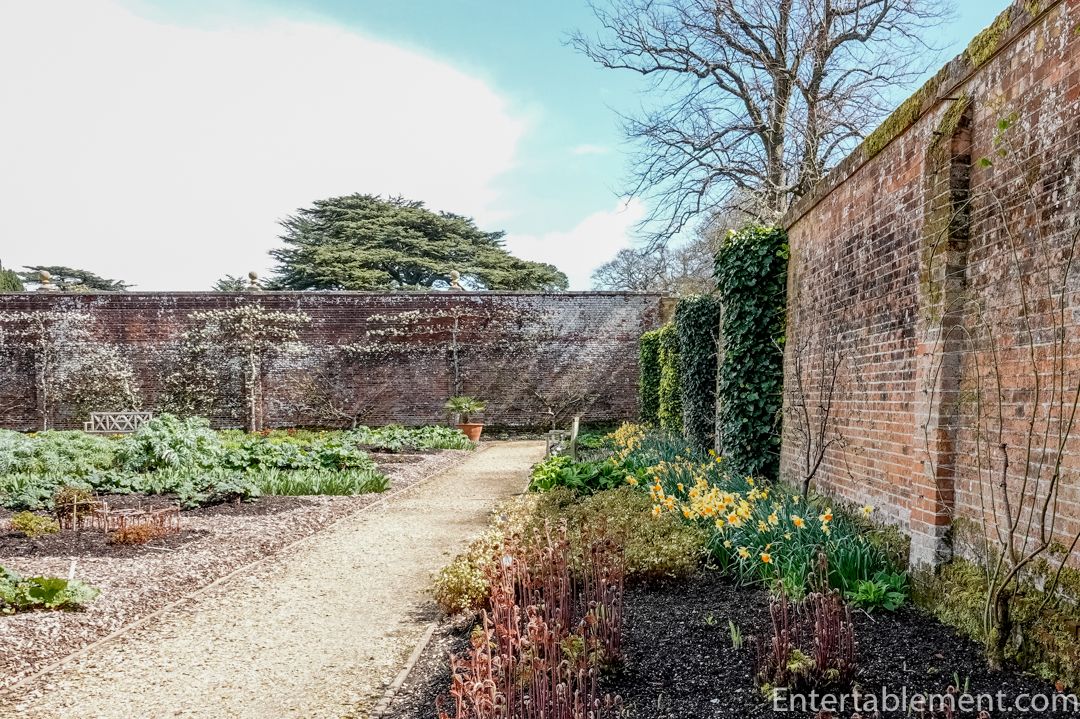
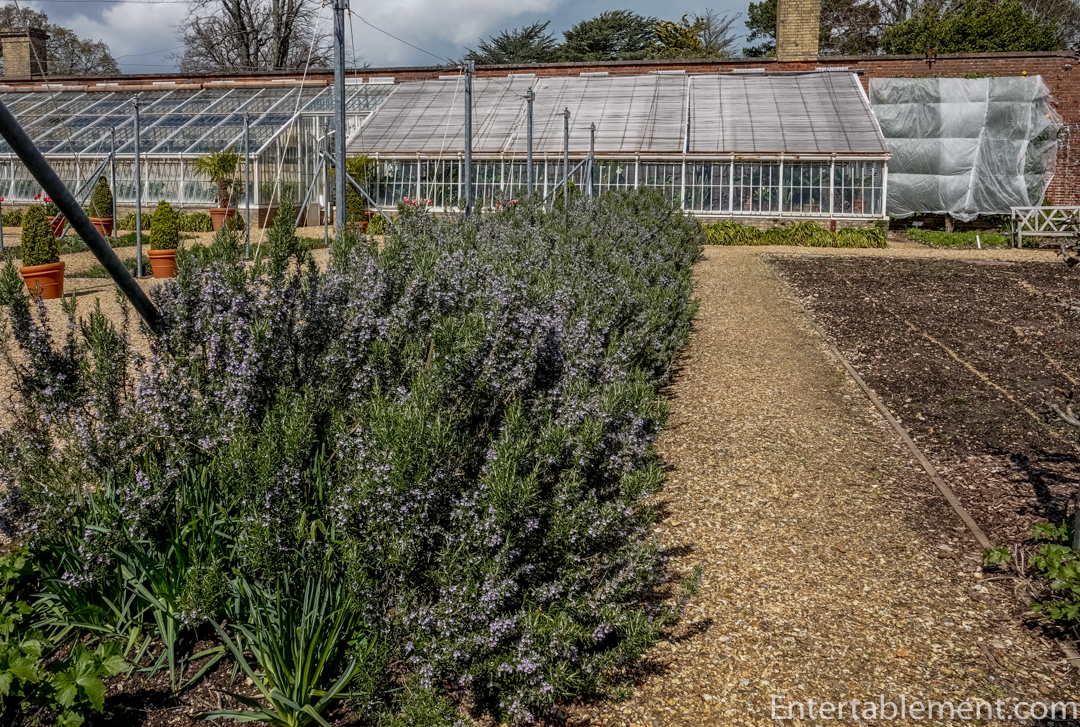
Woodland Walks & Rolling Parkland – Sweeping lawns and shaded pathways leading down to the water, perfect for long, contemplative strolls—something the Queen herself enjoyed.

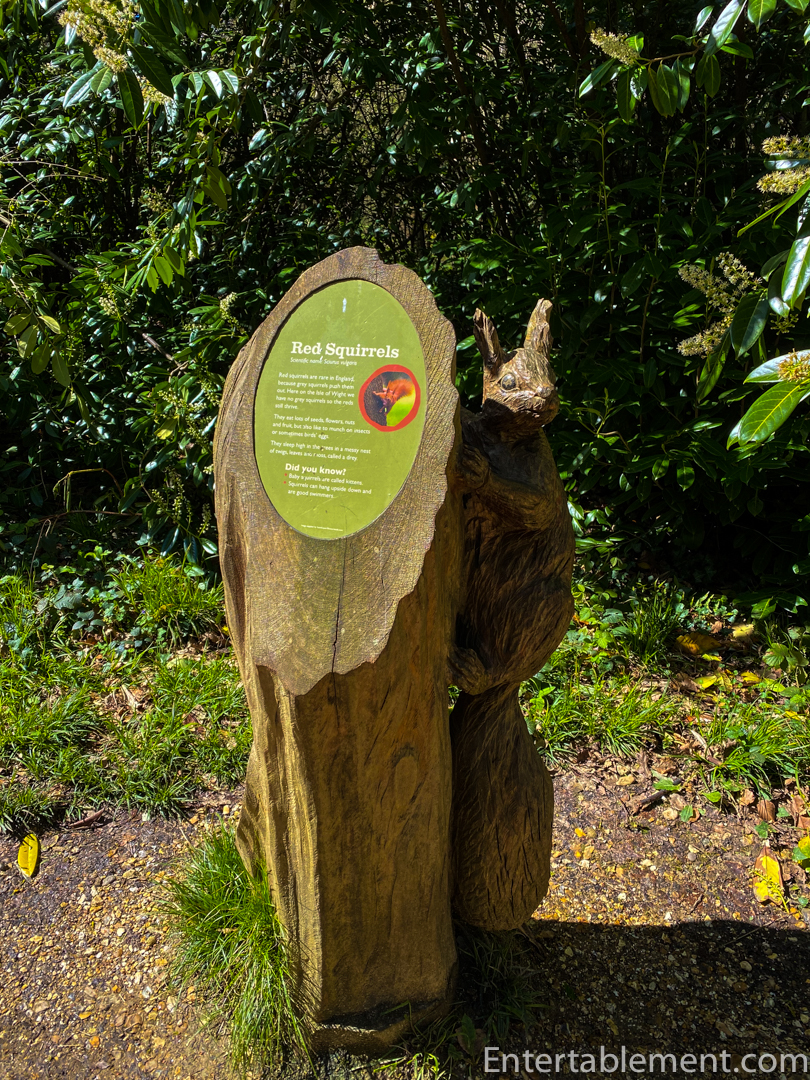

Osborne’s Private Beach: A Royal Seaside Escape
One of Osborne’s most charming features is its private beach, a place of leisure and relaxation for the royal family.
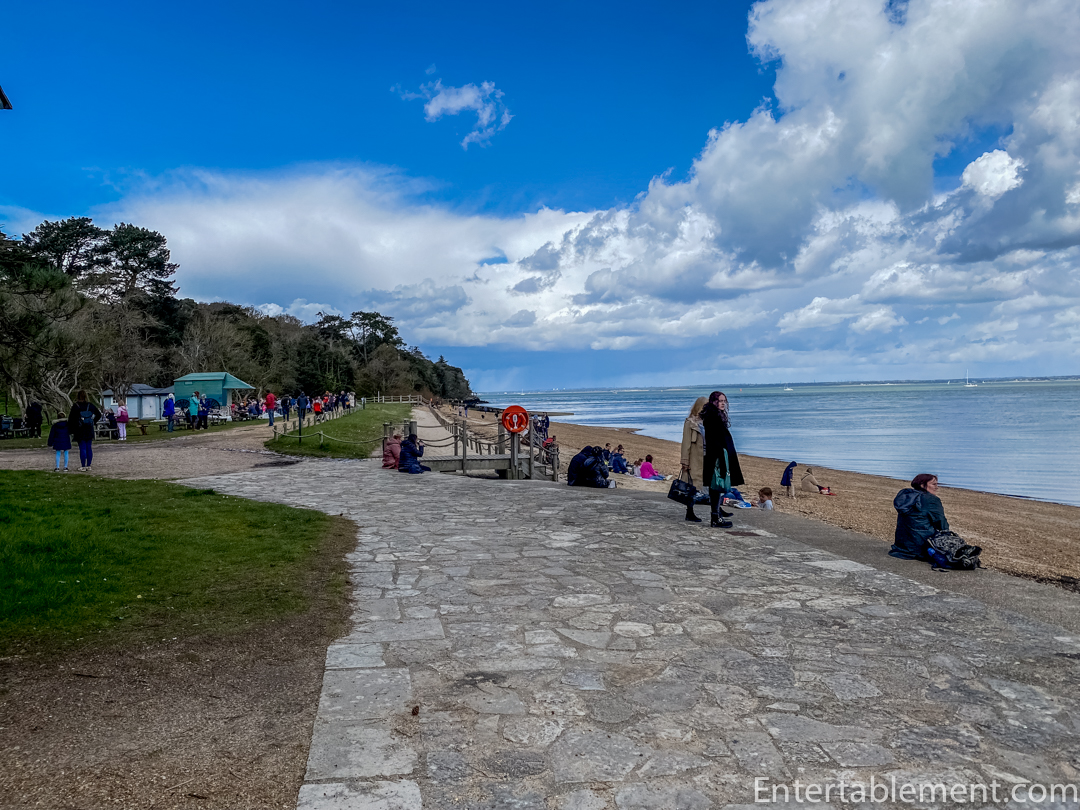
Queen Victoria famously bathed here in a specially designed bathing machine—an enclosed wooden cart that allowed her to enter the water with complete privacy.

The beach was also a favourite spot for the royal children, who swam, collected seashells, and played like any other Victorian youngsters. Today, visitors can enjoy the same sandy shore, making it one of England’s unique royal experiences.
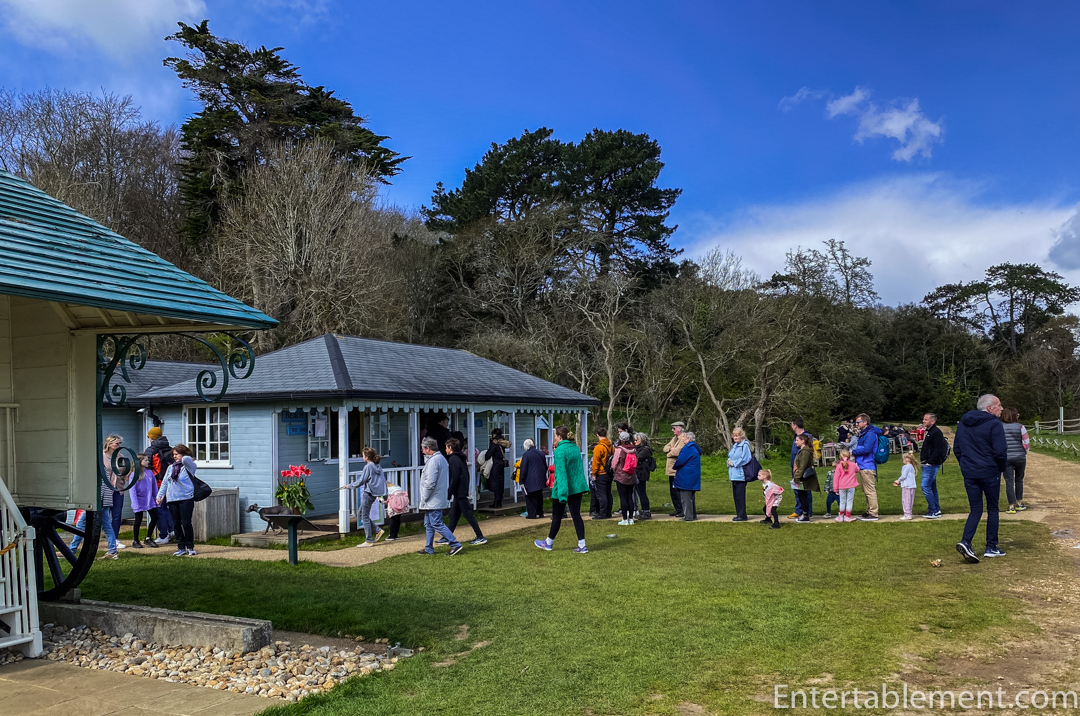
The beach pavilion (now the cafe) was built when Osborne House became a convalescent home after the Queen died in 1801.
Why Osborne Still Captivates Visitors Today
Osborne is more than just a historic house; it’s a time capsule of royal domestic life. Unlike Buckingham Palace’s stiff grandeur, Osborne offers a deeply personal perspective on Victoria as a mother, wife, and ruler. It is also a testament to Albert’s influence as a consort and a forward-thinking designer with a vision for what a royal residence could be.

Under the care of English Heritage, Osborne remains remarkably well-preserved, allowing visitors to step directly into the world of the 19th-century monarchy. Whether it’s the breathtaking architecture, the grand rooms, the family spaces, or the serene beach, Osborne continues to enchant those who walk its halls.
Osborne is a rare gem—a royal residence specifically built to accommodate the daily, noisy life of a large, growing family. From the grandeur of its staterooms to the simple pleasures of its gardens and beach, it offers an unparalleled glimpse into Victoria’s private world. Whether you visit for the history, the architecture, or simply the stunning views, Osborne is where the past lingers, inviting you to step into the life of one of Britain’s most iconic monarchs.






.jpg)